Moroccan Butternut Squash + Wild Rice with Garbanzos

Moroccan Butternut Squash + Wild Rice with Garbanzos

img_1134

so this is the sound of you
here and now whether or not
anyone hears it this is
where we have come with our age
our knowledge such as it is
and our hopes such as they are
invisible before us
untouched and still possible

– from To the New Year by W.S. Merwin

img_1127

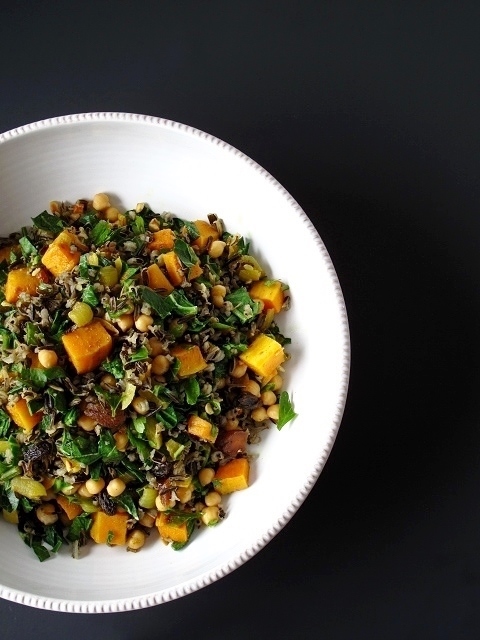
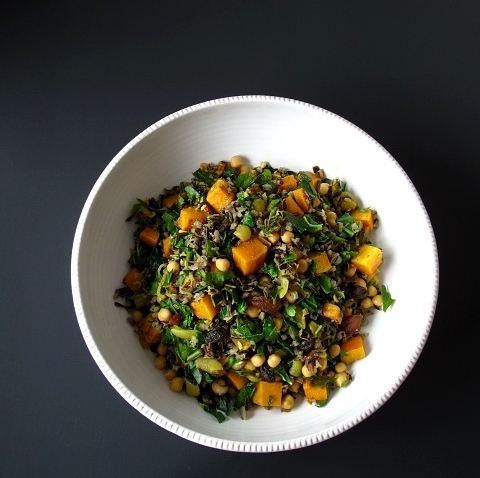
Moroccan Butternut Squash + Wild Rice with Garbanzos, serves 4-6
Near the tail end of winter last year, I made a rendition of this off the Kinfolk website. I declared it the best thing I had eaten all winter and couldn’t wait until squash season came back. This year, I realized the recipe had disappeared and so I set about to recreating it. Unlike the original, I added cooked garbanzo beans and a good couple handfuls of winter greens. It is now more of a one-dish main grain salad than the original, which served as a side. It’s a good one for a cold winter evening and makes an excellent leftover lunch. Enjoy!

1 cup uncooked wild rice, soaked for at least 8 hours
2 1/2 cups water
1 1/2- 2 lbs. butternut squash, peeled, deseeded and diced into 1/2-inch cubes
1 large onion, diced
1/4 cup raisins
1/4 cup chopped dried apricots
1/4 cup toasted hazelnuts, chopped
2/3 cup parsley, minced
2 cups cooked garbanzo beans
4 cups chopped kale or other winter greens
1 tsp. sea salt, or to taste, divided

Dressing:
2 Tbs. coconut or good quality canola oil
2 Tbs. apple cider vinegar
1 tsp. Dijon mustard
1/4 tsp. black pepper
3/4 tsp. cumin
3/4 tsp. cinnamon
1/2 tsp. turmeric
1/4 tsp. cardamom
1/4 tsp. coriander
1/16 tsp. clove
1/8 tsp. nutmeg
splash of water, as needed

Instructions

  • Heat oven to 400 degrees F.
  • Cook rice by draining it and then combining with 2 1/2 cups of water in a medium saucepan and bringing to a boil. Turn down to a simmer and cook until the rice is light and fluffy and the water is completely absorbed, 50-60 minutes.
  • Mix the dressing ingredients in a small dish or jar.
  • Place squash cubes  and diced onion in a single layer on a baking sheet lined with parchment paper. Drizzle 2/3-3/4 of the dressing over the vegetables, and sprinkle with salt. Mix it well with your hands or wooden spoon until the vegetables are evenly coated. Place them in the oven and bake for 35-45 minutes until the squash begins to brown on the edges and completely soft.
  • Meanwhile, in a large bowl, toss together the garbanzos, parsley, greens, dried fruit, and hazelnuts. When the rice and vegetables are done cooking, allow them both to cool slightly and then add to the bowl ingredients. Stir in the remaining dressing and season with additional salt and pepper to taste. Serve warm or at room temperature.

toasted oat porridge with chamomile, walnuts + spiced apples

toasted oat porridge with chamomile, walnuts + spiced apples

img_1092

Everything is connected here…the soil feeds the plants that feed us. We are merely the walking, talking result of that connection.
– Lora Lea Misterly


I tend to share the same old stories here, I’m sure, but one of the big turning points in my relationship with food was marked by my visit to Quillasascut Farm School back in 2009. The week of cooking, harvesting, and gathering with like-minded young folk was put on as part of a Slow Food Youth workshop. I was the only “experienced” farm girl among the participants, and I was chosen in part because I come from a conventional agriculture background while the teachings and discussions were in line with Slow Food’s philosophy of food that is good, clean, and fair. At the time, I had just wrapped up spending 18 days straight working wheat harvest which entailed driving a combine for 12 hours a day across soil that was essentially devoid of life–save that wheat. The experience was a good one and I worked for a great family but I was beginning to put the pieces of our food and health systems together.


img_1105


I don’t think the week at Quillasascut changed any of my viewpoints on food necessarily, but through it I was able to move away from hyper-focusing on what any one food was doing to me individually and instead look at it from a broader lens, taking into consideration the communal and ecological connections to what I was eating. I was able to move away from thinking of myself as just an eater and realized I play a vital part in this connection within our vast food system. When I began to take into consideration and participate in more of the story behind my food, where did it grow, in what conditions, by who, were the people that grew it compensated fairly?, what role do I play?, I stopped worrying so much about the things that do not matter, i.e. exactly how many calories are in my meals, how I can control my body, etc., and just eat with joy, mindfully. To be sure, I’ve had a volatile last few years in terms of my relationship to food and body image, but each time I begin to overthink and hyper analyze, I’m usually brought back into better relationship by refocusing on the communal and broader connection aspects of eating.


img_1054


This month, The Recipe Redux challenged us to pull out one of our cookbooks and share a reduxed recipe. In similar, past challenges, I have shared recipes from my favorite blogger family. This year, I instead pulled down Quillasascut’s cookbook, Chefs on the Farm. 

The book is beautiful, and though many of the recipes bring back warm memories since they are ones myself and the workshop participants made there with chef Karen Jurgensen, the book contains much more than recipes. Each season is marked with a reflection by farmer Lora Lea or her husband Rick about life on the farm as well as knowledge of sustainability practices that can be incorporated, no matter the location, or lack of farm.


img_1049


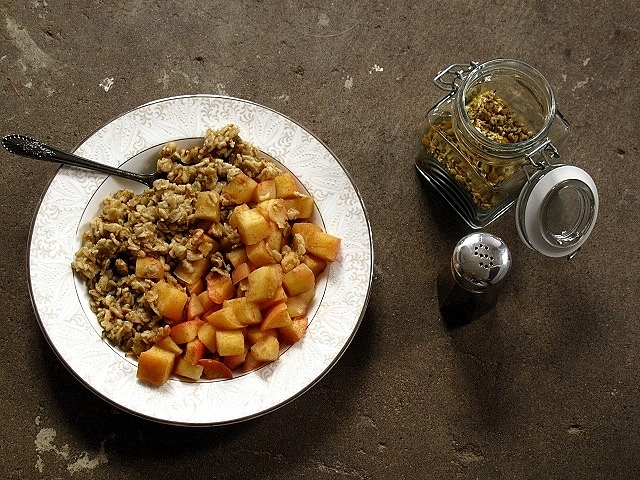
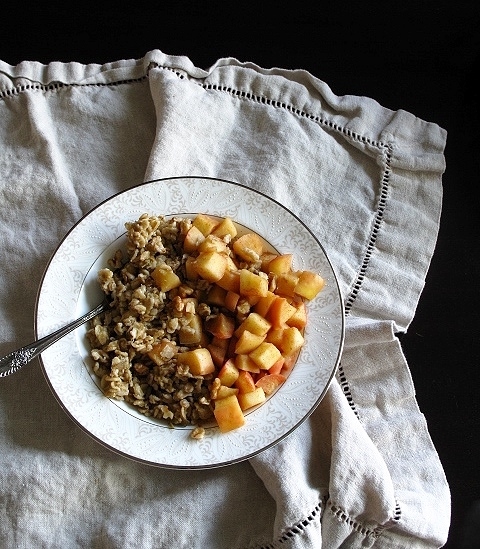
Today’s recipe is adapted from a chamomile porridge in the Winter section of Chefs on the Farm. Both chamomile and oats have relaxing properties that soothe the nerves and set us up for a more grounded day. Chamomile is also useful for soothing an anxious, hyped-up, or perhaps overworked stomach and digestive system, which may be needed this time of year. Along with omega-3 rich toasted walnuts, the oats and chamomile combine to make a truly delightful and nourishing breakfast option during this holiday season. Enjoy the combination on its own, or if you’ve the mind, make a quick spiced apple compote to serve alongside. If unable to track down bulk chamomile, break open a packet of tea. Enjoy!


Toasted Oat Porridge with Chamomile, Walnuts + Spiced Apples, serves 1
1/2 cup old-fashioned or thick rolled oats, gluten free if necessary
1 cup water
1 Tbs. dried chamomile flowers
dash of sea salt
1 small apple, diced
dash of cinnamon and ginger
1-2 Tbs. walnuts, toasted and roughly chopped

  • Toast the oats in a skillet over medium-high heat, just until they become fragrant. This step is optional but it will lead to a richer, toasty oat flavor.
  • Then, in a small saucepan, bring 1 cup water to a boil and add in the toasted oats, chamomile, and a dash of sea salt. Cook for 5-10 minutes, depending on the cut of your oats and desired consistency.
  • While the oats are cooking, combine the diced apple, spices, and a splash of water in a small saucepan. Bring them to a good simmer and cook just long enough for the apple to soften and the liquid to form a slight syrup.
  • Remove the oats to a bowl, pour over the spiced apples, and top with toasted and chopped walnuts.

recipe-redux-linky-logo

Apple Cinnamon Doughnuts

Apple Cinnamon Doughnuts


img_0928


I made it to the end of a whole year of nutrition grad school and on the last day of finals I made doughnuts to celebrate bake off the mad I experienced when the server went down and locked me out of my four-hour final.

If this sounds overly dramatic, it is. I had really been looking forward to resting my mind from amines, amides, carboxyls, thiols, esters, etc., and waking up on a Saturday morning to finish it all off was last on my favorite list when all I really wanted was to go visit farmers at the market and finally get in the holiday spirit. In any case, I eventually got to take my final and do all of that because I finally regained access at 8:00 pm Friday evening and I decided to forge on and finish the class rather than waiting another day. Perhaps it was the extra study time, that I was better prepared than I thought, or that some of my fellow students are even more dramatic than me, but the final only took a little over three hours, wasn’t nearly as painful as I was envisioning, and I landed a solid score off the whole ordeal.
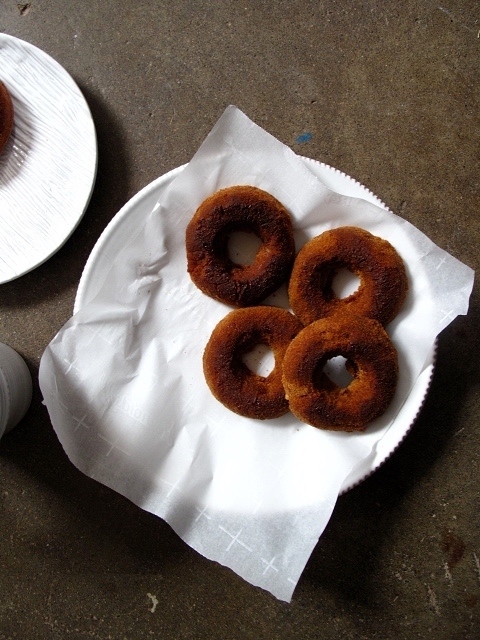
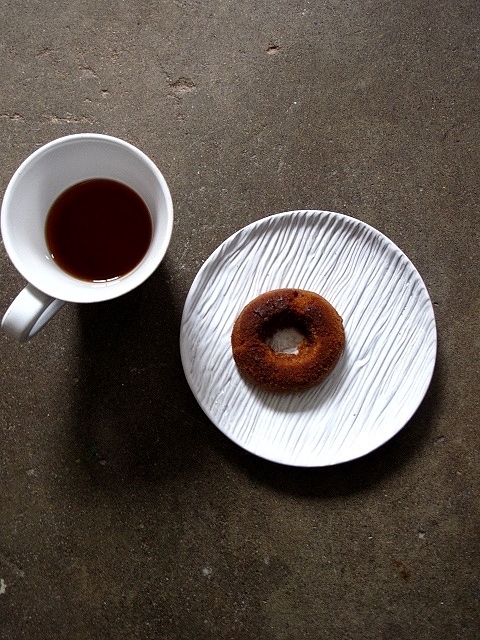
 

img_0953img_0965


Or maybe it was the doughnuts.

These apple cinnamon doughnuts are brought to you by my forced change of plans and at 2:30 pm on a Friday before the big final, they 1. tasted absolutely delicious 2. did not cause a sugar rush/crash that would have made a fun* experience even better and 3. may or may not taste exactly like a bakery doughnut because I haven’t had one since early high school.

You have been warned.


img_0947img_0966


As I mentioned in my last post with pie, and also back when I made cookies, I’ve really been torn when it comes to sugary, indulgent treats around the holidays–but also generally. I tend to eat a “treat” every single day after dinner, but often it is fruit and cereal or a bit of dark chocolate. When I do indulge in the more decadent desserts, I’m often shocked at how sweet they are and I retreat back to fruit pretty quickly. This wasn’t always the case.

Also, I get the urge to experiment for this space every few weeks or William requests some sort of dessert or friends bring over treats–so my life is not entirely devoid of sweets.

I learned about carbohydrate and sugar metabolism this last term and also did a bunch of research on which alternative sugars to recommend. The important thing is that all types of sugar are hard on our systems in too high amounts and we as a society eat way too much of them. Second, I favor alternative sugars because they contain just enough other nutrients to not tax our systems quite as much and most are a little less sweet. Fructose in its refined state, (think high fructose corn syrup and/or white table sugar) heavily taxes the liver and according to some research, leads to decreased leptin, our satiety hormone, and increased grehlin, which is our hunger hormone. So we crave more and more and are never really satisfied. Unlike refined fructose, the sugar in whole fruits doesn’t have the same effect and there is evidence that this is the case because some of the phyto (plant) nutrients like quercetin in whole fruits block or slow down sugar absorption.

One of the less processed sugars that I hadn’t tried until recently was coconut sugar. I had avoided mostly because I’ve slowly been reducing all sugar over the years but also because the coconut craze has had me questioning the sustainability of coconut water, oil, sugar, flour, etc., with it all being so popular. I was handed a big bag of coconut sugar recently, however, and after trying it out here, I liked the results. It didn’t make me jittery or crave more like regular white sugar and the doughnuts were quite sweet enough, but not too much so. Coconut sugar does have a lower glycemic index and more nutrients than regular sugar, and can be used cup for cup in recipes. If you’re baking this season, it might be a nice ingredient to experiment with.


img_0949


Apple Cinnamon Doughnuts, makes 4-5
1 Tbs. ground flax
3 Tbs. warm water
1/4 cup millet flour
1/4 cup brown rice flour
2 Tbs. coconut sugar
2 Tbs. almond meal
1/2 tsp. baking powder
1/4 tsp. baking soda
1/2 tsp. cinnamon
1/4 tsp. sea salt
1/4 cup almond milk
2 Tbs. applesauce
1 Tbs. coconut oil
1 tsp. vanilla
1/2 an apple, peeled + medium-diced
2 Tbs. coconut sugar + heaping 1/4 tsp cinnamon for the topping
1-2 tsp. coconut oil, melted

  • Oil and flour the doughnut pan and preheat the oven to 350 degrees F. If you’ve no doughnut pan, these can be made in a standard muffin pan; they won’t be doughnut shaped but they’ll taste just the same.
  • Whisk the ground flax together with the water in a small bowl and set aside for a few minutes.
  • Combine the dry ingredients in a large bowl and mix well and then go back to the flax mixture and add the remaining liquids to it. Stir it all together to combine.
  • Pour the liquids into the dry ingredients and stir briefly until the whole thing is just combined. Gently fold in the apples.
  • Spoon the batter into the doughnut pan, making sure not to overfill. Bake for 15-18 minutes until they are lightly golden brown at the edges. Remove from the oven and pan, and cool.
  • For the topping, switch the oven over to broil and then place a bowl of melted coconut oil and a plate of cinnamon sugar in an assembly line next to the doughnuts.
  • Dip the top of each doughnut into the oil mixture briefly and then dip and roll it in the cinnamon sugar. Set on a baking sheet or sturdy foil and repeat with the others. Then transfer them all to the oven, just under the broiler, and allow the sugars to caramelize briefly. This should take no more than 2-3 minutes and may take less. Be careful not to scorch their tops!
  • Remove from the oven and serve warm, if possible.