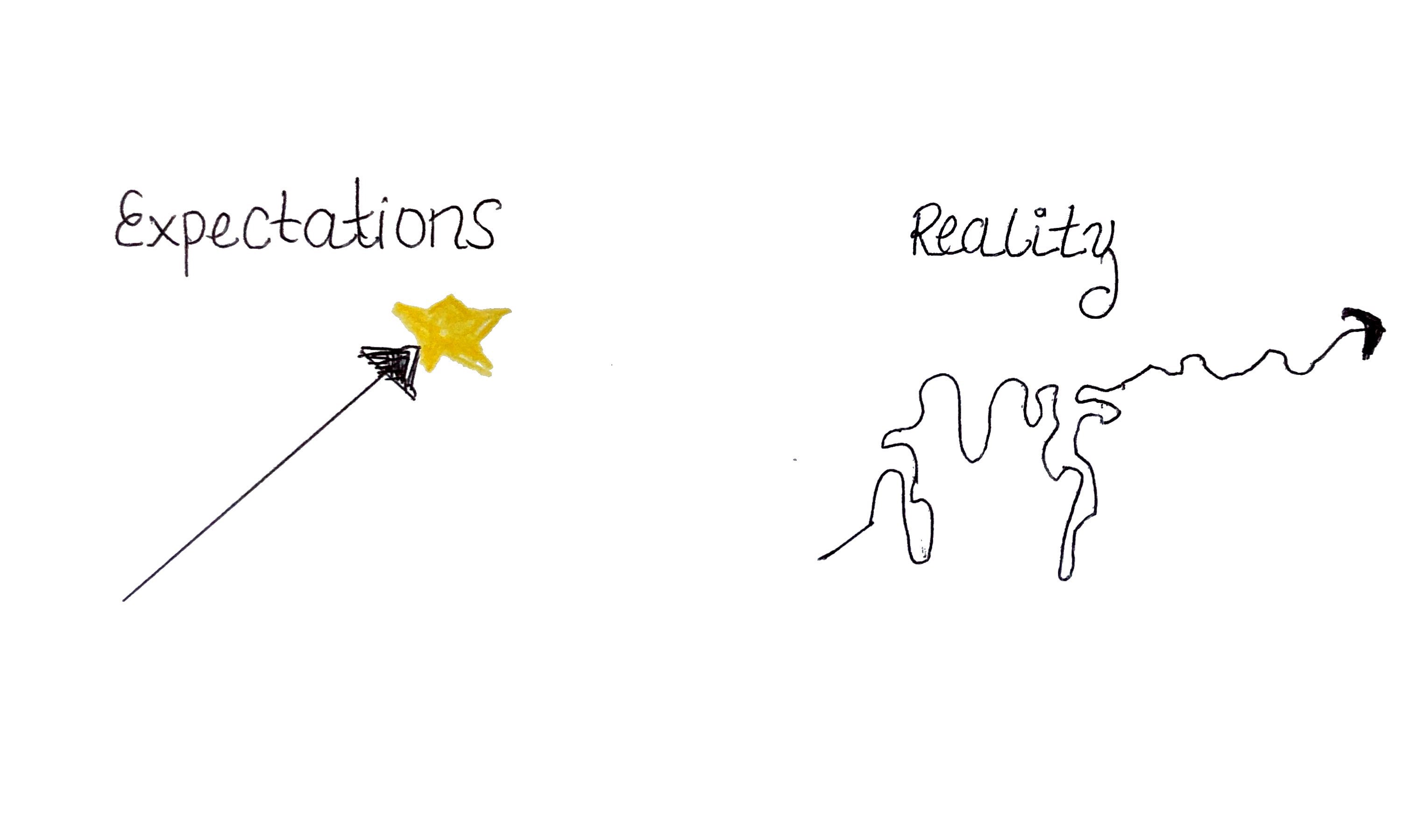
I’ve been having lots of conversations lately about the expectations we have for ourselves. We expect once we begin taking action to improve our health condition, that a shift to doing better will come quickly.
We read books, or internet articles, or hear someone’s gospel-like miracle healing story, and we expect that for ourselves too.
And sometimes that’s the case. We feel substantially better almost immediately.
But that’s not always the reality.
In fact, if you listen to nearly any respected academic researcher or health practitioner, or expert in their field, they often stray away from miracle stories and black and white health panacea protocols. And they instead use language more along the lines of “…it depends” and “not one thing that helps but a combination of [diet and lifestyle] factors.”
Healing Isn’t Linear
Rarely ever is healing, or improving in whatever goal we have for ourselves, linear. One finite example, is that it takes at least five days for the lining of the gut to repair itself after it’s been damaged, and a full three to five weeks for a food that triggered the inflammatory process to fully leave the system.
So as we already switch our calendars over from the first month of the new year into the second, this is my gentle reminder to you.
Go easy with yourself.
Expect less linear lines and gold stars at the top, and more nuance, (adventure!), overcoming fear, stepping into the unknown, and learning more about yourself and your needs.
Something Practical
And for something practical to guide you, here’s a little practice to try: Ask yourself what you need today by really stopping what you’re doing and resting a moment in complete not-doing-or-thinking-ness. And then ask yourself, what do I need today to feel better? How can I care for myself better today?
Our bodies are meant to heal themselves. Sometimes we have to mentally get out of our own way and give them care and time(!) to do so.
Reach Out
If nothing comes up for you in the reflective exercise above, or you’re ready for more nutritional guidance, I invite you to reach out to me for more personalized support on digestion, sports nutrition, or both.
I’ve been reminded lately of barriers we put in place that prevent us from healing chronic health challenges, or negative habits.
That barrier is how we attach ourselves to and start to own our struggles.
Here are a few example statements that illustrate this: – My typical GI struggles. – I’ve always hated vegetables. – I’ve always struggled with digestion. So have my parents. – I’ve had that ever since I was kid. I’ve always had it. – I never recover well during a (marathon) training cycle, and never get my nutrition and health to go right enough to be prepared for the race. – My anemia pattern.
Another example is identifying with our diagnosis or diet pattern as if it were a job title. This is often easily visible on social media. You might witness or use something like IBS Warrior or Ulcerative Colitis Warrior, or Celiac next to a name in a bio, as an example.
I’ll use my past self as another example. For a long time, I felt like whatever medical mystery that presented as something autoimmune meant I’d be in daily chronic pain forever. This began at age 27. I was in constant fear and anxiety about the pain, and I felt like I couldn’t get outside that experience, even temporarily. Fast forward seven years and my body and mind feel remarkably different. The cloud of bleakness hanging over me, the fear of pain, the internal anguish that I couldn’t understand is no longer part of my everyday.
Yes, when it comes to healing something that has been chronic, finding the right nutrition plan and lifestyle practices are incredibly important. But healing is also energetic. You have to believe it’s possible. And you have to change your mindset and the energy you put around the process.
You have to believe your body is meant to heal.
And we start to believe what we say about ourselves. By saying we always struggle with something, that means deep down that we probably believe we will always struggle with it.
This simple, though definitely not easy, nugget of first changing what we say (out loud and internally) is what catalyzes healing. We start to believe lasting healing is possible. We seek out and then are put into connection with individuals who further light the healing pathway from whatever we’re currently experiencing – an autoimmune condition, IBS, chronic fatigue, a lifetime of emotional and disordered eating and body hate, weight woes, medical diagnoses that are largely written off, etc.
And sometimes our catalyst for healing is just an example from another person.
For instance, we all operate within a community, whether that’s in person in our daily lives, or people we follow online who influence us. Often, we identify with individuals who have journeyed through similar experiences and challenges as us.
What often distinguishes individuals who are incredibly good at healing themselves for the long term, and those that have chronic set-backs, lies in what the first group don’t spend their time doing.
These “experts at healing” don’t hang out in forums or self-help groups with individuals discussing the woes of their symptoms or how bad it is. They get out of their negative head space as soon as they notice they’ve fallen into it. They change their language in how they talk about their health. Instead of statements like “I always struggle with….” or “My faulty digestion….”, they view a health challenge as a temporary setback. My digestion is currently less than ideal — That’s a less permanent way to state that.
Or I haven’t yet arrived at the end of a training cycle feeling like I’ve nailed my nutrition and recovery strategies, but I believe it’s possible and I’m committed to exploring what has prevented me in the past.
Or My doctor believes I have lupus that I’ve put into semi-remission enough to be below the threshold for clinical diagnosis. I am not a victim. And I’m committed to my nutrition and lifestyle practices to continue my journey towards complete healing. This statement was my personal example.
In my case, I refused to mentally identify with or use the word lupus. For one, I didn’t have an actual diagnosis. But for me, that choice was energetic. This is similar to (before then) never using the words celiac, IBS, or dysbiosis about myself–though they were all either likely or true. These words we attach ourselves to are incredibly powerful. And here I am a handful of years later, and I haven’t thought about the words “autoimmune” or “lupus,” “IBS,” or “dysbiosis” as it relates to myself in quite a while.
Think about how you can shift the statements you make about your health. Catch yourself when you say what “you’ve always” said about your situation. Restate it in a less attached, or less in ownership, way.
Let the way you speak be a catalyst for how you think about your health.
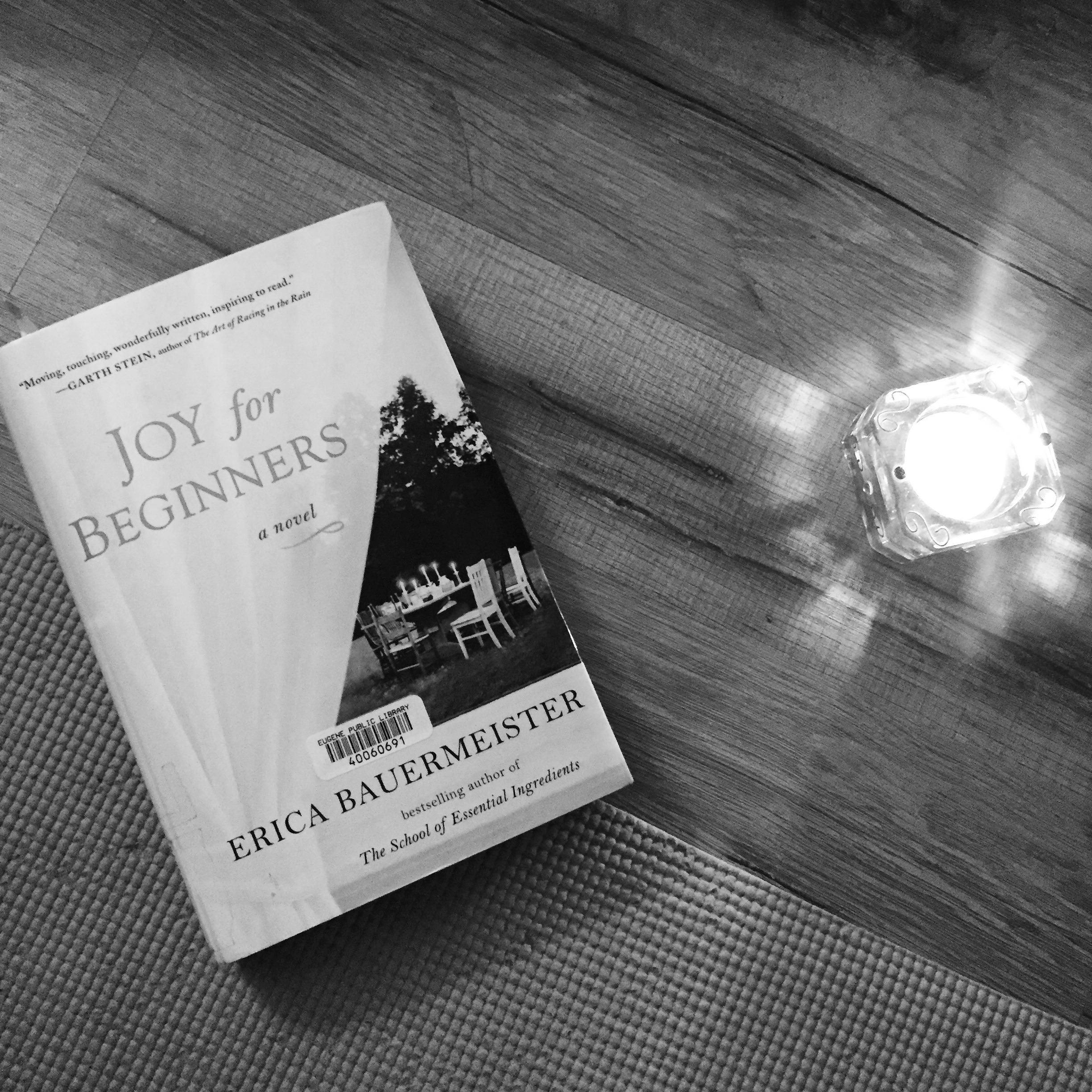
*Note on the book pictured above: I don’t remember the plot. But I do remember it was part of my finding joy and rewiring how I thought about my health process.
At this point in the summer, it’s easy to start feeling a little hot, overheated, and irritable, both internally (mood and digestion), and externally (skin irritation and inflammation).
Your body takes cues from nature and often reacts to what the environment is like. When it comes to your body’s symptoms of imbalance, it all comes back to digestion. Since food, and whether you’re digesting it, literally becomes the body over the coming weeks and months.
Signals of Balance in the Summer Months Feeling cool, calm, and optimistic with ample energy Taking breaks rather than pushing through work (or play) Staying hydrated and nourished No cravings for certain foods
Signals of Imbalance in the Summer Months Feeling hot, inflamed, easily frustrated, and hot-tempered Overworking yourself and perfectionism Allergic reactions Regular headaches Rashes Acidic digestion and reflux Craving spicy, sour or salty foods Loose stool or diarrhea Low energy
Summer’s Food Remedy
What’s surprising to some is that during the height of summer, our digestive capacity is actually lower. This is why on extremely hot days, we often have a low appetite. This may be especially apparent if you’re running lots of summer mileage but feeling less hungry afterwards or know your appetite doesn’t match your energy output. And shoving more food in when you’re not hungry or digesting it well is counterproductive since your body can’t digest and assimilate well when it’s not digesting and assimilating well!
When we look at the seasonal foods that grow in the summer, many of them are cooling and juicy. Just the opposite of how you may be feeling internally or externally!
So when we look to what should go in our meals to balance the heat of summer, it’s best to eat foods that are easily digestible when you have any symptoms that fall in the imbalance category above. That means (gently) cooked foods that are chewed thoroughly. But it also means incorporating ingredients such as vegetables, herbs and spices, and fats/flavorings that are naturally cooling to balance the heat.
For cooling vegetables, fennel, zucchini and summer squash are excellent and abundant to incorporate this time of year! So too are cucumbers, cooling mint, basil, cilantro, parsley, and dill.
That’s where this dal comes in. It’s easily digestible, flavorful, cooling with fennel, dill, and a little coconut milk stirred in, and especially important, tasty!
Much of my nutrition practice is focused on individuals and athletes with digestive health issues such as leaky gut, food allergies and intolerances, chronic GI distress, malabsorption of foods and nutrients, and inflammation. If you’re tired, stressed, and not really sure what to eat to help or hurt anymore, I invite you to reach out to me for more personalized support.
Featuring cooling summer ingredients, this is a dal to eat when the weather is hot, dry, and irritation-inducing—and when you’ve been feeling the same!
Prep: 15 minutes | Cook: 40-50 minutes | Serves:4
1 ½ cups red lentils 1 tsp. turmeric 5 cups water 1 ¼ tsp. mineral salt, divided 1 Tbs. olive oil 1 tsp. cumin seeds ½ tsp. mustard seeds ½ tsp. grated fresh ginger root 1 large onion, diced 1 large fennel bulb (~500 grams), diced 1 handful fresh dill (~15 grams), minced 2 tsp. hot chili sauce, or ½ a hot chili, minced 14 oz. / 400 ml lite coconut milk (1 can) Juice of 1/2 to 1 lime, to taste 1 cup dry brown rice, soaked for at least 4 hours 2 cups water Sliced crisp fresh greens, such as cabbage or romaine, to serve
Rinse the red lentils until the water runs clear; then put in a large pot with the turmeric and ½ tsp. salt, and cover with 5 cups of water. Bring to a boil, turn down the heat and simmer for 20-25 minutes, until cooked – that is, when the lentils start to break down and merge together when stirred.
While the lentils are cooking, heat the oil in a large sauté pan over a medium heat and, once it’s hot, add the cumin, mustard seeds, and ½ tsp. salt. Thirty seconds later, when they pop, add the onion, fennel, and ginger, and cook, stirring every now and then, until soft and caramelized, about 20 minutes. You may need to add in a couple splashes of water. Cook with a lid on.
Add the chili sauce or chilies and dill. Stir and cook for a couple minutes more, then tip into the lentil pot along with the coconut milk; if the mixture looks as if it could do with being a bit looser, add a little water. Bring the mix up to a bubble, then take off the heat and stir through the lime juice.
To make the rice, drain and rinse from it’s soaking liquid. Then combine in a small pot with 2 cups of water, and the remaining ¼ tsp. Salt. Bring to a boil, turn down to a simmer, cover and cook for 40 minutes.
Serve the rice, sliced fresh greens and dal in a serving bowl. Garnish with a couple of sprigs of dill as desired.
Notes: If you’ve been feeling especially inflamed, reduce the hot chili sauce and mustard seeds by half.




 GUTSy Performance Nutrition