Let’s talk about tea, and more specifically caffeine.
The last few years, I’ve taken a semi-annual mini break from my morning (caffeinated) black tea ritual. In part because caffeine can be both good and bad, helpful to athletic performance and health, but also contributing to imbalance.
The bad includes disrupting female hormone metabolism and stress hormones, providing another chemical for our often overloaded livers to break down and excrete, drying out the body over time leading to constipation and dryness, raising blood pressure, and being just a little too stimulating on certain days when we’re already naturally over-stimulated (hello, way too many open tabs and general 21st century overwhelm).
Perhaps because of my history with disordered eating and controlling-my-food tendencies, I also think it’s a good idea to periodically question what it is we’re attached to. Why are we attached to it? Can we loosen up the mind’s attachments, and then the body’s? Is it contributing to some of our other health symptoms?
My planned caffeine break coincided with just having finished reading Michael Pollan’s latest book, This is Your Mind on Plants. In his typical great-storytelling pattern, Pollan takes us into the history and politics of caffeine use in one third of the book, as well as his own personal experience going off, and then back on, caffeine. It made me even more curious about my — and our — attachment to the daily cup or two of warm and fuzzy stimulation.
In my case, going off my not-that-much-caffeine daily tea ritual was much more symptomatic than the idea of it I was attached to. (It turns out when you decide to change your mind about what you’re attached to, you’re already no longer attached to it). And though my mind was not suddenly cloudy and unable to do anything productive without caffeine – like Pollan’s– it also wasn’t suddenly more focused and productive when I added a little back in after a couple week break.
While I was on break from black tea, I began making this Rooibos Masala Chai instead, and still am most days. Its’ simple, lightly spicy, and nuanced. Red rooibos is a popular caffeine-free herbal option from South Africa, and is often pronounced “Roy Buhs.” Rooibos literally translates to “Red Bush” in the Afrikaans language, so think of that if it helps you to remember it’s pronunciation.
This is a nice break from caffeine option or when you’d like to enjoy a quick at-home masala chai. When making the masala chai spice blend, using freshly ground spices will result in the best, most potent flavor. Diaspora Masala Chai blend is an excellent alternative to purchase and supports the real cost of spices (premium quality, fair trade / fair wages).
I heard an idea I really agree with this morning, a snippet of a conversation on a podcast while I was in between places. Fittingly, it was the idea that we really like beginnings and endings in our culture. But not so much the middle.
We really get into the beginning of a new project, a new adventure, a new wellness routine or dietary protocol, a new workout routine or training plan, a new way of being…
And we relish the celebratory endings. The race after all the weeks and months of hard work, the “after” photo to a renovation project or “our new self,” the feeling of triumph when we turn a big project in on the deadline day. The feeling better after months or years of feeling run-down, depleted, and in pain.
But we don’t love the messy middle. We get sidetracked or completely turned off course here. We lose motivation. Nothing is glamorous. It’s just work and there’s often nothing to show for it. Or none that we can see.
I’m personally starting to really lean into the messy middle more in the last few years.
Chalk it up to having a Taurus sun (incredibly stubborn and will not give up, ever), or the literal get-back-in-the-saddle, work’s not done until it’s done mentality that must have been instilled in me since birth or before by way of my upbringing. In any case, I first remembering enjoying the messy middle in my first couple marathon training build-ups. I realized I just loved the training process, the stacking bricks that was happening over weeks and months and then years, followed by both the routine and shifting nature of it. If you’re a runner or athlete, you might relate.
Or at least maybe you’ll relate when those bricks are being stacked instead of taken away?
In the nutritional realm, the messy middle is often where all the magic happens, and unfortunately, it’s where most of us just plain give up or get distracted.
If the goal is to feel better…or perform better…or look better, the messy middle is the training plan that works like magic only because of it’s consistency.
So this is my little mid-week reminder for you. Keep up the better-lifestyle eating and cooking practices you know are the right ones for you right now. If you feel stuck or circling, just choose one thing to focus on. And focus on it until it’s routine again.
For you, that might mean making a meal plan again and shopping so you have a stocked kitchen when weeks are busy. Or it might mean closing the laptop, and the phone, and the TV…and the tablet. And sitting down with yourself at your table and just eating your meal, chewing each bite.
And it might mean returning to making and eating balanced meals when you’ve gotten off track. Getting off track here is one that used to happen so much with me, and still does sometimes. But I’ve been working on it and thankfully, creating balanced meals has become more or less ingrained as routine.
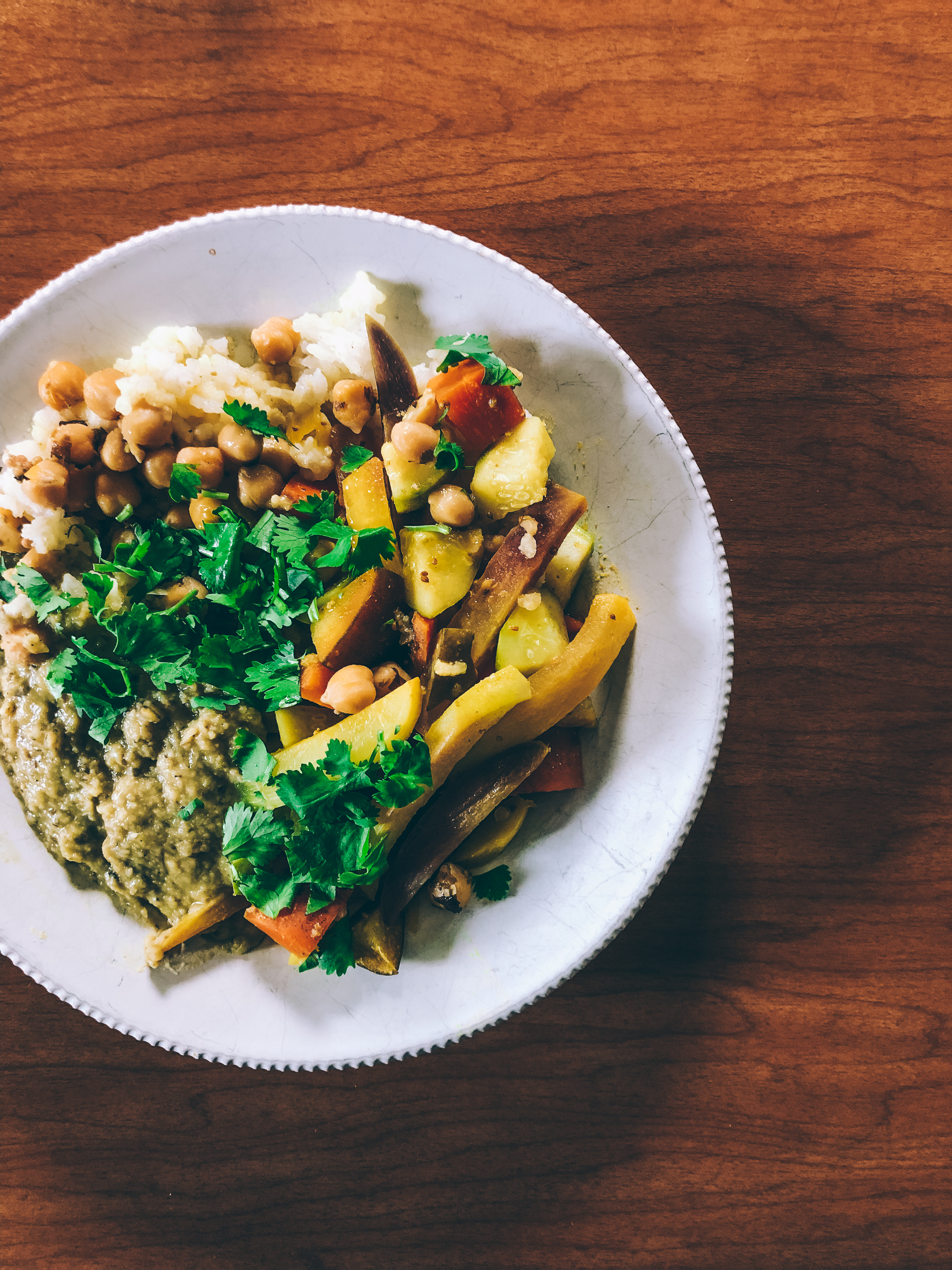
In that light, here is a balanced meal I’ve been making lately in the past few weeks. Initially, I simply called it a Sushi Bowl. But it didn’t really remind me of sushi in any way other than the light touches of seasoning and sticky rice. To make it more of a sushi bowl, add some seaweed if you’d like, and roll all the fillings up inside. I basically never do that. So we’ll just call it what it is.
The idea with this recipe–and making any balanced meal–is that there’s a protein source, a grain, a vegetable component that’s sweet, and a vegetable component that is more pungent, astringent (drying), or bitter. Like dark leafy greens! Or radish! And those components are all in proportion.
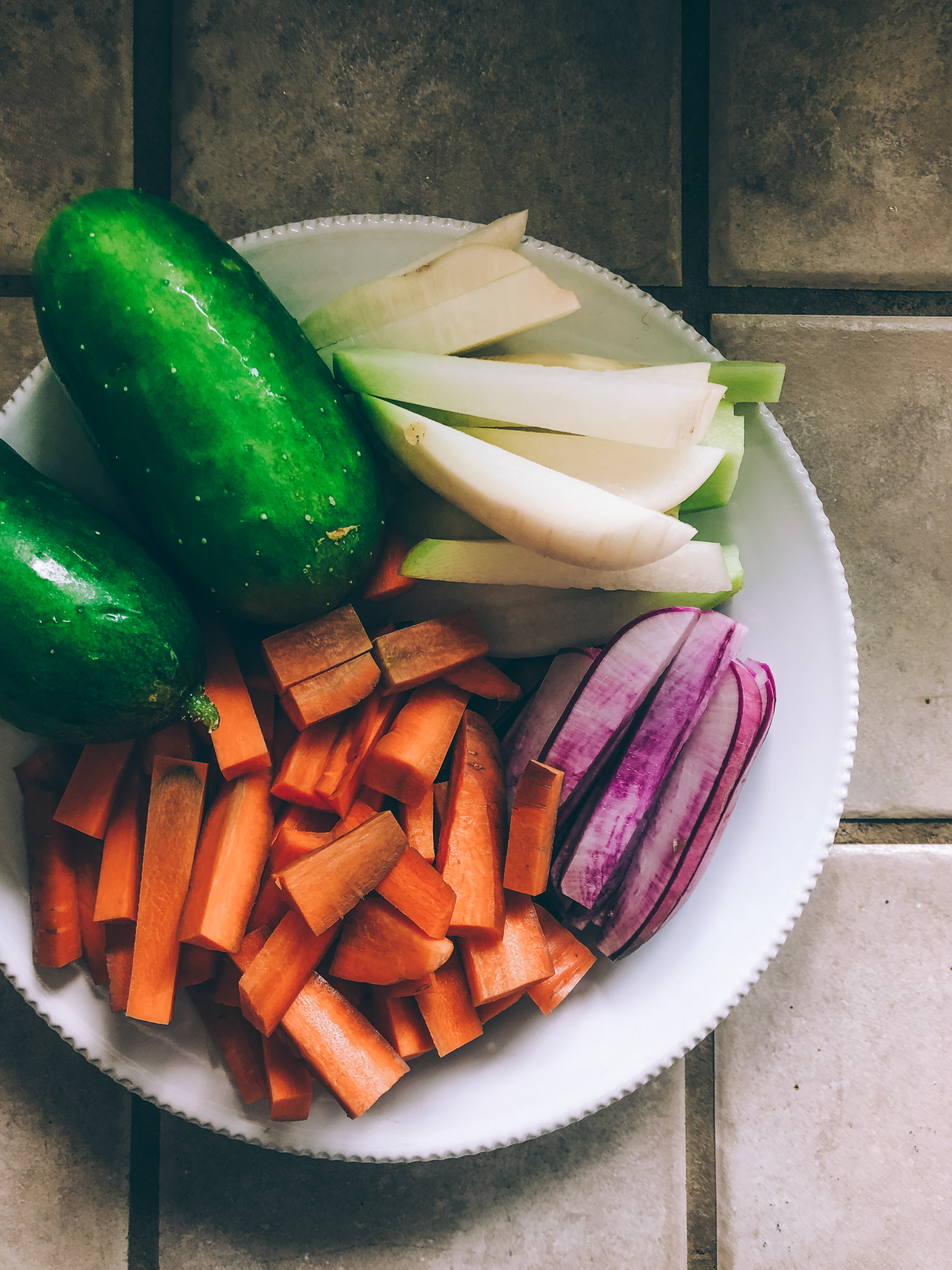
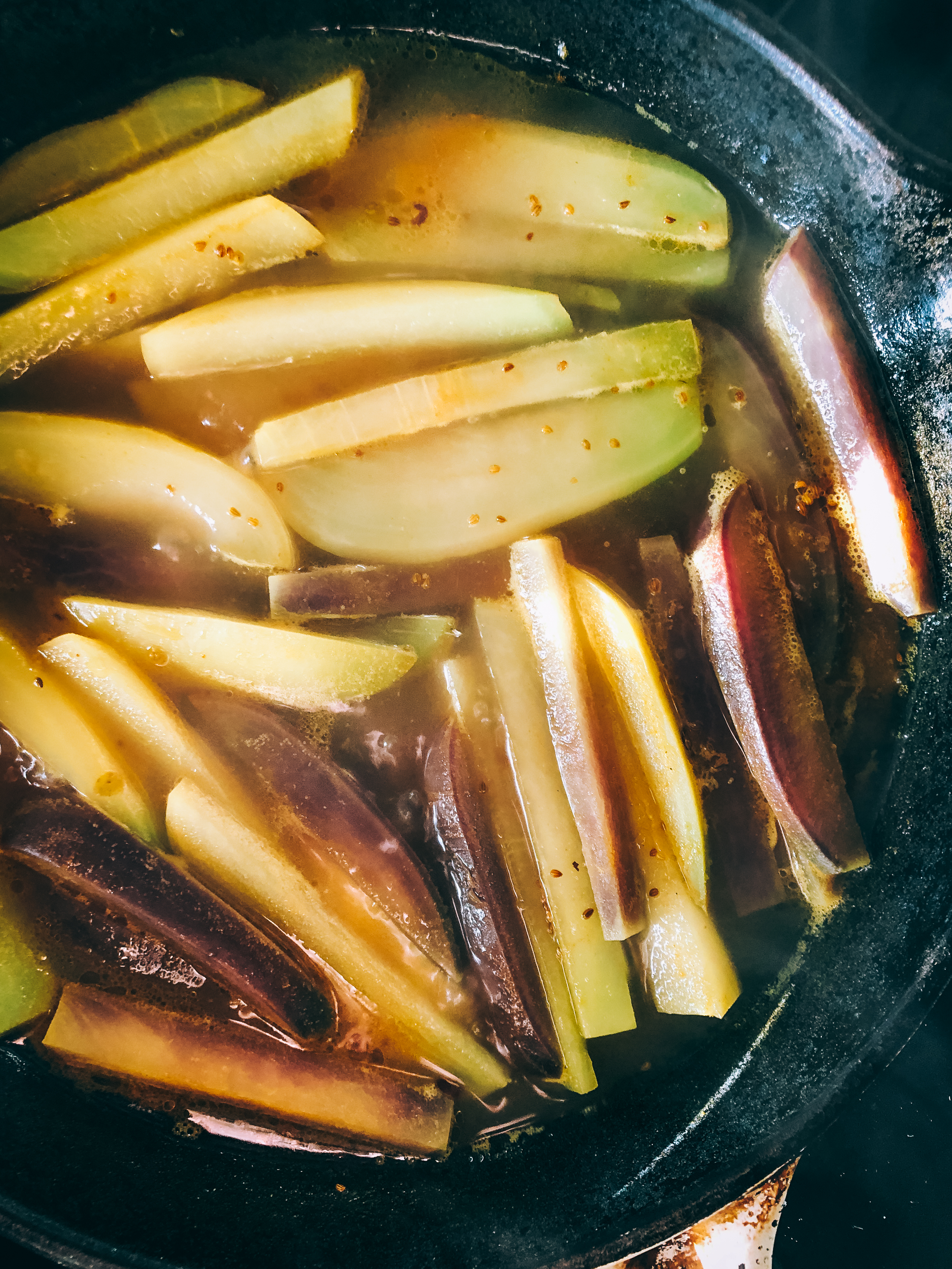
For this version, I’ve used a variety of daikon radishes called Baby Purple Daikon. We grew three successions this summer and something about the location and timing of the weather and planting has made for an incredibly robust and delicious third crop. Daikon can be found at nearly any specialty/natural foods grocer, especially in the fall and winter when they’re at their peak. We love them best cooked as they are here, simmered in a little oil, spices, turmeric, and water until they are soft all the way through.
If you make no other component of this meal, try the daikon and add it to your fall and winter meals!
And try to enjoy that messy middle.
Sushi Rice with Red Lentil Miso Soup, Carrots and Cucumbers, and Turmeric Daikon, serves 4
Lots of substitutions can be made depending on your ingredients to create a balancing sushi-inspired meal. For the soup, use either red lentils or split mung beans. Adjust your vegetables depending on the season, omitting the cucumbers in cool late fall and winter by adding a couple additional carrots. Additionally, the daikon can be interchanged with early summer asparagus, cabbage or broccoli. If you do not have access to many different oils in your cooking cabinet and/or do not eat ghee, choose untoasted sesame oil throughout the recipe. Using toasted sesame oil throughout will overpower the recipe.
Red Lentil Miso Soup 2 Tbs. untoasted sesame oil ½ tsp. sea salt 1 tsp. dried wakame seaweed or kombu 1 tsp. ground cumin 1 tsp. fenugreek seeds ¼ tsp. ground black pepper 1 cup red lentils 4 + cups water 1 Tbs. light miso
Sushi Rice 1 cup short grain sushi rice (or half white sushi rice, ½ short grain brown rice) ¼ tsp. mineral salt ½ tsp. ground coriander 2 cups water
Carrots and Cucumber 1 Tbs. ghee (or untoasted sesame oil) ⅛ tsp. mineral salt 1 tsp. minced/grated fresh ginger ½ tsp. ground fennel seeds 2 large carrots 2 large cucumbers, peeled and seeded water to ¼ the height of veg minced cilantro leaves
Daikon Radish: 1 Tbs. toasted sesame oil ⅛ tsp. mineral salt ½ tsp. turmeric ¼ tsp. ajwain seeds 1-2 daikon radish / 320 grams, peeled and chopped Water to ¼ the height of veg Squeeze of fresh lime sushi nori , optional
First begin with the red lentil soup. Warm the sesame oil in a medium saucepan. Add the salt, chopped seaweed, cumin, fenugreek, and black pepper and stir. Continue to heat just until the spices become fragrant. Then stir in the red lentils and water. Bring to a boil and then turn down and partially cover. Cook for 25-35 minutes, until soft. Then mash in the miso paste. A good way to do this is to take out a couple spoonfuls of the soup into a small dish and then mash the miso into it thoroughly. Then stir the mixture back into the soup and distribute throughout. Remove from the heat and set aside.
For the rice, add 2 cups water to a medium saucepan along with ¼ tsp. salt, coriander, and rice. Give it all a good stir and bring to a boil. Once it’s boiling, turn down to a simmer, cover and cook for 25 minutes. When the rice has finished, take the lid off and allow the steam to escape for a few minutes.
For the carrots: heat the ghee or sesame oil in a sauté pan and simmer the salt, ginger, and fennel until an aroma is present. Then stir in the carrots and stir to coat in the spices. Add water to about ¼ the height of the carrots and simmer until nearly tender, about 15 minutes. Then stir in the sliced cucumbers and stir to mix with the carrots and spices. When the carrots are fully tender and the cucumber is warm, turn off the heat.
For the daikon radish: warm the toasted sesame oil in a small sauté pan and simmer the salt and spices until the aroma is present. Stir in the daikon pieces. Add water to about ¼ height of the daikon. Cover and cook over medium-low until it is fully tender, about 10-15 minutes. Turn off the heat, squeeze in the lime, and let sit for about five minutes.
Serve the rice and vegetable components together, topped with minced fresh cilantro and pieces of nori seaweed, as desired, along with the red lentil miso soup on the side (see notes below).
Notes: Learn more about Ajwain seeds here. You can purchase them from Mountain Rose Herbs or Diaspora Spice Co. Or alternatively, use oregano, thyme, or fennel instead.
Also, the miso soup can truly be soupy and served in a bowl, or you can cook it longer (or add less water), and make it thick and more of a puree. This latter version would be great if you are actually going to use nori and roll the various components into a sushi roll.
I took my first formal nutrition class back in 2014. At the time, I already had a ton of nutrition knowledge, both from on-the-job training and from personal study, but I was beginning to realize I wanted to shift my career from public health into individual nutrition.
As a female and athlete (with digestive issues), I had always struggled with iron, despite eating a fairly high iron diet. At first, I also ate some red meat, and in my nutrition class, we had to complete a three-day food log and perform a nutritional analysis. I was easily meeting the recommended dietary allowance (RDA) for iron. When I asked my instructor about it, a locally practicing registered dietician, she told me, “If you’re consuming the RDA in iron, you should not have low iron status.”
That conversation turned out to be a good jumping off point for wanting to know a whole lot more about nutrition, and nutrient and lifestyle interactions.
If you’re an athlete (male or female), and you’ve ever wondered about what all the hype is on iron, or why you have low iron, or what exercise has to do with iron regulation and absorption, this article is for you.
The Role of Iron and How Iron Deficiency Impacts Athletic Performance
First let’s review what iron does in the body. When we speak about iron, we’re often speaking about it in the context of iron-deficiency anemia. There are many reasons for anemia, not just low iron stores, but iron-deficiency anemia is the most common. Anemia at its most literal means “without blood.” And that’s where we start to talk about iron (though again there are other nutrient depletions that can also cause anemia).
Iron is an essential part of oxygen transport and energy production at a cellular level, and is important for cognitive and immune function (1,2). Hence the reason you feel fatigued when your body is without iron. Note that low energy is also a feature of many nutrient deficiencies since many nutrients are involved in cellular energy production.
For endurance athletes, iron is dually important because it is used for multiple metabolic pathways, including 1) it is used for oxygen transport to the exercising muscle and 2) the production of ATP (energy) is highly reliant on iron.
Common symptoms of compromised iron status include fatigue, lethargy, negative mood, and poor performance during endurance exercise.
A Hormone Called Hepcidin and its Impact on Iron Absorption
Hepcidin is an inflammatory and iron-regulatory hormone that increases for 3 to 6 hours after exercise. This is likely a result of the exercise-induced inflammatory response, and associated increases in an inflammatory cytokine, interleukin-6 (IL-6). Increases in hepcidin result in a decrease in iron absorption as well as decreases in recycling iron from the gut.
So there’s likely a window of time following exercise where the body has altered iron metabolism.
Who is at risk for iron deficiency? The mechanisms that influence iron absorption in athletes
Traditionally, we think of compromised iron status as something that females suffer from. This is because women in their menstruating years generally lose iron through blood loss each month; whereas men should not be losing blood. However, active women are estimated to be twice as likely to present with Iron Deficiency Non-Anemia (stage 2 of iron deficiency) than sedentary, non-active women. Among athletes, we see much higher iron deficiency rates than in the general population with estimates of greater than 50% of female athletes and up to 30% of male athletes having compromised iron stores (1).
Both testosterone and estrogen can influence iron metabolism because they suppress hepcidin (more on this hormone above). When women are exercising at a high training load, this may result in an altered hormonal profile, with gonadotropin-releasing hormone (GnRH), which is a sex-hormone precursor, being suppressed. Consequently, luteinising hormone (LH), follicle stimulating hormone (FSH), and then estrogen will be suppressed. So lower estrogen leads to higher hepcidin (or at least less suppression of hepcidin), and thus more difficulty in absorbing iron.
Likewise, the same result can happen in males with a high training load, with gonadotropin-releasing hormone being suppressed, and consequently suppressed testosterone, and less suppression of hepcidin. In turn, chronically low testosterone in males may be linked to higher hepcidin levels, potentially impairing iron regulation.
Another variable is relative energy deficiency- what I call not eating enough for one’s activity level. Overall low energy availability (LEA) and energy intake may relate to either an overall deficit in dietary iron intake, and/or a dysfunction in iron absorption from the foods that are consumed.
Further, we’re also finding that the makeup of one’s microbiome also affects iron absorption, with iron-deficient individuals lacking lactobacilli species–a key species often cited with good health. Many other bacteria also require iron for growth (3).
Otherwise, vegetarian and vegan / plant-based diets can also impact iron absorption and stores since non-heme plant sources of iron are more difficult to absorb. A big one though, is the general state of your digestion. You have to have good digestive function to assimilate the nutrient.
Finally, some good news: the inflammatory response following exercise can be reduced after long exercise bouts of two hours or longer by consuming carbohydrates during exercise. Eating during exercise decreases the depletion of glycogen stores in the muscle (2), and ingesting carbohydrate during exercise has also been shown to improve the recovery response from long/high intensity efforts.
The Stages of Iron Deficiency:
Stage 1: Iron Deficiency: Iron stores in the bone marrow, liver, and spleen are depleted, indicated by ferritin values less than 35ug/L, Hemoglobin values > 115 g/L, (11.5) and transferrin saturation >16%
Stage 2: Iron-Deficient Non-Anemia: Red blood cell production decreases as the iron supply to the bone marrow is reduced, indicated by ferritin values less than 20ug/L, Hemoglobin >115 g/L (11.5), and transferrin saturation < 16%
Stage 3: Iron Deficiency Anemia: Hemoglobin production falls, resulting in anemia, indicated by ferritin values less than 12 ug/L, Hemoglobin <115 g/L, transferrin saturation less than 16%.
From current research, it appears that depleted iron stores (in stage 1) have minimal or no impact on physical performance, but this is likely particular to you as an individual–some athletes will notice the impact sooner.
What You Are Eating in Your Diet and Iron Status
The timing, amount and source of iron from your diet, in combination with the overall composition of the diet are all important factors to consider when looking at iron status. The most easily absorbed source of iron is heme iron (from meat).
The presence of Vitamin C can enhance non-heme iron absorption, but vitamin C is destroyed by heat (and light), so cooking a vitamin C-rich food into a dish will likely not help much. A couple squeezes of citrus juice at the end of cooking when the food is on your plate can be an effective method to get around this.
Otherwise, polyphenols, phytates, oxalates, calcium, zinc, copper, and vitamin E, which are all part of many nutritious, plant-rich diets and in particular are in whole grains, legumes, leafy greens, and tea and coffee, can decrease the amount of non-heme iron that is absorbed in a meal. Suddenly, your (or my) quinoa salad bowl with nuts, seeds, lentils, spinach and other dark leafy greens, and tahini or almond sauce is not a recipe for a hearty, iron-absorptive meal. Note, these are foods that are frequently on the high-in-iron list! And there are ways to prepare them to make their iron more absorbable, such as soaking, sprouting, fermenting, etc.
Want to Know More?
Within my nutrition practice, I specialize in endurance athletes and digestive imbalances. If you’ve struggled with chronically low iron, or recently have experienced it, I encourage you to reach out to me for more personalized support about how to boost iron around your exercise load.
References:
1). Sim, M., Garvican-Lewis, L.A., Cox, G.R., Govus, A., McKay, A.K.A.,…and Peeling, P. (2019). Iron considerations for the athlete: a narrative review. European Journal of Applied Physiology, 119: 1463-1478. https://doi.org/10.1007/s00421-019-04157-y.
2). McKay, A.K.A., Pyne, D.B., Burke, L.M. and Peeling, P. (2020). Iron Metabolism: Interactions with Energy and Carbohydrate Availability. Nutrients, 12: 3692. https://doi.org/10.3390/nu12123692.
3. Frame, L. (2021, October 7th). Mixed Diet and the Microbiome- Challenges with Complexity. Linus Pauling Institute Diet and Optimum Health Conference, Corvallis, OR, United States.









 GUTSy Performance Nutrition