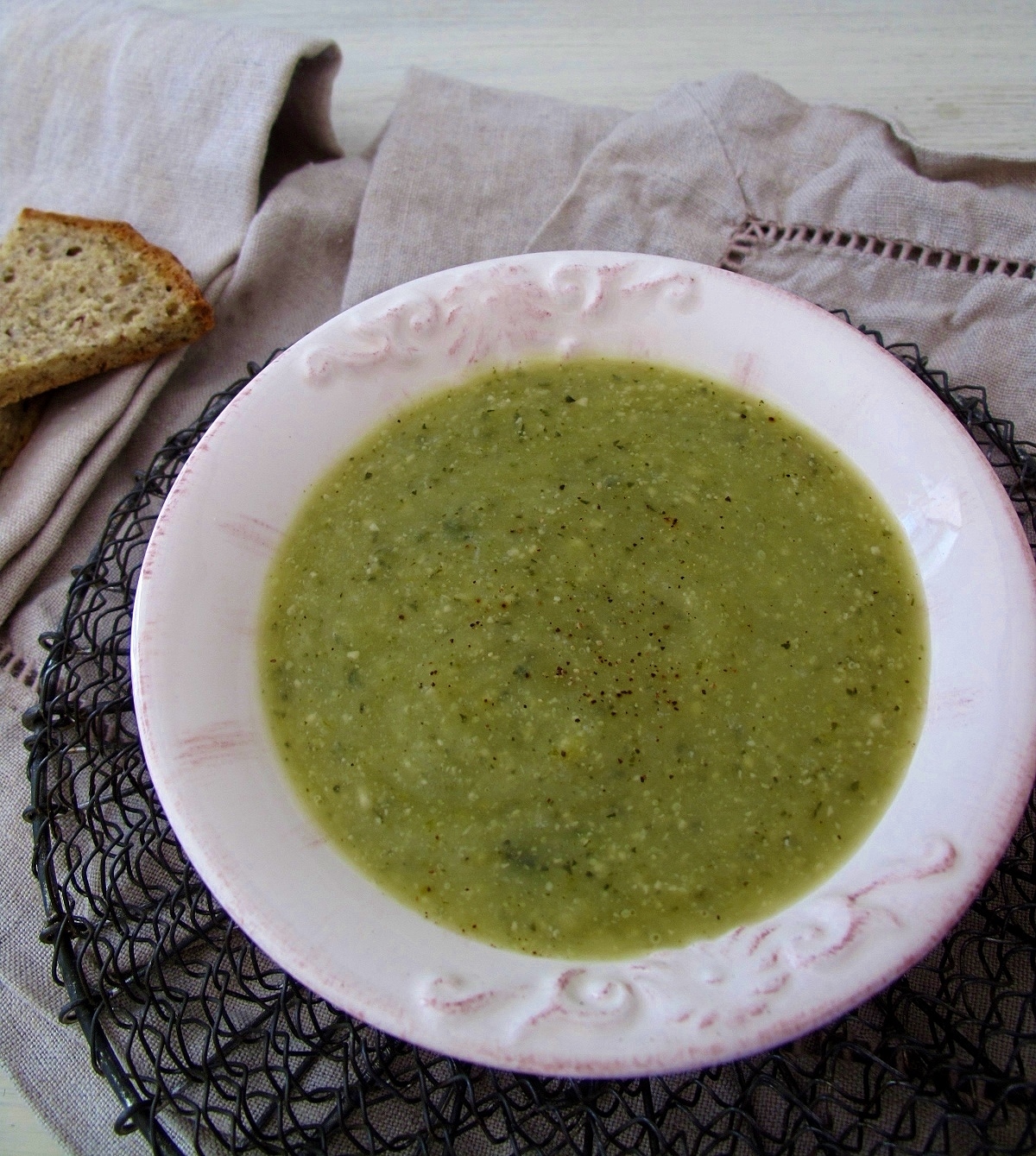
Roasted Zucchini + Tarragon Soup

IMG_8359
 

I have a loose policy that for every new purchase of clothing or books that comes in, at least the same number of clothes or books must go out, to be sold or donated. I generally purchase only books that will be used over and over again and I tend to check out those of interest at the library first, renewing them repeatedly until the library decides it is time to give another person a turn. Then– often–I won’t purchase the book, thinking someday instead, and I’ll get back in the hold queue and repeat the process until it is practically my personal copy anyway.


Somewhere in between being a teenager with aspirations of growing up to live in a giant house and drive a fancy vehicle, I veered sharply in the other direction and wound up aiming for minimalism instead. Clutter and “things” make me cranky. Whenever relatives call and ask if we would like an item they are getting rid of, I default to no. If the item is used only once a year or so, it is no longer worth the space and headache.
 
IMG_8350
 

Yet, I fail daily in keeping clutter to a minimum. I leave stacks of books in every room. Despite my library-tendencies, there are three fairly large and overflowing bookshelves in our small apartment and nearly all of them ‘belong’ to me. When I take a giant stack in to sell, I purchase two more with the profit instead of taking the change. There are clothes, too, in the closet which have not been worn in years, and in the kitchen, I aspire to make simple meals, letting the flavor and the freshness of our garden produce shine through. And then I go and make every meal (every meal folks!) overly time-consuming, with something like five or more steps and at least one appliance/gadget for each one. I almost went to culinary school. Twice. Given my affinity for recipes that should require several sous-chefs and an industrial dishwasher to boot, one would think I actually did. And if you can’t tell, I tend to overcomplicate just about every little thing I turn my focus onto.


I’ve been attempting (and struggling with) less steps and ingredients in meals lately, and mentally beating myself up about it. After listening to the most recent Pure Green Podcast episode, I realize I resonate so greatly with Jonathan MacKay’s style of cooking and food philosophy. Jonathan, the food editor at Pure Green Magazine, says,

I like food to be simple and complex at the same time. Complex because the textures and flavors are layered, but simple because they are practical to make and easy.

Listening to Jonathan share this and many more valuable tidbits made me realize I need to take a deep breath and stop trying so damn hard–in all aspects of life. It is okay–and often essential–for there to be many steps to make a great meal. It is okay for there to be a tension between leading a simple life and a complex one. It is okay to have more than I need, but infinitely less than I desire. It is just fine to embrace clutter and at the same time, strive to minimalize the accumulation of things.
 

IMG_8361

 
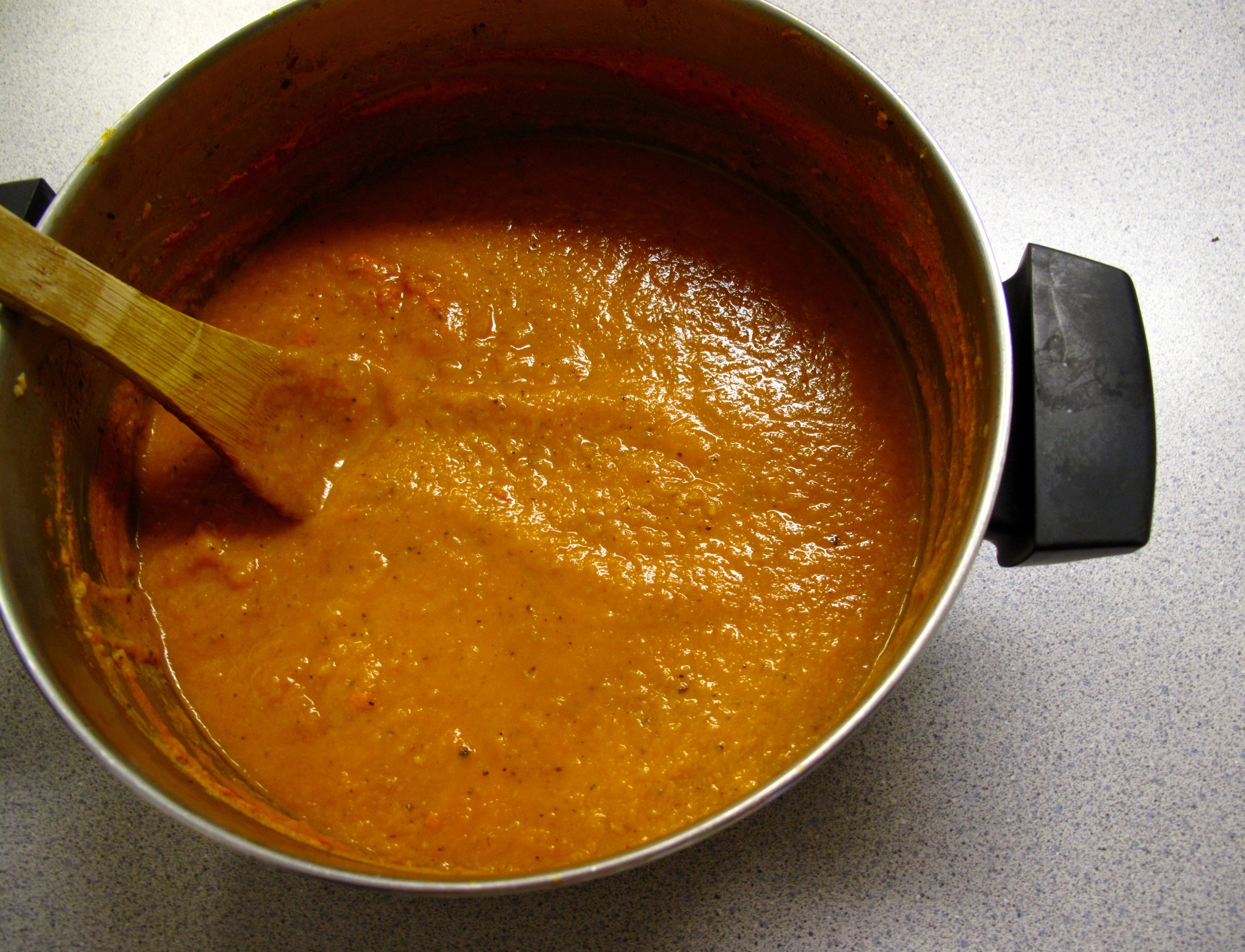
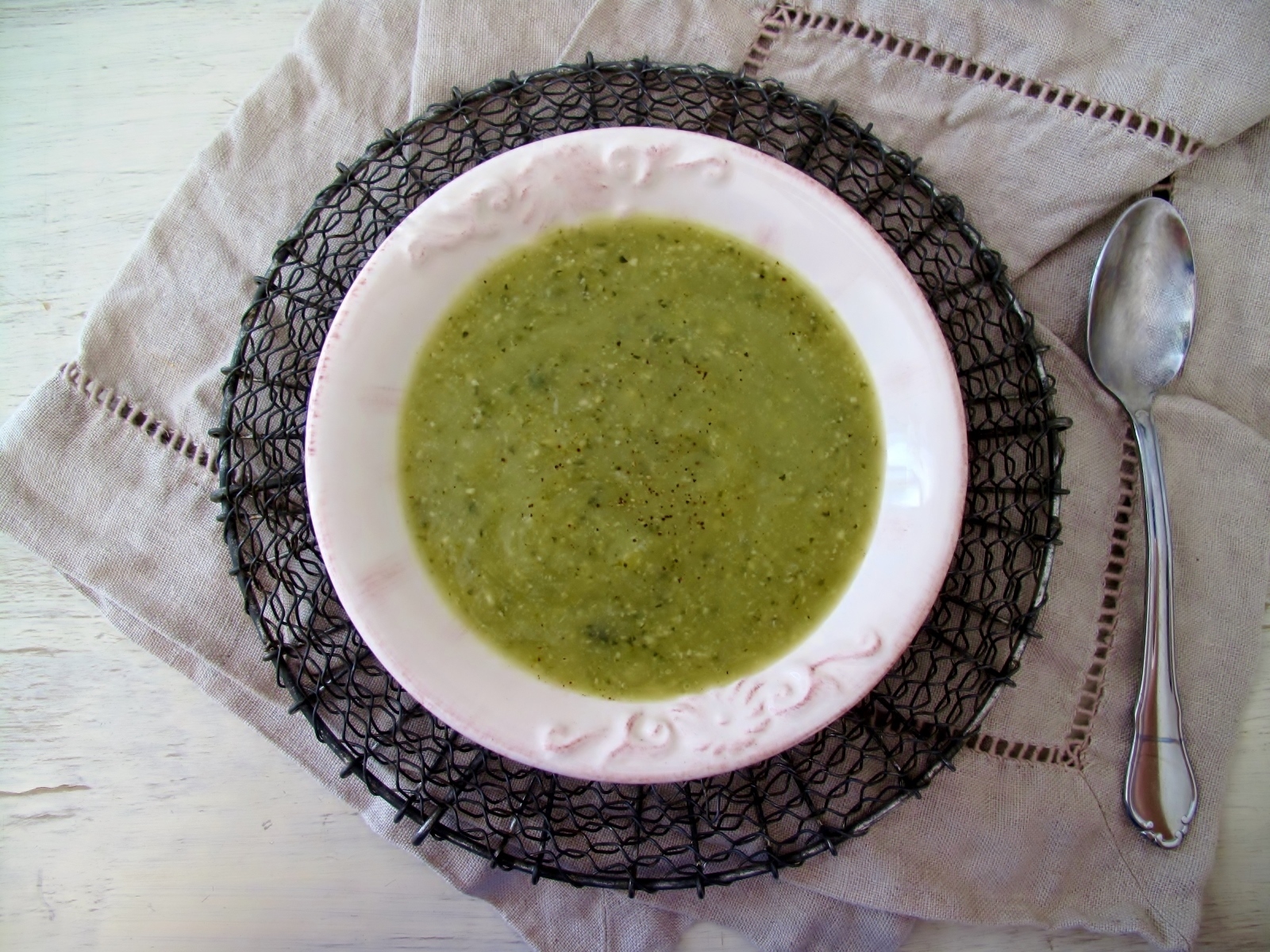
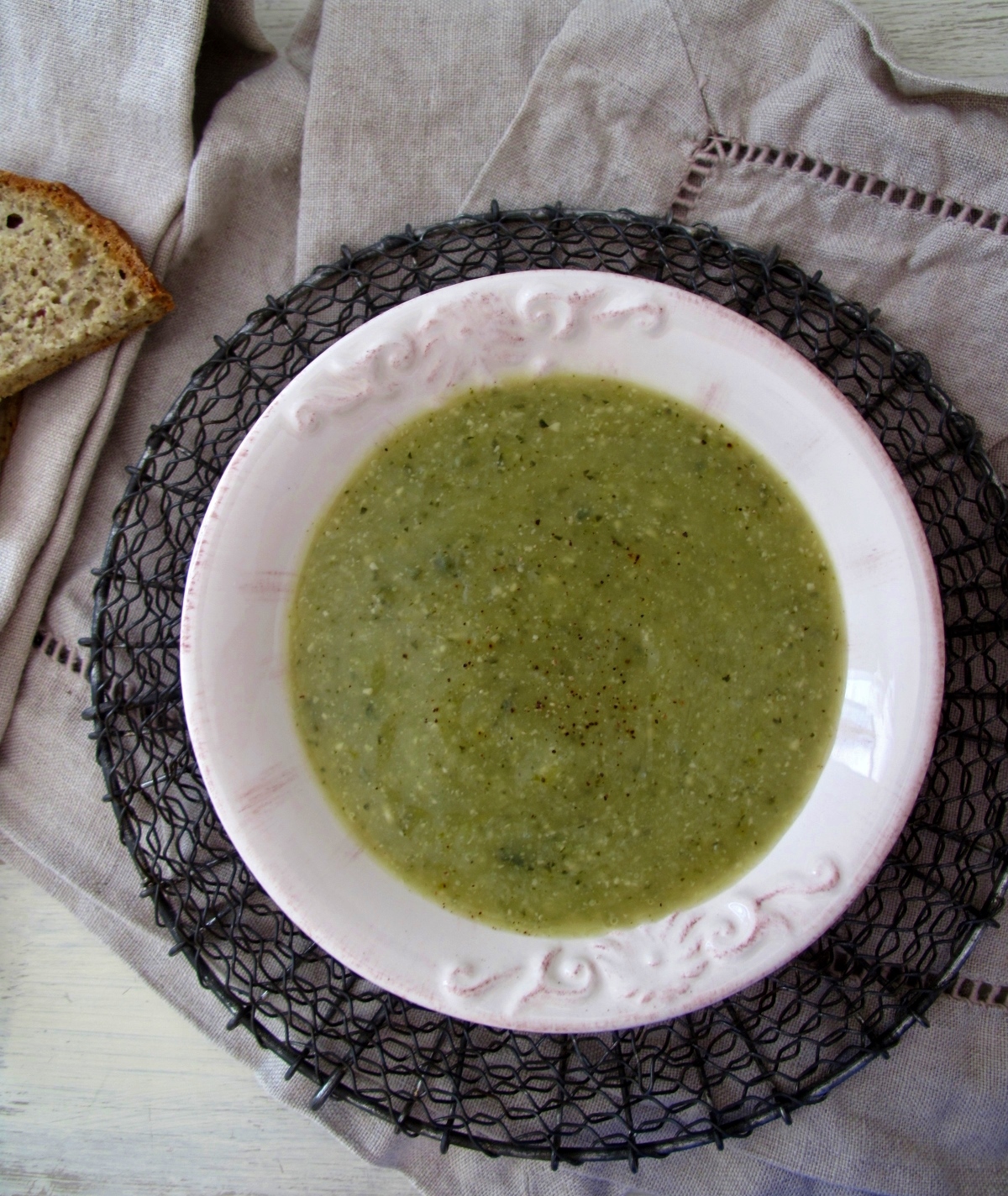
Roasted Zucchini + Tarragon Soup, serves 4-6
This zucchini soup is a double-remake of an old family favorite. I’ve revamped the original to make a simple gluten-free and vegan version that has a tangy cashew cream stirred into the end to round out the flavors and provide healthy fats. True to me, I added another step by roasting the zucchini rather than simply cooking it on the stovetop until soft. The result adds a nice complexity that is well worth it and makes for a soup which rivals my memories of the original. This soup is a great way to use up larger zucchini that have gotten out of hand, and fits right in with the August Recipe Redux theme of getting ‘back to the dinner table’ after the busy summer season. Growing up, we tended to slurp zucchini soup all summer long, but since this summer has been such a cooker, I’ve had little inclination for soup until now. I know we’ve at least a month left of true summer, but the winding down of longer days and the gear-up for school starting in a couple weeks makes it feel as if the season is basically over. We are nearly into my favorite time of year when all the late-summer harvests are colliding with the onslought of fall flavors, but until then, I’m holding onto these slower summer days and enjoying the bounty they bring. 
 
12 cups chopped zucchini
3 cups vegetable broth
3 cloves garlic, smashed
1 large onion, chopped
1 tsp. salt
1 Tbs. fresh tarragon, minced
1/2 tsp. freshly ground black pepper
1/2 cup raw cashews, soaked for at least 2 hours
1-3 Tbs. water
1 Tbs. fresh lemon juice
Salt and pepper to taste
 
  1. In a large baking dish, toss together the chopped zucchini, garlic, and onion. Roast until soft at 400 degrees F, about 30-40 minutes. Remove from oven and cool slightly.
  2. In a large pot on the stovetop, bring vegetable broth to a simmer. Slide roasted vegetables into the broth, add salt, tarragon, and pepper, and simmer for about 10-15 minutes, to allow the flavors to meld slightly.
  3. Transfer squash mixture to a blender and blend in batches until smooth. Return to the pot and bring back up to a low simmer.
  4. Drain the soaked cashews and puree with lemon juice and water in a food processor until completely smooth. Add enough water so the mixture is slightly thinner than paste consistency.
  5. Stir the cashew cream into the zucchini soup, taste, adjust seasonings as necessary, and enjoy!

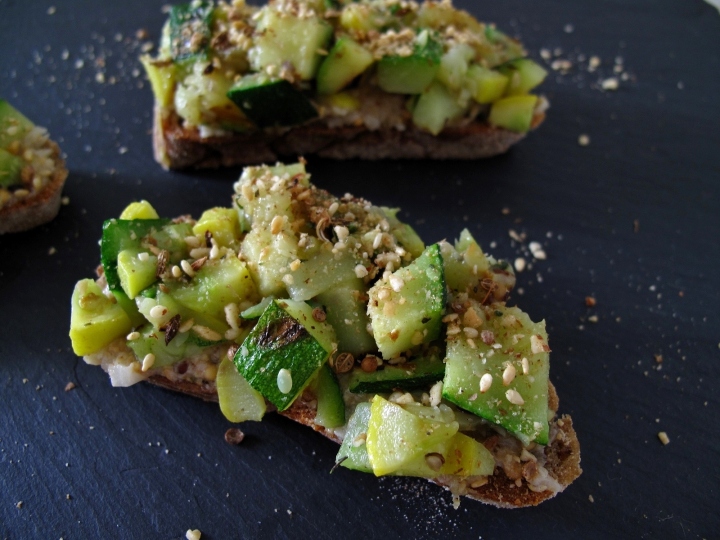
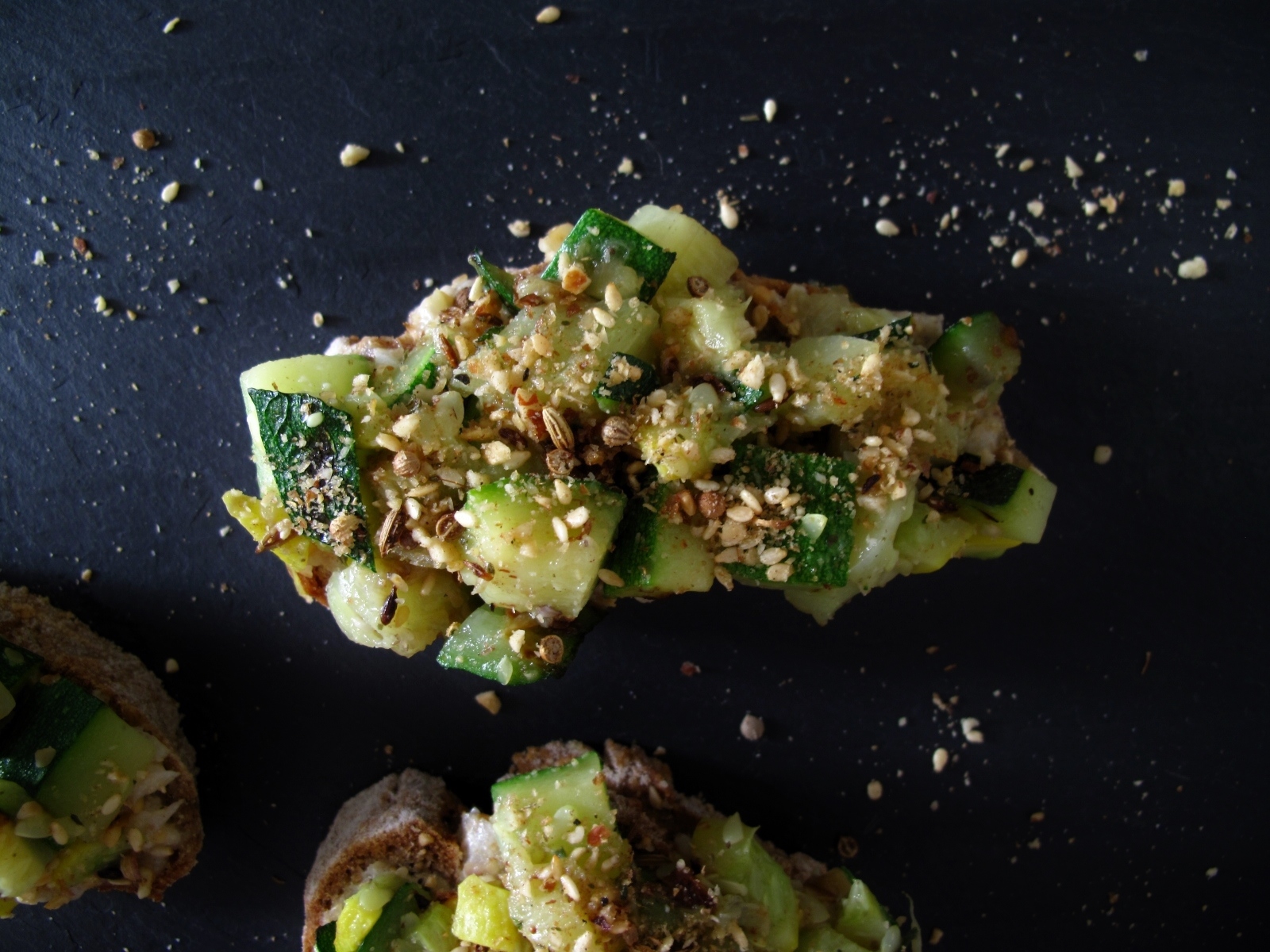
Zucchini Toasts, Cashew Ricotta + Dukkah

Zucchini Toasts, Cashew Ricotta + Dukkah

IMG_8218

Sometimes, I’m surprised to realize how long ago I began this blog. It began as a little project to collect thoughts and share recipes shortly after I graduated with my undergrad degree, an entire six years ago. Much has changed since then, both on the blog and in life, but one thing that has stayed the same is my fervent and on-going affinity for the freshest, most-local, seasonal produce. Though there is a slightly deeper reason for this than simply liking vegetables, I’ll save that topic for another day. Instead, today’s post is for The Recipe Redux and the theme is Fresh From the Garden Produce.

Thanks to my mother who has the greenest of thumb(s), I was privy to garden produce from the very beginning. What came along with the garden were numerous lists of chores, which inevitably were put off until the heat of the day and the fear of not having them done when my parents got home were at their peak. The worst chore was picking green beans and I never have particularly cared for them, possibly as a result of being haunted by memories of spending “hours” picking in the hot sun. Realistically, I’m betting my attention span was less than 30 minutes.

IMG_8180

The best of chores was devouring the hourds of zucchini that came from our garden. We often ate them in two ways; one in a variation of this cream of zucchini soup (which I soon shall be giving a facelift for less dairy and gluten), and two, drenched in flour and egg and fried to crispy golden french-toast-like rounds. Every person in the family loved these meals, and to my recollection we all loved zucchini in general. Since my parents had the joy of raising three hot-headed, disagreeing, and violent-toward-each-other, orange-haired children, it’s a wonder that we all could agree on anything!

IMG_8205

To this day, I absolutely love zucchini. It is the simplest of plants to grow and goes every which way into summer meals. Lately, I’ve been grilling it up on the stovetop grill with a coating of dukkah, spooning it atop toasts spread with a cashew ricotta, and watching it disappear faster than my plants will produce. (Crazily enough, this is possible.)

IMG_8210

Zucchini Toasts, Cashew Ricotta + Dukkah, serves 2

If you go ahead and pick up store-bought staples like bread and dairy-based ricotta, and make or buy the dukkah ahead of time, these toasts make for a very quick and simple meal. If you like to do everything or prefer a vegan ricotta, I’ve included recipes for all the fixings below. Dukkah is one of those super-easy-to-make seedy, nutty, spice mixtures that packs a serious punch in the flavor department and amps up the flavor profile of simple meals. It is Egyptian in origin and a suitable (although certainly different) substitute in this recipe could be za’atar, if you have that on hand instead. This book is my favorite source for truly great gluten-free bread. I made the 100% Whole-Grain Batons for these toasts and their slightly heftier density and crust worked out perfectly.

Cashew Ricotta, see below

2 Tbs. Dukkah, recipe below

1-2 Tbs. whole-grain or dijon mustard

1/4 tsp. salt

2 medium zucchini, chopped into smallish squares

1-2 tsp. olive or coconut oil

4 slices whole-grain bread (a denser, baguette type works particularly great)

additonal dukkah to coat zucchini and serve

  • Mix the 2 Tbs. dukkah, mustard, and salt into the ricotta. Set aside.
  • Toss the chopped zucchini with a spoonful or two of additional dukkah and oil. Grill on a stovetop grill until slightly soft and charred edges begin to form, about 3-5 minutes. Remove from grill.
  • While zucchini is grilling, lightly toast the bread slices and then slather a bit of the ricotta mixture atop each one.
  • Then, pile zucchini atop the toast and ricotta, sprinkle a dash of additional dukkah on top, and serve.

Cashew Ricotta

1 cup cashew milk (or any other non-dairy milk)

1/4-1/2 tsp. lemon juice

1/2 tsp. extra virgin olive oil

pinch of salt

3/4 tsp. agar powder

  • In a medium saucepan, stir together all ingredients.
  • Very slowly, bring the mixture to a boil, stirring occasionally.
  • Reduce heat to low and allow to simmer for five minutes or until agar is dissolved, stirring occasionally.
  • Remove from heat and cool for about 10 minutes. Then, transfer to a sealed container and place in fridge until set, a few hours.
  • After the mixture is set, transfer it to a food processor and pulse until you get the desired consistency.

Dukkah, adapted only slightly from Vegetable Literacy

1/2 cup hazelnuts

1/4 cup sesame seeds

1/4 cup coriander seeds

2 Tbs. cumin seeds

1 tsp. fennel seeds

several pinches each of dried thyme, marjoram, and oregano

sea salt and freshly ground black pepper

  • In a saute pan, toast the hazelnuts and seeds until fragrant and lightly colored, about five to eight minutes. Then pour onto a plate to cool.
  • Once sufficiently cooled, transfer the nuts and seeds to a food processor. Add the herbs, 1/4 tsp. salt to start, and pulse until the mixture is roughly ground but not yet paste-like. The goal is a fine but still crunchy textured mixture. Taste and add additional salt, if necessary, as well as a few pinches of black pepper.

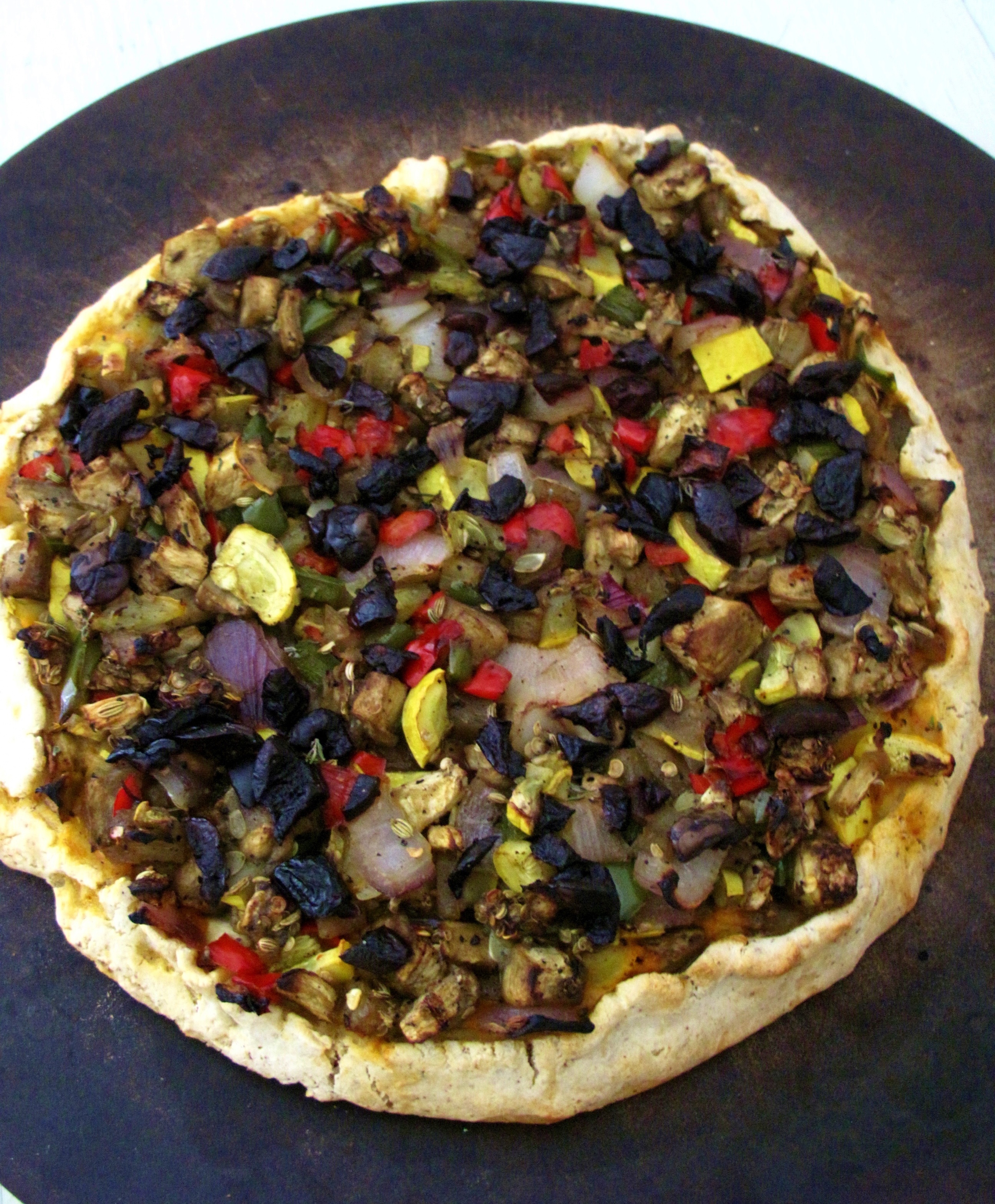
Roasted Vegetable Pizza with Golden Tomato Sauce

IMG_6711


There are few people I respect more than those who live each day in truth with their whole selves. I’m in awe of these folks and admire how they stubbornly live in their brassy, blunt, comfortably imperfect beings.

I am not of those personalities. I tend to be quiet, small, and gauge how much I share with how well it will be accepted. If feathers will be ruffled or judgement passed, I opt to keep my mouth shut. I’m one that avoids controversy and negative attention. I like to be perceived as put together.


IMG_6687


These last few months I’ve been working on letting go a little: Being me without so much filter. Wearing less camoflouge. Going out in public in whatever I happen to have on. Saying things I mean. Sharing parts of me that I previously shoved away into dark little corners.


IMG_6663


In my food-world, I liken this process to embracing the ugly vegetables.


IMG_6669

 
William is working on an awesome organic vegetable farm this summer and he brings home bags of crooked carrots, too-ripe peppers, and weedy leaves.
 
If truth be known, I have a fondness for the most interesting produce cast-aways. A perfectly straight carrot? An apple that has more beauty than flavor? A purely symmetrical tomato? Perfection in the botanical world is boring, sterile, and dare-I-say-it, industrial. Blemishes have their own unique beauty and the taste, what’s inside that really matters, is rarely sacrificed.
 

If it’s so exciting to embrace ugly produce, why is it like hurdling mountains to get along with personal imperfection?

Tough experiences leave scars which make the good days shine all the more brightly. They leave a life rich with experience. And wisdom.

Exposure to another viewpoint and belief encourages acceptance and understanding.

Having a different opinion is some sort of individualistic awesome.

Critisism can be a catalyst for growth–Or expelling bad juju.

Casting aside worry of another’s judgement is liberating.

Self-acceptance is the best form of freedom.


IMG_6670


Back in the kitchen, I’m working with golden heirloom tomatoes of an unknown variety–they were too ripe to sell. I’ve seedy, scarred eggplants, and yellow summer squash from my garden. My squash plant is dying so these are likely the last ones for the summer. I’ve Jimmy Nardello peppers that didn’t come up to size and missshapen bell peppers, still green, which came off with a broken stem from overenthusiastic weeding. There are gorgeous red onions too. I’ve no idea why but they didn’t pass the farm’s to-market test.


IMG_6672


As for me, I’m working on being real,worrying less about measuring up or missing out. I’m working on embracing the ugly vegetables in my personality, the crooked roots and misshapenness. I’m working on letting the unique beauty that is the real me overpower the pursuit of being perceived as polished as a tasteless red apple.

 
 IMG_6721


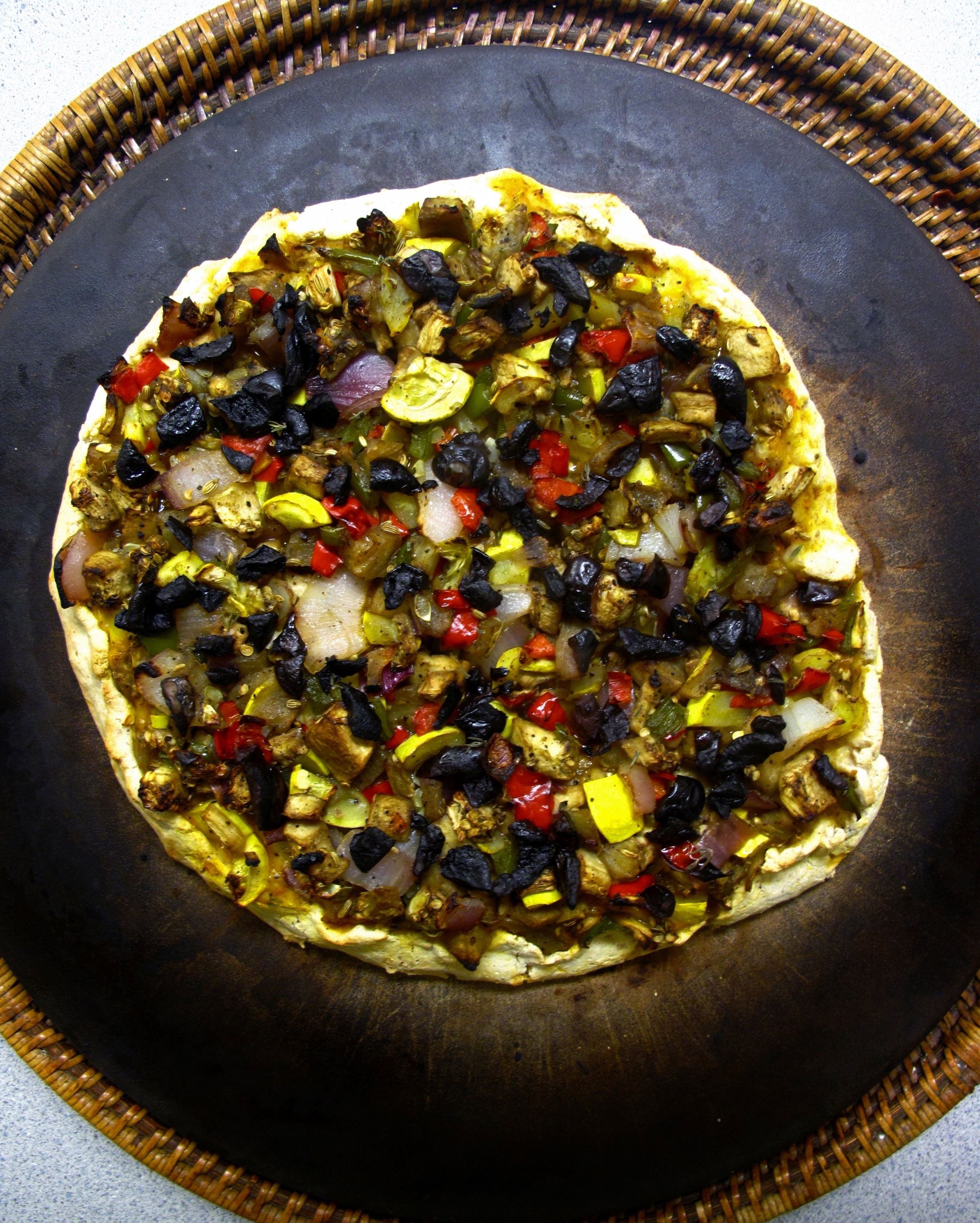
We are all glorious in our imperfection. Let’s celebrate a little more of that today. And eat pizza loaded with a bunch of ugly vegetable cast-aways.


IMG_6691
 
 
Roasted Vegetable and Golden Tomato Pizza, makes 2, serves 4-6
Roasted Vegetables:
1 medium eggplant, chopped
1-2 medium yellow summer squash, chopped
1 red onion, chopped
1-2 sweet red peppers, chopped
1 green bell pepper, chopped
8-10 kalamata olives, diced
extra-virgin olive oil
1-2 tsp. fennel seed
1 tsp. freshly ground black pepper
1/2 tsp. salt
fresh thyme, optional
 
– Preheat the oven to 425 degrees F. In a large baking pan lined with parchment paper, layer in the chopped eggplant, squash, onion, and peppers.
– Drizzle the mixture with oil, and toss in the fennel seed, freshly ground black pepper, and salt.
– Give it all a good stir and then roast for about 20-25 minutes.
– When the vegetables are sizzling and soft, remove from the oven and let cool slightly.
 
Golden Tomato Sauce:
1 Tbs. extra virgin olive oil
3 garlic cloves, crushed
2 lbs. yellow or golden tomatoes, peeled and roughly chopped
1 tsp. Italian seasoning
1 tsp. salt
1 tsp. freshly ground black pepper
 
– Heat the oil in a medium saucepan over medium-high heat. When the oil sizzles, add the garlic and sauté until just golden.  
– Add the tomatoes and spices and turn to low. Simmer for 45-60 minutes.  
– Let the tomatoes cool for a few minutes and then puree in a blender for a smooth, pizza-sauce consistency. If the sauce is still quite thin, put it back on the stove and simmer a bit longer to thicken up.
 
Crust:
The ingredients below make enough for two 10-12″ crusts. Each pizza usually serves two to three. You can refrigerate the dough for the second crust up to two days. Due to the differences in the flours, I like to weigh them with a kitchen scale to get an accurate ratio of 70 percent whole grains and 30 percent starches. I’ve then put those weights into cups so it will be easier to measure without a scale, but if in doubt, I’d use a “short measurement,” rather than an overflowing cup.
 
1 1/2 Tbs. flax seed, ground
3 Tbs. hot water
40 grams (a short 1/2 cup) garbanzo & fava bean flour
80 grams (3/4 cup) brown rice flour
80 grams (3/4 cup) sorghum flour
80 grams (3/4 cup) millet flour
40 grams (1/4 cup + 2 Tbs. tapioca starch
40 grams (1/4 cup + 2 Tbs. arrowroot starch
40 grams (1/4 cup) potato starch
2 tsp. salt
2 1/4 tsp. active dry yeast
~2 Tbs. olive oil, separated
1 tsp. sugar
1 1/3 cup warm water, divided
cornmeal
 
– Combine the flax seeds and 3 tablespoons of very hot water in a small bowl until a slurry is formed; set aside.
– Combine the flours and salt in a large mixing bowl. In a liquid measuring cup, whisk together the yeast, 1 Tbs. olive oil, sugar and 1/2 cup warm water. Allow it to rest for 3 minutes or so until the yeast is activated.
– Add the yeast mixture to the flour mixture, and stir it all up. Then add the flax seed slurry to the dough and a portion of the remaining water; mix until the dough comes together in a ball. If it is too dry, add enough water to for a tender, pliable dough.
– Cover the dough in the mixing bowl and set it aside to rest for 1 hour.
 
Putting it all together:
– Preheat the oven to 450 degrees F. Separate the dough into two equal portions. For each pizza, dust your pizza stone or baking sheet with a light sprinkling of cornmeal. Roll one of the dough portions out to desired thickness directly on a pizza stone or baking sheet. 
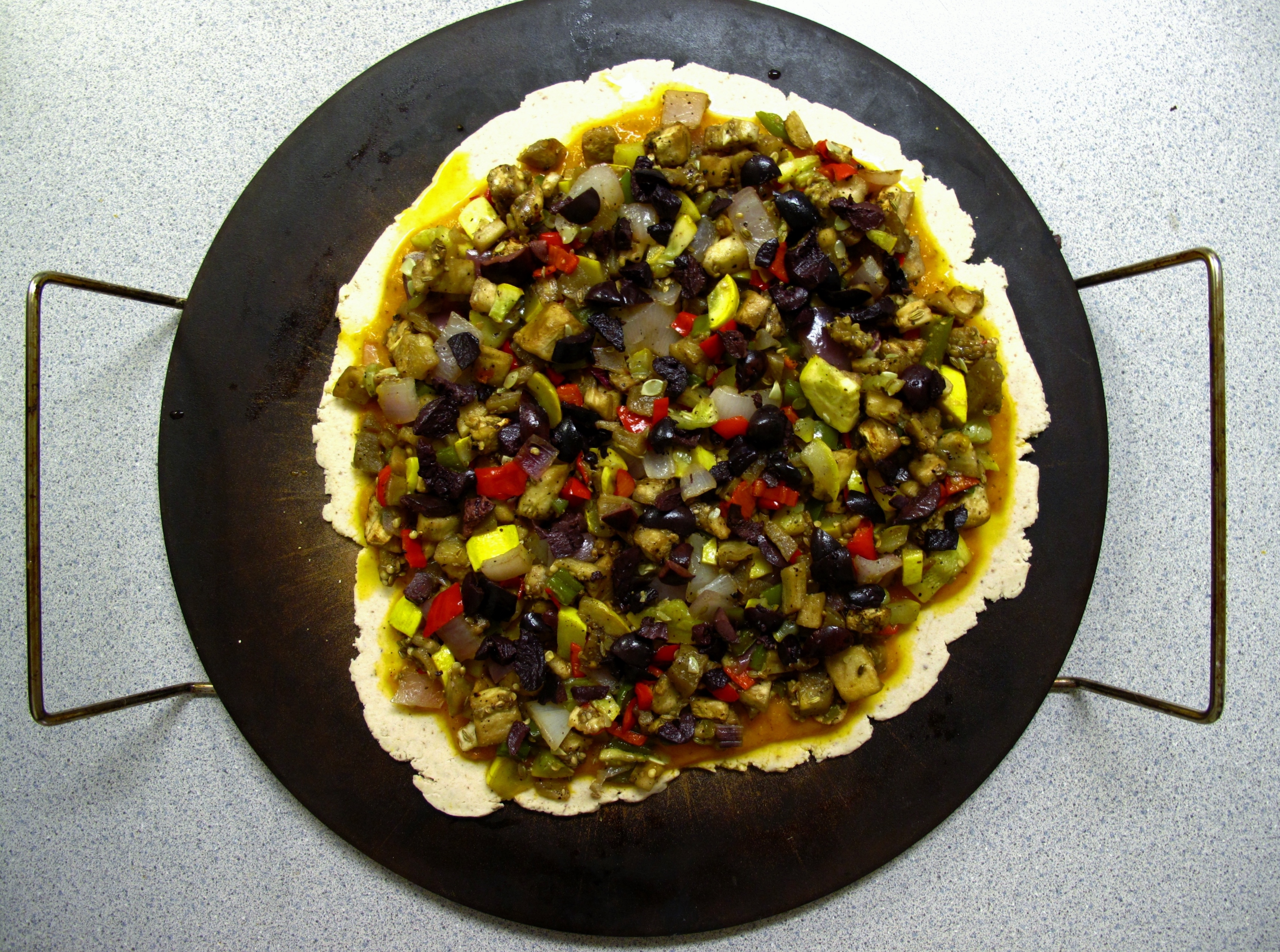
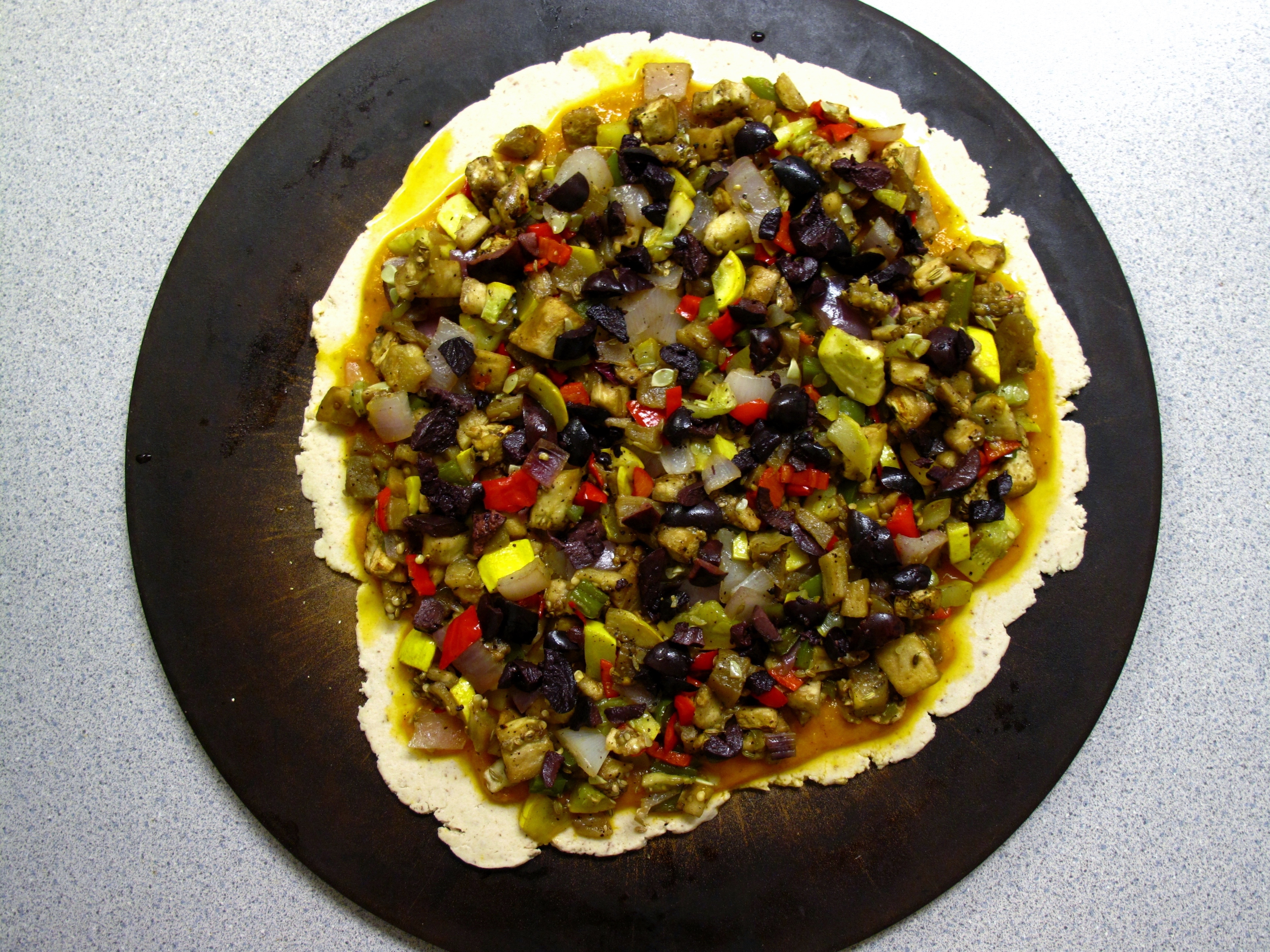
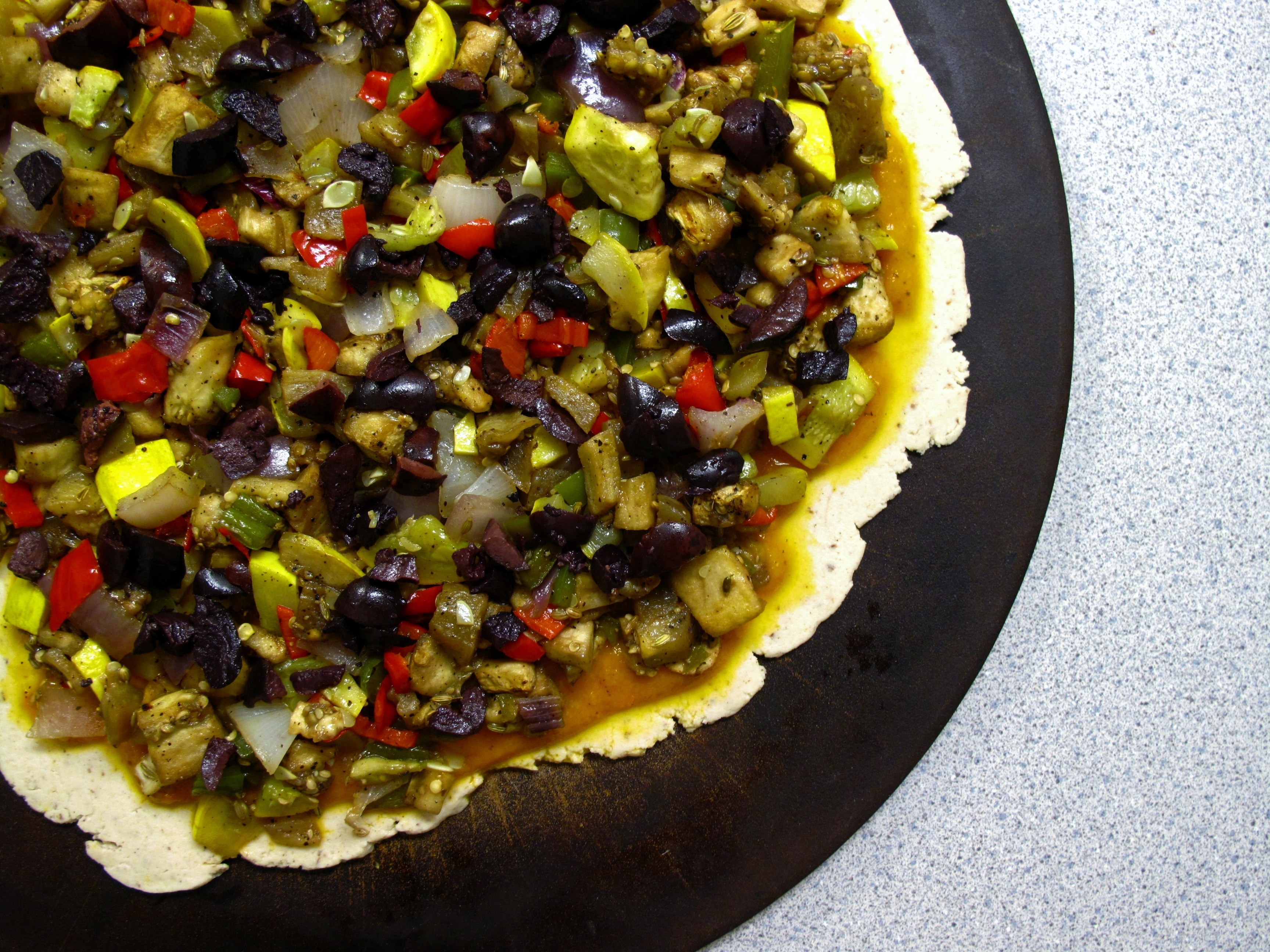
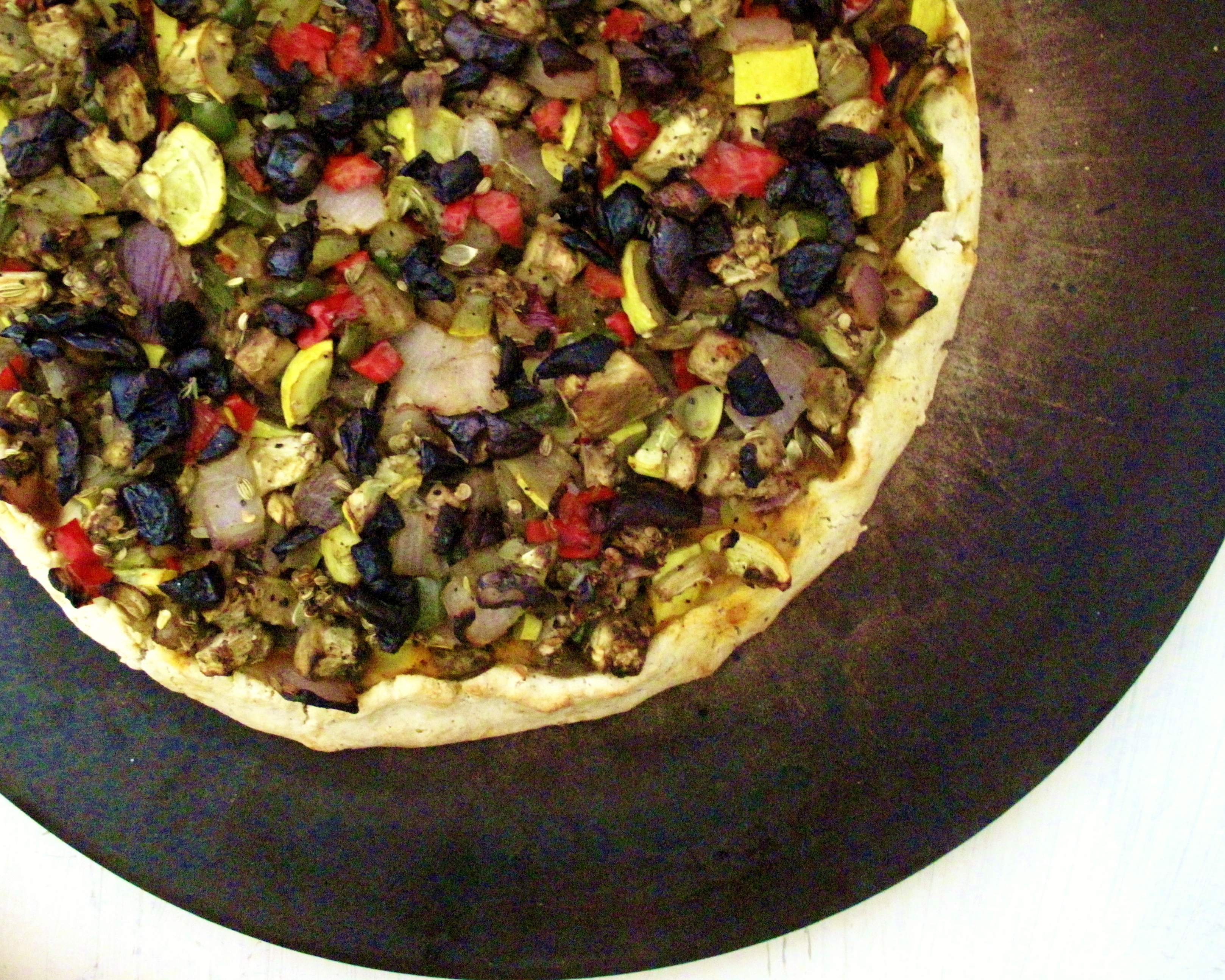
– Spoon a hefty couple of ladlefuls of the golden tomato sauce over the dough and smooth it out. Then, layer on the roasted vegetables followed by the kalamata olives. If desired, crumble a sprig of fresh thyme over the top. Fold the crust edges in when done, and with your fingers, lightly dab the edges with the last tablespoon of olive oil. Pop it in the oven and bake for about 16 minutes.