Moroccan Butternut Squash + Wild Rice with Garbanzos

Moroccan Butternut Squash + Wild Rice with Garbanzos

img_1134

so this is the sound of you
here and now whether or not
anyone hears it this is
where we have come with our age
our knowledge such as it is
and our hopes such as they are
invisible before us
untouched and still possible

– from To the New Year by W.S. Merwin
img_1127

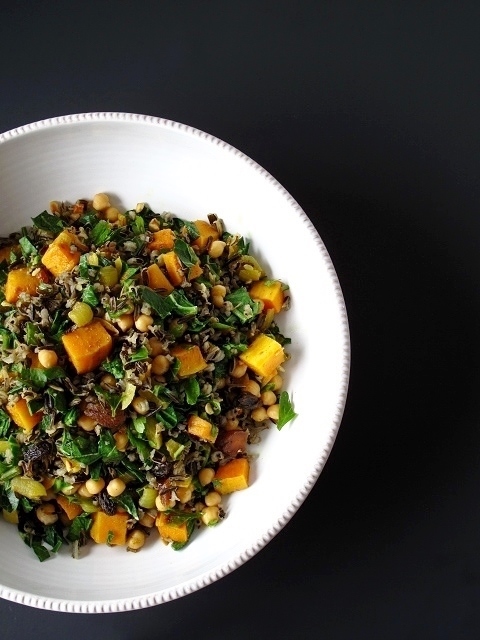
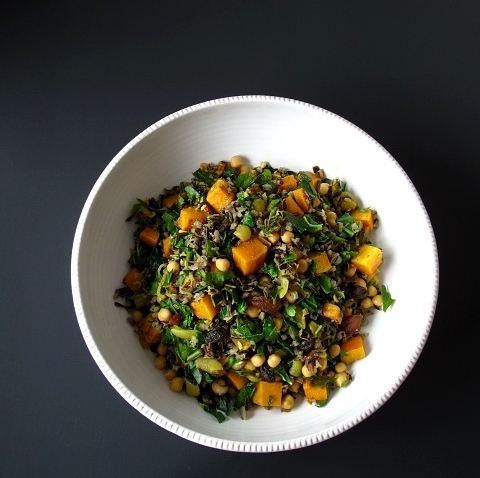
Moroccan Butternut Squash + Wild Rice with Garbanzos, serves 4-6
Near the tail end of winter last year, I made a rendition of this off the Kinfolk website. I declared it the best thing I had eaten all winter and couldn’t wait until squash season came back. This year, I realized the recipe had disappeared and so I set about to recreating it. Unlike the original, I added cooked garbanzo beans and a good couple handfuls of winter greens. It is now more of a one-dish main grain salad than the original, which served as a side. It’s a good one for a cold winter evening and makes an excellent leftover lunch. Enjoy!

1 cup uncooked wild rice, soaked for at least 8 hours
2 1/2 cups water
1 1/2- 2 lbs. butternut squash, peeled, deseeded and diced into 1/2-inch cubes
1 large onion, diced
1/4 cup raisins
1/4 cup chopped dried apricots
1/4 cup toasted hazelnuts, chopped
2/3 cup parsley, minced
2 cups cooked garbanzo beans
4 cups chopped kale or other winter greens
1 tsp. sea salt, or to taste, divided

Dressing:
2 Tbs. coconut or good quality canola oil
2 Tbs. apple cider vinegar
1 tsp. Dijon mustard
1/4 tsp. black pepper
3/4 tsp. cumin
3/4 tsp. cinnamon
1/2 tsp. turmeric
1/4 tsp. cardamom
1/4 tsp. coriander
1/16 tsp. clove
1/8 tsp. nutmeg
splash of water, as needed

Instructions

  • Heat oven to 400 degrees F.
  • Cook rice by draining it and then combining with 2 1/2 cups of water in a medium saucepan and bringing to a boil. Turn down to a simmer and cook until the rice is light and fluffy and the water is completely absorbed, 50-60 minutes.
  • Mix the dressing ingredients in a small dish or jar.
  • Place squash cubes  and diced onion in a single layer on a baking sheet lined with parchment paper. Drizzle 2/3-3/4 of the dressing over the vegetables, and sprinkle with salt. Mix it well with your hands or wooden spoon until the vegetables are evenly coated. Place them in the oven and bake for 35-45 minutes until the squash begins to brown on the edges and completely soft.
  • Meanwhile, in a large bowl, toss together the garbanzos, parsley, greens, dried fruit, and hazelnuts. When the rice and vegetables are done cooking, allow them both to cool slightly and then add to the bowl ingredients. Stir in the remaining dressing and season with additional salt and pepper to taste. Serve warm or at room temperature.

Pumpkin Pie + Holiday Thoughts

Pumpkin Pie + Holiday Thoughts

img_0915


The Recipe Redux theme for November is healthy holiday baking. If you’re new to this space, The Recipe Redux is a monthly recipe challenge, founded by three registered dietitians, which I participate in. The challenges are always focused on taking delicious dishes, keeping them delicious, but making them better for us.


image


In light of this season, I’ve been doing a bit of reflection on where I stand in the interchange between decadent holiday foods and how I eat from day to day. Should I splurge and not worry about some of those really not healthy ingredients because it is the holidays, or should I try to capture the essence of health in enjoyable foods because it is the holidays –and we all tend to overeat and regret it later?

Additionally, as a result of all that I’ve been learning of health and nutrition and where I stand right now in aiming to maintain a healthy relationship with food, I’ve been returning to passages from Annemarie Colbin’s Food and Healing: 

With all the recent emphasis on “healthy” eating, it is important to remember one thing: Food does not make us healthy. The right kind of food will allow us to reach our maximum health potential, to become as healthy as our genes and constitution may permit. It will support what we are at our best. It will not interfere with our development, but it will also not make us more than what we can be. In short, good food is effective because it is passive. The wrong kind of food will act like a block or a dam, deflecting our growth and thwarting our unfolding. In other words, it will actively create trouble, and make us unhealthy…Good food will nourish us without causing stress, and thus allow our immune system to spend its energy in healing. Thus many different diets will have healing effects. Often it is not just what we eat, but also what we don’t eat that helps us become healthy again. 

So my theory right now? Stressing about eating the right kinds of food is not healthful. But neither is eating foods that overtax and/or stress our bodies, foods like highly refined sugars, refined flours/grains, and rancid oils, to name a few. Sure, they’re fine in small quantities infrequently. For the most part however, they’re best avoided, even (and maybe especially) during the holidays. Aren’t we all a little too stressed in this season? Don’t we deserve to feed ourselves and our loved ones foods that have healing qualities?


img_0923

img_0886


My advice is to do what you can with what you have. But maybe as you venture into this holiday season, do so a little more mindfully, thinking to yourself, How do I want my body to feel after eating? What foods will nourish me best? 


img_0875


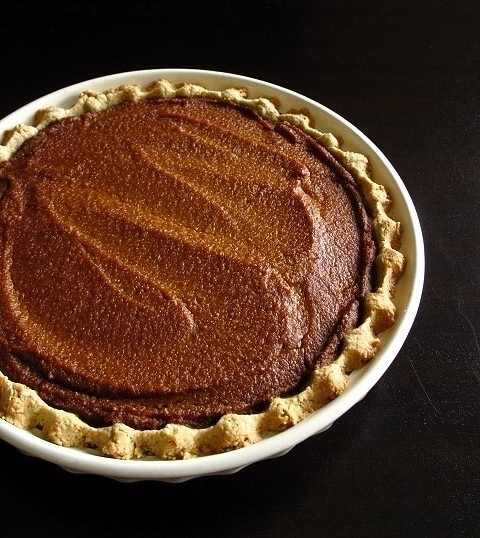
Pumpkin Pie, makes one 9-inch pie
Truthfully, I never liked pumpkin pie until I stopped eating dairy and enjoyed a vegan version of the classic. The creamy custard base always turned me off. Now I love pumpkin pie and count it as one of my favorite flavors. While there are innumerable versions swirling about this time of year, this is the one I make and enjoy. It is adapted from Gena Hamshaw’s pie in
Food52 Vegan and while I enjoy her version, I’ve changed it a bit so dates are the primary sweetener and, in my years-long quest to find a good gluten-free and vegan pie crust with no coconut oil (which I cannot stand in fat-heavy pastry doughs), I’ve finally come to a closer-to-whole-foods crust that tastes like what I think a pie crust should. It gets extra points for not needing to be rolled, chilled, or being difficult to work with. Enjoy!

filling:
2 1/2 cups baked + pureed pumpkin or winter squash, or canned puree
1 cup cashews, soaked for at least 4 hours
1 cup medjool dates (about 10)
2 tsp. pure vanilla extract
1/4 tsp. sea salt
2 Tbs. tapioca starch
2 Tbs. blackstrap molasses
1 tsp. cinnamon
1/2 tsp. ginger
1/4 tsp. nutmeg
a couple good pinches of cloves

crust:
1 cup rolled oats
1/4  cup + 2 Tbs. almond meal/flour
3/4 cup millet flour
pinch of sea salt
4 1/2 Tbs. good quality canola oil
3 Tbs. maple syrup
3/4 tsp. vanilla

  • Begin by baking the pumpkin or squash, if using, and soaking the cashews in water a few hours ahead of time.
  • Then, soak the dates in warm water for about an hour to soften up. Once the dates have soaked, keep 1/2 cup of their soaking liquid and put in a food processor along with the pitted dates, vanilla, and salt. Puree until completely smooth.
  • Into the food processor with the date puree, add the soaked and drained cashews, starch, molasses, and spices. Puree again, until completely smooth. Then add the pumpkin and puree once again until completely mixed. Then set aside to make the crust.
  • At this point, preheat the oven to 350 degrees F.
  • Finely grind the oats into a flour using either a food processor or coffee grinder.
  • Then, in a mixing bowl, whisk together the oats, almond and millet flours and salt.
  • In a liquid measuring cup, stir together the oil, maple syrup and vanilla. Then pour the liquids over the dry ingredients and mix together with a fork until the dough is evenly moistened.
  • Dump the entire mixture into a 9-inch pie pan, and with your fingers, spread the dough across the bottom and up the sides. A flat-bottomed measuring cup, glass, or mini rolling pin helps smooth the bottom.
  • Crimp the edges, and then fill the crust with the pumpkin mixture.
  • Bake for 35-40 minutes, until the filling is a golden brown.
  • Remove from the oven and let cool completely before serving.

Roasted Sweet Potato + Beet Soup

img_5042


Sometime in the early months of 2013, I discovered a whole new genre of food blogs. At the time, I was coming home from work to an always empty house, laying on the floor for an hour to re-calibrate from my day, working myself into a 30 minute or so run, and then reading a couple food blogs over dinner (usually a sweet potato, roasted during that run, with black beans, salsa, and a pile of greens), working another couple hours just to survive the next school day, and falling into bed into a deep and dreamless sleep before my alarm clock wrenched me out and up and into another day that was much the same. I was exhausted and unhappy — but I was learning so much and I could tell if I could just keep putting one foot in front of another and trust my intuition, I’d end up in a better place. Also, I was learning a new way to eat and cook and it’s safe to say in my years-long shift in eating, a major one was slowly taking place.

One of the blogs I discovered during that time was Sarah Britton’s My New Roots, and it was from her that I first learned about the “holy trinity of flavor,” or what I’ve now learned is referred to as FASS. Personally, I like to call it the four corners of cooking.

Sarah shared about an experience in her cookbook of a chef thinking her soup was bland and teaching her that every dish needs to have an acid, a salt, and a sugar, or will taste a little less than ideal. This is Sarah’s holy trinity of flavor. In the four corners, a fat is added to that trio, to make FASS. For each of the four components, a little can go a long way.


img_0465

img_0468


It was soup week this last week in my cooking lab for nutrition, and we experimented with refining the four corners of our recipes. Flavor is a very personal thing, but I found that very simple recipes with few ingredients, a little fat, an acid, a sweet note, and some salt can work wonders in making a recipe taste delicious. After eating different types of soup for several days and using William as my second taste-tester, I felt the need to share the humblest of soups from this week. I say it is humble but it was also the one that absolutely hit the spot, more than once, after coming home late from long days of work, hard runs, and commuting.

I wrote up a description about working with the four corners of flavor for class this week, and because I think everyone should cook with flavor, I’ll share a rendition of it here: First, when refining flavors, make sure the dish is at the temperature you will serve it at, as the flavors will change, depending on whether you are tasting it hot or cold.


img_0447


For any given recipe, it is likely that a fat source as either butter or an oil will likely be used in building the base. The fat type can add flavor, if it is intended to, or if added near the end as either a cream or nut cream, can add mouth feel and a change in texture as well. Adding a fat such as lightly toasted and chopped nuts can also be a flavor-enhancing garnish to round out a finished recipe.

As an acid component, a squeeze or two of lemon juice or one of the many types of vinegar can be added. The small amount of acid added at the end of cooking will enhance and sharpen the other flavors of the dish.

Salt, the third component, is likely the most important, and can really heighten the other flavors. The right amount of salt is a very personal thing, and it can easily be overdone to the recipe’s detriment, so add it in small amounts and taste as you go. You will know when you’ve added the right amount.

The fourth corner is sugar. Depending on ingredients, you might already have a sugar component. For instance, in this roasted vegetable soup, the roasting of the vegetables prior to adding them to the broth brought out their natural sugars through the process of caramelization. For this soup, I did not need to add any additional sweetener. The sweet flavor balances and rounds the soup and also will satiate the appetite, which is why if it is missing from a meal, we often finish wanting more, even though we’re physically full.


img_5043

Roasted Sweet Potato + Beet Soup, serves 2-3
Feel free to use whatever root vegetables and beans are on hand or desired. Recipe adapted from Eleonora Gafton. 

1 Tbs. olive oil
1 sweet potato, medium dice
1-2 large beets, medium dice
1 large carrot, roll cut
2-3 small turnips, medium dice
1/2 large yellow onion, medium dice
1 clove of garlic, minced
4-5 cups vegetable broth
1 sprig of fresh rosemary
1 sprigs fresh thyme
1 bay leaf
2 Tbs. fresh parsley, minced
1 1/2 cups cooked black-eyed peas
sea salt to taste
ground black pepper
a squeeze of lemon juice, as necessary

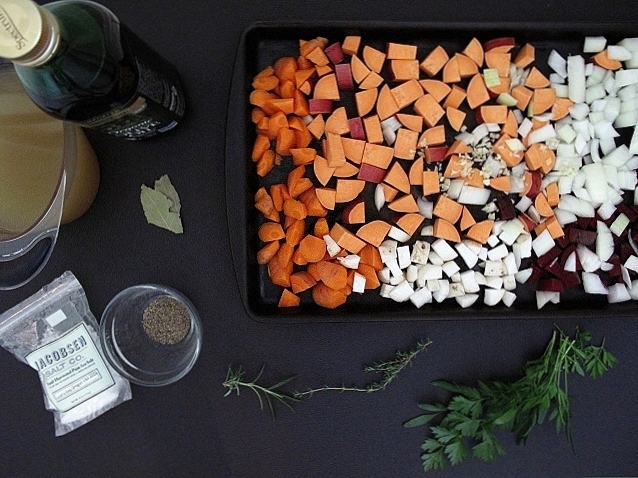
  • Place all diced vegetables on a large baking pan and drizzle with olive oil and a pinch of salt.
  • Roast them in a preheated oven at 400 degrees F for 20-30 minutes or until the vegetables are soft.
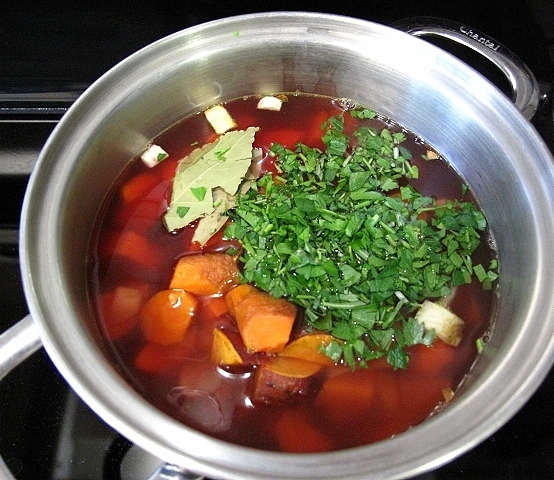
  • In a large pot, add the roasted vegetables and herbs, along with the broth and beans. Bring to a boil, reduce heat and simmer for about 10 minutes.
  • Season as needed with additional salt, pepper, and lemon juice. Serve with fresh chopped parsley, and if you’re in the mood, fresh baked scones or cornbread.