


I cooked my first winter squash this week, a delicata from the garden. I added it into the lovely split pea, rhubarb and apple soup from Vegetarian Everyday/Green Kitchen Stories. I sipped a rendition of Izy’s autumn-spiced coffee, planted purple sprouting broccoli for a late winter/early spring harvest, and kicked the heat on to a measly 62 degrees in the house. It ran almost all day while I wore my down vest and a blanket and powered through week four of term three–grad school life; the workload is intense; it calls for blankets and my first coffee in well over a year–and yet I love it. I’ve scheduled myself to take one-two days off from the material right now and I still wake up on those mornings ready to dive back in.

It’s safe to say summer is well on its way out. Ever the seasonal sleeper, I’m waking much later in the mornings. And catching up on processing my recent transition out of school garden education. I also began writing in more detail about my experience with running, eating disorder recovery, faith, and mental health in general–topics that might be a little too intense here. If you first came to this blog for those posts, feel free to read more on my new blog. Otherwise, below are a sampling of the many short and longer reading I’ve enjoyed these past months, a couple podcast episodes I feel are worth sharing, and a few seasonal meals we’ve been enjoying.


Reading
How to Build an Empire
The Salkantay Trek to Machu Piccho: perspective + privilege
David has been cooking with and sharing/photodocumenting the stories of Syrian refugees in Turkey this last week. It is a beautiful experience, important to share, and I think relates a lot to the point made by Ashlae, above.
Why I haven’t weighed myself in 2 1/2 years
The Starvation Study that Changed the World, I’m still reflecting on these last two but they are both well worth reading in terms of body image, eating, and/or weight struggles.
Longer Reading
Food and Healing by Annemarie Colbin. I just finished. I loved it.
Listening to
Up Your Game
How to Cultivate Non-Judgment
Andrew Wheating on Strengthening Your Winning Muscle (I’ve listened to this on repeat for weeks!)
Seasonal Eating–Basically, I only want to eat Moroccan or Middle Eastern flavors and/or eggplants so we’ve been enjoying these:
Moroccan Eggplant Mini-Galettes with Chickpeas + Harissa
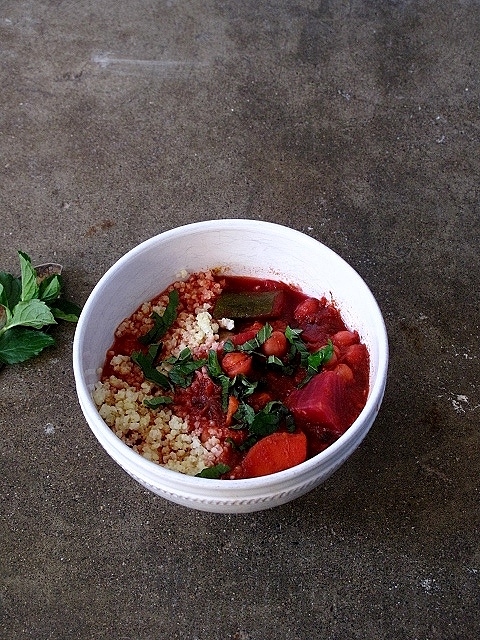
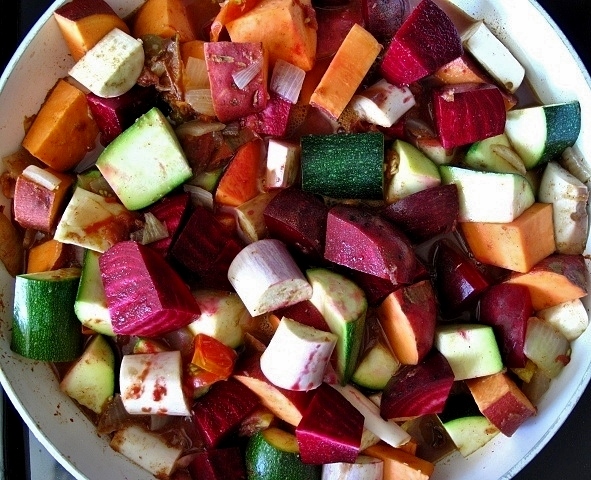
Moroccan Tagine with Sweet Potatoes + Beets
Roasted Vegetable Pizza
Eggplant & Olive Caponata
We also enjoyed the Eggplant Meatballs from Love & Lemon’s new cookbook at a friend’s last weekend. They were delicious.
And I’m eating all the pears from my favorite pear farmer and these Chai-Spiced Pear Oats, daily.


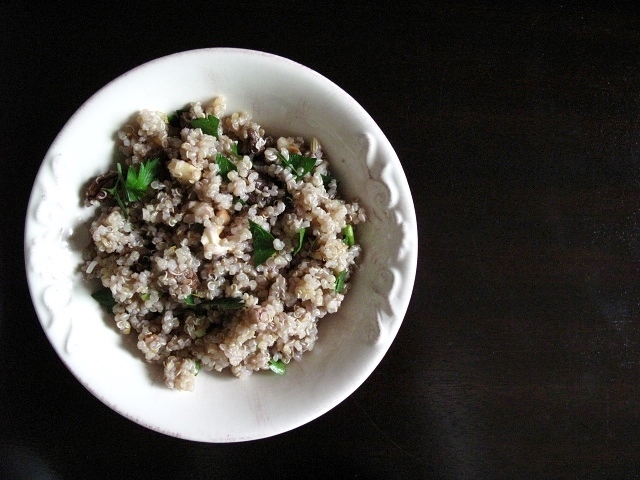
early autumn collard wraps with beet hummus, orange quinoa salad + apples, makes 4
Every once in a while I get a craving for collard wraps, always with beets and a grain salad of sorts and perhaps some fruit. Wrapped up tight, they make for a delicious and nourishing lunch. This version is inspired by a recipe in Vegetarian Everyday with my own beet hummus (still delicious and addicting), thinly sliced crunchy apples, and locally grown chickpeas.
1-2 batches Beet Hummus
1 cup quinoa
1 tsp. fennel seeds
zest and juice of 1/2 an orange
1/2 cup raisins
1/2 cup toasted, chopped walnuts
2-3 spring onions or baby leeks, thinly sliced
2-4 Tbs. minced parsley
sea salt, to taste
2 cups cooked chickpeas
8 large collard green leaves
3-4 small apples, thinly sliced
- To make the quinoa salad, bring 2 cups water and quinoa to a boil in a small pot. Add the fennel seeds, turn down to a simmer, cover and cook for 15-20 minutes. Set aside to cool.
- Add orange juice and zest, raisins, walnuts, leeks or spring onions, parsley and salt to the quinoa.
- To assemble the wraps, trim the base of the stem off the collard leaves and take a serrated knife and thinly shave down the remaining stem, getting it to the same thickness as the rest of the leaf. Then soften the leaves by either drenching in warm water briefly or heating in the microwave for a few seconds.
- For each wrap, arrange two collard leaves head to foot, overlapping them halfway. Spread a generous amount of beet hummus, then quinoa salad, garbanzos, and finally a few apple slices in the center. Fold over each end, tuck one side under, and roll tightly like a burrito. If it’s in danger of coming apart, use a few toothpicks to hold it together, and slice in half.
- Continue as above to create the remaining three wraps. There should be apple slices leftover which are great eaten on the side.


 From that moment when I learned to turn on the mixer, to scoop flour into the measuring cups, to follow recipe instructions, up to now, nearly 20 years later, I’ve been most at home in any place surrounded by food. It fascinates me in its cultural symbolism, use as a socio-economic tool and weapon, as a medicine to heal, as a draw to family gatherings and entire holiday celebrations, and most importantly, in its most simple form as basic sustenance for the hunger in all of us.
 In those simple childhood days, those most-remembered foods symbolize the dearly loved and oft-hated. My favorites from that gray box included our neighbor’s recipe for honey-cinnamon swirl rolls, my mom’s homemade bread, and leftover-oatmeal cookies with just the right amount of spice. There was my favorite breakfast, dad’s “stinkbug porridge”, which was a simple concoction of raisins and brown sugar. And then the fresh milk from our cow, Betsy, with flakes of cream floating amongst my morning cheerios. I had to plug my nose to get the milk down after staying an extra hour at the table gathering the resolve to drink it. Now looking back, I realize what a precious experience to have been raised in a place where our milk came right from the cow.
 In this new season and new beginning of sorts, I am reminded of how I am drawn to food as a means of communication and connection. I am reminded of the beginning, how I learned in the kitchen with my mom and the whirl of the blender blades that are still in her cupboard today. I am reminded that food is special, and that when I go into myself, as Rilke suggests, the only answer I come back with is, yes, I must create.
Though I no longer enjoy thick slices of my mom’s bread, or partake in flecks of cream floating in cow’s milk, I hold in my heart and in my cooking a focus on good, simple, nourishing food, in whatever way it can be most enjoyed. I am looking forward to this season to come, and the creations it will bring.
In this new season and new beginning of sorts, I am reminded of how I am drawn to food as a means of communication and connection. I am reminded of the beginning, how I learned in the kitchen with my mom and the whirl of the blender blades that are still in her cupboard today. I am reminded that food is special, and that when I go into myself, as Rilke suggests, the only answer I come back with is, yes, I must create.
Though I no longer enjoy thick slices of my mom’s bread, or partake in flecks of cream floating in cow’s milk, I hold in my heart and in my cooking a focus on good, simple, nourishing food, in whatever way it can be most enjoyed. I am looking forward to this season to come, and the creations it will bring.







 GUTSy Performance Nutrition