Gluten Free + Vegan Irish Soda Bread

IMG_4275

For a few weeks in the late winter or early spring, I inevitably begin cooking more simply, or more simply than I usually do, and turn my meat and potatoes-snubbing nose towards the flavors of home, or of home in the old country. It’s been nearly nine years now since I lived in Ireland, a place that some deep ancestral vein in me recognized as home from the first moment I stepped out for an exceptionally early morning run there, in the late summer of 2008. I rarely talk so much about my time in Ireland any longer, but on rare days I find myself especially longing for that feeling I recognized there immediately, that of truly having an origin and belonging to a place in a way that goes beyond this lifetime.

Rather than dwell on the past, I instead tend to celebrate the memories I have. And just when I especially long for spring, it comes, and I invite it in all the more because the earliest spring vegetables here are the exact same as from the Irish countryside and farms, what with nettles, watercress, overwintered cabbage, sprouting kale, parsnips, potatoes, and the like. And then of course, I bake brown bread.

I read recently that Myrtle Allen of the esteemed Ballymaloe House in County Cork once said, I was many years married before I first triumphantly put a really good brown soda loaf on the tea table. I smiled when I read it because Myrtle’s Brown Soda Bread recipe was the one I baked on repeat before making major dietary changes. And it just so happens that six years after I first began experimenting with a gluten and dairy-free version, and incidentally nearly six years married, I baked a really, really good loaf.

IMG_1482


Gluten-Free + Vegan Brown Soda Bread
Recipe Updated: 3/18/22
Brown bread is dense, craggy, and in the traditional recipes, contains no more than wholemeal flour, salt, baking soda, and buttermilk. It’s the best bread for afternoon tea, with thick vegetable-heavy chowders, or simply to provide some extra nourishment to your Irish-themed march meal(s). When I lived in Ireland, it’s the item I’d always order when out for a midday meal, along with whatever pureed vegetable soup was on for the day. If you choose to make this, know that I’ve begun baking almost exclusively by weight these days, which makes the flours a little more interchangeable, if you’ve a kitchen scale. Amaranth and/or teff provide a good dose of nutrition and hearty flavor while the sorghum and brown rice flours lighten it up a little. You can also interchange the sorghum for millet flour or likely oats, milled into a flour. Substitute flours by weight, if you choose to, instead of volume measurements.

1 cup amaranth or teff flour (120 g)
1 1/2 cups sorghum flour (180 g)
2/3 cup brown rice flour (110 g)
3/4 tsp. baking powder
3/4 tsp. baking soda
16 g psyllium seed husks 
1 Tbs. ground flax seed + 3 Tbs. warm water
1 1/2 – 1 3/4 cups (350 – 415 ml) plain non-dairy milk
2 Tbs. apple cider vinegar

  • Preheat the oven to 450 degrees F and prepare a baking pan with a piece of parchment paper on top; set aside.
  • Combine the ground flax with water to form a slurry, and then measure out the milk and add a splash of cider vinegar in a separate dish and allow it to thicken a little. Set aside.
  • In a bowl, combine the dry ingredients.
  • Pour the flax slurry and milk into the bowl with the flours, and then mix, stirring gently until the ingredients come together and form a ball (sticky but not too wet). Work quickly and do not overwork the dough as it will make the end result more dense.
  • Flour your hands and work the dough gently to shape it into a round, or alternatively bake in a 8 1/2 x 4-inch loaf pan. Using a sharp knife to make a cross on top of the bread. (This as you may know, lets the fairies out). Transfer the round to the baking pan and bake for 15 minutes. Reduce the heat to 400 degrees F and bake for 20 minutes, or until the top of the bread is golden in color and a thermometer comes out at 190-200 degrees F. If at this point it is still not quite done , turn down to 350 degrees and bake for 10-15 minutes longer. Depending on the humidity of the day and room, and the shape you choose for your loaf, baking time will vary.
  • Let cool on a rack. Like all true soda breads, this bread is dense, and it’s best eaten within a day or so.

Strawberry Tabbouleh Salad + an early summer catch up

IMG_6062


It has been a while since I rounded up all the inspirations that are lifting me and the last couple of months, there has been much. I enjoy going back and reading my previous posts of these types, so in the off-chance you’ll enjoy any of these as much as I have, I’m bringing them to you here.

Otherwise, this strawberry tabbouleh salad is so absolutely delicious that I’m going to make it on repeat until the strawberries slow down. It just might be my new favorite spring meal.


Reading
:
Tender: a cook and his vegetable patch

Iron and the Female Athlete: This review article was an assigned reading from my micronutrients class this term. I am learning so much and I really appreciated delving more into the research on select micronutrients that I (and many others) struggle with.

When Times Are Tough

Sick, Again: This perspective on living with an invisible and life-changing disease is one I resonate with. I love how Tessa was able to write about her experience and ultimately perspective on living with Crohn’s Disease.

The Power of a Letter: I’ve been saving this story about Obama’s mailroom for months. Just thinking about it lifts me up when the politics/media cloud threatens to take over.

Listening To:
Let it Out Podcast with Jessamyn Olivia Stanley and my one of my favorite ladies in food, Sarah Britton.

Connie Chapman’s Podcast about Ditching the Victim mentality (ep #69): Find Someone to Call You Out on Your Bullshit.(!)

The Rich Roll Podcast with John Mackey: Whole Foods Market opened in our city about eight months ago and I still haven’t been as I try to shop at the locally owned natural foods stores as much as I can. I didn’t expect to enjoy so much of this episode, especially Whole Foods’ founder John Mackey’s perspective on business.

And also, the episode with David Clark. I think I listened to this one about four times over in the space of three days this last week.

Self Care:
Inspiration from Claire

Self Care, Two Ways

Let it Out: I bought this journaling book last year, also authored by Let It Out podcast host, Katie Dalebout. I’ve been returning to its helpful prompts lately as there is so much good stuff here.

Into the Woods: I’ve followed Aran’s beautiful blog, Cannelle et Vanille, for as long as I knew food blogs existed. I love that she shared this video of her experience with food, as a therapy to heal and where she was able to find community and connection. So much of this resonates with my experience.

Lastly, Pia’s beautiful wisdom on a postcard from my younger self:
Ten years on again, as I look back at my younger self…I remember asking myself at the time, when everything seemed so chaotic in my life… Would I be bold enough to pursue my own dreams? To live away from my family? To live differently to my family? Will I be ok when my mother dies? Will I become a mother?
Trust. Because, yes. I need to remember this every time I ask myself heart questions in times of messiness and chaos. “Trust. Because, yes.” 


Strawberry Millet Tabbouleh, serves 3-5
I am a big fan of combining cooked grains, beans, and whatever seasonal vegetables are on hand to make main-dish style salads that can also double as potluck or celebratory sides. This salad, though a complete deviation from the traditional middle eastern tabbouleh, was a recent favorite in our house. The addition of strawberries really takes it to the next level.

1 cup millet
¾ teaspoon cinnamon
½ teaspoon each cumin and coriander
2 cups water
3-4 green onions
1 pint strawberries
½ a bunch of radishes
2 cups cooked lima beans
A small handful of mint leaves, finely minced
A slightly larger handful of flat-leaf parsley, finely minced
¼ cup extra virgin olive oil
1-2 tablespoons red wine vinegar
Juice from one small lemon
½ to ¾ teaspoon sea salt and black pepper
1/4 cup dukkah seasoning, as desired

  1. Place the millet in a small saucepan and then add the spices and 2 cups water. Bring to a boil, reduce the heat to low, and then cover. Cook for 15-20 minutes until the water is absorbed, and then set aside to cool slightly.
  2. Thinly slice the green onions, strawberries, and radishes and add them to a large mixing bowl. Then add the cooked and cooled millet, beans, mint, parsley, oil, vinegar, lemon juice, and salt and pepper. Taste as you go and adjust seasonings as needed. Top with dukkah seasoning if desired.
  3. Serve chilled or at room temperature.

Pumpkin Pie + Holiday Thoughts

Pumpkin Pie + Holiday Thoughts

img_0915


The Recipe Redux theme for November is healthy holiday baking. If you’re new to this space, The Recipe Redux is a monthly recipe challenge, founded by three registered dietitians, which I participate in. The challenges are always focused on taking delicious dishes, keeping them delicious, but making them better for us.


image


In light of this season, I’ve been doing a bit of reflection on where I stand in the interchange between decadent holiday foods and how I eat from day to day. Should I splurge and not worry about some of those really not healthy ingredients because it is the holidays, or should I try to capture the essence of health in enjoyable foods because it is the holidays –and we all tend to overeat and regret it later?

Additionally, as a result of all that I’ve been learning of health and nutrition and where I stand right now in aiming to maintain a healthy relationship with food, I’ve been returning to passages from Annemarie Colbin’s Food and Healing: 

With all the recent emphasis on “healthy” eating, it is important to remember one thing: Food does not make us healthy. The right kind of food will allow us to reach our maximum health potential, to become as healthy as our genes and constitution may permit. It will support what we are at our best. It will not interfere with our development, but it will also not make us more than what we can be. In short, good food is effective because it is passive. The wrong kind of food will act like a block or a dam, deflecting our growth and thwarting our unfolding. In other words, it will actively create trouble, and make us unhealthy…Good food will nourish us without causing stress, and thus allow our immune system to spend its energy in healing. Thus many different diets will have healing effects. Often it is not just what we eat, but also what we don’t eat that helps us become healthy again. 

So my theory right now? Stressing about eating the right kinds of food is not healthful. But neither is eating foods that overtax and/or stress our bodies, foods like highly refined sugars, refined flours/grains, and rancid oils, to name a few. Sure, they’re fine in small quantities infrequently. For the most part however, they’re best avoided, even (and maybe especially) during the holidays. Aren’t we all a little too stressed in this season? Don’t we deserve to feed ourselves and our loved ones foods that have healing qualities?


img_0923

img_0886


My advice is to do what you can with what you have. But maybe as you venture into this holiday season, do so a little more mindfully, thinking to yourself, How do I want my body to feel after eating? What foods will nourish me best? 


img_0875


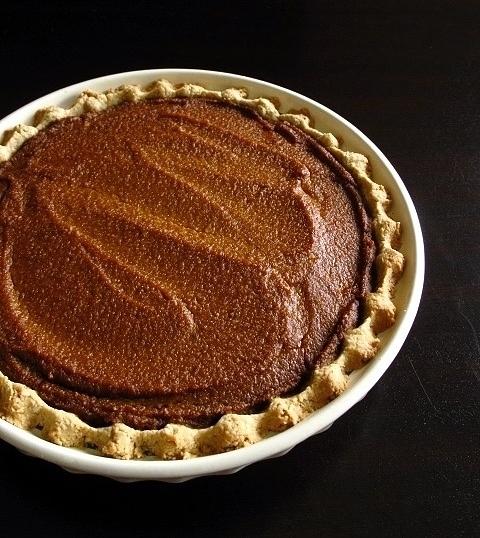
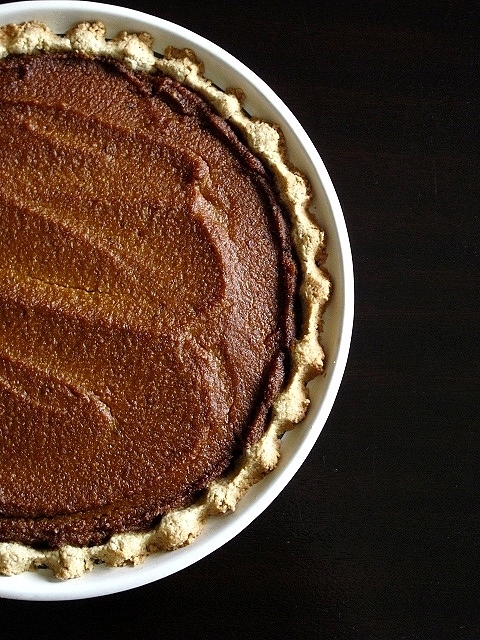
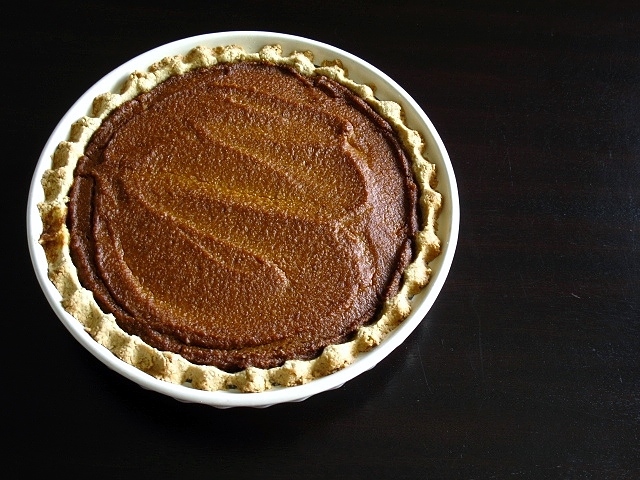
Pumpkin Pie, makes one 9-inch pie
Truthfully, I never liked pumpkin pie until I stopped eating dairy and enjoyed a vegan version of the classic. The creamy custard base always turned me off. Now I love pumpkin pie and count it as one of my favorite flavors. While there are innumerable versions swirling about this time of year, this is the one I make and enjoy. It is adapted from Gena Hamshaw’s pie in
Food52 Vegan and while I enjoy her version, I’ve changed it a bit so dates are the primary sweetener and, in my years-long quest to find a good gluten-free and vegan pie crust with no coconut oil (which I cannot stand in fat-heavy pastry doughs), I’ve finally come to a closer-to-whole-foods crust that tastes like what I think a pie crust should. It gets extra points for not needing to be rolled, chilled, or being difficult to work with. Enjoy!

filling:
2 1/2 cups baked + pureed pumpkin or winter squash, or canned puree
1 cup cashews, soaked for at least 4 hours
1 cup medjool dates (about 10)
2 tsp. pure vanilla extract
1/4 tsp. sea salt
2 Tbs. tapioca starch
2 Tbs. blackstrap molasses
1 tsp. cinnamon
1/2 tsp. ginger
1/4 tsp. nutmeg
a couple good pinches of cloves

crust:
1 cup rolled oats
1/4  cup + 2 Tbs. almond meal/flour
3/4 cup millet flour
pinch of sea salt
4 1/2 Tbs. good quality canola oil
3 Tbs. maple syrup
3/4 tsp. vanilla

  • Begin by baking the pumpkin or squash, if using, and soaking the cashews in water a few hours ahead of time.
  • Then, soak the dates in warm water for about an hour to soften up. Once the dates have soaked, keep 1/2 cup of their soaking liquid and put in a food processor along with the pitted dates, vanilla, and salt. Puree until completely smooth.
  • Into the food processor with the date puree, add the soaked and drained cashews, starch, molasses, and spices. Puree again, until completely smooth. Then add the pumpkin and puree once again until completely mixed. Then set aside to make the crust.
  • At this point, preheat the oven to 350 degrees F.
  • Finely grind the oats into a flour using either a food processor or coffee grinder.
  • Then, in a mixing bowl, whisk together the oats, almond and millet flours and salt.
  • In a liquid measuring cup, stir together the oil, maple syrup and vanilla. Then pour the liquids over the dry ingredients and mix together with a fork until the dough is evenly moistened.
  • Dump the entire mixture into a 9-inch pie pan, and with your fingers, spread the dough across the bottom and up the sides. A flat-bottomed measuring cup, glass, or mini rolling pin helps smooth the bottom.
  • Crimp the edges, and then fill the crust with the pumpkin mixture.
  • Bake for 35-40 minutes, until the filling is a golden brown.
  • Remove from the oven and let cool completely before serving.