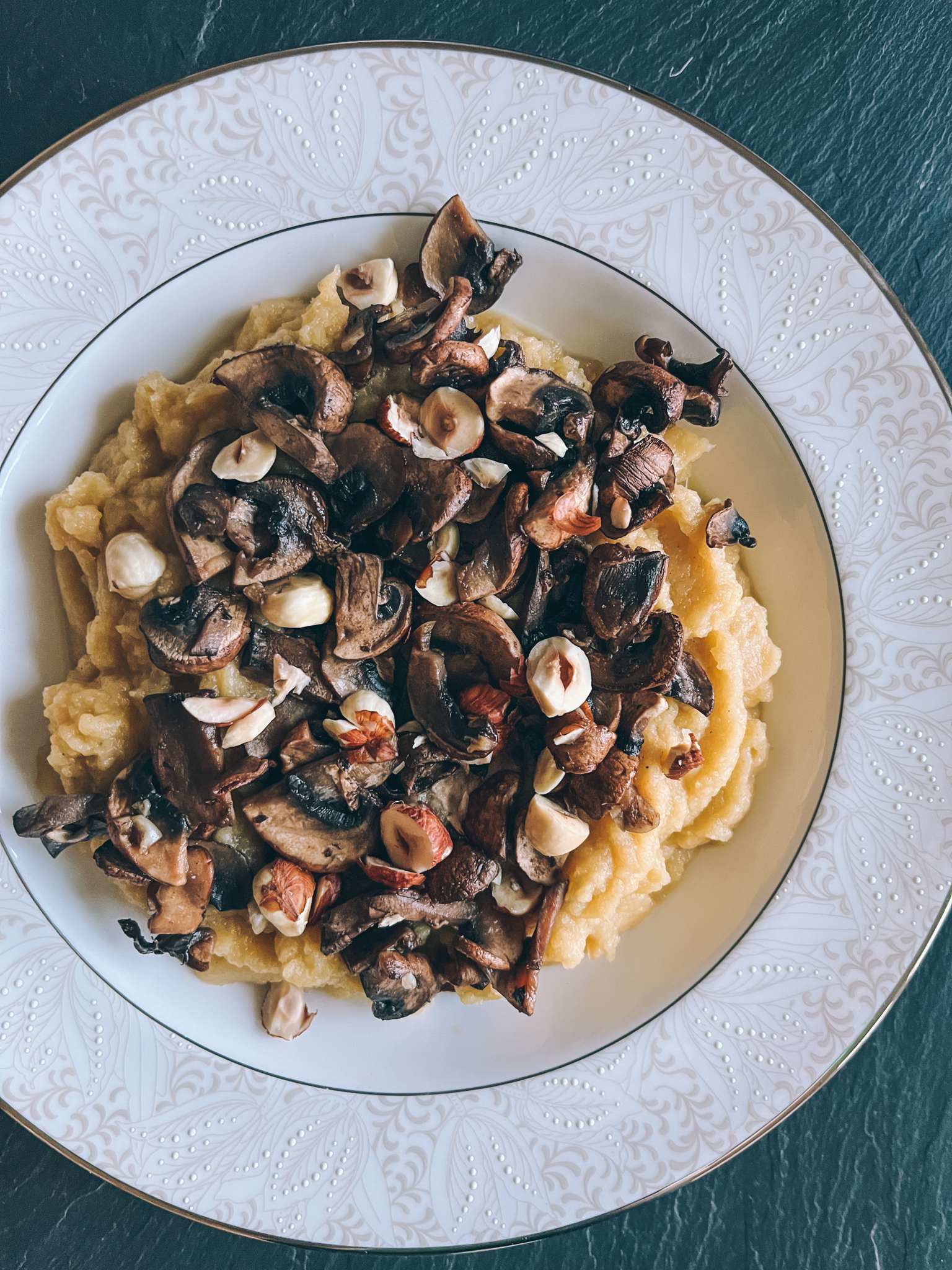
Creamy Rutabaga (Swede) Mash with Mushrooms, Sage + Hazelnuts

For the past couple months, I’ve been cooking and taking a lot of inspiration from Gill Meller’s Root, Stem, Leaf, Flower cookbook. I say “cooking” but I rarely cook the recipes as written. Instead, I’ve learned my own energetics and the energetics of the season, and I adjust ingredients and amounts accordingly. Or the recipe technique doesn’t seem quite what I’m looking for and I adjust it somehow.

This is the type of cooking and eating that is the goal for all the individuals I work with in the nutrition clinic, but admittedly, it can take a long time to get there when one’s intuition is overwhelmed by inflammation, chronic pain, nutrition and food confusion, etc.

But back to the cookbook – Root, Stem, Leaf, Flower has been my favorite inspiration to cook from for the past few years. It’s hyper seasonal with produce common of the climate I live in, exceptionally British (meaning the seasonings and ingredients are very much of the region), and uses simple high quality ingredients in often novel and creative ways. The ingredient lists tend to be short and don’t require much beyond the produce and pantry staples at hand.

This creamy rutabaga mash with mushrooms is one such example of inspiration I took from Gill Meller last year. I first shared and published this recipe locally with a farming and food organization that I served on the board of for the last few years, the Willamette Farm & Food Coalition (WFFC).

Each year, WFFC publishes what is called the Locally Grown Guide, a printed and online directory of all the local food resources: farms, farm stands, CSA’s, grocery stores that stock local, and the like. This recipe first appeared in the 2023 edition of the Locally Grown Guide, but since we’re gearing up for a 2024 release (with new inspiration within the pages), I want to share the recipe here.

Plus this combo of creamy mashed rutabagas (also called Swede), mushrooms, sage and hazelnuts is incredibly tasty. It’s a true comfort dish using local–to Western Oregon as well as the UK–fall and winter ingredients. And it’s a good one for mid to late winter, when our ideas for novel and healthful (and seasonal) eating tend to wear out.

As you’ll see, this recipe is either a side-dish or a meatless “main component,” and it will need a protein on the side to balance out the meal. Even though many vegetarians tend to recommend mushrooms as an alternative to a protein source (and they do contain some protein), I don’t recommend just eating this on it’s own–most individuals will benefit from 20 to 35 grams of protein for main meals during the day–so pair it with a side of sauteed or baked tempeh, stewed and sage-ey garbanzos, or your choice of animal-based protein on the side. Another option is to pair it with a simple and delicious pot of lentils.

P.S. Lentils have been my often go-to the last few months. If you follow me on Instagram or read my newsletter, you’ll know why I’ve had them on repeat. :)
Creamy Rutabaga Mash with Mushrooms, Sage + Hazelnuts
inspired and adapted from Root Stem Leaf Flower by Gill Meller

Prep:  10-15 minutes  | Cook: 40 minutes  | Serves: 4

1 large ~ 1 ½ lb. (600 gr) rutabaga, peeled and chopped
1 Tbs. ghee or butter
8-12 fresh sage leaves
½ tsp. mineral salt, divided
⅛ tsp. ground black pepper
1 Tbs. olive oil or ghee
2 garlic cloves, minced
1 pound (450 gr) mushrooms, thickly sliced
A small handful of toasted hazelnuts, roughly chopped

  1. Place the chopped rutabaga in a medium pot and cover with water. Bring to a boil, then turn down to a simmer and cook for 25-35 minutes, until the pieces are completely soft when pierced.
  2. Drain the rutabaga with a colander, then transfer to a food processor or a blender. Add the butter or ghee, ¼ tsp. salt, about four small sage leaves, and black pepper. Puree until smooth, adding a splash of water if it is too dry. Set aside and keep warm. 
  3. Mince the remaining sage leaves. 
  4. Then heat the remaining olive oil or ghee in a large saute pan and bring to medium-high heat. Add the sliced mushrooms. remaining ¼ tsp. salt, minced sage leaves, and garlic. Cook the mushrooms for about 6-8 minutes, until they are tender, dark, and the moisture has cooked off. Then stir in the chopped hazelnuts and give it all a good stir. 
  5. To serve, spoon the rutabaga puree onto plates and top with the mushroom and hazelnut mixture. 

Notes:
– Rutabagas, which are also called swede in some countries, are truly underrated but you can swap them out for nearly any other root vegetable for a variation.
– Rutabaga belongs to the same family as broccoli and has compounds called glucosinolates, which can help with liver detoxification and can help
prevent conditions like heart disease and cancer. Hint: it looks like a large turnip but the interior flesh is more yellow.

Broccoli Rice Bake

and a tip for taking care of digestion during the holidays and beyond

Before I get to the recipe below, there’s one little nutrition tip I want to share today that just about every one of us can use, especially during the holiday season. It’s simple – but can go a long way in terms of improving negative digestion symptoms, in addition to energy, having a steady appetite, clear skin, and focused thinking.

It’s that we should leave out habitually grazing or snacking throughout the day.

When we’re in a pattern of habitual grazing all day, or feeling constantly hungry or snacky, it’s often because we haven’t eaten enough at a previous meal. Or we’re eating for emotional comfort, or simply skipped a previous meal altogether. Or we’re doing those holiday gatherings that involve no real meal but constant “finger foods.”

In any of these cases, eating when the last meal hasn’t fully digested can put the body in a stressed state and leave us with indigestion, bloating, fluctuating energy levels, and a whole host of other symptoms. When we snack on the go or while distracted during our busy days, the same uncomfortable symptoms often occur.

But what about for athletes? I know many of you, like me, move your body a lot and need more food to be getting enough for your needs.

As endurance athletes doing daily workouts or training for an event, having a snack or two during the day is reasonable. But we should not feel constantly hungry, or hungry every hour or two.

Eating again before the last meal has finished digesting puts a lot of stress on the digestive system and it can’t do either job of processing the new food or assimilating the last meal effectively. This goes for everyone, regardless of whether you notice negative symptoms or not.

Aim to have snacks about four to six hours after your last meal has been eaten, and two to three hours before your next meal. This is the length of time it takes to fully digest your meals. For a person that is active less than an hour per day, three meals is usually plenty. For those who are more active, an eating schedule with a snack built in to get enough food might look like having breakfast at 7am, lunch between 11-12:00 pm, a snack around 3-4pm, and dinner between 6-7pm.

Do you feel worse when you constantly snack or graze throughout the day? I know I do. Try cutting all snacks or sticking to the above schedule for a week or two, and see how much better you feel.

Now, for something nourishing to eat during your actual meals. At least during one holiday of every year while growing up, there was my mom’s Broccoli Rice Casserole, which we all craved. Likely a holiday meal because it involved ingredients we didn’t eat any other time of the year (processed cheez whiz and instant rice), I have no idea when the tradition began, or when/if it ended, but we all enjoyed it.

Several years in to a dairy-free lifestyle, I tried upgrading the recipe to be based around whole foods and be dairy-free as a final project for one of my grad school cooking labs. Like most vegan / dairy-free recipes trying to mimic a cheesy taste, the result I got was trying too hard to stimulate all the taste buds with the nutritional yeast, miso, garlic, etc. combination of flavors, and I never really landed on a finished recipe that I wanted to remake year after year.

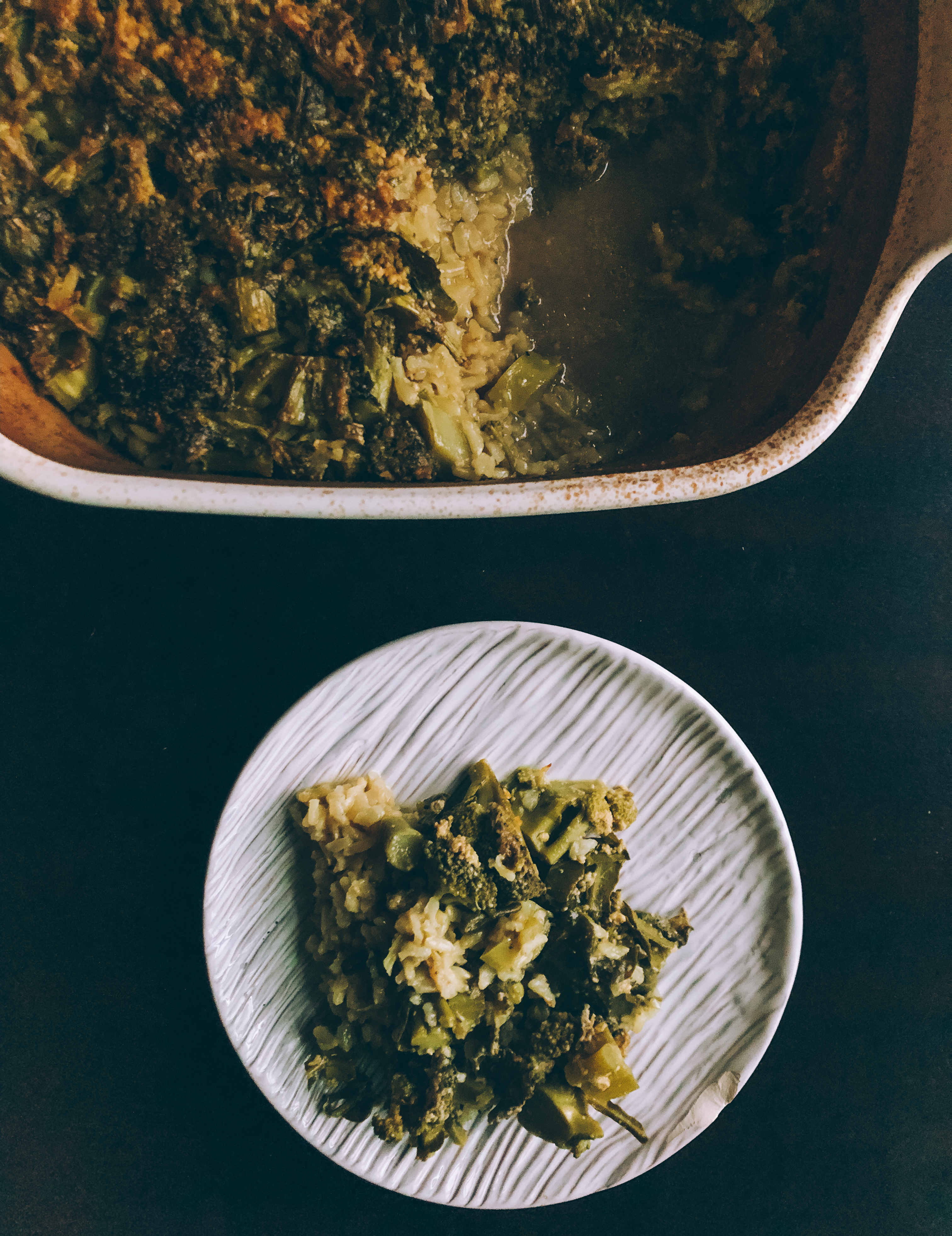
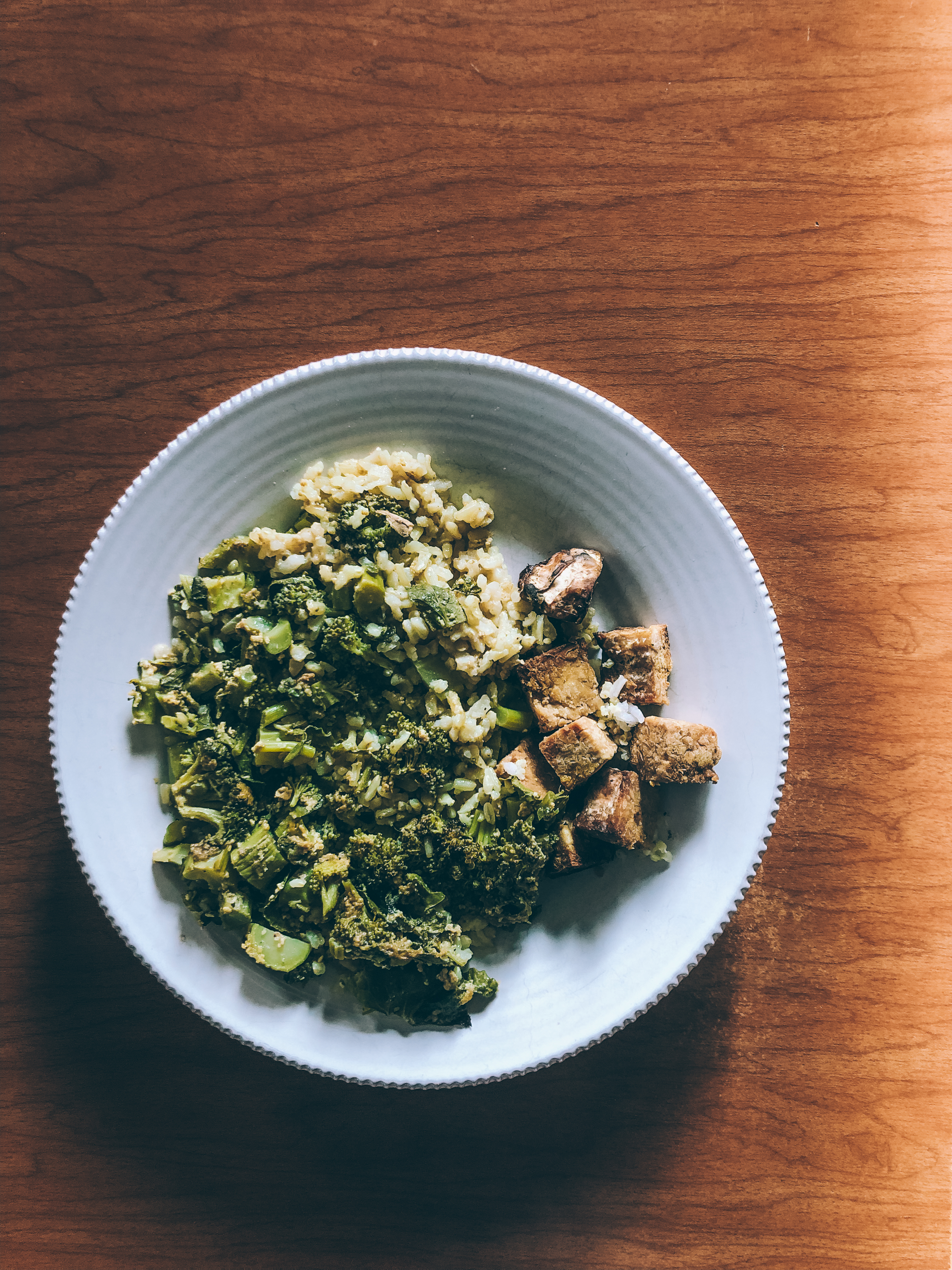
Then I stumbled upon the flavor/spice combination below while having a little creative session in the kitchen earlier this year. Without intending to, the result ended up being exactly what I was going for in the failed recipe revamp. And here we have it! A whole foods remake of the Broccoli Rice Casserole I loved from youth.

Broccoli Rice Bake

This is a far cry from, yet extremely reminiscent of the cheezy Broccoli Rice Casserole I grew up eating around the holidays. The combination of the spices, tahini and coconut milk seem like they’d yield a curry rice bake – but the result is actually far more subtle and more in line with the cheez whiz, instant rice, and cream of mushroom soup combination of childhood. It’s creamy, comforting, and a perfect addition to either a holiday or an everyday winter’s meal. 

Prep:  4-8 hours soaking (optional but recommended)   | Cook: 1.25-1.5 hours  | Serves: about 4

3 ½ cups (320 gr) chopped broccoli
1 cup (185 gr) brown rice (soaked for at least 4 hrs)
1 tsp. salt
¼ tsp. ground fenugreek seed
¼ tsp. ground fennel seed
1 ½ tsp. grounding masala spice blend or curry powder
2 tsp. minced fresh ginger root
3 Tbs. (45 gr) tahini
1 cup (240 ml) coconut milk*
2 1/2 cups (600 ml) water

  1. Preheat the oven to 350°F (180°C ).
  2. Spread the broccoli out in a 9×9″ baking dish along with the soaked (and drained) rice. Set aside.
  3. Stir together the spices, fresh minced ginger, salt, and tahini into the coconut milk and  water. Pour over the vegetables and rice and mix. Then spread the mixture evenly, making sure that the broccoli and rice are submerged in the liquid. Cover with kitchen foil and bake for 45 minutes.
  4. Now discard the foil and increase the oven temperature to 430°F (220°C). Bake for a further 25-30 minutes, or until the broccoli and rice are cooked and the sauce starts to form a slight crust around the edges of the pan. It might look a bit softer than steamed rice consistency at this point, but will set up after removing from the oven.
  5. Let cool for about 10 minutes out of the oven before serving as a side dish.

Notes: Use canned coconut milk, the type used for cooking. Either lite or full-fat can be used but full-fat is preferred, and will result in a creamier texture and richer flavor. 
I’ve tested this a couple times in a larger, flatter 13×9″ baking pan. It still works, but the rice really benefits from a smaller, deeper pan so it can fully immerse and steam-bake, rather than dry out without fully cooking.

Veggie Rainbow Cool Noodles

In a quest to cook more in community, and educate in a hands-on format again, I’ve been leading routine cook-a-longs this summer. I’ve been cooking both with my local running group and as part of my public health nutrition role, my side gig when I’m not working one-on-one with nutrition clients.

I love cooking with both groups–but especially the cook-a-longs with my running ladies because we share similar interests and chat more as we’re making the recipes. And because I get to choose recipes that I routinely make in my everyday and know will make meals and workout recovery easier for others.

This is one such recipe that we made together last week.

It’s a cool noodle dish, served either warmish or at room temperature, but ideally not truly ‘fridge-cold’ or with raw vegetables, because that makes it extra difficult to digest. At a time (summer / hot weather) when our natural digestive ability is already weaker.

It features an Asian-inspired sauce and is kept super easy and quick by utilizing a protein and carbohydrate source in one with legume-based pasta noodles. If you don’t prefer tahini, choose almond butter instead. There are several legume-based pastas on the market. Banza is a good one. If you don’t prefer that, you can add two cups of edamame, your choice of other protein such as grilled fish, chicken, or tofu, and use a whole-grain noodle, such as brown rice noodles or whole-wheat fettuccine. 

Happy cooking and summer training / adventuring / eating / digesting! :)

Veggie Rainbow Cool Noodles
Prep:  15 minutes  | Cook: 15-25 minutes  | Serves: 4

Ginger Turmeric Tahini Sauce:
¼ cup tahini
½-inch fresh ginger, finely grated
1 Tbs. low-sodium tamari or soy sauce
½ tsp. turmeric
2 Tbs. lime juice
1 tsp. pure maple syrup
1 Tbs. light miso 

Noodle Salad:
8 oz. chickpea or legume-based noodles
3-4 large carrots (about 500 grams), sliced thin
1 bunch (240 grams) radishes, sliced
2 cups green peas, fresh or frozen
½ cup (packed) cilantro, plus more for garnish
Toasted sesame seeds, for garnish

  1. Make the sauce: Mix the sauce ingredients, along with 4-8 Tbs. water until completely smooth. Taste and adjust seasonings as needed and then set aside. 
  2. For the Noodles: Bring a pot of water to a boil. Add the noodles and any hard vegetables (such as carrots or radishes) and cook half way through. Add the peas and any softer vegetables, and cook the remaining few minutes until the pasta is al dente. Drain and rinse with cold water to stop the cooking process. 
  3. In a medium-serving bowl, toss the pasta and vegetables with the sauce and cilantro. Top with some toasted sesame seeds and serve. 

Notes: Change up the vegetables depending on what is in season near you! When you vary it up, choose one to two root vegetables or starchy vegetables and one or two leafy green vegetables or more pungent vegetables.
Roots/Starchy Examples: Peas, fresh corn, carrots, summer squash, zucchini (spiralized to add to the noodles (not in replace of!) is what I’ve done in the photo above)
Green/Pungent Examples: Broccoli, cabbage, kale, spinach, radishes, daikon radishes (what I’ve used in the photo), asparagus

Want to Know More?

Within my nutrition practice, I specialize in digestive imbalances, often within endurance athletes. When we’re experiencing chronic GI distress, fatigue, and/or malabsorption of foods and nutrients, there will often be imbalances in several systems of the body simultaneously. I shared more about this topic in the nervous system’s role in part 1, the immune response and subsequent inflammation in part two, gut microbes and dysbiosis in part three and the importance of chewing our food in part four. Check those out or reach out to me for more personalized support for gut healing, increased energy, performance, and feeling good in your everyday life.