The Easiest DIY Non-Dairy Milk

Shortly after we all went into lockdown a few weeks ago, my running team had a group call with Sally Bergeson, owner/founder of the women’s running apparel company, Oiselle. Sally spoke about doing the work of Pulling Out Poisoned Roots, and since I’d just received the team journal for this year, and knowing that Sally is an activist and visionary on what are often the most controversial topics and particularly women’s rights and sport, one could surmise exactly the poisoned roots she was referring to.

I had recently re-begun examining my own poisoned roots, and thus have spent most of the spring working through old programming, stories about my own limited potential and unable-to’s that stem from their foundations in early childhood and youth. As I have been working though the next layer of this ‘brain training’ this spring—for beginning this process many years ago was one of the most important steps in healing my autoimmune condition—I’ve been daily reminded about how difficult it is to rewire the brain, to heal old wounds and stories we’ve been told or have told ourselves. And every single day, I’ve been reminded of my privilege.

For I’m in a place right now where I have the ability to prioritize this type of self-work. My basic needs are met. I’m in a place of relative health. I don’t have unconscious or blatant systemic biases working against me. And I’ve thought about those that come from experiences of more extreme trauma—for a refresher on the impact of childhood trauma has also been part of my spring quarantine for my part-time public health role. How for individuals who’ve experienced extreme trauma, if they ever get to a point in life where they have the resources to undergo this type of psychological training, how much more difficult, how much more healing, they need.

For as much as it’s a nice thought that we’re all simply different shades in a crayon box—a saying I’ve seen a few times the past couple weeks—the circumstances we each are given make that a phrase that is naïve to the reality of our lives.

Today I’ll share a little story about that as it relates to dairy foods, who is supposed to consume them (everyone) as opposed to who can actually digest and absorb them (mostly white, non-minorities without other health problems). This is a mostly nutritional but also partly political post, but the end result is an incredibly easy DIY non-dairy ‘milk’ recipe with just a couple ingredients (nut or seed butter, water, pinch of salt). Since I’ve spent more than a decade immersed in public health and the politics of food systems before going into clinical nutrition, this is my way of combining and educating through a lens that speaks to all of them – if you’d rather just get the recipe, feel free to simply skip to the end.

——————————————————————————–

Whenever I have both the blender and the nut butter jar out, William tends to ask me if it’s time to milk my nuts. It’s a slightly humorous household joke, but without fail it reminds me of long-ago days in childhood when I watched my mom do a similar yet more complicated process of filtering the cream from fresh milk from our milk cow, Betsy. I was always fascinated and yet disgusted at the same time because for whatever reason, I did outgrow my early childhood dairy allergy for a while, but the smell and taste still repulsed me, leading to routine sessions of sitting extra-long at the kitchen table until my stubbornness gave way and I figured out a way to make myself gag the milk down.

Nowadays, I’m routinely reminded how times are a little different. In my parent’s era, making their children drink their milk portions every day was a necessity. How else was I to grow strong bones? Also, dairy farming is in my family history. I say things are different because there are a plethora of non-dairy milks available nowadays, so much so that dairy farmers in our country are struggling as never before. We now know that many individuals really struggle to digest dairy, whether because of lactose intolerance or a dairy protein allergy, as I have.

Lactose, the sugar in milk, requires the enzyme lactase to digest and absorb it properly, and it’s now well known that many populations worldwide, particularly individuals of East Asian and West African descent, are less likely to have the lactase enzyme. Additionally, this enzyme can become faultier as one ages, so lactose intolerance can arise in adulthood, making certain milk products challenging. All in all, approximately 65 percent of the population worldwide has a reduced ability to digest lactose after infancy, yet only about five percent of individuals of Northern European descent are lactose intolerant.

On the dairy protein sensitivity/allergy side of the equation, the reasons for its increasing prevalence are fairly widespread. We can develop an immune response to virtually any food, and the overload of disruptive environmental contaminants (toxic air, water, pesticides, pharmaceuticals, etc.), as well as high stress and imbalanced lifestyles (think lots of work, not enough sleep and nutritionally balanced meals), can wreak havoc on our digestive systems and over time the body begins to build antibodies to everyday foods that we could handle before. For individuals with seasonal environmental allergies, as well as those that generally tend to have excess mucous and feel ‘puffy,’ they often feel quite a bit better after removing dairy—since it’s protein structure can be tough to digest and therefore increases inflammation throughout the body.

So in our current global circumstances, there are a lot of individuals who are intolerant to dairy for varying reasons, or for environmental or other personal reasons are choosing to avoid it. And yet in the USDA’s MyPlate, the official dietary recommendation put out by the US Government, dairy is a food group that all individuals are recommended to consume daily, since one’s daily calcium needs are easily met with 3-4 servings of milk or similar dairy products. I still teach nutrition classes part time in a USDA-funded public health role in my local community, and it has frustrated me time and again to have to teach a model of nutrition that only ‘fits’ the needs of a certain (ahem, mostly white) population. This is an example of systemic bias at work – and also showcases the lobbying role of the dairy industry in making our federal government’s nutritional guidelines.

While recognizing that calcium is an important nutrient to consume in adequate amounts lifelong–adults need approximately 1000-1200 mg per day depending on gender, age, and activity level–there are other ways to consume it, like ample calcium-rich leafy greens. Those are often my first recommendation, because they have a calcium bioavailability similar and perhaps even better than dairy milk. We also need the many other nutrients that make up balanced bone metabolism including Vitamins A, C, D, K, B-vitamins, other minerals such as magnesium, zinc, copper, phosphorus, boron, manganese, potassium, iron, vanadium, and more. Eating lots of leafy greens as part of a balanced whole-food diet happens to also include many of that plethora of nutrients also.

There are several more foods on my bone support and maintenance list, and one of those categories is rotating through many different nuts and seeds. Sesame seeds and tahini, pumpkin and sunflower seeds, almonds and cashews particularly. None of these on their own will supply your daily calcium needs – if avoiding dairy, you need to eat diverse and greens-heavy meals for that – they do provide a range of many other bone supporting nutrients.


Today, let’s focus on the alternative to milk when one is looking for the texture and mouthfeel of using milk, such as in an extra-creamy porridge, cooked grains, to top your evening cereal fix, or to round out a smoothie. That’s when I’ve been reaching for my blender, nut butter jar, and the time to milk nuts scenario. Bonus points for no longer adding to the overflowing milk-carton collection in my laundry room that is supposedly recyclable during certain days of the year, but will more likely end up in the trash.

As a little aside, if it wasn’t clear from the above, I’m not overtly anti-dairy or a proponent that all of us should follow a dairy-free lifestyle, but I strongly believe in individual nutrition and not one-size-fits-all viewpoints that are already biased towards certain groups in power and with privilege.  
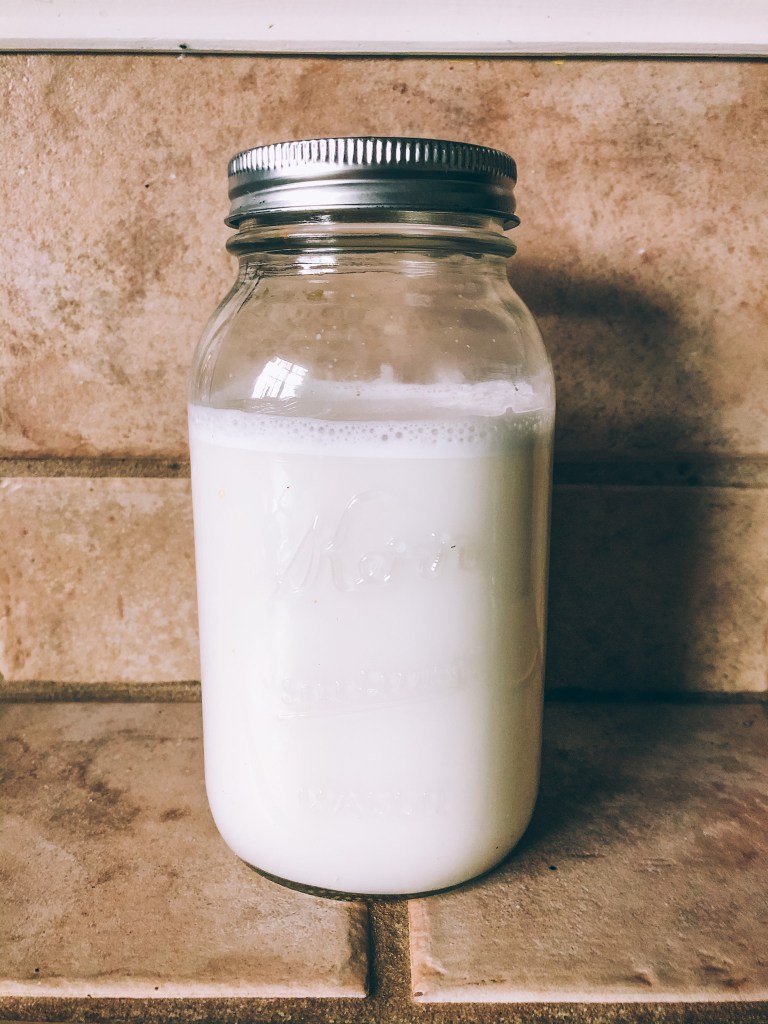
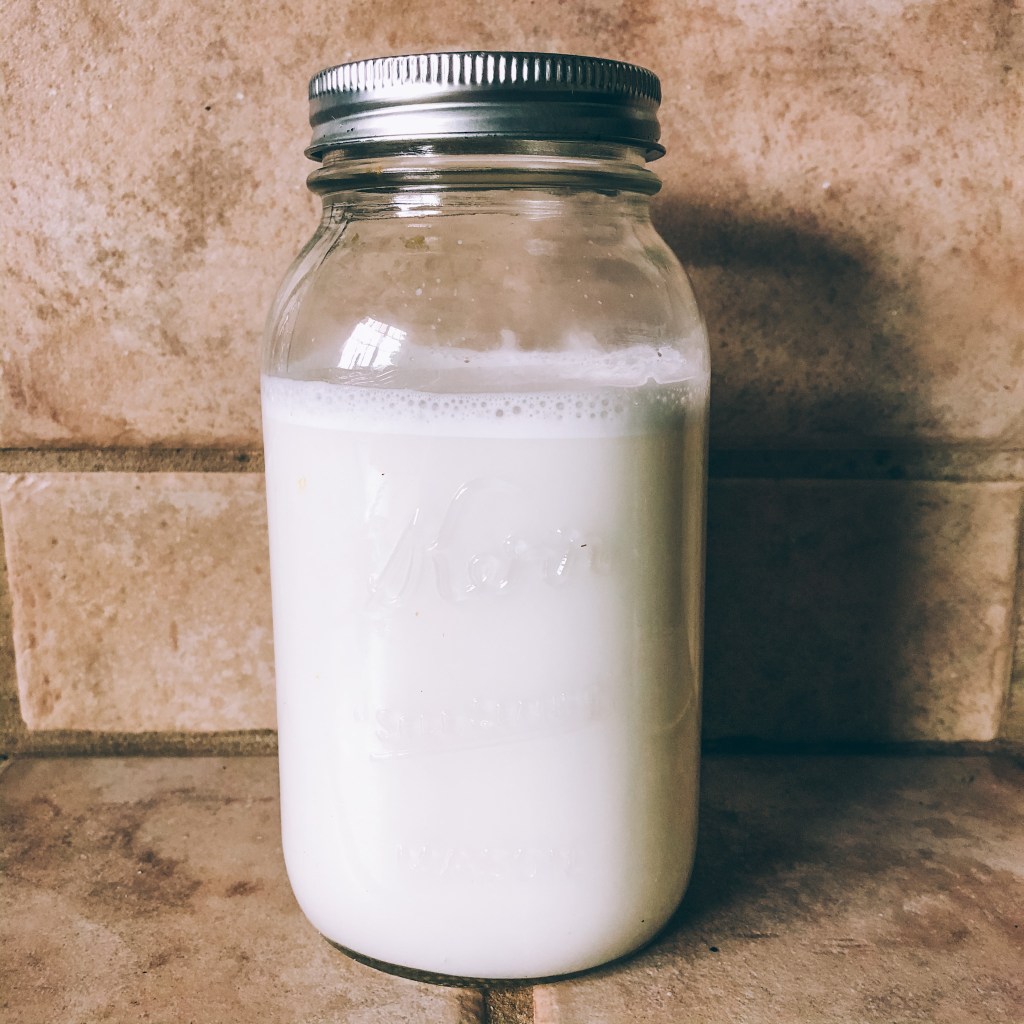
The Easiest DIY Non-Dairy Milk, makes 3 cups
For this, I recommend starting with raw nut/seed butter with zero other ingredients. Currently, I prefer Artisana Organics brand, which also happens to source from local California farms when possible and commits to sustainable and fair-trade ingredients. There are other brands that are similar, so do your research and learn where your food comes from. For nutritional diversity, I recommend rotating through a different type of nut or seed each jar or batch you use.

1-2 Tbs. raw nut/seed butter (raw cashew, almond, sunflower, or pumpkin butter, or raw tahini)
3 cups water
pinch of salt

  • In a high speed blender, combine 1 to 2 tablespoons of your raw nut/seed butter of choice with 1 cup water. I prefer using 1 Tbs. for each batch, but doubling the amount will make for a creamier milk. Blend for about 1 minute until the nut butter is completely worked into the water.
  • Then add 2 more cups of water, a pinch of salt, and pour out into a glass container. That’s it. You’re done and ready to use!
  • Store extra in the fridge and remember to shake/stir before each use as particulates will settle in the bottom.

This information does not intend to treat, diagnose, cure, or prevent any disease. 
References:
National Institute of Health (NIH). Genetics Home Reference. U.S. Library of Medicine. (2020). Lactose Intolerance.

Hot Cross Buns {gluten + dairy-free, sourdough option}

As I opened my daily planner this morning, I was reminded that I had originally been slated to be teaching a lesson today about healthy breakfasts and how to tell when one is hungry and full to several kindergarten classes I work(ed) with.

Of all the nutrition and cooking lessons I teach in public schools, that particular one is my favorite. And because the funding source leaves me tied to teaching particular curricula that I often find wanting in terms of what we should actually be teaching our children about nutrition (i.e. developing a healthy relationship to food more than focusing so much on all the food groups), this particular lesson is one I really look forward to. Hunger presents itself in numerous ways beyond just a painful, rumbly tummy, and food and nutrition is far more than just calories in/calories out, macro and micronutrients, and following the ‘right’ plan until whatever prefabricated goal is reached. If I could fill out my entire kindergarten series with this topic of developing a healthy relationship to food alone, I think my students would be far closer to having the basis of a firm foundation in healthy lifelong eating than most of us have ever gotten.


One thing I’m noticing a lot in the last couple weeks as we all go into isolation and quarantine is a few different but similar conversations about food. Panic-buying and hoarding as lack of clear leadership, lack of control over life situations, and messages about what to do change nearly daily. Bingeing or overeating on a kitchen full of food, or stress not-eating as we stay home and navigate a completely different routine. Stress-baking to put at least our hands in motion, and choosing comfort foods when nothing else is comfortable. And then stacking guilt on top of our already stressed and anxious systems as we berate ourselves for not having some willpower or not taking care of ourselves adequately, etc.

One of the questions I like to ask, not to my kindergarteners, but in clinical practice, is ‘what’s that about?’ When our minds go into worry and circular thinking about whether there’s any flour, yeast, eggs (or TP) to be found at the store. When we find ourselves needing a comfort food or snack while working from home when we’re not actually hungry. When we skip a meal or two and are ‘not hungry’ when we’ve clearly not eaten much in the last day or days. When our hands at the grocery reach for ice cream, cookies, chips and crackers, or the ingredients to make something sweet / salty. When we panic at the thought of missing a workout or being sidelined from normal training due to this situation. When we’re anxious. When we wake every night at 3am.

In any or all of these instances, ask yourself, ‘What is that about?’ What’s the underlying feeling, belief, or reason I’m doing this thing? Ask yourself without judgement, and just be okay with whatever answer comes. And if there’s no immediate clear answer, that’s okay too.

As an adult, having an awareness and lack of judgement at the reason for our actions is incredibly helpful in navigating uncertainty and beginning to form trust in yourself that you are strong and able to deal. For even when we judge our actions and ourselves incessantly, there are always fairly wise reasons for them that we are somehow protecting ourselves against.

Today as I’m writing this, it is also the beginning of Holy Week, a special solemn few days in the Christian calendar before Easter, and given the state of the world right now, the solemn state of things appears to run parallel to it. Hot Cross Buns are also a traditional specialty this time of year, at least in parts of the US, and for sure in the UK and Ireland. It you’ve never enjoyed them, they are a spiced and fruit-filled yeast bread roll, often made quite a bit richer due to extra butter/oil, added sweetener and perhaps an egg. They were traditionally eaten on Good Friday, which is also a traditional day of religious fasting. If you like to delve into the history of food traditions like me, you can learn more about hot cross buns on Good Friday in this short article and its fascinating discussion/comments.

Otherwise, may you work on asking yourself this week, ‘What’s that about?’, and if you’ve the inclination, try baking hot cross buns.


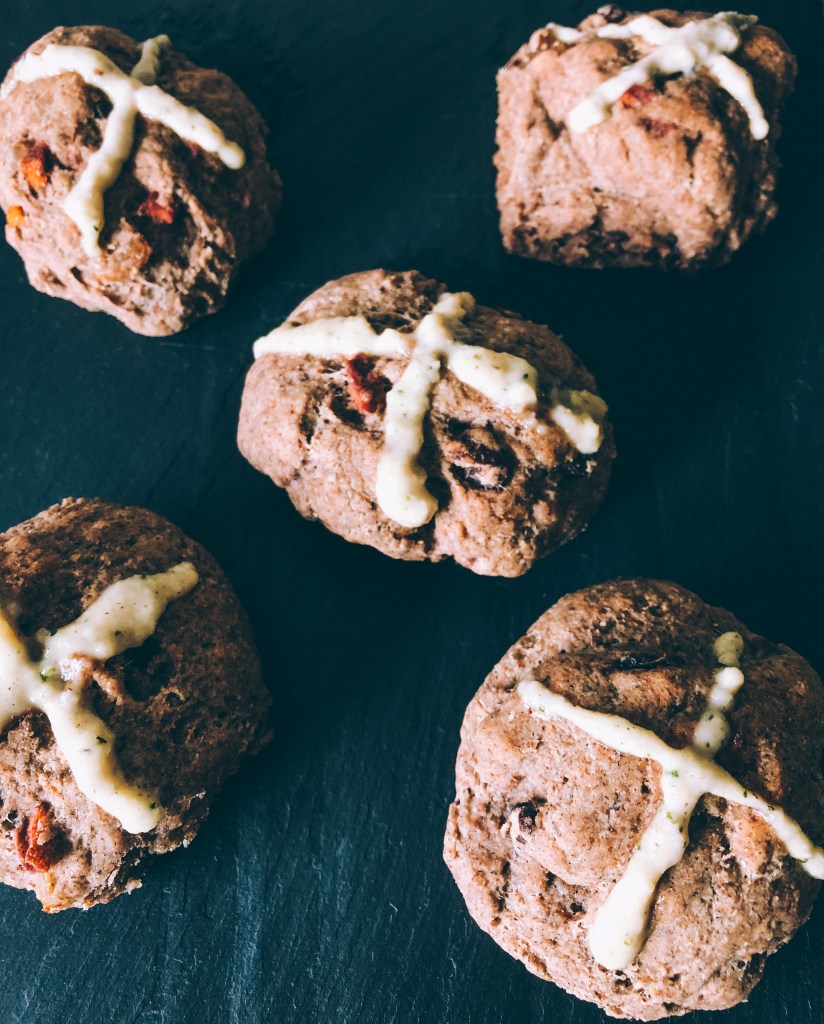
Hot Cross Buns {gluten-free and vegan, sourdough method}, makes 5
This recipe appropriately fits the needs for those avoiding all (or some) of the most common food sensitivities and allergies, and because my nutrition-brain is always on when developing recipes for this space, these are a delicious, slightly enriched and sweetened whole-grain bread option that doesn’t get too far into the super decadent category.
As you’ll note, I’ve created two options to make these, with a sourdough starter, and without. I’ve made and enjoy them both ways, and because I don’t do away with the yeast in the sourdough option or dramatically change the method, they both turn out fairly similar. Instead, I tend to use my sourdough discard for the recipe and reduce the other flours and liquid.
If you’re finding gluten-free flours difficult to source right now, substitutes work well. Sorghum flour subs in well for either brown rice or millet, oat flour made from ground up oatmeal will likely work well in part, and any of the starches (arrowroot, tapioca, potato, or corn) can be used in place of the arrowroot and tapioca combination. As always when baking and especially when using substitutions, it’s always best to measure by weight.
There are a few ways to make the cross on top, either with a bit of icing after baking, by cutting a cross in the dough before baking, or by making a flour and water paste and drizzling it on top before baking. I meant to cut my dough before baking but then forgot, and decided to use a quick couple spoonfuls of cashew, vanilla and honey ‘frosting.’ I haven’t added that in here because I think it’s too fussy and these don’t need a sweet finish. They taste great on their own!

Wet Ingredients:
6 Tbs. non-dairy milk
2 1/2 Tbs. water
1 1/8 tsp. dry active yeast
¼ cup mixed dried fruit (raisins, golden raisins / sultanas, orange peel)
2 Tbs. orange juice or tart cherry juice or water
1 Tbsp. ground flax seeds 
1 Tbsp. psyllium husk (or use ground chia seeds OR flaxseed meal)
2 Tbsp. coconut oil, melted
½ Tbsp. apple cider vinegar
1 Tbsp. honey or maple syrup

Dry ingredients:
130 grams / ~1 cup gluten-free all purpose flour
(or 13 g buckwheat flour, 19 g tapioca flour, 20 g arrowroot flour, 26 g each sorghum, brown rice, and millet flours)
100 grams / ~ 1 cup gluten-free sourdough starter (equal parts flour and water)
1.5 tsp mixed spice  (1/2 tsp. cinnamon, ¼ tsp. allspice, ¼ tsp. nutmeg, 1/8 tsp. cloves, 1/8 ginger, 1/8 tsp. coriander, 1/8 tsp. cardamom)
¾ tsp. baking powder
¼ tsp. baking soda
¼ tsp. sea salt

  1. Warm up the non-dairy milk and water together until lukewarm or at about 100 degrees F / 38 degrees C. Whisk in the yeast and allow to froth up for about 10 minutes.
  2. While waiting combine the dried fruit and juice or water. Warm for a few seconds in the microwave and set aside to let the liquid soak in and soften up the fruit. I use about 1 Tbs. finely diced orange peel in this mix to make these extra festive and more traditional.
  3. Add the ground flax, psyllium, oil, vinegar, and honey to the frothy yeast liquid. Whisk together and set aside so it can thicken a little.
  4. In a large bowl, stir together the dry ingredients. Dump the wet ingredients and fruit into the middle of the flour mix and stir. Your dough will begin to look scrappy. Keep stirring with your spoon or hands until the ball of dough becomes somewhat smooth.
  5. Put a cloth over your bowl and let rest / rise for one hour.
  6. Next stir the dough well again, and then divide into 5 equal balls. Lay parchment in a small baking pan and then roll or shape each of the dough balls into rolls. Place them on the dish, cover with cloth again, and rise again for 1 hour in a warm, non-drafty space in your kitchen. These should rise enough to be touching each other in the pan, but will not double in size.
  7. Preheat your oven to 375 degrees F / 190 C. Before baking, make a little flour/water paste and pipe onto the top of the buns in crosses. Then bake for 2025 minutes or until the edges have firmed up. Place the pan on a wire rack to briefly cool down. You can also make your own frosting /sugar glaze and pipe atop when they are finished baking instead of the more traditional flour/water paste.

EXTRA NOTES

1. Tastes best when eaten warm and straight out of the oven.
2. Store in an airtight container and keep for about 3 days.
3. The dough can be made ahead of time. Simply place in the fridge during the second rise time and allow to sit overnight. Baking time might need to be longer.

Hot Cross Buns {gluten-free and vegan, regular non-sourdough method}, makes 5

Wet Ingredients:
6 Tbs. non-dairy milk
6 Tbs. water
1 1/8 tsp. dry active yeast
¼ cup mixed dried fruit (raisins, golden raisins/sultanas, orange peel, etc.)
2 Tbs. orange juice or tart cherry juice or water
1 Tbs. ground flax seeds 
1 Tbs. psyllium husk (or use ground chia seeds OR flaxseed meal)
28 grams / 2 Tbs. coconut oil, melted
½ Tbs. apple cider vinegar
1 Tbs. honey or maple syrup

Dry ingredients:
180 grams / 1 ½ cups gluten-free all-purpose flour
(or 18 g buckwheat flour, 27 g tapioca flour, 27 g arrowroot flour, 36 g each sorghum, brown rice, and millet flours)
1 1/2 tsp. mixed spice
(1/2 tsp. cinnamon, ¼ tsp. allspice, ¼ tsp. nutmeg, 1/8 tsp. cloves, 1/8 ginger, 1/8 tsp. coriander, 1/8 tsp. cardamom)
¾ tsp. baking powder
¼ tsp. baking soda
¼ tsp. sea salt

  1. Warm up the non-dairy milk and water together until lukewarm or at about 100 degrees F / 38 degrees C. Whisk in the yeast and allow to froth up for about 10 minutes.
  2. While waiting combine the dried fruit and juice or water. Warm for a few seconds in the microwave and set aside to let the liquid soak in and soften up the fruit. I use about 1 Tbs. finely diced orange peel in this mix to make these extra festive and more traditional.
  3. Add the ground flax, psyllium, oil, vinegar, and honey to the frothy yeast liquid. Whisk together and set aside so it can thicken a little.
  4. In a large bowl, whisk together the dry ingredients. Dump the wet ingredients into the middle of the flour mix and stir. Your dough will begin to look scrappy. Keep stirring with your spoon or hands until the ball of dough becomes somewhat smooth.
  5. Put a cloth over your bowl and let rest / rise for one hour.
  6. Next stir the dough well again, and then divide into 5 equal balls. Lay parchment in a small baking pan and then roll or shape each of the dough balls into rolls. Place them on the dish equally apart, cover with cloth again, and rise again for 1 hour in a warm, non-drafty space in your kitchen. These should rise enough to be touching each other in the pan, but will not double in size.
  7. Preheat your oven to 375 degrees F / 190 C. Bake for 2025 minutes or until the edges have firmed up. Place the pan on a wire rack to briefly cool down.

EXTRA NOTES

1. Tastes best when eaten warm and straight out of the oven.
2. Store in an airtight container and keep for about 3 days.
3. The dough can be made ahead of time. Simply place in the fridge during the second rise time and allow to sit overnight. Baking time might need to be longer.

Berry Bran Muffins and what to cook right now

A somewhat humorous discussion amongst some of the current and past students of my nutrition program last week was “What is Eleonora cooking right now?” Eleonora is my former cooking lab instructor, since we were required to take a few cooking courses during the program to really cement our ‘food as medicine’ approach to clinical nutrition practice.

While I consider myself an experienced cook, I never expected to learn a ton from these courses, but a day before that conversation emerged about Eleonora, a conversation with my childhood best friend brought realization that those simple courses cemented several cooking foundations that were otherwise learned haphazardly over time, or not at all.  

In that conversation with my friend, which not surprisingly went on as she was cooking dinner and subsequently asking for advice on the right temperature and amount of oil for roasting vegetables, she asked if I’d heard of a popular cookbook, Salt Fat Acid Heat. I explained that I was indeed familiar, but haven’t actually picked up the book. We learned those concepts in cooking lab, I explained.

What I got most from that conversation, however, wasn’t that I’ve picked up some culinary school concepts over time, or that I should give myself a pat on the shoulder, but that the conversation was so normal. Having not had a real conversation in months and going long stretches with much less since my friend’s life work is in ministry and she’s been abroad for most of the last decade, the ebbs and flows and even pauses to wait for another discussion on the other end of the line to begin and end were exactly as they would be between us—at any point in the last twenty and more years we’ve been close friends.

That maybe is a benefit to slowing down a little. We both all of a sudden were available for a conversation that as the years go, grows greater distance between each one.

The other thing, one of the students actually knew the answer to What is Eleonora Cooking?, since they were doing raw food lab last week. Eleonora is making and eating lots of sprouts. You know, just about the healthiest, most nutritious food on the planet.


When I was in her classes, I both loved and feared Eleonora. She has a brusque way about her, a heavy accent, and though you wouldn’t guess it, she was also a former Olympian. I suspect in some sort of track and field or gymnastics discipline, though I never did get that answer.

So in the midst of a global pandemic, my former Olympian-now nutritionist and cooking instructor is teaching the newest round of students about the benefits and how-tos of growing and eating sprouts. And my long-time friend and minister is not doing her work in visiting and being with people, but sewing masks and cooking roasted vegetables. And though many of us are attempting to keep some semblance of normalcy, we’re definitely not in normal times.

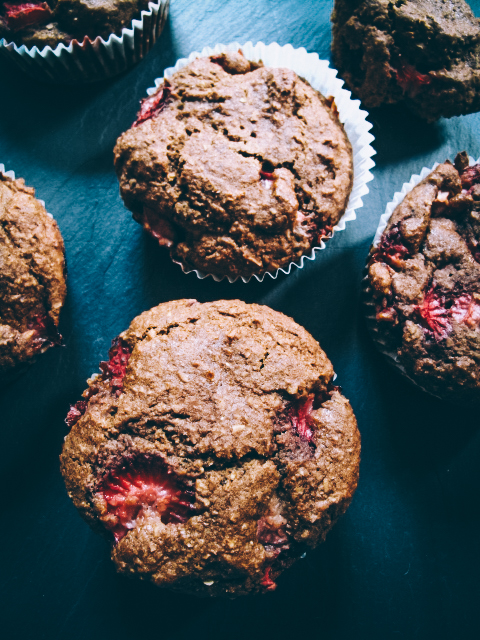
Instead of following in Eleonora’s food-steps and providing a guide on sprouts, or the best pot of beans, or the finer details on making gluten-free sourdough, today I offer you Berry Bran Muffins (but yes, I’m otherwise making and eating all three of those nutritious, gut-health and therefore immune boosting foods.)

Muffins are basically my go-to semi-nutritious baked good to make and experiment with, and though I know it’s common practice to eat them at breakfast, I much prefer them as dessert.

Because we all need as much cheer as possible right now, whether it’s in making something warm and delicious in the kitchen, finding funny videos, books, or movies to be entertained by, or in another creative project. I am lucky and grateful enough to still have a semi-normal routine –as much as one can in self-imposed isolation or quarantine or whatever you may call it when the wisest thing to do is to avoid everywhere except the open road or trail or neighborhood walkabout.

And I understand if where you’re located doesn’t quite have all the ingredients for these stocked on the shelf—or you’re not going back to the store for a while. That’s the thing about cooking, baking, and muffins in particular. The adventurous, creative part is in improvising when the way forward is not exactly as the recipe goes.

And yes, that’s a metaphor for life. I encourage you to have faith in yourself and the process.

Other things that held me up and gave me faith this week:
– A reminder of the Proverb of the Chinese Farmer
– The ever wise insight from Julie Piatt on taking care in the time of Coronavirus
The two words that will guide you (mine are faith and nature – which maybe explains a lot of what I share here and how I work)
This book I’m reading during the season of Lent along with daily reflections by Matthew Kelly
– Rebecca Altman’s Surrender + Magic mini-course (of meditations and finding peace)
– running, my normal routine and as if my scheduled April race is still happening as planned

Berry Bran Muffins, makes 6 standard size muffins
If using a store bought gluten-free flour mix, the one I’ve found most similar to mine is the Krusteaz Gluten-Free Flour. If using that or others, it is best to measure by weight, and omit xanthan gum from the recipe if your flour mix contains it. As much as possible, I avoid adding xanthan gum unless I believe a recipe really needs it–and after much testing, this one does because the batter is heavy on flavorful, but juicy berries.

1/2 cup / 50 g oat bran
1/2 cup / 120 mL non-dairy milk
2 Tbs. molasses
1/2 tsp. pure vanilla extract
1 cup / 120 g gluten-free flour mix
1 tsp. baking powder
1/2 tsp. baking soda
3/4 tsp. xanthan gum
1/8 tsp. salt
1/2 tsp. cinnamon
1/4 tsp. ground cardamom
1/8 tsp. ground ginger
2 Tbs. / 28 g coconut oil
1/4 cup / 50 g sugar
3 Tbs. aquafaba (liquid from cooked or canned garbanzo beans) or 1 egg
1 1/2 tsp. apple cider vinegar
1 cup fresh or frozen berries (choose your berry of choice or use a mix)

  1. Preheat the oven to 350 degrees F / 180 degrees C., and prepare a standard six-cup muffin pan by wiping with oil and dusting with flour or using paper muffin liners.
  2. Stir the oat bran, milk, molasses, and vanilla together in a small bowl until combined. Then allow to sit for at least 10 minutes.
  3. Meanwhile, in a smaller bowl, combine the dry ingredients including the flour, soda and baking powder, and spices. Set this bowl aside also.
  4. In a medium mixing bowl, stir and mix together the coconut oil and sugar until it is light and fluffy. This may take 3 to 5 minutes. Then add in the aquafaba or as an alternative, the egg. Mix well.
  5. Now add the flours, bran and milk mixture, and vinegar to the creamed sugar. Mix this just until all the ingredients are incorporated.
  6. Gently fold in the berries. If using frozen, you don’t need to pre-thaw them. Using a large scoop or spoon, divide the batter between the muffin cups. Bake until they become golden and a toothpick in the center comes out with just a few crumbs attached, about 25-30 minutes.
  7. Cool the muffins in the pan for about 5 minutes, then flip onto a wire rack and cool for at least 10 minutes before eating.