roasted zucchini and crookneck squash with pumpkin seeds, oregano, and olives

I went out to harvest in the garden this morning and after using up about 20 crookneck squash in the last couple days, I harvested a dozen more. And a dozen cucumbers and three tomatoes. I trimmed the tomato plant back a bit so I can see several others are nearly ready, and William on corn duty tells me there are six or more ears that need to be used now. They’ll be as many or more of everything tomorrow.

I somewhat jokingly wrote in an instagram post several weeks back that I’ve found the best way to eat more vegetables is to grow a lot of vegetables. No jokes anymore since at this point in the season, it’s an incredible fact. For me anyways, this goes particularly because even though the romanticism of growing our own has long since worn off, there’s a huge sense of obligation to not waste what we’ve watched growing all season, to not waste the many hours William has spent watering and sifting compost, pulling weeds, and turning over beds.

Me? I mostly just harvest and cook and then take the glory. As is true for most gardeners and farmers, we tend to plant extra of everything because inevitably one or more crops fail– and people who grow things are slightly addicted to growing more things. (A slight problem when the backyard is producing so much). This year so far, nothing has failed. Literally nothing except a slow start and replanting of beets which thankfully won’t be ready until the summer squash, cucumbers, and corn are about done.

Anyhow, one thing I’ve been thinking about all summer is how very little has been stated publicly, in the mainstream US news anyway, about lifestyle factors that can help us through this pandemic season. Eating more vegetables, filling ourselves up on all the colors, nutrients, phytonutrients, and generally eating more whole, looks-like-it-came-directly-from-the-earth, foods can go a long way. I was asked to write a little more in-depth about this topic recently for Territory Run Co., so if you’d like more details on specific foods, nutrients, or lifestyle factors to help through this season (like mindfulness for stress relief), you can find the article here.

Meanwhile, I’ll be trying to figure out how to gift a few harvest extras this week, and chop, roast, sauté, etc. my way through the others. A little Italian flavor inspired, this combination of roasting zucchini and crookneck squash, and topping it with an herby, olive, garlic, and pumpkin seed topping is just one way to add some pizazz to eating your vegetables. If you have a grill basket and would like to take the cooking outside, grilling the squash instead of roasting will be a nice shift in methods.

Roasted Zucchini + Crookneck Squash with Pumpkin Seeds, Oregano, and Olives, serves 4 as a side
Use any type of summer squash you have available. The smaller, less seedy ones have the best texture.

4-8 small to medium summer squash, chopped (enough to fit a sheet pan or baking tray)
1 clove garlic
1/4 cup pumpkin seeds, toasted
1/4 tsp. salt
20 fresh oregano leaves, finely minced (about two large sprigs)
15 small black olives (about 1/4 cup), rinsed, drained and sliced

  • Preheat your oven to 425 F. Line a baking pan with parchment and then spread the chopped squash evenly, so it’s mostly a single layer. Sprinkle with a little salt and roast until soft and borderline mushy, about 30-40 minutes.
  • Meanwhile, lightly toast the pumpkin seeds in a pan on the stovetop, and then remove them to a cutting board. Chop them until they’re in medium-small pieces, small enough to not be able to tell they’re pumpkin seeds, but not super-fine.
  • Mince the garlic and add it to a small dish, along with the pumpkin seeds, salt, minced oregano and olives.
  • When the squash is done roasting, slide it into a serving bowl, and then stir the herby pumpkin seed mixture throughout and serve.

Radish + Hazelnut Grain Salad

This is the type of meal situation that’s my bread and butter. It’s the sort of thing I’ll bring to a potluck or picnic-style situation, and it makes a routine visit in our regular meals much the same way tacos do – i.e. same concept, different ingredients depending on what’s on hand and seasonal. Over the years, I’ve also found that William usually takes some of the leftovers for his work lunch the next day – which only happens if it meets his slightly different than mine taste-bud standards. It also helps when I add raisins, which in our house grace many a main dish. We are both lifelong raisin affectionados. :)

While everything is fairly interchangeable here, you’ll note I only list gluten-free grains as options. I don’t tend to be outright against gluten-containing grains for those that can tolerate them, but many individuals tend to be at least slightly sensitive – especially those with pre-existing autoimmune conditions (since inflammation in the gut significantly contributes and/or is part of the cause, and gluten is inflammatory to everyone to a certain degree). I also find that many individuals running long miles, particularly in the summer heat, suffer from more achy tummy – not hungry – can’t tolerate lots of foods symptoms. That’s because these kind of long or hard workouts in stressful physical conditions contribute to damage of the endothelial tissue in the gut, which by design is very thin (one cell thick!) to allow for absorption. If you eat gluten and wheat products regularly, purchase a few non-gluten grains next time you’re out shopping. And if you do avoid wheat and gluten, try to find one or two new to you or haven’t tried in a while gf grains next time. Dietary diversity is also imperative for good long-term gut health.

One last note I’ll make here is that I left out a protein-rich ingredient to this. If you tend to follow a vegan or vegetarian way of eating, and especially if you’re active, please add one to your meal. You can read more here about the importance of protein, particularly for plant-based, active folks. Often I’ll add cooked beans such as garbanzos to make this type of salad a one-dish situation, but a side of seasoned/baked/grilled tempeh or tofu, grilled salmon or similar, a couple fried eggs, or whatever else is your protein of choice will round this out nicely into a true meal. Enjoy!

Radish + Hazelnut Grain Salad, serves 4
1 cup mixed grains (like millet, quinoa, buckwheat or any combination of these)
1 onion, thinly sliced
a large handful of baby spinach or kale leaves
1 cup radishes, thinly sliced
1/4 cup raisins
1/4 cup dried apricots, sliced into small pieces
1 cup parsley leaves, minced
1 cup mint and / or basil, minced
2 Tbs. olive oil
2 Tbs. white wine or raw apple cider vinegar
1/4 cup hazelnuts, toasted
salt and pepper to taste

  1. Place the grains in a medium saucepan and add 2 cups water. Bring to a boil, reduce the heat to low, and then cover. Cook for 20-25 minutes until the water is absorbed, and then set aside to cool slightly.
  2. While the grains are cooking, saute the thinly sliced onions in a skillet with a little of the olive oil. Cook them until they are soft and translucent, bordering on being caramelized. Pull off the heat and transfer them to a large serving bowl.
  3. Tear or slice the spinach or kale leaves into small pieces and then pile them on top of the the onions.
  4. Add the slightly still warm cooked grains to the mixing bowl on top of the greens. Stir through to wilt them slightly. Then mix in the radishes, dried fruit, and herbs.
  5. Add in the olive oil and vinegar, 1 Tablespoon of each at a time, and stir through. Add additional as needed to make it the right consistency for you, i.e. add more oil and vinegar if you like a wetter mixture. Also taste as you go, since you might need more vinegar to bring a little more acid flavor for balance. Salt and pepper to taste at this time as well. You might need up to 3/4-1 tsp of salt and 1/8-1/4 tsp. black pepper.
  6. Serve slightly warm or at room temperature.

Gluten + Dairy-Free Chocolate Chip Cookies

On days I’m a little overwhelmed or harboring heavy feelings at the state of events lately, I’ve pulled up a short video that harkens me right back to my 14 through 18-year old self. I can smell the straw and the hay, the musty dust in the barn air, the damp, oily, pungent scent of wool, and of lambing. The smell of iodine as we dipped new lamb’s navels. And this, one of the most soothing of sights. It’s slightly ironic that I had been thinking for a long while about sharing a non-dairy milk in this season. Since for adults, milk is not actually mandatory food. Yet most of us still drink milk or ‘mylk’, in whatever way. And it’s clear to me that my routine of watching the new lamb drinking one of its first meals, the soothing calm I feel when returned to old memories, is all about finding some comfort, and of the awe of watching new life, a whole new world unfolding.

For the last few weeks, I’ve been fairly quiet and unsure of my place in this current moment we’re in. I’ve experienced the range of emotions like a lot of people. I’ve been so close to just quietly closing my facebook account for sheer “can’t handle the vile and ignorance there,” but I’ve also understood – because I too was once extremely ignorant. And in some aspects, am only a little less so now. I’m still learning, along with most of us.

But I also have been sitting on several recipes and meals, several thoughts about our relationships to our bodies, and how we block out how we’re really doing in order to navigate our worlds. I’m not sure I have the bandwidth yet to to delve deep into those second topics, but we all need to eat, and in our own ways, find comfort amidst the sometimes dramatic shifts of the ever-changing seasons.

Today I’d thought to share my norm, a healthy seasonal recipe. But on this solstice weekend, what’s speaking to me more is that idea of comfort amidst change. So we have instead an updated recipe of the ultimate American comfort classic, Chocolate Chip Cookies. If you need a little treat, go ahead and make them, along with the non-dairy milk I last shared, and enjoy while watching the video linked above on repeat. The trio will be a comfortable hug to self. :)

Lastly before the recipe, a couple lines from a blessing I’ll share more about in coming days or weeks. Whether you choose to make cookies or not, I encourage you to meditate on the meaning of these words to you as you make a meal or treat in the kitchen, or during your next workout, next yoga session, or time in silence contemplating the solstice:

May your body be blessed.
May you realize that your body is a faithful and beautiful friend of your soul.


From A Blessing for the Senses by John O’Donohue in his Anam Ċara

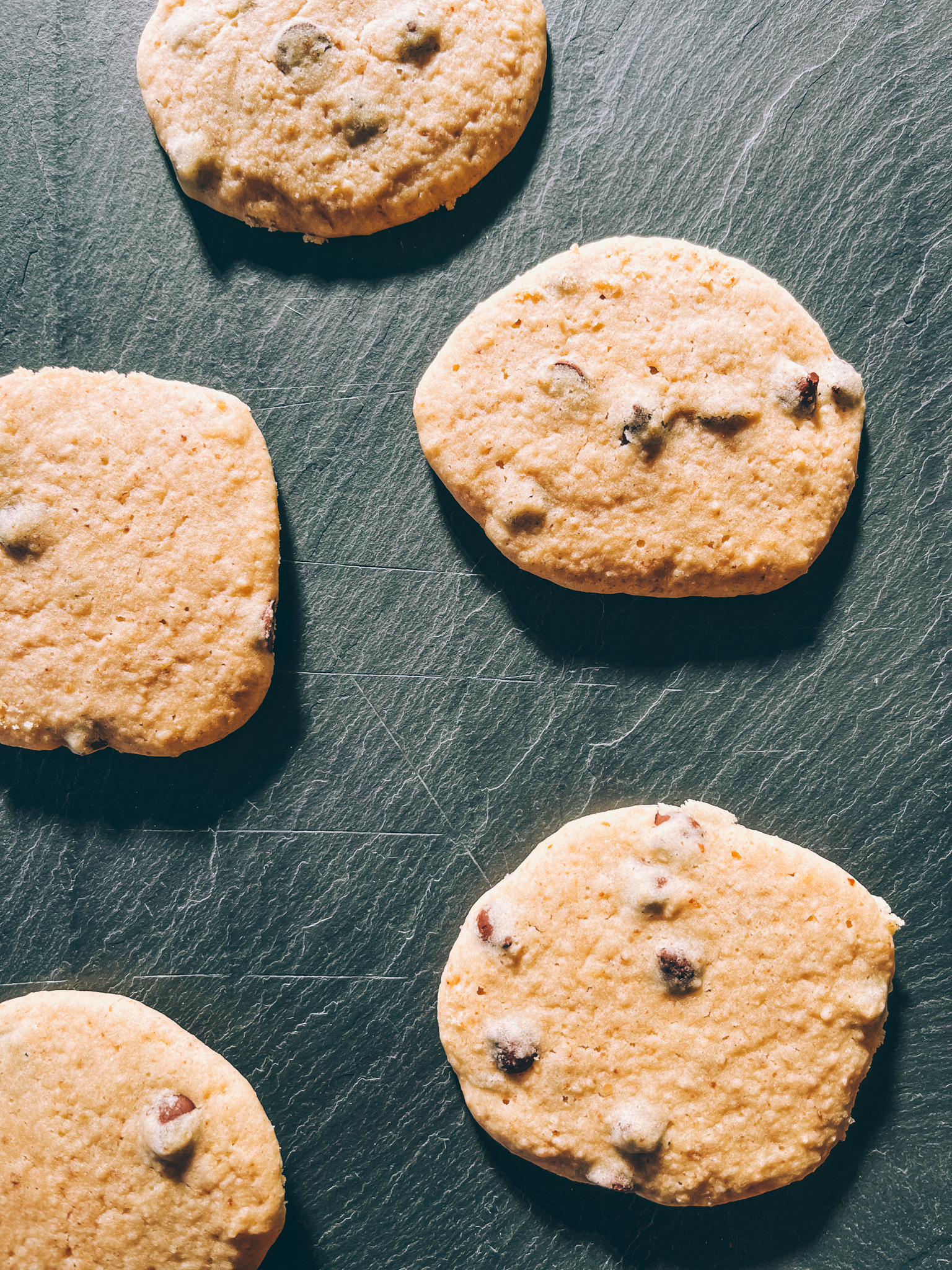
Chocolate Chip Cookies (gluten + dairy-free), makes about 24
These make a soft, chewy, chips-ahoy style cookie.
Recipe Updated: 1/28/23

1 2/3 cups / 200 grams gf all-purpose flour
1/2 cup / 50 grams quick oats, gluten-free if necessary
1/4 cup sugar / 50 grams
1/2 tsp. salt
1/2 tsp. baking powder
1/2 tsp. baking soda
1/2 cup /112 grams non-dairy butter
1 egg or flax egg
1/2 cup / 120 ml brown rice syrup or maple syrup
1 1/2 tsp. vanilla extract
1 Tbs. water
1/2 cup / 80 grams dark chocolate chips or 1/2 cup of rough chunks, from a dark chocolate bar

  • Preheat oven to 375 degrees F. If using flax instead of an egg, mix 1 Tablespoon ground flax seed with 3 Tablespoons warm water and stir together to form a little slurry.
  • Mix the dry ingredients in a large bowl and set aside.  In a medium bowl, whisk together the oil, egg or flax mixture, brown rice syrup, vanilla and water.
  • Stir into the dry ingredients, and mix in chocolate chunks.
  • Cover and chill the batter for about an hour or overnight.
  • Divide into cookies on a baking pan and bake each batch for about 10 minutes.