Moroccan Quinoa Salad, a favorite

IMG_1515

I cannot count the number of times I’ve made this main-dish salad the day before a race, gobbled it up as my night-before meal, and then happily gone back for the leftovers in the hours after the effort was over. Though I’ve eaten so many kale and quinoa salad combinations over the years–and perchance you have too–this one is my personal favorite this past year. Similar in many ways to this dish, I’ve changed up most of the ingredients and quantities, as I tend to, and now it is simply the kind of food I like to eat all the time, but especially when the weather begins to turn back to cool and the days shorten. Oof, I think we’re getting there.

Moroccan Quinoa Salad, serves 3-4 as a main dish
1 cup quinoa, rinsed and soaked
2 3/4 cups cooked garbanzo beans (from 1 cup dry beans, or use 2 cans, drained and rinsed)
1 large bunch kale, diced
1/4 cup hazelnuts, roughly chopped
1/4 cup dried apricots, diced
1/4 cup raisins
2-3 Tbs. capers, rinsed and drained
a couple small handfuls of mint leaves, minced
salt as needed

Dressing:
2 Tbs. extra virgin olive oil
2 Tbs. apple cider vinegar
1 tsp. Dijon mustard
1-2 tsp. maple syrup or honey
1/4 tsp. black pepper
3/4 tsp. cumin
3/4 tsp. cinnamon
1/2 tsp. turmeric
1/4 tsp. cardamom
1/4 tsp. coriander
1/16 tsp. clove
1/8 tsp. nutmeg
1-2 Tbs. water, as needed to thin

  • A few hours before making, soak the quinoa in water and add a splash of apple cider vinegar. This will reduce some of the phytates, making its minerals more available and digestible. Then, drain and rinse the quinoa and add it to a small pot with 1 1/2 cups water, a pinch of salt, a splash of the dressing, and the raisins and chopped apricots. Bring to a boil, cover, and turn down to low. Cook for 20 minutes and then remove from heat and set aside to cool.
  • While the quinoa is cooking whisk together the dressing ingredients and chop and toast the nuts.
  • In a large sauté pan over medium heat, add a splash of the dressing and warm until it starts to develop an aroma. Then add the kale, a pinch of salt, and a little water. Stir and cover to steam sauté for just a couple minutes. Remove from the heat.
  • To a large salad bowl, combine the cooked and cooled quinoa, garbanzos, chopped hazelnuts, dried fruit, and capers. Then, to the top add the cooked kale and dressing. Stir it all together gently and top with the mint leaves to finish.

NOTES:
– Balances Pitta and Kapha Doshas
– Six Flavors:
Sweet – quinoa, honey/maple syrup, apricots, raisins
Salty – salt, capers
Sour – apple cider vinegar, lime juice
Bitter – kale, mustard, turmeric
Astringent – kale, garbanzo beans, quinoa, hazelnuts, mint
Pungent – mint, mustard, black pepper, cumin, cinnamon, cardamom, turmeric, coriander, clove, nutmeg

Cooling Kitchari + End of Summer Notes

Cooling Kitchari + End of Summer Notes

IMG_1904


After sharing about my experience with eating at the relay, I got a request to share the kitchari that I made and ate during the race. As I’ve told more than a few people, it is a variation on dozens of “beans and rice” meals that I regularly make and consume. One thing that is different, however, is that I’ve been paying a little more attention to the energetics of food these past few months, how certain things make me feel, physically and emotionally, and really asking myself, What do I need today? to feel my best. Part of this is perhaps just where I’m at in life, with my relationship to food and my body, and the other part is that I find when it comes to healing complex health concerns, which I’ve struggled with for a number of years, I believe we each individually have the internal knowledge of what is best for us, if only we tune in and acknowledge it.

I’ll share a little more about what I have adapted, and suggestions for how you can do the same in the recipe notes below, but first a few good articles, a video, and a podcast episode that I particularly enjoyed these past few weeks.
 

IMG_1867


Nutrition + Food:
Superfood or Super-Hype?: ‘My advice is to think twice before you succumb to the next cure-du-jour and run out to buy this week’s superfood. It might cure what ails you (though probably not). Better to take a thorough look at your lifestyle, habits, and diet. Choose from the widely available healthy foods and go for a long walk!’

The Antioxidant Effects of Acai versus Apples

A Vegan Dietitian Reviews “What the Health”: There has been A LOT of discussion and controversy over this new documentary, but I think Virginia Messina does the best job detailing the problematic nature with how the information was presented.

Microbiome: Increase Your Diversity: ‘However good your diet and gut health, it is not nearly as good as our ancestors’. Everyone should make the effort to improve their gut health by re-wilding their diet and lifestyle. Being more adventurous in your normal cuisine plus reconnecting with nature and its associated microbial life, may be what we all need.’

This Is Your Brain on Cheese: When I first learned I was reacting negatively to gluten and dairy and eliminated them from my diet, I found dairy was much more difficult to remove, and I went through weeks of anger and frustration at the sudden lack. After that ‘detox’ period was over, I have never craved cheese or other dairy again. Some of the evidence in this article explains why.

Are Endurance Athletes More Susceptible to Getting Diabetes? ‘If you’re eating like a Tour de France rider, just make sure you’re training like one too.’

A Cook’s Remedy: I absolutely loved Aran’s video showcasing her Spanish Roots and relationship to food and body, and her journey over the years. It is episode Three, parts one and two.

And Lastly, a podcast episode to really get you thinking about your relationship to food and buying in to diet culture–I know it certainly has been the start of a paradigm shift for me: Isabel Foxen Duke on Sanity around Food, Surrender, Diet Culture, Fat Phobia as a Social Justice Concept + So Much More
 

IMG_1882


Self-Care + Mindfulness:
The Mindfulness of Pure Experience

Turning Softly Towards Your Pain Rather Than Avoiding It: ‘I began to alter my relationship to negative selective memories and go towards them and soften them rather than avoid them. I would notice how they made me feel, where I felt them, breathing deeply, anchoring myself around the thought or memory in order to reduce the impact it had on me.’

The Tomorrow List: ‘Instead of listing what I was grateful for that day, which despite my inability to articulate was still aplenty, I made a list of what I would be grateful to have realised tomorrow. If all went according to my desire’s and the sake of my safety, how I would feel at the end of my day.’

I’ll shoot you straight: ‘If you are resentful and do nothing to change either your exterior or interior, you have not met yourself. If you go back to the same coping mechanisms over and over again with the same results over and over again, you have not met yourself. If you keep opening the same doors over and over and OVER again, there’s a whole untouched hallway ahead of you – and you have not met yourself.’ 

‘I sit here knowing my body will go through so many incarnations and I’m going to treat it like it’s royalty no matter what. I smile because I have not only a yoga practice on the mat but off the mat as well (life, yo) that strives to be authentic, layer-peeling, free of addiction and crutches and sameness, and I feel as if I am gliding down the hallway, door by door. And I realize I am free, I am whole, I am love. And I am not afraid.’

And to end on a slightly lighter note, I love Sophie’s suggestions on 12 Ways to Make Your Kitchen a Hippie Haven, combining both food, nutrition, and mindfulness topics.
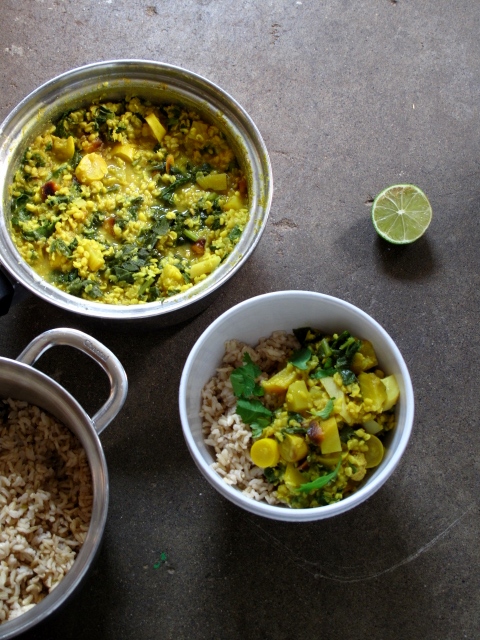
 

IMG_1913


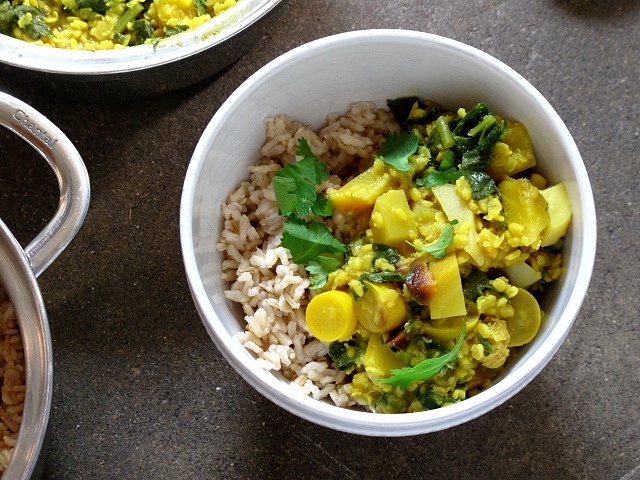
Cooling Kitchari
, serves 4
Adapted from What to Eat for How You Feel

Kitchari is a creamy porridge-like blend of beans and rice that has been a staple of Ayurvedic cuisine for many centuries. It is often consumed during times of healing or for detox, as simple frugal fare, and as a comfort meal. There are countless variations on it, and I adapted my own, choosing to cook the beans and rice separate for a less porridge-like texture in lieu of a more soupy curry served over brown rice. I’ve made it with both split yellow mung dal and red lentils. Both are lovely but the red lentils will break down more into that porridge consistency, and the split mung beans will retain a little more texture. The spices used here are more in favor of consuming this during the summer heatwave we are once again experiencing, with cooling and digestion-friendly fennel, and smaller amounts of the heating and pungent ginger and turmeric spices. Additionally, use whatever seasonal vegetables you have on hand. I chose to use more grounding vegetables from my garden like golden beets, yellow summer squash, carrots, and white ‘salad’ turnips and their greens. My garden is bursting with tomatoes, peppers, and eggplant too, and though I really do enjoy those foods, I’m noticing that they’re not leaving me feeling my best so I left them out. If you choose to make this, I invite you to adapt it as needed, adding in one or two minced chili peppers if you’re feeling a little stuck or sluggish, or taking out the black pepper if you’ve been overheated.

1 cup yellow split mung dal or red lentils
3 cups water or vegetable broth
2 cups diced seasonal vegetables
1-2 cups dark leafy greens
2 bay leaves
1 teaspoon fennel seeds, ground in a spice/coffee grinder
1 teaspoon fresh grated ginger
1/2 teaspoon ground turmeric
1 teaspoon salt
1/4 teaspoon black pepper, if desired
1 Tablespoon olive oil
1 cup long grain or basmati brown rice
2 cups water or vegetable broth
1/4 cup fresh chopped cilantro, basil, or parsley
lime wedges, to serve

  • Soak the mung dal or red lentils for at least 30 minutes, then drain, wash well, and and drain again. Do the same in a separate dish with the brown rice.
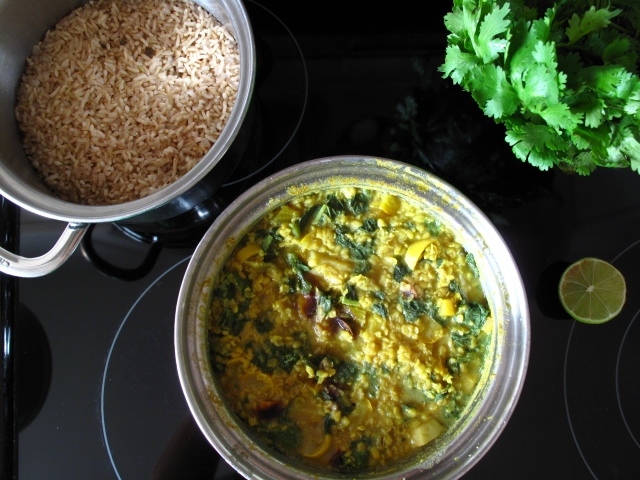
  • In a small saucepan, bring the rice and water to a boil, cover, turn down to a simmer, and cook for about 40 minutes or until all the liquid is completely absorbed and the rice is plump.
  • Combine the mung dal or red lentils and broth or water in a medium saucepan and bring it to a boil over high heat. Stir occassionally and skim off the froth that comes to the surface.
  • Add the vegetables and fennel, bay leaves, ginger and turmeric, leaving out the greens for now, and mix well. Reduce the heat to medium-low, cover, and simmer for 20-25 minutes, or until the beans are soft and fully cooked. Stir occasionally as needed so nothing sticks to the bottom of the pan.
  • Then stir in the greens, oil, and salt and pepper to taste. Cook just a little longer until the greens soften.
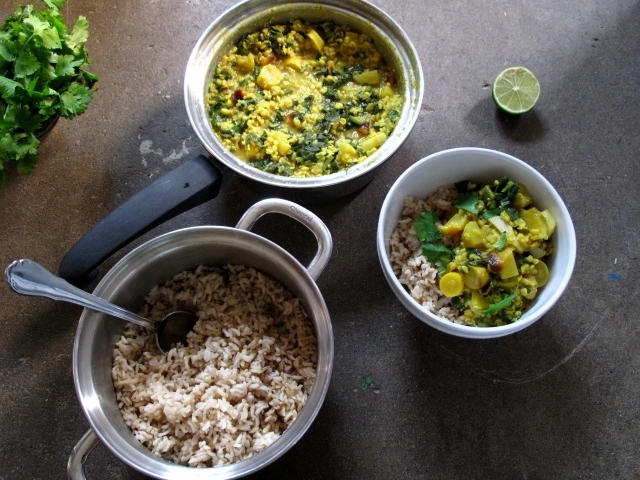
  • To serve, spoon the kitchari over a bowl of rice and top with minced cilantro or other cooling fresh herbs and a few squeezes of lime juice.

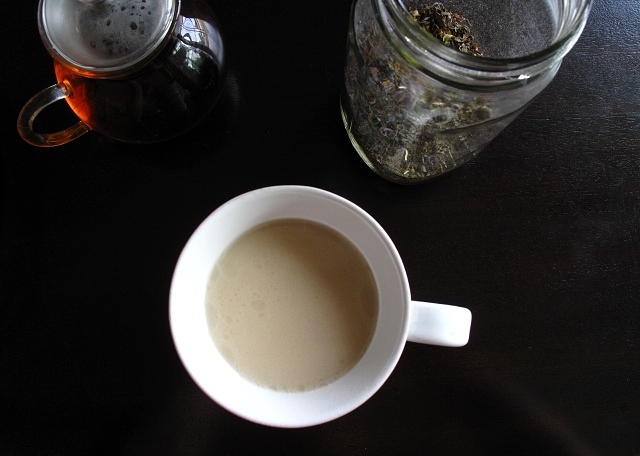
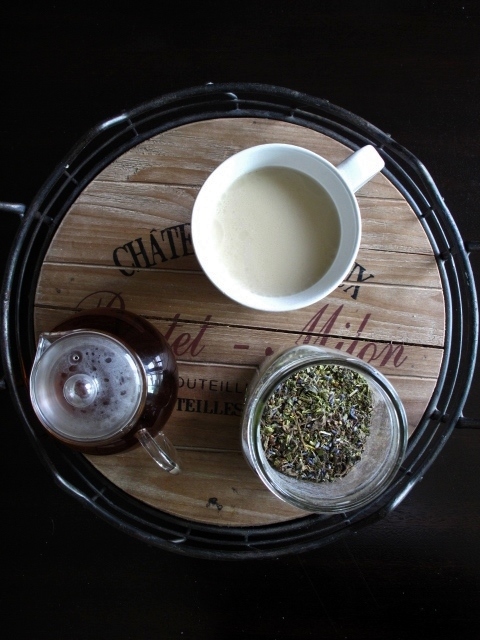
summer calm herbal latte

summer calm herbal latte

IMG_1856


Did I tell you my summer term was a real whopper? I probably did because I complained and/or used it as a (valid) reason to opt out of a whole host of summer social activities that I wanted to partake in on many an occasion these past weeks. If I’m remembering correctly, I was singing the same tune last summer too so clearly I need to learn how to say no more to heavy lifting during the long seasons when I want to relax, socialize, and travel more. I somehow ended up taking three of the best but most time-intensive classes and most of my weekends for May/June/July were spent polishing off weekly deadlines and term checkpoints.

Realistically though, it wasn’t all bad. My herbal class textbook went along well with both my pathophysiology and personal life learnings, and I found myself scribbling this recipe for a summer calm herbal tea blend and latte in my notebook while reading the nervous system chapter on herbs on a day that I was also laying on the grass under the tree in our backyard, listening to the buzz of insects and children playing nearby, and feeling generally rather chill. So yeah, it wasn’t all tough going. I had a lot of relaxing afternoons where I could read or study from anywhere as long as I got it done. Many days, I chose outside in the backyard or the local forest.

And then it got hot and term project deadlines brought me indoors and reliant on the internet. And I forgot all about my recipe that includes a few nice herbs to infuse calm.


IMG_1849


Since we’re now closing in on just a few last weeks of summer and the back to school or work frenzy has got some of us a little higher strung, it’s definitely time to bring out this recipe. I might just be sipping on it a ways into the next season as well as it will be perfect for those cool, dark afternoons and evenings that are sadly coming our way. It’s got a few perhaps new-to-you herbs that are really good ones too.


IMG_1846IMG_1847IMG_1844


Skullcap, Scutellaria lateriflora // One of the best anxiolytic/nervine herbs for calming a racing mind, or at least I think so! Skullcap is one of the original herbs used in herbal medicine in the United States, and has a rich history of use here since at least the early 1800’s. In addition to being useful for anxious, nervous, and stressed mindsets, it is also a great anti-spasmodic for tight, painful muscles–both of these reasons are why I love it so much! Personally, however, I think its flavor is one that “grows on you.” When I first began working with skullcap, I found its stronger flavor slightly off-putting, but now I use it so much I tend to really favor it.

Holy Basil/Tulsi, Ocimum sanctum // With a very long history of use as a revered herb in India, and used there as a rasayana or rejuvenative, Holy Basil brings about health and long life. It is known as an adaptogen, meaning it will restore stress levels back to a balanced state, and also has antioxidant and neuroprotective qualities.

Lemon Balm, Melissa officinalis // In the springtime on my trail runs, I often stop along the way and rub my hands in the lemon balm, especially if I’m in need of a mood lift. The fresh herb smells and tastes very lemony, but in the dried form, it is much more subtle, and acts like a gentle mood elevator. Some studies also show it enhances cognitive function, and may even relieve some symptoms of Alzheimer’s disease like forgetfulness and irritability. It’s also great for stress headaches and improving focus.

Lavender, Lavendula angustifolia // Lavender is a mild nootropic herb, which means it “acts on the mind,” helping cognitive function. Additionally, it is good for nervous headaches, exhaustion, or anxiety. The essential oils in the flowers have antioxidant and anti-inflammatory properties as well, and I find their aroma just lovely.


IMG_1862


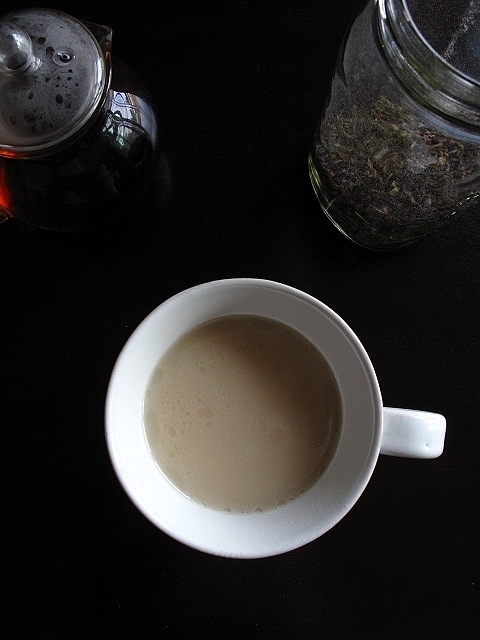
Summer Calm Herbal Latte, makes 1 large drink (18-ounces)
In the last step, I like to combine the steeped tea and warm milk in a liquid measuring cup and then have about a mug and a half of latte, as it tends to be the perfect amount for me. 

1 Tbs. summer calm herb blend (below, or herbal tea of choice)
3/4 cup nut milk
1 tsp. coconut butter
1/2 tsp. pure vanilla extract

  • Add herb blend to a tea ball or basket and then pour 12 ounces freshly boiled water over the herbs, cover or cap the mug or pot to capture all the beneficial essential oils, and allow to infuse for at least 10-20 minutes.
  • While the herbs are steeping, gently warm the nut milk, coconut butter, and vanilla extract on the stovetop or in a microwave safe dish.
  • Remove the tea ball or basket and carefully combine the tea and nut milk blend.


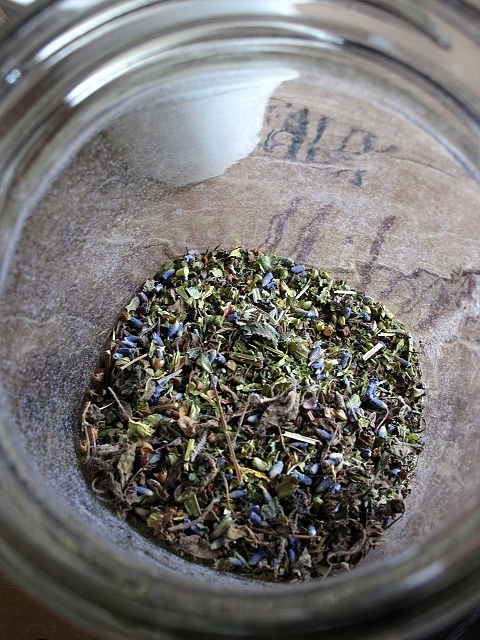
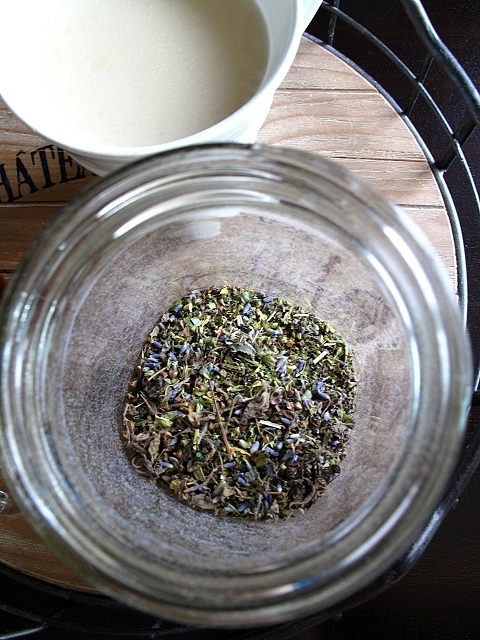
Summer Calm Herbal Blend

Dried herbs are best purchased in small quantities in bulk from a natural foods store, if you have access. Alternatively, an excellent place to source them online is from Mountain Rose Herbs.

2 parts skullcap
2 parts holy basil
2 parts lemon balm
1 part lavender flowers

  • In a jar, or other glass container, combine the dried herbs in parts, either by volume using tablespoons or measuring cups, or by weight. Then gently shake or stir the herbs, cap, and label with ingredients and amounts for future reference.