comforting red flannel hash

comforting red flannel hash

img_0977


And so it goes. A brand new year. If you have experienced anything like the collective, 2016 was a tough one. The excitement for new goals, resolutions, and the prospect of being better and different is all around us. Honestly though, there were a lot of exceptionally good happenings in the last year too and I’m not so quick to wish it all away.

Even so, I went home for Christmas week to my parents and I admit I ate more than I’d have liked. Not too much, but more than “enough.” More cookies, more servings, more mindless chomping to fill a void I didn’t realize existed until I was there, in it.
 

img_0973img_0987


And here we are back at it.

We’ve been a whole year now in our new house. I’ll call it new even though it’s the oldest on our street by far and we’ve been here all these months. It still feels new and not quite a home just yet. There’s a blank wall in the living room still, waiting for the right photo, a total lack of rugs on cold tile floors, and the dog fence and house in the back I want torn out. There’s talk though of a kitty–even as there’s the one of us that’s extremely allergic. Let’s just never mind that for now.

Yet we’ve made the place our own in small ways that feel significant. I’ve had food to eat growing since last February and even as I keep kicking myself now for not putting in more of an effort at a winter garden, there are leeks, greens, and roots to be harvested yet, we just finished the last of the Brussels sprouts, and we sat down to a NYE meal that was largely from our own back yard. Small gains that mean a lot.
 

img_1022


What do you eat in this new season of reset to get back on track? I tend to forego the cleanses, green juice/smoothies, and cold salads, and just focus on what sounds good. This time of year, that means gently warmed greens that grow through the winter like kale and collards, roasted or steamed roots including beets, parsnips, carrots and the like, warming spices (cinnamon, ginger, turmeric, rosemary, sage, nutmeg and cloves!), hot drinks, and squash.

Lots of squash. I eat it in my oatmeal often, and spoon little cupfuls of plain roasted puree in between or to round out meals because that’s how I like it best. I know. I know. William curls his nose and tells me so.
 

img_1019


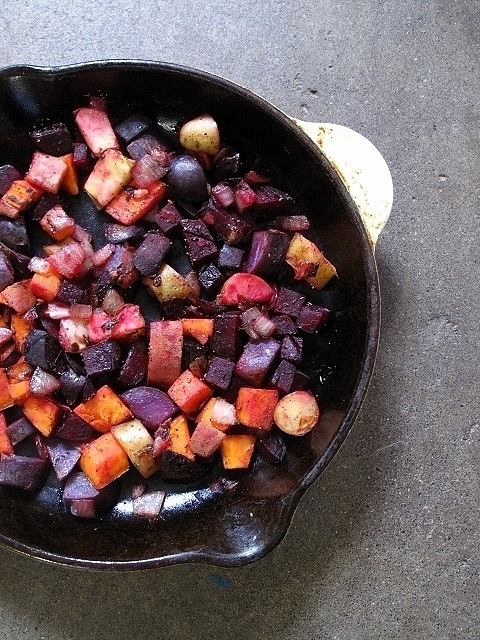
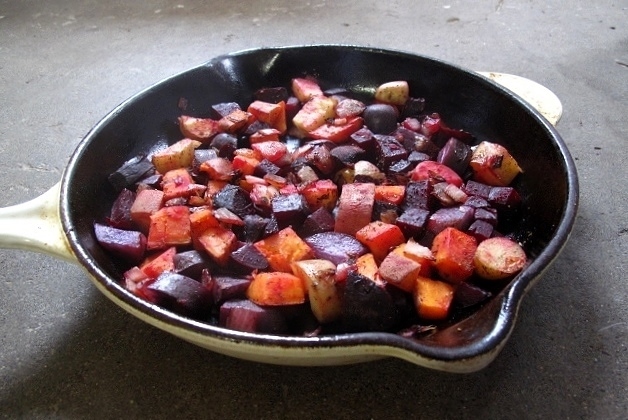
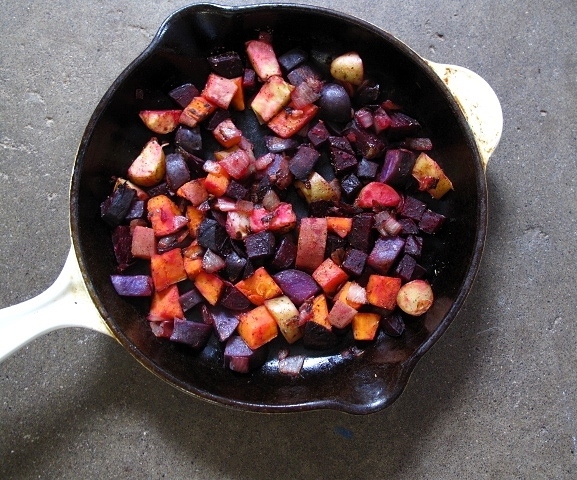
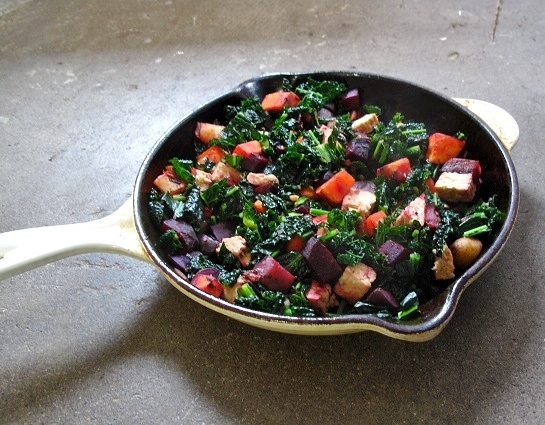
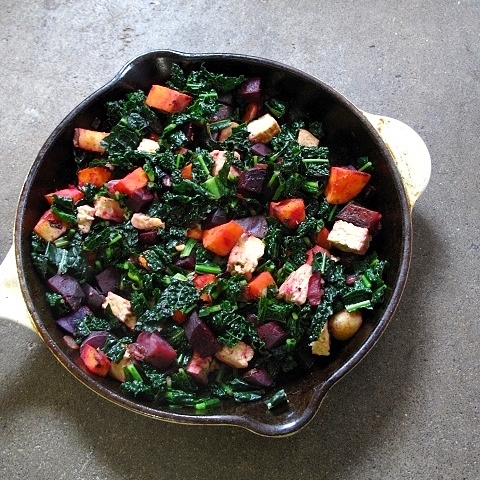
Comforting Red Flannel Hash, serves 4-6
1 pound potatoes (2-3 medium), diced into 1-inch pieces
1 pound sweet potatoes (1-2 medium), diced into 1-inch pieces
1 pound red beets (3 medium), diced into 1-inch pieces
1 Tbs. extra-virgin olive or coconut oil
1 large onion, medium-diced
2 cloves garlic, minced
sea salt and black pepper, to taste
2 Tbs. each minced parsley and fresh dill or 1 tsp. dried dill
add-ins such as tempeh, diced greens, etc.

  1. Steam the potatoes and sweet potatoes in a steamer basket set in a pot of simmering water, covered, until it is fork tender, which will take about 12-15 minutes. Drain, remove, and repeat the same steaming process with the beets.

  2. Meanwhile, heat a large ovenproof skillet over medium-high and add in the oil. Cook the onion until it is translucent.

  3. Then stir in the garlic, potatoes, and beets and season them with salt and pepper. Flatten the vegetables with the back of a spatula to compact them a bit. Cook the hash until it is brown and a little crispy on the bottom. Stir occasionally, and once the bottom is nice and crispy, flip it over to crisp up on the other side. Once the whole mixture is browned to your desired consistency, sprinkle over the herbs, and serve or stir in the add-ins, as desired.


Roasted Sweet Potato + Beet Soup

img_5042


Sometime in the early months of 2013, I discovered a whole new genre of food blogs. At the time, I was coming home from work to an always empty house, laying on the floor for an hour to re-calibrate from my day, working myself into a 30 minute or so run, and then reading a couple food blogs over dinner (usually a sweet potato, roasted during that run, with black beans, salsa, and a pile of greens), working another couple hours just to survive the next school day, and falling into bed into a deep and dreamless sleep before my alarm clock wrenched me out and up and into another day that was much the same. I was exhausted and unhappy — but I was learning so much and I could tell if I could just keep putting one foot in front of another and trust my intuition, I’d end up in a better place. Also, I was learning a new way to eat and cook and it’s safe to say in my years-long shift in eating, a major one was slowly taking place.

One of the blogs I discovered during that time was Sarah Britton’s My New Roots, and it was from her that I first learned about the “holy trinity of flavor,” or what I’ve now learned is referred to as FASS. Personally, I like to call it the four corners of cooking.

Sarah shared about an experience in her cookbook of a chef thinking her soup was bland and teaching her that every dish needs to have an acid, a salt, and a sugar, or will taste a little less than ideal. This is Sarah’s holy trinity of flavor. In the four corners, a fat is added to that trio, to make FASS. For each of the four components, a little can go a long way.


img_0465

img_0468


It was soup week this last week in my cooking lab for nutrition, and we experimented with refining the four corners of our recipes. Flavor is a very personal thing, but I found that very simple recipes with few ingredients, a little fat, an acid, a sweet note, and some salt can work wonders in making a recipe taste delicious. After eating different types of soup for several days and using William as my second taste-tester, I felt the need to share the humblest of soups from this week. I say it is humble but it was also the one that absolutely hit the spot, more than once, after coming home late from long days of work, hard runs, and commuting.

I wrote up a description about working with the four corners of flavor for class this week, and because I think everyone should cook with flavor, I’ll share a rendition of it here: First, when refining flavors, make sure the dish is at the temperature you will serve it at, as the flavors will change, depending on whether you are tasting it hot or cold.


img_0447


For any given recipe, it is likely that a fat source as either butter or an oil will likely be used in building the base. The fat type can add flavor, if it is intended to, or if added near the end as either a cream or nut cream, can add mouth feel and a change in texture as well. Adding a fat such as lightly toasted and chopped nuts can also be a flavor-enhancing garnish to round out a finished recipe.

As an acid component, a squeeze or two of lemon juice or one of the many types of vinegar can be added. The small amount of acid added at the end of cooking will enhance and sharpen the other flavors of the dish.

Salt, the third component, is likely the most important, and can really heighten the other flavors. The right amount of salt is a very personal thing, and it can easily be overdone to the recipe’s detriment, so add it in small amounts and taste as you go. You will know when you’ve added the right amount.

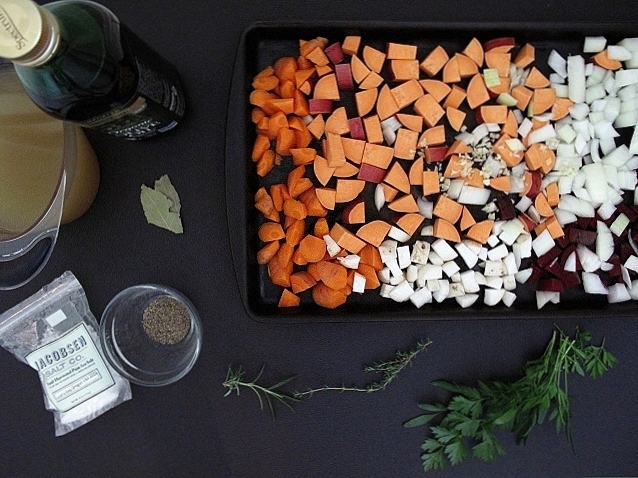
The fourth corner is sugar. Depending on ingredients, you might already have a sugar component. For instance, in this roasted vegetable soup, the roasting of the vegetables prior to adding them to the broth brought out their natural sugars through the process of caramelization. For this soup, I did not need to add any additional sweetener. The sweet flavor balances and rounds the soup and also will satiate the appetite, which is why if it is missing from a meal, we often finish wanting more, even though we’re physically full.


img_5043

Roasted Sweet Potato + Beet Soup, serves 2-3
Feel free to use whatever root vegetables and beans are on hand or desired. Recipe adapted from Eleonora Gafton. 

1 Tbs. olive oil
1 sweet potato, medium dice
1-2 large beets, medium dice
1 large carrot, roll cut
2-3 small turnips, medium dice
1/2 large yellow onion, medium dice
1 clove of garlic, minced
4-5 cups vegetable broth
1 sprig of fresh rosemary
1 sprigs fresh thyme
1 bay leaf
2 Tbs. fresh parsley, minced
1 1/2 cups cooked black-eyed peas
sea salt to taste
ground black pepper
a squeeze of lemon juice, as necessary

  • Place all diced vegetables on a large baking pan and drizzle with olive oil and a pinch of salt.
  • Roast them in a preheated oven at 400 degrees F for 20-30 minutes or until the vegetables are soft.
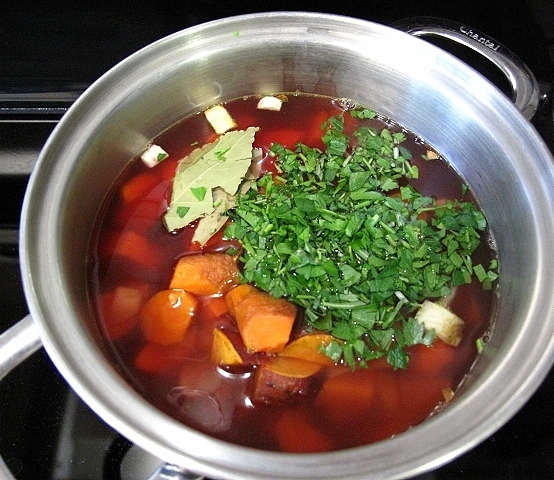
  • In a large pot, add the roasted vegetables and herbs, along with the broth and beans. Bring to a boil, reduce heat and simmer for about 10 minutes.
  • Season as needed with additional salt, pepper, and lemon juice. Serve with fresh chopped parsley, and if you’re in the mood, fresh baked scones or cornbread.

Moroccan Tagine with Sweet Potatoes + Beets, food for runners (or this runner)

Moroccan Tagine with Sweet Potatoes + Beets, food for runners (or this runner)

IMG_0359


There is nothing like a few days spent living with others to put into perspective how truly personal is our choice in food. While I will happily eat roasted broccoli or leftover kale salad for 9am snack (and frequently do), even the idea of kale salad at a seemingly more appropriate time of day might leave others running for the door.


This point is driven home in my frequent conversations about food with others. My work at the university has often left me chatting about the differences between foods here in the U.S. and elsewhere in the world–how everything is just sooo sweet–and how diets inherently change even without the individual really attempting to when taking up residence here.


IMG_0370
IMG_0368
IMG_0362

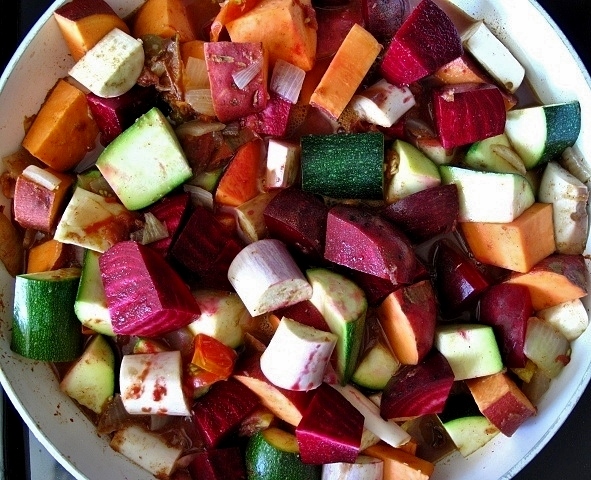
In sharing this recipe, I’ll make a point in saying first that I question the title and definitely the authenticity as I’ve never been to Morocco and have only eaten at one semi-Moroccan restaurant. And yet I love the flavors of “Moroccan” foods, particularly the tagines with sweet, savory, and spicy notes. So I’ll take liberty and call this my own version of a Moroccan tagine.

Second, I can see some camps loving this and others, again, running for the door because whoa, there are tooo many vegetables and don’t get me started on Rebecca’s fondness for spices.


IMG_0307


But basically I call this the type of food that I like to eat to fuel my running life. Or more adequately, it is the food I tend to crave before a big run or race. So when William and others were packing sandwiches for our relay race a few weeks back, I found myself making and then eating Moroccan sweet potato + beet tagine with quinoa to fuel my runs and turning to it again a few more times throughout the ensuing weeks.

It is also a recipe I know I will adapt and make further into the fall season and the months (and miles) to come.


IMG_0311


Moroccan Sweet Potato + Beet Tagine, serves 6-8
Inspired by Vegetarian Everyday

Though I tend to use a heavy hand with the harissa, I haven’t yet purchased or made one that has been nearly as spicy as the kind I’ve had in a restaurant–and its flavor tends to get muted by all the sweet notes of the apricots and currants. Use more or less, or even leave out, as you see fit.

1 tablespoon extra virgin olive oil
1 large onion, chopped
4 cloves garlic, minced
1 1/2 inches fresh raw ginger, finely grated
1 1/2 tablespoons cinnamon
1  1/2 teaspoons cumin
sea salt, to taste
2 tablespoons harissa
4-5 large tomatoes, diced
zest and juice of one lemon
3-4 beets, sliced into 2 inch pieces
1 medium eggplant, sliced into large pieces
1 medium zucchini, sliced into 2-inch pieces
2 medium sweet potatoes, sliced into 2-inch pieces
10 dried apricots, each sliced into about six pieces
2 cups cooked garbanzo beans
1/4 cup currants
thinly sliced fresh mint, to serve
cooked millet, quinoa, brown rice or other, to serve

Directions:

  1. Heat the olive oil in a large saucepan and sauté the onion for a few minutes until it becomes soft and translucent. Add the garlic and ginger and the spices and allow to cook for about 30 seconds more.
  2. Stir in the harissa, diced tomatoes, lemon zest and juice. Bring the sauce to a boil and then lower the heat to simmer.
  3. Add the beets, eggplant, zucchini, sweet potatoes, and apricots. Stir well so everything is nice and mixed, then cover and simmer for about an hour. Keep it covered as much as possible, but stir a couple times throughout the hour.
  4. Once the vegetables are tender all the way through, add in the cooked beans and currants, cook for about 5 minutes more to heat through, and then season with additional salt and pepper, if needed.
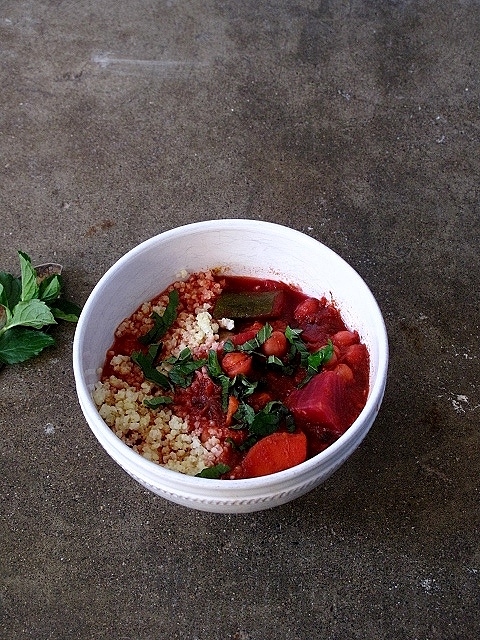
  5. Serve over cooked millet or other grain with a garnish of sliced mint on top.