strawberry, asparagus + radish flatbread

strawberry, asparagus + radish flatbread


IMG_4301


It started with my annual, have you tried asparagus before? questioning at the high school garden. To all the new students who told me they won’t eat asparagus, I brought them over to the plants, cut off a few stalks, snapped them into smallish pieces, and handed them over.

This always works.

I love converting asparagus haters. Fresh-off-the-plant raw asparagus is the epitome of what spring tastes like. It’s not tough or bitter or slightly limp like some of us have grown used to. It’s alive and green and has a flavor that even vegetable-avoiding high school students can get behind.
 

IMG_4298


Since then, we’ve been eating a few asparagus-filled meals on repeat.
 

IMG_4300


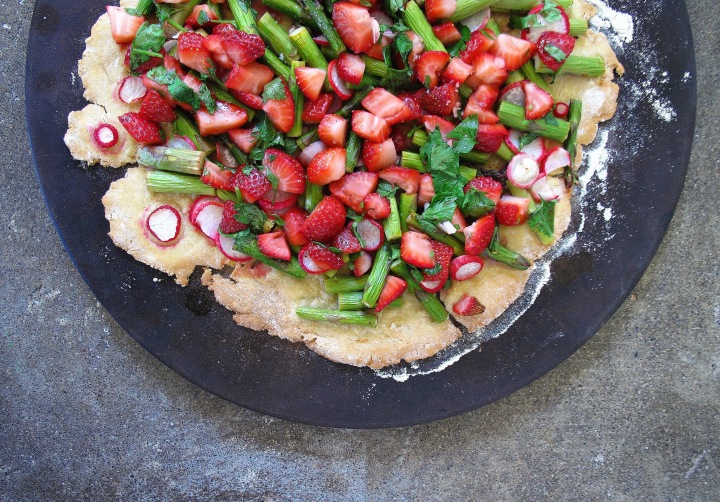
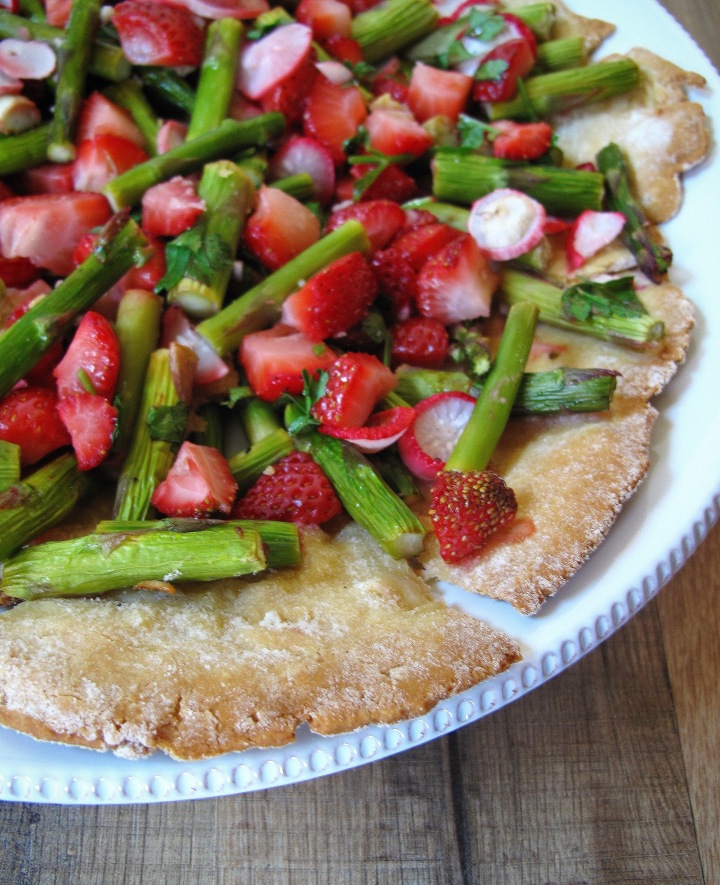
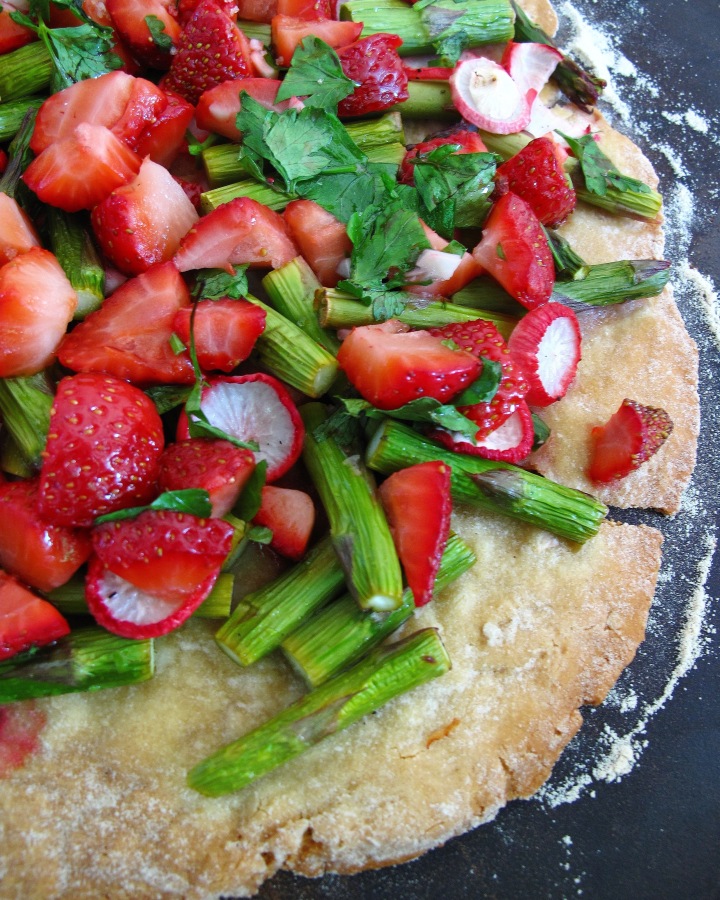
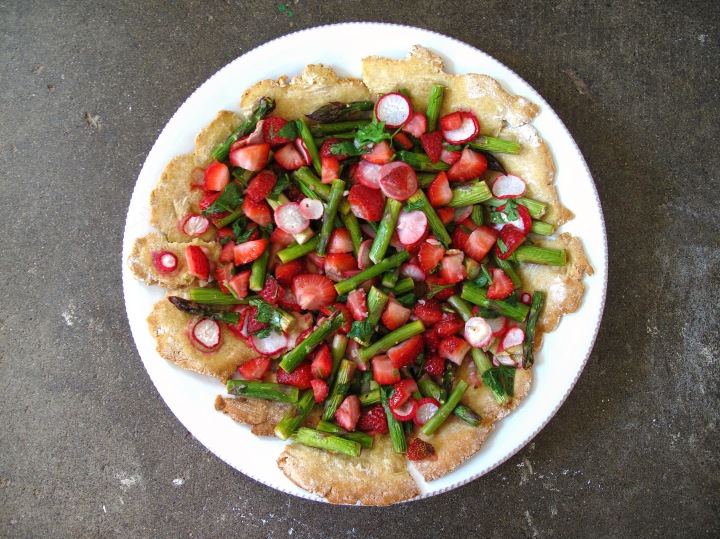
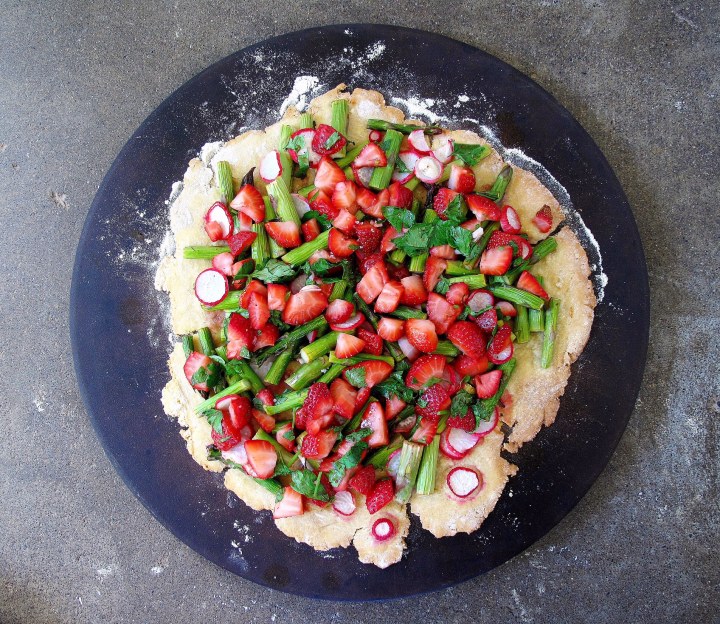
The first is this strawberry, asparagus + radish flatbread. It is perfect for a light meal or can be paired with others for more of a tapa-style selection. The Recipe Redux theme this month is tapas and small bites, so check out the link-up below for more ideas, if you’ve the mind. William and I have tended to make two of these flatbreads at a time, eat one for dinner, and then the other for lunch leftovers the next day. I like mine drizzled with a little balsamic vinegar and he leaves his as is. We love them.
 

IMG_4299


The other asparagus dinners we’ve been enjoying and sharing with friends this spring include a quick sauté of asparagus, mushrooms, zucchini, and peas over Lindsey’s chickpea mash and then again with her vegan chickpea alfredo pasta, which we serve with asparagus, peas, and any number of other spring vegetables.
 

IMG_4302


Strawberry, Asparagus + Radish Flatbread, makes 2

1 1/3 cups garbanzo bean flour

2/3 cups brown rice flour, plus more for dusting

2 tablespoons extra virgin olive oil

1 teaspoon baking powder

1 teaspoon fine grain sea salt

1/2-2/3 cup water

1 bunch asparagus, chopped into 2-inch pieces

1 bunch radishes, thinly sliced

juice from 1/2 lemon, or more to taste

olive oil

2 cloves garlic, minced

1 Tbs. raw honey

1 lb. strawberries, sliced

1 handful fresh flat-leaf parsley, finely chopped

balsamic vinegar, to drizzle, optional

  • Mix the flours, oil, baking powder, salt, and water. Add enough water to make a dough that can be handled and rolled. Then allow the mixture to rest for about 10 minutes. Divide it in two, and roll out one of the flatbreads on a floured work surface. Transfer to a baking pan or pizza dish and with a pastry brush or your fingers, coat the dough with a small amount of olive oil.
  • In a large bowl, toss the asparagus, radish slices, lemon juice, and garlic.
  • Then top the dough with half the asparagus mixture and bake at 400 degrees F for about 16 minutes. Without removing from the oven, add half the sliced strawberries, a handful of parsley, and a drizzle of honey, and then bake for an additional 3-4 minutes, just to warm the ingredients.
  • Remove from the oven, drizzle with a small amount of balsamic, if desired, slice and serve.
  • Repeat with the remaining dough and ingredients.

superseed porridge with rhubarb, blood oranges + tahini

superseed porridge with rhubarb, blood oranges + tahini

IMG_4106


William took over my yoga mat the other night and started doing weird yoga-esque stretches I’ve never seen before. I’m certainly no yoga expert, but I think he was making them up. When I inquired about this new foray into brief stretching, he started talking about helping out his Qi (sounds like chee), which in Traditional Chinese Wisdom is the circulating vital energy or life force within us.

Around our house, I talk about Qi all the time, especially as it relates to mental clutter, anger or frustration, and digestive unease–basically whenever I notice something is personally out of balance. William is just about the only one I talk about Qi with, and having him suddenly spout my words back at me was a moment of startling clarity. As it turns out, when we spend enough time with someone, we begin to believe and do the same things as each other. I guess that’s why he also wanted only a big thrown together “beans and rice salad” for his weekly meal contribution recently, instead of the more typical tacos, pasta, and pizza fare.

It all makes me wonder, what little practices and sayings am I picking up from him (and others) that I haven’t noticed?


IMG_9785


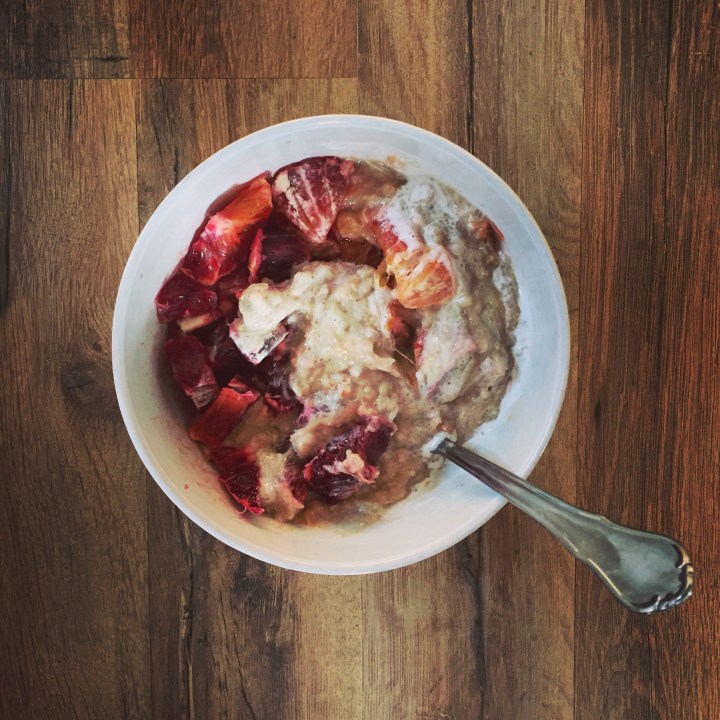
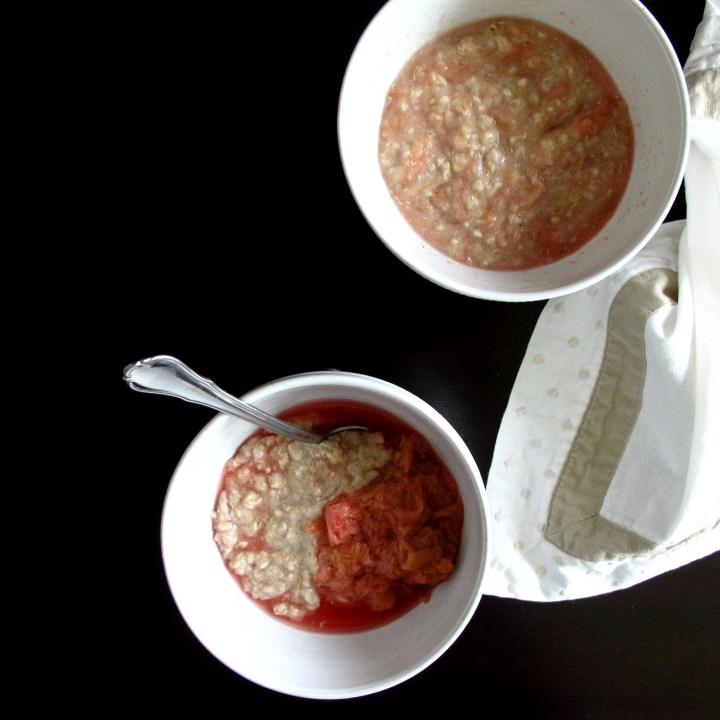
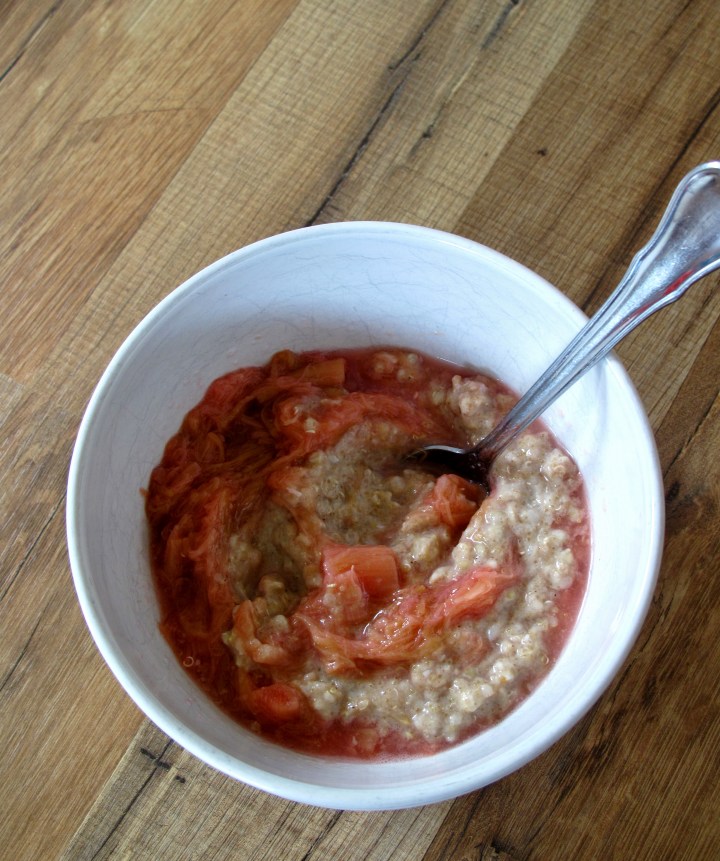
Superseed Porridge with Rhubarb, Blood Orange + Tahini, serves 1

I eat more oatmeal than my old horse but have also been experimenting with a good mixed grain/seed porridge combination these past few months. I’ve finally found one I like. It includes a few of the pseudo-grains/seeds I’ve been trying to enjoy more of including amaranth and buckwheat. They are wonderful and nutritional heavy-weights, but have strong, distinct flavors that can overwhelm all on their own. I leave out what we consider true seeds from the actual mix as I like to add ground sesame, flax, sunflower, pumpkin, hemp, chia, or tahini as the whim strikes, and I expect you will as well. Sometimes I add in an adaptogen like ashwagandha or maca powder, which I’m eagerly learning more about in my herbal medicine classes for their ability to help us adapt to stress. That’s a highly individual thing, however, and I recognize that simply making a good morning meal and eating it mindfully at a table is a vast improvement for many of us. I’ve tried this porridge mix with a number of flavor combinations throughout the seasons, but the one I love right now is heavy on the rhubarb with blood oranges and tahini.


IMG_9805IMG_9812


Super Seed Porridge Mix, makes 10 1/3-cup servings

2 cups old-fashioned oats, gluten-free if necessary

2/3 cup quinoa flakes

1/2 cup amaranth

1/2 cup buckwheat

  • Mix together and store in a container of choice. When ready to cook, use 1 cup water to 1/3 cup grains for each serving.


Rhubarb, Blood Oranges + Tahini Porridge

rhubarb sauce, as much or as little as preferred

1-2 tsp. tahini

1 cup water

1/3 cup porridge mix

1 blood orange, sections separated and roughly chopped and a little zest stirred in.

sweetener, to taste

  • I stew the rhubarb into a sauce or compote ahead of time. Including chopping and prep, it takes no more than 20 minutes. Simply chop a few stalks of rhubarb roughly and then add to a small saucepan along with a small splash of water. Cook over medium high for a few minutes until it becomes a sauce. Unlike a lot of people, I don’t add sugar to the sauce and instead leave it tart. I’ll add a sweetener of choice to whatever I mix it into and adjust as needed. If I feel like getting fancy, I’ll stir in a little vanilla or orange zest.
  • Then boil the one cup water and whisk in the grains in a small saucepan. Cook until it becomes a porridge, and stir in the rhubarb sauce and tahini in the last few minutes, until warm.
  • Finally, add in a little orange zest and the orange sections in the last minutes, as their Vitamin C is heat sensitive and easily lost in cooking. Add sweetener of choice to taste.
  • All in all, this is more of a weekend porridge—or as I’ve taken to doing, it can be easily made up the night before. I cook the entire thing save the blood orange, and then pour into my serving bowl and let it chill overnight in the fridge. The next morning, I simply reheat in the microwave and stir in the orange and orange zest and I’ve got a fancy start to an otherwise busy morning.

Sprouting Broccoli, Za’atar, Tempeh, + Harissa Yogurt

Sprouting Broccoli, Za’atar, Tempeh, + Harissa Yogurt

IMG_9775


Recently, I was listening to one of my favorite podcasts, and the question came up, What are you totally obsessed with right now? I love that question, and in lieu of sharing links and things, here are a couple of life updates/current obsessions:


IMG_9706IMG_9683IMG_9742


  • The microbiome and its potential role in virtually all aspects of health and disease. I listened in to most of the Microbiome Medicine Summit last month, and all the new information only cemented this interest.
  • Herbal remedies for stress, sleep, and anxiety: I’ve been taking an introductory class on Herbal Medicine this term and at the beginning of January, we picked one herb to study in depth. I’ve been studying American Skullcap (Scutellaria lateriflora) and I picked it for its nervine (nerve-supporting), anti-anxiety and anti-spasmodic properties. It’s been fascinating to learn about not only skullcap, but the whole host of other herbs that support sleep, stress, and anxiety, particularly because this is an area I’ve been struggling with. I’ve been carting around a review article titled Nutrients and Botanicals for Treatment of Stress: Adrenal Fatigue, Neurotransmitter Imbalance, Anxiety, and Restless Sleep and instead of reading feel good books, I’ve been re-reading it in my free time (see, obsession!). Also, I’ve been taking a series of herbal formulas which include valerian, lemon balm, chamomile, and passionflower, among others. Like skullcap, these are all sleep and stress-supporting herbs. I’ve been seeing positive results.
  • Positive self-talk and self-care: I’m almost done with my first term in nutrition grad school! It’s been an interesting few weeks, as I began with A LOT of class work, and then gradually dropped off the load and finished classes throughout the term. I have one week left of one class and then a couple weeks break. I’m already excited for next term and in particular, a foundation health and wellness class that focuses on self-care and behavior change. I consider myself somewhat good at self-care, but I’ve been obsessed lately with positive self-talk. As I work on it, I’ve noticed the negative self-talk is gradually improving. I’ve also noticed that I’m usually self-deprecating when I receive compliments, and though I’ve always thought it was just part of being humble, I’ve realized I do not have to make an excuse every time I receive a compliment. I can simply say, thank you, and leave it at that. There are huge things to be gained from building oneself (and others!) up, instead of tearing down.
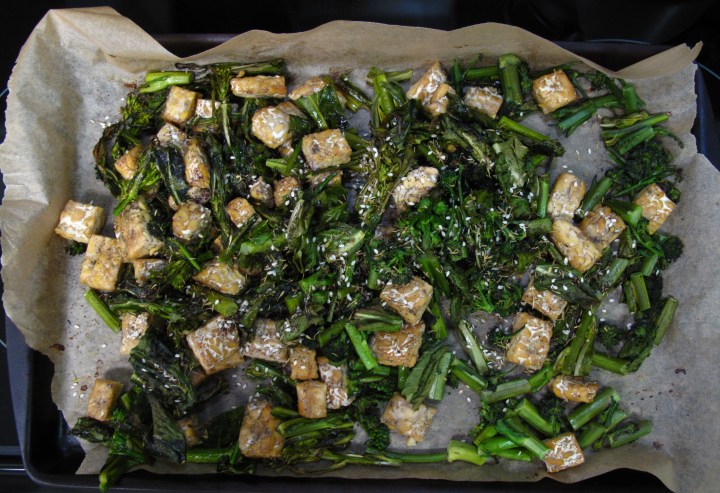
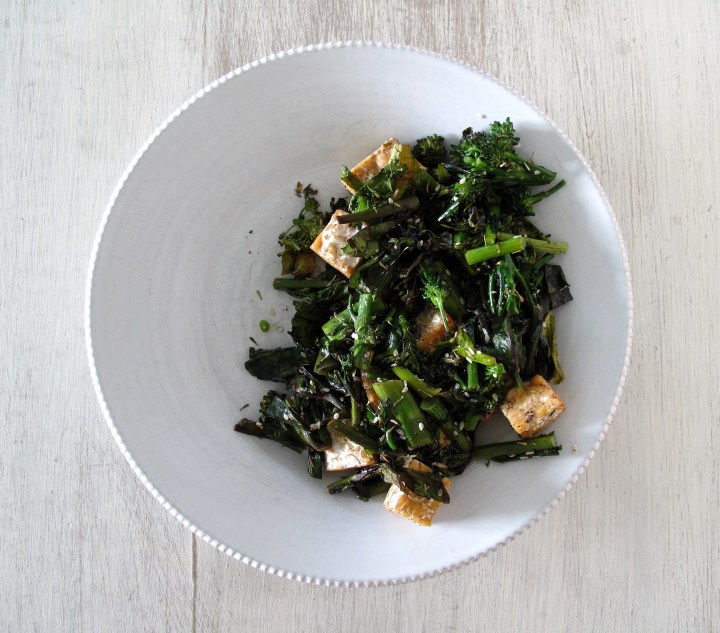
  • Broccoli. I have eaten so much broccoli these last couple months in the form of broccoli raab, purple sprouting broccoli, romanesco, and just plain, straight-up broccoli. Every time I think I’m ready for a broccoli-break, it ends up in the fridge and I gobble it up. William likes broccoli too, (he’s the one that started this whole broccoli bandwagon), but tax season has him eating away from home so much that I’ve eaten the major share of our broccoli purchases. I’ve also been really into broccoli with tempeh. For forever, I avoided soy products, but something about the fermenty flavor and texture is just so delicious right now. I’ve been adding it in to meals every other week or so, and alongside roasted broccoli and harissa, it’s simply delicious. Also: if the amount of broccoli I’ve eaten parallels how many times I’ve written broccoli in this paragraph, it may be time for a mini-break!


IMG_9771IMG_9776


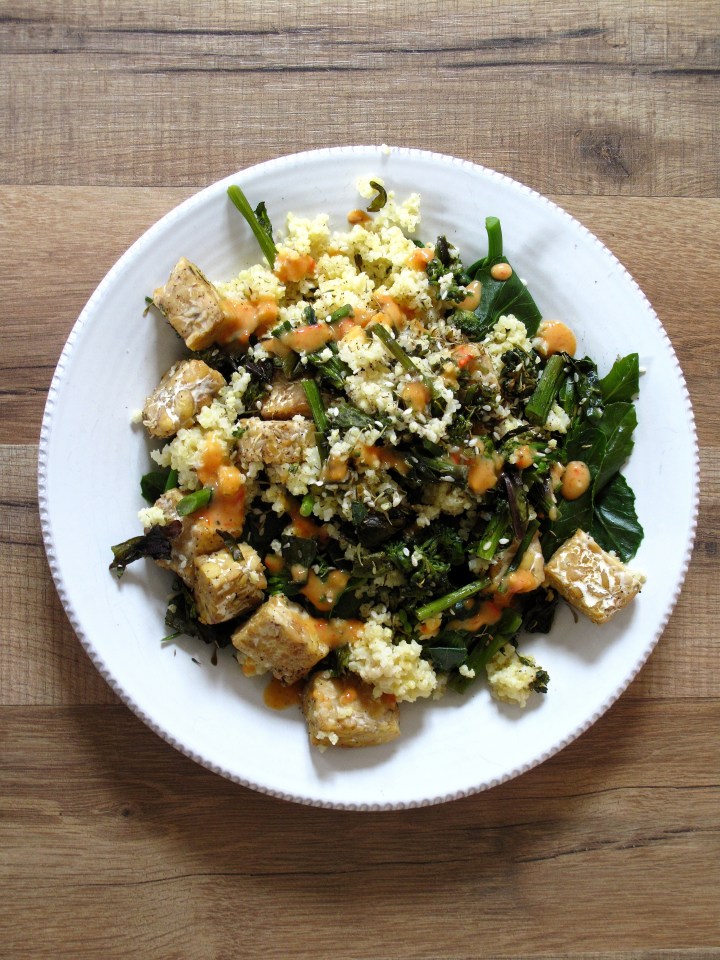
Sprouting Broccoli, Za’atar, Tempeh + Harissa Yogurt, serves 2

This is the kind of comforting bowl-food that I enjoy eating, always. Harissa, a north African hot sauce, is spicy and contributes a lot of the flavor. Add as much or as little as you prefer but keep in mind the yogurt balances the heat, as do the other ingredients. This is the sort of recipe that can easily be switched up depending. William is not so big a fan of tempeh, and I can imagine this would be just as good with any number of other protein types. Likewise, the harissa would be equally good mixed into a little thinned cashew cream for a different sort of sauce, sans yogurt. 

1-2 bunches sprouting broccoli, sliced into 2-inch pieces

coconut oil

6 oz. tempeh, cubed

1 Tbs. za’atar or more as needed

½ cup coconut yogurt

1-3 Tbs. harissa, to taste (I used Ottolenghi’s recipe, but you can also purchase)

steamed millet, to serve

  • Preheat the oven to 375 degrees F. Line a baking tray with parchment paper and toss together broccoli pieces, tempeh, za’atar and a little coconut oil. Roast for 20-25 minutes, stirring once or twice throughout.
  • While the broccoli is roasting, stir together the yogurt and harissa. Start with a small amount of harissa and adjust according to taste.
  • Once the broccoli is done, serve with steamed millet or another grain, and top with harissa yogurt.


Reference:

Head, K.A. and Kelly, G.S. (2009). Nutrients and Botanicals for Treatment of Stress: Adrenal Fatigue, Neurotransmitter Imbalance, Anxiety, and Restless Sleep. Alternative Medicine Review, 14 (2), 114-133.