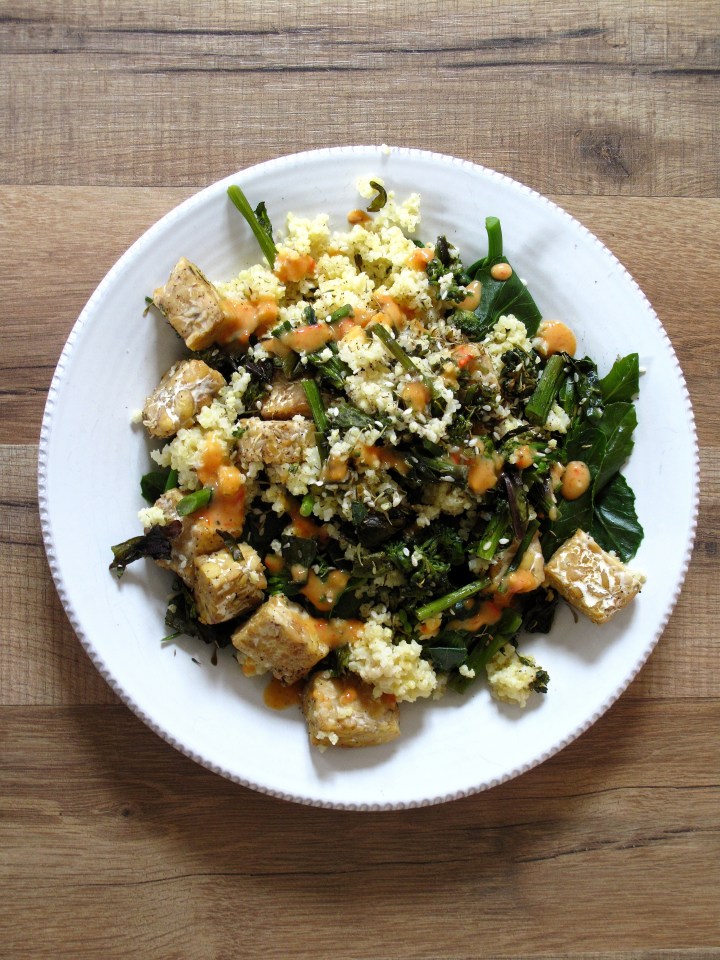
Sprouting Broccoli, Za’atar, Tempeh, + Harissa Yogurt

Sprouting Broccoli, Za’atar, Tempeh, + Harissa Yogurt

IMG_9775


Recently, I was listening to one of my favorite podcasts, and the question came up, What are you totally obsessed with right now? I love that question, and in lieu of sharing links and things, here are a couple of life updates/current obsessions:

 

IMG_9706IMG_9683IMG_9742


  • The microbiome and its potential role in virtually all aspects of health and disease. I listened in to most of the Microbiome Medicine Summit last month, and all the new information only cemented this interest.
  • Herbal remedies for stress, sleep, and anxiety: I’ve been taking an introductory class on Herbal Medicine this term and at the beginning of January, we picked one herb to study in depth. I’ve been studying American Skullcap (Scutellaria lateriflora) and I picked it for its nervine (nerve-supporting), anti-anxiety and anti-spasmodic properties. It’s been fascinating to learn about not only skullcap, but the whole host of other herbs that support sleep, stress, and anxiety, particularly because this is an area I’ve been struggling with. I’ve been carting around a review article titled Nutrients and Botanicals for Treatment of Stress: Adrenal Fatigue, Neurotransmitter Imbalance, Anxiety, and Restless Sleep and instead of reading feel good books, I’ve been re-reading it in my free time (see, obsession!). Also, I’ve been taking a series of herbal formulas which include valerian, lemon balm, chamomile, and passionflower, among others. Like skullcap, these are all sleep and stress-supporting herbs. I’ve been seeing positive results.
  • Positive self-talk and self-care: I’m almost done with my first term in nutrition grad school! It’s been an interesting few weeks, as I began with A LOT of class work, and then gradually dropped off the load and finished classes throughout the term. I have one week left of one class and then a couple weeks break. I’m already excited for next term and in particular, a foundation health and wellness class that focuses on self-care and behavior change. I consider myself somewhat good at self-care, but I’ve been obsessed lately with positive self-talk. As I work on it, I’ve noticed the negative self-talk is gradually improving. I’ve also noticed that I’m usually self-deprecating when I receive compliments, and though I’ve always thought it was just part of being humble, I’ve realized I do not have to make an excuse every time I receive a compliment. I can simply say, thank you, and leave it at that. There are huge things to be gained from building oneself (and others!) up, instead of tearing down.
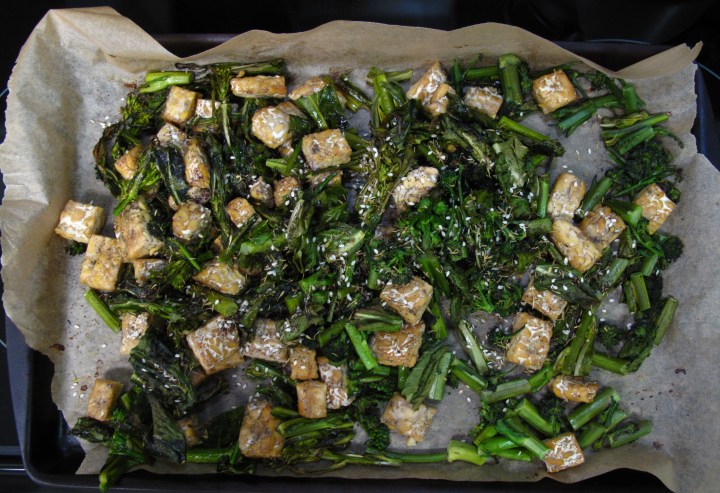
  • Broccoli. I have eaten so much broccoli these last couple months in the form of broccoli raab, purple sprouting broccoli, romanesco, and just plain, straight-up broccoli. Every time I think I’m ready for a broccoli-break, it ends up in the fridge and I gobble it up. William likes broccoli too, (he’s the one that started this whole broccoli bandwagon), but tax season has him eating away from home so much that I’ve eaten the major share of our broccoli purchases. I’ve also been really into broccoli with tempeh. For forever, I avoided soy products, but something about the fermenty flavor and texture is just so delicious right now. I’ve been adding it in to meals every other week or so, and alongside roasted broccoli and harissa, it’s simply delicious. Also: if the amount of broccoli I’ve eaten parallels how many times I’ve written broccoli in this paragraph, it may be time for a mini-break!


IMG_9771IMG_9776


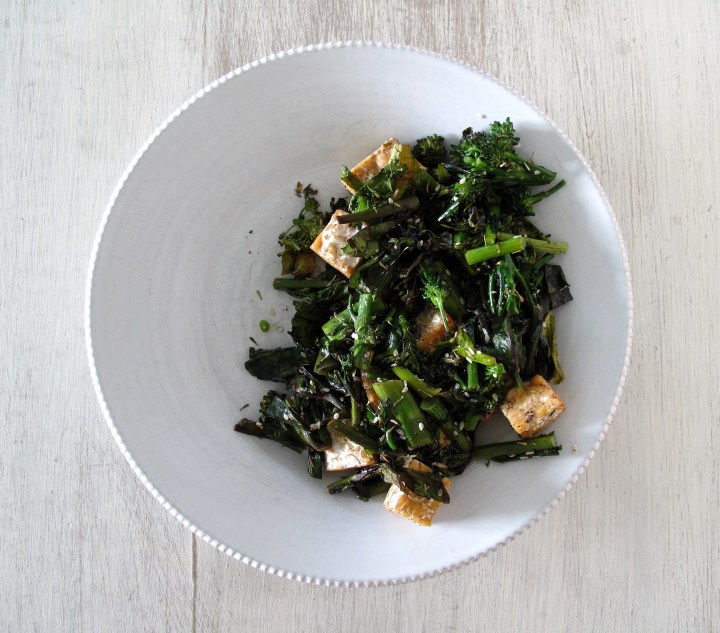
Sprouting Broccoli, Za’atar, Tempeh + Harissa Yogurt, serves 2

This is the kind of comforting bowl-food that I enjoy eating, always. Harissa, a north African hot sauce, is spicy and contributes a lot of the flavor. Add as much or as little as you prefer but keep in mind the yogurt balances the heat, as do the other ingredients. This is the sort of recipe that can easily be switched up depending. William is not so big a fan of tempeh, and I can imagine this would be just as good with any number of other protein types. Likewise, the harissa would be equally good mixed into a little thinned cashew cream for a different sort of sauce, sans yogurt. 

1-2 bunches sprouting broccoli, sliced into 2-inch pieces

coconut oil

6 oz. tempeh, cubed

1 Tbs. za’atar or more as needed

½ cup coconut yogurt

1-3 Tbs. harissa, to taste (I used Ottolenghi’s recipe, but you can also purchase)

steamed millet, to serve

  • Preheat the oven to 375 degrees F. Line a baking tray with parchment paper and toss together broccoli pieces, tempeh, za’atar and a little coconut oil. Roast for 20-25 minutes, stirring once or twice throughout.
  • While the broccoli is roasting, stir together the yogurt and harissa. Start with a small amount of harissa and adjust according to taste.
  • Once the broccoli is done, serve with steamed millet or another grain, and top with harissa yogurt.


Reference:

Head, K.A. and Kelly, G.S. (2009). Nutrients and Botanicals for Treatment of Stress: Adrenal Fatigue, Neurotransmitter Imbalance, Anxiety, and Restless Sleep. Alternative Medicine Review, 14 (2), 114-133.
 

Hungry Gap?

Hungry Gap?

IMG_3941


In temperate climates like ours in western Oregon, and also traditionally in the United Kingdom and Ireland, the weeks between March and April are known as the Hungry Gap for gardeners and local producers because we have nearly run out of winter storage crops and the new season’s growth does not provide a substantial amount of nourishment.


IMG_9570


Most of us don’t think about this anymore, since we have access to almost any type of food we’d like from all across the globe. Easter is next weekend however, and for me, Easter marks the beginning of true spring. Likewise, I associate Easter with strawberries and rhubarb at home with my parents and extended family. Because I manage a garden, I’ve become aware that this pairing won’t come together locally until early May, and though I’m okay with purchasing a few berries from afar to enjoy sooner, I’m nearly always disappointed with the flavor. When I spent a summer on the strawberry farm as their trials intern, I was surprised at the diversity of varieties. Some were super-packed with flavor and others were big and beautiful, but tasteless. Interestingly, all the varieties went into the same punnets and at the grocery store, I could just as easily pick up tasteless strawberries as flavor-packed ones. In any case, it is not common for commercial fruit and vegetable varieties to be bred for outstanding flavor. It is early yet in this new season and this year we won’t be traveling home for Easter. So I think I will wait on strawberries.


IMG_9583IMG_9603IMG_9632


I’ve noticed a little of this hungry gap in shopping for local vegetables lately too, as there is a plethora of greens and some winter storage roots like rutabagas, turnips, parsnips, and beets, but the variety that other seasons provide is missing. Still, in our age of abundance, there is a bounty during this season.

I’ve been doing a better job too, of planning meals since moving, taking on grad school, and commuting. I thought I would be letting go of cooking creatively during this new phase, but the opposite has actually been true. Using seasonal produce as the foundation for meals and then planning for busy weeks, being flexible, and doing a little more batch cooking on slower days has been quite instrumental. William’s one day of managing dinner has also allowed for simpler things like pizza, tacos, and pasta primavera to show up in our rotation.


IMG_9602


Even during this hungry gap and busy season, we are enjoying lots of variety. This is what I picked up in the last week, and how we enjoyed them:

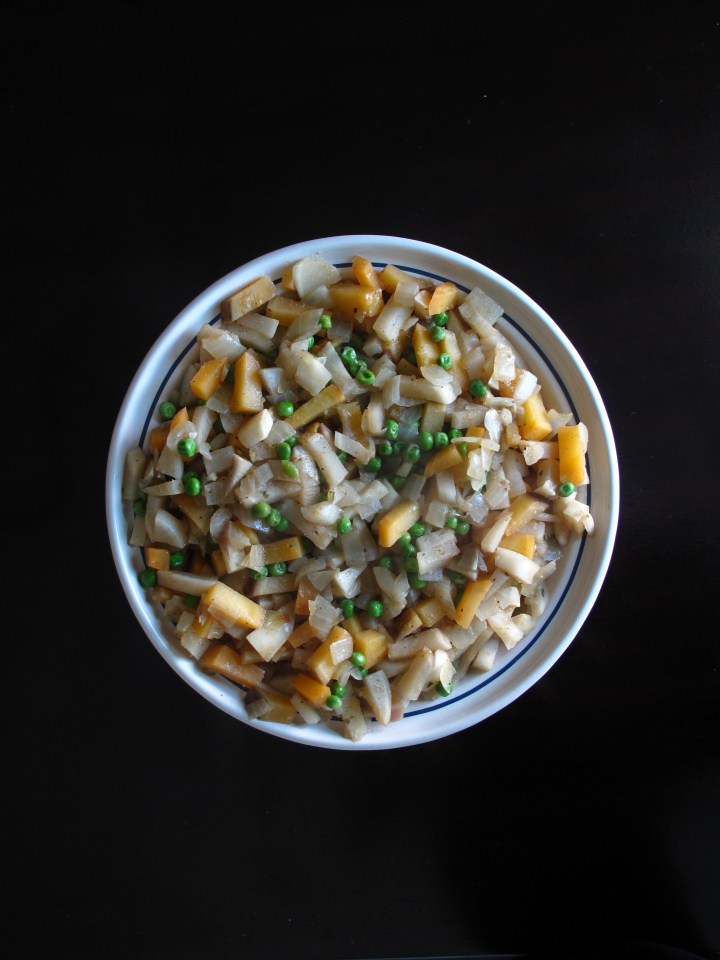
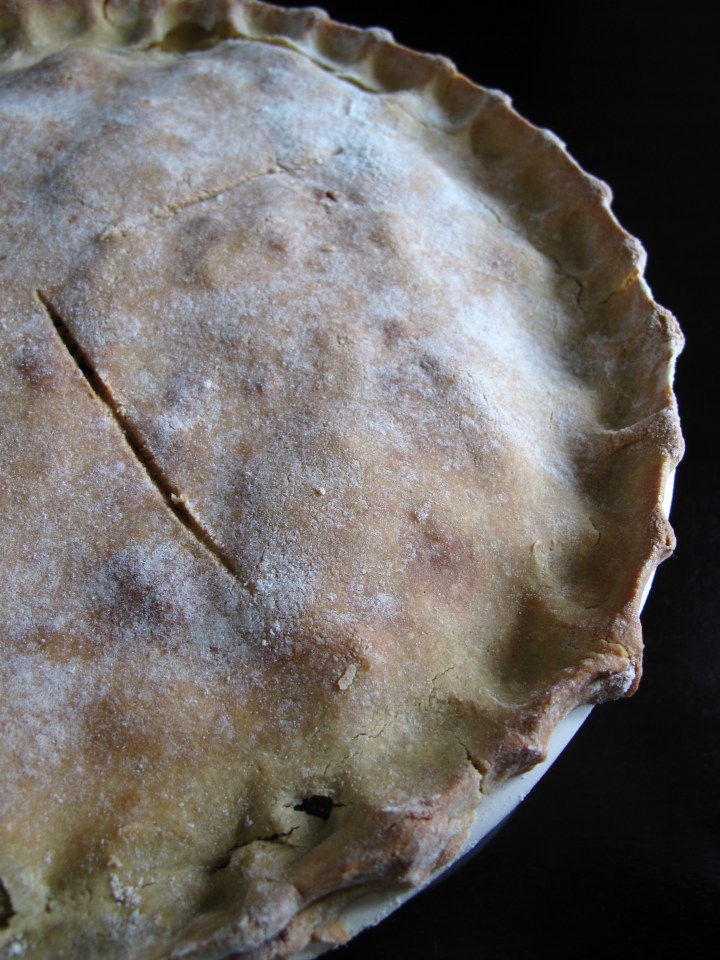
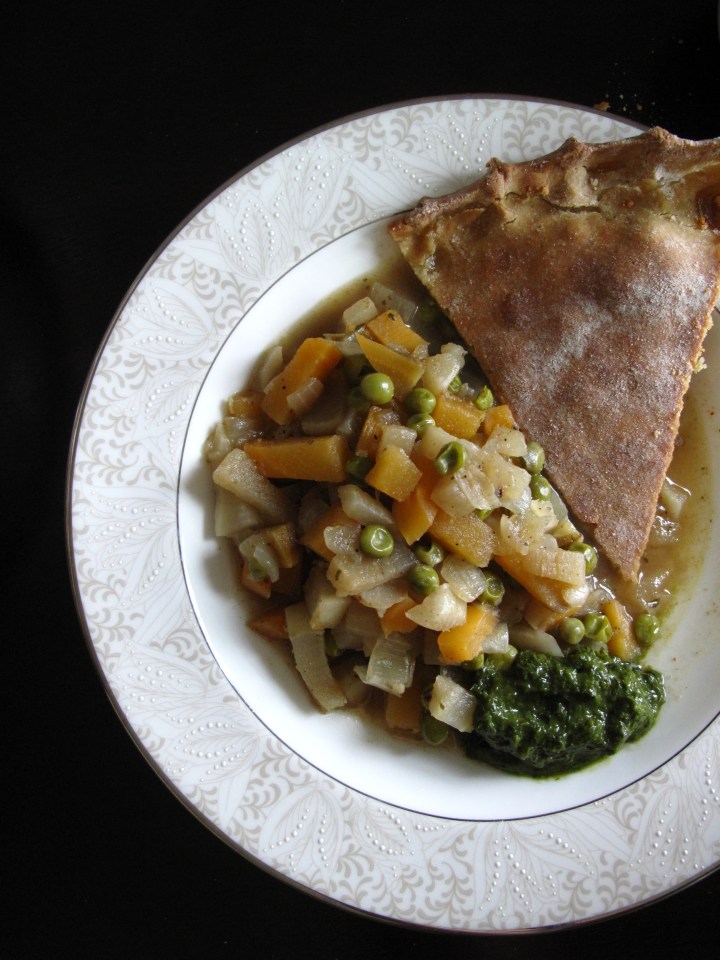
Turnips + Rutabagas: Rustic Indian Samosa Pie

Beets: We had beets, lentils, tahini + flatbread last weekend and leftovers into the early part of the week.

Leeks,  Nettles + Potatoes: We enjoyed a nice Irish Nettle Soup with leeks and potatoes for St. Patrick’s Day.

Sprouting Purple Broccoli + Collard Raab: I lightly roasted these with tempeh and za’atar, and served them alongside harissa and millet. Yum!

Eggs : William powers through tax season by eating eggs and green juice most mornings for breakfast.

Green Salad mix with lots of winter greens like kale, arugula, frisée, bok choy, and chard: To round out meals.

Carrots + Parsnips: For snacking and carrot + parsnip oatmeal.

Parsnips + Sage: I am experimenting with a parsnip + sage risotto for dinner tonight and serving it alongside white bean fagioli from Heidi’s new book.


What local abundance is available lately in your corner of the world?


IMG_9629


Rustic Indian Samosa Pie with Mint + Cilantro Chutney, serves 4

I first got the idea for this pie from Kelsey, when I attempted to make her Sweet Potato Samosas and failed miserably with tiny pastries and gluten-free crust. Since then, I decided to turn it into a seasonal veg pie and finally perfected a savory crust. I’ve made this a few times and change up the vegetables depending on what I have. It is a good one for using up random vegetables that might be hanging about. This version has rutabagas, turnips, and peas and only a top crust. If you want more of a true pie, double the pastry recipe and make a double crust. It will take a little longer to bake. A word to the wise, I tend to air on the side of spicy with seasonings, and then serve a cooling mint and cilantro chutney alongside to tame it down. Use a little less cayenne if you prefer less heat. 

Savory Pastry

1/2 cup brown rice flour, plus more for dusting

1/2 cup quinoa or amaranth flour

3/4 cup chickpea flour

1 tsp. salt

1/4 cup olive oil


Filling:

1 Tbs. olive oil

1 medium onion, medium-diced

5 cups chopped vegetables (mix of turnips, rutabagas or any others)

1 cup frozen peas

2 cups vegetable broth

1 1/2 tsp. apple cider vinegar

3/4 tsp. ground coriander

1 1/2 tsp. garam masala

3/4 tsp. ground cumin

1/2 tsp. salt

3/16 tsp. cayenne

1-inch piece ginger, minced

1 Tbs. arrowroot or tapioca starch


Cilantro-Mint Chutney:

1 large bunch cilantro

1 cup tightly packed mint

3 Tbs. fresh lemon juice

1/2 cup plain coconut yogurt

1/4 tsp. salt

  • Make the crust: Combine the flours and salt in a food processor. Pulse a few times to aerate and mix. Add the olive oil and 1/4 cup cold water. Pulse until the dough just comes together, adding a little more water as needed.
  • Transfer the dough to a plastic wrap, wrap it loosely and press it into a flat disk. Chill in the fridge for at least 30 minutes while preparing the other ingredients.
  • To make the filling: Heat the oil in a large sauté pan and then add the onion, and cook until lightly browned. Add the chopped vegetables and 1 cup broth and let simmer for 10 minutes, stirring occasionally. Add vinegar, coriander, garam masala, cumin, cayenne, salt, minced ginger, and remaining cup of broth. Simmer for another 10 minutes until the vegetables have softened. Stir in the peas and arrowroot starch mixed with a small amount of water. Bring the mixture to a boil, and then turn down to a simmer and let cook a couple minutes more. Remove from heat and transfer to a 9-inch pie dish.
  • Dust a large flat surface with rice flour, and roll the pastry out until it is about 1/8-inch in thickness. It should be just larger than the pie pan. Roll the dough carefully around the rolling pin and transfer it to cover the filled dish. Trim the edges and fold under. Crimp them around the edge of the pan, then cut a couple slits in the top to let steam escape. Bake in an oven preheated to 375 degrees F for 20-30 minutes, or until starting to bubble and the crust has become golden.
  • To make the chutney: Put mint, cilantro, lemon juice, yogurt, and salt in a food processor, and purée until smooth. Serve alongside the pie.

Mejadra with Swiss Chard + Tahini

Mejadra with Swiss Chard + Tahini

IMG_9494

IMG_9424


I go on stints where I cook almost exclusively from one cookbook or blog. Actually, I take recipes, apply their concept, and change almost everything. I’ve been cooking from Ottolenghi’s Jerusalem lately.

I also share recipes on Food52 sometimes and I received the kindest comment on my beet and lentils with flatbread there. It made my whole week and reaffirmed why this blog remains mainly about food. The comment made me think, too, about the decisions I’ve made that were true turning points. One of those was during my senior year in high school when I decided to go to university rather than culinary school, and then after university, deciding to find a job rather than going back to Ireland for a course at Ballymaloe.

Sometimes I feel as if I was born to cook and feed people. I’ve loved everything about cooking for as long as I can remember. I love the creativity of selecting ingredients and flavor combinations. I love both its meditative aspects and the more fast-paced balance of doing multiple tasks simulanteously. I love sitting down to a special meal with William and sometimes friends or family, turning off the phone, computer, TV, pause and say grace, and then invite in the experience of enjoying a meal.

I remember bringing a beef and mushroom stew over to a friend’s one time in college, and how her then-boyfriend took two bites and then paused, looked at me, and said, Bec, I can tell this was made with love, before proceeding. And it was.

I know a lot of my friends and family do not get the food I make. I’ve long felt sensitive about it, as I’ve been cooking creatively since the beginning. When William and I first began dating, it was summer and I was in town for a week. There was very little to eat in my college house as my roommates and I were largely absent for the summer. I invited him over for lunch, knowing there were approximately five ingredients to make a meal—and I knew they could combine to provide a pretty spectacular combination. William survived college up to then on his grandma’s spaghetti sauce, made by his family and frozen in huge quantities, tuna sandwiches, plain spaghetti, pizza, and kraft mac + cheese. Anything outside of that lineup was super adventurous, and he didn’t exactly appreciate what I thought was a fabulous summer lunch—with ingredients largely from my self-watering garden. For months after, he approached every dinner I’d make with trepidation, knowing it was going to be awful, and a breach from his standard American diet. But he’d try it anyway. Nine times out of ten, he’d end the meal telling me he was pleasantly surprised, again. The weird things I made actually tasted good. All he had to do was try.

When left to my own devices, I tend to veer strongly in the direction of cooking with middle eastern influences. I don’t know exactly when I picked this up as I didn’t try the cuisine until mid-college at least. I like the combination of savory and sweet grains and spices, the vegetable-heavy emphasis of the traditional recipes, and the infinite possibilities as even the simplest of ingredients can taste rich and flavorful and nourishing.


IMG_9476


As I reflect on the statement above, I feel as if I was born to feed people, I realize I still haven’t found exactly what this means for me. I know my place is not actually feeding people in the standard chef/culinary sense. I know it is not in producing food, as I also once contemplated. Perhaps it is in sharing recipes here or elsewhere, but more likely, it might be in feeding people something other than actual food, in the form of kindness, hope, understanding, or inspiration. Ultimately, I know for me to be able to do that with authenticity, I have to be able to provide it to myself first.

William has been working late these days, and I’ve often been feeding only me. So I’ve been cooking with more mindfulness, taking recipes and adapting them intuitively to what I need, trying to eat meals a little more slowly with less distractions. I’ve been focusing on allowing the process to fill me up in ways that stretch far beyond the meal itself, to let light shine into the dark internal corners I’m afraid of, and let self-compassion and love in, when for so long I’ve projected it only outward, onto others.

I’m at a real turning point just now, and it feels like a good one. I’m finally coming to know and appreciate me. I’ve been learning (and still often failing) how to feed myself the essential nutrients that come from genuine self-care, rather than merely “nutritious food.” This is one of the meals I’ve been enjoying lately through the process.


IMG_9507


Mejadra with Swiss Chard + Tahini

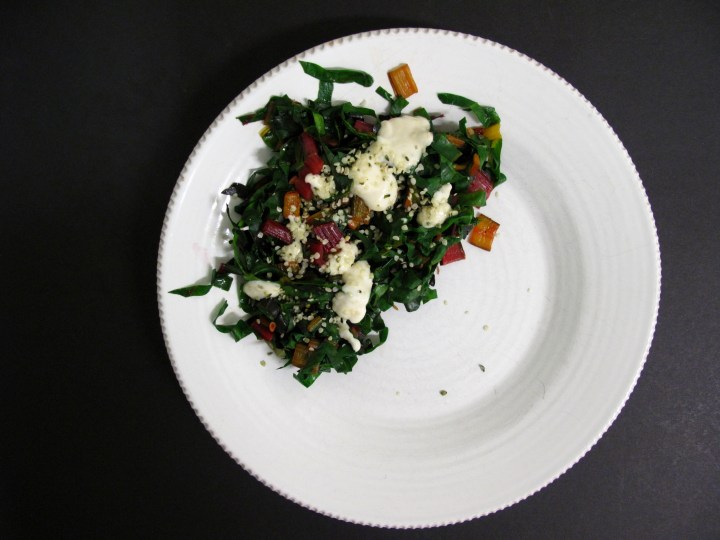
The inspiration for these two recipes are drawn from Jerusalem. Mejadra is an ancient dish in the Arab world, considered a meal for the poor but fit for kings. At its simplest, it is rice and lentils cooked together with caramelized onions. Crazily enough, those simple ingredients can taste heavenly. I’ve incorporated a few wonderful spices in keeping with Ottolenghi’s version, and for William, I’ve added raisins. He loves raisins. He added another handful for good measure as he gobbled it up.  The Swiss chard and tahini-cream will make for a nice side. I’m loving Swiss chard lately, when for so long I discarded it completely. The trick, I think, is a quick sauté. 

For the Mejadra:

1 very large onion (1 1/2 lb.), sliced thinly into rounds

2 Tbs. olive oil, divided

1 tsp. ground cumin

2 tsp. ground coriander

1/2 tsp. turmeric

1 1/2 tsp. allspice

1 1/2 tsp. cinnamon

1 tsp. pomegranate molasses

1/2 tsp. salt

pepper to taste

1 cup long-grain brown rice, soaked and rinsed

1 cup lentils

1/2 cup raisins, optional

3 1/2 cups water

  • Begin by soaking the brown rice for at least 8 hours in a large bowl of water with a little apple cider vinegar or lemon juice. This breaks down some of the phytic acids which can bind the zinc, magnesium, calcium, and other important minerals. Prior to cooking, rinse and drain the rice.
  • In a large sauté pan, add 1 Tbs. olive oil and heat to medium-high. Then, add in the sliced onions, cook and stir for 3-5 minutes, and then turn down to medium-low and cook, stirring occasionally, until they soften and caramelize, about 25-30 minutes.
  • While the onions are cooking, add the remaining 1 Tbs. olive oil, spices, rinsed rice and lentils, pomegranate molasses, raisins, and water to a medium pot, and bring to a boil. Once boiling, turn down to low, cover, and allow to cook for 40-45 minutes, or until the water is absorbed.

For the Swiss Chard:

1 tsp. olive oil

1 large clove garlic, smashed and minced

1 bunch Swiss chard, stems chopped, leaves sliced

salt and pepper to taste

  • In a medium sauté pan, heat the oil over medium-high. Add garlic and chard stems and allow to cook until beginning to soften. Add a little water as necessary to help the chard stems soften up.
  • Then add in the sliced leaves and heat just until they begin to wilt. Remove from heat and add salt and pepper to taste.

For the Tahini-Cream:

2 Tbs. tahini

1 1/2 Tbs. lemon juice

1 small clove garlic, smashed and minced

2-4 Tbs. water, as needed

salt and pepper, to taste

  • Whisk together all ingredients in a small bowl, thinning as necessary with water.
  • Spoon the tahini-cream atop the Swiss chard as a side to the mejadra.