Veggie Rainbow Cool Noodles

In a quest to cook more in community, and educate in a hands-on format again, I’ve been leading routine cook-a-longs this summer. I’ve been cooking both with my local running group and as part of my public health nutrition role, my side gig when I’m not working one-on-one with nutrition clients.

I love cooking with both groups–but especially the cook-a-longs with my running ladies because we share similar interests and chat more as we’re making the recipes. And because I get to choose recipes that I routinely make in my everyday and know will make meals and workout recovery easier for others.

This is one such recipe that we made together last week.

It’s a cool noodle dish, served either warmish or at room temperature, but ideally not truly ‘fridge-cold’ or with raw vegetables, because that makes it extra difficult to digest. At a time (summer / hot weather) when our natural digestive ability is already weaker.

It features an Asian-inspired sauce and is kept super easy and quick by utilizing a protein and carbohydrate source in one with legume-based pasta noodles. If you don’t prefer tahini, choose almond butter instead. There are several legume-based pastas on the market. Banza is a good one. If you don’t prefer that, you can add two cups of edamame, your choice of other protein such as grilled fish, chicken, or tofu, and use a whole-grain noodle, such as brown rice noodles or whole-wheat fettuccine. 

Happy cooking and summer training / adventuring / eating / digesting! :)

Veggie Rainbow Cool Noodles
Prep:  15 minutes  | Cook: 15-25 minutes  | Serves: 4

Ginger Turmeric Tahini Sauce:
¼ cup tahini
½-inch fresh ginger, finely grated
1 Tbs. low-sodium tamari or soy sauce
½ tsp. turmeric
2 Tbs. lime juice
1 tsp. pure maple syrup
1 Tbs. light miso 

Noodle Salad:
8 oz. chickpea or legume-based noodles
3-4 large carrots (about 500 grams), sliced thin
1 bunch (240 grams) radishes, sliced
2 cups green peas, fresh or frozen
½ cup (packed) cilantro, plus more for garnish
Toasted sesame seeds, for garnish

  1. Make the sauce: Mix the sauce ingredients, along with 4-8 Tbs. water until completely smooth. Taste and adjust seasonings as needed and then set aside. 
  2. For the Noodles: Bring a pot of water to a boil. Add the noodles and any hard vegetables (such as carrots or radishes) and cook half way through. Add the peas and any softer vegetables, and cook the remaining few minutes until the pasta is al dente. Drain and rinse with cold water to stop the cooking process. 
  3. In a medium-serving bowl, toss the pasta and vegetables with the sauce and cilantro. Top with some toasted sesame seeds and serve. 

Notes: Change up the vegetables depending on what is in season near you! When you vary it up, choose one to two root vegetables or starchy vegetables and one or two leafy green vegetables or more pungent vegetables.
Roots/Starchy Examples: Peas, fresh corn, carrots, summer squash, zucchini (spiralized to add to the noodles (not in replace of!) is what I’ve done in the photo above)
Green/Pungent Examples: Broccoli, cabbage, kale, spinach, radishes, daikon radishes (what I’ve used in the photo), asparagus

Want to Know More?

Within my nutrition practice, I specialize in digestive imbalances, often within endurance athletes. When we’re experiencing chronic GI distress, fatigue, and/or malabsorption of foods and nutrients, there will often be imbalances in several systems of the body simultaneously. I shared more about this topic in the nervous system’s role in part 1, the immune response and subsequent inflammation in part two, gut microbes and dysbiosis in part three and the importance of chewing our food in part four. Check those out or reach out to me for more personalized support for gut healing, increased energy, performance, and feeling good in your everyday life.


Salad Sandwich

In the last year, the amount of questions I’ve gotten about food confusion–confusion about what to eat, how much to eat, what is intuitive eating vs. what is actually just following cravings, what makes up an ideal proportion of meal components–has increased a lot. I don’t know if it’s a cumulation of way too much focus on nutrition-ism, fad diets and sensationalism in the media, an increase in individuals transitioning to vegetarian or plant-based ways of eating, long months of COVID stay-at-homes, or something else.

But just know, if you’re confused about what a healthy way of eating looks like, or you struggle a lot with food and your body, or you’ve followed so many restrictive ways of eating in order to heal but are still in chronic illness, you are definitely not alone.

But also, settling for an unhappy status quo or giving up is not the answer.

One thing that’s safe to say is that most of us are better at making little changes gradually rather than making sweeping overhauls in how we eat. And another is it’s likely you eat less vegetables than you think. As much as exotic and trendy superfoods seem so much more exciting, most vegetables are actually the real superfoods on our everyday plates.

So as you wind down your summer, have a few meals on the go after active summer adventures, or transition into a more structured back-to-school / back-to-work schedule, here’s an update on a fairly standard mid-day lunch. The Salad Sandwich.

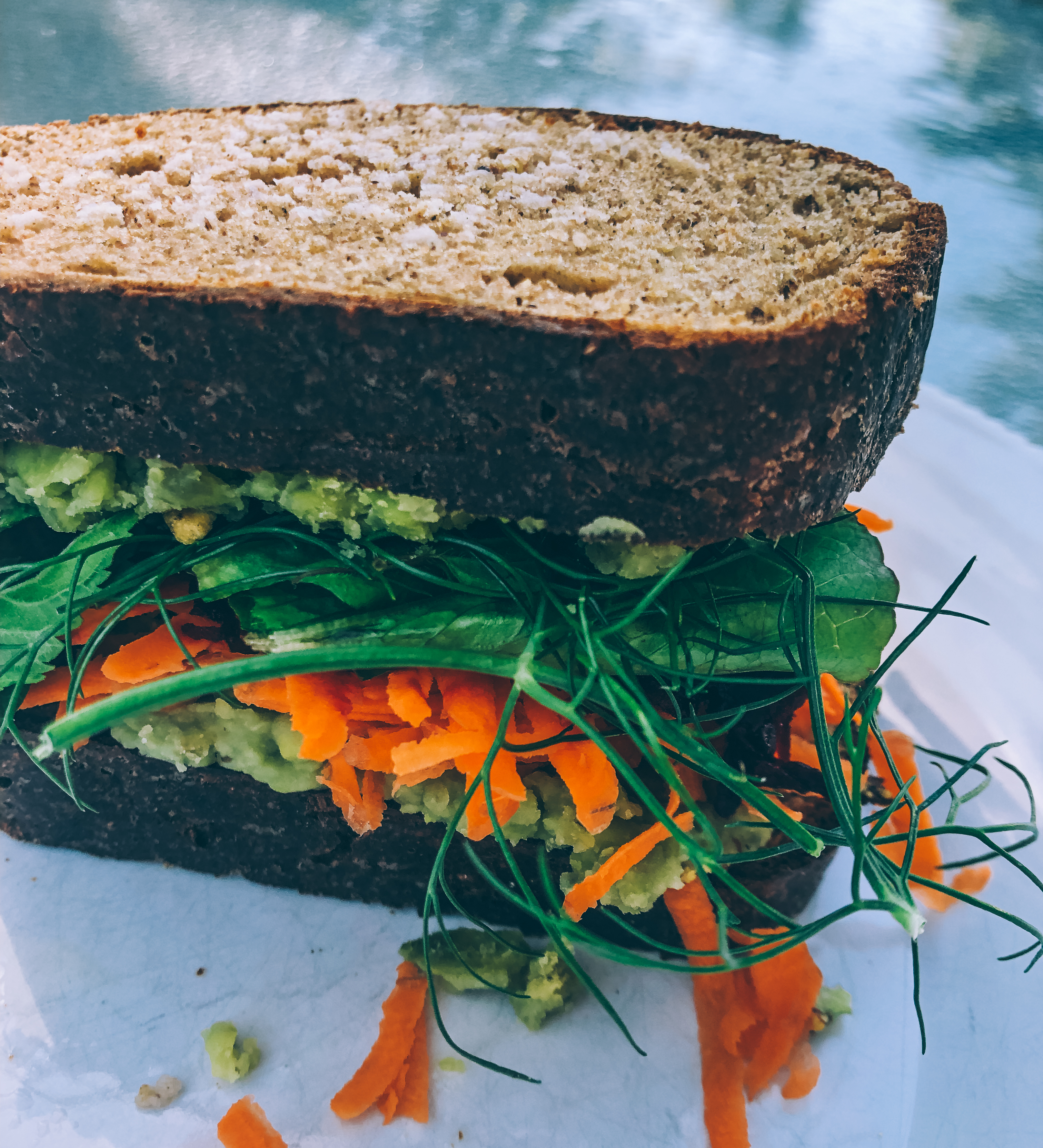
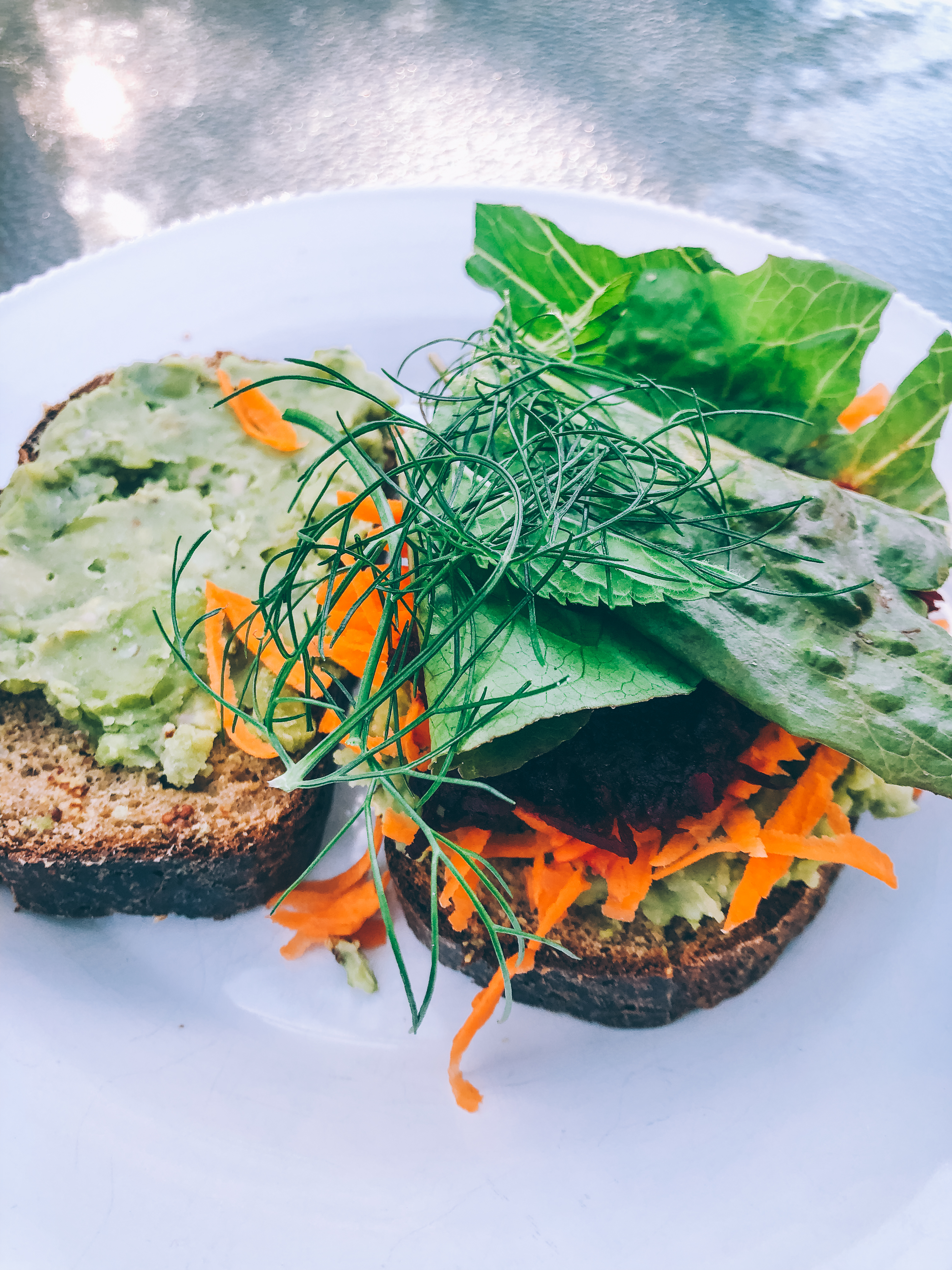
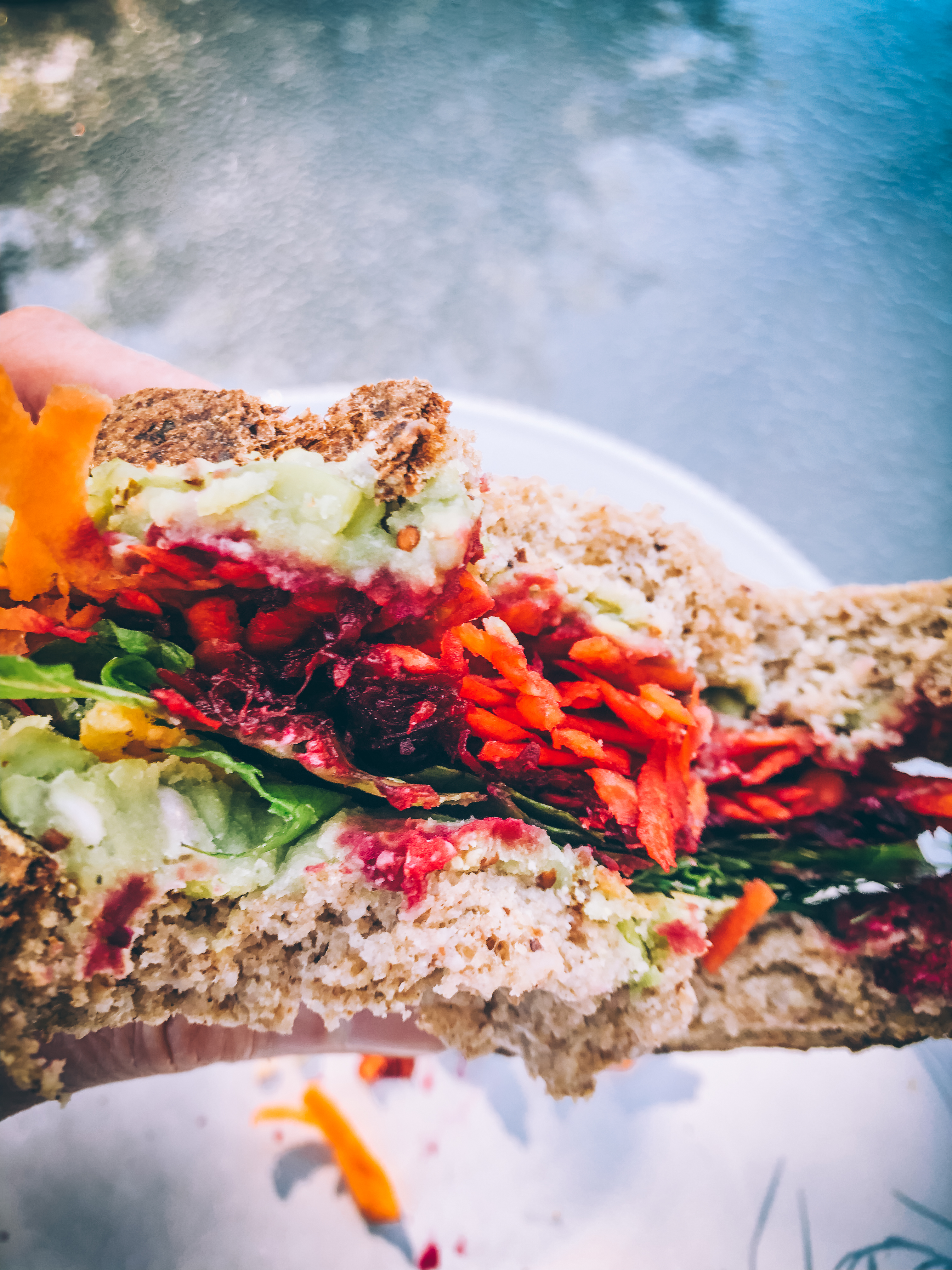
There are many ways to go about making this, but the idea is that you’re eating a balanced plate meal in sandwich form. Whole grain bread, shredded root vegetables, lots of leafy greens and a hummus spread. Condiments to add texture, the six flavors to satisfy taste buds and to help digest the meal, and if you can’t stuff your sandwich quite so full to add *enough* veg, a side salad with the remaining filling components to balance the meal out.

That’s the idea anyway. Every summer of late, I’ve had an ideal repeat meal. Below is a brief list of some of my past ones. This salad sandwich is the 2021 rendition.

Roasted Zucchini and Crookneck Squash with Pumpkin Seeds, Oregano and Olives
Sourdough Pizza
Cooling Kitchari
All-Healing Anti-Inflammatory Green Soup and Sourdough
Zucchini Noodles, Crookneck Squash, Garlic, and Pesto using All-The-Greens Interchangeable Pesto

Salad Sandwich, Serves 1

1 cup Hummus, my favorite recipe below
1 medium beet, finely shredded
1 large carrot, finely shredded
2 cups romaine or other leafy greens
1-2 Tbs. herbs of choice – Mint, Basil, Fennel Tops, finely minced
1-2 tsp. Dijon mustard, optional
1-2 Tbs. of something pickled, such as quick-pickled onions or radish, sliced olives, or sauerkraut
2-4 tortilla chips, optional
2 slices thick, whole-grain (preferably sourdough) bread

  • Wash hands with soap and water.
  •  Prepare your toppings. Then make the sandwiches by either toasting the bread to start, or leaving untoasted.
  • Spread the bread with a thick layer of hummus on each side, and a little Dijon mustard, as desired.
  • Then layer the shredded roots, herbs, pickled condiments, and greens. Top with a couple crunchy chips and then finish with your other slice of hummus-ed bread.
  • Combine any extra filling components in a small bowl and combine together. If you’d like a little dressing to finish it off, a little drizzle of olive oil and vinegar or lemon juice is often super nice.

Easy to Digest Hummus, serves 4

1 tsp. ghee (or use untoasted sesame oil)
2 tsp. untoasted sesame oil
1/2 tsp. mineral salt
1 tsp. kombu, wakame, or bladderwrack seaweed (dried)
1 tsp. ground cumin
1 tsp. ground coriander
1/2 tsp. ground fenugreek
1/4 tsp. ground black pepper
1 cup whole mung beans (soaked at least 6 hours)
3 Tbs. tahini
Juice from 1/4 lemon, or more to taste
Water

  • Wash hands with soap and water.
  •  Heat the ghee and sesame oil in a pot over medium heat.
  • Then add the salt, dried seaweed, and spices. Simmer until an aroma is present. Then add the soaked and drained mung beans; stir and simmer for another minute or two.
  • Add water to above the beans by a couple inches. Then bring to a boil; reduce heat, cover and simmer for about 25 minutes, until the beans are soft and breaking apart.
  • Remove from the heat and allow to cool for 5-10 minutes.
  • Then blend the beans and their cooking liquid with the tahini and lemon. Add additional water to thin if needed.