Field Notes: September 1st, 2024

Somehow the last full month of summer went in a flash. When I look back at all the little moments through memories on my phone, I realize there was baby, or I’ve barely captured anything at all.
I’ve now been back to work for a full month. I have felt constantly pulled between wanting to be in two places at once. And balancing work with breastfeeding or pumping regularly – in short, the last year or so of pregnancy and new motherhood has given me a whole new appreciation for mothers.

And in the more granular, events both in our neighborhood this past week, and in my community of people have shaken me the last few days. Tragedy, shock, personal fear. While we can all do hard things – sometimes we just wish for others to stay at the top of wheel of fortune just a while longer. And of course we wish that for ourselves.

Reading

Enjoying

  • A Vegetarian Ceviche that tastes pretty much the same as the imitation crab-based one I grew up with. I’ll be leading a virtual Cook-Along in the next few days if you’d like the recipe and/or to cook-along with me!
  • Gluten-Free Sourdough Pizza with this Quick Homemade Pizza Sauce. I made a Margherita Pizza for the first time ever last week and it was AMAZING – using this dairy-free mozzarella.
  • an adapted version of the Vaghareli Makai corn salad recipe in Heidi Swanson’s Near & Far.
  • This playlist. And also this one, which I personally refer to as Temple Morning. Our baby has mostly listened to Gregorian chants or Sanskrit mantra songs, and he came into this world to a different playlist of the same (now his bed-time songs).
    I’ve always been a big music person but my tastes have changed with the years. In the last few, I’ve realized I need music that calms my nervous system rather than amps it up. It’s safe to say I’m in a spiritual/chanting phase.

Nutrition and Food/Cooking Questions

  • Should I be avoiding chocolate due to the recent headlines about heavy metal content?
    A recently published study on heavy metals in chocolate is a bit alarming, and should be taken into consideration as lead and cadmium are toxic. For most individuals, this means limiting your portion sizes, choosing products that have somewhat lower amounts, and consuming chocolate less often. See Consumer Lab for more details on brands and products. This is especially true for pregnant women, young children, and anyone with chronic health conditions. This doesn’t mean you have to avoid chocolate completely – just be conscious of just how much you’re consuming.
  • What do you think of soy products? I try to avoid them because of health risks.
    Soy really has gotten a bad wrap over the years. This is usually true because of its phytoestrogen content. Traditional soy foods including organic tofu, tempeh, and edamame actually are linked to preventing the health conditions that many are weary they’ll promote. This is because the phytoestrogens act like a “key” in an estrogen receptor “lock”, and they replace the key that estrogen would have inserted into that receptor lock. In fact, we see that up to two servings of traditional soy foods per day can be helpful for preventing breast cancer, both pre-and post-menopausal, and higher soy consumption is associated with reduced risk of death after cancer diagnosis. Consuming soy may also help with the symptoms that often present in the menopause transition.
    For the same reason as the estrogen lock and key description above, men need not fear soy products either.
    You’ll want to seek out organic products as non-organic soy is commonly genetically modified and will have heavy glyphosate use during crop production. The takeaway here is that as long as you’re consuming soy in traditional ways and not in ultra processed products, it’s beneficial in well balanced and diverse eating patterns.

    Until next time ~ Rebecca

    p.s. if you have nutrition or cooking questions, you’d like to submit, enter them in the comments, or submit via the contact form. If you’d like to sign up for my periodic newsletter, you can do so here.
Field Notes: August 10th, 2024

Something I’ve been thinking a great deal about the last few weeks is the shift that occurred internally for me within the last couple years regarding becoming a mother. Since childhood, I’ve always aspired to have kids some day and when I was younger, I thought it would occur much sooner than it did.
But then William and I got married, and we just weren’t ready. For years. There was a lot that went into that including a health crisis, turbulent finances, politics in this country, the climate upheaval (also a crisis, actually). But ultimately, there was being ready for the lifestyle adjustment. And a switch in my brain that hadn’t flipped. Until it did.

Since having our baby, it’s become even more dramatic. At first, I worried that I’d lose myself and my ability to make time for the other things I enjoy. We’re only a bit over three months in so there is much of parenting we haven’t gotten to yet, but one thing we discussed early on in planning for a child was that we were going to include our child (or children) in doing the things we love rather than give up ourselves for the sake of our new person(s).
As it turns out, in the first few months anyway, that last aspiration is quite challenging. We’re still trying to get back into a regular routine of going to church and we’re several months yet from being able to go for a run together, let alone a day-trip adventure run. But it’s certainly a work in progress.

My parents were visiting recently, and since they live so very far away now, it was extra special to see them enjoying their latest grandchild. With that, here are some other tidbis of what I’m enjoying.

Reading

  • “Matrescence,” and the Transitions of Motherhood: If I’ve suddenly transitioned to talking a lot about motherhood, you can blame my new brain!
  • A diet-wide Mendelian randomization analysis: causal effects of dietary habits on type 2 diabetes: In this study, poultry consumption was positively correlated with type 2 diabetes, and intake of dried fruits and cereals was correlated with lower incidence of T2D. Pretty counter to what the low-carb tribe will have you believe. According to study authors, “possible reasons include the breeding process, where commercially bred chickens may be exposed to hormones and antibiotics, which can act as endocrine disruptors and potentially affect glucose metabolism. Additionally, processed chicken products often contain high levels of sodium and preservatives. Cooking methods also play a role, as fried or fat-added chicken products can be high in saturated and trans fats. These cooking methods can lead to the formation of advanced glycation end products (AGEs) through frying, grilling, and high-temperature baking. These fats and compounds are known to increase oxidative stress and inflammation, which are contributing factors to the onset and progression of type 2 diabetes”
  • Impact of Plant-Based Dietary Fibers on Metabolic Homeostasis: “The gut microbiota contributes to metabolic disease, and diet shapes the gut microbiota…”
    There are a lot of caveats to this study since it was done on mice, they were on a high-fat diet, and the implementation of dietary fibers was via supplementation rather than as part of a well-balanced diet. But the results are where I start to reference oats and oatmeal consumption again! The authors found that “Only βeta-glucan supplementation during HFD-feeding decreased adiposity and body weight gain and improved glucose tolerance compared with HFD-cellulose, whereas all other fibers had no effect. This was associated with increased energy expenditure and locomotor activity in mice compared with HFD-cellulose.” Guess what the richest source of Beta-glucan fiber types are? Yep, it’s rolled oats, and oat bran!

Enjoying

  • Speaking of oats, I made my Strawberry Rhubarb Crumble recently and it is super easy and delish!
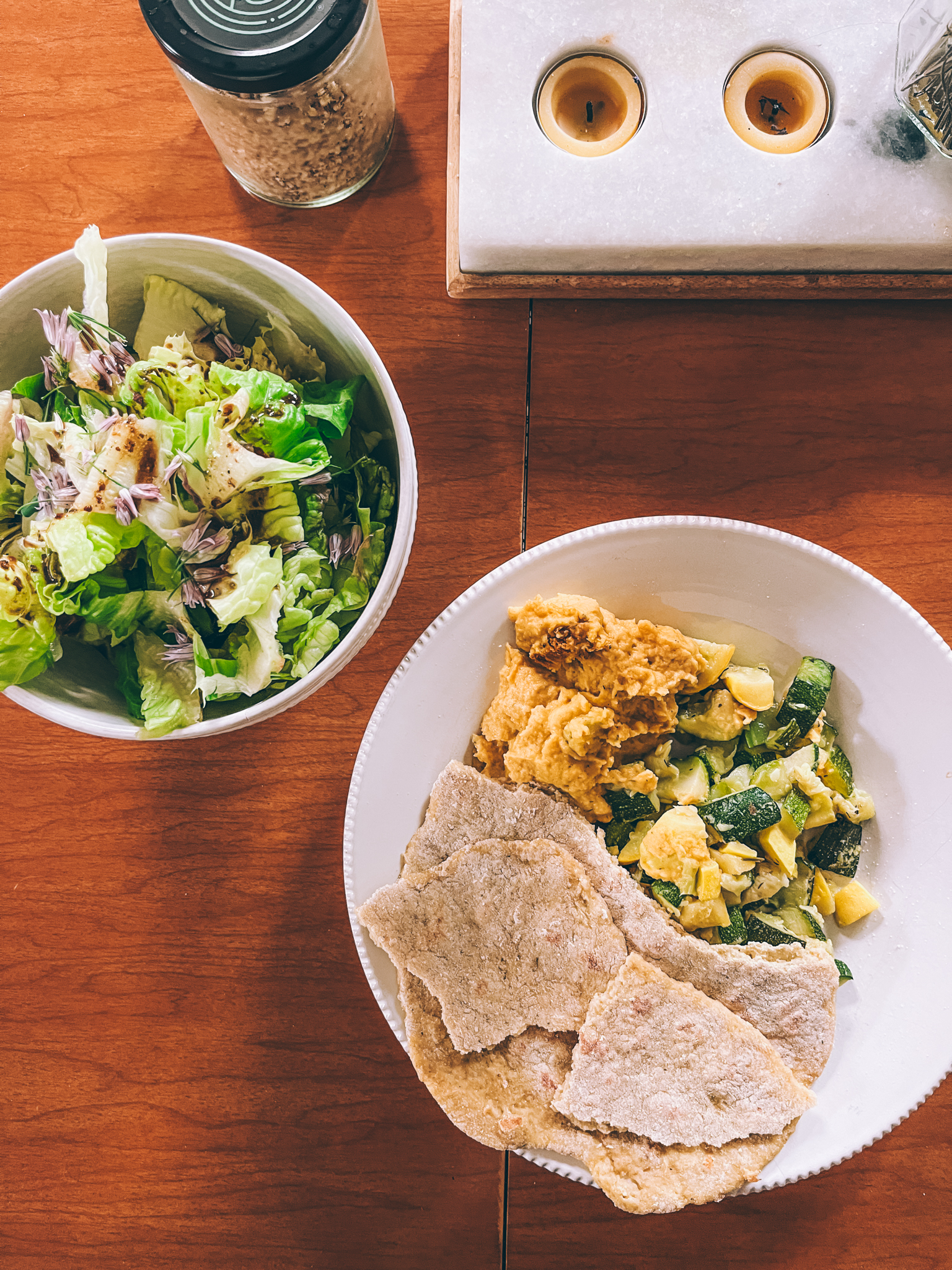
  • This flatbread with roasted zucchini, hummus, and a crunchy, seedy salad.
  • Kohlrabi Soup – Kohlrabi means “cabbage turnip” and that’s essentially the best way to explain what kohlrabi is like; a combination of the two. Admittedly, I like both cabbage and turnips more than kohlrabi, but we grow a handful every year, and they are amazing in this soup.
  • Apricot, Date + Turmeric Bars: a favorite fruit/nut snack bar with balanced carbs + protein for athletes.
  • The Olympics! So far, I’m extremely behind and mostly watching Equestrian Dressage (which was my sport back when I had a horse), Equestrian Eventing, Road Cycling, and all the (distance) track and running events. And if you’re able to but haven’t yet watched the opening ceremony, I highly recommend.
  • Nigel Slater’s garden
  • Making elderberry syrup. ‘Tis the season.
All those health-promoting polyphenols in elderberries make for purple hands for a couple days after syrup making!

Nutrition and Food/Cooking Questions

  • I see that you are not an RD. What does your CNS credential mean?
    This article explains the difference well. I’ll add that the training to become an RD and a CNS are similar but also quite different. An RD pathway will have a big portion of training for acute care (like in a hospital), and/or planning for creating nutrition plans for an institution, whereas my training leaves that out and focuses solely on preventative and chronic conditions. Additionally, a CNS will have functional medicine training and a focus on integrative health and getting to the root cause of an imbalance, as well as training in using herbal medicines and other traditional approaches, in addition to food and nutritional supplementation. Ultimately, in many states an RD and CNS share the same licensure, meaning we have the exact same scope of practice.
  • What’s an easy summer vegetable side dish?
    Roasted summer squash and/or zucchini! This is such an easy go-to that’s mostly hands-off, delicious, and easy on digestion (unlike all those crunchy summer salads). Just chop up a bunch of zucchini and/or yellow summer squash, lay out flat on a parchment lined baking pan, preheat your oven to about 400-425 degrees F, and lightly season with salt and pepper. You can add other spices too, such as thyme, Herbes de Provence, or Italian Seasoning, but they’re not even necessary. Roast until soft and slightly golden on the edges/bottoms, stirring once or twice throughout. No need for any oil or water in the pan; the squash will create it’s own juices and make it just the right consistency.
  • What’s been growing well in your garden this year?
    Every year some things do well and others flop. I’ve already mentioned the boysenberries and blackcurrants in previous posts, but we also had a great harvest of black raspberries, and the everbearing strawberries are coming back around for their smaller second harvests. As for vegetables, many things are growing great! We have a steady supply of yellow crookneck squash right now, zucchini (hence lots of delicious roasted squash!), green beans, carrots, broccoli, and there were several heads of amazing cauliflower a few weeks ago. We also have a whole garden full of giant sunflowers. Such perks of constant joy.


Until next time ~ Rebecca

p.s. if you have nutrition or cooking questions, you’d like to submit, enter them in the comments, or submit via the contact form.
If you’d like to sign up for my periodic newsletter, you can do so here.

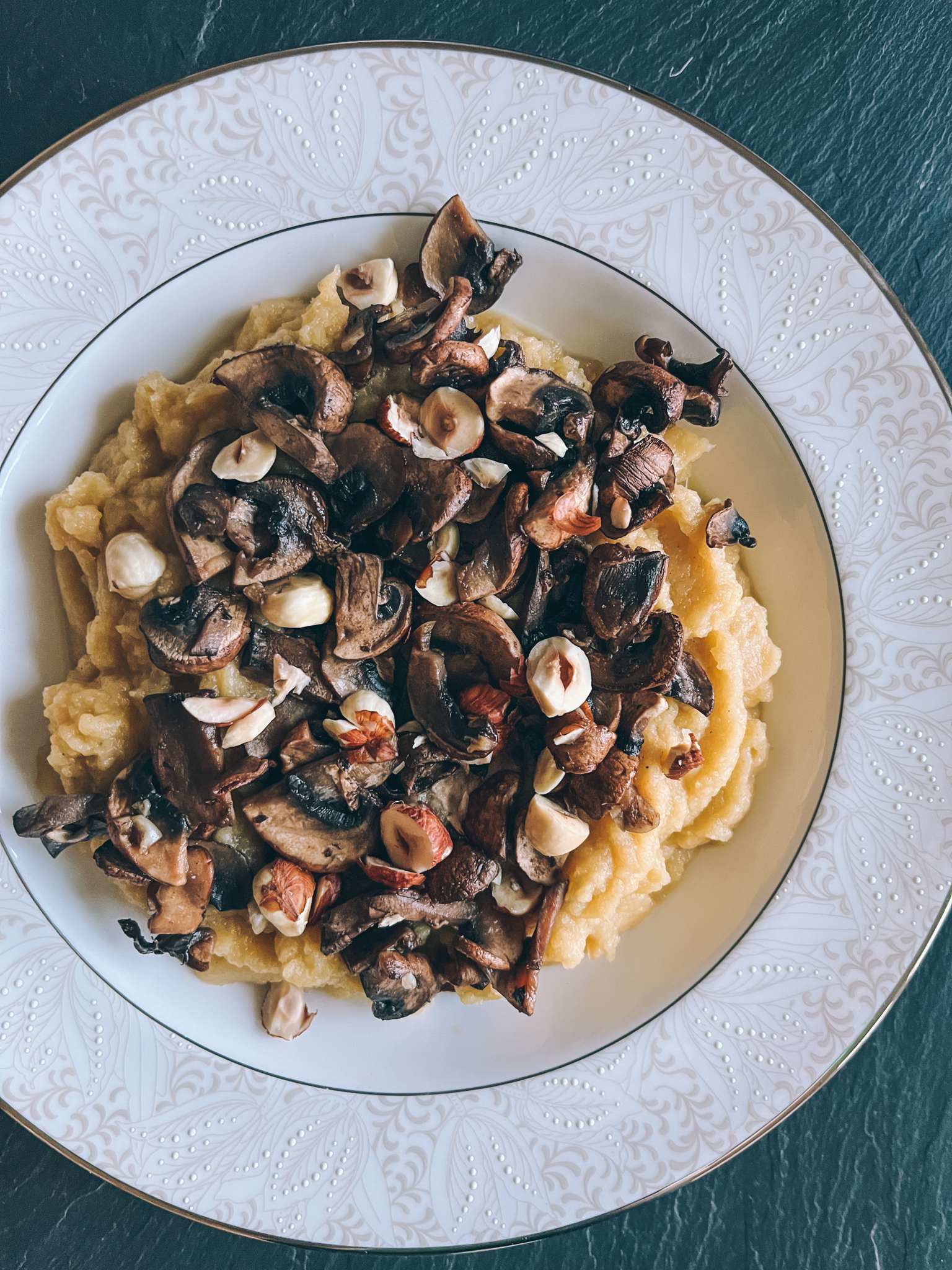
Creamy Rutabaga (Swede) Mash with Mushrooms, Sage + Hazelnuts

For the past couple months, I’ve been cooking and taking a lot of inspiration from Gill Meller’s Root, Stem, Leaf, Flower cookbook. I say “cooking” but I rarely cook the recipes as written. Instead, I’ve learned my own energetics and the energetics of the season, and I adjust ingredients and amounts accordingly. Or the recipe technique doesn’t seem quite what I’m looking for and I adjust it somehow.

This is the type of cooking and eating that is the goal for all the individuals I work with in the nutrition clinic, but admittedly, it can take a long time to get there when one’s intuition is overwhelmed by inflammation, chronic pain, nutrition and food confusion, etc.

But back to the cookbook – Root, Stem, Leaf, Flower has been my favorite inspiration to cook from for the past few years. It’s hyper seasonal with produce common of the climate I live in, exceptionally British (meaning the seasonings and ingredients are very much of the region), and uses simple high quality ingredients in often novel and creative ways. The ingredient lists tend to be short and don’t require much beyond the produce and pantry staples at hand.

This creamy rutabaga mash with mushrooms is one such example of inspiration I took from Gill Meller last year. I first shared and published this recipe locally with a farming and food organization that I served on the board of for the last few years, the Willamette Farm & Food Coalition (WFFC).

Each year, WFFC publishes what is called the Locally Grown Guide, a printed and online directory of all the local food resources: farms, farm stands, CSA’s, grocery stores that stock local, and the like. This recipe first appeared in the 2023 edition of the Locally Grown Guide, but since we’re gearing up for a 2024 release (with new inspiration within the pages), I want to share the recipe here.

Plus this combo of creamy mashed rutabagas (also called Swede), mushrooms, sage and hazelnuts is incredibly tasty. It’s a true comfort dish using local–to Western Oregon as well as the UK–fall and winter ingredients. And it’s a good one for mid to late winter, when our ideas for novel and healthful (and seasonal) eating tend to wear out.

As you’ll see, this recipe is either a side-dish or a meatless “main component,” and it will need a protein on the side to balance out the meal. Even though many vegetarians tend to recommend mushrooms as an alternative to a protein source (and they do contain some protein), I don’t recommend just eating this on it’s own–most individuals will benefit from 20 to 35 grams of protein for main meals during the day–so pair it with a side of sauteed or baked tempeh, stewed and sage-ey garbanzos, or your choice of animal-based protein on the side. Another option is to pair it with a simple and delicious pot of lentils.

P.S. Lentils have been my often go-to the last few months. If you follow me on Instagram or read my newsletter, you’ll know why I’ve had them on repeat. :)

Creamy Rutabaga Mash with Mushrooms, Sage + Hazelnuts
inspired and adapted from Root Stem Leaf Flower by Gill Meller

Prep:  10-15 minutes  | Cook: 40 minutes  | Serves: 4

1 large ~ 1 ½ lb. (600 gr) rutabaga, peeled and chopped
1 Tbs. ghee or butter
8-12 fresh sage leaves
½ tsp. mineral salt, divided
⅛ tsp. ground black pepper
1 Tbs. olive oil or ghee
2 garlic cloves, minced
1 pound (450 gr) mushrooms, thickly sliced
A small handful of toasted hazelnuts, roughly chopped

  1. Place the chopped rutabaga in a medium pot and cover with water. Bring to a boil, then turn down to a simmer and cook for 25-35 minutes, until the pieces are completely soft when pierced.
  2. Drain the rutabaga with a colander, then transfer to a food processor or a blender. Add the butter or ghee, ¼ tsp. salt, about four small sage leaves, and black pepper. Puree until smooth, adding a splash of water if it is too dry. Set aside and keep warm. 
  3. Mince the remaining sage leaves. 
  4. Then heat the remaining olive oil or ghee in a large saute pan and bring to medium-high heat. Add the sliced mushrooms. remaining ¼ tsp. salt, minced sage leaves, and garlic. Cook the mushrooms for about 6-8 minutes, until they are tender, dark, and the moisture has cooked off. Then stir in the chopped hazelnuts and give it all a good stir. 
  5. To serve, spoon the rutabaga puree onto plates and top with the mushroom and hazelnut mixture. 

Notes:
– Rutabagas, which are also called swede in some countries, are truly underrated but you can swap them out for nearly any other root vegetable for a variation.
– Rutabaga belongs to the same family as broccoli and has compounds called glucosinolates, which can help with liver detoxification and can help
prevent conditions like heart disease and cancer. Hint: it looks like a large turnip but the interior flesh is more yellow.