Barriers to Healing: Ownership or Attachment to our Struggles

I’ve been reminded lately of barriers we put in place that prevent us from healing chronic health challenges, or negative habits.

That barrier is how we attach ourselves to and start to own our struggles.

Here are a few example statements that illustrate this:
– My typical GI struggles.
– I’ve always hated vegetables.
– I’ve always struggled with digestion. So have my parents.
– I’ve had that ever since I was kid. I’ve always had it.
– I never recover well during a (marathon) training cycle, and never get my nutrition and health to go right enough to be prepared for the race.
– My anemia pattern.

Another example is identifying with our diagnosis or diet pattern as if it were a job title. This is often easily visible on social media. You might witness or use something like IBS Warrior or Ulcerative Colitis Warrior, or Celiac next to a name in a bio, as an example.

I’ll use my past self as another example. For a long time, I felt like whatever medical mystery that presented as something autoimmune meant I’d be in daily chronic pain forever. This began at age 27. I was in constant fear and anxiety about the pain, and I felt like I couldn’t get outside that experience, even temporarily. Fast forward seven years and my body and mind feel remarkably different. The cloud of bleakness hanging over me, the fear of pain, the internal anguish that I couldn’t understand is no longer part of my everyday.

Yes, when it comes to healing something that has been chronic, finding the right nutrition plan and lifestyle practices are incredibly important. But healing is also energetic. You have to believe it’s possible. And you have to change your mindset and the energy you put around the process.

You have to believe your body is meant to heal.

And we start to believe what we say about ourselves. By saying we always struggle with something, that means deep down that we probably believe we will always struggle with it.

This simple, though definitely not easy, nugget of first changing what we say (out loud and internally) is what catalyzes healing. We start to believe lasting healing is possible. We seek out and then are put into connection with individuals who further light the healing pathway from whatever we’re currently experiencing – an autoimmune condition, IBS, chronic fatigue, a lifetime of emotional and disordered eating and body hate, weight woes, medical diagnoses that are largely written off, etc.

And sometimes our catalyst for healing is just an example from another person.

For instance, we all operate within a community, whether that’s in person in our daily lives, or people we follow online who influence us. Often, we identify with individuals who have journeyed through similar experiences and challenges as us.

What often distinguishes individuals who are incredibly good at healing themselves for the long term, and those that have chronic set-backs, lies in what the first group don’t spend their time doing.

These “experts at healing” don’t hang out in forums or self-help groups with individuals discussing the woes of their symptoms or how bad it is. They get out of their negative head space as soon as they notice they’ve fallen into it. They change their language in how they talk about their health. Instead of statements like “I always struggle with….” or “My faulty digestion….”, they view a health challenge as a temporary setback. My digestion is currently less than ideal — That’s a less permanent way to state that.

Or I haven’t yet arrived at the end of a training cycle feeling like I’ve nailed my nutrition and recovery strategies, but I believe it’s possible and I’m committed to exploring what has prevented me in the past.

Or My doctor believes I have lupus that I’ve put into semi-remission enough to be below the threshold for clinical diagnosis. I am not a victim. And I’m committed to my nutrition and lifestyle practices to continue my journey towards complete healing. This statement was my personal example.

In my case, I refused to mentally identify with or use the word lupus. For one, I didn’t have an actual diagnosis. But for me, that choice was energetic. This is similar to (before then) never using the words celiac, IBS, or dysbiosis about myself–though they were all either likely or true. These words we attach ourselves to are incredibly powerful. And here I am a handful of years later, and I haven’t thought about the words “autoimmune” or “lupus,” “IBS,” or “dysbiosis” as it relates to myself in quite a while.

Think about how you can shift the statements you make about your health. Catch yourself when you say what “you’ve always” said about your situation. Restate it in a less attached, or less in ownership, way.

Let the way you speak be a catalyst for how you think about your health.

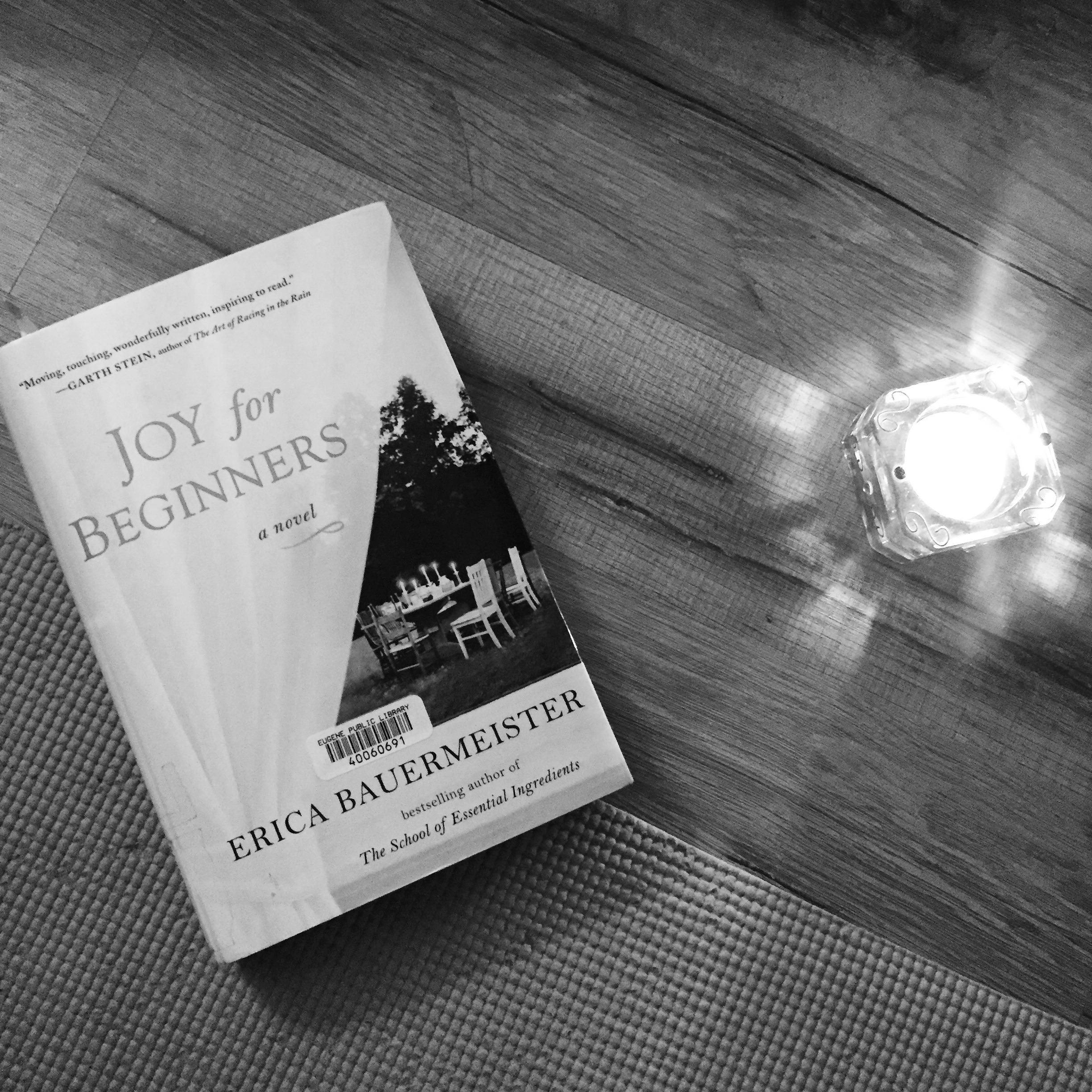
*Note on the book pictured above: I don’t remember the plot. But I do remember it was part of my finding joy and rewiring how I thought about my health process.

Veggie Rainbow Cool Noodles

In a quest to cook more in community, and educate in a hands-on format again, I’ve been leading routine cook-a-longs this summer. I’ve been cooking both with my local running group and as part of my public health nutrition role, my side gig when I’m not working one-on-one with nutrition clients.

I love cooking with both groups–but especially the cook-a-longs with my running ladies because we share similar interests and chat more as we’re making the recipes. And because I get to choose recipes that I routinely make in my everyday and know will make meals and workout recovery easier for others.

This is one such recipe that we made together last week.

It’s a cool noodle dish, served either warmish or at room temperature, but ideally not truly ‘fridge-cold’ or with raw vegetables, because that makes it extra difficult to digest. At a time (summer / hot weather) when our natural digestive ability is already weaker.

It features an Asian-inspired sauce and is kept super easy and quick by utilizing a protein and carbohydrate source in one with legume-based pasta noodles. If you don’t prefer tahini, choose almond butter instead. There are several legume-based pastas on the market. Banza is a good one. If you don’t prefer that, you can add two cups of edamame, your choice of other protein such as grilled fish, chicken, or tofu, and use a whole-grain noodle, such as brown rice noodles or whole-wheat fettuccine. 

Happy cooking and summer training / adventuring / eating / digesting! :)

Veggie Rainbow Cool Noodles
Prep:  15 minutes  | Cook: 15-25 minutes  | Serves: 4

Ginger Turmeric Tahini Sauce:
¼ cup tahini
½-inch fresh ginger, finely grated
1 Tbs. low-sodium tamari or soy sauce
½ tsp. turmeric
2 Tbs. lime juice
1 tsp. pure maple syrup
1 Tbs. light miso 

Noodle Salad:
8 oz. chickpea or legume-based noodles
3-4 large carrots (about 500 grams), sliced thin
1 bunch (240 grams) radishes, sliced
2 cups green peas, fresh or frozen
½ cup (packed) cilantro, plus more for garnish
Toasted sesame seeds, for garnish

  1. Make the sauce: Mix the sauce ingredients, along with 4-8 Tbs. water until completely smooth. Taste and adjust seasonings as needed and then set aside. 
  2. For the Noodles: Bring a pot of water to a boil. Add the noodles and any hard vegetables (such as carrots or radishes) and cook half way through. Add the peas and any softer vegetables, and cook the remaining few minutes until the pasta is al dente. Drain and rinse with cold water to stop the cooking process. 
  3. In a medium-serving bowl, toss the pasta and vegetables with the sauce and cilantro. Top with some toasted sesame seeds and serve. 

Notes: Change up the vegetables depending on what is in season near you! When you vary it up, choose one to two root vegetables or starchy vegetables and one or two leafy green vegetables or more pungent vegetables.
Roots/Starchy Examples: Peas, fresh corn, carrots, summer squash, zucchini (spiralized to add to the noodles (not in replace of!) is what I’ve done in the photo above)
Green/Pungent Examples: Broccoli, cabbage, kale, spinach, radishes, daikon radishes (what I’ve used in the photo), asparagus

Want to Know More?

Within my nutrition practice, I specialize in digestive imbalances, often within endurance athletes. When we’re experiencing chronic GI distress, fatigue, and/or malabsorption of foods and nutrients, there will often be imbalances in several systems of the body simultaneously. I shared more about this topic in the nervous system’s role in part 1, the immune response and subsequent inflammation in part two, gut microbes and dysbiosis in part three and the importance of chewing our food in part four. Check those out or reach out to me for more personalized support for gut healing, increased energy, performance, and feeling good in your everyday life.


Training the Gut for and during Long Runs and Endurance Sports

Now that it’s full on summer, let’s check in about a topic that is pertinent for all the endurance athletes, and particularly runners, with wonky guts and/or rigid beliefs about fueling during longer efforts. 

I’ve heard so many variations on the following over my years as a runner:
“I can’t eat anything before a run, ever.”
“I can’t eat anything during a run.”
“ I can’t drink anything more than a little water during a run.”
“I have no appetite for hours (or days) after a run and my GI is messed up for several days.”
“I’m not recovering from long runs or races as well as I used to.”

If you currently relate to any of those statements, I want you to know that the digestive system is highly adaptable. Gastric emptying as well as stomach comfort can be ‘trained’ during endurance activities.

Stored glycogen, or the amount of carbohydrates in our system already, are depleted after about 80 minutes at marathon pace, so for most athletes training for longer efforts, fueling with some sort of carbohydrate during exercise is essential. This training of the gut can improve the delivery of nutrients during exercise so during these long efforts, your system gets the fuel you need and are ingesting, and alleviates some (and perhaps all) of your negative GI symptoms.

How Can I Train my Gut? 

What we currently know is that the stomach can adapt to ingesting large volumes of  both solids, fluids, or combinations of the two. 

Just think about those competitive eaters who can down dozens of hot dogs in a matter of minutes. Disgusting thought, I know, but they have to train their systems to do it!  For endurance athletes needing fuel for the long run, we need to do our own version of gut training. 

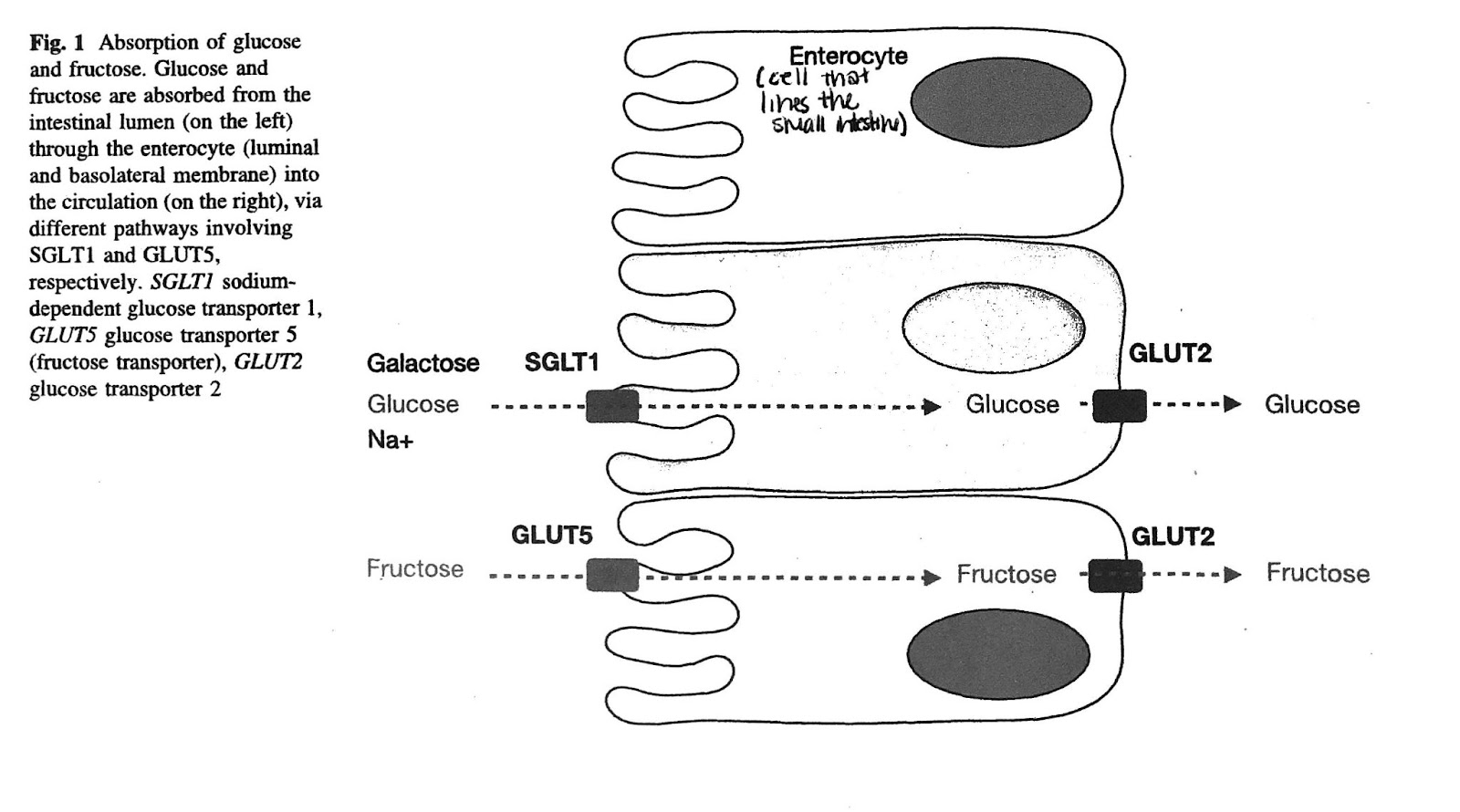
This happens both during and outside of exercise because eating a higher carbohydrate diet leads to our intestinal cells, called enterocytes, being able to absorb and utilize carbohydrates as fuel more efficiently. 

To get sugar (carbohydrates) from our small intestine where absorption occurs into our blood, the sugar molecules mostly have to be transported across the membrane by glucose or fructose transporters. Think of a taxi transporting you from the airport to your destination. When we eat a diet high in carbohydrates, our body naturally increases the number of sugar taxis (glucose and fructose transporters). 

You’ll notice some of these taxis are sodium-dependent, which is a super essential nutrient for endurance exercise, particularly in the summer, but a topic for another day. 

We also know that increasing dietary intake of carbohydrates increases the rate of gastric emptying. This occurs rapidly with a change in diet, within just a few days. So what this means is that you can fuel with more carbohydrate before exercise, fuel with more carbohydrate during exercise, not feel like you’re running around with a giant, full, sloshy gut, and perform the training run or race better, because you were using the fuel you needed to perform adequately. 

And, we also now have evidence that when you fuel with the appropriate amount of carbohydrates before, during and after an exercise bout, recovery from hard efforts is substantially improved. 

When your body has all the sugar taxis it needs to get carbohydrates out of the digestive system and into the blood stream for circulation and use as fuel as quickly and efficiently as possible, and our body gets used to using carbohydrates added on the go as fuel, the chances of developing GI complaints during exercise are much smaller.

Win, win, and win, in my opinion. 

How Much Carbohydrate Can and Should I Be able to Tolerate ?

How much carbohydrates you need or should consume during exercise depends on a few factors. One, how long you’re going to be out there. Two, the intensity of the effort. And three, your gender. 

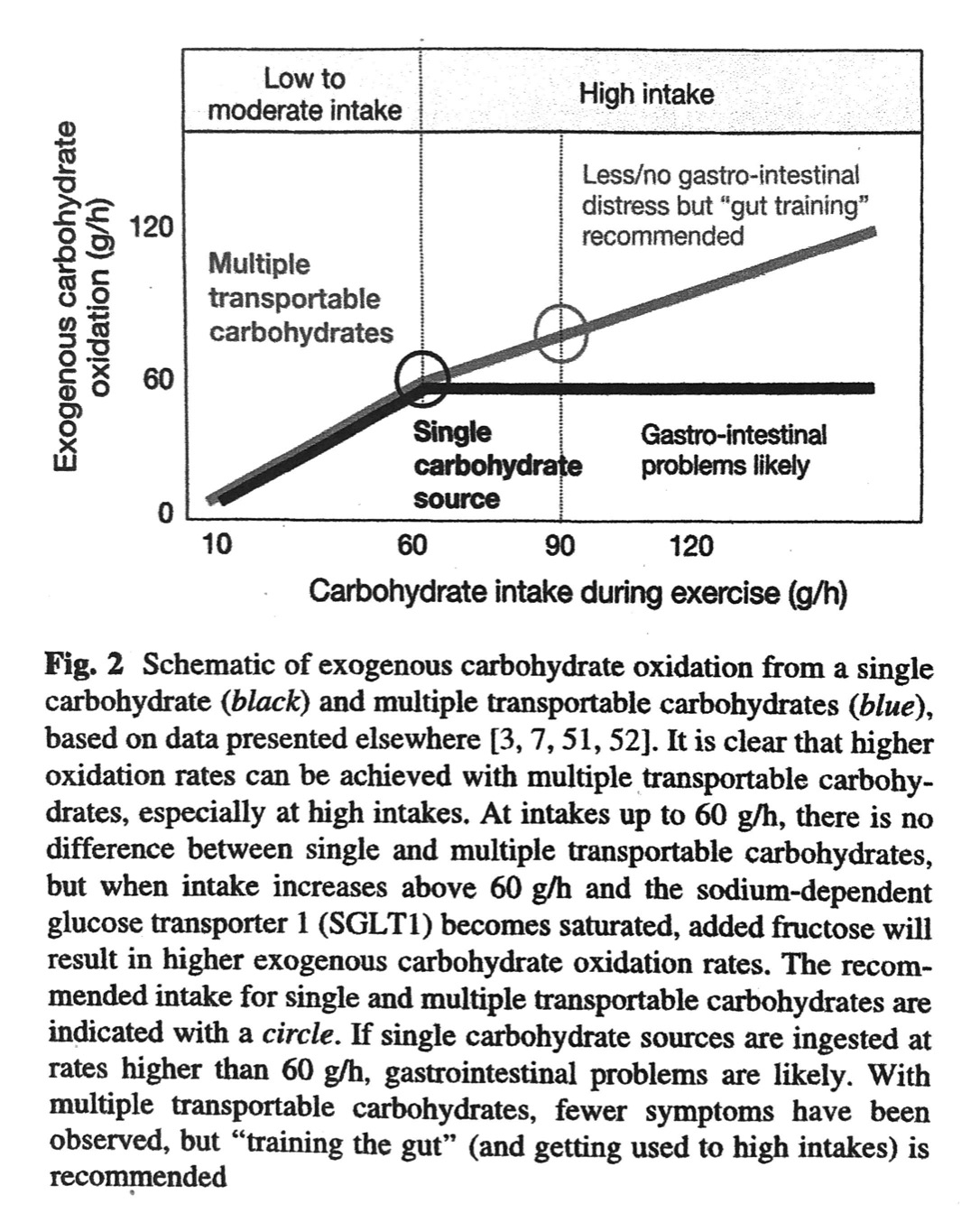
Exogenous carbohydrate oxidation, or the amount of carbohydrates we can use during exercise, peaks around 60 grams per hour when it comes from glucose only.  When fructose is ingested in addition to glucose, carbohydrate oxidation rates are elevated above 60 grams per hour, to 90 to 120 grams per hour (when the gut has been trained). In women, however, we have evidence that carbohydrate oxidation rates appear to be maximized at about 60 grams of carbohydrates per hour (2). If you’re a female and looking to maximize your fueling and racing/recovering capacity, you can experiment with ingesting more than 60 grams per hour. This upper limit will likely be individual.

The current guidelines for fueling are to take in up to about 60 grams per hour of carbohydrates for exercise lasting up to two hours. 

And when the effort lasts longer than 2 hours, men should experiment with increasing their intake to slightly greater amounts of carbohydrate (90g/hr), but women may feel best at sticking with 60 grams per hour. These carbohydrates should be a mix of glucose and fructose or maltodextrin and fructose. Virtually every sports nutrition product for use during exercise includes a mixture of carbohydrates these days so most people will not need to worry about getting the different sources. And most do-it-yourself whole food fuel sources will also include both fructose and glucose. 

Note that sucrose, which is contained within many whole foods and is also what makes up simple table sugar, is a disaccharide, meaning it has two different sugar compounds, fructose and glucose.

Here’s another way to look at the timeline of fueling needs:

Exercise Duration0-59 minutes1 hour2 hours2.5 hours3 hours
Grams of Carbohydrate Per Hournone3030-60g : women
Up to 70 g/hr: men
(higher intensity = higher need)
30-60g : women
Up to 70 g/hr: men
60 g: women (can experiment with more)
Up to 90 g: men
(can experiment with up to 120 g)

How Long Does Training the Gut Take? 


If you’re training for a race and practicing fueling during long efforts, it doesn’t take more than a few days to a couple weeks to increase those sugar taxis in your gut. Based on animal data, an increase in dietary carbohydrate from 40 to 70% could result in a doubling of SGLT1 transporters over a period of two weeks (1).

But it’s important to practice your race nutritional strategy in training, get used to higher volumes of solid or liquid intakes, and higher carbohydrate intakes both during and outside of training. 


As always with fueling for sports, it will take a little individual experimenting and tweaking to find what works for you so you’re less likely to end up looking like this during your next long run or race:

Will Training My Gut Fix all my Exercise-Related Digestive Woes? 

Perhaps following the above recommendations will be a simple answer to fixing all your exercise-caused angry/sad midsection woes. 

But many people with digestive systems that are more prone to upset also need to pay special attention to what you are and aren’t consuming, and how much you’re eating in all the hours outside of training. This can be very individual. 

Want to Know More?

Within my nutrition practice, I specialize in digestive imbalances. Often when we’re experiencing chronic GI distress, fatigue, and/or malabsorption of foods and nutrients, there will be imbalances in several systems of the body simultaneously. I shared more about this topic in the nervous system’s role in part 1, the immune response and subsequent inflammation in part two, gut microbes and dysbiosis in part three and the importance of chewing our food in part four. Check those out or reach out to me for more personalized support for gut healing, or to go from not being able to tolerate fueling, to training your gut for the amount you need.

References:

1). Jeukendrup, A.E. (2017). Training the Gut for Athletes. Sports Medicine, 47(Suppl 1): S101-S110. https://doi.org/10.1007/s40279-017-0690-6  
2). Wallis, G.A, et al. (2007). Dose-response effects of ingested carbohydrate on exercise metabolism in women. Medicine and Science in Sports and Exercise, 39(1): 131-8. https://doi.org/10.1249/01.mss.0000241645.28467.d3.