

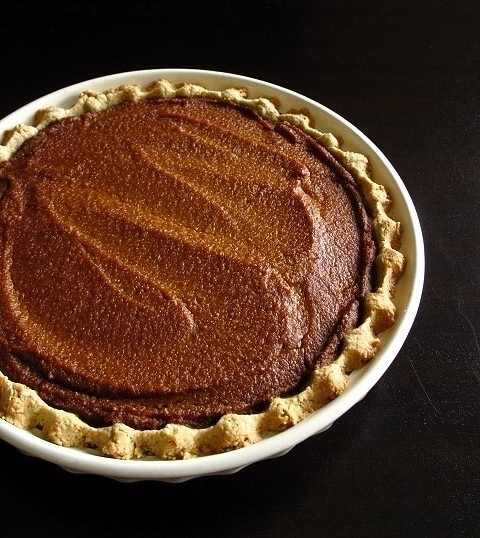
The Recipe Redux theme for November is healthy holiday baking. If you’re new to this space, The Recipe Redux is a monthly recipe challenge, founded by three registered dietitians, which I participate in. The challenges are always focused on taking delicious dishes, keeping them delicious, but making them better for us.

In light of this season, I’ve been doing a bit of reflection on where I stand in the interchange between decadent holiday foods and how I eat from day to day. Should I splurge and not worry about some of those really not healthy ingredients because it is the holidays, or should I try to capture the essence of health in enjoyable foods because it is the holidays –and we all tend to overeat and regret it later?
Additionally, as a result of all that I’ve been learning of health and nutrition and where I stand right now in aiming to maintain a healthy relationship with food, I’ve been returning to passages from Annemarie Colbin’s Food and Healing:
With all the recent emphasis on “healthy” eating, it is important to remember one thing: Food does not make us healthy. The right kind of food will allow us to reach our maximum health potential, to become as healthy as our genes and constitution may permit. It will support what we are at our best. It will not interfere with our development, but it will also not make us more than what we can be. In short, good food is effective because it is passive. The wrong kind of food will act like a block or a dam, deflecting our growth and thwarting our unfolding. In other words, it will actively create trouble, and make us unhealthy…Good food will nourish us without causing stress, and thus allow our immune system to spend its energy in healing. Thus many different diets will have healing effects. Often it is not just what we eat, but also what we don’t eat that helps us become healthy again.
So my theory right now? Stressing about eating the right kinds of food is not healthful. But neither is eating foods that overtax and/or stress our bodies, foods like highly refined sugars, refined flours/grains, and rancid oils, to name a few. Sure, they’re fine in small quantities infrequently. For the most part however, they’re best avoided, even (and maybe especially) during the holidays. Aren’t we all a little too stressed in this season? Don’t we deserve to feed ourselves and our loved ones foods that have healing qualities?
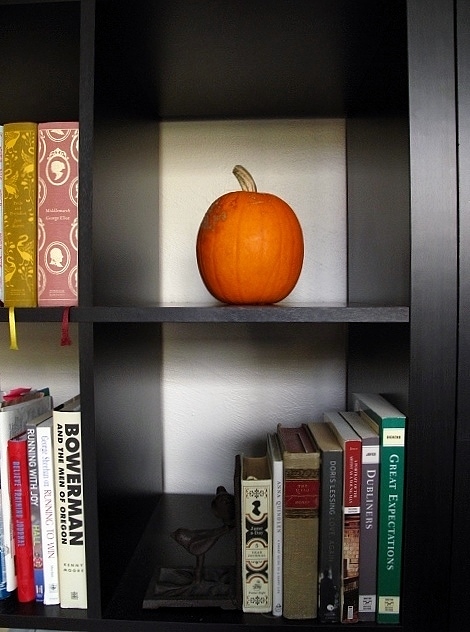

My advice is to do what you can with what you have. But maybe as you venture into this holiday season, do so a little more mindfully, thinking to yourself, How do I want my body to feel after eating? What foods will nourish me best?

Pumpkin Pie, makes one 9-inch pie
Truthfully, I never liked pumpkin pie until I stopped eating dairy and enjoyed a vegan version of the classic. The creamy custard base always turned me off. Now I love pumpkin pie and count it as one of my favorite flavors. While there are innumerable versions swirling about this time of year, this is the one I make and enjoy. It is adapted from Gena Hamshaw’s pie in Food52 Vegan and while I enjoy her version, I’ve changed it a bit so dates are the primary sweetener and, in my years-long quest to find a good gluten-free and vegan pie crust with no coconut oil (which I cannot stand in fat-heavy pastry doughs), I’ve finally come to a closer-to-whole-foods crust that tastes like what I think a pie crust should. It gets extra points for not needing to be rolled, chilled, or being difficult to work with. Enjoy!
filling:
2 1/2 cups baked + pureed pumpkin or winter squash, or canned puree
1 cup cashews, soaked for at least 4 hours
1 cup medjool dates (about 10)
2 tsp. pure vanilla extract
1/4 tsp. sea salt
2 Tbs. tapioca starch
2 Tbs. blackstrap molasses
1 tsp. cinnamon
1/2 tsp. ginger
1/4 tsp. nutmeg
a couple good pinches of cloves
crust:
1 cup rolled oats
1/4 cup + 2 Tbs. almond meal/flour
3/4 cup millet flour
pinch of sea salt
4 1/2 Tbs. good quality canola oil
3 Tbs. maple syrup
3/4 tsp. vanilla
- Begin by baking the pumpkin or squash, if using, and soaking the cashews in water a few hours ahead of time.
- Then, soak the dates in warm water for about an hour to soften up. Once the dates have soaked, keep 1/2 cup of their soaking liquid and put in a food processor along with the pitted dates, vanilla, and salt. Puree until completely smooth.
- Into the food processor with the date puree, add the soaked and drained cashews, starch, molasses, and spices. Puree again, until completely smooth. Then add the pumpkin and puree once again until completely mixed. Then set aside to make the crust.
- At this point, preheat the oven to 350 degrees F.
- Finely grind the oats into a flour using either a food processor or coffee grinder.
- Then, in a mixing bowl, whisk together the oats, almond and millet flours and salt.
- In a liquid measuring cup, stir together the oil, maple syrup and vanilla. Then pour the liquids over the dry ingredients and mix together with a fork until the dough is evenly moistened.
- Dump the entire mixture into a 9-inch pie pan, and with your fingers, spread the dough across the bottom and up the sides. A flat-bottomed measuring cup, glass, or mini rolling pin helps smooth the bottom.
- Crimp the edges, and then fill the crust with the pumpkin mixture.
- Bake for 35-40 minutes, until the filling is a golden brown.
- Remove from the oven and let cool completely before serving.



 From that moment when I learned to turn on the mixer, to scoop flour into the measuring cups, to follow recipe instructions, up to now, nearly 20 years later, I’ve been most at home in any place surrounded by food. It fascinates me in its cultural symbolism, use as a socio-economic tool and weapon, as a medicine to heal, as a draw to family gatherings and entire holiday celebrations, and most importantly, in its most simple form as basic sustenance for the hunger in all of us.
 In those simple childhood days, those most-remembered foods symbolize the dearly loved and oft-hated. My favorites from that gray box included our neighbor’s recipe for honey-cinnamon swirl rolls, my mom’s homemade bread, and leftover-oatmeal cookies with just the right amount of spice. There was my favorite breakfast, dad’s “stinkbug porridge”, which was a simple concoction of raisins and brown sugar. And then the fresh milk from our cow, Betsy, with flakes of cream floating amongst my morning cheerios. I had to plug my nose to get the milk down after staying an extra hour at the table gathering the resolve to drink it. Now looking back, I realize what a precious experience to have been raised in a place where our milk came right from the cow.
 In this new season and new beginning of sorts, I am reminded of how I am drawn to food as a means of communication and connection. I am reminded of the beginning, how I learned in the kitchen with my mom and the whirl of the blender blades that are still in her cupboard today. I am reminded that food is special, and that when I go into myself, as Rilke suggests, the only answer I come back with is, yes, I must create.
Though I no longer enjoy thick slices of my mom’s bread, or partake in flecks of cream floating in cow’s milk, I hold in my heart and in my cooking a focus on good, simple, nourishing food, in whatever way it can be most enjoyed. I am looking forward to this season to come, and the creations it will bring.
In this new season and new beginning of sorts, I am reminded of how I am drawn to food as a means of communication and connection. I am reminded of the beginning, how I learned in the kitchen with my mom and the whirl of the blender blades that are still in her cupboard today. I am reminded that food is special, and that when I go into myself, as Rilke suggests, the only answer I come back with is, yes, I must create.
Though I no longer enjoy thick slices of my mom’s bread, or partake in flecks of cream floating in cow’s milk, I hold in my heart and in my cooking a focus on good, simple, nourishing food, in whatever way it can be most enjoyed. I am looking forward to this season to come, and the creations it will bring.

 GUTSy Performance Nutrition