Cooling Kitchari + End of Summer Notes

Cooling Kitchari + End of Summer Notes

IMG_1904


After sharing about my experience with eating at the relay, I got a request to share the kitchari that I made and ate during the race. As I’ve told more than a few people, it is a variation on dozens of “beans and rice” meals that I regularly make and consume. One thing that is different, however, is that I’ve been paying a little more attention to the energetics of food these past few months, how certain things make me feel, physically and emotionally, and really asking myself, What do I need today? to feel my best. Part of this is perhaps just where I’m at in life, with my relationship to food and my body, and the other part is that I find when it comes to healing complex health concerns, which I’ve struggled with for a number of years, I believe we each individually have the internal knowledge of what is best for us, if only we tune in and acknowledge it.

I’ll share a little more about what I have adapted, and suggestions for how you can do the same in the recipe notes below, but first a few good articles, a video, and a podcast episode that I particularly enjoyed these past few weeks.
 

IMG_1867


Nutrition + Food:
Superfood or Super-Hype?: ‘My advice is to think twice before you succumb to the next cure-du-jour and run out to buy this week’s superfood. It might cure what ails you (though probably not). Better to take a thorough look at your lifestyle, habits, and diet. Choose from the widely available healthy foods and go for a long walk!’

The Antioxidant Effects of Acai versus Apples

A Vegan Dietitian Reviews “What the Health”: There has been A LOT of discussion and controversy over this new documentary, but I think Virginia Messina does the best job detailing the problematic nature with how the information was presented.

Microbiome: Increase Your Diversity: ‘However good your diet and gut health, it is not nearly as good as our ancestors’. Everyone should make the effort to improve their gut health by re-wilding their diet and lifestyle. Being more adventurous in your normal cuisine plus reconnecting with nature and its associated microbial life, may be what we all need.’

This Is Your Brain on Cheese: When I first learned I was reacting negatively to gluten and dairy and eliminated them from my diet, I found dairy was much more difficult to remove, and I went through weeks of anger and frustration at the sudden lack. After that ‘detox’ period was over, I have never craved cheese or other dairy again. Some of the evidence in this article explains why.

Are Endurance Athletes More Susceptible to Getting Diabetes? ‘If you’re eating like a Tour de France rider, just make sure you’re training like one too.’

A Cook’s Remedy: I absolutely loved Aran’s video showcasing her Spanish Roots and relationship to food and body, and her journey over the years. It is episode Three, parts one and two.

And Lastly, a podcast episode to really get you thinking about your relationship to food and buying in to diet culture–I know it certainly has been the start of a paradigm shift for me: Isabel Foxen Duke on Sanity around Food, Surrender, Diet Culture, Fat Phobia as a Social Justice Concept + So Much More
 

IMG_1882


Self-Care + Mindfulness:
The Mindfulness of Pure Experience

Turning Softly Towards Your Pain Rather Than Avoiding It: ‘I began to alter my relationship to negative selective memories and go towards them and soften them rather than avoid them. I would notice how they made me feel, where I felt them, breathing deeply, anchoring myself around the thought or memory in order to reduce the impact it had on me.’

The Tomorrow List: ‘Instead of listing what I was grateful for that day, which despite my inability to articulate was still aplenty, I made a list of what I would be grateful to have realised tomorrow. If all went according to my desire’s and the sake of my safety, how I would feel at the end of my day.’

I’ll shoot you straight: ‘If you are resentful and do nothing to change either your exterior or interior, you have not met yourself. If you go back to the same coping mechanisms over and over again with the same results over and over again, you have not met yourself. If you keep opening the same doors over and over and OVER again, there’s a whole untouched hallway ahead of you – and you have not met yourself.’ 

‘I sit here knowing my body will go through so many incarnations and I’m going to treat it like it’s royalty no matter what. I smile because I have not only a yoga practice on the mat but off the mat as well (life, yo) that strives to be authentic, layer-peeling, free of addiction and crutches and sameness, and I feel as if I am gliding down the hallway, door by door. And I realize I am free, I am whole, I am love. And I am not afraid.’

And to end on a slightly lighter note, I love Sophie’s suggestions on 12 Ways to Make Your Kitchen a Hippie Haven, combining both food, nutrition, and mindfulness topics.
 

IMG_1913


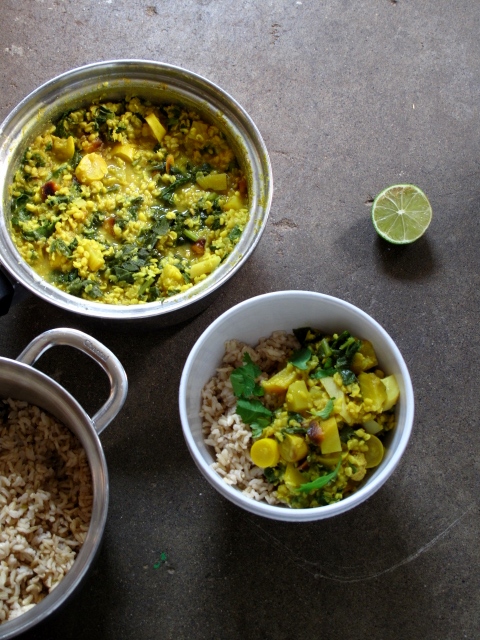
Cooling Kitchari
, serves 4
Adapted from What to Eat for How You Feel

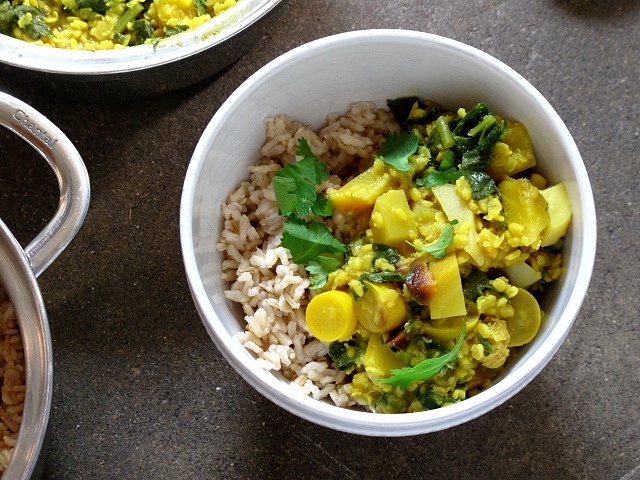
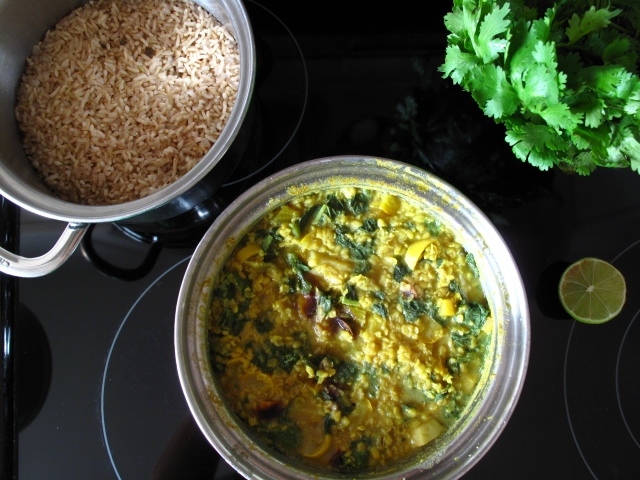
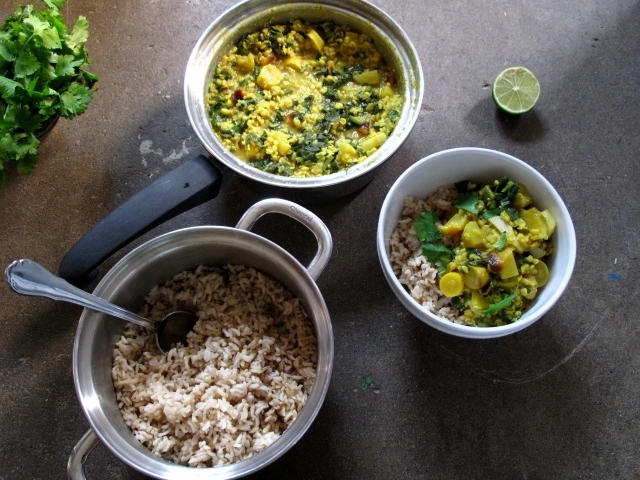
Kitchari is a creamy porridge-like blend of beans and rice that has been a staple of Ayurvedic cuisine for many centuries. It is often consumed during times of healing or for detox, as simple frugal fare, and as a comfort meal. There are countless variations on it, and I adapted my own, choosing to cook the beans and rice separate for a less porridge-like texture in lieu of a more soupy curry served over brown rice. I’ve made it with both split yellow mung dal and red lentils. Both are lovely but the red lentils will break down more into that porridge consistency, and the split mung beans will retain a little more texture. The spices used here are more in favor of consuming this during the summer heatwave we are once again experiencing, with cooling and digestion-friendly fennel, and smaller amounts of the heating and pungent ginger and turmeric spices. Additionally, use whatever seasonal vegetables you have on hand. I chose to use more grounding vegetables from my garden like golden beets, yellow summer squash, carrots, and white ‘salad’ turnips and their greens. My garden is bursting with tomatoes, peppers, and eggplant too, and though I really do enjoy those foods, I’m noticing that they’re not leaving me feeling my best so I left them out. If you choose to make this, I invite you to adapt it as needed, adding in one or two minced chili peppers if you’re feeling a little stuck or sluggish, or taking out the black pepper if you’ve been overheated.

1 cup yellow split mung dal or red lentils
3 cups water or vegetable broth
2 cups diced seasonal vegetables
1-2 cups dark leafy greens
2 bay leaves
1 teaspoon fennel seeds, ground in a spice/coffee grinder
1 teaspoon fresh grated ginger
1/2 teaspoon ground turmeric
1 teaspoon salt
1/4 teaspoon black pepper, if desired
1 Tablespoon olive oil
1 cup long grain or basmati brown rice
2 cups water or vegetable broth
1/4 cup fresh chopped cilantro, basil, or parsley
lime wedges, to serve

  • Soak the mung dal or red lentils for at least 30 minutes, then drain, wash well, and and drain again. Do the same in a separate dish with the brown rice.
  • In a small saucepan, bring the rice and water to a boil, cover, turn down to a simmer, and cook for about 40 minutes or until all the liquid is completely absorbed and the rice is plump.
  • Combine the mung dal or red lentils and broth or water in a medium saucepan and bring it to a boil over high heat. Stir occassionally and skim off the froth that comes to the surface.
  • Add the vegetables and fennel, bay leaves, ginger and turmeric, leaving out the greens for now, and mix well. Reduce the heat to medium-low, cover, and simmer for 20-25 minutes, or until the beans are soft and fully cooked. Stir occasionally as needed so nothing sticks to the bottom of the pan.
  • Then stir in the greens, oil, and salt and pepper to taste. Cook just a little longer until the greens soften.
  • To serve, spoon the kitchari over a bowl of rice and top with minced cilantro or other cooling fresh herbs and a few squeezes of lime juice.

Herbal Allies // Ginger, Licorice and Chamomile Tea

Herbal Allies // Ginger, Licorice and Chamomile Tea

IMG_1545


I’ve spent the last three early mornings lingering over the breakfast table, laptop, morning books, and empty porridge bowl all pushed aside. Just me in the early morning stillness facing east towards the bright sun shining into my eyes, a big smile on my face. William came in this morning and asked me what I was doing. Chameleon-ing, I told him. I’ve been soaking up as much of the early morning sun and warmth as I can.

We’ve finally been getting a good stretch of sun and warm days here and it feels just about right as May is the best month, to my way of thinking. Given I’ll be making my way into a new decade in a few days, I’ve been figuring a good way to begin my birthday week celebrations is by starting each day basking in the sun with a mug of tea. It feels like the best sort of end of a decade indulgence.


IMG_1521IMG_1539IMG_1540


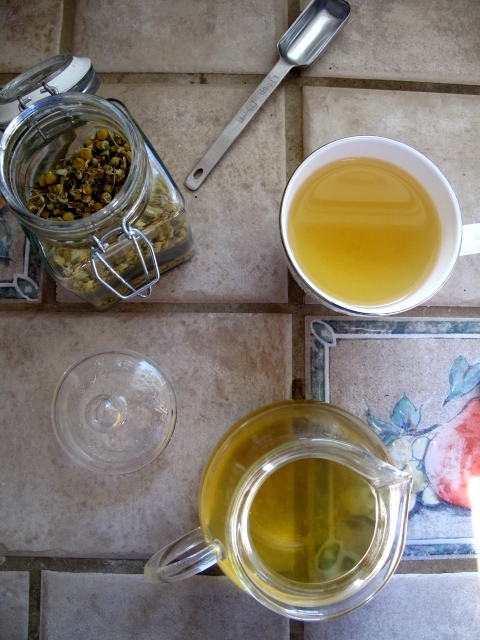
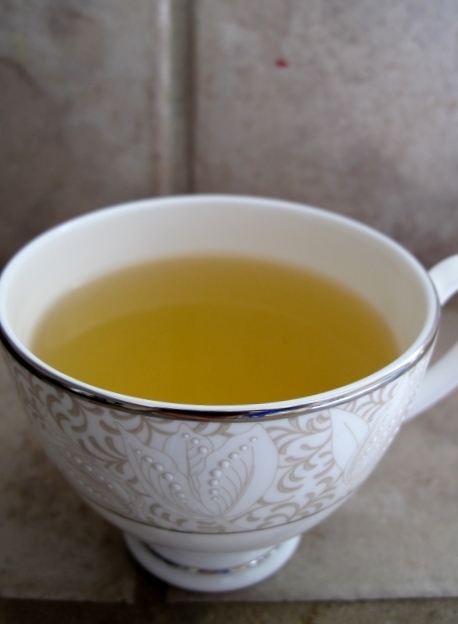
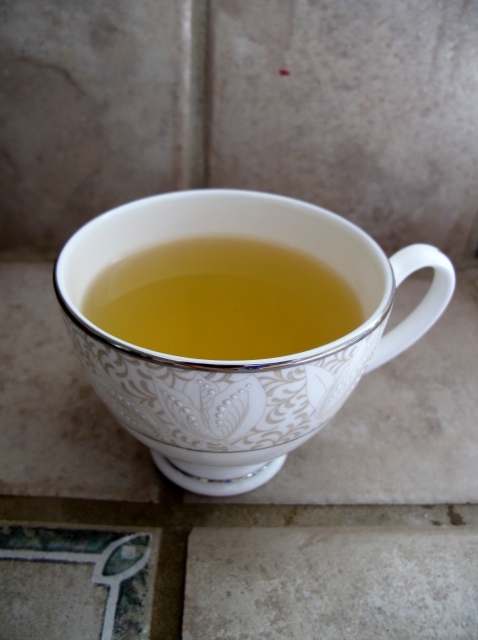
The other thing I’ve been doing lately is drinking this ginger, licorice, and chamomile tea. It is usually my evening/after dinner drink of choice as the licorice root is naturally sweet, chamomile is soothing, and ginger is warm and zesty.

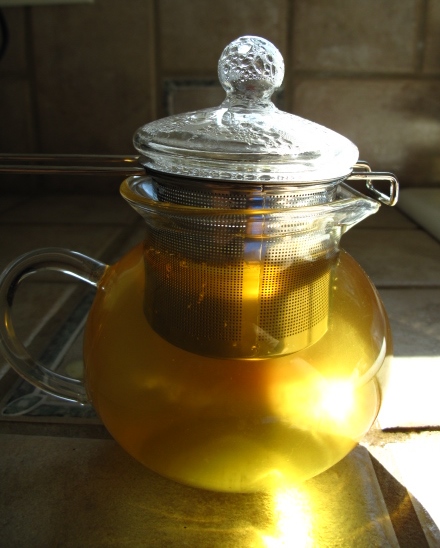
In my herbal class last term, we experimented with different methods of making herbal tea. Certain herbs, like flowers or leaves, are better prepared by infusing them in freshly boiled water, as I’ve done here. Others, like roots, will have more of their beneficial constituents released by decocting them in gently simmering water for 15-30 minutes. The thing we learned though, is that though medicinally speaking, some methods of extracting might be better, either way will be fine depending on preference. It is something like the people that pour warm water into a mug and then dunk their tea bag in. When I’m offered tea prepared in this way, I often cringe and hesitantly accept, because it’s not the way I prefer my tea (i.e. strong, long-infused, and exceptionally hot, especially if it’s black/Irish tea). But I understand we all have our personal tastes and what might be ‘wrong’ in the recommended way of things may be just what a person needs.

So going against the grain here, I’ve found that I actually enjoy licorice and dried ginger root prepared in the easy infusion method of pouring boiling hot tea over and letting sit for 10-15 minutes, rather than simmering away on the stove. Luckily for me, the chamomile prefers this method too.


IMG_1535


I’ve chosen these specific three herbs because they particularly spoke to me to be infused together, but after thinking about their medicinal actions, I came to a good conclusion why:

Ginger // Common fresh or dried ginger is probably my most often used herb/spice, right after cinnamon. It is good in this tea as it is gently warming and pungent, and balances the sweet flavor of the licorice and slightly bitter properties of the chamomile. Freshly grated ginger root can also be used here. Ginger is exceptionally beneficial in controlling inflammation and muscular pain, increases circulation, and also aids in digestion.

Licorice Root // Despite the connotation with licorice candy, licorice root does not taste anything like the red or black ropes I loved to eat as a child. Licorice is an excellent herb for balancing the adrenals, balancing blood sugar, and helping decrease stress and inflammation. It is also soothing to the mucous membranes and GI tract, and makes for a good addition to an evening tea when we are winding down and might be craving extra sweets. Note: licorice should not be taken by those with high blood pressure. 

Chamomile // Chamomile  is an indispensable herb for evenings for so many reasons. Well known as a gentle, calming tea, these delicate yellow flowers help relieve irritability, stress, anxiety, insomnia, upset stomach, and much more.


IMG_1542


Ginger, Licorice, and Chamomile Tea, makes 1 12-ounce mug
Dried herbs are best purchased in small quantities in bulk from a natural foods store, if you have access. Alternatively, an excellent place to source them online is from Mountain Rose Herbs.

1 Tbs. dried chamomile flowers
1 tsp. dried licorice root
1/2 tsp. dried ginger root

  • Add herbs to a tea ball or basket and then set in a mug or tea pot. Pour 12 ounces freshly boiled water over the herbs, cover or cap the mug or pot, and then allow to infuse for at least 10 minutes and up to four hours. Drink warm or cold.


Healing Mineral Broth

Healing Mineral Broth
IMG_5702
In honor of Earth Day, the Recipe Redux challenged us to show how we reduce food waste. Whatever you would normally toss, use it up. Share tips for reducing food waste in meal planning, prep, or using up scraps. 

One of the things I was most excited about when we bought our house was finally having the ability to compost because I hated having to put all my vegetable scraps in the trash. But I am also the least responsible compost-keeper. I have a one-two pile system going in the last owner’s dog run that I never turn, don’t add enough green to brown material to, and sometimes draw in little rodent creatures, as I’ve created their ideal habitat. It is fairly routine for William to remind me about how I need to turn/do something about my scrap piles and for me to nod along, I know, and then do nothing about it. This is definitely the case of liking the idea of something more than the actual process, and is just one more reason I would have made a terrible farmer.

Thanks in part to learning the benefits of making healing vegetable broth last fall in my cooking class, I’ve slightly reduced my critter-habitat production, as I’ve found another initial use for many of my scraps. But also, our neighborhood cat has now got my back. ;)

The recipe we learned was Rebecca Katz’s Magic Mineral Broth, which she designed to include vegetables that will provide minerals essential for their deep-healing effects. I’ve been given the recommendation time again this past winter to incorporate more broth, as I’ve needed to return to more specific gut-healing and immune-enhancing protocols than just eating my vegetables. Mineral broth is good for that but it is also rich in electrolytes needed for athletic recovery, nutrients essential for bone health, and lots of minerals that just about all of us could use more of.

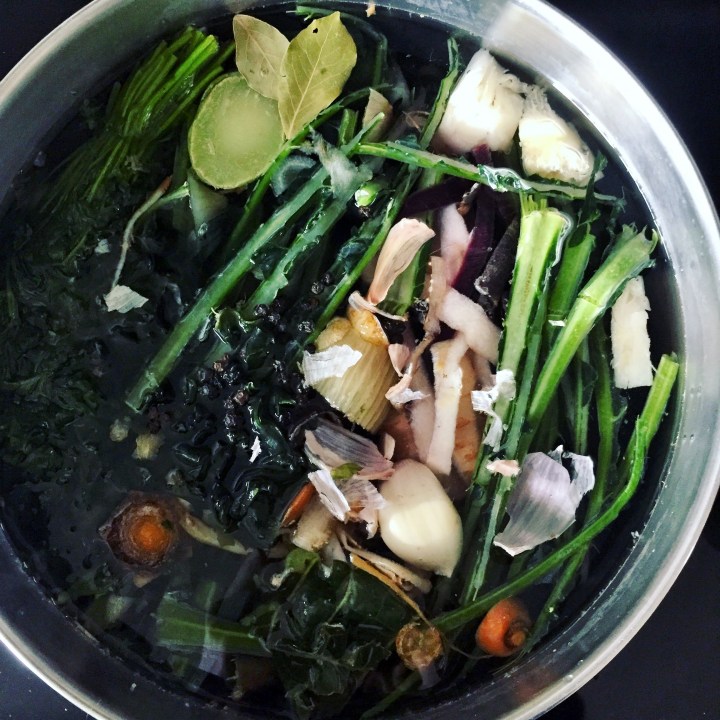
What’s more, it can be made using vegetable scraps. Lately, that is what I’ve been doing, as I throw the kale, collard, and tough broccoli stalks in the freezer, along with onion, garlic, celery, and carrot bits and pieces until I’ve gotten a good-sized bag. Then I dump it all out into a large pot, add a few good additions along with water, and simmer away for a couple hours.

In addition to making sure my broth includes onions, garlic, or leeks, I always add a good pinch or small handful of kelp or one of its varieties. These are seaweeds that are themselves extremely rich in nutrients, but also add a real umami flavor that enhances the taste. And no, the finished broth does not have a seaweed/seawater flavor.

For more about the specific reasons vegetable broth can be so healing, check out these informative articles by Ally, Aimee and The Salt.


IMG_5838


Healing Mineral Broth, makes about 10 cups
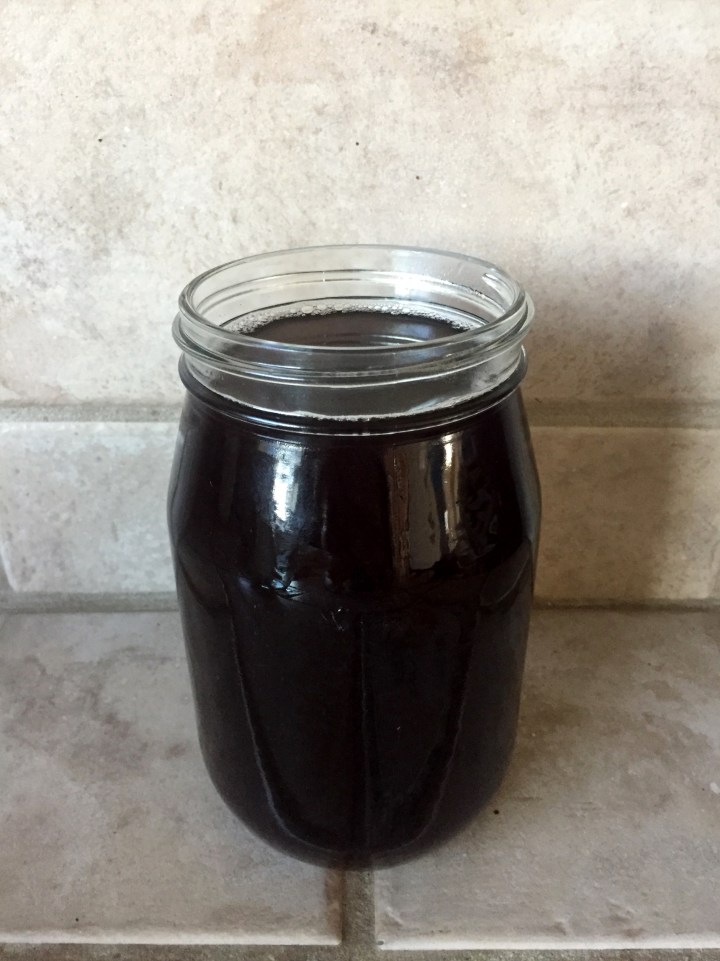
The broth above is a deep purple because of the addition of purple carrot scraps. Use what you have, but tend for vegetables that will impart a mild flavor (less beets and nightshades, more onions, brassicas, celery, and carrots). Mushrooms would be lovely as well. Add the finished broth to soups, stews, instead of water in cooking grains, or simply for sipping on its own. It is tasty, I promise. 

8-10 cups assorted vegetable scraps
1-2 bay leaves
1-2 cloves garlic, peeled
1/2 tsp. dried thyme leaves or 2-3 sprigs fresh
A small handful of parsley stems
1 tsp. whole black peppercorns
a good couple pinches of kelp (I’m currently using wakame)
10-12 cups water

  • Add all ingredients to a large pot and bring to a strong simmer. Turn down, cover, and simmer for 2-4 hours, adding water if needed.
  • Remove from heat, allow to cool slightly, and then strain off the scraps (and compost if you can).
  • Store any broth that won’t be used within a couple days in glass jars in the freezer.

recipe-redux-linky-logo