Celebrating the Season and the Athletic Off-Season

Every December for the last several, I’ve taken a running or training break. It has looked different every year, from the sharp and abstract non-injury pain and extreme anxiety that marked the beginning of my autoimmune ‘journey,’ to the slow easy miles that were part of most of the entire year afterward, to racing and recovering from my first and third marathons at CIM.

And then there was last year when a late-summer flare, autumn of struggle and grief over my grandfather’s death culminated in a December of laryngitis and bronchitis, so painful I carried a pillow around the house, holding it against my ribs as I braced against the wall each time I coughed. Thankfully I have an amazing chiropractor that somehow received the x-rays that weren’t supposed to be sent to him, massaged out and adjusted my painful, strained ribs, and gave me the go-ahead to put my body back in motion the day before Christmas.

When one either chooses—or is forced—to take a break, the return process can be such an amazing gift.

But how to mentally navigate the season of food, festivities, and excess when one is not as active? This is a concept I’ve struggled with off and on over the years. For the most part, I try to be mindful and stay intuitive in my eating patterns, but let in room for enjoyment and celebration.

In a recent training on eating habits of those that struggle or have struggled with anorexia nervosa, I learned that two habits tend to stay with individuals long after they’ve recovered. They’re two habits I identify with, and believe are actually pretty common in the athletic community. First is the inherent choosing of lower-fat foods; either foods lower in fat than the average population or low-fat foods in general, since meals will then be lower in overall calories. For athletes, this can often result due to a focus on carbohydrates and protein rather than outright avoidance of fat. The other is adherence to somewhat rigid food rituals – in whatever way that might present itself for the individual. Interestingly, these two habits are generally encouraged for those that are needing/wanting to lose weight, and therefore habits that are considered within the spectrum of disordered eating are promoted within the weight loss community.

Why am I bringing this up? Because the holiday season is ripe for advice and conversations that promote disordered eating and behaviors that take away the intuitive tuning-in to one’s body and state of being.

Faced with a plate of decorated cookies or a sad, (or maybe even delicious-looking) vegetable tray, which food would you choose? The answer for you depends on a great number of variables, but I hope this holiday season the decision can more often be made with intention and desire to care for yourself rather than punishment or tuning out needs to “think about it in January.”

This December, I am taking a training break but will still be enjoying movement of my body, and likely more of it than any of the last several years. I chose an early December half marathon to finish my training year rather than a full marathon and finished it neither going into an achy flare, or being ill and unable to run. I did however finish the last few weeks with a couple foods outside my normal go-tos of gluten and dairy causing digestive problems. Because I tend to be achier and more prone to inflammation than others considering my eating patterns, I plan to take the remaining weeks of festivities to be especially mindful and supportive of my body. A little decadent, inflammatory foods are okay when I’m feeling relatively good but can be especially problematic in excess (for me), or when my system is already challenged.

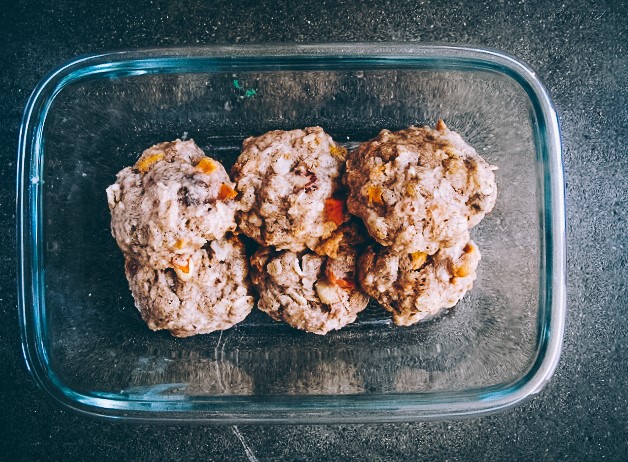
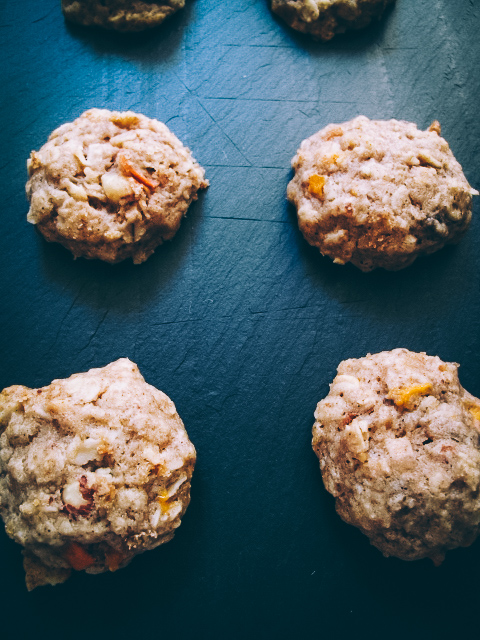
Cookie baking and gifting is part of my family’s holiday tradition and because of that, these festive and delicious Oatmeal Persimmon Cookies are part of this year’s line-up. They are perfect for the athletes that can’t get enough oatmeal in all the things. ;)

To balance out all the baking I will be doing, I’ve also been tasked with bringing that sad or delicious-looking vegetable and dip tray to the family festivities. Since cold, raw vegetables are especially challenging on one’s digestion in the winter— especially for those of us with sensitive systems—I haven’t decided if I’m going to deviate from the request and change up the raw vegetable / cold dip routine to some version that’s more warm and inviting to the system. If I do, let me know if you’d like me to share the recipe. 😊

Oatmeal Persimmon and Hazelnut Cookies, makes ~24
Recipe Updated: 12/5/22

– Any all-purpose gluten free flour blend can likely be used, but I only experimented with my own mix. It is 70% whole-grain by weight.
The addition of two types of oil are a result of years of trial, testing, and learning from the wise recipe scientists at Cooks Illustrated. If only using one oil, choose coconut oil. Or use butter if it poses no problems. Digestive challenges and conscious choice to not use animal products aside for some individuals, butter is fabulous for baking.
Instead of the chia slurry, you can use 2 eggs instead.
The flat Fuyu persimmons are used in this recipe. If no persimmons are available near you, perhaps try another seasonal fruit, or a festive dried fruit such as cranberries or cherries.

2 Tbs. chia seed, finely ground (from 1 Tbs. whole chia seed)
6 Tbs. water
1 1/2 cups gluten-free flour mix
1 1/2 cups rolled oats, gluten-free as needed
2 tsp. baking powder
1/2 tsp. sea salt
1 tsp. cinnamon
1/2 tsp. nutmeg
1/2 cup coconut oil
1/6 cup sunflower or canola oil (2 Tbs. + 2 tsp.)
2/3 cup packed brown sugar
1 cup persimmon chunks
1/2 cup hazelnuts, toasted and roughly chopped

  • Preheat oven to 350 degrees F. In a small bowl, whisk the ground chia seeds and water to form a slurry. Set aside.
  • In a small mixing bowl, stir together all the dry ingredients and then set aside.
  • In a large mixing bowl, whisk together the oils, then sugar; then mix in the chia slurry.
  • Stir the dry ingredients into the creamed butter and sugar mixture until combined. Then stir in the persimmons and hazelnuts.
  • The mixture should be a little looser than standard cookie dough. At this point it can be chilled for about 30 minutes so the cookies don’t spread too much, or baked directly and they’ll be a little larger and slightly thinner.
  • Using a medium cookie scoop or a spoon, drop onto a baking sheet or stone and bake for 12-14 minutes, depending on your oven.

Golden Fire Cider for times of illness

One of the most practically useful classes I took in grad school was an herbal elective on how to make my own herbal medicines. Each week we used a different method for preparing herbs, from medicinal herbal infusions and decoctions (often simply called herbal tea), herbal honeys, infused vinegars, salves, tinctures, and even herbal baths. As a runner, the best information on the benefits and how-to’s of water therapy for exercise recovery was actually gained in my herbal medicine making course!

Beyond being able to make my own tinctures for potent low-dose, completely natural medicines to help with everything from boosting the immune system, relieving nervous tension, and putting my spinning 2am brain promptly back to sleep, this recipe for fire cider is by far my most repeated recipe that came out of that course.

Fire Cider is a kitchen-hearth recipe originally created by herbal elder Rosemary Gladstar. If you’ve never heard of Rosemary, she is a founder of the Traditional Medicinals tea brand you’ve more than likely seen on shelves in the supermarket tea aisle, among her many other accomplishments.

The idea with fire cider is that the ingredients are easy to access, likely already on hand, and make for a warming, stimulating and potent combination that gets your blood moving, with the heat from the ingredients pushing pathogens and heat to the surface of the body during times of illness. The real key to the formula is movement, using herbs to stimulate and circulate movement through the immune system, lymphatic system, cardiovascular system, and digestive system.

Fire cider is great to take as a tonic all season long, or in larger amounts if you’ve contracted a virus. One to two teaspoons daily mixed in with a little water is usually a good way to take it.

My recipe for Golden Fire Cider varies slightly from Rosemary’s. For one, I add turmeric since it is incredibly anti-inflammatory and pungent, and thus supportive in times of illness. I also don’t add honey to my formula. The honey was originally included to make the stimulating herbs more palatable so can be added if one desires. Lastly, the fresh horseradish root can sometimes be difficult to source. I’ve got a jar of wasabi powder in the back of my pantry that has served as great substitute in those instances. Ideally, the ingredients are infused in the vinegar for at least a month, so if you’d like some to carry you through cold and flu season, start a batch now!

Golden Fire Cider, makes 2-3 cups
¼ cup grated horseradish root
1/2 cup chopped onions
2 Tbs. minced garlic
2 Tbs. fresh minced ginger root
1 small hot pepper such as jalapeño or serrano, minced
1 tsp. dried turmeric root or 1 Tbs. fresh root, minced
a couple pinches black pepper
raw apple cider vinegar
raw local honey, to taste

  • Add all chopped ingredients to a quart jar.
  • Add apple cider vinegar to three inches above herbs. Cap the jar and shake. Infuse for about 28 days before straining, and shake/mix daily or as often as you remember.
  • Add honey to taste, if desired. (I don’t).

Celiac Disease, Gluten Sensitivity and Wheat Allergy: what’s the difference and what are the concerns?

I remember the beginning nearly exactly. Lower GI pain that began in the afternoon, dull enough at first I tried to ignore it, and would only go away after eating dinner, coming back at nearly the same time the next day without any apparent linkage to what I had eaten. I was in the first month of my one-year graduate program for teaching at the time, age 22. I was otherwise healthy and relatively stress-free. Over the next two and a half years, without doing anything about it, the pain intensified and some days was nearly constant.

And I developed more symptoms, many of them far beyond my GI system.

After the first couple hour-long meeting with my doctor, a naturopath, she told me she highly suspected what was going on, but we’d confirm with further testing. It was nearly Thanksgiving then and some of my symptoms were overwhelming anxiety, daily headaches, acne that was far worse than I ever had as a teen, and a nearly complete inability to concentrate. Having formerly struggled with an eating disorder, I was weary of having restrictions in what I ate. Plus, I was making incredibly delicious homemade bread and pastries regularly and I didn’t enjoy the idea of changing that. So I pushed the testing off, dug in my heels, and waited to confirm or change anything until after the holidays. What we confirmed was that I was significantly depleted in nutrients despite eating normally, and highly reacting to gluten. In addition to those other symptoms above, test results also showed a bunch of the wrong type of bacteria hanging out in my system, further contributing to my complete sense of not-at-all-wellbeing. At the time I had many other life events happening with tight finances, job/career uncertainty, and an upcoming wedding halfway planned–so I didn’t push for further testing or a celiac disease biopsy like I should have. Instead, I grudgingly and not altogether stringently, took out gluten from my diet with the knowledge I had.

I felt better very very slowly, but after six months, I was only better enough to know I was still reacting to more than gluten. So we tested again and found more problem foods.

Celiac Disease

Celiac Disease is an autoimmune condition characterized by damage or destruction of the villi in the small intestine resulting in malabsorption of nutrients and widespread pathophysiological symptoms throughout the digestive tract and often in other areas of the body (1, 2)

The only current long-term treatment to successfully stop the autoimmune response that occurs in celiac disease is to strictly adhere to a life-long gluten free diet. This includes avoiding wheat and its relatives (spelt, kamut, emmer, einkorn, triticale, etc.), barley, rye, and in some individuals, oats (3). In celiac disease, the inflammatory response invoked by the gluten proteins leads to destruction of enterocytes, the cells in the small intestine, then atrophy of the intestinal villi, the tiny, fingerlike projections along the small intestine lining that enable nutrient absorption to occur.

The lining of the small intestine is one cell thick, and these cells are semi-permeable, which allows for tiny molecules of nutrients to pass through into the bloodstream. The cells of the gut lining are also joined together by what are known as tight junctions, which are supposed to be tight, but damage can cause larger particles to slip through. When the body negatively reacts to gluten proteins, chemicals that are released in their presence causes the lining of the small intestine to become much more permeable, and substances that normally would not be allowed to pass through now can, causing even more inflammation.

When the area of the body that is responsible for nutrient absorption is so critically damaged, decreased nutrient absorption quickly follows. Likewise, the immune complexes attacking the small intestine don’t just stay there. They travel throughout the body and can damage other organ systems, which is why it is common to see symptoms that are far beyond the gut in those negatively responding to gluten, such as depression or anxiety, headaches or migraines, joint and muscle pain or weakness, skin conditions, fatigue, infertility or repeat miscarriages, frequent bruising, brain fog or difficulty concentrating, osteoporosis, tooth enamel damage, canker sores, and many more associated with lack of adequate nutrients. Lastly, if not diagnosed, or one does not adhere to a strict gluten-free diet, those with celiac disease are at much more risk for developing secondary autoimmune and other diseases, such as cancer.  

When gluten is no longer triggering the immune system, the enterocytes and then villi can begin to heal (3). The goal in implementing a strict gluten free diet is to heal the gut lining so nutrient depletion and widespread symptoms stop occurring. After just one meal containing gluten, symptoms can appear for up to six months in those with celiac disease, which makes paying close attention to cross contamination, and educating friends and family who prepare meals a primary concern. So too is being particularly careful about eating out at restaurants that pay strict attention to cross contamination, or that don’t prepare any food with gluten, which is rare but a real haven for those that need to avoid it.

Gluten Intolerance

Beyond celiac disease, there is the slightly more common gluten sensitivity (also called gluten intolerance), which often displays the same or similar symptoms as celiac disease, but does not cause intestinal damage, often will not take as long for healing and symptom remission to occur, and is not always lifelong. Gluten sensitivity also is not autoimmune, and does not appear to have a genetic linkage. When enough healing has occurred in one that is gluten sensitive but does not have celiac, the individual can often reintroduce gluten in small amounts and/or return to eating it normally.

The one caveat in determining between lifelong strict avoidance of gluten for those with celiac disease, and perhaps less stringency with those with gluten sensitivity, is that the only way to definitely diagnose those with celiac disease is with an intestinal biopsy, and damage will only be ‘complete’ enough to diagnose with daily consumption of gluten for at least six months. I had an unfortunate episode a couple years after I removed gluten in which I unknowingly was eating contaminated oatmeal every day for a month. After realizing and removing it, it still took me over six months to be symptom-free, and that very small amount of gluten daily for about 30 days was nowhere near enough gluten to be able to diagnose. So if one suspects gluten is a problem, I always recommend ruling out celiac disease before completely removing gluten from the diet.

Wheat Allergy

Now, for a slightly different but similar condition—wheat allergy.
Those with wheat allergy have developed an antibody to a particular structure in wheat. Similar to a peanut allergy, symptoms can occur immediately after eating, up to within two hours later, and include swelling, itching or irritation of the mouth or throat, itching, hives, or skin rash, itchy watery eyes, GI concerns such as diarrhea, cramps, nausea, vomiting, difficulty breathing, chronic hay fever, heart palpitations, etc. Like other food allergies that cause similar reactions, even a trace of the food allergen can trigger a severe reaction, and the way your body reacts to a food allergen one time does not predict how it will react the next time. So a mild response in the past does not mean the response will always be mild, and vice versa for severe reactions.

Gluten-Free Diet for other Autoimmune Conditions

A question and/or concern that comes up routinely in those that have been diagnosed with other autoimmune conditions is why is a gluten-free diet commonly suggested if one has something like Hashimotos thyroiditis, Lupus, or others?
The answer here is slightly complicated—but the simplest way to describe it is that it is commonly believed that the gluten proteins are highly complex and difficult molecules to break down, and they are mildly inflammatory in most individuals, but highly inflammatory in others. For those individuals that already have an autoimmune response occurring in the body, an immune system that is “on alert” does not need more inflammatory molecules entering the system. That is why many feel better when removing gluten and other inflammatory foods, such as refined sugar, dairy, processed meat, etc., and load up on anti-inflammatory foods to help heal the whole system.

Sourcing Gluten-Free Products

If one does need to avoid gluten and/or wheat, pay particular attention to sourcing, packaging, and labeling of all foods, and in particular grains that might be processed in the same facilities as wheat and other gluten-containing grains. Flours that are certified gluten-free, or that at least say on the label they are not processed on a line that also processes gluten-containing grains is essential –that’s how I got into trouble with the oats! This means purchasing flours and grains from bulk bins needs to be done with care, as well as knowing the source and details of the processors so as to avoid cross-contamination. Edison Grainery (my favorite source currently), Arrowhead Mills, Bob’s Red Mill (which has two lines so pay attention to whether food is from the gluten-free line!), and One Degree Organics are great companies, but there are many more to be found as long as you read the ingredient list, look for a gluten-free certification, and read the small print about allergen cross-contamination.

I hope this informational article clarifies some of the myths and misconceptions about these challenging dietary conditions. Feel free to comment below or contact me with your further questions or for more information on working with me if you or a loved one are concerned about gluten and/or wheat. In addition to my own experience mentioned above, I studied gluten-associated pathophysiologies extensively while in graduate school for clinical nutrition.

References:
1: Lipski, L. (2012). Digestive Wellness (4th ed.). New York, NY: McGraw Hill.
2: Hardy, M.Y. and Tye-Din, J.A. (2016). Coeliac disease: a unique model for investigating broken tolerance in autoimmunity. Clinical and Translational Immunology, 5(11): e112. doi: 10.1038/ct.2016.58.  
3: Barker, J. M., & Liu, E. (2008). Celiac Disease: Pathophysiology, Clinical Manifestations and Associated Autoimmune Conditions. Advances in Pediatrics55, 349–365. http://doi.org/10.1016/j.yapd.2008.07.001.