Answers to the Big Questions and a Hearty Runner’s Brunch Hash

Lately, I’ve returned to reading two books. First the Purgatorio, the second in Dante’s Divine Comedy. My former English professor and deacon at my church in Corvallis has been leading a weekly class lately guiding us through the Purgatorio and the timing feels just about right since the class began the Wednesday of Holy Week and is leading us through this continued period of staying at home and distancing. Purgatory—the place between two more known-of places—seems the perfect description for where we all are now.

If there’s anything I can pick up from Dante’s 14th century poem, it’s that it gets easier as we keep going.

The other book I’ve begun again is Sajah Popham’s Evolutionary Herbalism: Science, Spirituality, and Medicine from the Heart of Nature—a reading I encourage everyone, yes everyone to read. For it guides you back to a perspective I think we all had as children and lost along the way.

I’ve been considering a lot these last few weeks. About this space, this encouraging journal and recipe guide of sorts, my role as a nutritionist and in the community, health and true wellness, and of course, nature.

On that note, I wrote in two questions for a couple of favorite podcasts a few months ago and surprising to me, both questions were answered by the respective individuals this past week. Unsurprisingly –if you know me—my questions were on the topics of sustainability and having a lower ‘footprint’ as a company, and on navigating faith and spirituality amongst busy seasons and family traditions that don’t partake in that faith. I know. I know. I like to ask the tough questions.

So why am I bringing all that up here? This past week my big questions semi-paralleled with those of Brett Farrell, the founder of Territory Run Co., for which I am a content ambassador and contribute seasonal articles. Brett spoke about his own big questions, the clothing industry’s own climate footprint, challenges with community, and more. Check out those here and here. As well as recent contributions on the Territory Run Journal – there are several excellent and thoughtful articles there lately.

What I was really reminded of however, was that in a conversation with Brett about a year ago, I spoke about the draw of trail running, the joy and peace and healing it has brought me personally, and about getting to the know the medicine around me—literally coming to know the plants I spend time with on the trails. Though I’ve only written or spoken about it in pieces, I came to an interest in herbs and herbalism like a lot of individuals. I was really sick, in a way that modern medicine wasn’t going to cure or even temporarily fix. And after a while of taking various herbs and formulas which my doctor gave me, and around the same period spending more of my running hours in the forest, the plants reached out to me and pulled me in, sometimes sharing themselves in profound ways –like being pulled to a stop suddenly alongside a trail, staring captivatedly at one, and (internally) asking, who are you? Crazily enough at times, I’d find I had my answer when the plant’s name simply came to the edge of my tongue, when if you’d asked on any other day, I wouldn’t have known it.  In fact, it happened again today.

And then Brett asked me another ‘big question’ about what it is I really want people to know in regards to nutrition and health. My answer is one I still will give and one I’ll likely give for the rest of time. What I really want you to know about nutrition and health is that if you get quiet enough – go deep enough into the forest’s eternal wisdom, and your own—you’ll find you already have the answers to the questions you seek.

To explain this more since the concept can be a little esoteric, I’ll refer to a couple lines from Sajah’s first two chapters:
To begin gathering natura sophia (the intelligence of nature), we must learn to see beyond the limitations our modern world has placed upon our perception and see the living intelligence of the Earth. And this can only be done through gnosis cardiaca—the knowledge of the heart.

and

To truly enter the kingdom of nature we must suspend our rational thought, let go of our knowledge of botany and chemistry, even dispense with our systems of herbalism—for any potential interference of the mind will get in the way of our capacities to directly perceive the intelligence within the plants. To move beyond herbal knowledge and into herbal wisdom, we must tread the pathway down the mind into the inner temple located just inside our chest.

Bringing this back down to earth even a little more, the answers to these big questions don’t come easily, they don’t necessarily just appear when we ask them or when we want them to. There can be many layers to the answers of how to be a better patron of the planet, or how to balance a spiritual life in faith with the goings on of the ‘real world,’ or how to heal – truly heal the body and mind.

Over time, I’m beginning to realize my role here is to educate about true wellness, about true healing, to be more of the guide—the Virgil and/or the Beatrice (though I claim no Godlike abilities)—and no longer the lost and hurting Dante who I was for a long time. To provide encouraging words yes, and recipes to nourish the body yes, and with those working with me clinically, proven scientific strategies to heal root cause imbalances yes. But it’s also to remind you, to remind us, that we also have the answers. That we’re not victims.

In every relationship whether it’s with me your nutritionist, your coach, your chiropractor or PT, your family and friends, your life partner, or with the plants in your window box, yard, locally farmed vegetable box, or forest, there’s an opportunity for a two-way conversation, a partnership to come to the answers that are already within you waiting to be revealed.

Maybe that’s the point of this slow down period we’ve been given, for I know it’s not for many millions to suffer. Maybe it’s the time to return to our childlike ways, picking the dandelions and blowing our wishes into the big questions, letting the answers present themselves in their own time and way.

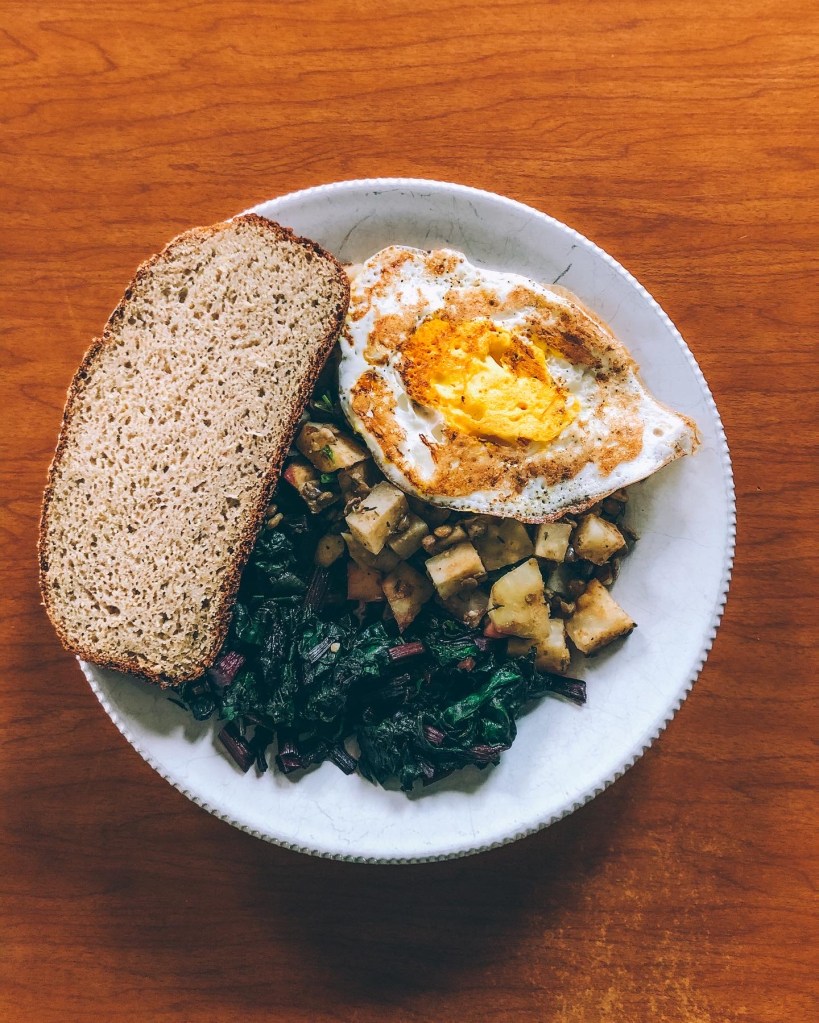
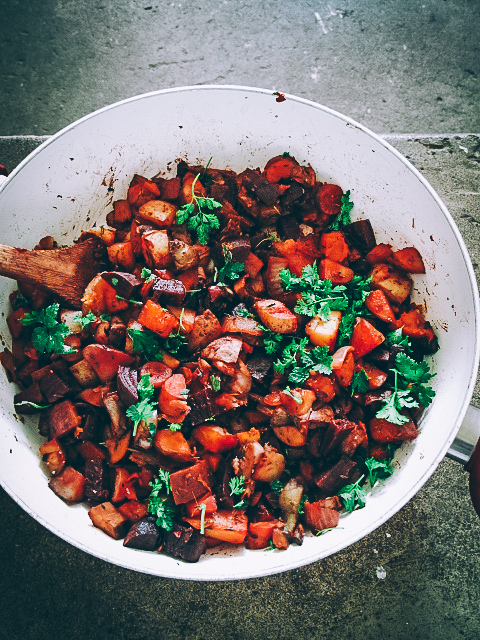
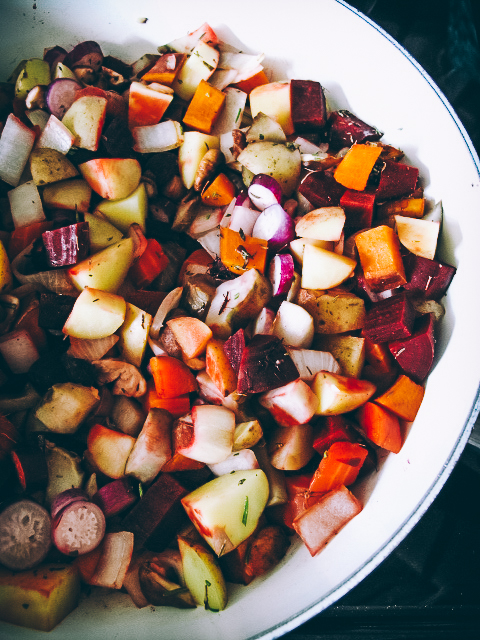
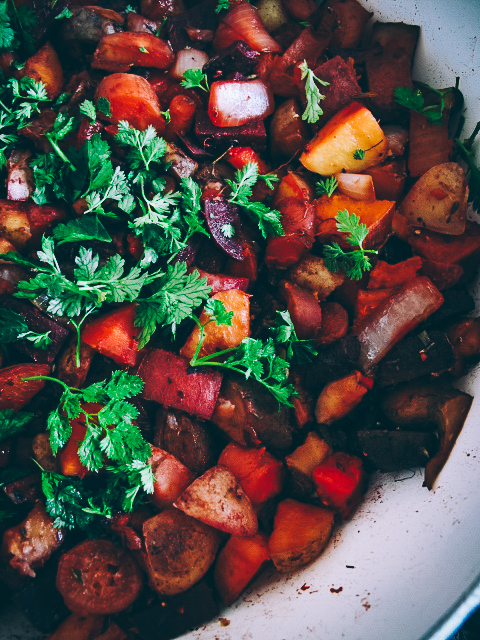
Now for this hearty brunch hash.

You’ll need a hearty, though not heavy, meal to refuel the system after your time in the forest– or wherever you go to dwell in your own big questions and their answers. I’ve shared the recipe over on the Run Journal at Territory Run Co. Get the full article and recipe here.

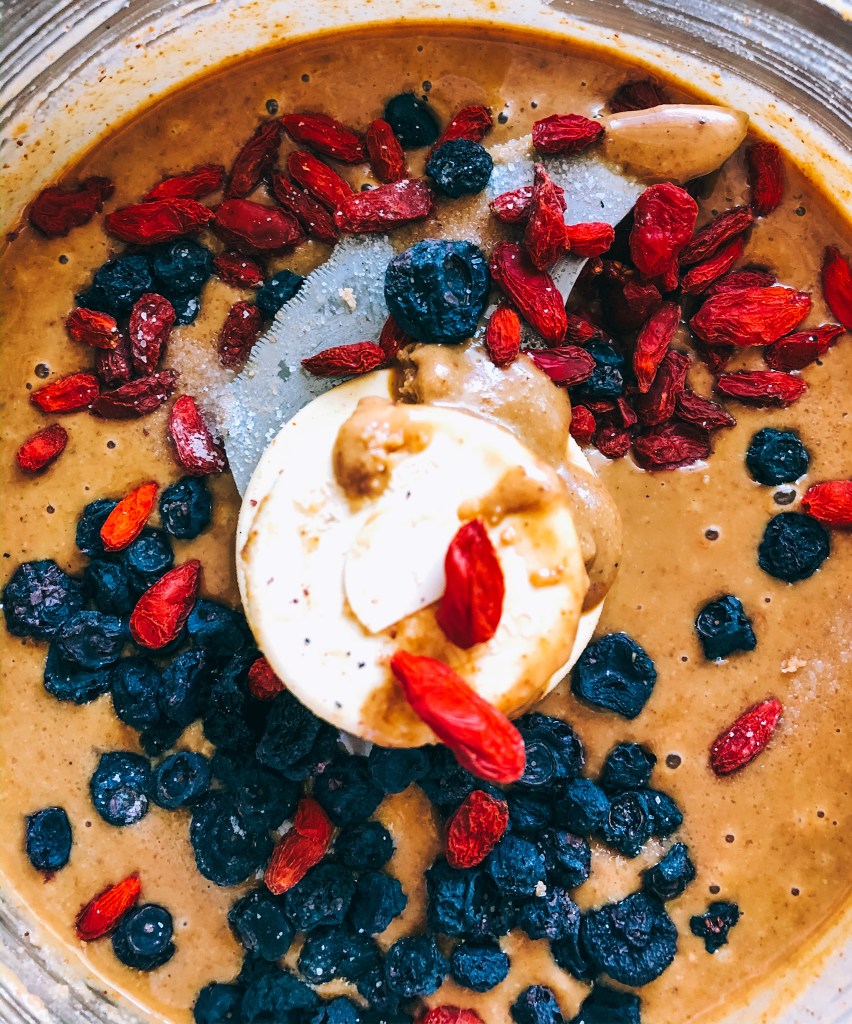
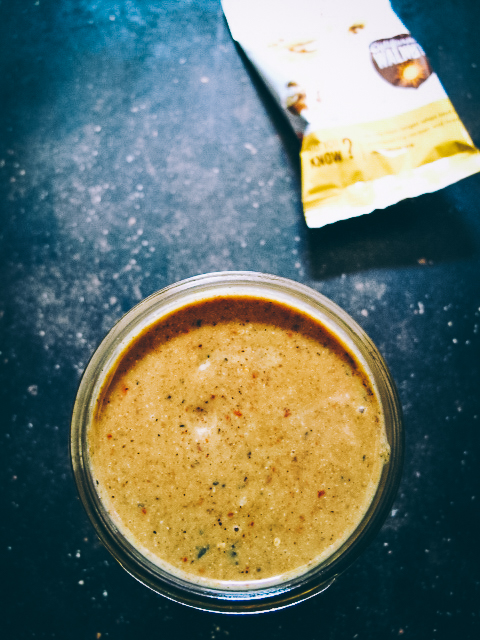
Walnut Butter with Blueberries, Goji Berries + Vanilla

I received free samples of California Walnuts mentioned in this post. By posting this recipe I am entering a recipe contest sponsored by California Walnuts and am eligible to win prizes associated with the contest. I was not compensated for my time.

There was a conversation going around the last few weeks about using up what’s in the cupboard, finding random stowed-away forgotten, stale, and outdated ingredients, and actually making a meal of them. As that went around, I truthfully had the thought of Ha, well that doesn’t apply to me.
I also remember a few years ago, a friend that first got to know me as a study abroad/international student and came to visit. He remarked at how elaborate the collection of ingredients in my pantry were. At the time, it felt like a moment of baring my soul, for what’s in your pantry and fridge tell as much or perhaps more about someone as taking a look in their medicine cabinet.

I tend to have a fairly vast collection of cooking ingredients simply because I love to experiment and create, and I like the flavors of a lot of different places. My kitchen is perhaps the [adult foodie] version of my dear grandmother’s elaborate dress-up closet that we loved as a kid.

Lately, I’ve also been making meals inspired by Heidi Swanson’s Near & Far cookbook, though I’ve particularly been drawn to the Near section, meaning Northern California cuisine. In the springtime particularly, this means I’ve been making meals with plenty of greens and herbs, and with flavors and ingredients that are pretty close to home here in Oregon’s southern Willamette Valley. In other words, as the stay-at-home recommendations went into effect, I craved even more the flavors that come from closer to home.

And…when I finally dug through the pantry and fridge to inventory what’s there, I discovered I’m not the outlier with no outdated or forgotten foods in the pantry like I’d convinced myself to be.

A jar of freeze-dried wasabi powder
An untouched jar of Rhubarb Cordial which I made during cordial-making week in Herbal Pharmacy class four years ago
A few blooming teas and flavored teas and extra-floral teas that various individuals have gifted me – love tea, kinda picky about which ones I’ll drink on the regular
A package of pizza spice mix
A jar of jalapeño jelly I made a long time ago that appears still good – the gift of high sugar content
A big pack of spring roll wrappers I’ve only needed in small amounts
A couple dried habaneros – before I realized only a smidge in a recipe will singe the hairs off, clear the mucus membranes, and help me breathe fire like the dragon I sometimes claim to be. ;)

And, not outdated at all and in constant rotation, an entire third of my fridge and a shelf on the pantry dedicated to the nut, seed, and dried fruit collection. Because I like to start from the equivalent of primary colors when making recipes, I usually purchase raw, unroasted nuts and seeds, and dried fruit with no added oils or sweeteners. This also means their amazing nutrients are retained without adding extra oils, salt, or sugar. Despite a few other ingredients that clearly need to be tossed or regifted – that cordial did not look good and went down the drain this morning – this preference for having diverse and fresh ingredients on hand came in real handy the last few weeks.

So let’s turn to this particular recipe, shall we?

One of the components of total health and overall diet that is important is the ratio of omega-3 to omega-6 polyunsaturated fatty acid types in our daily diets. Both omega-3s and omega-6s are essential, meaning we have to get them from our foods to have adequate health, but their ratio is perhaps just as important. In traditional diets, our evidence shows that peoples were likely eating a 3:1 or even 2:1 ratio of omega-6 to omega-3s, and this is still optimal. In a standard Western diet, that ratio is often skewed to a 20:1 or more ratio. Anything above a 5:1 ratio begins to be more of a pro-inflammatory state for the body.

Omega-3 fats are primarily found in fatty fish like salmon, herring, mackerel, anchovies and sardines.
But they’re also found in plant-foods including walnuts, chia, flax, and hemp seeds, as well as edible wild plants – a major source for our ancestors.

Omega-6 fats, though essential, are ones we usually don’t have to work at getting because they’re prolific in our food supply – primarily through corn, soy and other-vegetable oils, but also in most of the other nuts and seeds not mentioned above.

One important note is that no food has just one type of fatty acid profile – foods contain varying amounts of all types of fat, both monounsaturated, polyunsaturated (those omega-3s and 6s), and saturated fats. Our body thrives with a balance which is another reason it is wise to eat diversely and seasonally.

Working a little of that Near & Nearer concept into my meals and snacks lately, this recipe primarily features California walnuts, which I love because they offer a rich, sophisticated flavor, and they’re the only nut to provide an excellent source of the plant-based omega-3, ALA (2.5g/oz).

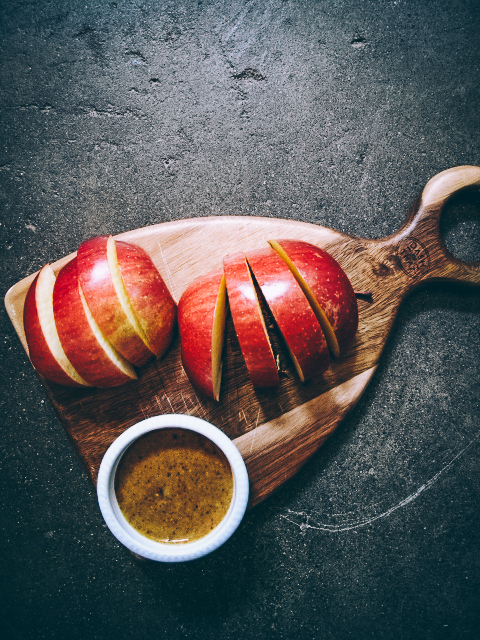
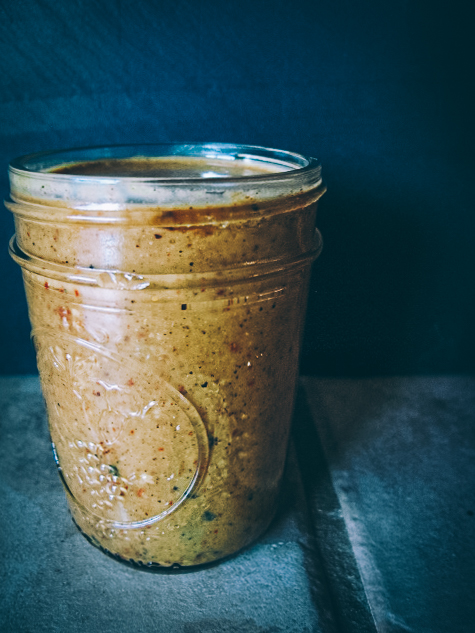
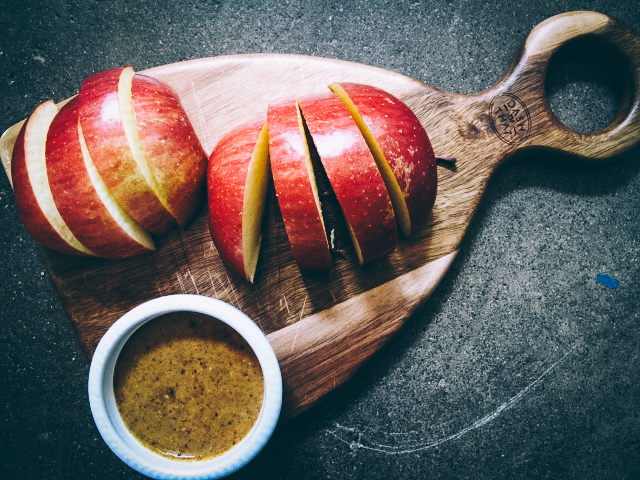
And a handful (or spoonful) of California walnuts is a versatile snack and can satisfy any taste preference, from savory to sweet.​ As far as this walnut and berry nut butter goes, it works that slightly sweet angle with blueberries that were grown by one of our local farmers, a handful of antioxidant-rich goji berries, and just enough sunflower seeds to balance out the stronger flavors that walnuts on their own in a nut butter provide. I particularly enjoy this as a snack or alongside apple slices as a little after dinner treat. And if you make it, whether you have to go source a few ingredients or work that Far angle of the Near & Far concept, I promise you will too. :)

Walnut Butter with Blueberries, Goji Berries + Vanilla, makes 240 grams (about 8 oz.)
1 ¾ cups / 175 grams California Walnuts
¼ cup / 35 grams sunflower seeds
2 Tbs. / 20 grams unsweetened dried blueberries
2 Tbs. / 10 grams dried goji berries
1/8 tsp. vanilla
a dash of salt and up to 1/8 tsp.

  1. Set the oven to 160°C / 320°F.
  2. Spread out the walnuts and sunflower seeds on a baking tray and roast for 15-18 minutes until they begin to turn a slightly darker, toasted hue.
  3. Transfer to a food processor and mix on high speed for approximately 10-15 minutes or until it starts to become smooth and perhaps a little runny (stopping and scraping down the sides every now and then). 
  4. Add in the dried berries, vanilla, and salt.
  5. Puree again until the berries are mostly incorporated but might still have some small pieces.
  6. Pour into a 8 oz. jar and store extra in the fridge.

Winter Tabbouleh and How Fiber Helps Support your Health — and Hunger

In the health, wellness, and fitness community, we often hear all about the macronutrients (fat, protein, and carbohydrates). Yet, a nutrient that’s incredibly beneficial to our health is far less mentioned. That’s fiber.

Fiber is best known to keep you regular or prevent constipation, but there are many more benefits. In the athletic community, the one that comes to mind first is helping to relieve that ‘hungry all the time’ feeling that often comes with heavier training loads. Next is gut health, lowering disease risk, and helping to regulate the body’s use of sugars.

Dietary fiber consists of the non-digestible carbohydrates from components of plants. The human body does not make the types of enzymes needed to break the bonds in these fibers, so they pass through relatively intact.

Fiber is found in most plant foods, primarily vegetables and whole grains, as well as nuts, seeds, and fruit. There are two types of fiber— soluble and insoluble.  Both are beneficial to our health.

Soluble fiber absorbs water and turns into a gel-like consistency that slows down digestion. Ever had chia pudding or chia in a smoothie and felt full and satisfied for hours? That’s the soluble fiber at work.
Soluble fiber also helps slows the absorption of sugar into the bloodstream so blood sugar levels remain more stable. Food sources include chia, psyllium, flax and other seeds and nuts, oats and oat bran, lentils, peas, and some fruits and vegetables.

Insoluble fiber is not digested by the body. It is helpful for clearing out the buildup of undigested food and environmental and metabolic toxins in the digestive system as it moves through. Insoluble fiber also helps get the digestive system moving and eliminate any constipation. (Side note: constipation is not just having difficulty having a bowel movement. That’s the extreme. It also refers to spending more than just a couple minutes on the toilet, passing hard, dry, small pieces, failing to eliminate daily, and transit time beyond 12-24 hours.) Now that we’ve got that cleared up, insoluble fiber can be found in whole grains such as oats, millet, quinoa, sorghum, amaranth, brown rice, farro wheat, beans, and fruits and vegetables.

Fiber Nourishes Your Gut

Your digestive system is home to trillions of beneficial bacteria, called the gut microbiome. They live in an (ideally) symbiotic relationship with you. This means you and they both benefit from them being there. Just like you, the microbes need to eat to live and grow, so they obtain nourishment from the food you eat. In the case of beneficial bacteria, they feed on the undigested part of the food, (fiber), that is passing through your large intestine by fermenting it into short chain fatty acids such as Butyrate.

A healthy gut microbiome can protect you against disease-causing bacteria because the good bacteria compete for space in the intestines, literally out-populating the bad bugs from taking hold. It can also help you absorb otherwise non-absorbable nutrients like certain antioxidant polyphenols, produce some micronutrients like vitamin K, and provide needed fuel for the cells in the colon. Production of short chain fatty acids by bacteria in the intestine plays an important role in the maintenance of the intestinal barrier. What’s more, Butyrate has also been shown to be protective against colon cancer.

Whereas we don’t want an overgrowth of bad bacteria, having ample and diverse beneficial bacteria is a hallmark for optimal health. Low beneficial bacteria can impact your protective mucus lining in the intestinal tract, which supports up to 80% of our immunity. The commonly used phrase “leaky gut” comes into play here when the interplay between a low fiber diet, low beneficial bacteria count, and difficult to digest macromolecules poke holes in the cheesecloth-like fragility of the intestinal lining and then opens the way for the immune system to do its job –in overdrive – resulting in sensitivities, intolerances, and allergies to many foods that are in your normal routine. Prolonged problems here are part of the pathophysiology of autoimmune diseases. 

Fiber Keeps You Feeling Full Longer – Read this again during your next heavy training cycle!

Because fiber is so difficult for your body to break down, it stays in your gastrointestinal tract longer compared to simple carbohydrates like table sugar. Having food in your system helps you feel full longer. This is partly why eating an apple is better than 100% apple juice (stripped of fiber), which is then better than apple-flavored juice (stripped of all nutrients). We even have studies showing that diets rich in high-fiber whole foods help reduce the perception of hunger. This is good information if you experience the “hungry all the time” feeling during heavy training cycles when you’re actually eating enough.

How much do we need?

Research has found that hunter-gathers ate a large quantity of fiber compared to modern humans, upwards of 100g of fiber per day. The average American has around 10-15g per day, and the US Dietary Reference Intake is around 25-38g of dietary fiber per day – which is well above that of the average person –but easily achieved by gradually increasing plant-foods in the daily routine. Can we consume too much? Yes, that is possible. Too much fiber can lead to a bowel obstruction and diarrhea (which is also caused by many other factors).

Caveats

Some therapeutic diets eliminate fiber-rich carbohydrates temporarily with the aim of improving long-term health and shifting the microbial population. For example, this is the purpose of the low FODMAP diet for small intestine bacterial overgrowth (SIBO), and the candida protocol. Individuals who try an extreme low-carbohydrate or ketogenic diet also do so with the intention of improving health –often by way of improving the body’s response to sugars. But what’s commonly left out of the conversation is that all of these diets are meant to be temporary, because they all come with long-term negative health consequences such as eliminating all those beneficial bacteria that feed on fiber.

One more thing, we often hear the advice to reduce fiber in the days before a big athletic race, or eat ‘quick sugars’ in the few hours before athletic activity. This advice largely depends on the person, since just like we can train our bodies, we can also train our gut. Some of my best marathons were run after eating my routine high-fiber dinner and breakfast. I’ll delve more into this topic soon! 😊

Summary: Dietary fiber is an essential nutrient required for proper digestion of foods, proper functioning of the digestive tract, and for helping you feel full. A deficiency of fiber can lead to constipation, hemorrhoids, and elevated levels of cholesterol and sugar in the blood. Conversely, an excess of fiber can lead to a bowel obstruction and diarrhea. Individuals who increase their intake of fiber should do so gradually since this internal adjustment is going to adjust the populations of beneficial (and not so beneficial) microbial species in the lower GI –and thus might initially come with uncomfortable symptoms.

Now that we’ve got our daily dose of nutrition wisdom, let’s eat! William labeled me the queen of grain salads the other night after presenting this dish. It’s a seasonal variation on a plethora of other fiber rich tabbouleh-like grain salads in the recipe archives of this space –and one I’m really favoring right now for the bright colors, balance of slightly sweet and savory, and all in one dish for dinner. I routinely use millet or quinoa, but used both in this version. We had a stockpile of pumpkins in our house from last season’s harvest which I’ve by now mostly used up, but I noticed at our local farmers market last weekend that winter squash and pumpkins are still going strong—locally we tend to have them until mid to late March. If they’re less available near you, swap them out for some other seasonal vegetable – or leave out completely.


Winter Tabbouleh, serves 4-6
1 small pumpkin or winter squash (about 2 cups cubed)
1 cup millet or quinoa or a combination of both
2 cups water or vegetable broth
¼ tsp. cinnamon
1 cup cilantro
½ cup mint
3 green onions
¼ cup walnuts, chopped and lightly toasted
¼ cup goji berries
2 cups cooked garbanzo beans
1-2 handfuls spinach or other greens, optional
2 Tbs. apple cider vinegar
2 tsp. honey
1 Tbs. olive oil
salt and pepper to taste

Instructions

  • Heat oven to 400 degrees F.
  • Cook millet by combining with 2 cups of water or broth, along with the cinnamon, in a medium saucepan and bring it to a boil. Turn down to a simmer, cover and cook until the liquid is completely absorbed, 25 minutes. Set aside to cool.
  • Place the squash cubes on a baking sheet with a little water. Bake for 25-35 minutes until the squash is soft. Alternatively, you can bake the squash whole until soft, then peel off the skin and chunk into pieces. This is my preferred quick-prep-ahead method lately.
  • In a large bowl, toss together the garbanzos, cilantro and mint, gojis, toasted walnuts, cooked squash and green onions. Then add the millet and spinach greens and give it all a good stir. Finish it off with the apple cider vinegar, honey, olive oil and salt and pepper to taste. Serve warm or at room temperature.