Carnival Belly, Running, and a Digestive Health Survey

Lately, William and I have been taking weekend adventure runs, meaning we’ve been getting out of town for a good part of the day to run somewhere new. Often this is followed by a picnic with a very runner-favorite spread: PB&J sandwiches, fruit, and tortilla chips. A couple weekends ago, the route I chose was based on being new and not far to drive, and as such it was on a course that’s designed more for mountain biking. After three miles of steady running upwards amidst the giant forest foxgloves and complete peace that is running away from civilization, we got to our summit and the single-track mountain biking descent. It started out as a really fun, fairly technical terrain with lots of creek rocks, tree roots, twisty trails and garden-gnome spotting. But there were also steady, heavy mountain biking moguls, making every bit of downhill come with nearly the same in little uphill rollers.

By about halfway through the downhill, I had this experiential memory of being on a carnival ride, and I was unsurprised to find my digestive system was feeling jostled in just the same way. By the end of the fourth and final mile of downhill, I realized I’d taken for granted that the norm for runners is to cruise and ‘wheee!’ downhill once the climbing is done. And I’d gladly take that steady climb over the tumbling in my lower GI and the muscle fatigue setting in from all those rollers.

My carnival belly largely went away for the day once I stopped running and had a meal, but it was mildly painful and upset for a day or two afterwards. Relatedly, this week our annual relay team has taken the very different challenge of racing the 2020 relay race virtually, and because this race coincides with the hottest stretches of heat year after year (and no different this year), I had that same mild carnival belly throughout the day yesterday after a hard race effort in the morning heat that was quickly becoming uncomfortable. Similarly to the week before, the discomfort was mostly gone again within a few hours.

So What’s With the Carnival Belly From Exercise, and in Running Particularly?

When we exercise, our body directs blood flow away from the gastrointestinal tract and to the working muscles. This reduction in blood flow, accompanied by an increased release of stress hormones during higher intensity or long exercise efforts, as well as the high impact of running (just visualize the internal organs being jostled up and down as we run), all combine to cause damage to the cheesecloth-thin lining to the gut, leading to all sorts of uncomfortable symptoms, as well as impaired digestion and absorption of food and drinks.

And yes, all of this is fairly normal in small amounts given the nature of doing long or hard exercise bouts. When we are dehydrated (a big topic in itself for another day) and/or exercise in the heat or to an extent that we have a high body temperature, we further reduce blood flow to the GI system, increasing stress hormone release, and develop a higher likelihood of digestive distress. But what might be a small amount of discomfort and upset sometimes should not lead to or be confused with frequently occurring and/or greater than mild GI symptoms.

Despite the serene views, this was taken at the point in the day when the sun was getting hot, the water bottle was running low, and my fun to need-to-be-done ratio was starting to tip directions.

What Can We Do For MILD GI upset?
Rather than grimace and bear it, there are many nutritional and training strategies we can do to minimize GI distress. Primary strategies include being properly hydrated in the 24 hours before / after exercising, especially in the summer heat, as well as training the gut. Just like other aspects of the body, we can train our gut to tolerate different types of foods, fuels, and amounts. Other helpful tactics include avoiding NSAIDS around exercise (as frequent use negatively impacts the gut), and eating and drinking smaller and more frequent amounts during exercise–this method alone helps alot with optimizing absorption and reducing upset.

But what about when that GI ‘offness’ or tummy upset isn’t just mild, and it continues long-term or occurs frequently?

That’s what I’d love to ask about today. Having chronic or frequent digestive symptoms including nausea, GI pain or cramping, reflux, lack of appetite (in general or after exercise), bloating, gas, diarrhea, constipation, loose stools with undigested food, or limited food choices due to reacting to many foods are all big warning signs, kind of like our body’s version of a flashing yellow or red light telling us to proceed with caution, or just plain stop and seek to understand what’s going on.

Rather than address any of those symptoms individually or all together, I’d actually first like to know how common those symptoms are–so I’ve created an anonymous survey for you to tell me about them.

If you’ve followed along here longer term, you’ll know I write about digestion a lot as it’s one of a few factors that finally pushed me into clinical nutrition, and it’s honestly my favorite nutrition topic to help others with–partly due to my own challenges over the years, but also because it can be complicated and I love a good challenge.

So if you’d please, fill out the quick survey for me and I’ll see if I can share about any of those flashing yellow or red symptoms that can cause us distress in or out of exercise in the coming weeks.
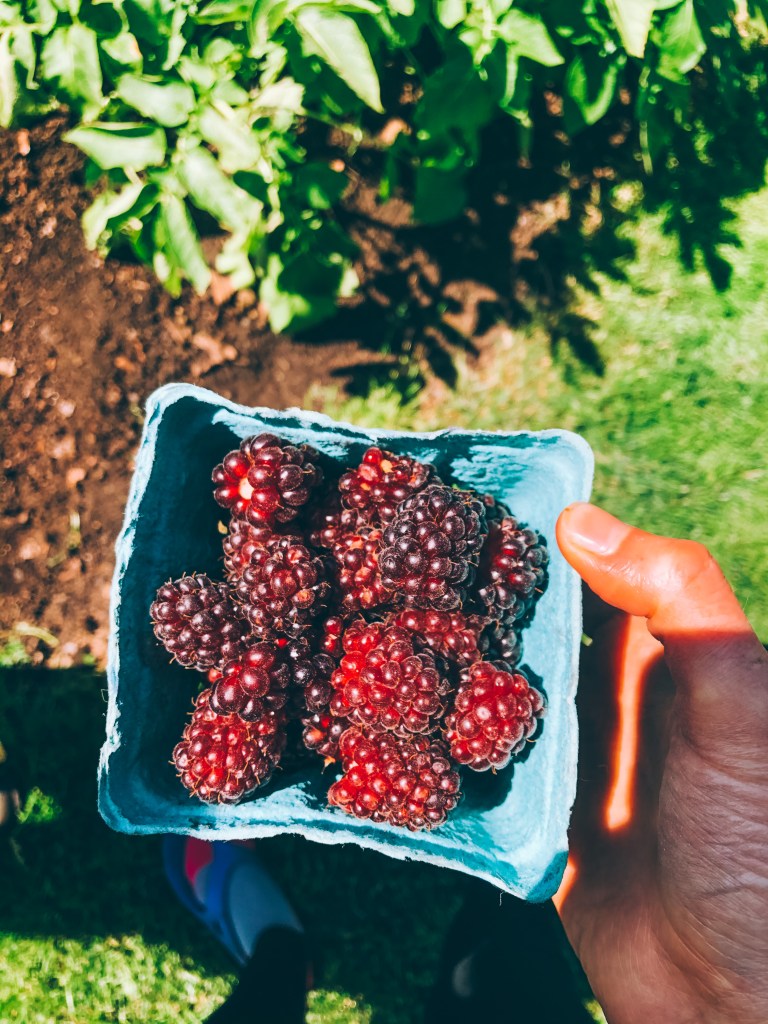
Best summer post-exercise treat / summer snacking — all the berries!

References:
Costa, R.J.S., Miall, A., Khoo, A., Rauch, C., Snipe, R.,…and Gibson, P. (2017). Gut Training: The Impact of two weeks repetitive gut-challenge during exercise on gastrointestinal status, glucose availability, fuel kinetics, and running performance.
Costa, R.J.S., Snipe, R., Kitic, C.M., and Gibson, P.R. (2017). Systematic Review: Exercise-induced gastrointestinal syndrome-implications for health and intestinal disease.
Snipe, R. (2018). Exertional heat stress-induced gastrointestinal perturbations: Prevention and management strategies.

Radish + Hazelnut Grain Salad

This is the type of meal situation that’s my bread and butter. It’s the sort of thing I’ll bring to a potluck or picnic-style situation, and it makes a routine visit in our regular meals much the same way tacos do – i.e. same concept, different ingredients depending on what’s on hand and seasonal. Over the years, I’ve also found that William usually takes some of the leftovers for his work lunch the next day – which only happens if it meets his slightly different than mine taste-bud standards. It also helps when I add raisins, which in our house grace many a main dish. We are both lifelong raisin affectionados. :)

While everything is fairly interchangeable here, you’ll note I only list gluten-free grains as options. I don’t tend to be outright against gluten-containing grains for those that can tolerate them, but many individuals tend to be at least slightly sensitive – especially those with pre-existing autoimmune conditions (since inflammation in the gut significantly contributes and/or is part of the cause, and gluten is inflammatory to everyone to a certain degree). I also find that many individuals running long miles, particularly in the summer heat, suffer from more achy tummy – not hungry – can’t tolerate lots of foods symptoms. That’s because these kind of long or hard workouts in stressful physical conditions contribute to damage of the endothelial tissue in the gut, which by design is very thin (one cell thick!) to allow for absorption. If you eat gluten and wheat products regularly, purchase a few non-gluten grains next time you’re out shopping. And if you do avoid wheat and gluten, try to find one or two new to you or haven’t tried in a while gf grains next time. Dietary diversity is also imperative for good long-term gut health.

One last note I’ll make here is that I left out a protein-rich ingredient to this. If you tend to follow a vegan or vegetarian way of eating, and especially if you’re active, please add one to your meal. You can read more here about the importance of protein, particularly for plant-based, active folks. Often I’ll add cooked beans such as garbanzos to make this type of salad a one-dish situation, but a side of seasoned/baked/grilled tempeh or tofu, grilled salmon or similar, a couple fried eggs, or whatever else is your protein of choice will round this out nicely into a true meal. Enjoy!

Radish + Hazelnut Grain Salad, serves 4
1 cup mixed grains (like millet, quinoa, buckwheat or any combination of these)
1 onion, thinly sliced
a large handful of baby spinach or kale leaves
1 cup radishes, thinly sliced
1/4 cup raisins
1/4 cup dried apricots, sliced into small pieces
1 cup parsley leaves, minced
1 cup mint and / or basil, minced
2 Tbs. olive oil
2 Tbs. white wine or raw apple cider vinegar
1/4 cup hazelnuts, toasted
salt and pepper to taste

  1. Place the grains in a medium saucepan and add 2 cups water. Bring to a boil, reduce the heat to low, and then cover. Cook for 20-25 minutes until the water is absorbed, and then set aside to cool slightly.
  2. While the grains are cooking, saute the thinly sliced onions in a skillet with a little of the olive oil. Cook them until they are soft and translucent, bordering on being caramelized. Pull off the heat and transfer them to a large serving bowl.
  3. Tear or slice the spinach or kale leaves into small pieces and then pile them on top of the the onions.
  4. Add the slightly still warm cooked grains to the mixing bowl on top of the greens. Stir through to wilt them slightly. Then mix in the radishes, dried fruit, and herbs.
  5. Add in the olive oil and vinegar, 1 Tablespoon of each at a time, and stir through. Add additional as needed to make it the right consistency for you, i.e. add more oil and vinegar if you like a wetter mixture. Also taste as you go, since you might need more vinegar to bring a little more acid flavor for balance. Salt and pepper to taste at this time as well. You might need up to 3/4-1 tsp of salt and 1/8-1/4 tsp. black pepper.
  6. Serve slightly warm or at room temperature.

The Easiest DIY Non-Dairy Milk

Shortly after we all went into lockdown a few weeks ago, my running team had a group call with Sally Bergeson, owner/founder of the women’s running apparel company, Oiselle. Sally spoke about doing the work of Pulling Out Poisoned Roots, and since I’d just received the team journal for this year, and knowing that Sally is an activist and visionary on what are often the most controversial topics and particularly women’s rights and sport, one could surmise exactly the poisoned roots she was referring to.

I had recently re-begun examining my own poisoned roots, and thus have spent most of the spring working through old programming, stories about my own limited potential and unable-to’s that stem from their foundations in early childhood and youth. As I have been working though the next layer of this ‘brain training’ this spring—for beginning this process many years ago was one of the most important steps in healing my autoimmune condition—I’ve been daily reminded about how difficult it is to rewire the brain, to heal old wounds and stories we’ve been told or have told ourselves. And every single day, I’ve been reminded of my privilege.

For I’m in a place right now where I have the ability to prioritize this type of self-work. My basic needs are met. I’m in a place of relative health. I don’t have unconscious or blatant systemic biases working against me. And I’ve thought about those that come from experiences of more extreme trauma—for a refresher on the impact of childhood trauma has also been part of my spring quarantine for my part-time public health role. How for individuals who’ve experienced extreme trauma, if they ever get to a point in life where they have the resources to undergo this type of psychological training, how much more difficult, how much more healing, they need.

For as much as it’s a nice thought that we’re all simply different shades in a crayon box—a saying I’ve seen a few times the past couple weeks—the circumstances we each are given make that a phrase that is naïve to the reality of our lives.

Today I’ll share a little story about that as it relates to dairy foods, who is supposed to consume them (everyone) as opposed to who can actually digest and absorb them (mostly white, non-minorities without other health problems). This is a mostly nutritional but also partly political post, but the end result is an incredibly easy DIY non-dairy ‘milk’ recipe with just a couple ingredients (nut or seed butter, water, pinch of salt). Since I’ve spent more than a decade immersed in public health and the politics of food systems before going into clinical nutrition, this is my way of combining and educating through a lens that speaks to all of them – if you’d rather just get the recipe, feel free to simply skip to the end.

——————————————————————————–

Whenever I have both the blender and the nut butter jar out, William tends to ask me if it’s time to milk my nuts. It’s a slightly humorous household joke, but without fail it reminds me of long-ago days in childhood when I watched my mom do a similar yet more complicated process of filtering the cream from fresh milk from our milk cow, Betsy. I was always fascinated and yet disgusted at the same time because for whatever reason, I did outgrow my early childhood dairy allergy for a while, but the smell and taste still repulsed me, leading to routine sessions of sitting extra-long at the kitchen table until my stubbornness gave way and I figured out a way to make myself gag the milk down.

Nowadays, I’m routinely reminded how times are a little different. In my parent’s era, making their children drink their milk portions every day was a necessity. How else was I to grow strong bones? Also, dairy farming is in my family history. I say things are different because there are a plethora of non-dairy milks available nowadays, so much so that dairy farmers in our country are struggling as never before. We now know that many individuals really struggle to digest dairy, whether because of lactose intolerance or a dairy protein allergy, as I have.

Lactose, the sugar in milk, requires the enzyme lactase to digest and absorb it properly, and it’s now well known that many populations worldwide, particularly individuals of East Asian and West African descent, are less likely to have the lactase enzyme. Additionally, this enzyme can become faultier as one ages, so lactose intolerance can arise in adulthood, making certain milk products challenging. All in all, approximately 65 percent of the population worldwide has a reduced ability to digest lactose after infancy, yet only about five percent of individuals of Northern European descent are lactose intolerant.

On the dairy protein sensitivity/allergy side of the equation, the reasons for its increasing prevalence are fairly widespread. We can develop an immune response to virtually any food, and the overload of disruptive environmental contaminants (toxic air, water, pesticides, pharmaceuticals, etc.), as well as high stress and imbalanced lifestyles (think lots of work, not enough sleep and nutritionally balanced meals), can wreak havoc on our digestive systems and over time the body begins to build antibodies to everyday foods that we could handle before. For individuals with seasonal environmental allergies, as well as those that generally tend to have excess mucous and feel ‘puffy,’ they often feel quite a bit better after removing dairy—since it’s protein structure can be tough to digest and therefore increases inflammation throughout the body.

So in our current global circumstances, there are a lot of individuals who are intolerant to dairy for varying reasons, or for environmental or other personal reasons are choosing to avoid it. And yet in the USDA’s MyPlate, the official dietary recommendation put out by the US Government, dairy is a food group that all individuals are recommended to consume daily, since one’s daily calcium needs are easily met with 3-4 servings of milk or similar dairy products. I still teach nutrition classes part time in a USDA-funded public health role in my local community, and it has frustrated me time and again to have to teach a model of nutrition that only ‘fits’ the needs of a certain (ahem, mostly white) population. This is an example of systemic bias at work – and also showcases the lobbying role of the dairy industry in making our federal government’s nutritional guidelines.

While recognizing that calcium is an important nutrient to consume in adequate amounts lifelong–adults need approximately 1000-1200 mg per day depending on gender, age, and activity level–there are other ways to consume it, like ample calcium-rich leafy greens. Those are often my first recommendation, because they have a calcium bioavailability similar and perhaps even better than dairy milk. We also need the many other nutrients that make up balanced bone metabolism including Vitamins A, C, D, K, B-vitamins, other minerals such as magnesium, zinc, copper, phosphorus, boron, manganese, potassium, iron, vanadium, and more. Eating lots of leafy greens as part of a balanced whole-food diet happens to also include many of that plethora of nutrients also.

There are several more foods on my bone support and maintenance list, and one of those categories is rotating through many different nuts and seeds. Sesame seeds and tahini, pumpkin and sunflower seeds, almonds and cashews particularly. None of these on their own will supply your daily calcium needs – if avoiding dairy, you need to eat diverse and greens-heavy meals for that – they do provide a range of many other bone supporting nutrients.


Today, let’s focus on the alternative to milk when one is looking for the texture and mouthfeel of using milk, such as in an extra-creamy porridge, cooked grains, to top your evening cereal fix, or to round out a smoothie. That’s when I’ve been reaching for my blender, nut butter jar, and the time to milk nuts scenario. Bonus points for no longer adding to the overflowing milk-carton collection in my laundry room that is supposedly recyclable during certain days of the year, but will more likely end up in the trash.

As a little aside, if it wasn’t clear from the above, I’m not overtly anti-dairy or a proponent that all of us should follow a dairy-free lifestyle, but I strongly believe in individual nutrition and not one-size-fits-all viewpoints that are already biased towards certain groups in power and with privilege.  

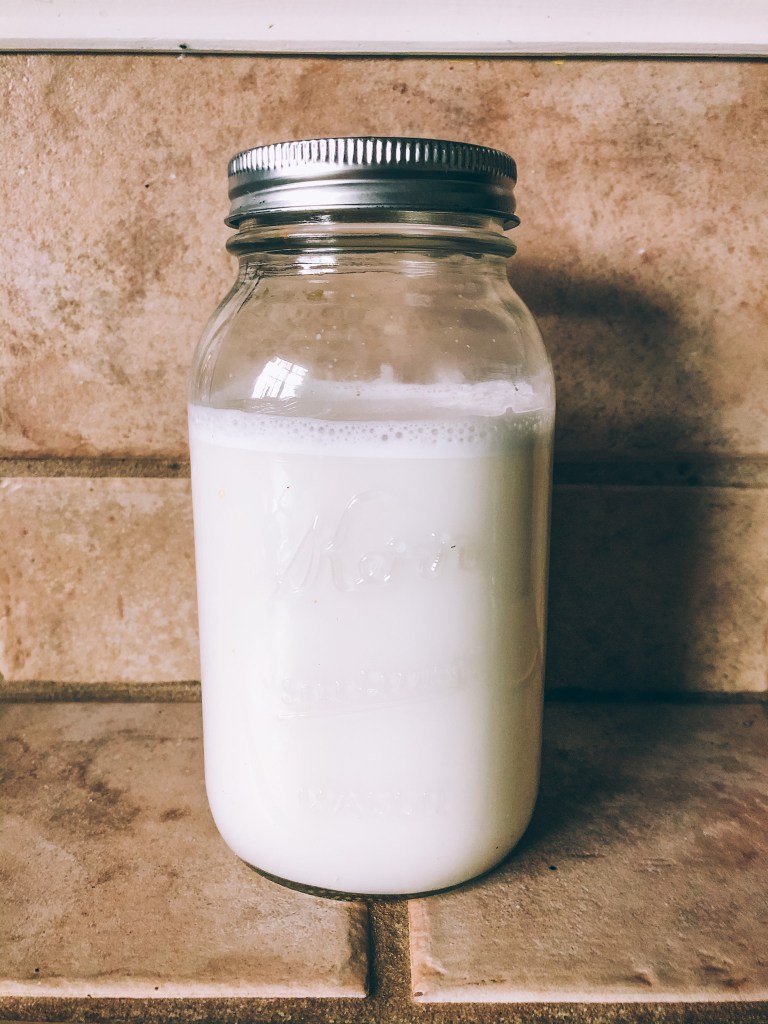
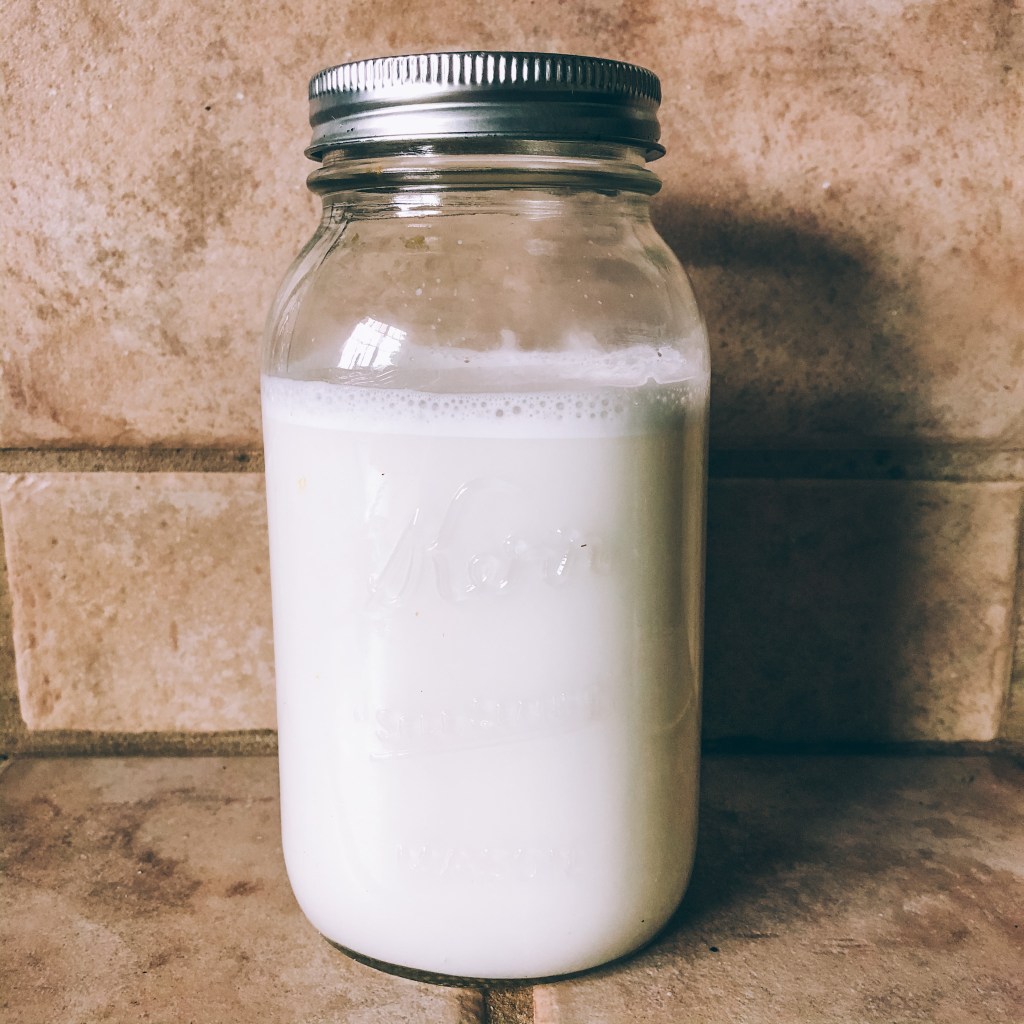
The Easiest DIY Non-Dairy Milk, makes 3 cups
For this, I recommend starting with raw nut/seed butter with zero other ingredients. Currently, I prefer Artisana Organics brand, which also happens to source from local California farms when possible and commits to sustainable and fair-trade ingredients. There are other brands that are similar, so do your research and learn where your food comes from. For nutritional diversity, I recommend rotating through a different type of nut or seed each jar or batch you use.

1-2 Tbs. raw nut/seed butter (raw cashew, almond, sunflower, or pumpkin butter, or raw tahini)
3 cups water
pinch of salt

  • In a high speed blender, combine 1 to 2 tablespoons of your raw nut/seed butter of choice with 1 cup water. I prefer using 1 Tbs. for each batch, but doubling the amount will make for a creamier milk. Blend for about 1 minute until the nut butter is completely worked into the water.
  • Then add 2 more cups of water, a pinch of salt, and pour out into a glass container. That’s it. You’re done and ready to use!
  • Store extra in the fridge and remember to shake/stir before each use as particulates will settle in the bottom.

This information does not intend to treat, diagnose, cure, or prevent any disease. 

References:
National Institute of Health (NIH). Genetics Home Reference. U.S. Library of Medicine. (2020). Lactose Intolerance.