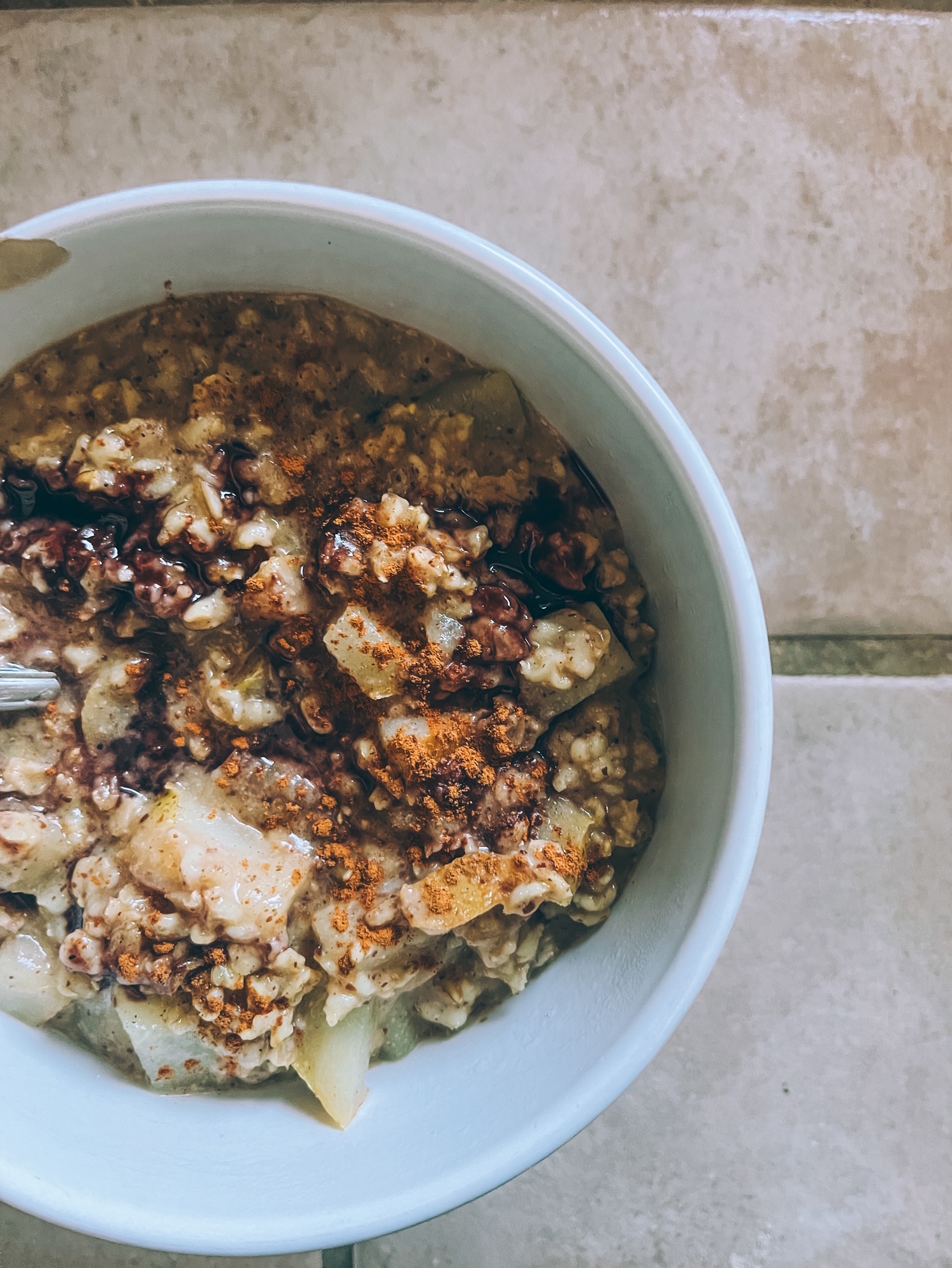
Breaking the Breakfast Boredom

Like many people, I personally love to eat the same or fairly similar food every day for breakfast.
My go to is oatmeal. 

And at the same time, as a nutritionist, I’m often preaching diversity of meals and foods on the daily.
Counter-intuitive? It seems.

Though I’ll caveat that my morning oatmeal is not the same everyday. I have a general formula and then standard variations and seasonal/weekly/daily changes which I do that end up leading to a fair amount of diversity. I’ll share more about that soon because oatmeal, or whole-grain porridge in general, really is an underrated super meal.

But today isn’t all about oatmeal because…

I went and had a baby who is now a toddler. With opinions!

And he got tired of oatmeal every day.

I was also trying to start him off with a diverse diet. So early on, his morning meal was in some ways more diverse than mine. Because while I might be firmly on the porridge train, I’m probably never going to eat amaranth or quinoa-based porridge on a regular basis. Oats are by far the preferred breakfast grain.

After Bee began having opinions about his too-similar breakfasts  – and me completely forgetting how to make him anything other than oatmeal or simple scrambled eggs – I came up with a simple framework to keep breakfast changing up throughout the days and weeks. 

I share this because too often, I hear you too get tired of the same old thing! But it’s so easy to default to the usual without some inspiration, a little guidance, and a plan. So I’ll share ours with you.

Our Weekly Breakfast Routine

  • Bee always has a fresh fruit offering, which he gets to snack on while we are preparing breakfast and getting morning chores done. Then,
  • Monday is Toast Day: Usually avocado and “toast” with some nut butter and possibly yogurt on the side.
    When I say toast, I mean not-toast currently. We do soft “steamed” whole grain sourdough instead of dry, crunchy bread.
    And I choose Monday for toast day because Bee favors bread when it’s freshly baked. I’m most likely to bake on the weekend and/or we pick up bread from a bakery then.
  • Tuesday is Oatmeal/Porridge Day: Babies and young toddlers need more fat than adults, so Bee’s oatmeal is cooked in a high calorie milk with dates and the same spices I choose that day. We currently have to do non-dairy milk for him, but it’s nutritionally similar to cooking his oats in whole milk. Then he has my omega-3 seed and nut butter rotation of the day stirred in. I usually don’t add other fruit (which I’ll stew into my oatmeal) because he is already eating fresh fruit beforehand. But it will usually be the same fruit for both of us.
  • Wednesday is Muffin Day: There will be some sort of baby/young toddler appropriate mini muffins (no sugar added/whole grain), yogurt, and maybe something else. Avocado on the side or perhaps leftover oatmeal so he has a choice if muffins aren’t favored that day.
  • Thursday is Egg Day: Usually scrambled and they will have at least one other thing to pair with them. Avocado, toast again, or perhaps yogurt so there are options. Some days I sprinkle in some moringa powder so he has a tiny punch of super nutritious greens. Some days he could eat eggs and only eggs – and lots of them. Some days, he won’t touch the eggs beyond an initial bite that he spits out.
    Other weeks I might instead do a quick tofu scramble instead.
  • Friday is Pancake Day: I tend to rotate between a few different pancake recipes, some savory, some very very simple. But my internal rule/reminder is to do something different than the week before.
    If I’m all out of ideas, I do a simple three-ingredient baby weaning pancake which includes one egg, a banana, and a ¼ cup of quick oats (or oat flour). My pancake recipe tends to be frequently in the rotation, as are any of the many pancakes from Green Kitchen Stories‘ books.
  • Saturday and Sunday are “free for alls:”  Meaning, usually Bee’s father is also having breakfast with him and eggs are likely offered again. Sometimes French toast will feature. Usually there’s another batch of oatmeal made. Leftover pancakes are also likely to happen. 

Are there repeat foods and ingredients with this plan?
Absolutely. It’s not perfect. 

Why Diversity is Important

Without dealing with an individual case, the number one thing I’d recommend for achieving or maintaining balanced health through diet is eating diversely with primarily plant-foods. Doing so feeds beneficial gut microbes through the plant fibers, and those microbes then make short chain fatty acids — which are key to balanced health — both in the gut and digestive system and beyond!

Ideally, eating diversely starts early and continues throughout life, but there’s absolutely no wrong time to start rotating in different types of foods and ingredients. And, even if you like “the same” type of food every day, there’s still room to opt for diversity. Stay tuned for my routine spin on changing up oatmeal soon.

Until next time ~ Rebecca

p.s. It’s been quite a while since I’ve posted a blog here, but I’m still balancing that baby/toddler with work in the nutrition clinic with clients. Reach out to me if individual sessions are of interest. And if you’d like to sign up for my periodic newsletter, you can do so here.

Iron Deficiency + The Athlete: Part II

If you recognize the food on the left side of the plate above as red lentils (a red lentil soup), then you may also know it to be a rich source of the mineral iron. 

I’ve written about iron in detail before, but a recent research paper on  impaired iron and endurance athletes reminded me that I need to periodically review this topic. 

Nearly all of my female clients in the past few years have come to me with iron deficiency, iron-deficiency non anemia, or iron-deficiency anemia. This has been true whether they are endurance athletes or not. And whether they’re highly active or not.

Here’s a refresher on the difference between those three:

Stage 1: Iron Deficiency: Iron stores in the bone marrow, liver, and spleen are depleted, indicated by ferritin values less than 35 ng/mL, Hemoglobin values > 11.5 g/dL and transferrin saturation >16%

Stage 2: Iron-Deficient Non-Anemia: Red blood cell production decreases as the iron supply to the bone marrow is reduced, indicated by ferritin values less than 20 ng/mL, Hemoglobin >11.5 g/dL, and transferrin saturation < 16%

Stage 3: Iron Deficiency Anemia: Hemoglobin production falls, resulting in anemia, indicated by ferritin values less than 12 ng/mL, Hemoglobin <11.5 g/dL, transferrin saturation less than 16%. 

While iron deficiency may be much more likely in women, it’s not a female-only issue. 

It used to be that when there were signs, symptoms, and laboratory results indicating deficiency of a nutrient, I did just the typical nutritionist thing of recommending eating more foods rich in that nutrient, increasing bioavailable co-factors in the diet, adjusting timing of nutrient intake so absorption increases, and according to the circumstances, recommending varying amounts of supplementation. 

Generally, that’s a pretty good and standard game plan.  But to a certain extent in many cases, it was band-aiding the real issue. Or at least not getting all the way there. 

Why is nutrient absorption impaired in the first place?  Did the individual merely need to increase nutrient intake and we’d solve the problem? Was it just an issue of increased demand or not eating foods rich in that nutrient?

What I started finding was that even with continued intake of iron-rich foods, or in some cases high-dose supplementation, we’d still have low levels of iron (and often of other nutrients).

So what’s happening here? 

It wasn’t until I had continued professional training on gut health and malabsorption that I began having some personal aha moments. 

When I began addressing the issue of nutrient deficiency from the standpoint of improving the person’s digestion and absorption and calming the nervous system (which is so incredibly entwined with gut health), absorption of iron and many other nutrients drastically improved. 

We were finally treating the issue. 

Which is to say, that still doesn’t mean it’s easy. Figuring out which puzzle piece or perhaps multiple puzzle pieces of the GI system are impairing absorption of nutrients and digestibility of food can take some time and it can take some persistence. But it’s so worth addressing. 

Here are some factors that might be causing impaired absorption of dietary and supplementary iron and/or increased need.  Check all that apply for you. The more that apply, the more likely absorption and/or intake of iron will need addressed.

  • Female of menstruating years 
  • Endurance athlete
  • Digestive Symptoms – Pain, Bloating, Gas, Loose Bowel Movements, Undigested Food in Stool, etc.
  • Have low stomach acid (quite common and most people are completely unaware)
  • Follow a vegetarian, vegan, or plant-based dietary pattern
  • Omnivore who avoids red meat
  • Fast eater or eats while distracted or stressed
  • Low estrogen or testosterone levels
  • Supplemental intake of other minerals at the same time as iron, not-including nutrient cofactors when consuming iron rich foods or supplements, and/or consuming foods and beverages that prevent absorption at meals rich in iron
  • Taking prescription medication(s) – depending on the medication if may impact nutrient absorption or change physiology so there’s an increased need
  • Lack of knowledge about how to eat a balanced diet or poorly planned dietary pattern
  • INFLAMMATION! – Particularly inflammation of the gut (may be asymptomatic or not obvious)

Want to Know More?

If you’d like a refresher on iron, check out my first article on this topic.

Need help with iron or absorption of other nutrients? Within my nutrition practice, I specialize in endurance athletes and digestive imbalances. If you’ve struggled with chronically low iron or poor absorption of other nutrients, I encourage you to reach out to me for more personalized support.

Experiencing Fatigue and Poor Exercise Recovery?

Depending on your exercise or training load, it’s sometimes “normal” to experience fatigue in the hours and days after a workout or strength session. But what about when you routinely feel fatigued, more than your normal or chronically? Or when you realize you’re not recovering from workouts as well as in the past? 

There are many reasons why you might be more fatigued than ideal, or not recovering well from training. Below are a few of the most common. 

Reasons For Excessive Fatigue and Poor Training Recovery

Sleep

Sleep is probably the number one thing that can help you recover better from exercise and stressful phases of life. Typically, most adults need about seven to nine hours of sleep per night, but it’s not just the number of hours that matters. The quality and timing of sleep can be equally important.

Do you fall asleep after 10 pm, or closer to midnight or 1am? Or later? 

If so, you’ve already missed out on crucial hours of recovery. This is because your body’s internal clock–it’s circadian rhythm–is programmed for what we’ll call the “night janitor” to come between the hours of 10pm to 2am each night. These are the hours that the brain and body does most of its deep cleaning internally. Just like at school or a workplace, if you work late and the night janitor shows up, they often say “I’ll come back later.” In this case, later means another day. Practiced routinely, and your missed hours or nights of deep cleaning and cellular repair start to add up, adding to your fatigue and poor recovery.

High Stress

Stress, no matter whether it’s perceived or actual, wreaks havoc on your hormonal response and puts extra strain on your recovery process. Habitual high stress also often impacts sleep, causes anxiety, burn-out, depression, and excessive inflammation. Nutritionally, inflammatory foods are a major stress to the metabolic process and can be treated as “high stressors” at the metabolic level. See more about this below.

Overtraining

Overtraining can be looked at from a number of angles, but ultimately, it’s about too much stress and not enough rest. That’s an extremely broad way of differentiating it from the Stress category above or from the nutritional categories below.

Snacking all day / improper meal planning or amount

If you’re quite active, aim for four balanced meals with no snacking in between. Giving the digestive system time to rest by about four to six hours after each meal really supports its ability to fully digest the last meal before the body has to begin digestion again. This habit can go a long way towards enabling proper nutrient utilization and improved recovery.

Inadequate Macro or Micronutrient Status

Either an improper ratio or amounts of the macronutrients (Carbohydrates, Protein, and Fats), or of any number of Micronutrients can cause poor exercise recovery. The micronutrients that are most often implicated for chronic fatigue and poor workout recovery include:
Magnesium,
Thiamin (B1),
Riboflavin (B2),
Niacin (B3),
Pantothenic Acid (B5),
Pyroxidine (B6),
Folate,
Vitamin B12,
Biotin,
Iron,
Copper,
Vitamin D,
Vitamin E,
Vitamin C,
Carotenoids,
Coenzyme Q10,
Selenium,
Zinc,
and other antioxidants such as Glutathione, N-Acetyl Cysteine, and Alpha-Lipoic Acid. 

As you can see, this is quite the list. Any one of these can be the cause of poor recovery. Some of these nutrients can be toxic if supplemented with more than is needed, or they can negatively impact the status of other micronutrients. So it’s always best to confer with an experienced nutrition professional before adding supplement nutrients to your regime. This also makes sure you get the right nutrients for you– and not guessing at what might help.

Poor Digestion / not absorbing nutrients from food

I’ve written extensively about poor absorption and digestion so I encourage you to learn more by reading other articles on this topic. But it’s safe to say if your digestion is compromised, which also may not be obvious to you, then you’re not going to be recovering well and will frequently experience fatigue as a result.

Excessive Ingestion of Inflammatory Foods 

Think of inflammatory foods as anti-nutrients for the body. They take more nutrients to break down and clear from the body than they provide, and cause excessive cellular inflammation before doing so. Foods or beverages in this category include refined sugars, refined/processed grains, rancid oils, alcohol, ultra-processed foods (most foods that have more than eight to ten ingredients, or ingredients that you’d never add to the food from your pantry if making a homemade version), and in cases where you also have compromised digestion (which may not be immediately obvious), whole foods that can be inflammatory and difficult to digest for certain individuals, such as wheat, barley, spelt, farro, dairy products, nuts, soy, eggs, and fish. 

Next Steps

Unfortunately, I am all too familiar with many of these personally, and have had whole training blocks and races thrown off by them. For me, the most common culprits are poor digestion and nutrient assimilation, micronutrient deficiencies due to poor digestion, and high stress. Additionally, the factors that can contribute to fatigue often work interchangeably and compound on themselves.

Within my nutrition practice, I specialize in endurance athletes and digestive imbalances. If you’ve struggled with poor exercise recovery or extra fatigue that you’d like to figure out, I encourage you to reach out to me for more personalized support.