Beet Hummus

IMG_8122


I have a spirit vegetable; one for each season.


In the late summer, it is the blackest purple eggplant, with streaks of white for good measure, like the Prosperosa. Into late autumn and winter, I fall for winter squash, and I sway between the dramatic orange Red Kuri in those early months of the season, and the thin-skinned Delicata as the new year and deep winter approaches. As the soil warms in the early spring and makes for dramatic growth day by day, the sweet, tart, crimson rhubarb calls my name.


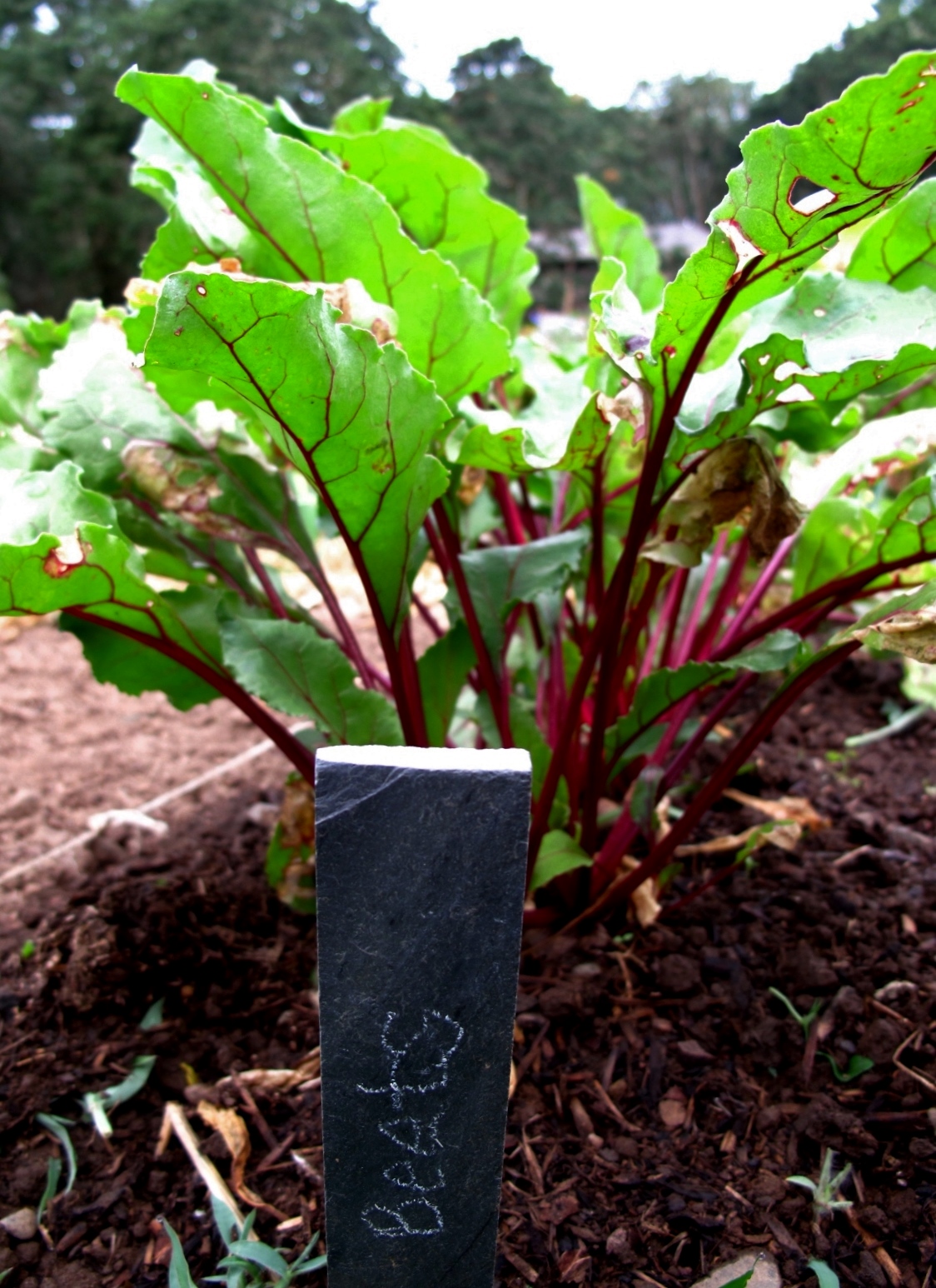
And in the heart of summer, when all the likely candidates wave their yellow-flowered flags before popping fruit upon fruit endlessly, I turn to the other side of the garden and pull the earthy beets from the ground, their soil-covered skins disguising the dramatic color within.
 

IMG_8155


I’ve mentioned this before, but I tend to identify with the harder-to-know vegetables, the ones that sometimes fall victim to knowing only one dish in most kitchens, or worse yet, never appearing. Like me, these vegetables might take a bit more work to understand, as what you see is certainly not what you get; they’re not the kind to be plucked from the vine and gobbled down there in the garden, warm and juicy from the sun.


I don’t revel in the hard-to-approach bits of my personality, nor do I love how I can remain so completely reserved to even my nearest and dearest friends. I don’t love how my first response to the teasing I get, for fun, is one of irritation and sharp-eyed fight-backing, before I slide my sassafras tongue back in, let out a smile, and just go with it.


I bet my spirit vegetables–with their thorny stems, prickly, then poisonous leaves, and dirty bottoms–feel the same way.
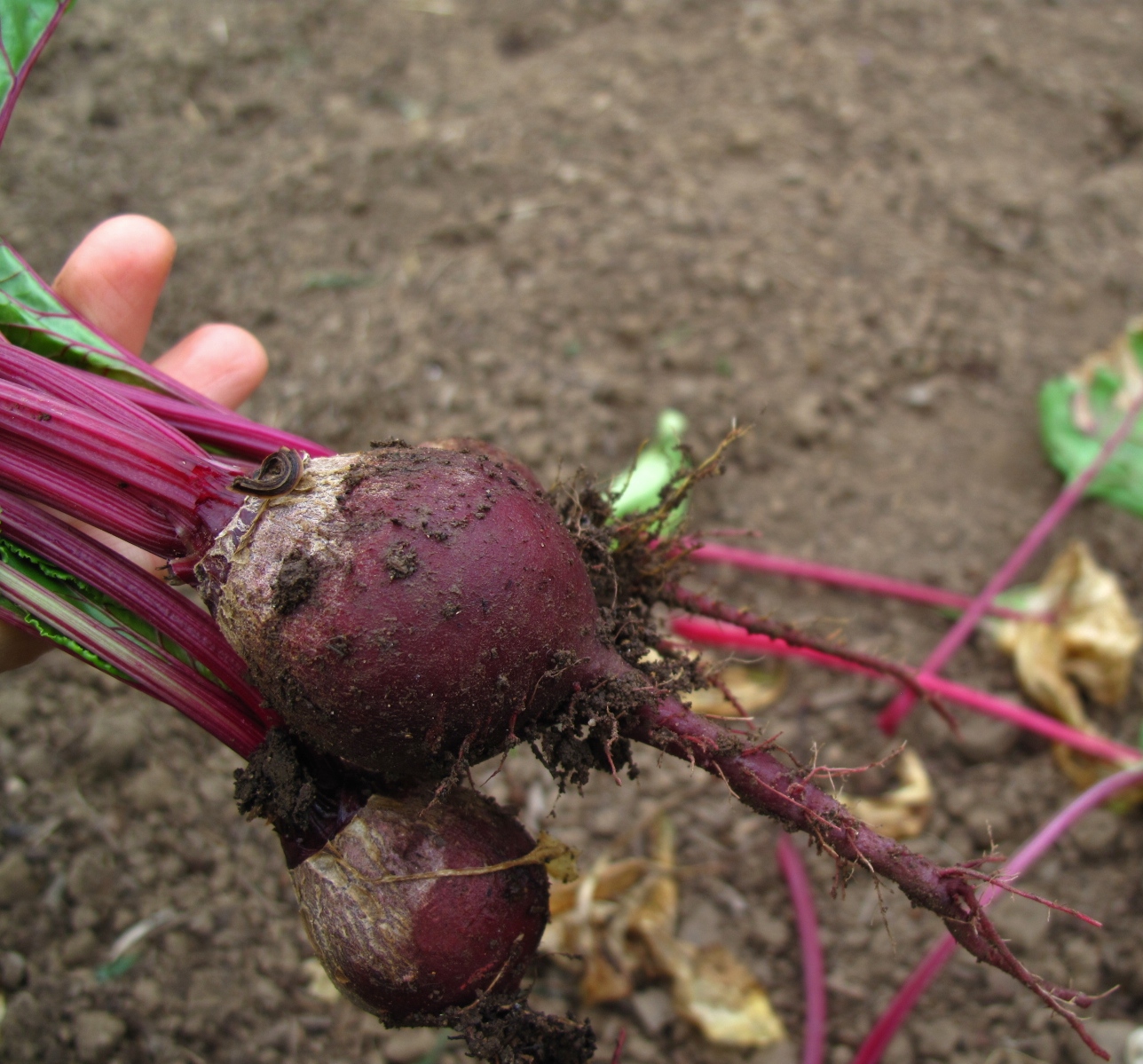
 

IMG_8164


Have you ever pulled a stalk of rhubarb from the ground, knocked that highly oxalated leaf off the stem, and sunk your teeth into the celery-like tartness, pure and raw and unadorned from sugar and strawberries? It is pungent; startling even. Have you ever greedily gobbled plain sweet roasted beets straight from their foil oven-packet before realizing you now don’t have enough for the recipe? Or done the exact same with a winter squash, thinking to yourself, this is the most magical candy on all the earth, as you’ve done so?


I don’t often share about my job, but one of my favorite things about it is wandering the garden with my high school students, giddily discovering a new vegetable is ready for harvest, like the spring’s first asparagus, cutting the new shoots from the ground, shoving stalks at them, and saying, try it. And there, with dirt on their hands, mud on their shoes, and weary eyes, they do and they discover a flavor they’ve never experienced before. It is one that you cannot get from a grocery store because it’s only there in that plant a short while before shipping and sitting on a shelf and waiting to be cooked in a fridge drains those flavors away. The students’ initial reluctance for something so green and unlike the usual packaged meals paves way for simple responses like, I’ve never tried asparagus before. I like it! Followed by their sitting in the log circle gnawing down an entire unruly, late-harvested, two-foot stalk.


Since it is summer, I spend a good majority of my days outside in one garden or another, whether at work with students, or in my home garden. I tend to eat even more vegetables than usual to keep up with the harvest, and I end most days tired, hot, and ready for a shower the moment I walk in the door. I’ve taken, too, to eating random vegetable-y things at most meals, even rounding out the usual morning porridge with a spontaneous need for beet hummus “spooned” upon whole cucumbers. I harvested six last night and there are at least 10 more coming in the next couple of days–and when cucumbers are as snappy, crisp, and fresh as these ones, they are perfect vegetable dippers for beet hummus.
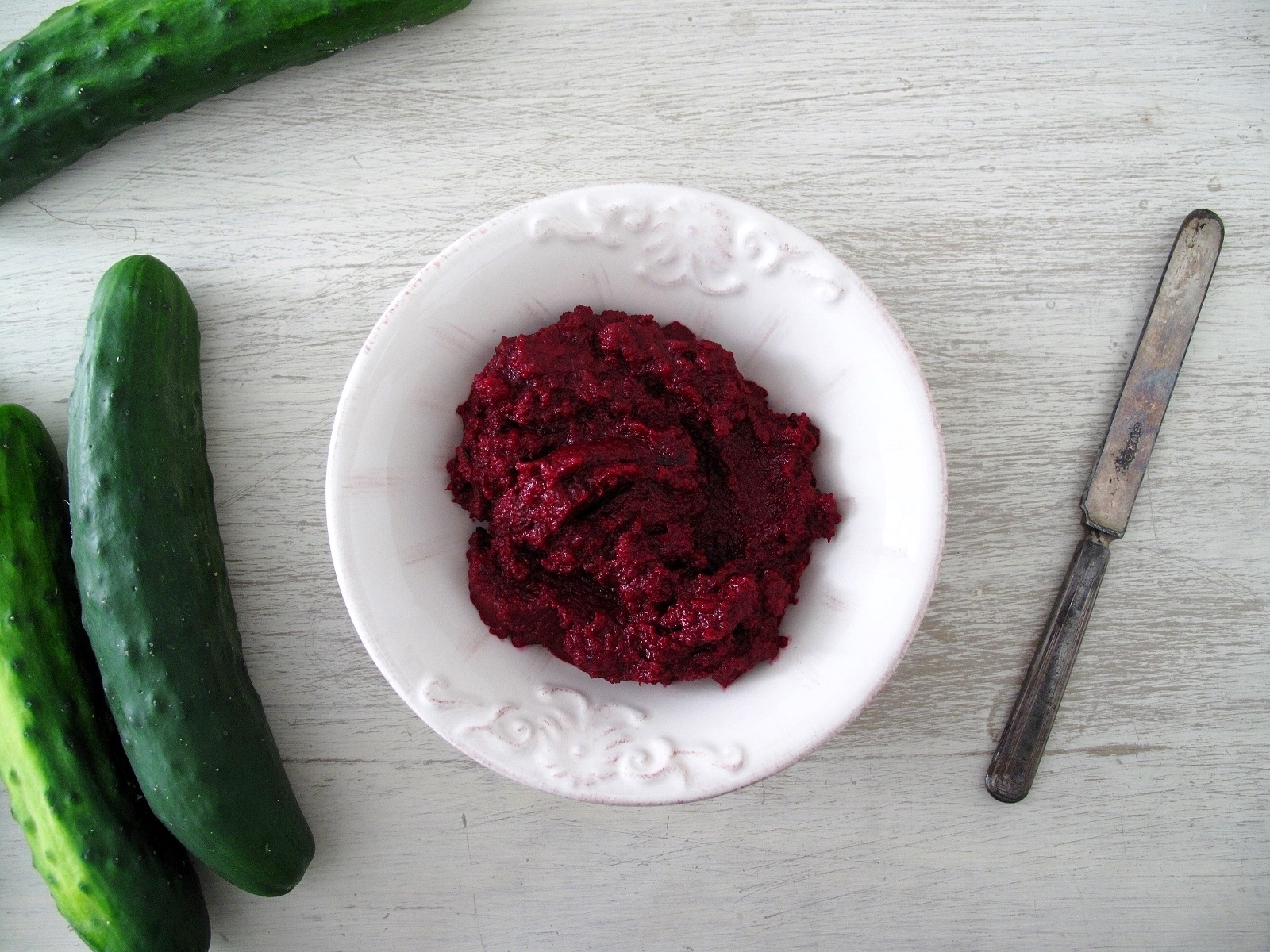
 

IMG_8114


Though beets can be harvested nearly year-round in these parts, beet hummus is what I love to make in this season to convert the earthy-crimson-root-weary to my summer spirit vegetable. Try it. You’ll like it.
 

IMG_8151


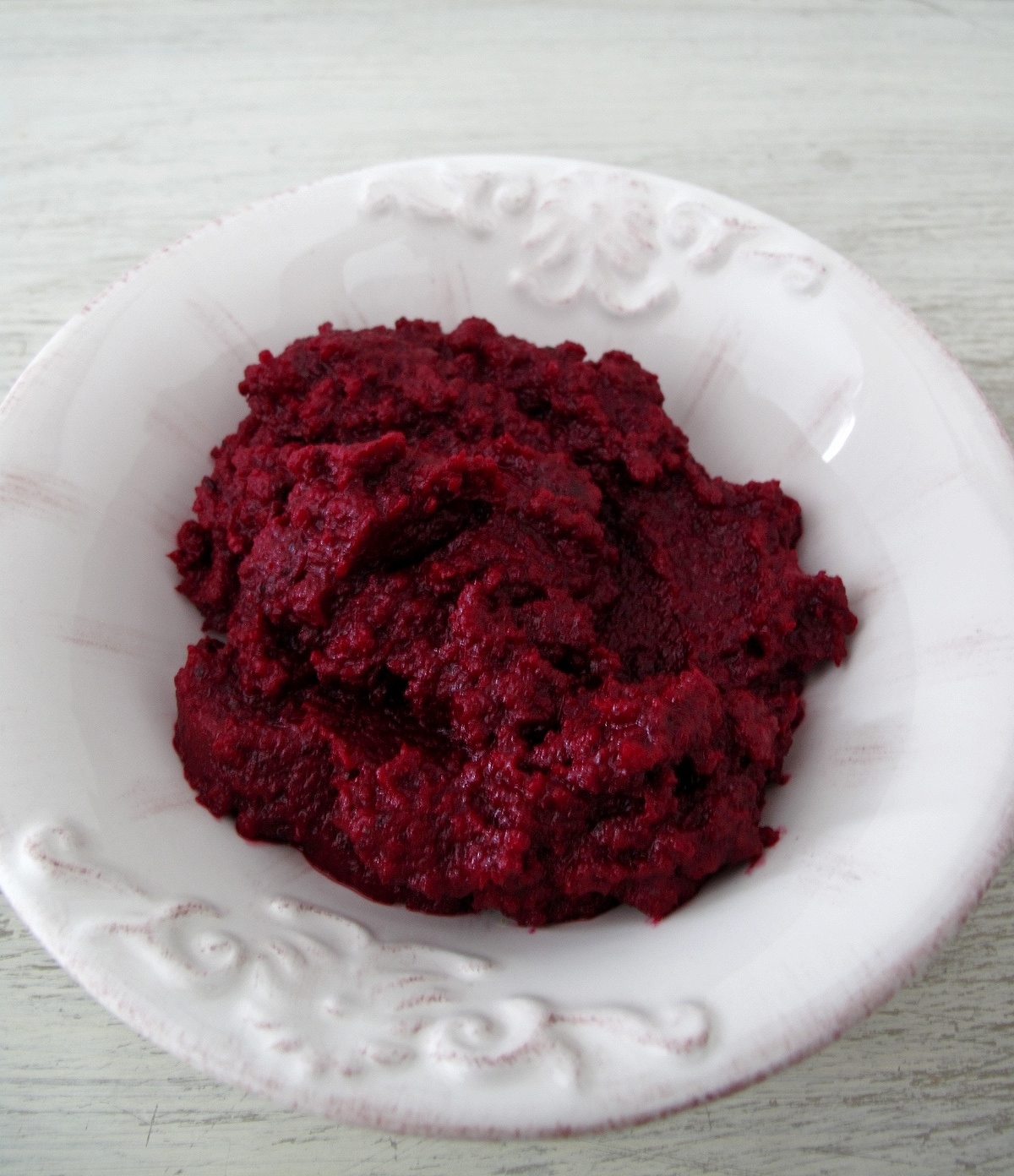
Beet Hummus, adapted from Ard Bia Cook Book
Makes about 1 cup or so. Double the recipe if you’re likely to gobble it up in one sitting.

4-5 beets (about half a pound)
1 garlic clove, peeled
1 1/2 tsp. ground cumin
1 1/2 tsp. pomegranate molasses
1 Tbs. tahini
2 Tbs. fresh lemon juice
1/2 tsp. sea salt
freshly ground black pepper

  • Scrub the beets and remove their tops and bottoms. Pile them into a large sheet of foil and fold until completely covered. Roast in a preheated oven at 400 degrees F until soft all the way through, about 40-50 minutes. Remove from the oven and let cool slightly. If they’re free from chemicals and grown in healthy soil, I don’t bother removing the peels.
  • In a food processor, puree the beets and remaining ingredients until they become a smooth paste. Add more lemon juice, salt, or pepper to taste.
  • Serve every which way atop the season’s fresh vegetables, or simply eat it straight from the spoon.

Dried Plum + Millet Tabbouleh


IMG_7841


Disclosure:  I received free samples of California Dried Plums mentioned in this post. By posting this recipe I am entering a recipe contest sponsored by California Dried Plum Board and am eligible to win prizes associated with the contest. I was not compensated for my time. 


For me, the spring season means a whole host of grain salads. I tend to eat gluten-free whole grains like millet, brown or black rice, quinoa and buckwheat as the center of many meals year-round, but in the spring, fresh, raw greens and herbs start to take more of the center stage. Inevitably, I end up adding sweet things into these meals, often in the way of fresh or dried fruits.


IMG_7822


May happens to be National Osteoporosis Month, and the California Dried Plum Board is hosting a No Bones About It Recipe Redux challenge. As a child with first a dairy allergy and then an extreme dislike for the taste of milk, I was often prompted to drink milk to prevent osteoporosis later in life. Interestingly, it wasn’t until last year that I learned about the many other vitamins and minerals that are also important to bone health like phosphorus, magnesium, and vitamins K and D.


Dried plums are one of the foods that can help support healthy bones. Emerging research shows that eating dried plums may have positive effects on bone health. Previous studies discovered that eating 100 grams (two servings; about 8- 10 dried plums) of dried plums for one year was associated with increased bone mineral density (BMD) and improved indices of bone turnover in postmenopausal women. At Experimental Biology, March 28- April 1, 2015, a current study presented as a poster, examined whether 50 grams (one serving; about 4-5 dried plums) would be as effective as the larger dose. The results indicated that one serving of dried plums may be as effective in preventing bone loss in older, osteopenic postmenopausal women. There are also natural elements in dried plums which help heighten the flavors of other ingredients in a recipe. They can be used as a flavor enhancer, both in savory and sweet dishes.


My grandparents must have had a plum tree because for years, every time they visited, they brought us bags of dried plums. My parents still have a ton of dried plums in their freezer and whenever I visit, I take a package or two, as I love experimenting with less-used ingredients and flavors.


IMG_7843


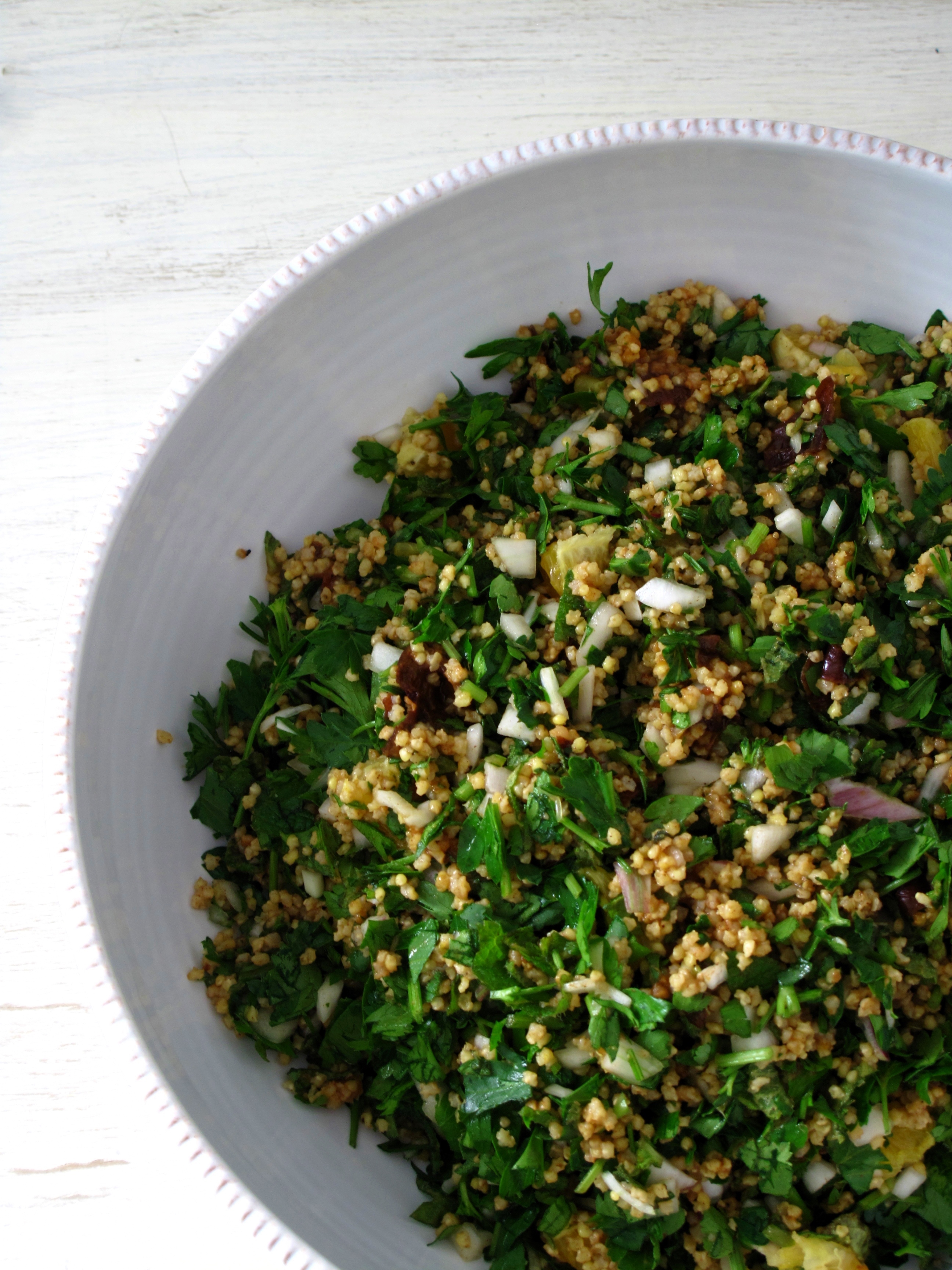
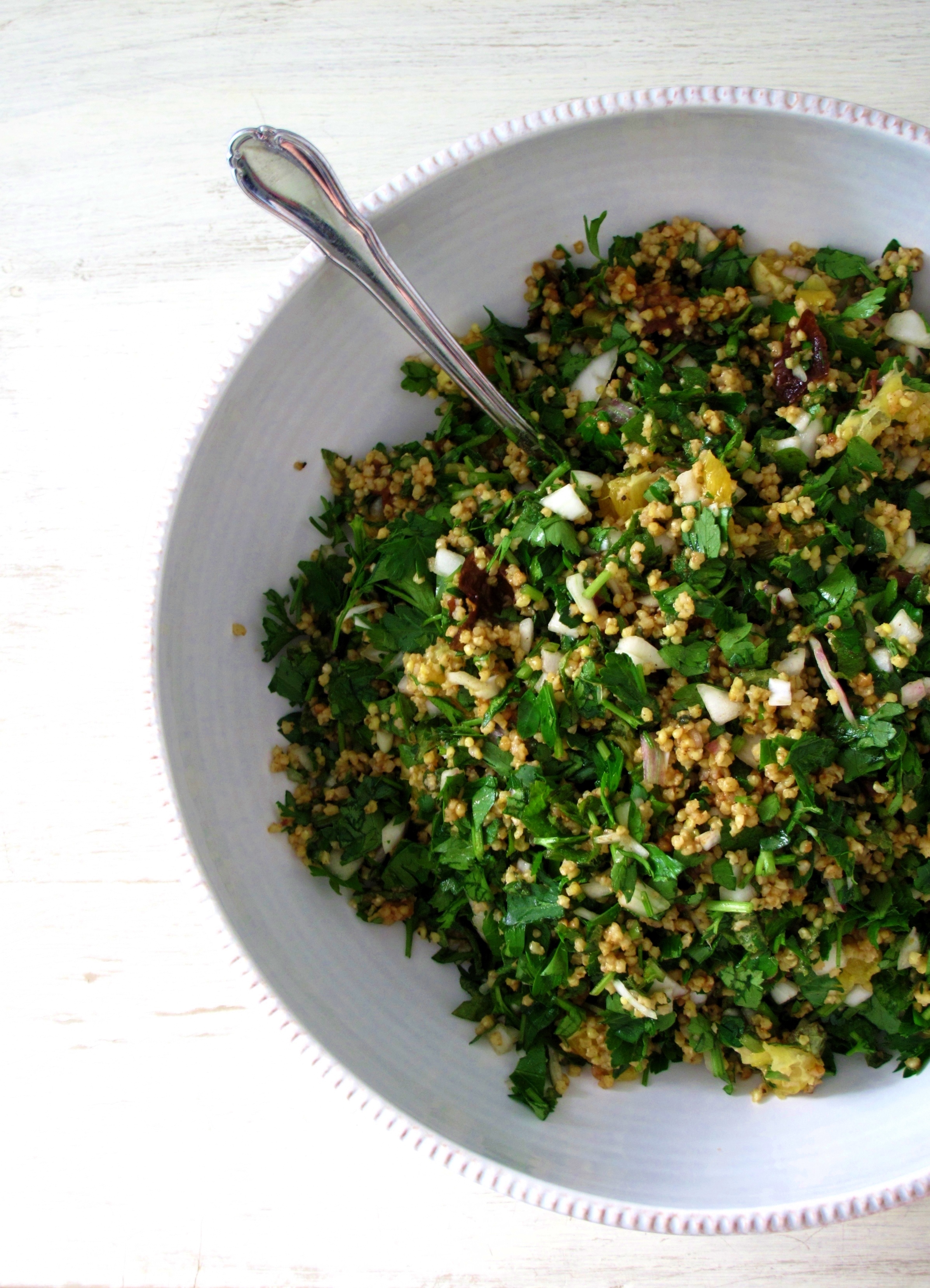
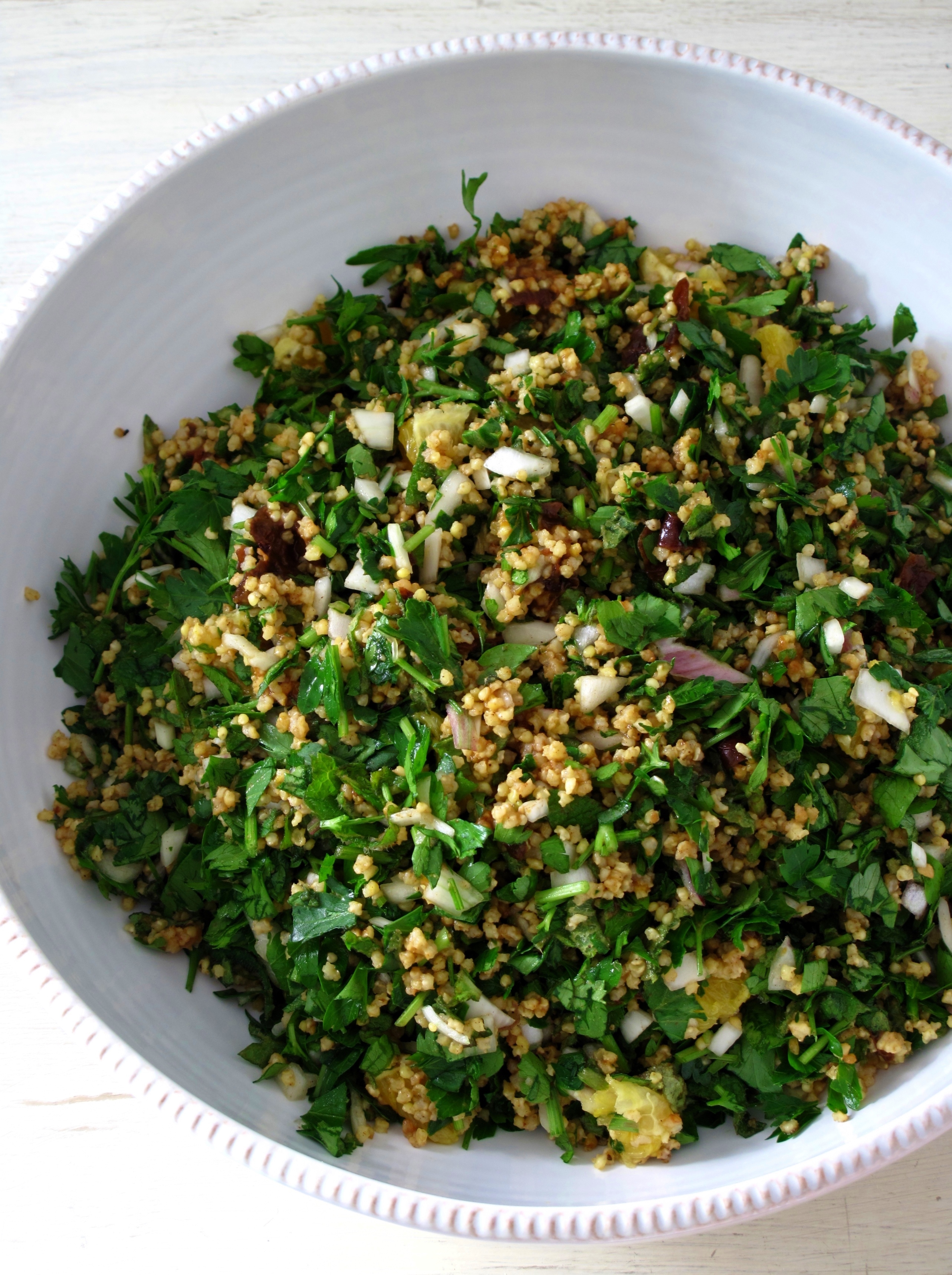
This salad hosts both dried plums and a whole bevy of nutrients essential to bone health. More importantly, with flavors inspired by middle eastern cuisine, it tastes delicious.


IMG_7825


It’s definitely making its way to the top of my favorite spring grain salads.


IMG_7816


Dried Plum + Millet Tabbouleh, serves 4-6

3/4 cup dry millet

1 1/2 cups water

3/4 cup dried plums, diced

2 large bunches parsley, finely diced

1/2 large bunch mint, finely diced

1 small red onion, finely diced

2 Tbs. apple cider vinegar

1/2 tsp. ground cinnamon

1/4 tsp. allspice

1/2 tsp. salt

black pepper to taste

1 orange, finely diced (optional, but not at all necessary)

  • In a medium saucepan, add dry millet, water, diced dried plums, and a pinch of salt. Bring to a boil, then turn down to low heat, and cover. Cook for 20 minutes, and then remove from heat and set aside to cool to room temperature.
  • Meanwhile, dice the herbs and onion and add them to a large serving bowl.
  • Toss the millet and plum mixture with the vegetables and stir in the spices and vinegar. Adjust the seasonings to taste and then serve at room temperature.

Miso Quinoa Polenta

IMG_7741


The other day, a girl in my high school group asked what I was like when I was her age. She asked what I did when upset, my teenage equivalent to eating a tub of ice cream in front of a sad movie. I thought a moment and suddenly remembered sitting on the floor in my room with the green carpet and sea foam walls, back pressed up against the bed, journal out and angry music turned up loud. I’d write poetry.


I wrote a lot of terrible poetry. I also wrote some poems that were quite good, words that I still have and to this day, can bring chills in their ability to convey a feeling, to put me back in the exact moment of their writing.


IMG_7756


My AP English teacher singled out a particular poem one day during my senior year. Standing at his podium, he read it aloud to the class. I still recall the moment because I was incredibly embarrassed. I mostly reserved my poetry-releases to funny bits in birthday cards, never sharing the serious ones. Though he didn’t say my name, I sat there petrified, afraid I’d be called out. I don’t know why I’d chosen that particular poem to submit for a class assignment; perhaps because it was powerful, those words having been torn from somewhere I didn’t know existed. Having them on paper was a vulnerability and the very act of sharing with my teacher was scary enough; having them read aloud to a room full of peers was unnerving. If only those words were safer, lighter-hearted, less mature, I would have been more fine in sharing.


Mr. Colley having done reciting, he and the others praised those words, commending their particular arrangement. As I listened, I allowed myself to momentarily separate, treating the words as if they were the work of another. In some ways their ownership wasn’t mine as in the throes of writing, I never really had a choice in putting them down.


IMG_7731


I share this memory because it’s exactly what I felt in writing and sharing my last post.


I cannot begin to express what it is like to sort through all the words, thoughts, and feelings inside and pull them out, one by one, getting them down on a page exactly as they were meant to be, and then having them composed, opening a window and flinging them out to the world haphazardly, not knowing why or what will become of them, knowing only they need to be flung.


I’m only just recovering from the result.


I am overwhelmed by the response; by the amount and depth of public and private messages received. The summary, if I can summarize, is that it is important to be real, to be vulnerable, to share the highs and the lows and to help each other out in our improving.


IMG_7748


My dear friend Kari shared a mantra on her blog that she spent a year striving to live by. I was so inspired by Kari’s mantra that I wrote it down and plastered it to the back of my phone. When it wore off, I tucked it away in my purse. On the days I am furthest from living by them, I seem to randomly pull that wisp of paper out and gain an instant paradigm shift.


Kari’s words:  Be brave. Be kind. Be true.


I don’t have preconceived notions that anything I say here is particularly important in the grand scheme of things or even inspiring to others, but I do know that Kari’s words stuck with me. I’ve been pondering them, applying them, being brave with them. In passing them along, I hope Kari’s mantra can serve as a guide for you, just as it has guided me. In whatever ways that apply, I hope you can be brave. I hope you can remember to be kind. And when life brings little nudges, I hope you can be true.


IMG_7713


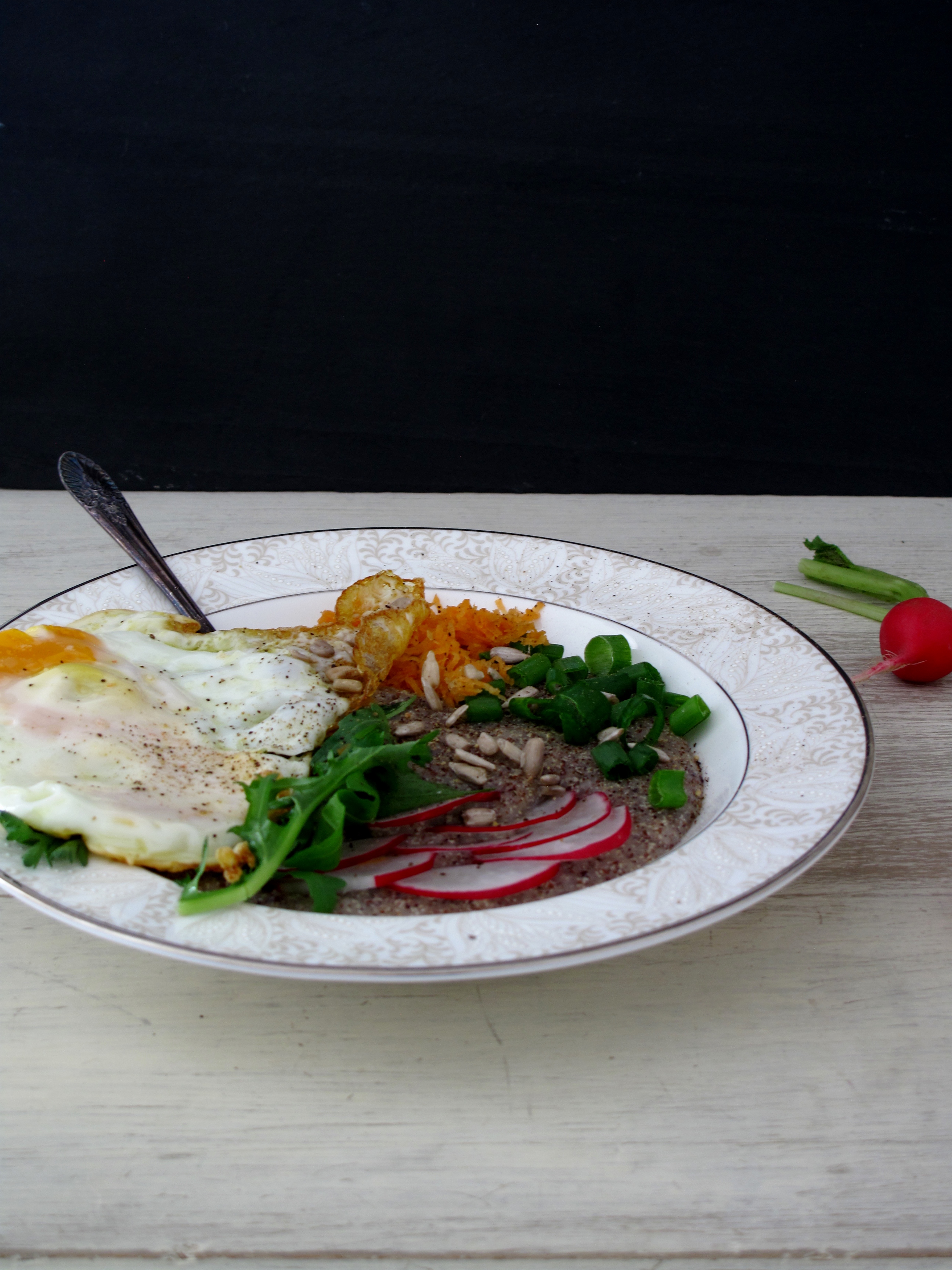
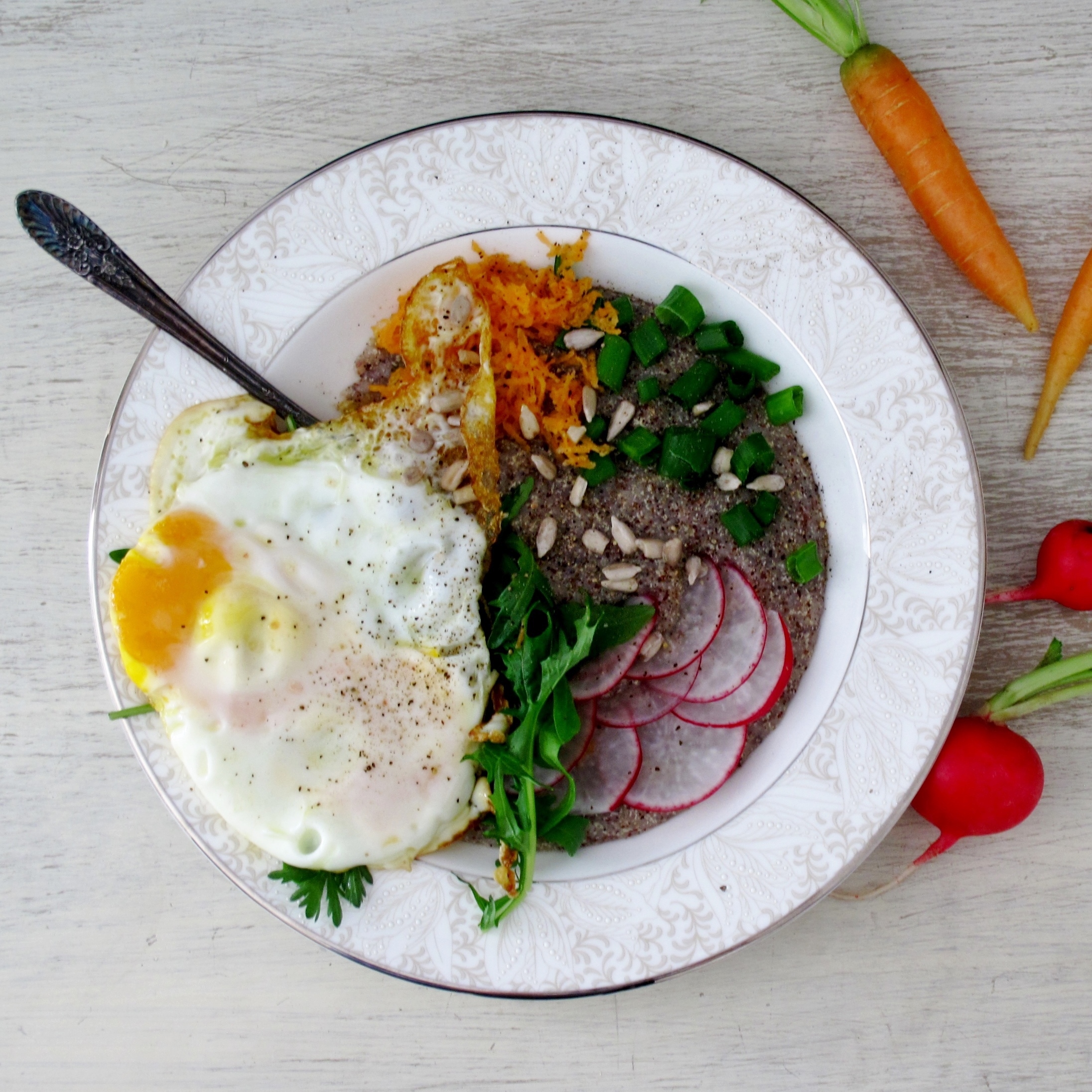
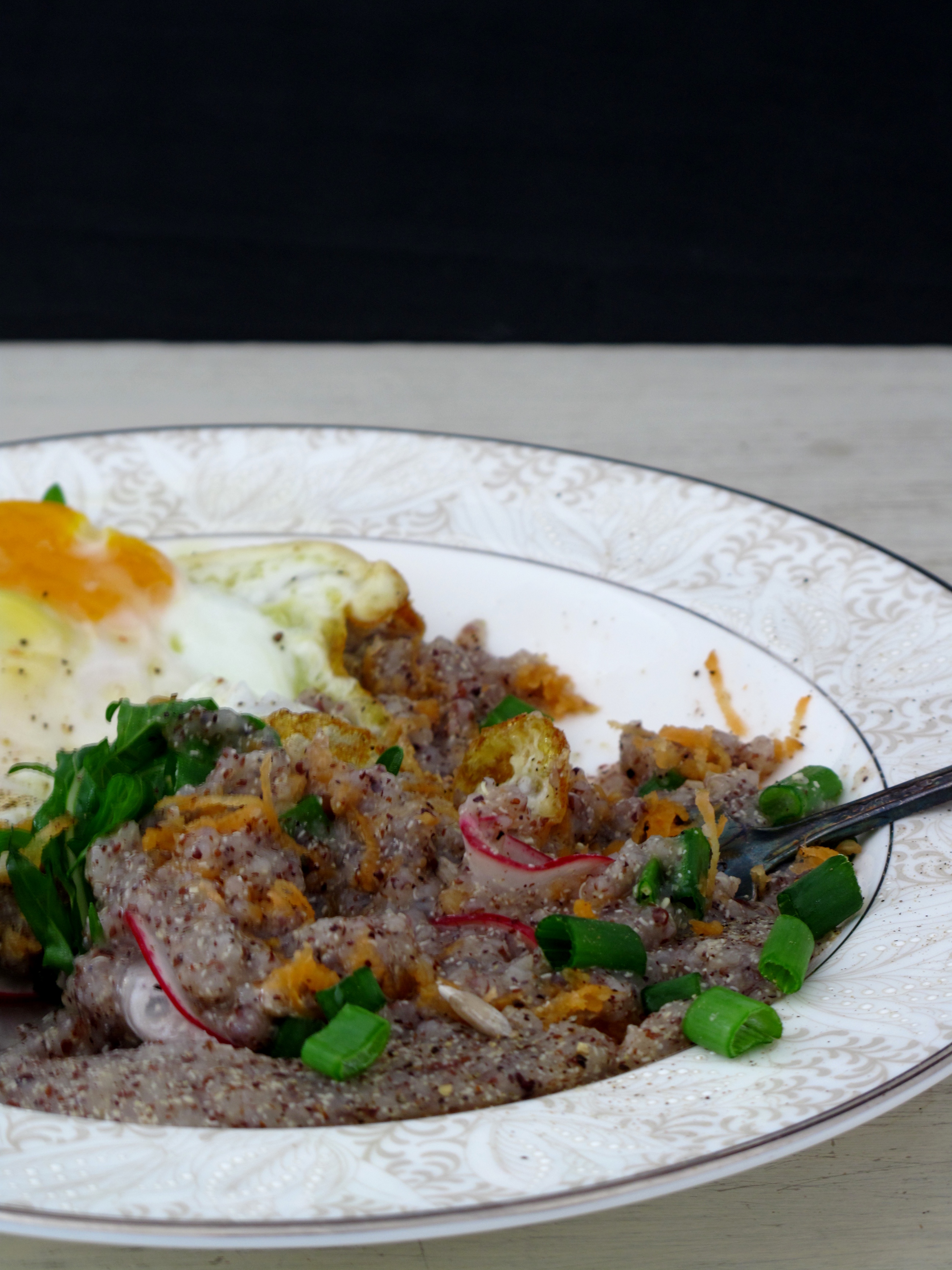
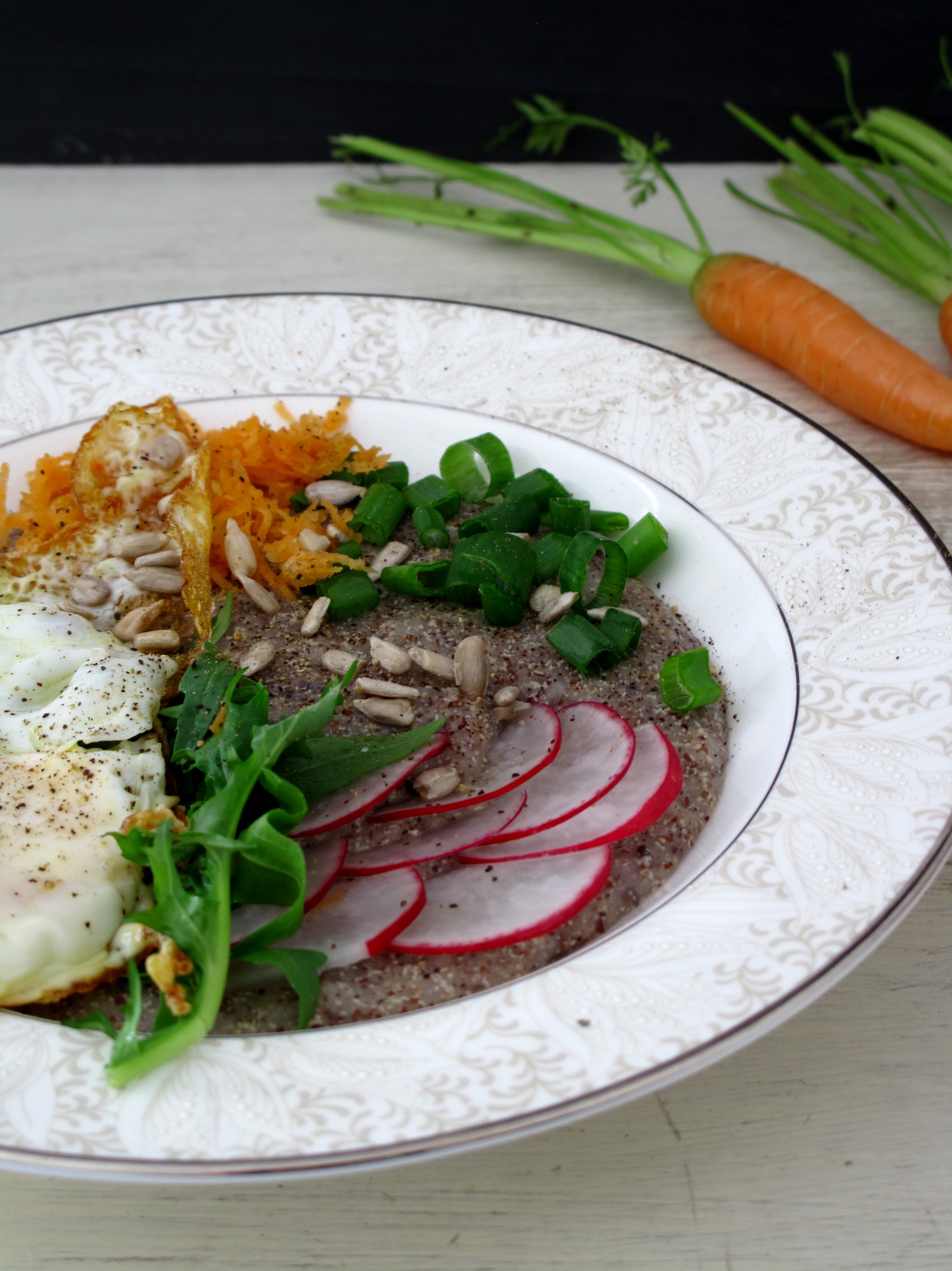
Miso Quinoa Polenta, serves 3-4

I’ve been making a mess of polenta this spring and one day, realizing I was short on cornmeal/polenta, I grabbed the quinoa and my coffee grinder and inspiration was born. The result is a nice change from both quinoa and polenta, and combines the best of both. I used a tri-colored quinoa, so the result is a touch gray, but any type will do. Grind it down to a fine meal in batches. As for the miso, I have only tried this with a soy-free chickpea miso that I purchase from a big bulk container at the co-op. I think it is this kind, but I’m not entirely sure. Regardless of what you choose, I recommend a lighter type. 

1 cup quinoa

2 + cups broth of choice or water

1 Tbs. light miso

1 bunch radishes, thinly sliced

3-4 spring carrots, finely grated

a big handful of salad greens

spring onion greens, sliced

4 eggs, fried, or protein of choice

sunflower seeds for garnish

salt and pepper to taste

  • In a medium pot, bring water or broth to a boil. Slowly, whisk in the quinoa polenta, making sure no clumps form, and turn down to medium-low. Cook until it is as thick as you desire, about 15 minutes, stirring frequently. Add more liquid as needed. Turn off the heat and stir in miso and salt and pepper to taste.
  • While polenta is cooking, prep the vegetables and fry the eggs.
  • Spoon the polenta into plates or bowls, toss on the vegetables, sunflower seeds, and eggs. Enjoy!