Sprouted Buckwheat Granola

IMG_8586


I listened to a disgruntled parent on the phone yesterday. Because she was disgruntled about something completely unrelated to me, she was quite open with the details of her discontent.


I listened to a couple teachers rant last week. In what started as a discussion of what I could do for their students, our meeting soon became what I could do for them in that moment, to be a good ear.


I listen to students in my high school group share their insecurities almost every Wednesday and Friday. Their fears and self-doubts are usually thrown into the middle of sentences so subtly that if I weren’t paying close attention, I might miss them.


When I was teaching, I regularly had students come into my classroom to sit and talk at me before or after school, to share their tough lives beyond the school walls, to ask me personal questions that I wanted to feel comfortable enough to answer sincerely because I knew they needed an adult to look up to and have their back.


IMG_8552


These are not isolated incidents. From day to day, I listen to people share feelings of frustration, of isolation, of shame. Certainly, not everything I listen to is negative. I hear plenty of good experiences and fun stories too. But I hear the tough ones more loudly. Sometimes in those circumstances, I offer my input. More often, I prefer to listen or ask a question or two to keep from having the conversation come back on me, to swirl back around to how I am doing.


IMG_8557


I remember growing up that it was often stated to me, no one likes a complainer. No one wants to hear the negativity. And I think that is true. But we also need someone to hear us, especially on the days that don’t go so well. In my own home, I’m often told that I’m not a good listener. I cringe each time I hear that statement and I immediatly wonder how, if I’m so terrible at listening to the one that loves and knows me best, can anyone else feel like I’m good enough to confide in?


We so often want to shut out the negativity, to cut off the complainers mid-vent because we know just how to fix their crazy, mental, nutty lives. I am a complete victim of this in my own home. I flap my wings all over William’s sharing like a distraught mother bird and I manage to cut him off mid-sentence repeatedly with unhelpful questions because if I’m busy focusing on fixing him there is less room in my crazy brain to focus on what is wrong with me.


When I take a step back and give myself a break, just as I so often give everyone else one, I realize we are all just trying to figure out how to live and be and manage ourselves in this experience we’re given. And many of us are struggling daily through life’s heap to peel back enough layers—in a conversation, in a relationship, in ourselves—to find the voice that is ours.


Each one of us has one. Each voice is distinct and has something to say. Each voice deserves to be heard. But it requires the act of listening. 

– Terry Tempest Williams, When Women Were Birds


IMG_8575


Sprouted Buckwheat Granola

Chalk it up to roots that run real deep to the British Isles, but I’m in the habit of enjoying teatime around 4pm as often as possible, complete with a hot cuppa and snacks, and all the better if there is good company and conversation to be had. Growing up, I always ate a bowl of cereal as a snack on days I came home right after school. To this day, I favor crunchy cereals and fruit rather than the traditional mid-afternoon sweets. Today just happens to be National Nut Day. I’m not acutally sure if the day is meant to celebrate all the nutters like me, or if its more of a day to enjoy eating nuts, but the Recipe Redux is celebrating with a nutty theme this month. So it was timely that my garden-neighbor handed me a big box of fresh-off-his-tree walnuts last week. I contemplated making all sorts of elaborate walnut concoctions. But then it was teatime and I was out of crunchy cereal. So I made granola.

This sprouted buckwheat granola is inspired by a completely raw, sprouted one that I purchase in tiny amounts at my local co-op as a treat. Sprouting seeds, nuts, and grains helps them to release enzyme inhibitors which make them more difficult to digest their beneficial nutrients and makes them more nutritious to eat. Making sprouted granola in a food dehydrator is the best way to make sure those released nutrients are still around in the final product. I do not have a food dehydrator though so I baked my batch in the oven at the lowest possible setting overnight. If you want to add a little honey or maple syrup in the mixing process to sweeten this up a touch more, go ahead. I find the applesauce and raisins to be lightly sweet enough.

2 cups raw buckwheat groats

2 cups puffed millet

1 cup raw walnuts

1 cup raw pumpkin seeds

3/4 cup applesauce

1 tsp. vanilla extract

1 tsp. cinnamon

1/2 tsp. salt

1 cup raisins

  • Soak the buckwheat in a large dish for 6-8 hours or overnight. Drain and rinse well until the water runs clear and all the slime is gone. Drain thoroughly. Return the buckwheat to a large jar and cover with cheesecloth, a thin towel, or paper towel, and set upside down. Rinse at least twice per day until it just starts sprouting, about 1-2 days. Meanwhile, soak the nuts and the seeds in a jar for 4-6 hours. Rinse and drain them thoroughly.
  • On a large baking pan, pour out and mix the slightly sprouted buckwheat, soaked and rinsed walnuts and pumpkin seeds along with the remaining ingredients, except for the raisins.
  • Set the pan in the oven at the lowest possible temperature setting and allow to dry overnight for 6-8 hours. Remove from the oven, cool to room temperature, and then stir in the raisins.

 

resourceful hands, all-the-greens interchangeable pesto

IMG_2012


I vividly remember mornings at my grandparents in the north, my dad’s parents, who we visited less regularly growing up. Specifically, I remember mashed-potato cakes in the morning for breakfast, their perfect fluffy rounds composed of leftover mash from the night before. There was something special about the resourcefulness of meals at my grandparents–how my dad and grandpa had trout on summer mornings, freshly caught in a pre-breakfast fishing trip to the creek, how the milk and eggs came from their cow and chickens, and how my grandma’s large garden to the back of the house sustained them long past their garden season.


In those days, we ate fairly similarly at home. But I had more respect for the ingredients that went into meals at my grandparents–even when I still hated the milk, refused to go near the trout, and was just as picky an eater there as at home.


Though I may not have wanted to partake in some of the foods that made up my grandparents’ lifestyle, in that pre-teen phase of wonderment, I loved sitting in the corner chair at the tiny table tucked into the kitchen, watching my grandma turn random assortments into a meal, listening to my grandpa spin yarns about his neighbors, his fingers cozied around his coffee cup, my dad nodding along.


In those early years before computers or smartphones or big screens to numb the mind and overwhelm the senses, I learned the art of quiet observation in small corners of rooms with the adults. In those rooms, where there is nary a sibling or cousin or similarly-aged friend in my memory, I watched, listened, and learned. I have always been fascinated by hands and it is the hands that I vividly remember, making it all happen. Hands flipping the potato cakes in the frying pan, the grease popping and squeaking. The hands swirling and lifting the coffee cup and setting it down again. The hands bringing in the basket of just-gathered eggs. The hands that helped mine push the creaky old elevator button leading to the farmhouse basement for another jar of jam. In observing those wiser hands throughout those early years, I like to think I learned to appreciate resourcefulness, of using what was had, and turning near-waste into something worth having.


I am not so naïve as to think the resourceful way of life practiced by my grandparents and parents then was born out of an extreme desire for some romantic farmy lifestyle. It was a way of life because it was what they knew, it was what they had, and it was how they (and we) survived economically.


William and I mutually agreed to forego gifting each other at many holidays over these past few years and we had to gently explain to friends and relatives why we were not willing to purchase certain items that might have seemed basic. But we didn’t scrap on our willingness to really pay the people who engage in the hardest of hand work to feed us. I am more willing to spend on food than these people I learned from, but I still hold tightly to their lessons on resourcefulness. I choose more expensive produce without complaint–but I damn well better try to use the whole vegetable. I like to think this comes as a result of all those quiet, watchful learnings growing up until it has become simply what I do–and every item we throw away goes somewhere.


When faced with carrot tops, radish or turnip greens, and other random herbs, I’ve spent the last few years finding ways to make them useful. My mom and grandma have chickens to eat their vegetable scraps. I have an ancient–but still working–food processor.


And that is how freezer-containers full of eclectic pesto combinations happened.


IMG_2362


All-the-Greens Interchangeable Pesto, adapted from Gena Hamshaw

The Recipe Redux theme this month is freezer meals. Whenever I have more greens or herbs than I know what to do with, I turn them into pesto and toss the container in the freezer. This recipe is one of my favorites because it is so versatile and I can make it using whatever I have. It also makes for a simple and quick meal. Our standard busy day go-to is spaghetti with pesto, but I’ve swirled it into grain bowls, spooned it atop toasts and pizza crusts, and even thinned it out to make a quick and tasty dressing for green salad. Try a few different combinations. Use up those herbs and greens. 

  • 2 cups tightly packed greens (radish/kale/parsley/cilantro/basil/mint/turnip/etc.)
  • 1/2 cup nuts or seeds, toasted
  • 2 cloves garlic, roughly chopped
  • 1/4 cup extra-virgin olive oil
  • 1/4 cup water
  • 1/2 tsp. salt
  • 1 tablespoon lemon juice
  • 2 tablespoons nutritional yeast (large flake) or 2 tsp. powder
  •  ground black pepper, smoked paprika, or red pepper flakes, to taste
  1. Place the greens, nuts or seeds, and garlic in a food processor. Pulse to combine until the mixture becomes a rough paste.
  2. Turn the motor on and drizzle in the olive oil and water. Add the salt, lemon juice, and nutritional yeast, and pulse a few more times to combine.
  3. Add the optional spices to give it a different flavor spin.
My favorite combinations thus far:
  • Carrot Tops, Sunflower Seeds + Smoked Paprika
  • Basil + Pumpkin Seeds
  • Radish Greens + Almonds
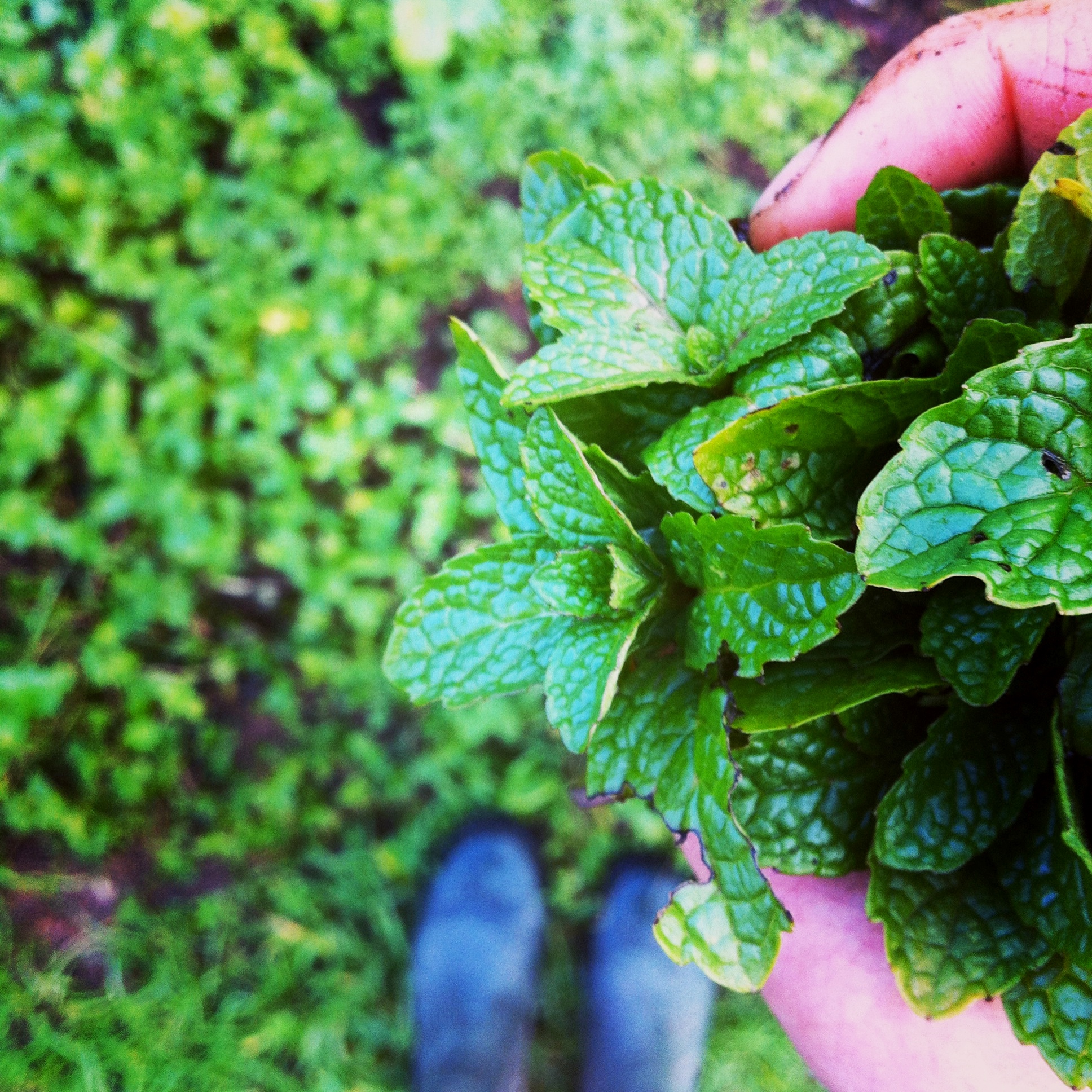
  • Mint, Cashews + Green Chile
  • Cilantro + Radish or Turnip Greens, Pumpkin Seeds, Cumin, Coriander, Red Pepper Flakes + Lime

to go on

IMG_8456

I can’t go on. I’ll go on. – Samuel Beckett

We were headed back from the coast last weekend and I had been admiring the views and the changing season when I looked out and realized it is September(!) and I suddenly saw not the slow slide of summer into fall but the trajectory of my life these last few months. I realized that I have been so busy feeling my way through this year that I haven’t been able to truly see the world around me, much like that summer I was in Ireland for the second round and one of my co-interns spent so much of her time capturing the experience on her camera that she never stopped to appreciate the views beyond her lens. When I look up and out, it is so easy to feel and see the change in season right now, and as we drove back into town last weekend, there was a bittersweet sadness hanging in the air. This and the last few posts have reflected that bittersweet vibe, as I’ve been sharing bigger matters that have sat heavy with me this year.


IMG_8479


One of these is whether I’m even writing a food blog anymore. I have always had more of an interest in talking about life in this space than in hyper-focusing on the food. Over the course of the last few months, I’d like to think I’ve been doing more of that and through the process become more honest in sharing the bigger things that matter. As I’ve done so, I have contemplated moving away from sharing food at all because it often doesn’t seem to go with the message I’m conveying. I think about my readers too. What do you want from this space? Why do you come here? How much is too much information? And I think about why I began the site, to share life and food.

Food is important to me. I love learning about it. I love talking about it. I really like helping others with it. And if you are newer here, if you read back to this post, you’ll see the making and partaking in food is so much more to me than finding peace through this year’s challenges or in fueling life on the run. All my interests, joys, and even problems circulate and intersect in and around food. And though I’ll chatter your ear off in actual conversation until you politely ask me to shut up about it, I don’t particularly enjoy writing about food in this space anymore.


IMG_8457


In a recent conversation with a friend, the topic of my eating disorder and food came up and I shared, It’s not about the food. Just like every person has his or her tools or mediums with which to create a life (or destroy it), my strengths–and also weaknesses–are both food and words. Like my eating disorder, this space seems to be about food but is also not about food.

Inevitably, I have opted to continue with the recipe sharing because when I talk about the highs and lows of life here, I share the meals that feed my soul through the process, recipes that hold meaning not because they have this or that ingredient in or out, not because of any label or food trend but because they are simply feeding me through this life. I’ve considered deleting posts which I think are silly now or old recipes that I no longer partake in, but those too are all part of my experience. Those meals, like the more recent ones, fed me through those ventures into becoming the better person I am today. For that alone, I want to have them recorded.


IMG_8463


In this transition of seasons, I too feel as if I’m wading through a big life transition. As I take a deeper and bigger-picture look at my trajectory, as I sort through my life and organize my thoughts around the point of this space, I want to share with both the readers who have held on for the long haul and those that are just jumping in, the basic reason for this blog hasn’t particularly changed. It is a space where I can use my creative tools to share real life more honestly; to go on, when a part of me is actually afraid to share what I really feel, is afraid to move into life’s changing seasons, is often frustrated and saying simply, I cannot go on.


IMG_8471


When I am standing fearfully on one of life’s cliffs, not ready to jump yet somehow poised for whatever the next adventure brings, when I am at the point where I begin to question everything, when my mind wants to give up and fight like hell simultaneously, that is when I know I am right where I need to be. I will get through this changing season and I’ll be better for the challenge with which it came. I will be glad too that I was willing to share the experience here, rather than waffling on about some random ingredient.

After all, isn’t this life little more than the accumulation of these daily lessons and joys, of conversations and meals good and bad, of being vulnerable, of putting plans into action and seeing hard work pay off, or spinning wheels in useless worrying which we can’t seem to move on from, until, for whatever reason, we do?


IMG_8436


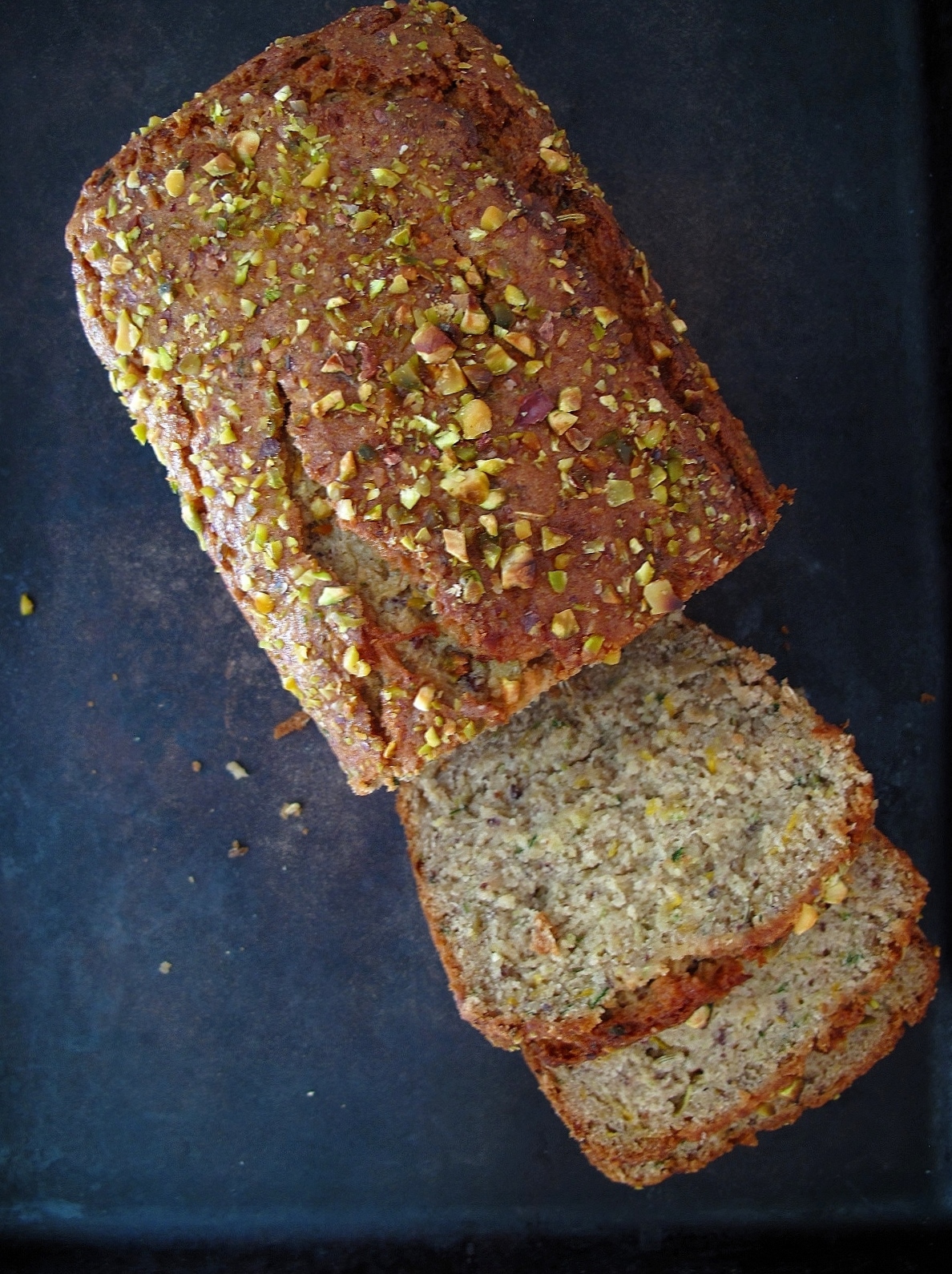
Two-Tone Fennel + Pistachio Zucchini Bread 

This zucchini bread has been a work in progress for many years and I’ve held off on publishing because every recipe, like the most vulnerable blog posts, is not quite ready to share. Originally adapted from a Cook’s Illustrated recipe, it has taken on a life of its own with the switch to quinoa, brown rice, and almond flours, two types of summer squash, fennel seeds, and pistachios. It is the type of recipe that feels right in this (nearly there) return to cooler days and comforting foods season, and it’s likely my last bout with zucchini this summer. My plants have been producing steadily since mid-June and they’re telling me their time has nearly come. Onwards!

1 lb. zucchini and yellow summer squash, (about 2 medium or 3 small)
2 Tbs. ground flax seeds
6 Tbs. hot water
3/4 cup sugar
1 cup quinoa flour
3/4 cup brown rice flour
1/2 cup almond flour
1/4 cup tapioca starch
1 tsp. baking powder
1 tsp. baking soda
1/2 tsp. cinnamon
1/4 tsp. allspice
1/2 tsp. salt
2 tsp. fennel seeds
1/4 cup plain non-dairy yogurt (I used unsweetened coconut)
1 Tbs. apple cider vinegar
3 Tbs. coconut oil
1/4 cup toasted pistachios, chopped

  • Heat the oven to 350 degrees F. Oil and flour the bottom and sides of a 9 x 5-inch loaf pan.
  • Shred the mixture of zucchini and yellow squash on the large holes of a box grater and then transfer to a fine-mesh strainer set over a bowl. Allow to drain for 20-30 minutes.
  • Meanwhile, mix the ground flax seeds with the hot water in a small dish and set aside to form a thick slurry.
  • In a medium bowl, whisk the flours, baking powder and soda, salt, cinnamon, allspice, fennel seeds, half the pistachios, and 1/2 cup sugar together. Set aside.
  • After the zucchini has drained, squeeze it dry between several layers of paper towels. Mix the dried zucchini with the yogurt and apple cider vinegar in a small bowl. Set aside.
  • Beat the remaining 1/4 cup sugar and coconut oil with a whisk in a large bowl until light and fluffy. Add the flax slurry and incorporate well. Add half the flour mixture and half the zucchini mixture and mix until just incorporated. Add the remaining flour and zucchini and mix once more until the mixture just comes together.
  • Scrape the batter into the prepared loaf pan and sprinkle the top with the remaining pistachios. Bake until the loaf is golden brown and a toothpick inserted in the center comes out with just a few crumbs attached, about 55 minutes. Cool the bread in the pan for 10-15 minutes, then tranfer the loaf to a wire rack. Serve warm or at room temperature, or once cool, slide into the fridge for a day or two, as the flavors really develop overnight.