

What Does Your Tongue Say About Your Digestion?

Sometimes our bodies are really weird. And sometimes they’re super cool.

Today let’s chat about how they’re cool. Did you know our bodies have all sorts of ways to indicate and reflect externally, what is going on internally?

One of these ways is by looking at your tongue. Let’s take a look at what we can learn from assessing our tongues today!

But first, if you’re a regular reader in this space, yes, I changed my website and business name. But, it’s the same old mostly serious, sometimes goofy me (Rebecca). I’ll continue to share recipes here interspersed with more just-plain-nutrition-topics. Thanks for continuing to read and follow. Now let’s get to learning about your tongue!

When you look at your tongue, you can see clues about internal moisture (or lack thereof), heat and cold, tissue integrity and health, and overall vitality. All of this begins in the digestive tract, since the food you eat literally becomes the cells and tissues of your body within the following days and weeks. 

There are several aspects of the tongue that clue us into what is going on, including: 
Color
Shape, including width and vertical thickness
Cracks
Marks (spots, swollen papillae)
Coat (its presence, thickness, color, and how rooted it is)
Tension
Under tongue vein conditions and/or teeth indentations

For instance: The color of a healthy tongue is generally a moderate shade of pink. If yours is darker or paler, that indicates there may be something going on with the blood and/or blood circulation, such as excess heat and internal inflammation, or anemia (which at its most basic definition means lack of blood). A tongue that is purple or bluish, or has spots of those colors tells us the blood isn’t moving. You might really be suffering from a lack of circulation and feel particularly cold compared to others. Adding warmer spices to your foods and circulation-promoting herbs can particularly help cold, stagnant blood circulation. 

The tongue size and shape indicates the state of fluids and hydration within the body, as well as overall tissue nourishment and balance. A swollen, wide tongue usually indicates there’s excess moisture, mucus, or edema, and a dry, thin, tongue is often the opposite. A tongue that’s thick vertically often indicates excess heat and internal inflammation. 

Likewise, lack of vertical or horizontal cracks indicate there is adequate bodily moisture. Are you routinely dehydrated? Do you have cracks on your tongue? 

The tongue’s coat and the color of the coat in particular are tell-tale signs of how digestion has become imbalanced and can be improved. If there is no coat at all or it’s present in patches, this tells us your digestive capacity is a bit insufficient. We need to work on helping the digestive system assimilate and absorb those nutrients from your foods!

And a particularly thick coating tells us there’s some sort of excess going on, in the way of imbalanced gut bacteria, excess moisture which often presents as bloating after meals, or stagnant digestion, where you feel like your food just sits in your gut. 

One of the most common indications of imbalance I see is tooth marks or indentations or ripples on the sides of the tongue. This means the digestive fire is low, and you’re not assimilating the foods you’ve eaten, leading to poor tissue quality and all sorts of bodily presentations of feeling not optimal.

Take a look at your tongue. What do you see? 

Here’s mine. What can you determine about my digestion by looking at it?
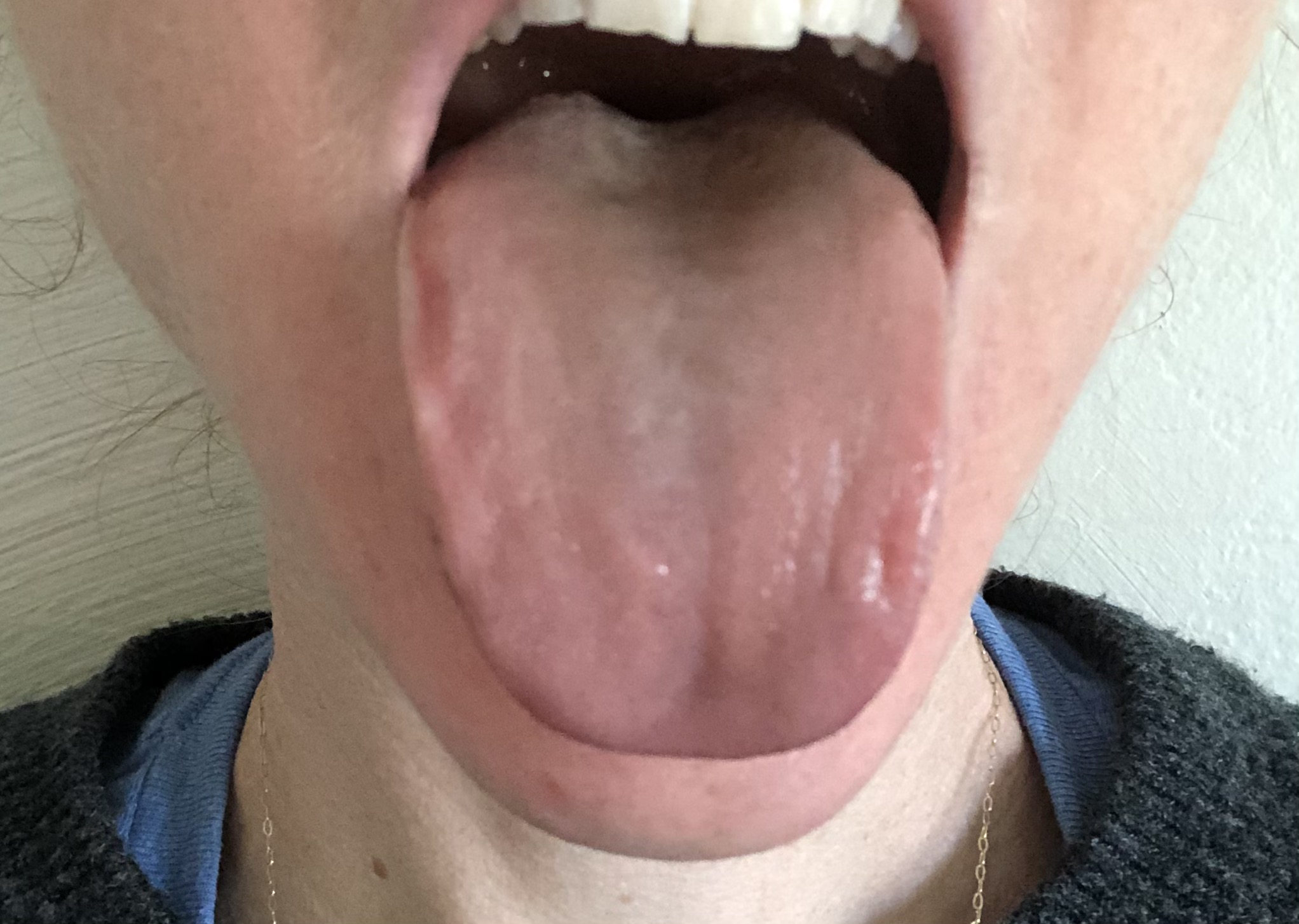
My tongue assessment:
Shape: A little wide, indicating possible lymphatic stagnation or mucus.

Color: Somewhat pale (not shown super well in this photo); indicating possible anemia and/or malnourishment.
I tend to float back and forth on the line between clinical anemia and low-normal red blood cells, have fairly chronic low digestive ability, and need for a ton of supplements to stay in “health” despite consistent focus on optimizing digestion and food first. This clue checks out with my actual lab data and long-term health tendencies.

Thickness and Color of the Tongue Coat: Spotty. Mostly absent from the front; thicker than ideal in the back, indicating poor digestive capacity in the middle and lower GI (stomach and small intestine), and excess mucus or stagnation in the lower GI (colon), probably as a result of the under functioning section above. The color is a transparent white which is ideal!

Tongue Moisture: Moist – which is ideal.

Cracks on the Tongue Body: none – ideal.

Lastly, I tend to have mild indentations or tooth marks on the sides of my tongue in the middle to front; particularly in the morning when I wake up. This indicates I’m likely not digesting the last meal of the day well and could use simpler to digest evening meals – and a little more help in getting digestive functioning to optimal: as reflected in the above areas.

Overall, my tongue indicates fairly exactly what I tend to find with my digestion, and what long-term lab data has shown: Sub-optimal digestion with a tendency to not digest and assimilate nutrients well.

I will say with consistent work at it, my digestion has improved substantially from what it used to be, and I’m less super-obviously symptomatic. I rarely experience bloating, sharp or low-grade GI pain, etc.

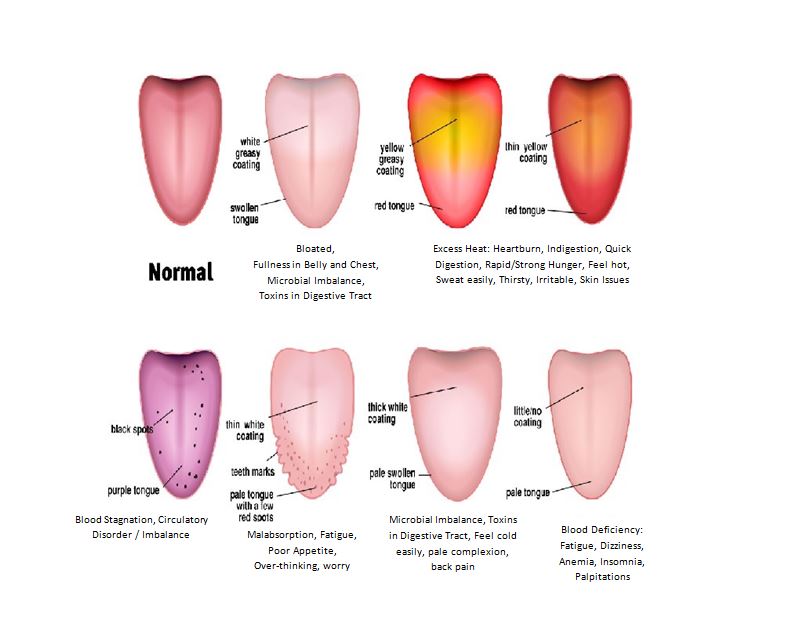
Here’s another illustration with notes about what the presentation is indicating in terms of digestion and health: 

Tongue Types – Digestive Health
Does your tongue suggest your digestion is functioning optimally? Or do you find indications that reflect exactly what you’ve had going on in there? If you’d like to learn more about how you can fix it, I’d love to speak with you in a quick phone consultation! Or learn more about your digestion in my other articles on the topic of optimal digestion and gut health

References:
Bunce, L. (2017). Tongue Assessment for Western Herbalists: A Primer.
Coatzee, O. (2017). NUTR 663: Sports Nutrition; Eastern Medicine Tongues. [Lecture]. Maryland University of Integrative Health. Retrieved from: https://learn.muih.edu

The Six Tastes for Balanced Meals and Digestion

For a long time, it’s felt appropriate to share a food as medicine approach to eating in this space, but I’m not so sure I’ve adequately explained how to do this other than to share meals that are largely based on whole, minimally processed from-nature ingredients. 

I know you want to eat food and meals that taste good, and are also good for you, but it’s important to recognize that everything we eat also has an effect.

That effect can be incredibly subtle or super obvious and I don’t mean just the effects of the caloric, macro or even micronutrient content of your meal, but because each subtle flavor within a food and meal will affect your body and your mind. 

Particularly when you eat in the same pattern of meals and flavors day in and day out. 

The Six Flavors 

There are six primary flavors within foods and ideally, all six flavors are incorporated into main meals, and at least four flavors are enjoyed at breakfast when we tend to eat a smaller amount. The six flavors are: sweet, salty, sour, bitter, pungent, and astringent

Now, what foods have which flavor? And what are their effects? 

Sweet 

The SWEET taste comes from foods that contain natural sugars: sweet root vegetables like carrots, squash, beets, all fresh and dried fruit, whole grains, natural sweeteners like honey, maple syrup, and molasses, and fresh dairy products such as milk, butter, and ghee. 

The sweet flavor builds tissues within the body, calms the nerves and nervous system, and relieves hunger. It’s the flavor you likely reach for when you’re eating to soothe an emotion or for comfort. This is natural since the flavor of our first food of milk is sweet. That food-memory association between sweet food, love, and being comforted is particularly strong. 

If you are dry, thin, nervous, anxious, scattered, or have nerve disorders, more naturally sweet foods are indicated and may be missing in adequate amounts in your meals – these are the whole grains, root vegetables, sweet fruits, and natural sugars. 

Salt 

The SALTY taste comes from foods that are naturally salty including seaweeds like kombu, arame, wakame, and nori. Some water-based vegetables are also naturally a little salty including celery, tomatoes, zucchini, and cucumbers. And of course, natural salt such as sea salt or pink mineral salt provides this flavor. Adequately cooking our foods in salt, and adding in a teaspoon per serving of dried seaweed when cooking beans or other stewy meals is an excellent way to build the salty flavor into a meal that will help us to retain the water we consume and have tissues that are more deeply hydrated, as well as provide a natural source of iodine – a critical and often missing nutrient for optimal thyroid health. 

If you are dry, drink plenty of water but are still dehydrated, experience constipation or find that the meals you cook taste “flat,” incorporating the salty flavor during the cooking process, rather than at the end, can be especially helpful. 


Sour

The SOUR flavor comes from foods such as lemons, lime, vinegars, unripe fruit, and fermented foods such as yogurt, pickles, kimchi, sauerkraut, sourdough bread, soy sauce and tamari. Many individuals either avoid sour foods or over-do them in meals. Both not enough and too much can cause problems. Adding in just a little squeeze of fresh lime juice or a little spoonful of apple cider or white wine vinegar at the end of cooking meals is frequently just enough of the sour flavor to lubricate tissues and stimulate the digestion process.

If you tend to run extra warm or frequently experience hot, agitated emotions, experience acid indigestion or reflux, have loose or sticky, incomplete stools, rashes, inflammation, or itchy, acne-prone skin, you may be over-doing the sour taste in your meals. 

Pungent

The PUNGENT flavor comes from hot and spicy peppers, black peppercorn, onions, garlic, ginger, mustard, horseradish, wasabi, raw radishes and turnips, asafoetida, cinnamon and cloves. 

This flavor increases heat and stimulates digestion and metabolism. As such, you should incorporate it into your meals in slightly larger amounts if you are routinely cold, experience poor circulation, or have low digestive fire –meaning you don’t digest or tolerate foods well

But for many others, too much pungent flavorings causes extra heat, excessive sweating and inflammation, skin rashes, acne, or eczema, agitated emotions, acid indigestion or reflux, and loose stools and diarrhea. 

If you tend to be a person that’s eternally on the move, both physically or mentally, and find it difficult to slow down your mind or pause for a relax break or day, it’s safe to say you may also benefit from cutting out too much of the pungent flavor — take a couple weeks without onions, garlic, and spicy peppers and then take note of how you feel.

Bitter

The BITTER taste is one many of us avoid. That’s unfortunate because the actions of bitter are to stimulate the digestion process by telling the body to begin releasing essential digestive acids and enzymes. The bitter flavor also helps the liver performs its routine detoxification process (necessary to get rid of waste products, excess hormones, and toxins), and it lightens tissues that are puffy and retaining water. 

Bitter foods include aloe vera, dandelion leaves and root, dark leafy greens, all vegetables in the brassica family, burdock root, eggplants, Jerusalem artichokes, sesame seeds and oil, dark chocolate, coffee, and fenugreek seeds.

Like the pungent flavor, we want just a small amount of bitter flavors in our meals — not an excess. Where many people tend to consume too much bitter is in the form of coffee. Coffee is a stimulant, and caffeine can be particularly troublesome for the liver, especially if you have hormonal imbalances. Try to reduce your coffee intake to no more than one to two 8-oz. cups in the morning if you enjoy coffee regularly. 

Astringent

The ASTRINGENT taste comes in beans and legumes, cruciferous / brassica vegetables such as kale, cabbage, broccoli, and brussels sprouts, unripe bananas, pomegranates, cranberries, and most herbs and spices including basil, bay leaves, caraway seeds, coriander, dill, fennel seeds, marjoram, nutmeg, oregano, parsley, rosemary, saffron, turmeric, vanilla, coffee, tea, wine, and alcohol. 

The astringent flavor helps us to absorb water, and dry and tighten tissues. I’ve used an alcohol-based (astringent) toner on my face a couple times a day for years, and to no surprise, I’ve also tended to experience frequent dry skin. The astringent nature of my facial toner is a wonderful example of what happens internally when we consume astringent foods. This can be excellent and necessary, in small amounts! 

If you experience chronic diarrhea or varicose veins, two examples of the tissues not being able to hold onto their fluids, astringent foods or herbs may be beneficial in slightly larger amounts. On the other hand, if you have routinely dry skin, or a dry internal condition like constipation, eating and drinking less astringent foods will be helpful. 

Six Flavors in Balance

Above all, a great way to begin to understand the effect of the different flavors and particular foods is to really pay attention to the flavor of the foods you are eating. Can you taste the sweetness when thoroughly chewing a whole grain or a steamed carrot? Can you pick out the drying, astringent effect as you take a sip of black tea, coffee, or wine? Do you notice how you internally heat up after a sandwich with spicy mustard or a bowl of particularly spicy soup? And then what do you notice in the minutes or hours afterwards?

When you begin to eat more meals that have a balance of the flavors, you’ll also notice that ongoing digestive symptoms and food intolerances might begin to reduce and eventually may even go away. And because meals simply taste better without being elaborate or extra complicated, cravings or over-eating begins to be less of an issue.

Much of my nutrition practice is focused on individuals and athletes with digestive health issues such as leaky gut, food allergies and intolerances, chronic GI distress, malabsorption of foods and nutrients, and inflammation. If you’re tired, stressed, and not really sure what to eat to help or hurt anymore, I invite you to reach out to me for more personalized support.