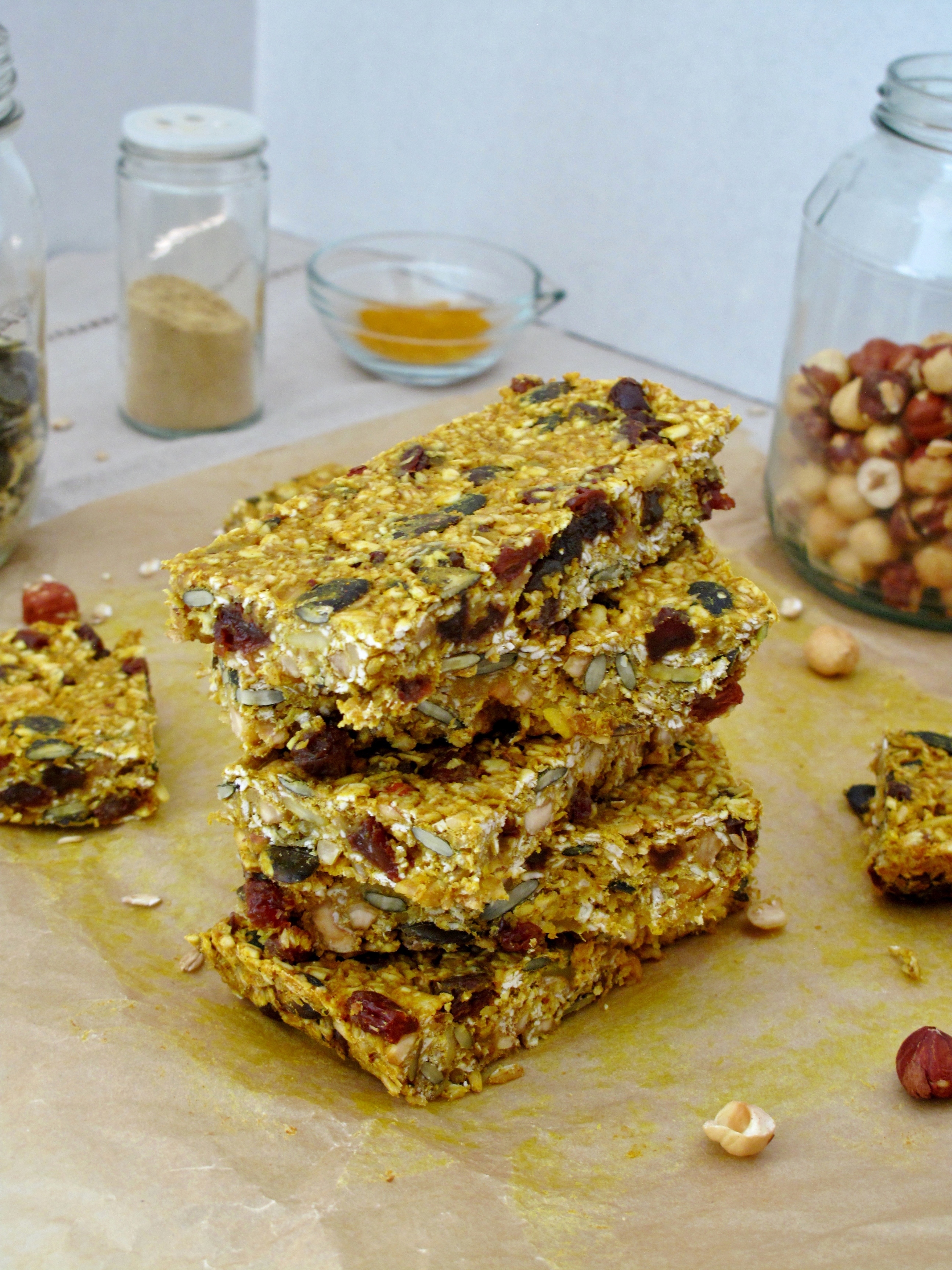
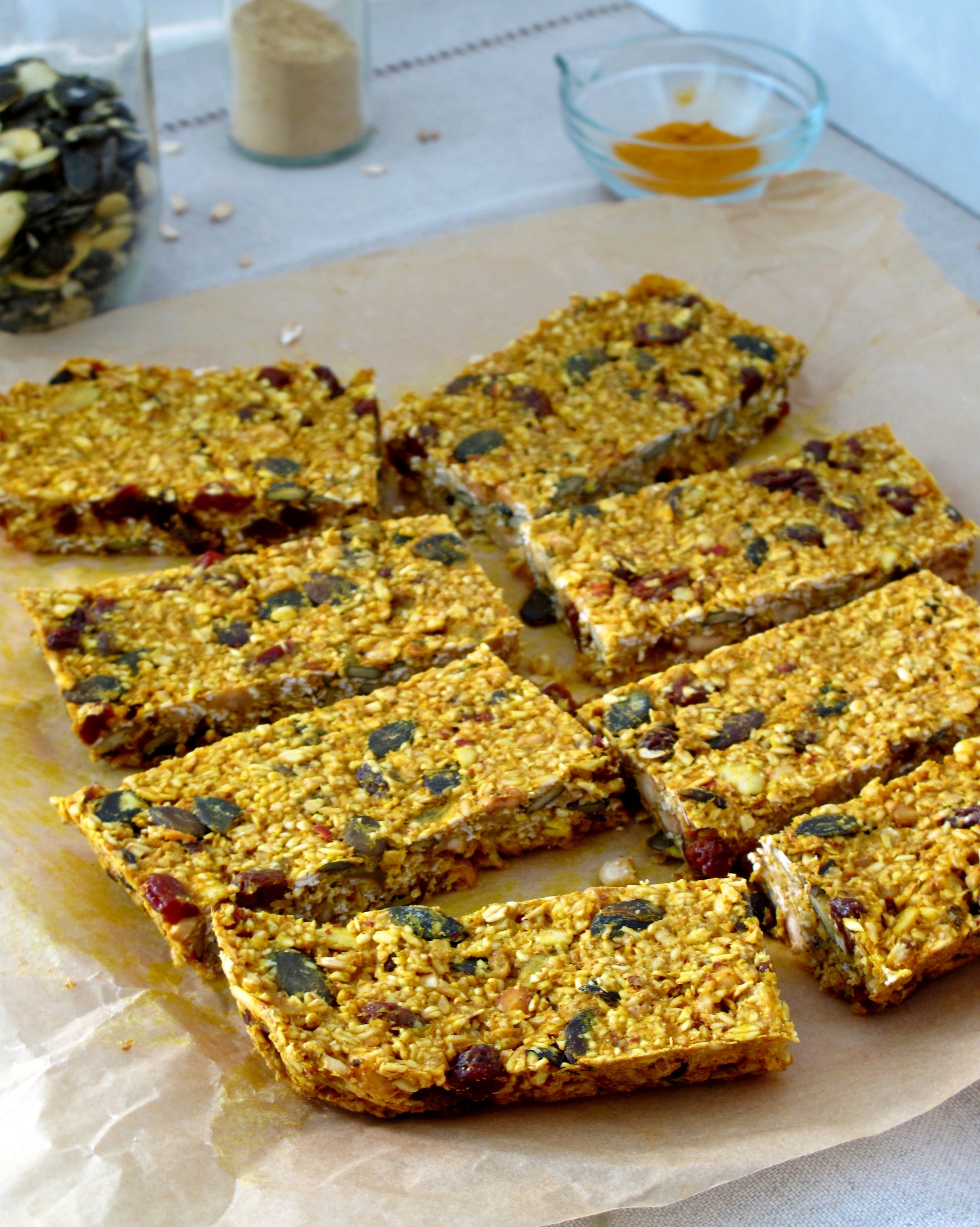
Turmeric Ginger Seed + Nut Bars

IMG_6651

Oats are one of my favorite foods of all time, and over the years they are probably the most common ingredient in many of my recipes. Aside from porridge, I really love to try out new variations of homemade granola bars. Recently, I’ve been using bars as a quick form of recovery after hard runs or races. With races especially, I often find it difficult to eat anything offered at the post-race party that might help me start the recovery process in a timely manner. Common post race offerings include bagels, bananas, pancakes, and sometimes pizza, which are all great carbohydrate-rich foods that I cannot eat. Making these bars and stowing them in my bag are the new way to go!
IMG_6642

The Sports Nutrition literature recommends eating a post-workout recovery meal or snack with a ratio of carbohydrate to protein of 3 – 4:1. Eating a food or meal in this range helps with muscle glycogen re-synthesis. That’s science speak for sugars in the muscle. Adding amino acids (the building blocks of protein) to the carbohydrate mix also help with muscle protein synthesis. If the muscles begin getting re-fueled and rebuilt quickly, they will recover and be ready to get back out there sooner!

In addition to fitting within the recommended carb to protein ratio range, these bars also contain turmeric, ginger, and cinnamon. Turmeric has been used for centuries in India. It contains a compound called Curcumin which has often been lauded with potent anti-inflammatory actions. Ginger also has been known to reduce inflammation and it helps settle the stomach. I’ve been struggling with a minor injury all summer and my stomach often begins to feel like I just stepped off a carnival ride after a hard run, so the addition of turmeric and ginger help the recovery process just a little bit more. With the addition of cinnamon, the flavor combination also just plain tastes good, and for that alone, I’d mix these spices in!
IMG_6619

These bars are healthy, filling, easy to make, and can be eaten any time of day, even if you’re not an endurance athlete. I’ve also been throwing them in my lunch box all summer to eat between meals when I need a snack.

If you’re really interested in the bars’ nutrient break-down, I’ve included it at the end of the post. For more on healthy inflammation-fighting foods, check out this article from Runner’s World.

 
IMG_6610
 
 
Turmeric Ginger Seed + Nut Bars
These can be adapted in infinite ways by changing up the types of dried fruits, seeds, and nuts. I also enjoy subbing out half of the oats for puffed rice or millet. The dash of black pepper will help the turmeric absorb and become more bioavailable, so don’t leave it out. 
  • 3/4-1 cup unsweetened applesauce
  • 1 tsp. pure vanilla extract
  • 2 cups rolled oats (use certified gluten-free if necessary)
  • 2/3 cup raisins
  • 1/2 cup toasted hazelnuts, chopped
  • 1/2 cup pumpkin seeds
  • 1/4 tsp. cinnamon
  • 1/2 tsp. ginger
  • 1/2 tsp. turmeric
  • 1/4 tsp. salt
  • dash of black pepper
  1. Preheat the oven to 350 degrees F. Lightly oil a square baking dish (approx. 8″ x 8″) or line with a piece of parchment paper so the bars are easier to lift out.
  2. In a large bowl, stir together the vanilla, 3/4 cup applesauce, and spices.
  3. Place the oats into a food processor and pulse until they are coarsely chopped, but still have a fair bit of texture. Then stir them into the applesauce mixture.
  4. Add the nuts, seeds, and raisins to the applesauce-oat mixture until thoroughly combined, and add a little more applesauce if needed.
  5. Spoon the mixture into the prepared pan and press down with the back of a spatula or spoon until it is compacted and even.
  6. Bake for about 15-20 minutes until the bars are firm and lightly golden along the edge. Wait until the bars are cool and then slice into squares or rectangles. This makes 16 small bars (~100 calories each) or 8 larger bars.

Nutrition Information, (for a larger bar or two small ones)
208 calories
10 grams fat – 13% Daily Value
1 gram saturated fat – 5%
0 grams trans fat
0 mg cholesterol
32 mg sodium – 1%
27 grams carbohydrate – 8%
9 grams sugar
4 grams fiber – 12%
6 grams protein – 14%
 
Vitamin A – 0 %
Vitamin C – 2%
Calcium – 2%
Iron – 13%
63 mg magnesium – 20%
217mg potassium – 5%


Carrot + Zucchini Oat Bran Muffins

IMG_2999

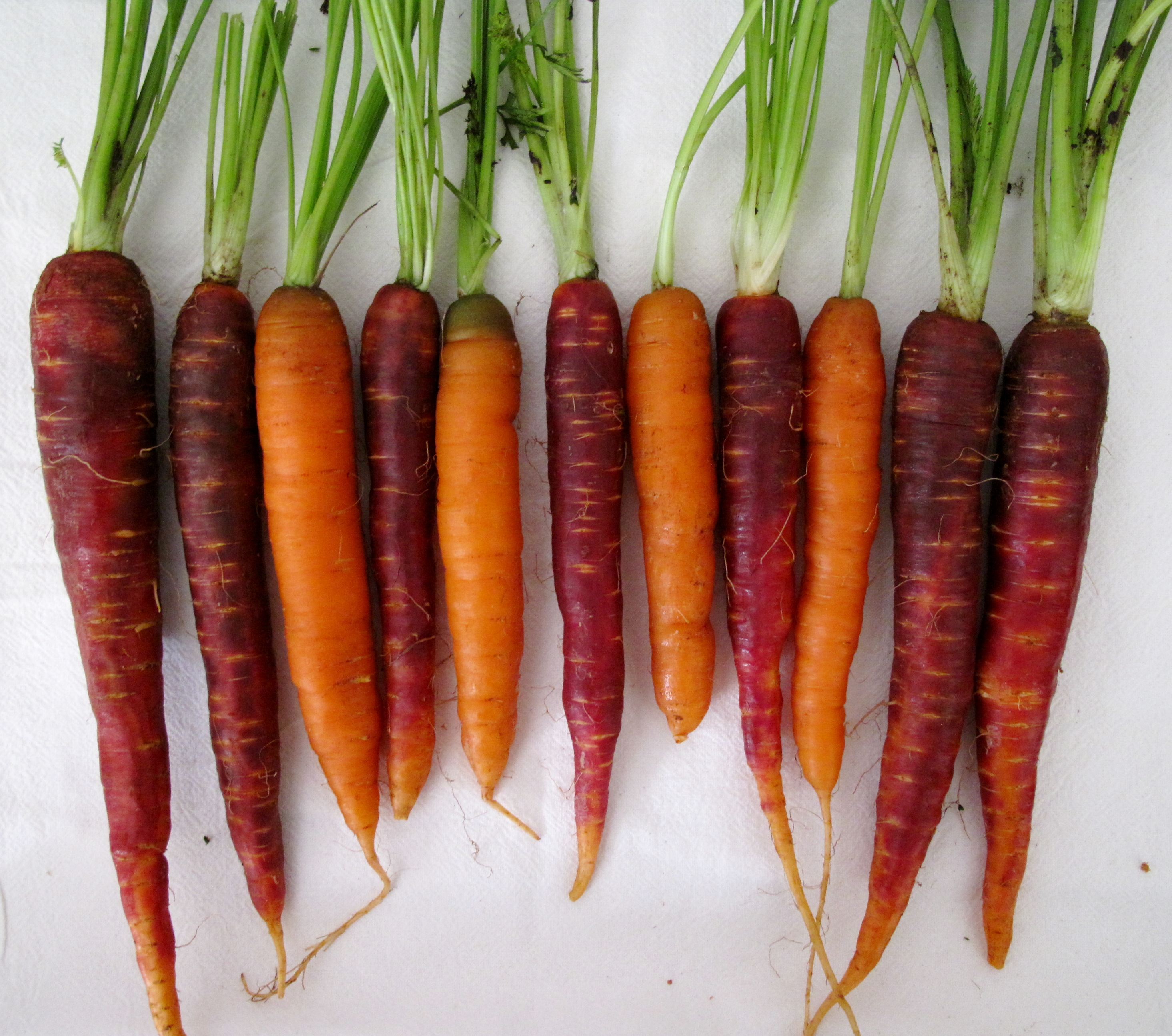
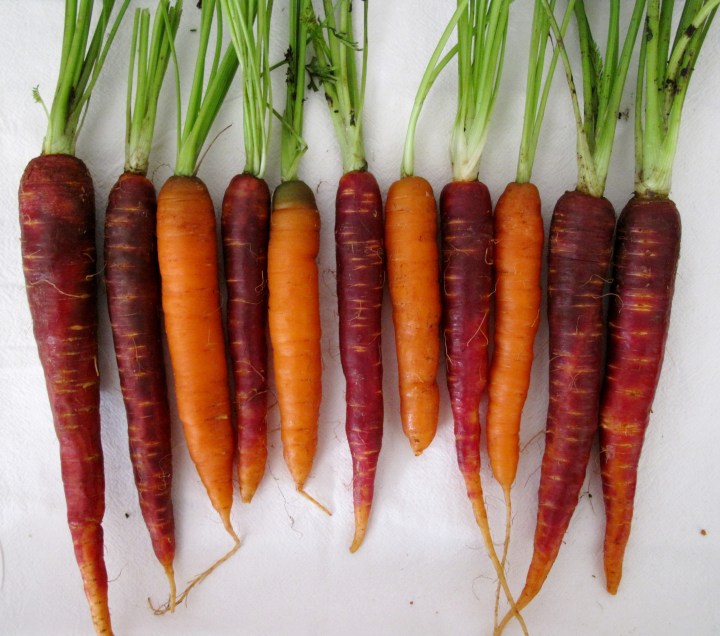
I am a struggling carrot farmer. Packets of seeds. Different locations within the space. Different weather patterns, sowing dates, and groups of planting hands. Gorilla planting at random when watering. Watering frequently. Pre-sprouting. Row covers. Gleaning scraps of information from the successful carrot farmers I know. They’ve all been attempted.

Let me explain. I coordinate a school garden. I plan the crops, the rotations, the amendment schedule and IPM techniques and timing. I coordinate the students, the teachers, the garden club, and the irrigation. Somehow, I can’t quite coordinate the soil to grow a substantial crop of carrots.

The carrots we’ve managed to grow were fat and tasty, and there is a meager amount of later-planted carrotlings still pushing their way through their sparsely sprouted rows. There’s progress. But carrot farmer, I currently am not.

IMG_6237

I see this carrot-failure as a small metaphor for the general way of things lately. I’ve been in a real mental funk, feeling like no matter the new tools I gather and employ, the result is still the same. Lackluster. Not the success I had envisioned.

IMG_2995

In light of the set-backs and failures, both personal and carrot-related, I’ve been taking stock of the situation(s). I have a few more tools up my sleeve, a little more determination and knowledge with each new attempt. I tend to not give up easily. In fact, I’m more likely to summon the kind of rage orange-haired people are known for and use it to my full advantage.

Those carrots will grow in that garden. They’ve got great soil and an ideal microclimate. If they’re willing to grow in my home garden with its frequently neglected and weed-infested clay beds, those carrots must grow in the school’s garden. I’m insistent.

Harvesting at least one substantial row of carrots is my personal gardening mission for the season. We will have a good and healthy carrot crop come autumn. I’ve the rage on my side. :)

IMG_2990

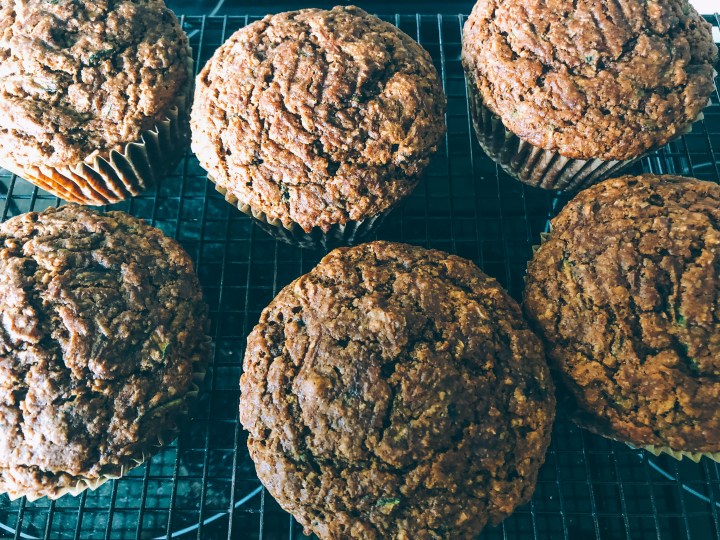
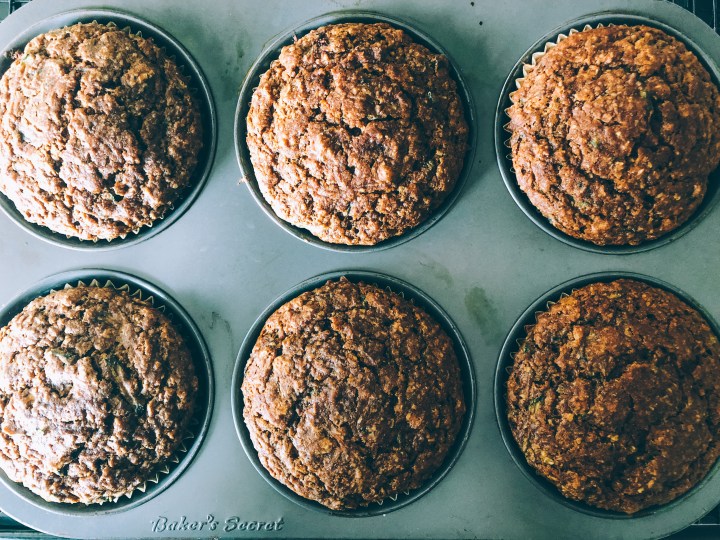
Carrot + Zucchini Oat Bran Muffins, makes 6 jumbo or 12 regular muffins
Recipe updated: 10/5/21

These muffins are heavily adapted from a recipe in The Sprouted Kitchen that I slowly  adapted over months and years.  We keep coming back to them and each time the muffins turn out better. They are a perfect way to begin a laidback summer breakfast AND they use up summer squash or zucchini and carrots–because let’s be real, I have five summer squash in my fridge from the last two days harvests, at least six more growing rapidly on the plant, and tons of squash blossoms and bees making more magic happen. I’ve EVEN managed to grow a successful crop of carrots in my home garden. If you’re a gardener, know one who shares, or have a CSA box, you too are probably trying to sneak veggies into anything and everything at this stage of summer! 
1 cup non-dairy milk
1 tsp. raw apple cider vinegar
1/4 cup / 56 gr coconut oil
1 egg or 1 flax egg (1 Tbs. ground flax seed + 3 Tbs. hot water)
1 Tbs. blackstrap molasses
1 tsp. pure vanilla extract
1/4 cup chopped pitted dates
3/4 cup grated carrots (about 1 large carrot)
3/4 cup grated zucchini or yellow summer squash (about one small squash)
1 1/2 cups  / 180 gr gluten-free flour mix
3/4 cup oat bran
1/2 cup sugar
1 tsp. baking powder
1 tsp. baking soda
1 tsp. xanthan gum
1 tsp. ground cinnamon
1/2 tsp. ground ginger
1/2 tsp. salt
  • In a large bowl, pour in the non-dairy milk and vinegar. Whisk and let sit for a couple minutes. Then measure in the oil, egg, molasses, and vanilla. Stir in the carrots, zucchini, and chopped dates.
  • In a small bowl, mix together the flour, bran, sugar, baking powder, soda, xanthan gum, salt and spices. Then pour into the wet mixture. Miix gently until all the ingredients just come together.
  • Scoop out the batter evenly into a prepared muffin pan, and bake for 20-25 minutes in a pre-heated oven at 350 degrees F.

Raw Buckwheat Porridge with Hazelnuts & Rose Water

IMG_5851


Almost a year ago, I wrote about a new beginning, my desire to meet new people, and to connect to place. Having grown up on a ranch where we were seemingly always connected to neighbors who often shared their honey, lamb, fruit, or eggs while we returned the favor with armfuls of zucchini, beef, and cookies(!), it is natural for me to connect to a place through its food and farmers. Food is precious, unique to place, and meant to be celebrated as such. I’d like for us all to return to that mantra, in whatever way we can best make it so.


IMG_5819


I have high aspirations to grow my own, get to know my farmers, and to share the abundance. The truth is though, I live in a tiny dark apartment under a canopy of giant oak trees. It is shady and I haven’t even been able to successfully grow herbs in the windowsill. I have a community garden plot full of packed clay soil, but at least it’s growing something. (Lots of things, actually!) I’m working on it.


IMG_5821


Because life also has room for trade, trying flavors from afar, and celebrating with foods that just won’t grow nearby, I have been finding ways to integrate local flavors into even the most international of themes. It is a balance and I’m still fine-tuning. Mostly though, I’m excited that the Willamette Valley is seeing a resurgence in local grains and pulses–and millers!


IMG_5908


Though there are dreams aplenty ’round these parts, I’m holding out for a larger piece of land for my buckwheat and oat plot. In the meantime, I’m excited to be trying out a couple different varieties of “dry beans” in the garden. There is more to eating locally these days than fruits and vegetables–and that is exciting!

How do you connect to your community?


IMG_5876


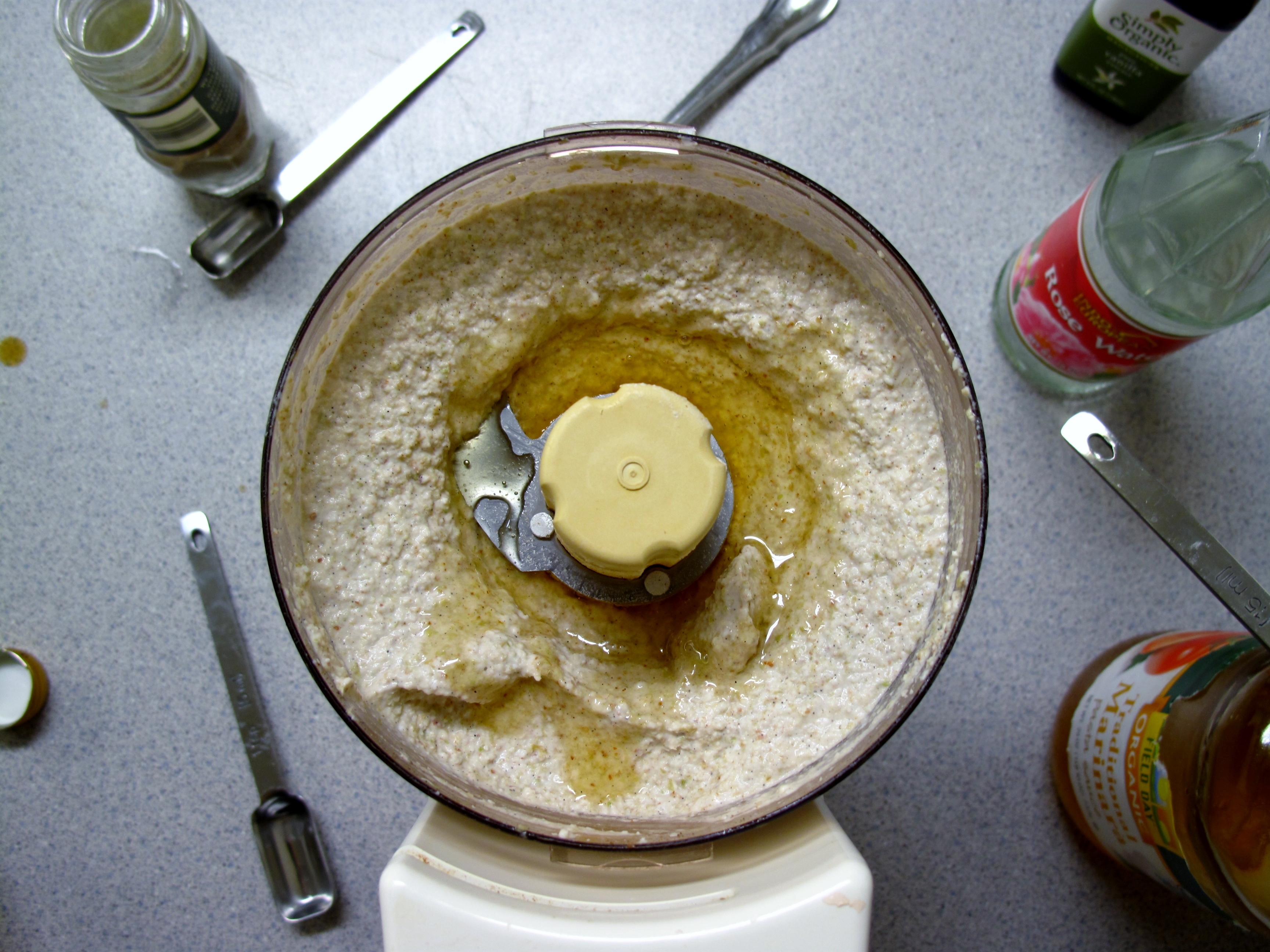
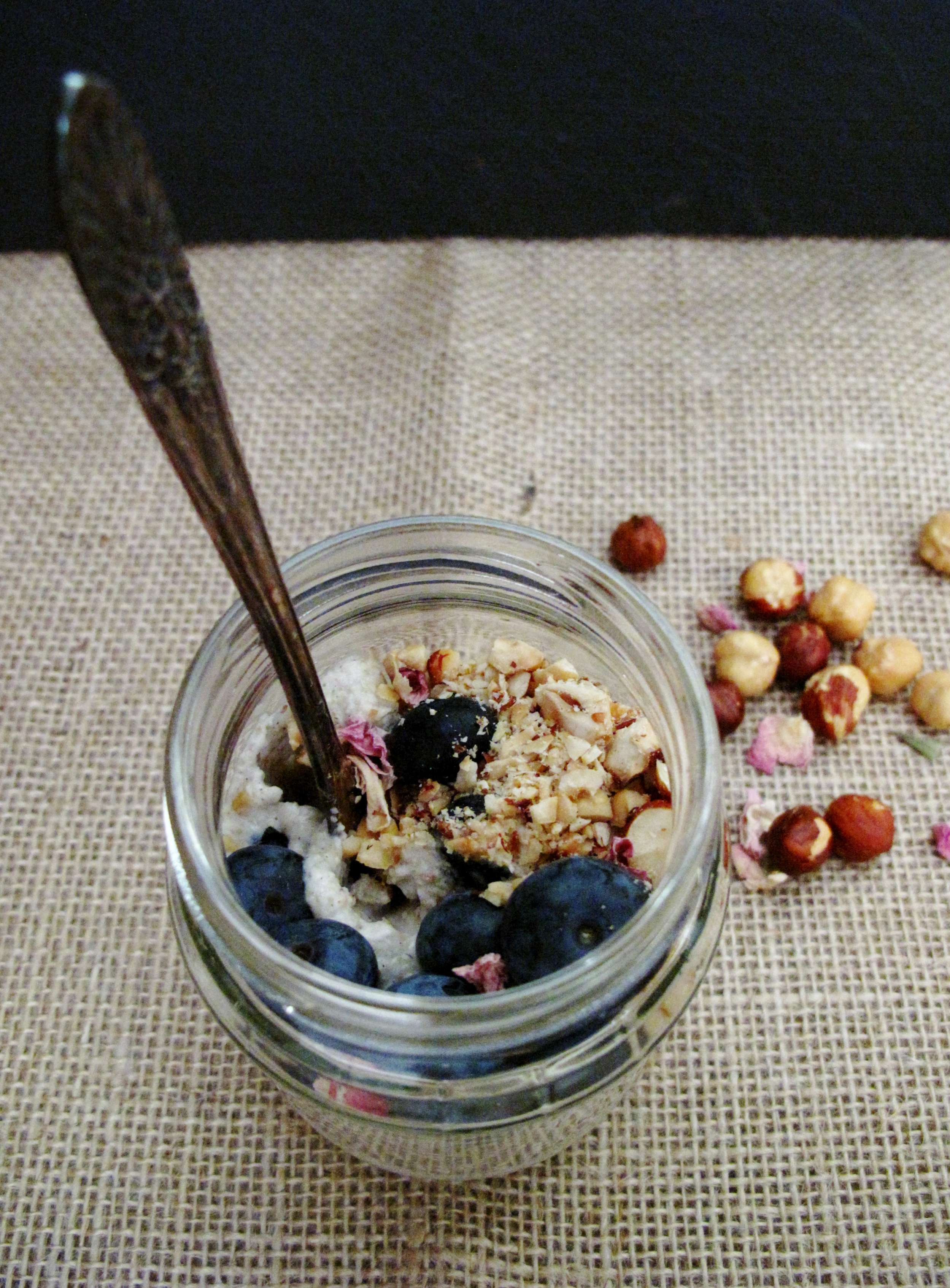
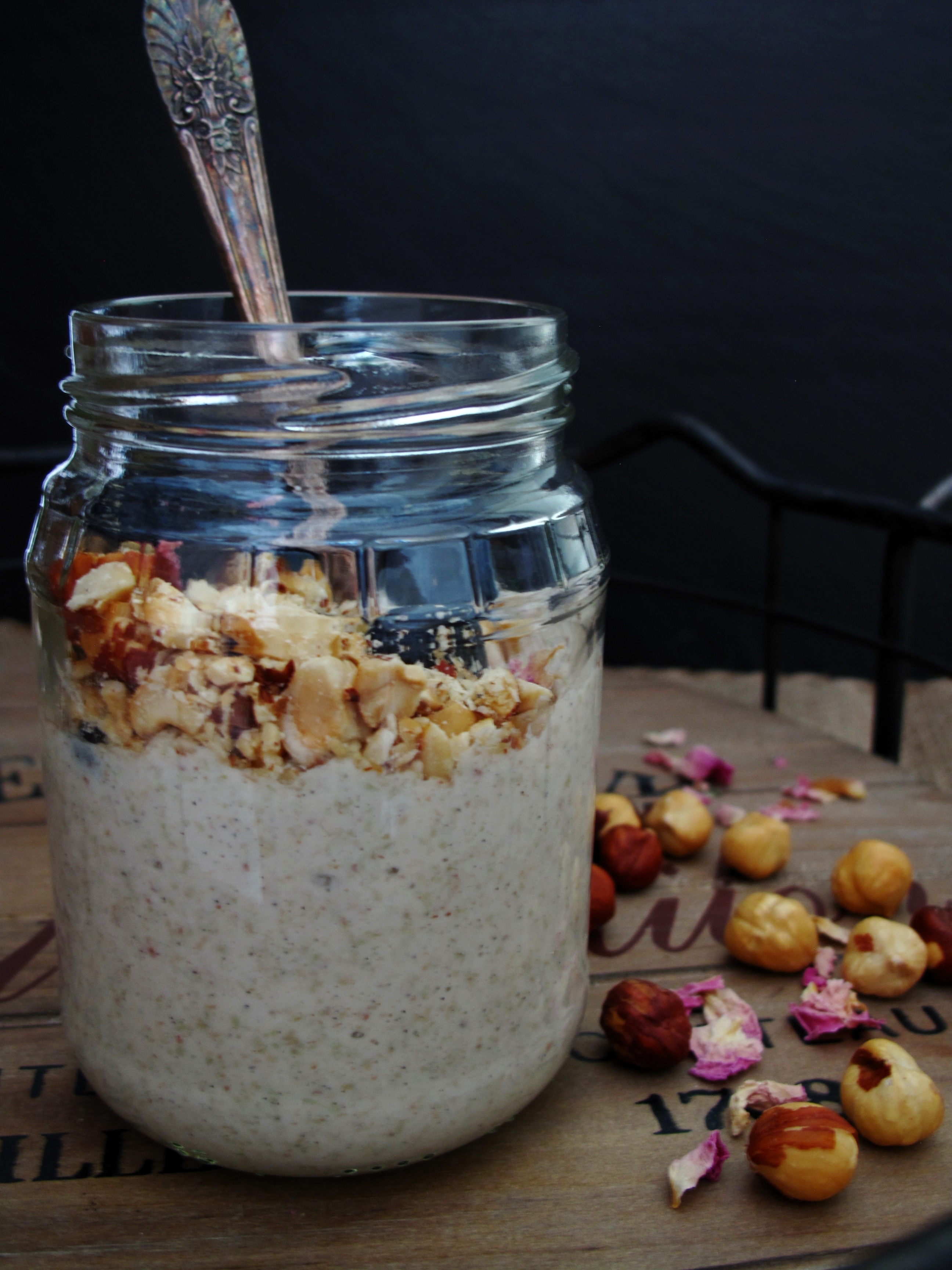
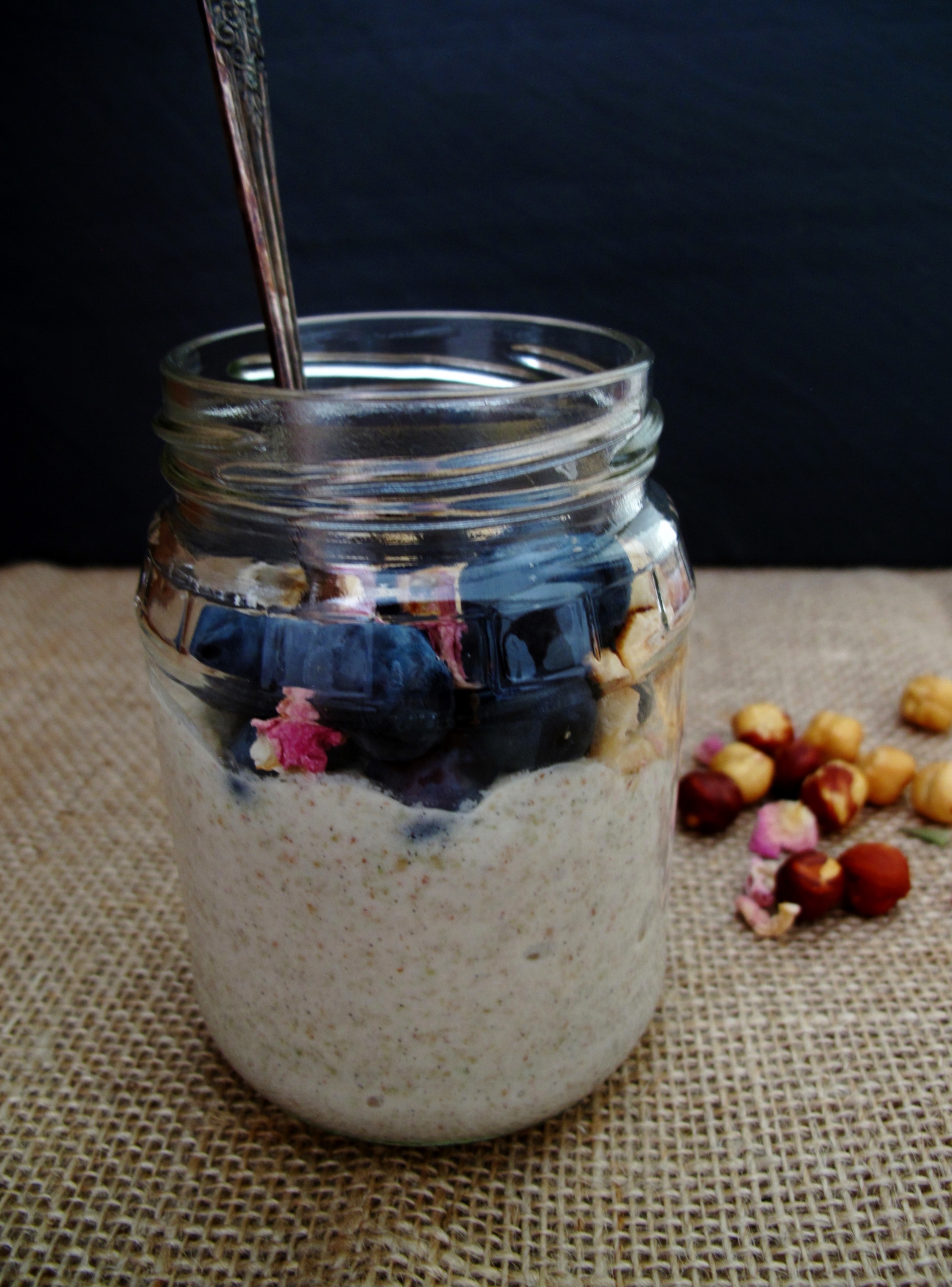
This porridge is raw, Middle-Eastern and June-inspired, and features edible flowers as part of this month’s Recipe Redux theme. There are roses blooming now and the weather has been continuously summer-like. Buckwheat is gluten-free, nutritious, locally grown and processed here (albeit still somewhat seasonally available), and super quick to blitz up on an early summer morning when there is a desire for nutritious, filling, and uncooked.

There are local hazelnuts and honey too, along with rose petals that can be gathered and dried. All together, I’ve gathered the makings of a quick, super delicious breakfast. Top with the berries of the season: Here, we are right at the beginning of blueberries.


IMG_5899


Raw Buckwheat Porridge with Hazelnuts and Rose Water
Serves 2–3
 
3/4 cup raw buckwheat groats, soaked overnight 
1 1/2 tsp. rose water
1/2- 3/4 tsp. ground cardamom
1/2 tsp. pure vanilla extract
2 Tbs. raw honey
1/4 cup toasted hazelnuts, roughly chopped
blueberries, by the handful 
dried rose petals, to taste 
  • Drain soaked buckwheat and pour into a food processor.  Pulse a few times until the grains are starting to break apart.
  • Measure in the rose water, cardamom to taste, vanilla, and honey. Puree until smooth.
  • Pour out into your container of choice and top with hazelnuts, berries, and rose petals. Enjoy!