Better than the Bakery GF/DF Blackberry Muffins

During my senior year of high school, my agricultural science class focused on business and economics principles, and in one unit on our future in the workforce, I did some business planning on starting a cake bakery. I don’t know if we were focusing on entrepreneurship specifically, or if I’ve always had a streak of planning to run my own business, but to my way of thinking, I was owning, managing, baking, selling, etc. The whole dang thing. Never mind that I was in agricultural class, not growing or milling wheat or other grains, or just using an example from the then business I had at the time of raising and selling club lambs. Nope. Instead I did an abrupt turn and planned for baking artistic cakes in my future.
To this day, I often joke that if the pay were better and other things didn’t work out, I’d be baking and handing over the goods to other happy people instead. Oh and starting a porridge and brunch restaurant. Which is where my love for baking muffins comes in. If you go ahead and browse the recipe section, you’ll see I’ve published more than a handful of muffin recipes over the years. Along with cake, muffins are one of my favorite baked foods to experiment with.

When it’s up to me, I often tend to go for the heavily spiced, oat-rich, morning glory-type muffins that are stuffed with ingredients like raisins, shredded zucchini or carrots, mashed pumpkin, or other fruit. But not everyone favors that kind of porridge reincarnation. William, for instance, is a plain vanilla cake / vanilla frosting person, and likewise prefers simple berry muffins without the frills and extra ingredients. Since he’s been stopping by a local bakery before work many mornings for exactly that type of muffin, we settled on me making him some that are a little more wholesome and he can grab and take instead.

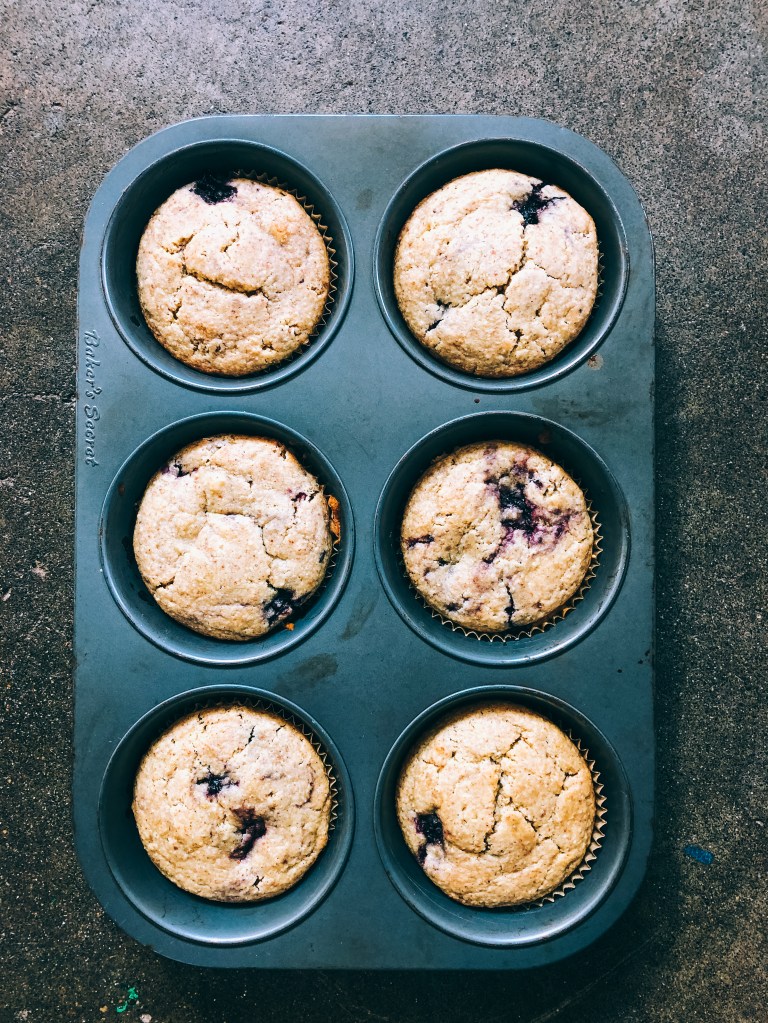
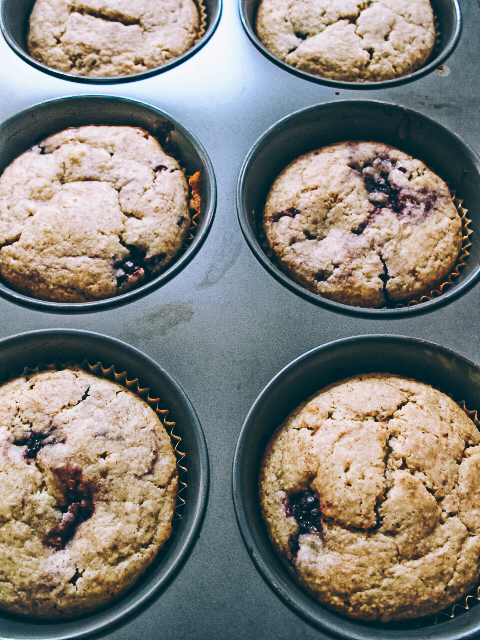
That’s where these come in. These are blackberry muffins made from milling oats, buckwheat, and almonds in my spice / coffee grinder. But they can easily become blueberry or raspberry-flavored instead, and if you have more of the flours than I do, start with oat, buckwheat, and almond flours for one less step. Either way, they’re an early morning treat that stands up to the bakery muffins with more whole foods, and especially whole-grains and reduced sugar. A big win and less of the side effects of refined sugars and flours, etc.
Blackberry Muffins, makes 6

65 grams / ¾ cup gf-certified oatmeal
65 grams / a little less than 1/2 cup raw buckwheat groats
60 grams / ½ cup raw almonds
8 grams / 1 Tbs. arrowroot flour
1 ½ tsp. baking powder
¼ tsp. baking soda
¼ tsp. sea salt
70 grams / 6 Tbs. organic cane sugar
25 grams / 2 Tbs. coconut oil
1 large egg or a vegan alternative (1 Tbs. ground flax mixed with 3 Tbs. water)
½ tsp. grated lemon zest, optional
1 tsp. lemon juice or apple cider vinegar
½ tsp. vanilla extract
170 grams / ¾ cup plain non-dairy yogurt (unsweetened coconut yogurt is best)
150 grams / 1 cup fresh or frozen blackberries

  1. Begin by weighing or measuring out the oats, buckwheat and almonds, and then finely grind them to a flour mixture in a spice / coffee grinder. Alternatively, if you already have light buckwheat flour, oat flour and almond meal, you can skip this step.
  2. Preheat the oven to 375 degrees and prepare a muffin pan by adding the paper liners, or lightly wipe the insides with oil and dust with flour. Set aside.
  3. In a small bowl, mix the flours, baking powder and soda, and salt. Then set it aside.
  4. In a medium bowl, mix the coconut oil and sugar with a spoon until light and fluffy. Then beat in the egg, lemon zest and juice, and vanilla.
  5. Add in about 1/3 of the flour mixture to the sugar and oil and stir. Then add in ¼ cup of yogurt. Stir in another third of flour and another ¼ cup of yogurt, and then add the rest of the flour and the final ¼ cup of yogurt. The batter should be slightly fluffy. Don’t overmix.
  6. Gently stir in the blackberries, and then evenly divide the batter into the six muffins cups.
  7. Bake for 25-30 minutes, or until a toothpick comes out clean. Cool them slightly in the pan, before tipping out and eating
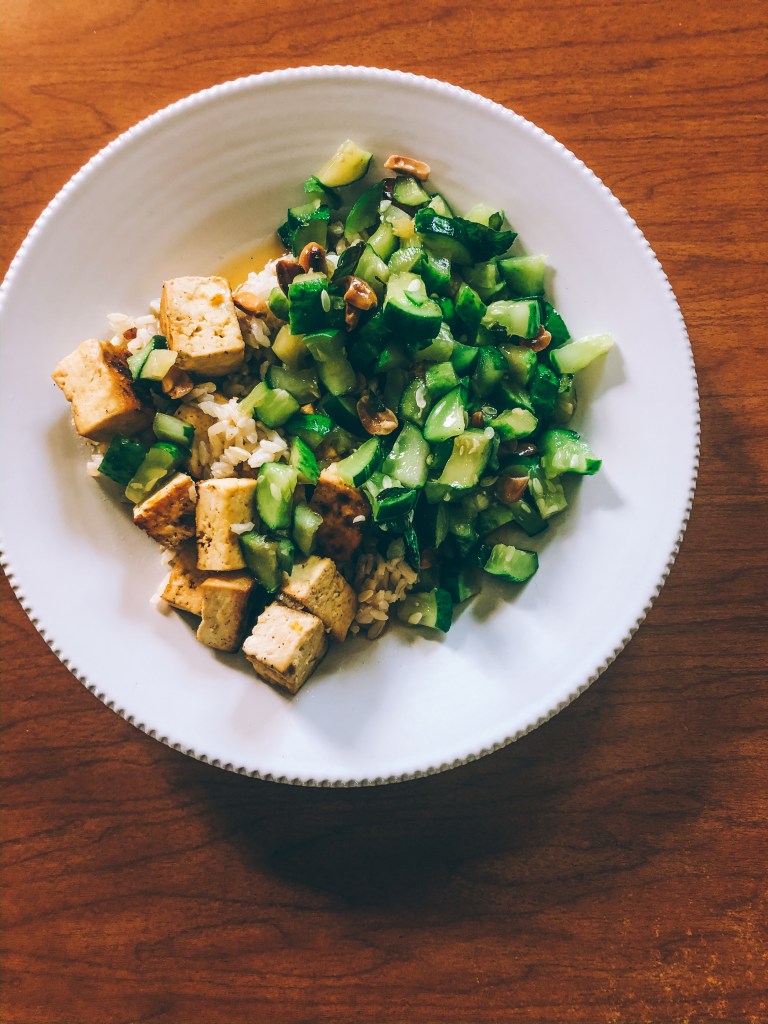
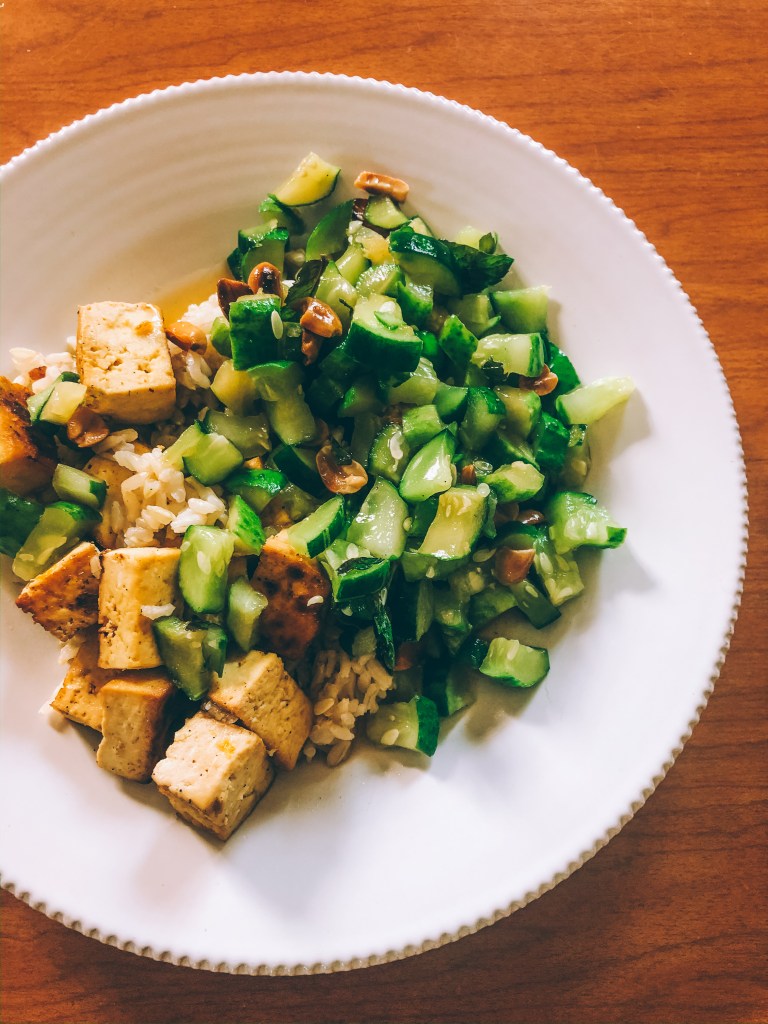
Garlic-Orange Tofu and Peanut Cucumbers with Rice

When I glance out the window this morning, it looks like it’s raining. But I look again and it’s still ash. We’ve been raining ash for the last couple days as the air quality went from clear blue skies over Labor Day weekend to a dramatic sweep of heavy smoke on Monday evening as several fast-moving forest fires have been burning in the cascade mountains and now closer near the edge of town to our east. Our hens have been out foraging as usual but I worry about their little lungs. Our teenage kitten, a truly needed and lovely new addition this summer, has been upset at the eery light the last couple of days.

I’ve been back to morning meditation lately first thing before I get out of bed or turn on the light, and this morning’s had me expressing gratitude for our air purifiers, those ‘noise machines’ that I have routinely tsk-tsked since William insisted on them in the last couple years. And also gratitude for a safe home. The alarm of LEVEL 3–GET OUT NOW evacuation alerts going off on my phone throughout yesterday afternoon for the northeast edge of the city, truly a ways off from us but too close for comfort, brought that gratitude home.

Today at least we got a sunrise, smoky as it was. Yesterday was just a dark red Apocalyptic haze, which is becoming the norm in Western Oregon in the last 36 hours.

We can still smell the smoke inside even with a couple good air purifiers so I’ve been adding turmeric to all my meals, taking or eating extra vitamin C and vitamin E-rich foods (hazelnuts, peanuts, sunflower seeds, leafy greens), and adding tulsi / holy basil, and licorice and marshmallow roots to my tea blend. The first three are taken with the idea of combatting the oxidative stress that comes with particularly toxic wildfire smoke particles. If I had a particularly vitamin-C rich food or herb on hand such as amla fruit powder, camu camu powder, or rose hips, I’d use that instead of just plain supplemental vitamin C. The last two roots of marshmallow and licorice are for soothing irritated internal tissues, such as the lungs and digestive lining. Even though I’m staying inside and out of the terrible air, this stuff is incredibly potent. Turmeric particularly helps my smoke headaches.

—–

While I’ve been meaning to share more about digestive health in this space over the next few days—since this is an area that my previous survey indicated is definitely a need. But first, I think we can all use a really good meal that’s refreshing, comforting, and enjoyable while summer is still here.

I know many individuals avoid tofu because they’re unsure of how to prepare it, or when they’ve tried to in the past the texture is all wrong. I was there for a long time (probably 10 years since I first attempted tofu until I was comfortable cooking / eating it). So I’ve outlined a little more detailed way to prepare it. This is my go-to method and yields the texture we prefer.

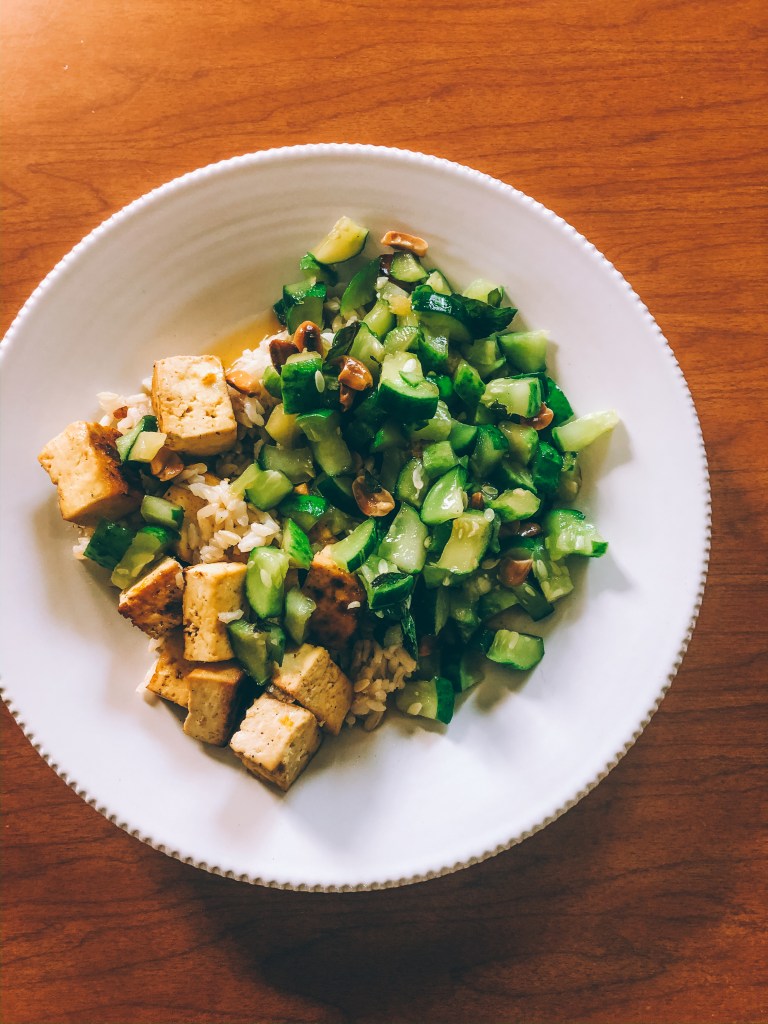
Then the tofu is paired with finely chopped cucumbers tossed and marinated in the same dressing as the tofu is marinated and cooked in, and enjoyed with simple brown rice. The result is a simple concept but the taste is truly rich and incredible. Hope you’re staying safe in whatever way where you are, and if you tend to avoid tofu because you’re unsure how to cook it, give this recipe a try.

Garlic-Orange Tofu and Cucumbers with Rice, serves 4
inspired by Anna Jones in the The Modern Cook’s Year

16 oz. / 453 grams firm tofu, drained

dressing:
3 cloves of garlic, minced
3 Tbs. reduced-sodium tamari
2 Tbs. brown rice vinegar or raw apple cider vinegar
1 Tbs. toasted sesame oil
1 Tbs. honey or maple syrup
a pinch of red pepper flakes
¼ tsp. ground black pepper
¼ tsp. ground coriander
the zest and juice of 1 unwaxed/organic orange

1 cup / 190 grams brown rice
2 cups / 470 ml water
1 ¼ lb. / 600 grams / ~4 cucumbers
a few pinches of salt
¼ cup /35 grams peanuts, toasted
a small handful of fresh basil, minced

  • Slice the block of tofu in half lengthwise, wrap in paper towels like a birthday gift, and then stack the wrapped tofu between two cutting boards. If you have something heavy in your kitchen, put it on top of your cutting board as a weight. (I use my giant Shakespeare textbook). Leave to press out the liquid for about 30 minutes.
  • While the tofu is pressing, whisk together the dressing ingredients.
  • When the 30 minutes is up, unwrap the tofu and slice it into equal size cubes (I get about 48), and combine it with 1/4 to 1/3 cup of the dressing in a container with a leak-proof lid. With the lid on, give it a few shakes to immerse in the dressing and then chill in the fridge for at least 30 minutes and up to a day. More time will allow for more flavor to develop.
  • Once the tofu has marinated, turn it and its dressing onto a parchment-lined baking sheet and bake at 400 degrees F for about 40 minutes, flipping it over halfway through.
  • After the tofu goes in the oven, cook the rice in a medium pot on the stovetop. Add 2 cups of water, 1 cup of brown rice (ideally pre-soaked but simply rinsed and drained if not), and bring the pot to a boil. Once it boils, turn down to a simmer, cover, and cook undisturbed for 40 minutes.
  • While the rice and tofu are cooking away, dice the cucumbers into small (~1-cm) pieces. Place the slices in a colander that’s over a sink or another bowl, and sprinkle and toss through a few pinches of salt. Set aside for 15 to 20 minutes to release some of their liquid.
  • Then take your (clean) hands or a clean kitchen towel and press the cucumbers to remove any extra liquid that may have been released. Put the cucumber in a bowl and add ¼ to 1/3 cup of the remaining dressing. Add more to taste. Scatter over and stir through the toasted peanuts.
  • Once the tofu and rice timers are done, remove them both from the heat and serve with the marinated cucumbers. Sprinkle atop some fresh minced basil leaves if desired.  

Potato + Artichoke Frittata and summer guidance

It seems that time is getting away from me this summer. In the midst of this tough year, I’ve found I’ve needed more of a break from the virtual world these last few weeks. In the midst of doing some checking in with myself, I retook a character strengths test around the time of my last post in late June from the Via Institute on Character. Having last took the same test in early grad school, I found that most of my top character strengths are truly mine and have hardly changed, but having moved into my own nutrition clinical work, some of the strengths that were lower as a student have truly risen to the top. The results highlight how much we become what we practice. From that assessment, my top character strength is spirituality, as it has nearly always been. What the institute means by the Spirituality character strength is:

Having coherent beliefs about the higher purpose and meaning of the universe; knowing where one fits within the larger scheme; having beliefs about the meaning of life that shape conduct and provide comfort.

All of which has guided the majority of what I’ve written here this year and for the last several.

But the too-much-online-all-the-time and never-ending negative news cycle has gotten in the way of that a bit this spring and early summer. My internal guidance has gotten harder to hear and less obvious. On the daily, I have often felt torn between too many demands and not enough complete alone time. And so, in early July, I took a time out. I took a week off completely, from my public health job, from nutrition clients, from running, and from all technology. If I’m honest, what I hoped to gain from it was a flash-bang inspiration and guidance, if only for a moment, to make me feel better about all of this we’re living through.

But I didn’t get it.
It’s often said that God speaks in the whispers of the heart. That his guidance for us dwells in the silent spaces.

One of the things I’m coming to over the last few months is directly on this topic. When I work with individuals with nutrition, I provide guidance and of course my opinion, but I see each encounter with each client as a true collaboration; because as much as I have the professional training and knowledge of nutrition and its impact on physiology, we are each experts on our bodies, or should be. And I think each of us has the intuitive feels right for me knowledge about our bodies hidden underneath the clutter of all our everyday stimulation and egotistical desires.

This year, so many of us have been going through hard things, personally, professionally, with health, and more. It’s been my intention to start writing and sharing more here on the everyday aspects of that that are applicable. Frustratingly, that everyday application has only come easily when working individually with each person. Instead of resisting against this frustration, or forcing something that I’m finding difficult, the right answer for me today is to follow the strings and share here what comes with more ease. All that’s to say, I’m practicing having more grace with myself. And hope you can do the same with you.

And also,
If you are struggling with your relationship to your body this year, or finally beginning to address it, I hear you.
and If you are struggling with your digestion and/or are in the midst of a long frustrating battle with it, I hear you.
and If you are overwhelmed and/or losing hope with this pandemic and lack of true normal or return to it in the foreseeable future, I hear you.

Perhaps I’ll soon begin to provide more concrete words on those topics soon, like I have been meaning to. In the meantime, I’m leaning in to feeding myself and William wholesome meals lately, like this potato and artichoke frittata, and trying to keep the quiet spaces open to allow in the guidance I prefer.
Hope you are taking care.

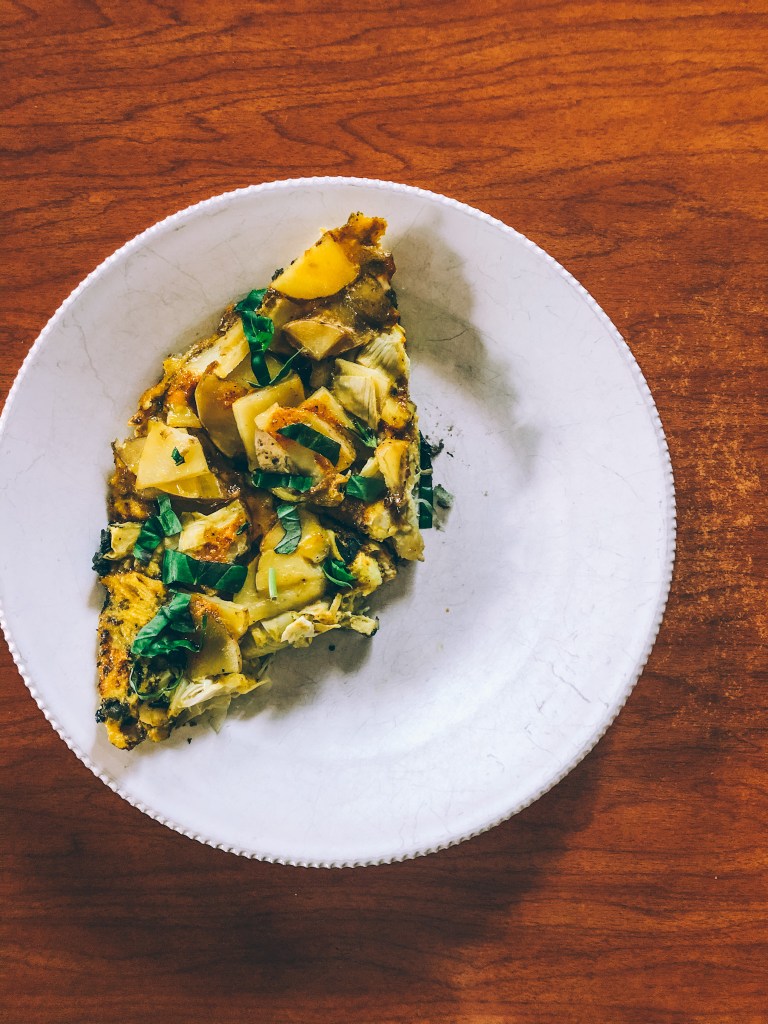
Potato + Artichoke Frittata, serves ~3
I’ve never been much of a potato person, except the year-ish I lived in Ireland, but William insisted on growing potatoes this year. He chose a variety from Row 7, a seed company founded by chef Dan Barber, whose intent is to work with farmers who are developing vegetable varieties with flavor in mind, a notion that realistically is not done when it comes to developing commercial / commodity foods. It’s clear to me now that good potatoes make all the difference. If you can, I encourage you to buy locally from a farmer near you. I promise, they will taste infinitely better than anything in a standard supermarket.

300 gr. / 2-3 medium potatoes, unpeeled, medium-diced.
a dab of coconut oil or ghee, to cook
6 large eggs, whisked
a dash of black pepper and 1/4 tsp. salt
200 gr. / 1/2 a can of artichoke hearts, drained, rinsed, chopped
1 tsp. olive oil
1/4 tsp. turmeric
1/4 cup fresh basil, finely minced

  • Over medium-high heat, warm a little coconut oil or ghee in a medium-large heavy skillet that is oven-safe. Stir in the potatoes and sprinkle with a bit of salt. Cover and cook until they are tender, stirring occasionally, about 8-10 minutes.
  • Whisk the eggs along with the remaining salt and black pepper. Turn down to medium-low heat and pour the eggs into the skillet with the potatoes, along with the chopped artichokes.
  • Cook for a few minutes, until the eggs are just set and there isn’t a lot of liquid running around the pan on the top. To help with this, you can run a spatula underneath the sides of the frittata, and tilt the pan so the uncooked eggs run ot the underside.
  • Remove from the heat and place in the oven under the broiler for a couple minutes, until the top has puffed up and set. If your broiler has two settings, choose the low setting.
  • Remove from the broiler and let it sit for a minute or two. In the meantime whisk together the remaining olive oil and turmeric. Drizzle the turmeric mixture over the top, and sprinkle with fresh minced basil.
  • Serve warm or at room temperature with fresh greens or other meal accompaniments.


Are you in need of extra nutritional support?
If so, I invite you to reach out to me for more personalized support. Conditions I often work with include digestive health and food intolerances, meeting needs of endurance athletes, vegan/vegetarian diets, intuitive eating, and autoimmune disorders.