Honey-Amaranth Waffles with Spiced Pears

IMG_9255

I woke up at 4:30 again this morning with a head full of words needing to come out. I proceeded to write solidly for over two hours before walking away, thinking all I had written needed to be shared.

Given the heaviness of what I’ve already shared in this space these last few days, weeks, and months, and the miraculous way that my lightness of being directly correlates with letting heavy thoughts go, those words may make their way into this space yet.

For now, I’d like to just settle my mind down and get cozy with high-vibe breakfast things, like waffles. And then, try to take a nap.

The Recipe Redux this month is all about breaking out of breakfast boredom and these waffles are one of the ways I’ve been doing that lately. Like a lot of people, I go through phases with breakfast meals, and the current one, hot porridge, has been going steady for four+ years.

But for the last month I’ve been revisiting my favorite waffles most Monday mornings. I generally have nothing planned for Mondays except to fill my brain with scientific literature and APA formatting for eight solid hours, as I’ve got the day off from work and it’s full of school instead. I’ve found that eating these is a great way to start the week.

The recipe for these waffles was a work in progress for about a year and a half after gluten and dairy were removed from my diet, and though I made a lot of different flavor combinations throughout my year teaching (comfort food after a stressful day, I suppose), these are the ones that became my go-to once that phase ended. I like them because the amaranth flour lends an earthy flavor, they’re almost entirely whole-grain, and they have just enough sweetness to need no extra sugar poured on top. All of this is my sort of thing because half the time waffles are more of a dinner item and I don’t like the idea of sugar and starch for my evening meal. I also can’t handle sugar for breakfast, so there’s that as well.

IMG_9245

If you haven’t tried amaranth before, it is technically a tiny-seed pseudograin, like quinoa. In fact, the two are related botanically and share many characteristics. Historically, amaranth was very important to the ancient Aztecs. Nutritionally, it is one of the highest-quality grains to add to your diet and is especially useful for individuals who do a lot of physical work, athletes, infants, children, and pregnant and nursing women. I like it because it is a good source of calcium and an excellent source of iron, and has more protein than most other grains. Even though its nutritional effects are minimal in these waffles, adding more amaranth to meals cannot hurt. Flavor-wise, I find that amaranth goes particularly well with autumn and winter fruits, like pears, and I prefer that combination over anything savory I’ve tried.

This recipe is inspired by Kim Boyce’s Honey-Amaranth Waffles in Good to the Grain, but is now so far removed that I can’t say they’re anything like her original. If you have no reason to avoid gluten, use whole-wheat pastry flour in place of the gluten-free, and if using your own gluten-free flour mixture, keep in mind that mine is 70 percent whole-grain by weight and has 10 percent buckwheat flour, which is another stronger flavor.

How do you break up the breakfast boredom?

IMG_9230

Honey-Amaranth Waffles with Spiced Pears, makes 3
Recipe Updated: 10/25/22

3 Tbs. ground flax, separated
3 Tbs. warm water
1 cup non-dairy milk
1 tsp. apple cider vinegar
2 Tbs. amaranth flour
1 cup all-purpose gluten-free flour
1 tsp. baking powder
1/2 tsp. baking soda
a pinch of salt
1 1/2 Tbs. honey
1 Tbs. (untoasted) sesame oil, melted + additional for the waffle iron

To Finish:
1 pear, chopped into a large dice
1/4 cup water
1/8 tsp. ground ginger
1/16 tsp. each cinnamon, nutmeg, cardamom and black pepper
pinch of ground cloves
unsweetened non-dairy yogurt, optional
pomegranate molasses, if you’d like an extra fancy drizzle of sweetness atop

Directions:

  1. Turn the waffle iron to a medium-high setting. In a small dish, whisk 1 Tbs. ground flax with the 3 Tbs. water. Set aside to form a thick slurry. In a liquid measuring cup, stir the milk together with the vinegar, and allow to curdle slightly.
  2. In a large bowl, stir the remaining dry ingredients together.
  3. Combine the oil and honey, and then add them to the milk along with the flax slurry. Whisk the liquids briefly to make sure they’re uniform, and then pour them atop the dry ingredients.
  4. Stir the batter lightly. Depending on the day and air moisture, a little extra liquid may need to be added.
  5. Brush the waffle iron with a small amount of additional sesame oil, and then ladle 3/4 cup of batter onto the iron. Cook until the indicator light tells you it’s done, or a quick peek shows a golden-brown color.
  6. Remove from the iron, and plate up, along with a spoonful or two of yogurt and a pile of spiced pears.
  7. For the pears: In a small saucepan over medium-high heat, combine the diced pears, water, and spices. Once they begin to really cook, turn down the heat to a low simmer, cover, and cook until they are soft and beginning to be a little syrupy. This can all happen while waiting for those waffles to cook.

References:

Boyce, B. (2010). Good to the Grain: Baking with Whole-Grain Flours. New York, NY: Stewart, Tabori & Chang.

Pitchford, P. (2002). Healing with Whole Foods: Asian Traditions and Modern Nutrition. Berkeley, CA: North Atlantic Books.
and Flying

and Flying

IMG_9132


I’ve finally accepted I don’t handle big, celebratory life events like most people. So I wasn’t jumping up and down excited the day we got the keys to our new house. Actually, I was wishing it would go away, the moving, the moving-on from the town that is home and the many special places there that I consider mine. My high school students asked my age the other day, and when we started talking about it, I shared how I won’t consider myself “grown up” until I reach 30. They laughed at me but were also surprised because as teenagers eager for freedom, they think becoming grown up happens at the exact turn of the clock to 18.  Moving on from Corvallis means much to me for so many reasons, but at the bottom of it, it is the place where I’ve done all my formative growing up, where I belong to and am invested in the community, where my work is, and many individuals have shaped my life perspective.

William’s grandma accused me of not being very happy about the new house over the Christmas holiday. I explained it away with, I’ve only been in it once so it’s a little difficult to love yet, but I was well aware my lack of enthusiasm went deeper. Since then, many people have asked me if I love it and I can tell by their tone of voice that my honest response will burst all their happy-for-us excitement. Ultimately, loving a place (or person) comes from deeply knowing it, and this little space and I are only just getting acquainted. So no, I do not love it yet. But knowing we were eventually moving, I prayed about it for a long time. Finally, just a few days before William brought up the idea of purchasing instead of renting, I felt the peace with relocating that I had been asking for. Later, a couple days before we got the keys, I felt very strongly that there is work for me to be done in this new place, that He is calling us to Eugene for a reason, that it is okay to have little clarity right now.


A week and a half in to being a Eugene resident, I told William, I’ve skipped straight to the angry stage of culture shock with this town. I prefer a community a little smaller, a little less busy at 5:57 am, a little friendlier to my idea of getting across town, a few less barking dogs in our neighborhood, and many more cats(!). I was complaining, irritated, and aware of it. In other words, I was adjusting.

I have still to figure out which will be “my” grocery store, where I will enjoy running on a regular basis, how to take all the quiet(er) little shortcuts to where I am going. And I’ll have to meet and make some new local friends.

Corvallis taught me these things take time. But even though I’ve felt a little upended this last month since moving, I’m diving in to learning this community in the ways I tend to, with running and with food:


IMG_3697


A couple weeks into the relocation, I was out running out at the edge of Alton Baker Park, near where the river gets a little wild and Eugene becomes Springfield. I remembered being on my pony, Angel, back at the ranch, about a mile from the house, on the road between the creek and the calving shed. I was around nine years old.

I remember leaning forward over Angel’s neck, letting the reins out, the hairs of her long mane tangling into mine, and feeling her fly, as fast as her legs could carry her. And I remembered that wild, heady freedom that a nine-year-old feels, completely absorbed in that moment, no fear, no coulds, shoulds, if-thens, but just there, all there in that rush, that moment, going as fast as we could go.

I relived that memory a moment and then I turned to run back towards home and my car, and my nine-year-old self and Angel faded behind me.


Back at that exact same spot a couple weeks later, the memory came back, just the same as before, unexpectedly, as if waiting for me. And then I connected the dots. So that’s why I’ve been running all these years, I thought. That’s why I love running fast especially. Perhaps I’ve been searching for that part of me I experienced with Angel all those years ago, that wild, carefree little girl who wasn’t afraid to go all out and live.


And then I smiled. This little city and I will get along just fine, I thought. There will undoubtedly be some growing pains, and I do miss the comforts of home in Corvallis, but I can tell there will be good things for me here.


So when friends ask, do I love the new house? my answer will likely continue to be hesitant. I don’t know that I will ever love the house, as I’ve never grown too attached to a building before. But I do get especially attached to places. And I’d like to tell them, in time, that I absolutely love this new place.


IMG_9106


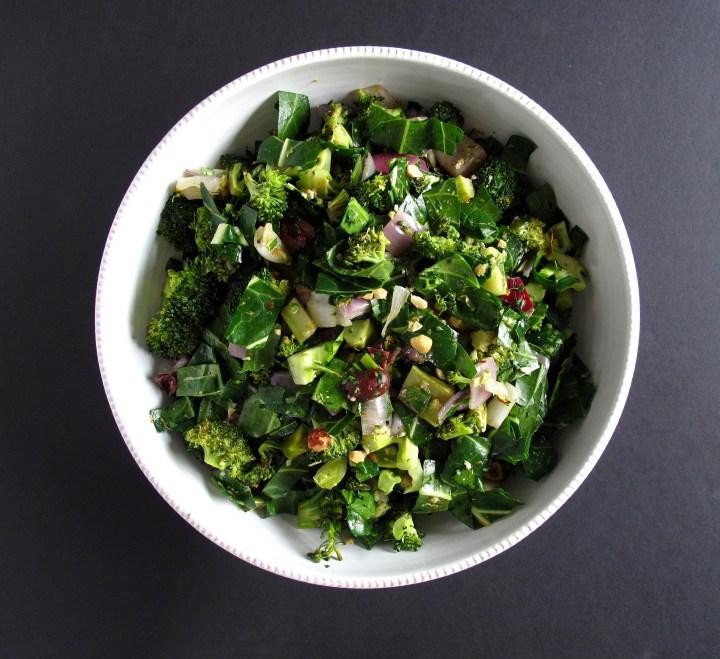
Broccoli, Collards + Kalamata Salad, serves 4-6

inspired by Sara’s Emerald Salad

William is on a broccoli kick lately. He asks for broccoli in everything. I had no idea he is partial to this vegetable until now, but glad I am because our school-garden-broccoli was such a success last year and I’m now planning on upping my broccoli-growing game in our new home garden this spring. Planning has already begun!

2 lbs. broccoli

1 large red onion

3 Tbs. extra-virgin olive oil, divided

zest of 1 orange

3 cloves garlic, minced

1 tsp. salt

1 tsp. ground black pepper

3-5 cups collard greens (or other winter greens), thinly sliced

red pepper flakes

3 Tbs. orange juice

1 small handful flat-leaf parsley

¼ cup kalamata olives, sliced

¼ cup toasted hazelnuts, chopped


– Preheat the oven to 425 degrees F.

– Chop the broccoli into 2-inch pieces; include the stems but discard the large, tough ends. Roughly chop the onion into large pieces. On a large bar pan lined with parchment paper, mix the broccoli pieces, onions, 2 Tbs. olive oil, orange zest, garlic, salt, and pepper. Once all the vegetables are nicely coated, roast in the oven for about 20 minutes, until the broccoli is starting to brown on top. Rotate the pan or stir halfway through.

– While the vegetables are roasting, remove the tough center stem and thinly slice the collards. Put them in a large mixing bowl. When the vegetables are roasted, pour them atop the collards to soften slightly and give the mix a good stir. Add the orange juice, pepper flakes, remaining tablespoon, if necessary, and toss with olives, parsley, and hazelnuts.

– Serve warm or chilled.

Pumpkin, Sage + Rosemary Baked Risotto

IMG_8967


I’m taking a class right now called Redefining Nutrition. One of its texts is Marc David’s Nourishing Wisdom, and I recommend it to just about everyone. Essentially, it backs up a lot of what I already know about food and diets, that there is no one diet for everyone, that we are all especially unique when it comes to food and food preferences, and that our bodies are always changing, and our diets should naturally change with them to reflect the seasons and our changing needs.


I recently read too, Gena Hamshaw’s wonderful article, about tuning out the noise around new year’s diets, cleanses, and body-resolutions. It was written specifically for those in recovery from eating disorders and it resonated strongly with me as Gena brought to attention the extemely competitive nature of food and fitness-regimes. Essentially, Gena suggests the often difficult task of tuning out all the hype and just, “you do you.”


IMG_8909


Taking into consideration both readings, I sit ill with encouraging you to “go eat this recipe” that I share, because that’s not me. And perhaps it is not the recipe you need right now if you are doing you. I only share recipes here that are essentially what I am eating in this season, for me. William, who generally raves about my cooking, doesn’t always agree with me that he needs to eat another grain and bean bowl, and sometimes, he tells me, he just needs pizza instead of greens.


IMG_8960


Specifically, a little more about me: I am cold all winter. I cart my heating pad wherever I go and blast the car-heater for a whole hour on my drive home. I have to warm up my fingers and toes after only short snippets outside and I tell friends I no longer snowboard because it cost too much and is too long of a drive and I hurt my knee on ice that last time and never got over the fear of doing so again, but actually I don’t snowboard anymore because I spent half the day on the lift freezing and I’m actually more afraid of spending hours being cold. So when the new year rolls around, I don’t do smoothies or cold salads. I rarely drink a cold beverage between the months of October and April. I’m not into cleanse diets or “clean-eating”. Mostly, I want to eat comforting, nourishing, warming things that just happen to be good for me, in the way that good food or good company fills you up and doesn’t seem to have any caloric value or nutritional plan attached to it or necessary for its consumption.  This is me tuning out the noise and eating for me. I encourage you to get quiet enough to find out what you need and if you want to make a diet, exercise, or other wellness resolution this year, go for it. But make it one that is true to you.


IMG_8963


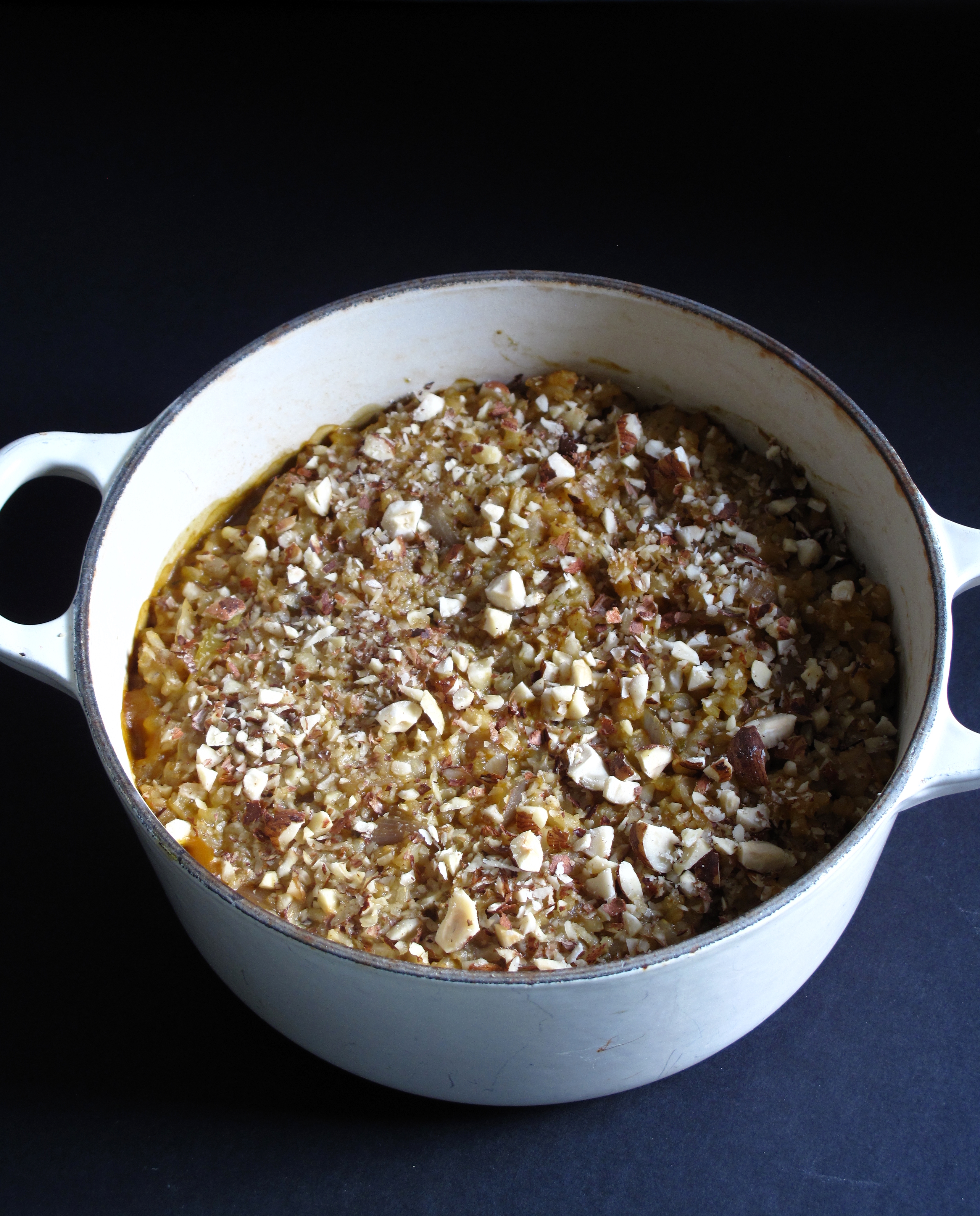
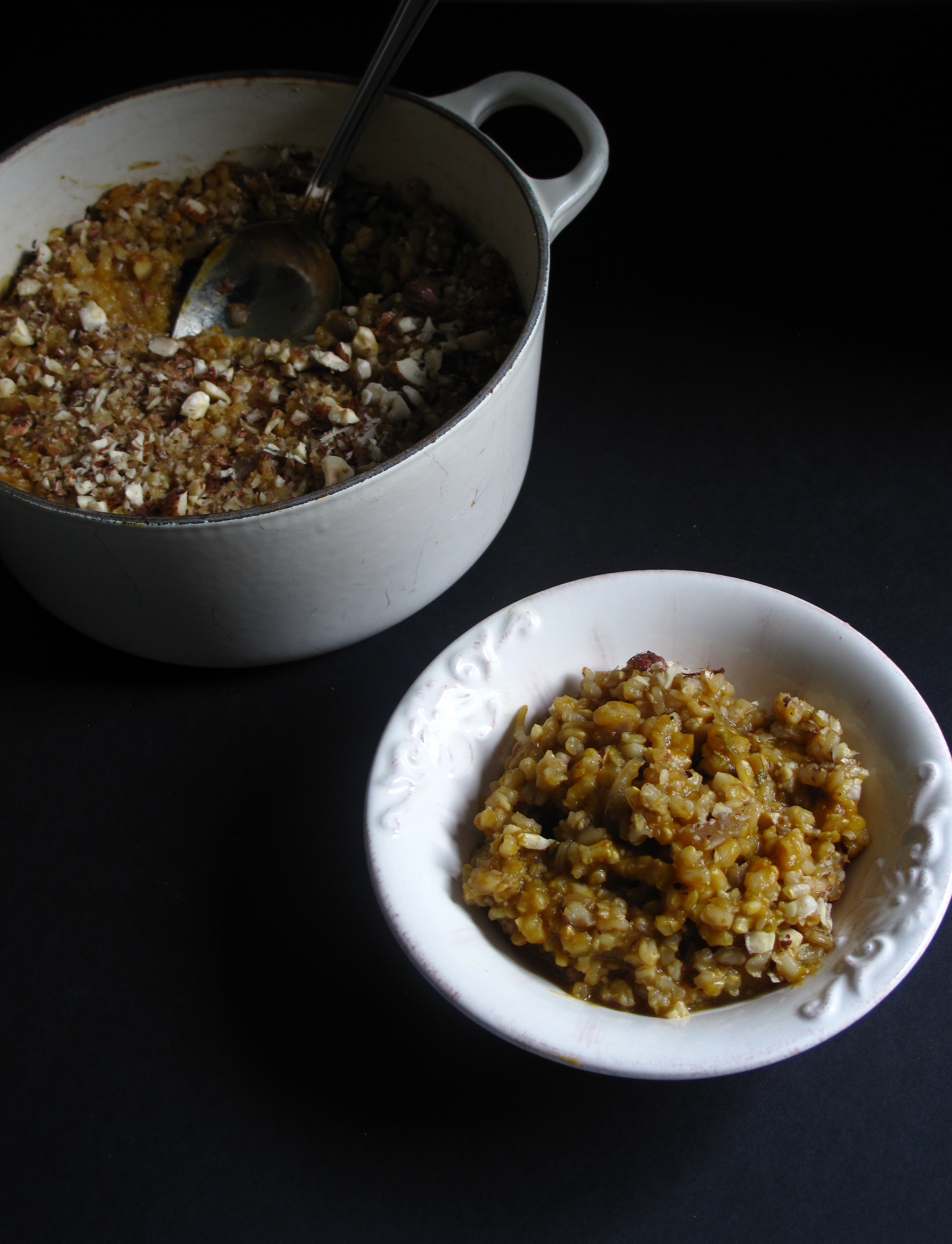
So as is my usual, I’m eating warm and wintery vegetables this January and this creamy, dreamy pumpkin risotto is one I know I’ll be making for years to come during the winter season. I first began making it way back in November and shared it at Thanksgiving with the fam. While I love all risotto, this one uses short grain brown rice, which gives it that creamy risotto texture which usually only comes with arborio or other traditional risotto rice varieties. It features caramelized onions, sage and rosemary, pumpkin puree, a hint of sweetness with a spoonful of maple syrup, and is rounded out with Progresso’s rich and savory vegetable stock. Now available in grocery stores nationwide in the soup aisle, Progresso has officially launched a new line of premium Cooking Stocks, made by simmering real bones, vegetables and herbs to create a flavor that’s close to homemade. I’ve made my own vegetable stock and I can honestly say Progresso’s tastes quite similar to my own version. Since this risotto itself is already more of a weekend endeavor, I like the shortcut of purchasing a nice cooking stock rather than making my own or using water only.


IMG_8973


Pumpkin, Sage + Rosemary Baked Risotto, serves 4

1/2 Tbs. coconut or olive oil

1/2 large red onion, thinly sliced

1 cup short grain brown rice

1 cup pumpkin puree

2 Tbs. cashew cream (see note)

1 Tbs. maple syrup

3/4 tsp. salt

3-4 sprigs fresh rosemary, destemmed and leaves finely diced

1/2 Tbs. finely diced fresh sage

pinch of ground black pepper

3 cups Progresso Vegetable Stock

2 Tbs. toasted and chopped hazelnuts

  1. To caramelize the onion: warm the oil in a large skillet over medium heat. Add the onion, stirring to coat. Decrease the heat to low and let the onion cook until dark golden brown, about 25 minutes. Stir as little as possible, but enough to keep the onion from sticking to the pan or burning.
  2. While the onion is caramelizing, parboil the rice by bringing a pot of water to a boil. Stir in the rice, decrease the heat to medium, and cook until the rice is half tender and slightly enlarged, about 12-15 minutes. Drain it and set aside.
  3. Preheat the oven to 375 degrees F and lightly oil a 9×9 inch baking dish or 2-quart dutch oven.
  4. In a large bowl, stir together the pumpkin puree, cashew cream, maple syrup, salt, pepper, and herbs. Fold in the onions once they are caramelized and the rice. Scoop the mixture into the baking dish and spread it out so the top is nicely level.
  5. In a saucepan, over medium-high, bring the vegetable stock to just below boiling. Put the baking dish in the oven, and then slowly and carefully pour the hot vegetable broth over the top.
  6. Bake, uncovered, for 40-50 minutes. The risotto will still be a little loose and have a layer of liquid still on top. It will continue to soak up liquid as it cools.
  7. Remove from the oven and top with chopped hazelnuts. Let cool for 15 minutes before serving.


Note: To make cashew cream, soak 1/4 cup raw cashews in water for at least an hour. Drain and add to a high-speed blender or food processor. Add 2-4 Tbs. water and puree until completely smooth. You now have your cream for this recipe and a little extra for another time. The extra freezes well.

As part of The Recipe Redux Progresso Comfort Food Flavor Boost Challenge, I received free samples of Progresso Cooking Stock mentioned in this post at no cost. By posting this recipe I am entering a recipe contest sponsored by Progresso Cooking Stock and am eligible to win prizes associated with the contest. I was not compensated for my time.