a primer on cooking with fats and oils + quick-sautéed greens

IMG_2332

One of my goals for this space this year is to share a nutrition tip each month which can guide us towards preparing and enjoying better meals. I’ve been sitting on this first topic for the better part of the last year, and it’s one that has been increasingly on my mind.

Let’s talk about cooking with different types of fats and oils.

For quite some time, I’ve tended to use olive or coconut oil for a lot of recipes. Up until a few years ago, I almost exclusively used extra virgin olive oil for all purposes outside baking sweets, at all temperatures. While I was familiar with the term “smoke point,” I never thought much of it, because I never saw smoke. What I didn’t realize was that I was wrong.

While there are many different kinds of fats and oils, some are more delicate than others, meaning their beneficial compounds break down or oxidize easily, creating harmful chemicals in the process. Those chemicals damage cells, promote widespread internal (and invisible) inflammation, and lead to a vast number of health concerns now considered common such as cardiovascular disease and cancer.

The three factors that cause fats and oils to oxidize and create harmful chemicals include exposure to heat, light, and oxygen, and the more unsaturated a fat is, and thus a lower smoke point, the more easily one of these factors will cause it to become highly inflammatory to our system.

My longtime go-to, extra virgin olive oil, is similar to most vegetable/plant oils, and is not particularly stable at temperatures above 320 degrees F (its smoke point). This means it is not suitable for stir-frying, sautéing, baking or roasting, or other high-heat cooking methods. What’s more, unsaturated oils such as corn, soybean, sunflower, and others which we’ve heard can stand up to high heat have instead been found to break down extremely easily at high temperature. In research, these were found to be some of the worst types of oil to cook with.

IMG_2318

So the question remains: what type of fat or oil can you use (safely) for high temperature cooking, such as roasting, baking, sautéing, and stir-frying?

Essentially, I no longer recommend cooking much above 350 degrees using any type of fat or oil unless it’s a special occasion. But when those high-heat-necessary meals are prepared, using fats that are more stable (and thus more saturated), hold up the best. This means coconut oil, butter and ghee (if you’re not sensitive to or actively avoiding dairy) are best. The other option is to choose a lesser quality (non virgin) olive, sesame oil, and possibly small amounts of non-gmo canola oil for baking. These oils are rich in monounsaturated fats, which tend to be slightly more stable at temperatures up to 350 degrees. And because they’re less refined and ideally cold-pressed, that fatty acid oxidation won’t be happening as much during the processing/pressing, since we’re aiming to avoid oxidized and rancid oils, especially before they even makes it home to cook with!

This also leaves the really-good-for-you extra virgin olive oil, as well as omega-3 rich flax and walnut, for drizzling on dishes after they’re off the heat. And if you really want to get right down to it, using less oil of all types and more fat-rich whole foods (like nuts, seeds, olives, and avocados) can never be a bad way to go.

IMG_2335

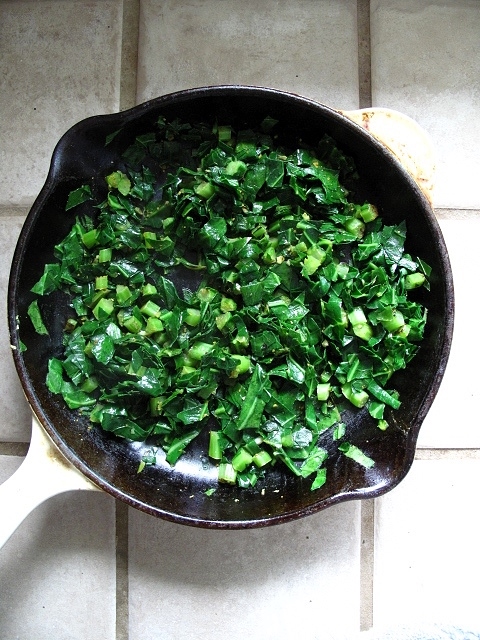
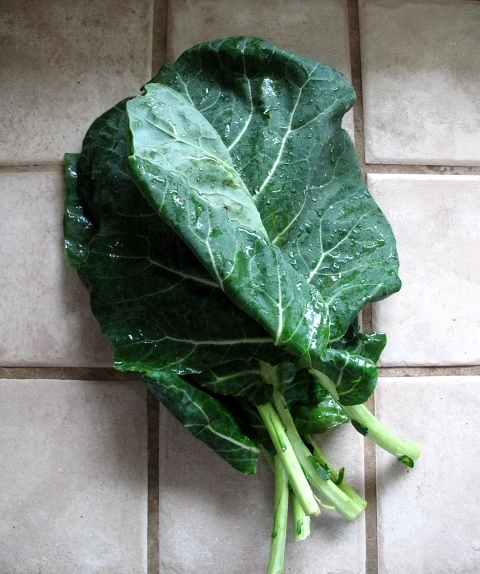
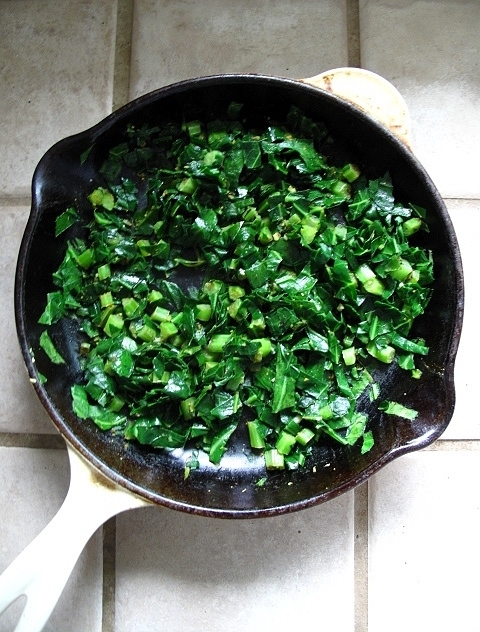
Quick Sautéed Greens, serves 1-2
Early in the new year might be the time when some of us are actively adding more greens to our routines, but a cold kale or green salad is often not the best when it’s cold outside and we’re bundled in layers. This is my favorite way to eat greens in the winter. The cooking process takes but a minute and the result is garlic-y, lightly spiced, and delectable. They’re a great addition to almost any meal. 

1 tsp. unrefined coconut oil
1 large clove garlic, smashed and minced
1 bunch winter greens (Collards, Kale, Swiss chard, etc.), stems chopped, leaves sliced
1 tsp. grounding masala, optional
salt and pepper to taste

  • In a medium sauté pan, heat the oil over medium-high. Add stems from the greens and allow to cook until beginning to soften.
  • Then add in the garlic, sliced leaves, and masala and heat just until the leaves begin to wilt. Remove from heat and add salt and pepper to taste.

RESOURCES:
Malhotra, A. (2016). The toxic truth about vegetable oil: Cooking with ‘healthy’ fats increases the risk of disease, type 2 diabetes and cancer. Retrieved from http://www.dailymail.co.uk/health/article-3574810/The-toxic-truth-vegetable-oil-Cooking-healthy-fats-increases-risk-heart-disease-type-2-diabetes-cancer.html?utm_sq=fjjqojxgyn.

Peng, C.Y., Lan, C.H., Lin, P.C., and Kuo, Y.C. (2017). Effects of cooking method, cooking oil, and food type on aldehyde emissions in cooking oil fumes. Journal of Hazardous Materials, 324(Pt B), 160-167. doi: 10.1016/j.jhazmat.2016.10.045.

Pitchford, P. (2002). Healing with Whole Foods: Asian Traditions and Modern Nutrition (3rd ed.). Berkeley, CA: North Atlantic Books.

Uribarri, J., Woodruff, S., Goodman, S., Cai, W., Chen, X.,…and Vlassara, H. (2010). Advanced glycation end products in food and a practical guide to their reduction in the diet. Journal of the American Dietetic Association, 110(6), 911-16.e12. doi: 10.1016/j.jada.2010.03.018.

Christmas Spice Porridge

IMG_2184


William and I ventured out to a tree farm last weekend and cut down our first-ever Christmas tree. We then spent the day readying the house for the holidays, putting up lights, hanging stockings, decorating the tree, and rounding it all out with superfood hot chocolate and Harry Potter. I’m a complete minimalist and sometimes our home with so many empty spaces feels a little cold and less than comforting. Inviting in a tree after so many years without reminded me that the simplest traditions are sometimes the best comforts.

I’ve learned a lot this year about true comforts, what I need to thrive, and about seeking joy. I’ve even been sharing reflections about it over on Instagram. In addition to this porridge, a seasonal favorite which tastes like Christmas morning, I’ve collected a few bits of of inspiration towards taking care of yourself through the holidays and into this cold, dark time of year. Read along or find the recipe at the end.


IMG_2200


Self-Care and Introspection:
Renee’s 35 simple self-care practices for the highly sensitive person is absolutely essential in this season.
Dream Freedom Beauty is my new favorite podcast. It’s one for the intuitives/healers/spiritual/plant medicine people. I was led to it by episode 80 with Sophia Rose, which is one of many great ones.
Speaking of which, I love this Interview with Sophia Rose, in which she says:

There is very little in the outer world that is solid, unchanging, or steadfast. In reality, we are constantly flowing in and out of home, whether to go to the grocery store or travel to a foreign country.  Home is a construct.  All my things are there, and I have passionately devoted myself to the garden I’ve created, but it won’t be my home forever and I cannot predict the exact moment when this will shift.  Nothing belongs to us and we can’t take any of it with us when we go. Best to get real comfortable where we are, as well as comfortable in the knowing that it will all inevitably change, in ways both large and small.

and

Spend as much time alone in nature as possible. Spend time with people who delight you and who bring you into the world in ways that are foreign and novel. Make time to wander. And know that you might have to dissolve a bit first to make space for the magic that is trying to find you.  The world is not quite so solid as you might have thought. Be curious about what can shift within you, and the world beyond your own body, heart, and mind will begin to reflect this inner refinement.


A Good Book:

I’m recently loving Give A Girl A Knife
and more of a self-care/DIY inspiration manual, A Wilder Life
and the best I read this year, Paradise in Plain Sight.


To Listen: 

The playlist I’ve got on repeat.


To Make/Gift:

Kick-Ass Cookies. Five ingredients, all of them “more nutritious,” chocolate optional, and feedback of the best peanut butter cookies ever by William and a few of his co-workers. They hold up well too, for holiday gatherings or gifting.
Cashew Butter. (or any other nut butter). It’s suuuper simple and will make the best wholesome, thoughtful gift.
Muesli or Granola. I make one or the other every year to gift and my family loves the endlessly varying combinations I tend to come up with.
Spiced Nuts. Make the gently honeyed and salted hazelnuts, or switch them for pecans for a tasty, decadent treat. Add minced rosemary to turn them just a touch more special.
And if you must have all the holiday cookies, David and Luise’s Sunflower & Jam Thimbles are absolutely the best.


To Eat: 

I’m craving all sorts of warm, comforting, “soul-healing” meals lately and Renee’s spin on a super green miso soup definitely hits that mark, as does kitchari and countless variations on dals.
In fact, we ate dal the night before my marathon a few days back and while eating, I relayed to William, no wonder I like dal so much; it’s basically the exact same consistency as my morning oatmeal. He nodded along emphatically.

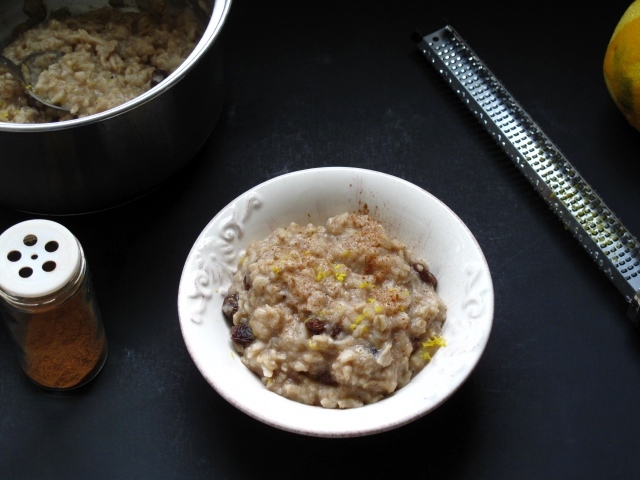
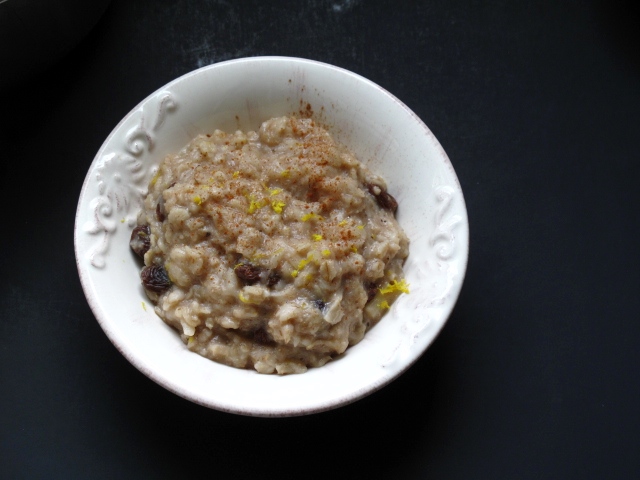
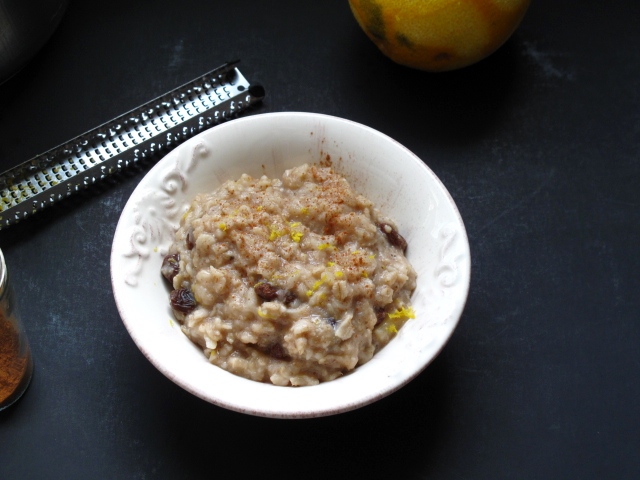
Speaking of oatmeal, this Christmas Spice version is the one I’m making daily. It’s loaded with creamy, sweet shredded parsnips, cinnamon, cloves, and orange zest. All together, it’s definitely infused with the flavors of the season, and will be a good start to any winter morning, but perhaps especially on days that are filled with meals rich with holiday feasting.


IMG_2176


Christmas Spice Porridge, serves 1-2

1 1/2 cups water
3/4 cup old-fashioned oatmeal (gluten-free if necessary)
1 small parsnip, peeled and grated
1/8 tsp. ground ginger
1/8 tsp. ground cinnamon
1/8 tsp. sea salt
a good pinch of ground cloves and cardamom
1-2 Tbs. raisins, dried cherries or cranberries
1-2 Tbs. ground flax seeds
zest from 1/4-1/2 an unwaxed orange
additional sweetener to taste

  • Bring 1 1/2 cups water to a boil in a small saucepan. Add grated parsnips, spices, oats, and dried fruit. Turn down to low and cook until the porridge is soft and to your desired consistency, about 5-7 minutes.
  • Stir in the ground flax, and zest the orange over the top.
  • Spoon into bowls and adjust sweetness as needed with maple syrup, honey, or stevia drops.

buttercup squash soup with coconut, sage + quince

buttercup squash soup with coconut, sage + quince

IMG_2164


a few weeks ago, i discovered there’s a seemingly abandoned quince tree a couple streets over from us. instead of inquiring about picking the fruit to the nearby house or walking my ladder down the neighborhood and being for real about the situation, i instead ended my marathon-season track workouts for weeks by practicing my plyometric jumps into the lower branches, snagging one golden floral fruit each time, and smuggling it’s precious but ugly self back home to add to my for-soup collection.

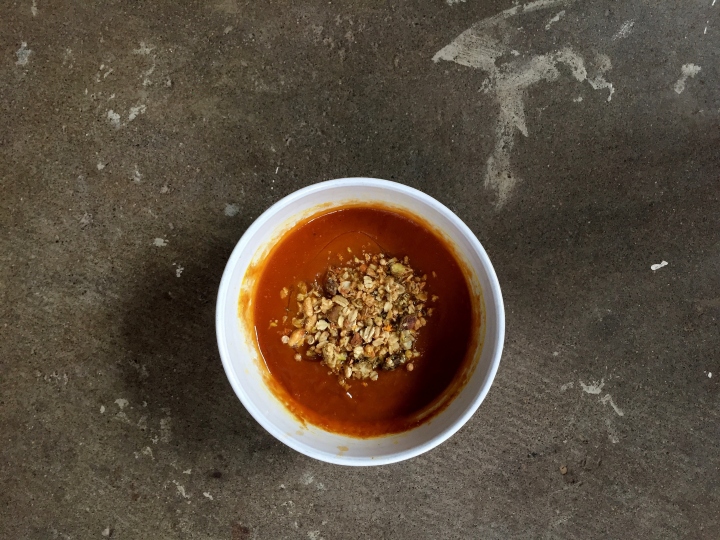
i had an idea in my head about updating this soup and instead of sending the floral quince notes throughout, piling a few thin sauteed slices on top with fresh sage. the result is absolutely holiday (or just really nice self-care) worthy.


IMG_2141IMG_2142


speaking of holidays, here is what i’m making for the Thanksgiving weekend:

i. a brussels-heavy variation of this salad.

ii. apple pie. i’m planning to recreate the best gluten + dairy free pie crust i’ve made so far, adapted from Alanna’s recipe and fill it with apples + spice inspiration from Renee.

iii. if the weekend calls for more cozy time in the kitchen, i’ll be making cornbread stuffing (per William’s request), and/or pumpkin, sage + rosemary baked risotto, or perhaps just end the weekend with that cornbread alongside my favorite deep/rich vegetable-heavy chili with chocolate and walnuts.

iv. and more of this soup! the Recipe Redux challenge this month is to add some naturally colored holiday treats and trimmings to the table and this soup is definitely colorful! and, importantly, it’s also tasty. i gobbled up the first and then second batch before i took time for photos, so the third round, whipped up in the final days before we head to eastern oregon for family time, is going home to share.


IMG_2155


buttercup squash soup with coconut, sage + quince, serves about 4

Curious about quince? They’re a seriously old fruit, similar in many ways to pears, but much more floral in flavor and aroma. They require cooking too, as their heavy tannins and raw texture will dissuade even the hungriest neighborhood scavenger! Since they’re slightly precious and can be difficult to find outside of local shops and markets, a pear or apple can be substituted, or completely left out for a less sweet/interesting ending. For a little more substance, I’ve often been stirring in either cooked garbanzos or sometimes marinated/seasoned tempeh to my soup and rounding it out with some whole grain sourdough bread for a full meal deal. Also, use any squash you like. I used the last of the Buttercup from my garden. It’s a sweet, dense, slightly dry flesh variety, and any of the Kabocha, Hubbard and Butternut varieties are also good alternatives. 

2 lb. buttercup winter squash, exterior rinsed of any remaining soil
1 + tsp. coconut oil, divided
1 large onion, medium-diced
1 tsp. dried thyme
3 cups water or vegetable broth
2/3 cups full-fat coconut milk
1 1/2 Tbs. apple cider vinegar
3/4 tsp. sea salt
ground black pepper
1 quince, cored and thinly sliced
1-2 tsp. minced fresh sage

  1. Preheat oven to 375F. Slice the squash in half and turn cut-side-down on a baking dish. Add 1/2- to 1-inch water to bottom of pan and roast for about 45-60 minutes, until a fork slides easily through the skin and flesh of the squash. Let cool at least 5 minutes before handling.
  2. Set a large pot on medium heat and add coconut oil. Add the chopped onion and sauté 5-8 minutes, stirring occasionally, until it softens and becomes translucent. Then stir in the thyme and water or broth.
  3. Once the squash is done roasting and is cool enough to handle, scoop out the seeds and discard. Then scoop the flesh into the pot. You can either discard the skin or toss it in, as it is definitely edible and will add a little texture towards the end result.
  4. Add the coconut milk and apple cider vinegar.  Bring to a boil and then turn down to simmer for 5 minutes. Let cool slightly, and then using either a blender or food processor, puree in batches until you have a smooth consistency. Turn it back into the pot, and add salt and ground black pepper and taste to adjust seasoning.
  5. For the quince, heat a sauté pan over medium-high heat. Add a small amount of coconut oil, sliced quince, and minced sage. Try to spread the slices out over the pan so they are not overlapping and cook for about 2-3 minutes on each side, until they are becoming golden and crispy on the edges.
  6. Serve the soup hot with the sauteed quince scattered on top. Enjoy!


recipe-redux-linky-logo