Simple Winter Kitchari

IMG_8192

Following in the footsteps of my last post, I’m creating lots of quick and comforting meals lately. Late-winter is when I typically become the least inspired by seasonal ingredients, but this year I’ve relegated to always having some batch-cooking or roll-over ingredients on hand for ready meals. And I actually haven’t lost inspiration per se, but the hours in the day for cooking creatively and sharing those meals has been taken up elsewhere.

Instead, I’ve really been putting my focus into creating space for in between moments and pauses, and it’s kind of funny to realize when life is really full and can feel rushed that pausing and watching the mind slows everything down. All that rush tends to fall away and around, instead of inside me, and I realize it’ll all get done. There are little checkoffs this season. Taking my ServSafe test and receiving certification, sitting for and passing a lengthy comprehensive exam before graduation this spring. Working on and completing my last group project for my Life Cycle Nutrition class. Successfully completing my last clinical course. Continuing to grow in my experience and working with new and continuing nutrition clients. And turning down my entrepreneur ‘what’s next’ business brain for when I have the ability to put my focus there.

And then setting it all down and going to work, where I focus on teaching kids to cook and learn about the basics of healthy eating.

And then dropping my energy into marathon training and keeping my body healthy.

Layers. Like peeling an onion, my doctor said the other day, only she was talking about layers of healing. We all have these layers of aspirations, or obligations, or activities that we’re simultaneously putting our energy into and even though it might be nice to compartmentalize and separate them, they tend to bleed over and into each other. Or at least mine do.

Over the last few years, I’ve tended to go in and out of stress reactions that will last a few weeks or more. I’m told they are really autoimmune-like flares, even though I’ve also been told I’m a touch too healthy to be diagnosed by conventional medicine, even with lots of ‘little signs’. Every time a flare happens I try to scramble and make sense of it, trying to identify the cause or the trigger, but ultimately when my physical body is a little too out of balance, my mental body becomes equally so, worrying and putting energy into the hurts and aches physically. And vice versa. And the two go round and round together, making the episode worse until I ultimately decide to set them both down, “give up,” and invest my energy elsewhere. That’s all to say that with two big end goals on the table right now, one being finishing my graduate program and the other the marathon that occurs just a few days after, I’m in a space right now of enjoying the process, enjoying the little things about the everyday today,  and not getting so caught up in the what if’s or shoulds, or what’s next. It will come regardless.

And for now, I’m eating lots of kitchari, even accused of making lentils and rice way too many meals in a row lately. But it’s what I’m craving and need after running in the rain or cold, or before rushing off to work.

IMG_8192

If you’re feeling like you’re holding lots of ‘layers,’ and could use a little space and pause for calming and grounding, I encourage you to turn off the noises around you that you can, tune into the ones that are still there (like family, the wind or rain, the heater), and immerse your senses in the process of cooking kitchari. Soaking the lentils and rice. Chopping the vegetables, measuring the spice. And then eat in the same fashion, for once without distraction, slowly, slowly. Tasting each bite.

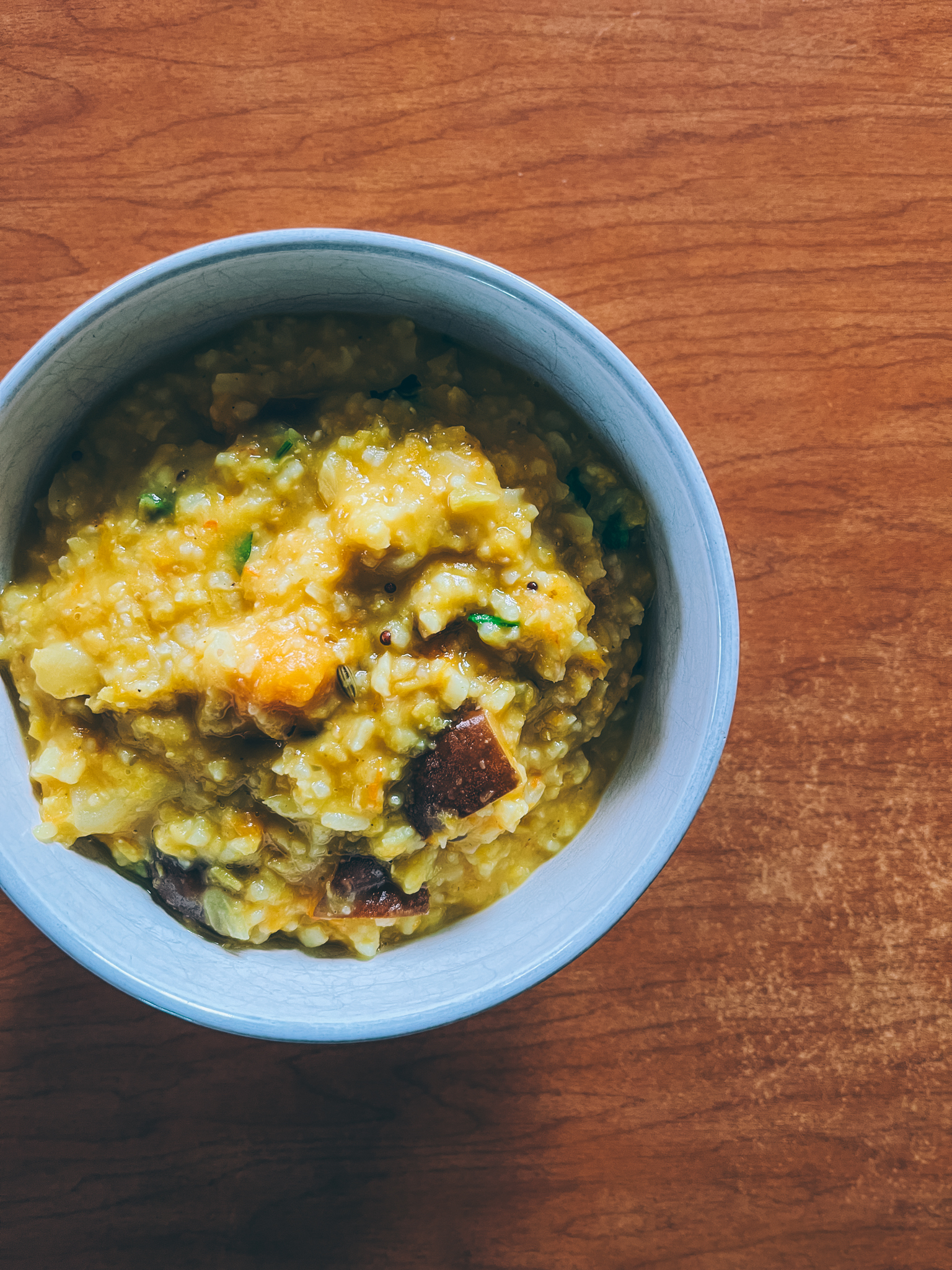
Simple Winter Kitchari, serves 2
This works great as a quick lunch or dinner, and can use whatever vegetables you have on hand, or very few if you’re needing super simple. Choose the white basmati rice if you have sensitive digestion. 

1 1/2 Tbs. ghee or coconut oil
1/2 Tbs. Grounding Masala spice mix (below)
1/2 tsp. salt
3 1/2 – 4 cups water
1/2 cup white basmati or brown rice, ideally soaked overnight or at least a few hours
1/2 cup red lentils, ideally soaked overnight for at least a few hours
2/3  cup greens or green vegetables, chopped (any type of leafy green, broccoli, cauliflower, peas, asparagus, etc.)
1 1/3 cups root vegetables (turnips, carrots, beets, sweet potato, parsnip)

1/2 Tbs. ghee or coconut oil
1/4 tsp. cumin seeds
1/4 tsp. coriander seeds
1/4 tsp. fennel seeds
lime, a squeeze of fresh juice for each serving
cilantro or parsley, to top

  • Drain the rice and lentils if you soaked them. Then in a medium pot, heat the ghee or coconut oil, along with the spices and salt. Heat until you begin to smell the spices. Then add the drained rice and beans. Simmer for a couple minutes and then add the water. Bring to a boil. If you’re tossing in hardier root vegetables, add them at this time too. Turn down, cover partially, and simmer for about 30 minutes. Check after about 20 minutes and add additional water as necessary and again at the 30 minute mark. After 30 minutes, add the greens or more tender vegetables and stir in, and then continue to cook 10 minutes more until everything is nice and porridge-like.
  • Meanwhile, in a small fry pan, heat the ghee or coconut oil over medium heat and add the cumin, coriander, and fennel seeds. Cook just until they begin to turn golden and smell fragrant, about 2-3 minutes. Remove from the heat and pour them into the kitchari.
  • Stir and serve with fresh lime and some cilantro or parsley on top.


Grounding Masala Spice Blend
, adapted from What to Eat for How you Feel
2 Tbs. coriander seeds
2 Tbs. fennel seeds
1 tsp. cumin seeds
1 tsp. whole cloves
3/4 tsp. black peppercorns
1 tsp. ground turmeric

  • Add all the spices to a coffee or spice grinder and grind to a fine powder. Put into a labeled container and store away from light.
go-to coconut curry

IMG_2967.JPG

For the past month or more, I’ve been collecting a few snippets of news I’ve read or articles meant to be shared, but rather than actually share, I’ve stashed them away in a folder and time has marched on.

Looking back, so much of what I had accumulated was news that was frustrating, negative, and political, in congruence with the season, even as it was about the state of our food system and climate. Those are indeed important things and I think we should all be informed about what we are eating and the nature and consequences of its production.

IMG_8507

But for whatever reason I was reminded recently of my high school riding instructor/coach, who always encouraged me to remember and focus on what’s going well, and to forget about the rest. I more often get in the mindset that if I only look through the world with rosy-hued lenses, then nothing gets done, and no real change to the status quo can occur.

But that’s not actually true. We grow better when we are happier, when we are living in joy, when our systems are not stressed with what-ifs and fear.

IMG_8521

I encouraged a nutrition client recently to start small, taking one day at a time, and to focus on only one thing each day that helps her to take care of herself. Taking a dose of my own advice, it’s early morning as I write this, and I’m unexpectedly home at my mom’s farmhouse kitchen table, sitting in what I deem the sunroom, given for it’s dusty lemon hues and big windows letting in the new day. My week has been fraught with grief, many tears, and saying one last goodbye to a truly dear grandfather, and related to that and my own internal fears and anxieties, my thoughts have been incredibly bent toward the negative of late.

Today I’ve decided to focus on the good, and to look for what is going well.

Today it’s that I did make it home to see Papa in his last hours, and it was almost as if he waited for me, the last and furthest grandchild to visit, and for his room to fill with family as he spoke his last words and slipped quietly from us.

IMG_8518

Too, the country is quiet, and I get to spend my day (and yesterday) looking out any window onto wide open pastures and birds singing and dancing their dance.

What this has to do with curry, I don’t for sure know, other than a simple and easily adaptable curry such as this has been my long time go-to for comfort, for taste, for turning whatever I have into something special and pleasing to everyone. It’s the food version of eternally positive, and a dish no matter the vegetable or bean adaptations, seems one can never mess up.

IMG_2969

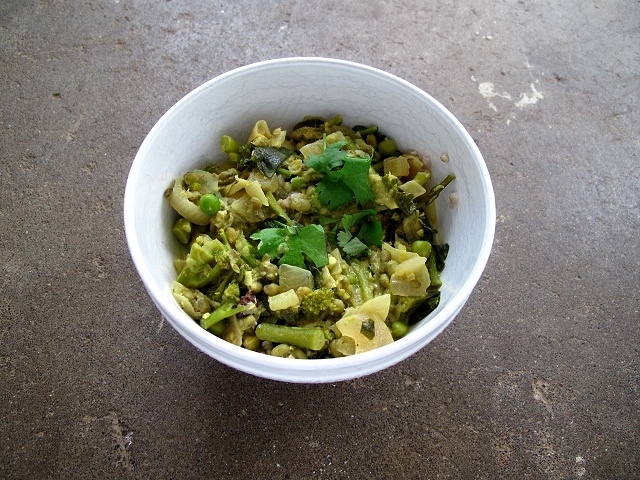
Go-To Coconut Curry, serves 4-5
Recipe Updated: December 2023
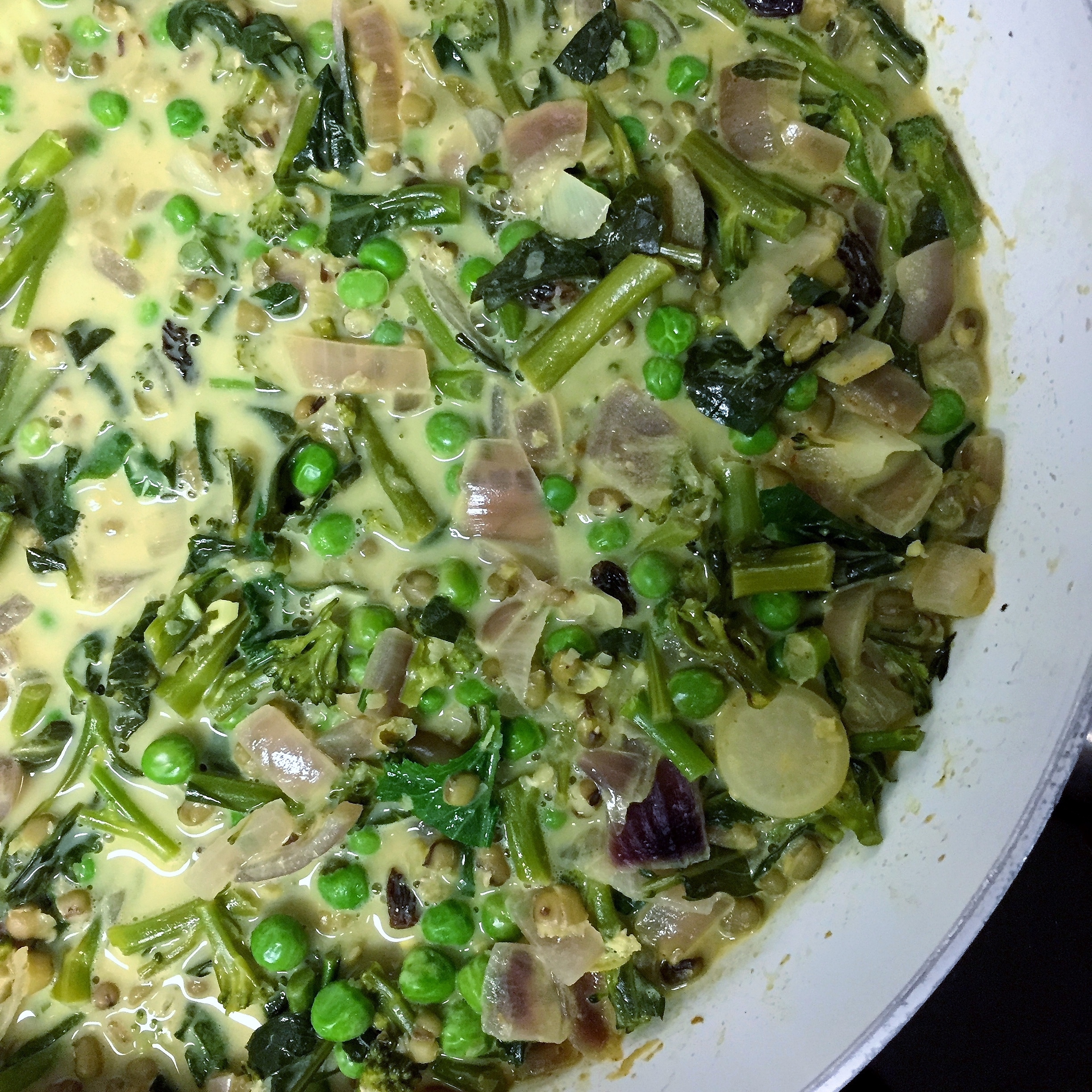
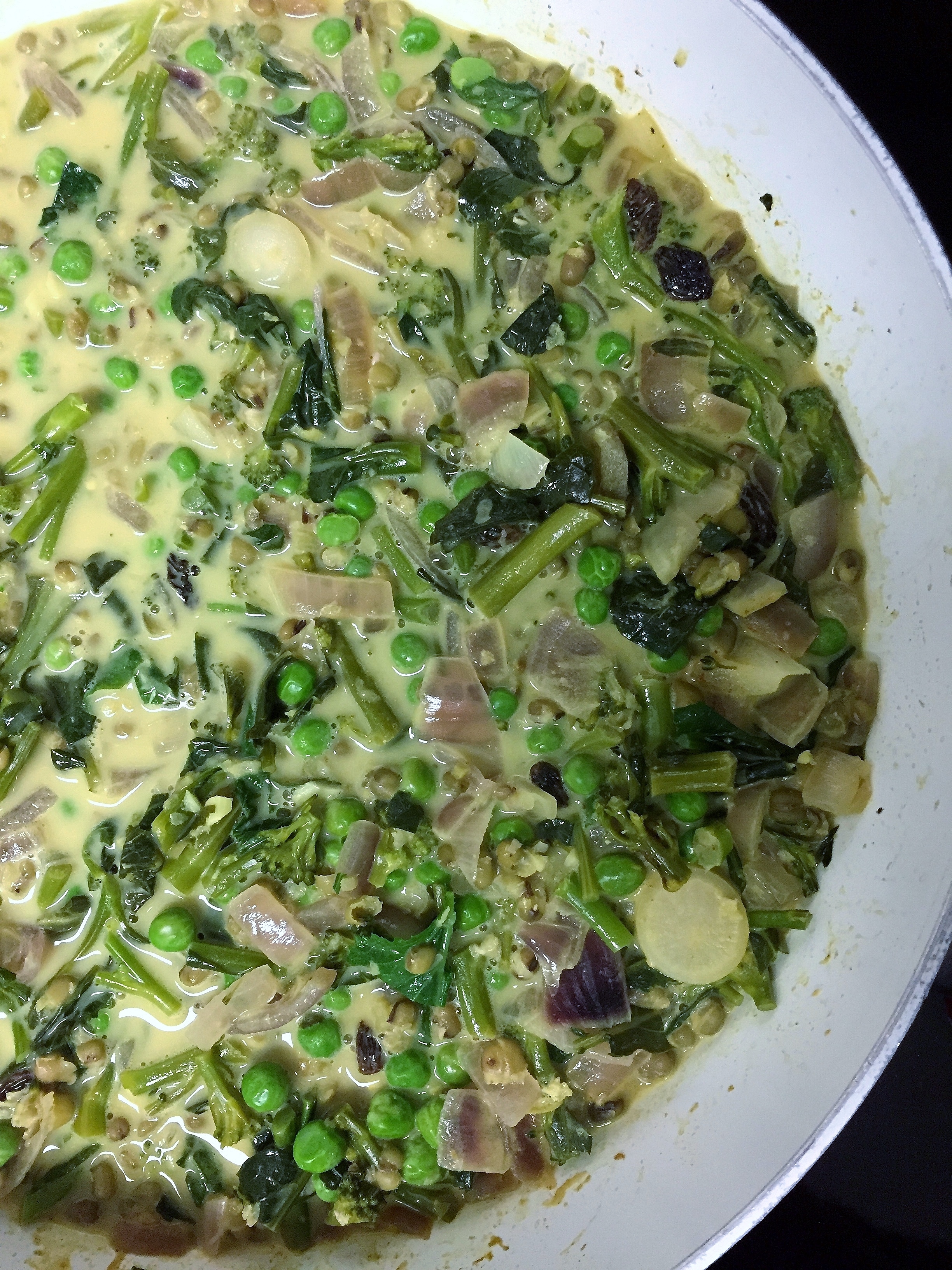
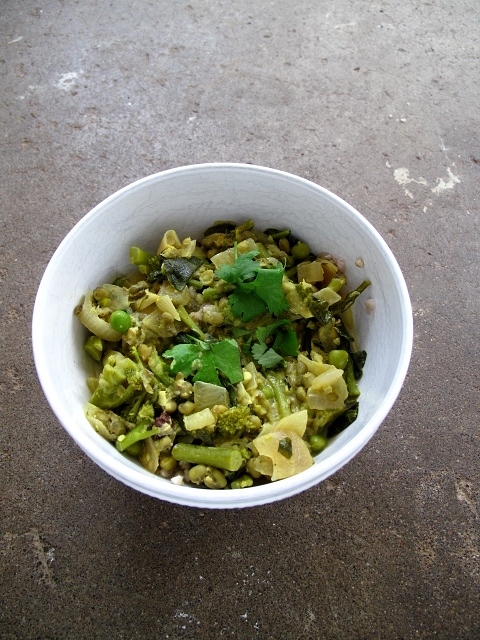
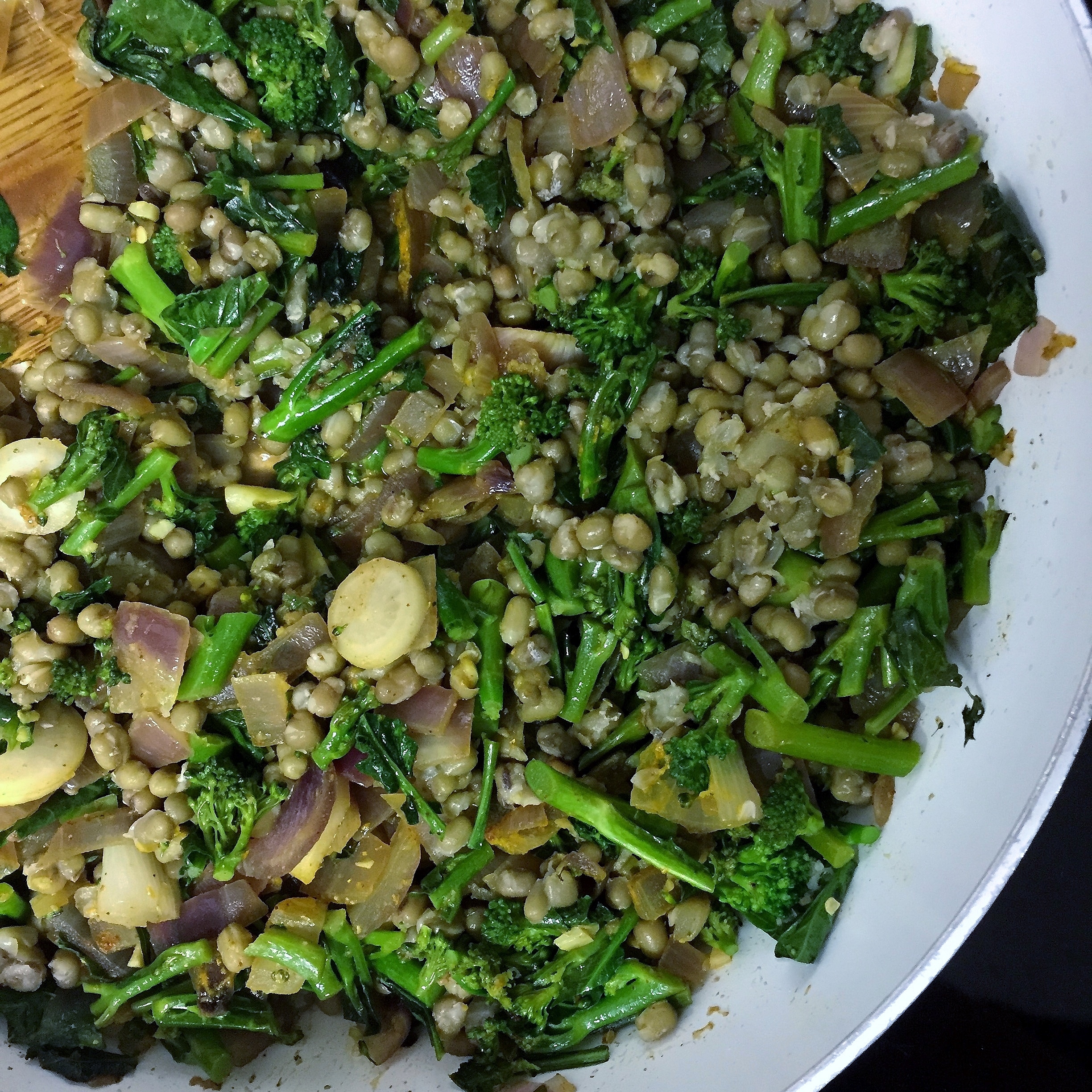
– I used cooked mung beans, broccoli, white “spring” turnips, and frozen peas in this version, and I encourage you to use whatever you have, is in season, or are particularly enjoying just now.
– In another version, I used carrots, shiitake mushrooms, cabbage, and frozen peas, as well as tofu. For the tofu, I pressed it and then baked it for 30 minutes with just a dry rub method of curry powder. 

1 Tbs. coconut oil
1 large onion, diced
1 large clove garlic, minced
4 cups / 500-600 gr chopped seasonal vegetables
1/8-1/4 tsp. cayenne powder (adjust according to taste)
3/4 tsp. cumin
1/2 tsp. chili powder
3/4 tsp. ground coriander
1 tsp. salt
1/2 tsp. turmeric
1 Tbs. fresh ginger, finely grated
1 can full fat coconut milk
2-4 cups water, as needed to thin
2 cups cooked beans or 14-16 oz. pressed and baked tofu
2 cups / 200-300 gr leafy greens, chopped
2 Tbs. lemon or lime juice
fresh cilantro, to serve
cooked brown or white basmati rice, to serve

  • In a large deep pan over medium heat, warm oil, moving around the pan to coat the bottom evenly. Toss in the chopped onions and garlic. Stir and let cook for about 8-10 minutes, until the onion and pepper are soft.
  • Then stir in the spices and other vegetables and cook until they are tender. You may need to add a few splashes of water.
  • Add the coconut milk, water, tofu or beans and greens. If you’re adding frozen peas, add them now as well. Stir everything together and let the flavors meld for 5-10 minutes more.
  • Stir in the lemon or lime juice, adjust seasonings to taste, and enjoy with rice and cilantro.

pumpkin ginger oat muffins

IMG_2915

I’ve just made it past the halfway point of my last fall term in nutrition grad school. I’ve been working with clients in clinic these past few weeks, experiencing all that I’ve learned in the last couple years come together in practice, and enjoying it so incredibly much. Getting to the clinical work has reinforced why I’ve spent so much of my energy on this career shift endeavor when I get to sit with someone and offer even a little bit of individualized support.

In addition to nutritional recommendations, I also give interventions that address balance from a whole systems perspective which is in line with the integrative and holistic approach to my program. This often means I try to emphasize stress reduction and relaxation practices. On the closer to home front, I’ve been trying to take some of my own advice and incorporate downtime each day for relaxing my system, an intention I constantly struggle with. Inevitably I often forego the rest I need and end up in the kitchen instead. My only excuse is it’s pumpkin season– and I find baking quite restorative!

IMG_2900IMG_2917

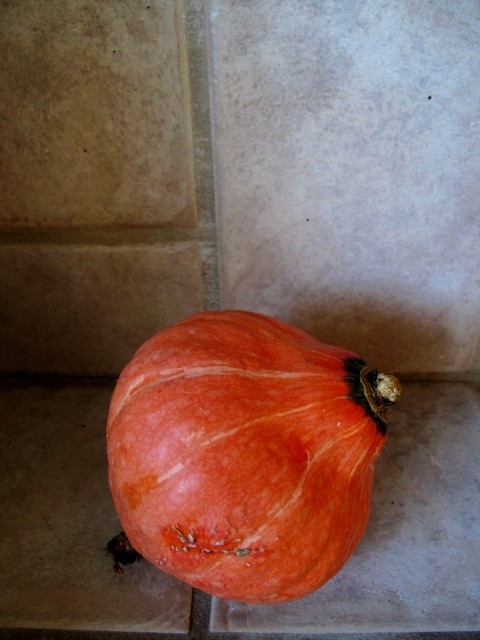
Since it is pumpkin and winter squash season, The Recipe Redux theme this month is Fresh from the Pumpkin Patch. We’ve had a string of mostly gorgeous days so far but once this fall season finally and truly sunk in, I began cooking lots of very autumn appropriate Ayurvedic recipes from Kate O’Donnell’s Everyday Ayurveda Cooking for a Calm, Clear Mind. Nutritionally, the recipes are helping rebalance my system after a rough end-of-summer transition. The first portion of the book is all about the Sattvic lifestyle in Ayurveda–a way of life I’ve been gleaning more from as time goes on and I notice how I fare better with less stimulating foods, practices, and experiences.

These muffins are a deviation from a recipe in the cookbook. If you’re a runner and a fan of the Run Fast Eat Slow superhero muffins, they’re also quite similar, but I’ve upped the emphasis on using walnuts and flax since they both are rich in omega 3’s which are an essential fatty acid that most of us need more of.

IMG_2921

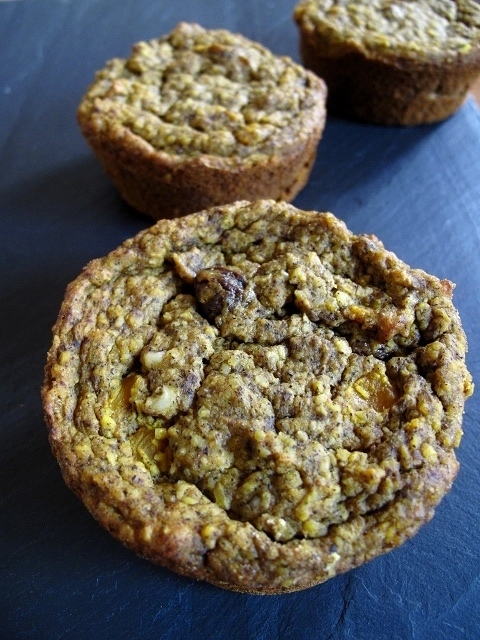
Pumpkin Ginger Oatmeal Muffins, makes 4 large muffins or 6 regular size
recipe updated: 2/18/2024
Even though I adapted these fairly dramatically, they do stay true to their ayurvedic roots. They are delicious as is but there are also many variations depending on what you’ve got on hand:
1) instead of ground walnuts, use almond flour 2) instead of pumpkin, use 1/2 cup applesauce and 1 medium chopped apple or other fruit and flavor combos. 3) instead of coconut sugar use pure maple syrup  4) instead of spices, add 1/2 Tbs. pumpkin pie spice and 1/4 tsp. turmeric

1 1/2 Tbs. ground flax seeds
4 1/2 Tbs. water
3/4 cup / 60 g raw walnuts, ground
1/2 cup + 2 Tbs. / 75 gr oat flour (can be made from oatmeal)
1/2 cup  / 50 gr oatmeal
1/4 cup / 50 gr organic cane sugar
1/4 tsp. salt
1/4 tsp. ground turmeric
3/4 tsp. cinnamon
pinch of cloves
1/2 tsp. baking soda
1 tsp. baking powder
pinch of ground black pepper
2 Tbs. / 25 gr coconut oil, melted
1 cup / 220 gr pumpkin, pureed or mashed
1 Tbs. / 3 g minced fresh ginger
1/4 cup / 35 gr raisins
1/4-1/2 cup water or nut milk, as needed.

  • Preheat oven to 350 degrees F. Line muffin tins with baking cups or oil and flour them.
  • In a medium bowl, whisk together the ground chia seeds and water. Let this stand for 5 minutes. In a separate bowl, mix the ground walnuts, oat bran and oats, salt, turmeric, baking soda, and baking powder.
  • Add the coconut sugar, pumpkin puree, and coconut oil to the chia seed mixture and stir until well combined. Stir in the ginger and the raisins.
  • Add the dry ingredients to the wet and mix until it just comes together. If the batter seems a touch dry, add water or nut milk just until it becomes a touch looser, but only add up to 1/2 cup, as they won’t need much. This step largely depends on how much moisture content your pumpkin puree has in it.
  • Divide into the muffin cups and bake for 25 to 30 minutes, or until they are golden brown and a toothpick in the middle comes out clean.

recipe-redux-linky-logo