Breaking the Breakfast Boredom

Like many people, I personally love to eat the same or fairly similar food every day for breakfast.
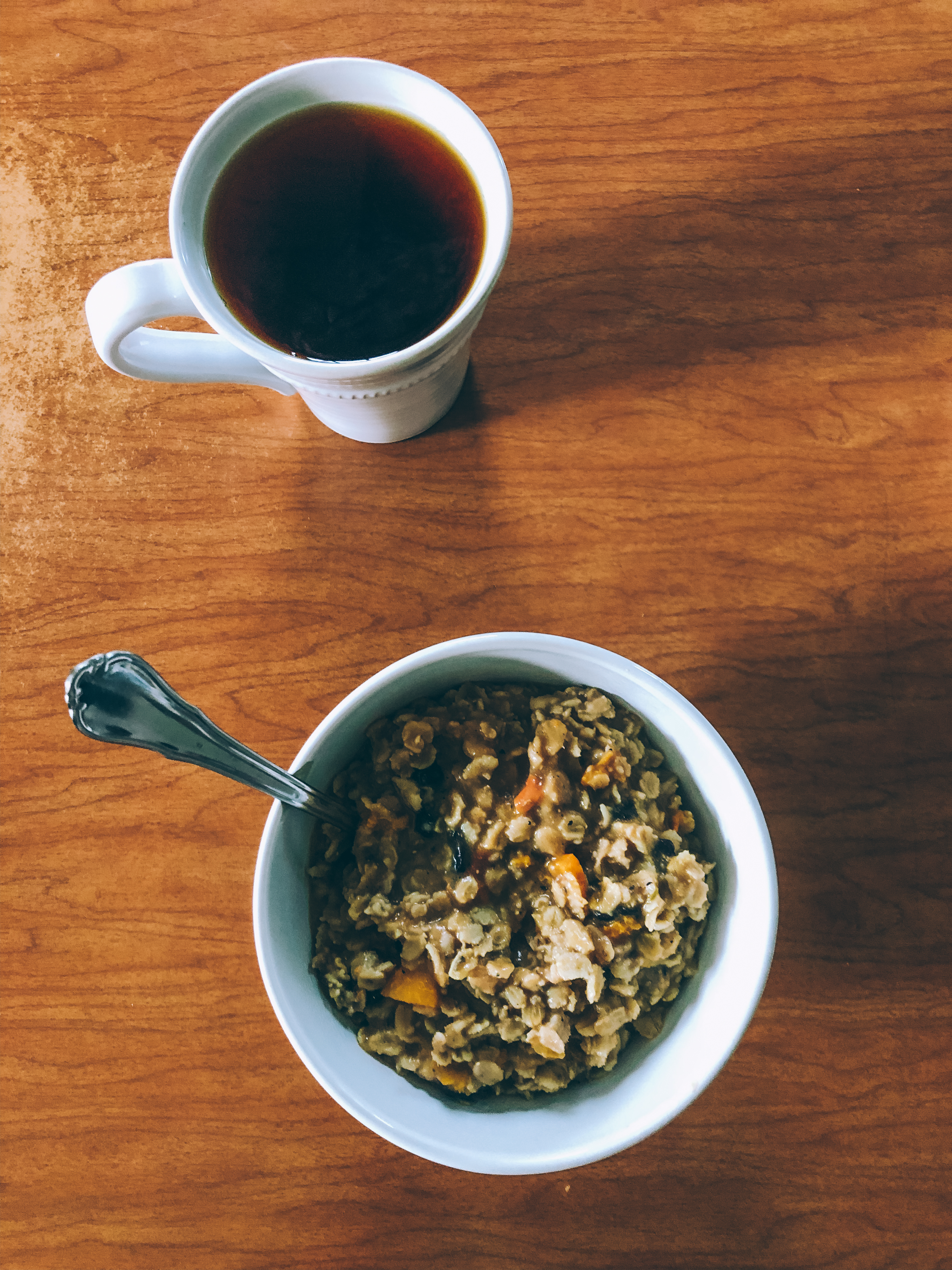
My go to is oatmeal. 

And at the same time, as a nutritionist, I’m often preaching diversity of meals and foods on the daily.
Counter-intuitive? It seems.

Though I’ll caveat that my morning oatmeal is not the same everyday. I have a general formula and then standard variations and seasonal/weekly/daily changes which I do that end up leading to a fair amount of diversity. I’ll share more about that soon because oatmeal, or whole-grain porridge in general, really is an underrated super meal.

But today isn’t all about oatmeal because…

I went and had a baby who is now a toddler. With opinions!

And he got tired of oatmeal every day.

I was also trying to start him off with a diverse diet. So early on, his morning meal was in some ways more diverse than mine. Because while I might be firmly on the porridge train, I’m probably never going to eat amaranth or quinoa-based porridge on a regular basis. Oats are by far the preferred breakfast grain.

After Bee began having opinions about his too-similar breakfasts  – and me completely forgetting how to make him anything other than oatmeal or simple scrambled eggs – I came up with a simple framework to keep breakfast changing up throughout the days and weeks. 

I share this because too often, I hear you too get tired of the same old thing! But it’s so easy to default to the usual without some inspiration, a little guidance, and a plan. So I’ll share ours with you.

Our Weekly Breakfast Routine

  • Bee always has a fresh fruit offering, which he gets to snack on while we are preparing breakfast and getting morning chores done. Then,
  • Monday is Toast Day: Usually avocado and “toast” with some nut butter and possibly yogurt on the side.
    When I say toast, I mean not-toast currently. We do soft “steamed” whole grain sourdough instead of dry, crunchy bread.
    And I choose Monday for toast day because Bee favors bread when it’s freshly baked. I’m most likely to bake on the weekend and/or we pick up bread from a bakery then.
  • Tuesday is Oatmeal/Porridge Day: Babies and young toddlers need more fat than adults, so Bee’s oatmeal is cooked in a high calorie milk with dates and the same spices I choose that day. We currently have to do non-dairy milk for him, but it’s nutritionally similar to cooking his oats in whole milk. Then he has my omega-3 seed and nut butter rotation of the day stirred in. I usually don’t add other fruit (which I’ll stew into my oatmeal) because he is already eating fresh fruit beforehand. But it will usually be the same fruit for both of us.
  • Wednesday is Muffin Day: There will be some sort of baby/young toddler appropriate mini muffins (no sugar added/whole grain), yogurt, and maybe something else. Avocado on the side or perhaps leftover oatmeal so he has a choice if muffins aren’t favored that day.
  • Thursday is Egg Day: Usually scrambled and they will have at least one other thing to pair with them. Avocado, toast again, or perhaps yogurt so there are options. Some days I sprinkle in some moringa powder so he has a tiny punch of super nutritious greens. Some days he could eat eggs and only eggs – and lots of them. Some days, he won’t touch the eggs beyond an initial bite that he spits out.
    Other weeks I might instead do a quick tofu scramble instead.
  • Friday is Pancake Day: I tend to rotate between a few different pancake recipes, some savory, some very very simple. But my internal rule/reminder is to do something different than the week before.
    If I’m all out of ideas, I do a simple three-ingredient baby weaning pancake which includes one egg, a banana, and a ¼ cup of quick oats (or oat flour). My pancake recipe tends to be frequently in the rotation, as are any of the many pancakes from Green Kitchen Stories‘ books.
  • Saturday and Sunday are “free for alls:”  Meaning, usually Bee’s father is also having breakfast with him and eggs are likely offered again. Sometimes French toast will feature. Usually there’s another batch of oatmeal made. Leftover pancakes are also likely to happen. 

Are there repeat foods and ingredients with this plan?
Absolutely. It’s not perfect. 

Why Diversity is Important

Without dealing with an individual case, the number one thing I’d recommend for achieving or maintaining balanced health through diet is eating diversely with primarily plant-foods. Doing so feeds beneficial gut microbes through the plant fibers, and those microbes then make short chain fatty acids — which are key to balanced health — both in the gut and digestive system and beyond!

Ideally, eating diversely starts early and continues throughout life, but there’s absolutely no wrong time to start rotating in different types of foods and ingredients. And, even if you like “the same” type of food every day, there’s still room to opt for diversity. Stay tuned for my routine spin on changing up oatmeal soon.

Until next time ~ Rebecca

p.s. It’s been quite a while since I’ve posted a blog here, but I’m still balancing that baby/toddler with work in the nutrition clinic with clients. Reach out to me if individual sessions are of interest. And if you’d like to sign up for my periodic newsletter, you can do so here.

Gluten Free Flour Tortillas or Flatbread Wraps

A few years ago, I started making various quick gluten-free flatbreads to use in meals when I wanted a grain but needed something quick, easy and different from the usual rice or quinoa or millet or buckwheat. I would often choose a slice or two of my whole grain gluten-free sourdough in that instance, but often I don’t have any bread handy either.

The flatbreads, made with just a couple flours, a pinch of salt and water, were a little lackluster, and William ate them unenthusiastically. Somewhere in the many months of making them, I happened upon the addition of psyllium seed husk. I also use psyllium husk in my sourdough recipe – it’s an essential ingredient for the stretch that gluten-free bread doughs will otherwise lack.

The psyllium addition has been a gamechanger. The flatbreads have become flour tortillas, or wraps, which I went over a decade without, and burrito size tortillas for various burritos and wraps – also a warm welcome after so long without.

The bonus is: these come together really quick! Like just as quick as the much less pliable flour/water/salt version. And if you only want enough for a meal, any leftover dough can easily be refrigerated until the next day, and rolls out super quick as you’re reheating leftovers.

Probably the only thing you’ll be wishing you had is an even larger pan to get these as absolutely large as you can possibly want them. :)

Gluten-Free Flour Tortilla or Chapati Flatbread

This is a quick and easy flatbread that can be used to make thin flour tortillas, or as chapati flatbread as a whole-grain addition to a balanced meal.

Prep:  15-25 minutes  | Cook: 20-30  minutes  | Serves: 4

12 grams / 2.5 Tbs. psyllium husk (rough husk form, not powder
240 ml / 1 cup warm water
180 grams / 1 ½ cups whole grain gf flour mix
  (or a 50:50 mix of  brown rice and sorghum flour)
¼ tsp. mineral salt

  1. In a bowl, whisk the psyllium husk and warm water. Within a few seconds, a gel will start to form. Set aside until needed. 
  2. In a separate larger bowl, stir the flour(s) and salt together, then add the liquids and mix with a wooden spoon until all the flour is mixed in.
  3. Then, give it a thorough knead by hand. Squeeze the dough through your fingers and work your way around the bowl, scraping off the sides as necessary. The final dough should come away from the sides of the bowl and be very springy to the touch. It shouldn’t be too sticky. It doesn’t have to be perfectly smooth – so long as it’s homogeneous with all the ingredients well combined and no clumps of flour or psyllium gel, you can proceed to the next step.
  4. Turn out the dough onto a lightly floured surface. Divide into 4 to 6 equal portions. If making four, this will yield burrito size tortillas or flatbreads – if you’re making them quite thin.
  5. Cover the pieces you are not currently working with with a towel to prevent them drying out.
  6. Use a rolling pin to roll out the dough into a thin tortilla, or if you’re wanting a thicker flatbread, you can also use your hands.
  7. For a tortilla, aim for very thin, about 1mm thick. This works best when your countertop is well-floured and you rotate the dough frequently to prevent it from sticking to the surface. As necessary, dust the top of the tortilla and your rolling pin with more flour.
  8. To cook: Heat a large cast-iron pan over medium-high heat. The pan is ready when a droplet of water sizzles on its surface.
  9. Place a tortilla into the hot pan and cook it for about 45 seconds. 
  10. Once you flip it, it should puff up in places with bubbles of varying size appearing. Cook on the other side for about 45 seconds to 1 minute. The tortilla is done when you begin to see large dark brown spots on the underside.
  11. Tip: If your tortillas are cooking/browning too quickly, reduce the heat. If they’re taking longer than a minute per each side to cook, increase the heat.
  12. Transfer to a clean dish towel and cover – this will help it stay soft and flexible. Continue cooking the remaining tortillas.

Notes: The tortillas are best served warm immediately after cooking, but can be stored for 1-2 days and reheated.
You can also store the uncooked dough in a covered container in the fridge for a day to quickly make 1-2 fresh tortillas as needed.

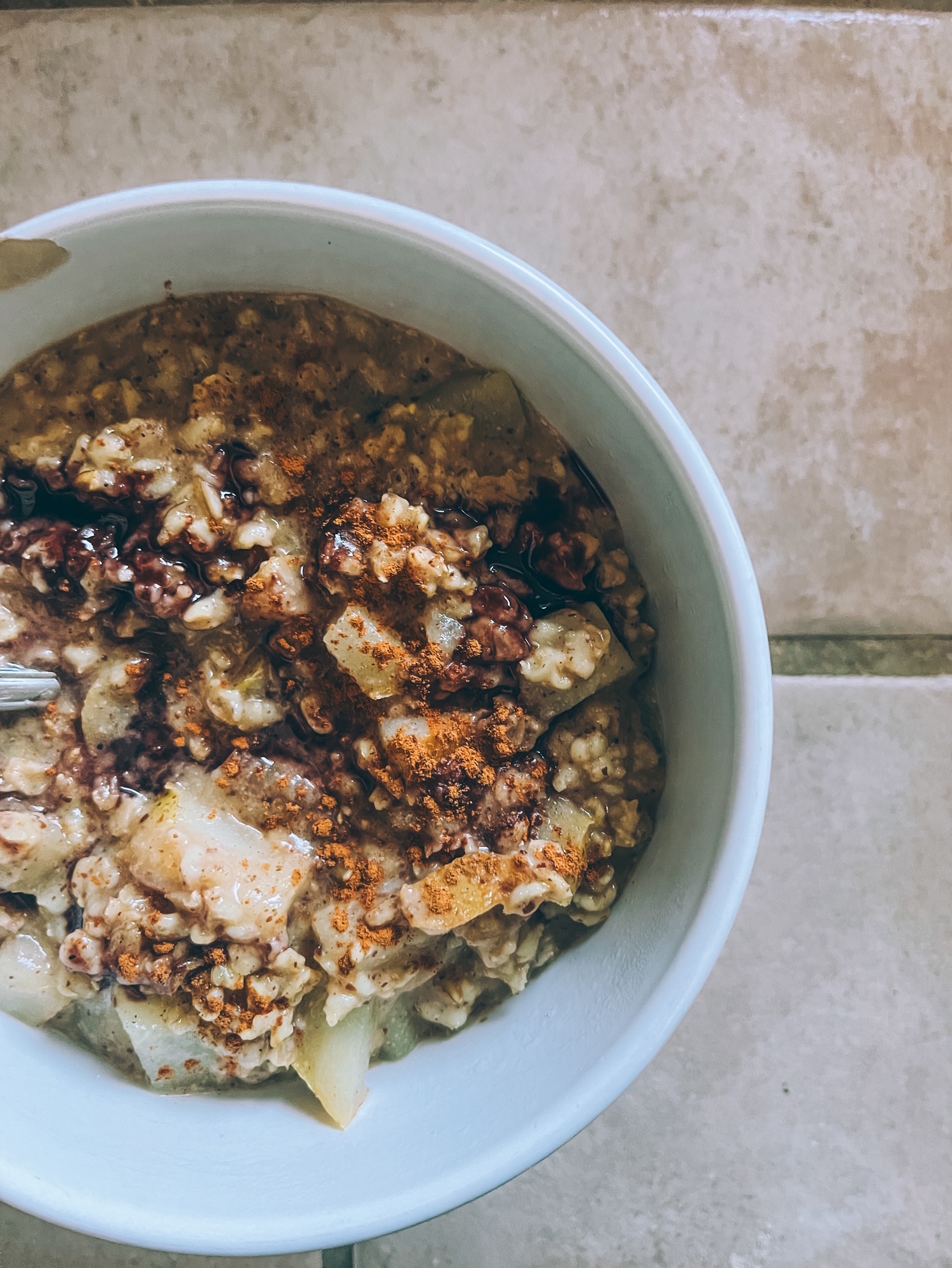
Tart Cherry + Apricot Oatmeal

Just in time for summer, here’s a delicious new way to start your day.

So many athletes and active individuals tend to eat oatmeal as a morning go-to, and inevitably get stuck in a rut with the same ingredient and flavor combinations day in and day out.

Oatmeal is super nourishing, filling, fiber-rich, and generally an all-around superb breakfast option. But changing it up every now and again is also optimal to encourage digesting and absorbing a wide range of micronutrients as well as feeding diversity in the gut microbial community.

Another challenge that you might find yourself in, is that active individuals often don’t start the day with “enough” food.

Classified as a “within-day energy deficiency,” an example is starting your day with a small breakfast, slightly larger lunch, and then having a moderate to large dinner. OR expending more energy than you’ve consumed (through both activity and daily living), in the early hours of the day and not topping up the tank until hours later, creating metabolic and physiological stress.

I also used to eat this way. It was part of my restrictive eating and diet mentality paradigms.

Not only is this style of consuming most of the day’s caloric energy late in the day problematic for digestion, since eating larger meals late at night is challenging for the body to digest and negatively impacts sleep quality, but it also creates a feast and famine cycle in the mind and body.

When I was caught in this pattern, I was routinely hungry all the time because I was training fairly heavily, and not proportioning all my meals to be adequate for what I needed.

For more information on the topic of Within-Day Energy Deficiency, here and here are two great articles.
And two of the scientific studies frequently referenced on this topic:
Within-Day Energy Deficiency and Reproductive Function in Female Endurance Athletes
Within-Day Energy Deficiency and Metabolic Perturbation in Male Endurance Athletes

The portion size below is “larger” than usual, but just about right for moderately active individuals. If you’re more or less active, or in a larger or smaller body (than average), feel free to adjust portion size accordingly.

Tart Cherry + Apricot Oatmeal 

Prep:  none  | Cook: 10-15  minutes  | Serves: 1

1 1/2 cups water
1/8 tsp. mineral salt
⅛ tsp. ground ginger
⅛ tsp. ground cardamom
¼ tsp. fennel seeds
3/4 cup old-fashioned oats, certified gluten-free as needed
2 Tbs. dried tart cherries
2 apricots, diced (approx. 150 grams)
2-3 tsp. sunflower butter
1-2 tsp. chia seeds

  1. On the stovetop, bring the water, salt, and spices to a boil in a small saucepan.
  2. When boiling, turn down to medium-low, and stir in the oats and dried cherries. Let cook until it is soft and nearly all the water has been absorbed, about five minutes.
  3. Then add in the diced apricot and stir. Turn off the heat and stir in the sunflower butter, and chia seeds, making sure they are spread evenly throughout.
  4. Spoon into a bowl and enjoy!

Notes / Substitution Suggestions:
– adjust the spices as needed for your energetics
– omit the tart cherries and increase to three apricots
– for a smaller portion, use ½ cup rolled oats
– omit either the sunflower butter or chia seeds and double the amount of the one you keep in. 

Within my nutrition practice, I specialize in endurance athletes and digestive imbalances. If you’re curious about how to improve your performance, health, and digestion, I encourage you to reach out to me for more personalized support.