a powerful place: running, faith, life lessons

a powerful place: running, faith, life lessons
IMG_3916
I want to stand as close to the edge as I can without going over. Out on the edge you see all the kinds of things you can’t see from the center.  – Kurt Vonnegut


I’ve shared little snippets about my running injury over the last year or so, and even more about the upheaval to do with my eating disorder which came to the surface when I stopped running. My thinking about my body and my relationship to running was exceptionally anxious, fearful, obsessive, and controlling, and it took me a while to become aware, accept, and then work on that. At the same time, I feel less anxious and obsessive, and much more connected and active in my faith through running. This is a continuation of my processing, and I’ll share a summary at the end of this post:


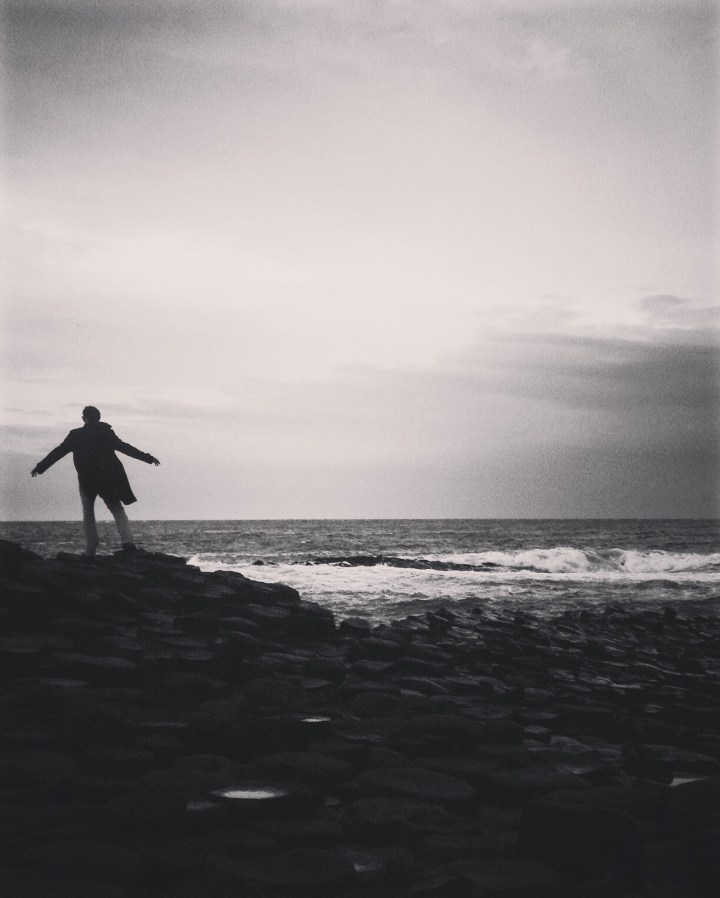
Something changed one day. Or perhaps it was a gradual transition and one day it came into awareness. I was running in Alton Baker Park. It was mid-February and I was on the outer edge of Pre’s Trail and I had this thought: What if it all just doesn’t matter? What if all these things I’ve been worrying about and building up are not big deals? What if I set them down and walk away? What if this were my last run and tomorrow I go back to riding horses instead? Immediately, the response was there. It was a very noncommittal shoulder shrug saying, Sure, that would be fine. 

The manic part of my brain fired back, You’re thinking that because you’re in the middle of a long run, in your happy place. You won’t be so happy tomorrow when you’re not experiencing this. There was fear in that thought, the fear of the what-ifs related to my body and my desire to control it. Those fears have plagued me.

But over the next several weeks, I kept circling back to that shoulder shrug, that lets not give such a fuck attitude. And I think right there I set down a little of the load, the attachment to an outcome, and there has since been a little space between where I’m at in the moment and what I wish for the future with running.

I am a little less attached to it, and certainly less anxious. On days when my feet or legs or body hurts in ways that are unexplainable, I’m often able to set down the pain and feel it only in the moment, not worrying so much about whether it will be there in the next moment, in the next day, in the way of the things I want to accomplish out there. I’ve stopped printing my weekly training plan and some days I have no idea what the next day will bring, nor do I overly care so much. I used to know every detail of what the week ahead would hold. 

I really don’t know what led to the change in my relationship with running, but because it was important, I prayed about it. I prayed for well over a year, often desperately. In January and February of last year, when I was not running, I was at a low point. William tried to console me one evening, It’s just a little injury. Give it a couple of weeks and you’ll be back to normal. You’re fine. 

It’s not, though, I responded. This is major. This is going to take a very long time. I don’t know how but sometimes I just know things. I knew the ‘little’ injury no one could explain was not so little, that it went way beyond the physical, that it was going to change me. That I had a long climb down before I could start climbing back up. In my desperate conversations with Jesus, I asked him to make it obvious if the answer was no, if I needed to set down this running hobby. I asked him to slam the door shut in my face and please, oh please God, just take away my desire to run. Help me find other hobbies. Help me find balance that is healthy. Help me not trade one obsessive, addictive tendency for another, i.e. food for running and vice versa.
 

IMG_3875


He did not slam the door shut in my face. There was a crack, and I cautiously, fearfully tip-toed through it, all the while expecting it to still slam closed. Even so, I’d catch glimpses of affirmation, out of nowhere, often on days that were otherwise real downers. One came sometime in the fall. I was in the middle of a run, in pain, frustrated, and a little depressed about the situation. Even so, I was like an earthworm; I could feel the light at the end of the tunnel, even if I could not see it. That little gift of His affirmation was enough to keep me trudging upwards through the mud. 

At some point, months before that February run in ABP, I stopped praying about running or physical healing without even realizing it, and my conversations with Jesus were more friend-like, not so tied to an outcome, and more in line with asking for direction with the big-picture of life, and not some non-essential hobby.

It’s often hard to say where one story ends and another begins. I don’t know when I began identifying myself as perpetually injured, or not good enough, or not worthy enough to go after goals. Or when I decided to set down that story and begin another one. It probably doesn’t matter. And I can’t really explain it, not even to myself. Why running? And why share about it? Why write and have an often too-personal blog? During the past year of prayer, several things became clear: It’s not really about me and there’s a purpose here that I don’t get to understand right now. I have some unsettled, fuzzy, too-big-to-understand running dreams that won’t go away, no matter how much I try to make them. The door keeps quietly opening, little by little, and though I’m afraid to try, I hear Him asking me to keep walking with faith, a few steps each day.

Like that day in Alton Baker Park, more recently on another run that wasn’t going all that well, I had another flash of realization. I realized I feel in a very powerful place these days, truly as if there is an energy in my physical and spiritual self not entirely of me, as this unexplainable journey I’ve been on, with all its painful, difficult, individual traumas is part of the transition upwards, out of the mindset of I can’t, I don’t get to, and I’m not good enough that I’ve been carrying around during this lifetime. In that moment, the journey itself sparkled beautifully before me, with all its ups and downs. I realized then I want to explore a concept I haven’t explored in a while: What if I can? What if I get to? What if I am good enough? What if I stop worrying about whether the door will slam in my face and instead concentrate on finding out what’s on the other side of the door? 
 

IMG_3989


I want to find out what I’m capable of; I want to find out what He is capable of doing in me. I want to do His work. I want to walk to the edge where He leads and see what He has for me to see. Right now, for whatever reason, running is part of that. And even though I feel in a powerful place, there are still doubts. There are days and little moments where I take a step back, look at the bigger picture of how I currently feel physically and what quiet affirmations I feel in my heart, and tell myself, lady, you’re either really fucking crazy, or on to something. I prefer to believe I’m on to something.


Reflection: I want to make clear this is my journey, and I’ve had a whole slew of professionals advise me. I do not recommend running through an injury unless under the supervision of a professional. I also have explored, in depth, my relationship between running, my eating disorder, and other behaviors that allow me to gain control. Running has always been intricately linked to my eating disorder, as I began running shortly before I began controlling food, and it likely served as a catalyst for the ensuing food and body image problems to surface. With that being said, those problems were there long before I began running regularly, and running has become one of the ways I deeply connect with my faith, with where I learn about myself, with how I finally came to love and feel comfortable in my body, and where I let go of other life problems. Two great articles I’ve enjoyed over the last few weeks include Gena’s reflection on How it Feels to Leave an Eating Disorder Behind and When Exercise Becomes an Addiction. I believe there is a place for endurance and/or competitive sports in the recovery process, and really enjoyed Julia’s podcast interview with Rich Roll on How to Take Ownership of Your Evolution, especially his thoughts on how athletic endeavors can fit into the recovery journey.

 

Beneath the surface, a manifesto.

IMG_8372

IMG_8387

IMG_8389

Years ago in the thick of my disordered eating days, I regularly frequented a forum on the Runner’s World site in which runners would post their daily meals. I participated a bit, but I mainly monitored what these people ate and compared my own meals to theirs. It was a terrible habit that led to nothing good. There were a few runners in other forum topics that deemed this “Nutrition and Weight Loss” forum a breeding ground for all the eating disorders to proliferate. To an extent, I agreed, as there were many runners recovering from and/or struggling with eating disorders who collected their meals there and I could see it was mostly a terrible place for me to frequent.

I’m remembering this now as I reflect on my seemingly lifelong troubled relationship with food, my body, control, and ultimately comparison. When I wrote a few months ago about my eating disorder and the idea of restriction, I shared that I have no food rules, no off-limits items (other than gluten and dairy for allergen reasons), no black and whites. I meant what I wrote.

But I need to air out a big elephant looming in the room which I get asked about, weekly. I had a hamburger in May at my niece’s birthday party, a bit of pork loin the weekend before at my in-laws, and a short handful of meals with meat since at the homes of friends and family, and even at our own table as William had been requesting that I cook a roast for weeks and I recently gave in. I didn’t necessarily feel like eating any of those meals but not wanting to be the weird, offensive one, hungry and standing out eating only fruits and vegetables, I partook. Some of those meaty bites were just fine when I stopped thinking about them, but in others I actually had to coach myself through eating.

Way before I began my disordered eating, I had issues with meat and beef in particular. Being raised on a ranch, my parents making their livelihood in cattle, beef is what is and has always been for dinner. Being the oddball in my family from the get-go, I never really developed a taste for it. Ground beef in particular has always been a struggle and there were many meals that became ordeals growing up. In my family, it was protocol to sit at the table until the plate and glass were empty. I inevitably always got to the end of the hamburger gravy and the milk in my glass, only when I had drained all the tears, spent all my stubborn rage, and finally plugged my nose and got on with it.

Throughout the years since, I’ve gone through phases of eating and barely eating meat. I attempted to be vegetarian during the days when I was avoiding foods with substantial fat and calories. Along with a few other foods, I put all meat into an off-limits category, with the idea that if I cut out an entire food group, I would not eat as much. Later, I left the country a couple times and rarely ate it because it was expensive. In the year that William and I lived apart, I barely ever cooked it. During the periods when I either actively or passively ate less meat, I did not miss it. Most of the times that it was reintroduced, it was because it was just there, our cultural norm, or I thought it was needed for a balanced diet. It was also the first food group that I was commanded to add back in to gain weight and for this reason alone, it will likely always have a lot of stigma attached.

For whatever reason in the last 18 months or so, along with the onslought of refiguring myself out that I’ve been dealing with, the idea of meat has become more of an issue again. Like when I was young, I’ve stopped enjoying the flavor and texture. A couple of months ago, I started noticing my reaction to when people ask me if I eat it, as they often do. I was emphatically answering yes, as in oh yes, definitely, of course; just not too often as I really like vegetables. I have been saying this as if I’m pleading with them to accept me as not that weird. Lately, I’ve been taking a back seat mentally in these dialogues, watching my thoughts and cataloging what is going on. After further reflection and digging beneath the surface, these experiences have me realizing a few things:

I realize that when people don’t like a food, they usually don’t make a big deal out of it. They just don’t eat it. And when they are allergic or intolerant to something, they don’t treat it as if it’s a nasty disability to be hidden. I tend to do both because I fear being an inconvenience and different. (Ironically, I have a giant individualistic streak and I like being the one doing my own thing.) I’ve spoken to William often about this and he always tells me, Look, there are foods I don’t like. And I don’t eat them. It’s okay if you don’t like meat. Just don’t eat it. His words are incredibly encouraging because I’m the one who decides what we eat most evenings and I’m especially thankful he’s okay with (mostly) foregoing it nightly and can enjoy it at meals we don’t share, or on days when he or we eat out. I am aware more than ever of where my mind goes in desiring to create “rules” to live by, to make me feel like I’m somehow in control of my circumstances. I have needed both to continue testing out meat periodically to see what the deal is mentally, and to hear William’s affirmations. More than the still-lurking-beneath-the-surface-fear of many social situations with food, I fear fixating on foods and unnecessarily labeling them good or bad. Doing so was the primary characteristic of my disordered eating days and I have no desire to retrace that path again.

Several months ago, I started reading Gena Hemshaw’s Green Recovery Stories on her blog, Choosing Raw. Gena is vegan and the green recovery stories are shared by women who have healed their relationship with food and recovered from eating disorders by adopting a vegan lifestyle. Mostly, their reasons center around reaching beyond themselves to find compassion for animals. I grew up showing and raising animals for meat and still feel substantially connected with the farming and ranching community. This closeness to the source of my food has me feeling differently than most of the ladies on Gena’s blog.

After reading many of the stories, however, I realize that I did find a similar eating lifestyle which ended up being a direct route to the beginning of healing my struggle with food. In the throes of this messed up relationship, when I feared every kind of fat and sugar and food of caloric significance, I recognized how distant I had become from the producers. Having grown up on a ranch and studying agriculture as a degree, this pained me but I could not seem to get out of it. At some point in my junior year of college, when I set out to expand my horizons by learning as much as I could about the different types of food production and farming methods, I learned of Alice Waters and Slow Food. A transition began. Shortly thereafter, I left the country and while abroad, the process was expedited due to the farm-tour-type classes and experiences I took, and the significance and national pride in eating local food that I witnessed in much of Ireland’s traditional eating patterns. After returning home and finishing school, I took the entirety of the monetary graduation gift I received from my grandparents and I went off to a cooking-farm-school for a week in remote, northeast Washington. I picked up a girl I’d met via email on the way and we carpooled the nine-hour drive, getting to know each other over Indie music and mutual interests in food and farming. That week–a week in which we began the day milking the goats, harvesting the produce for breakfast, making cheese and wood-fired, slow-fermented sourdough bread among other things–stabilized much of the healing process that had begun with learning the philosophy of Alice Waters and experiencing Ireland’s food culture.

IMG_8375

IMG_8391

IMG_8403

Growing food is incredibly difficult work. I admire all farmers. But the more I learned about all types of food production, the more I resonated with biodynamic and sustainable agriculture. It made absolute sense to me that the truly exceptional farmers focus on the soil and let the soil feed their crops. This was a slow and gradual learning process and as such, my diet and lifestyle habits changed quite gradually. The more I learned about and respected the process of food production, the more I have steered towards eating whole, minimally processed, and sustainable, organic, locally-produced foods. Making what the land around me can produce in each season the bulk of what is on my plate has been central to healing this broken relationship and can be summarized into one word: consciousness. The more farms of all types that I got my feet and eyes and hands on and into, the more I read of this book and then slowly over-hauled my diet, the better my relationship with food and my body became. I began to change my paradigm of “never” foods. I could sit down to a meal and eat without a thought for calories or nutrients or where on my body that food was going to end up. I instead focused on the flavor and on the process of what it took to get it to my plate. How many hands helped in getting it to my table? What kind of life did those people live? Would I be proud to produce that kind of food if I were the farmer? If not, why was I then supporting it as an eater? Essentially, this is the ethos of Slow Food–eating food that is good, clean, and fair. Recognizing the finite resources we take for granted and the impact of every one of our consumerist choices, learning more about the connection between the microbes in our soil and in our bodies and their subsequent impact on our health–these learnings have had a powerful impact on my recovery process. There is now much more to my relationship with food than “what’s in it for me.” And so, my diet has ended up being more or less vegan without putting particular intentionality to it since being vegan is not my focus. The more I learn of myself, the more strongly I feel that I should not be eating meat right now. I do eat eggs on rare days when they sound good but I often bake without them because it is difficult–and I enjoy a good challenge. I like honey. I am constantly learning and adapting. I make exceptions.

When I shared a big piece of my history a few months ago, one of my best friends reached out to me about being able to process and share a tough experience. She told me I was inspiring to her and to many others. Her comment meant a lot because I don’t feel like my relationship with food is one that anyone I know can relate to or draw inspiration from. Most of the time, I feel like the black sheep at the party and I want to go hide in a corner or politely decline social situations involving food. I don’t think it should have to be this way. It is okay to have different ideas and different preferences. It is okay to be the one person in the room that is eschewing social norms for their own sake. In fact, these types of people are the change makers in our society that I’ve so often looked up to. I’m sharing all of this today because perhaps there is truth in my friend’s statement. Perhaps there is a little part of my experience that can be an inspiration and sharing can make someone else’s uneasy relationship with food and body image a little less messy than my own.

When I look at where I was years ago and where I am now, I am so incredibly grateful that I can largely enjoy days and weeks of meals with little guilt, few negative thoughts, and almost non-existent calorie counting, nutrient tallying, and labeling of good, bad, and off-limits items. I feel entirely comfortable going home to visit my parents, knowing they will be supportive in whatever decisions I make and whether or not they agree. I’m also able to take eating day by day, loosening up a little and being less in control, and developing significantly less anxiety when eating meals prepared by others, especially when they are not the meals I would make for myself.

At the end of the day, I love food. I love conviviality, I love cooking for and sharing meals with others. I loved them before I ever knew what a calorie or a nutrient or a “superfood” was. I also really dislike hiding. Getting this all down makes me realize I’m incredibly close to being able to eat exclusively on my own terms, to care less about what other people think–and stop comparing–to just eat what makes me feel satisfied, roll with the phases life brings, and live a little.

Perhaps sharing my experience is not what was meant by the being-an-inspiration comment from my friend. Regardless, I think we can all be a little better off for caring less about normalcy and fitting in and more for being true to the one person we get to live with constantly–ourselves.

IMG_8411

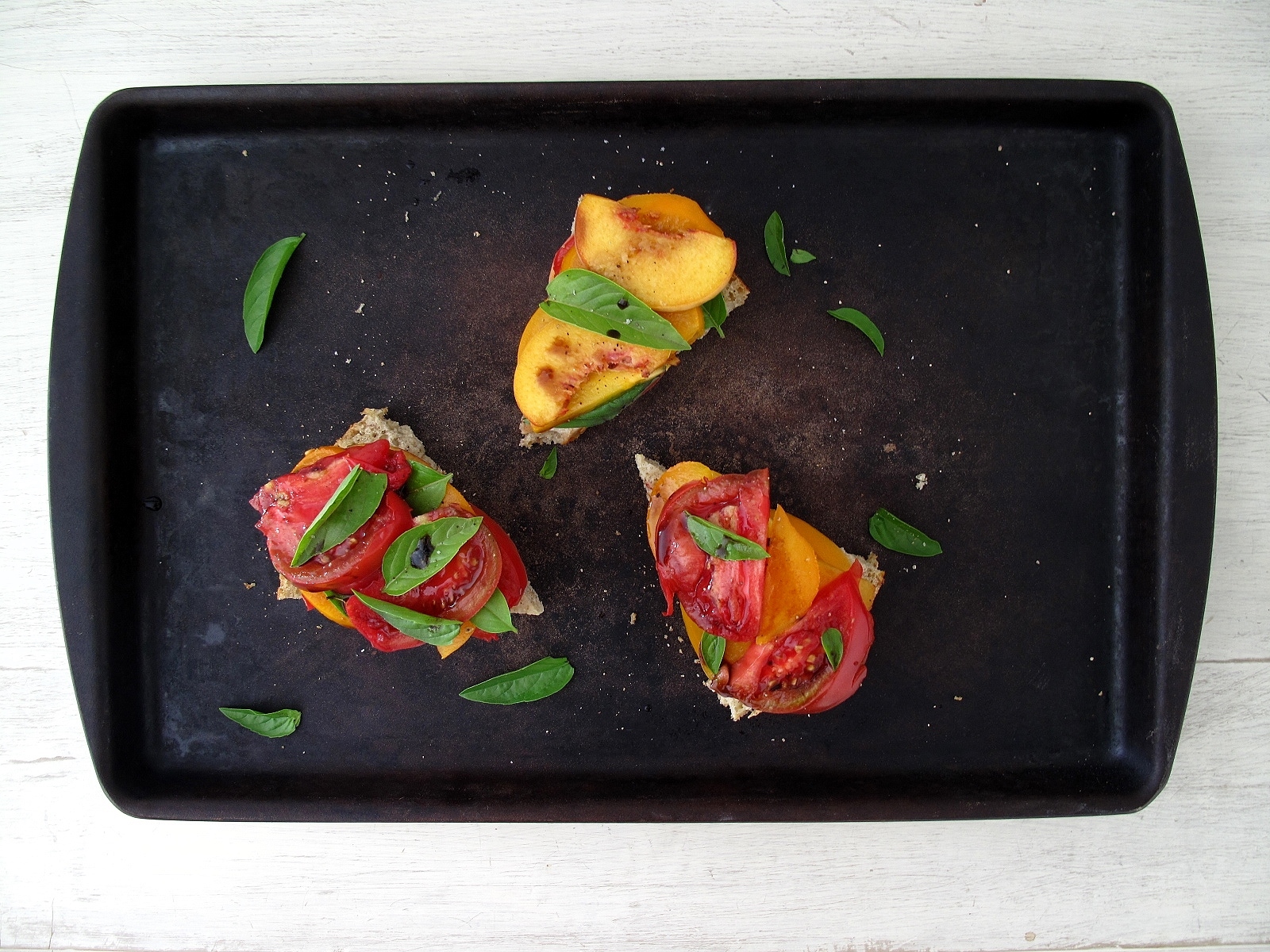
Tomatoes, Basil + Peaches, on Toast. serves 2-3

This is the simplest of summery dishes, which can be thrown together in a flash and enjoyed with some sort of protein to make a full meal. We are getting nearly to the end of the peach season here, but if you can find tree and vine-ripe peaches and tomatoes from a local source, the difference is magical — and worth the wait until next season once they are gone! 

1 peach, thinly sliced

2 large juicy tomatoes, sliced

a small handful of basil leaves, finely diced

a pinch of salt and ground black pepper

1 1/2 Tbs. extra virgin olive oil

1 1/2 Tbs. balsamic vinegar

whole-grain, gluten-free bread, toasted (or good slices of whatever you prefer)

  • Combine the sliced peach and tomatoes with the basil in a large bowl.
  • Measure in the balsamic and olive oil and salt and pepper to taste.
  • Stir to combine, and then spoon atop, crusty toasted bread.