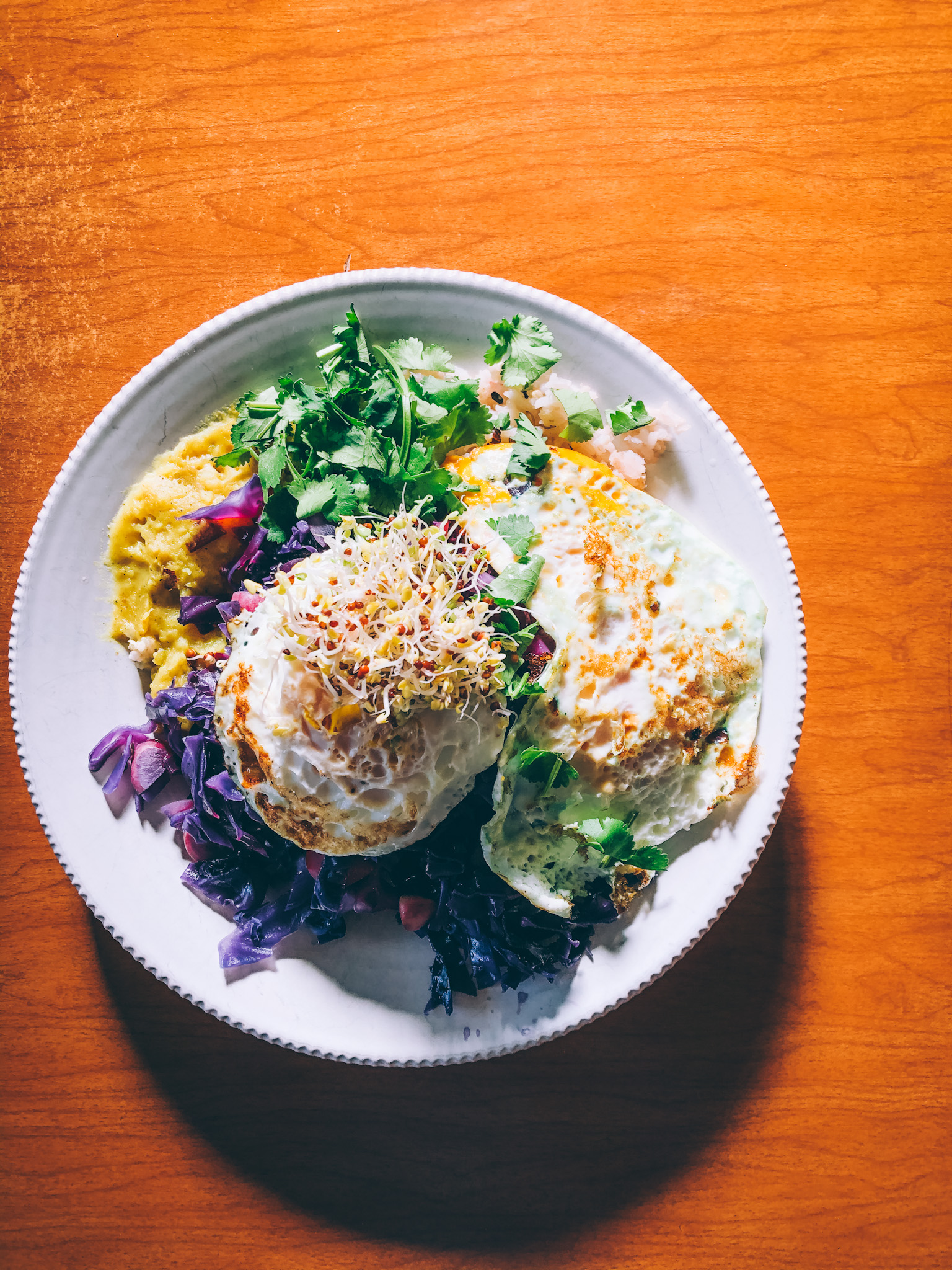
The Six Tastes for Balanced Meals and Digestion

For a long time, it’s felt appropriate to share a food as medicine approach to eating in this space, but I’m not so sure I’ve adequately explained how to do this other than to share meals that are largely based on whole, minimally processed from-nature ingredients. 

I know you want to eat food and meals that taste good, and are also good for you, but it’s important to recognize that everything we eat also has an effect.

That effect can be incredibly subtle or super obvious and I don’t mean just the effects of the caloric, macro or even micronutrient content of your meal, but because each subtle flavor within a food and meal will affect your body and your mind. 

Particularly when you eat in the same pattern of meals and flavors day in and day out. 

The Six Flavors 

There are six primary flavors within foods and ideally, all six flavors are incorporated into main meals, and at least four flavors are enjoyed at breakfast when we tend to eat a smaller amount. The six flavors are: sweet, salty, sour, bitter, pungent, and astringent

Now, what foods have which flavor? And what are their effects? 

Sweet 

The SWEET taste comes from foods that contain natural sugars: sweet root vegetables like carrots, squash, beets, all fresh and dried fruit, whole grains, natural sweeteners like honey, maple syrup, and molasses, and fresh dairy products such as milk, butter, and ghee. 

The sweet flavor builds tissues within the body, calms the nerves and nervous system, and relieves hunger. It’s the flavor you likely reach for when you’re eating to soothe an emotion or for comfort. This is natural since the flavor of our first food of milk is sweet. That food-memory association between sweet food, love, and being comforted is particularly strong. 

If you are dry, thin, nervous, anxious, scattered, or have nerve disorders, more naturally sweet foods are indicated and may be missing in adequate amounts in your meals – these are the whole grains, root vegetables, sweet fruits, and natural sugars. 

Salt 

The SALTY taste comes from foods that are naturally salty including seaweeds like kombu, arame, wakame, and nori. Some water-based vegetables are also naturally a little salty including celery, tomatoes, zucchini, and cucumbers. And of course, natural salt such as sea salt or pink mineral salt provides this flavor. Adequately cooking our foods in salt, and adding in a teaspoon per serving of dried seaweed when cooking beans or other stewy meals is an excellent way to build the salty flavor into a meal that will help us to retain the water we consume and have tissues that are more deeply hydrated, as well as provide a natural source of iodine – a critical and often missing nutrient for optimal thyroid health. 

If you are dry, drink plenty of water but are still dehydrated, experience constipation or find that the meals you cook taste “flat,” incorporating the salty flavor during the cooking process, rather than at the end, can be especially helpful. 


Sour

The SOUR flavor comes from foods such as lemons, lime, vinegars, unripe fruit, and fermented foods such as yogurt, pickles, kimchi, sauerkraut, sourdough bread, soy sauce and tamari. Many individuals either avoid sour foods or over-do them in meals. Both not enough and too much can cause problems. Adding in just a little squeeze of fresh lime juice or a little spoonful of apple cider or white wine vinegar at the end of cooking meals is frequently just enough of the sour flavor to lubricate tissues and stimulate the digestion process.

If you tend to run extra warm or frequently experience hot, agitated emotions, experience acid indigestion or reflux, have loose or sticky, incomplete stools, rashes, inflammation, or itchy, acne-prone skin, you may be over-doing the sour taste in your meals. 

Pungent

The PUNGENT flavor comes from hot and spicy peppers, black peppercorn, onions, garlic, ginger, mustard, horseradish, wasabi, raw radishes and turnips, asafoetida, cinnamon and cloves. 

This flavor increases heat and stimulates digestion and metabolism. As such, you should incorporate it into your meals in slightly larger amounts if you are routinely cold, experience poor circulation, or have low digestive fire –meaning you don’t digest or tolerate foods well

But for many others, too much pungent flavorings causes extra heat, excessive sweating and inflammation, skin rashes, acne, or eczema, agitated emotions, acid indigestion or reflux, and loose stools and diarrhea. 

If you tend to be a person that’s eternally on the move, both physically or mentally, and find it difficult to slow down your mind or pause for a relax break or day, it’s safe to say you may also benefit from cutting out too much of the pungent flavor — take a couple weeks without onions, garlic, and spicy peppers and then take note of how you feel.

Bitter

The BITTER taste is one many of us avoid. That’s unfortunate because the actions of bitter are to stimulate the digestion process by telling the body to begin releasing essential digestive acids and enzymes. The bitter flavor also helps the liver performs its routine detoxification process (necessary to get rid of waste products, excess hormones, and toxins), and it lightens tissues that are puffy and retaining water. 

Bitter foods include aloe vera, dandelion leaves and root, dark leafy greens, all vegetables in the brassica family, burdock root, eggplants, Jerusalem artichokes, sesame seeds and oil, dark chocolate, coffee, and fenugreek seeds.

Like the pungent flavor, we want just a small amount of bitter flavors in our meals — not an excess. Where many people tend to consume too much bitter is in the form of coffee. Coffee is a stimulant, and caffeine can be particularly troublesome for the liver, especially if you have hormonal imbalances. Try to reduce your coffee intake to no more than one to two 8-oz. cups in the morning if you enjoy coffee regularly. 

Astringent

The ASTRINGENT taste comes in beans and legumes, cruciferous / brassica vegetables such as kale, cabbage, broccoli, and brussels sprouts, unripe bananas, pomegranates, cranberries, and most herbs and spices including basil, bay leaves, caraway seeds, coriander, dill, fennel seeds, marjoram, nutmeg, oregano, parsley, rosemary, saffron, turmeric, vanilla, coffee, tea, wine, and alcohol. 

The astringent flavor helps us to absorb water, and dry and tighten tissues. I’ve used an alcohol-based (astringent) toner on my face a couple times a day for years, and to no surprise, I’ve also tended to experience frequent dry skin. The astringent nature of my facial toner is a wonderful example of what happens internally when we consume astringent foods. This can be excellent and necessary, in small amounts! 

If you experience chronic diarrhea or varicose veins, two examples of the tissues not being able to hold onto their fluids, astringent foods or herbs may be beneficial in slightly larger amounts. On the other hand, if you have routinely dry skin, or a dry internal condition like constipation, eating and drinking less astringent foods will be helpful. 

Six Flavors in Balance

Above all, a great way to begin to understand the effect of the different flavors and particular foods is to really pay attention to the flavor of the foods you are eating. Can you taste the sweetness when thoroughly chewing a whole grain or a steamed carrot? Can you pick out the drying, astringent effect as you take a sip of black tea, coffee, or wine? Do you notice how you internally heat up after a sandwich with spicy mustard or a bowl of particularly spicy soup? And then what do you notice in the minutes or hours afterwards?

When you begin to eat more meals that have a balance of the flavors, you’ll also notice that ongoing digestive symptoms and food intolerances might begin to reduce and eventually may even go away. And because meals simply taste better without being elaborate or extra complicated, cravings or over-eating begins to be less of an issue.

Much of my nutrition practice is focused on individuals and athletes with digestive health issues such as leaky gut, food allergies and intolerances, chronic GI distress, malabsorption of foods and nutrients, and inflammation. If you’re tired, stressed, and not really sure what to eat to help or hurt anymore, I invite you to reach out to me for more personalized support.

What is Leaky Gut and What Does it Have to Do with Your GI Symptoms, Athletic Performance and Long-Term Food Intolerances?

Just after an incredibly warm, humid and ROUGH marathon in which my gastrointestinal system barely held on to the end, and then subsequently fell completely apart at the finish line. In a prelude to what’s below, I was also stressed out for weeks before that race.

Leaky Gut, also called increased intestinal permeability or gut permeability is when the tight junctions, which are the space between each of the cells that line the small intestine where nutrient absorption occurs, loosen a little and allow larger food particles and bacterial fragments into the bloodstream, potentially setting off an immune response and inflammatory reactions (1).  

If you have a digestive disorder or gut health problems, it’s generally safe to assume you have a leaky gut. Likewise, leaky gut symptoms can present in a wide variety of ways across multiple body systems – not just in the digestive system.  

Leaky Gut is associated with Irritable Bowel Disease (IBD), Crohn’s Disease (CD), multiple sclerosis (MS), rheutamoid arthritis (RA), type 1 diabetes (T1D), asthma, necrotizing enterocolitis, and autism spectrum disorder (2), as well as celiac disease, non-celiac gluten sensitivity, various skin disorders (if your skin has problems–then you have digestive problems), and more (3). However, we haven’t yet determined whether leaky gut is a cause or consequence of these disorders.

The Athlete Component

What is not as well known to a lot of the run long and run harder crowd is that sustained endurance activities, particularly the jostling and pounding that we do as runners, can and will cause a fair bit of leaky gut symptoms. If you consider the anatomy and physiology of this region of the digestive system, it’s easier to see why. Picture a person running a three (or four, or nine) hour marathon or ultra endurance race, or a series of training runs day after day and throughout weeks and months. The race and many of the runs leading up to the race is going to be a hard and a long effort (sometimes both), which we also will sometimes begin without feeling as recovered from the last effort as we’d prefer. Then, while running, we down any number of foods and food-like substances to provide fuel to sustain the effort and to “train the gut.” This fueling on the go is something the digestive and nervous systems are arguably not designed for. We’re “supposed to” be in rest and digest mode while we’re processing those calories. So utilizing them on the go is a stress to the system.

Then there’s the gut itself. At the small intestine, the cells between it and the bloodstream are approximately one cell thick. This is because this is the site where broken down nutrients move through to be transported to the liver and other regions of the body for use. It’s super thin so nutrients can get where they’re supposed to go. But one cell, and the space between it and the next one, is pretty easy to damage with jostling and stress. So even with a perfect diet, a hard long run (or even a hard shorter run) can cause some damage down there. This is why many people have digestive complaints for three to five days after a race or hard effort. That’s exactly how long it takes for the epithelial lining to turnover into completely new cells!

But what makes leaky gut become chronic, thus inviting long-term digestive (or widespread) symptoms?

There are several lifestyle factors that can also lead to and sustain a leaky gut including stress (a BIG one!), lack of sleep, eating inflammatory foods, alcohol, antibiotics, oral contraceptives, prescription medications, exposure to environmental toxins, and frequent use of NSAIDS such as ibuprofen. Likewise, nutrient deficiencies, poor digestion due to digestive enzyme deficiency, overeating in general, wrong ratio of dietary fats, gut microbe dysbiosis and (sometimes hidden) other food allergies can also contribute. Oofda! That’s a lot of factors that can be working against us.

That Villain Gluten and the Bacterial Connection

Dr. Alessio Fasano, a leading scientist who studies celiac disease and related pathologies, discovered an enterotoxin called zonulin a few years ago. Zonulin disassembles the tight junctions in the intestinal lining, allowing pathogens through and thus causing more intestinal permeability. Dr. Fasano’s research team found that zonulin release is primarily triggered by both bacteria and gliadin. Gliadin is part of the gluten protein complex (2.) Hence the reason many of us are either mildly or definitively reactive to gluten-containing foods, at least some of the time.

Before developing increased intestinal permeability, changes in the gut microbiota have also been shown to occur, which, given that zonulin release is often triggered by bacteria, suggests that the bacterial change occurs first, and then zonulin release assists the epithelial tight junctions to disassemble, leading the way for subsequent disorders or diseases to develop after sustained leaky gut-inflammatory reactions. It has been suggested that an environmental stimulus, (that list above including stress, gluten, a virus, inflammatory diet, etc.) first causes the change in the gut microbiota (2).

How to Heal

Healing chronic leaky gut often takes a many-pronged approach. We have to remove as many of the things that are causing it as it’s appropriate to. For those of us who aren’t willing to give up endurance athlete lifestyles, that means eating a diet appropriate for the individual, repletion of nutrient deficiencies, and lifestyle tactics (that stress relief component!) become particularly important.

Want to Know More?

A leaky gut is one of the primary categories of digestive imbalances I look for when working with individuals clinically with digestion-related and sometimes widespread symptoms. Often when we’re experiencing chronic GI distress, fatigue, and malabsorption of foods and nutrients, there will be imbalances in several categories, and we begin working on the areas that appear most pertinent. I shared more about this topic in the nervous system’s role in part 1, the immune response and subsequent inflammation in part two, gut microbes and dysbiosis in part three and the importance of chewing our food in part four.

And If you’re tired of dealing with your wonky GI symptoms and fatigue, and would like to get back to feeling and training well, I invite you to reach out to me for more personalized support.

References:
1). Lipski, E. (2012). Digestive Wellness (4th ed). McGraw Hill: New York, NY.
2). Sturgeon, C. and Fasano, A. (2016). Zonulin, a regulator of epithelial and endothelial barrier functions, and its involvement in chronic inflammatory diseases. Tissue Barriers, 4(4). https://doi.org/10.1080/21688370.2016.1251384.
3) Kneessi, R. (2017). NUTR 635: Adverse Reactions to Food. [Lecture]. Maryland University of Integrative Health. Retrieved from: https://learn.muih.edu

What exactly is intuitive eating? Cravings vs. intuition

This is the time of year when it’s common to think about ways to improve our health. And if you are one of the majority that has a long and unsavory history with your relationship to food and/or your body, you just might be thinking more about intuitive eating this year. Or perhaps you assume you’re already eating intuitively by eating what you want when you want to.

For many of us with a history of rigid food beliefs, chronic dieting, or disordered eating behaviors, that step of tuning into and actually honoring our hunger, cravings, and food desires is a BIG start — and leads to less feast and famine mentality, peace around food and less guilt in indulging once in a while. It also can mean finally stepping away from the chronic calorie and macro tracking which tend to fuel the rigid behaviors, and dare I say it, throwing out your scale or having your partner/roommate hide it far away where you just might forget about it for a while – I mean several months, or longer.

One thing I noticed as I became less of a disordered eater and more of an athlete focused on feeling good in my body and recovering from workouts, is that I naturally began honoring my hunger more and focusing less on what my body looked like or what I thought I should be eating. It’s like I opened the fridge, took a look around, and then closed it, thinking nope none of this, a peanut butter sandwich sounds good right nowas well as a couple big handfuls (completely unmeasured and probably ate more than that) of tortilla chips.

And truthfully, I ate two pieces of pie every day for nearly a week around Thanksgiving this year on top of my “normal eating” meals and semi-reduced athletic activity, and I didn’t think about my weight or the scale or calorie tracking once. I also haven’t thought about pie at all in the weeks since then. But is that intuitive eating?

As a nutritionist, I always want the best for every person I work with, and quite honestly, everyone else too. And I always fall back on individualized support. Because for many people that have a long history of not tuning in to their body and hunger signals, the eat what I want when I want it, and maybe that means two slices of pie a day approach is okay with me. It’s a start. But it’s probably more appropriate to call it the honoring your cravings and letting go of guilt and diet-culture beliefs about food approach, rather than truly eating intuitively. I’ll put my pie-eating habits at Thanksgiving into this category.

What is Intuitive Eating?

I think the best way to share what intuitive eating is is to go back to just basic intuition. We often talk about intuition when we say we have a gut feeling, or “we just know something” and logically, it may not always make a ton of sense. We make these gut-feeling decisions when we choose a job that pushes us out of our comfort zone, or we make a big move, or choose a medical procedure (or opt not to), when it’s not the most logical thing to do.

But how do we “just know” that a food is right for us or is what we need? One of the best ways to begin to learn this is to pay attention to how you feel afterwards. Intuitive eating can best be described as paying attention to and honoring what your body is telling you it wants and needs, rather than what your mind wants or craves.

Signs that Your Body Didn’t Approve the Meal

When you’re done eating and in the three to five hours after, how do feel? How is your energy? Did you get really tired, or alternatively, super stimulated? Did you start to get some of those not-so-optimal digestive symptoms, like bloating, gas, pain, gurgling, reflux, heartburn, nausea, feeling just plain heavy and lethargic, etc.? Were you running to the bathroom or didn’t have a bowel movement today (also known as constipation)? How was your mood? Were you wired, anxious, scattered, fearful or angry, frustrated, short-tempered and snappy? All of those are influenced by what we’re eating and how we’re eating and whether we’re digesting and assimilating foods and nutrients optimally.

If what sounds good is a giant bowl of popcorn for a snack or dessert every day, and then we’re mentally scattered, gassy, constipated, and anxious afterward or the next day, then maybe our craving for popcorn is being influenced by our imbalance, rather than our intuition.

Another example is a desire for particularly salty or spicy foods with lots of onion and garlic. If those are more of what the mind is craving versus what the body is truly desiring, then we might be particularly short-tempered, easily frustrated, have acne or skin rashes, heartburn or nausea, and have loose stools or diarrhea.

One more example goes back to my pie, and in previous life phases, daily ice cream routine. Frequently eating heavy, cold foods often tends to make us feel heavy, lethargic, have sluggish or incomplete bowel movements, feel depressed or have a low mood, promote inflammation, and develop a lot of extra mucus in our sinuses and elsewhere. Many years ago now, I ate ice cream basically daily, and during a certain period, multiple times a day. During the multiple times per day phase, it probably began as my closest interpretation of my intuition–because I was way too light and undernourished, and my brain just simply needed kcals. But after some time, my weight had definitely stabilized and swung back in the direction of my heaviest, and I began to be extremely anxious all the time, craved more sugar (of course), and finally had a major candida outbreak. Candida is a yeast that feeds on sugar! My cravings were coming from the not-so-beneficial organisms in my GI tract – not my intuition.

So it can be a little difficult to graduate to true intuitive eating once we’ve mastered honoring our hunger and shoving off the influences of dieting culture, and are no longer just following cravings and feel like ice cream every day, popcorn and peanut butter on repeat, or grazing all day instead of three solid meals.

Why is all of this even more important? Much of what I write about here is in the realm of digestive health – and/or eating appropriately to fuel our athletic lifestyles. And when I work with individuals, I often encourage them to honor their intuition. But sometimes we need a little more help in deciphering, are we eating enough despite what we think is intuitive eating?, Is that food that I’m craving helping or harming my return to balanced digestion?, Is my daily pie or ice cream habit giving me the calories I need, but encouraging future imbalanced health down the road, and/or already showing signs of imbalance? And admittedly, the more symptoms of imbalanced health that we have (such as some of the above), the more challenging it becomes to self-determine cravings that fuel the imbalance versus eating intuitively that returns us to true, optimal health.

A good way to start to tune in is to keep a little journal of how you felt in the hours after meals for a few days, and see if you have more of the sub-optimal symptoms and moods than you were aware of before. And if you suspect you’re more in the realm of honoring cravings right now and want support in starting to eat more intuitively, feel free to reach out and chat with me in a nutrition consult.