Training the Gut for and during Long Runs and Endurance Sports

Now that it’s full on summer, let’s check in about a topic that is pertinent for all the endurance athletes, and particularly runners, with wonky guts and/or rigid beliefs about fueling during longer efforts. 

I’ve heard so many variations on the following over my years as a runner:
“I can’t eat anything before a run, ever.”
“I can’t eat anything during a run.”
“ I can’t drink anything more than a little water during a run.”
“I have no appetite for hours (or days) after a run and my GI is messed up for several days.”
“I’m not recovering from long runs or races as well as I used to.”

If you currently relate to any of those statements, I want you to know that the digestive system is highly adaptable. Gastric emptying as well as stomach comfort can be ‘trained’ during endurance activities.

Stored glycogen, or the amount of carbohydrates in our system already, are depleted after about 80 minutes at marathon pace, so for most athletes training for longer efforts, fueling with some sort of carbohydrate during exercise is essential. This training of the gut can improve the delivery of nutrients during exercise so during these long efforts, your system gets the fuel you need and are ingesting, and alleviates some (and perhaps all) of your negative GI symptoms.

How Can I Train my Gut? 

What we currently know is that the stomach can adapt to ingesting large volumes of  both solids, fluids, or combinations of the two. 

Just think about those competitive eaters who can down dozens of hot dogs in a matter of minutes. Disgusting thought, I know, but they have to train their systems to do it!  For endurance athletes needing fuel for the long run, we need to do our own version of gut training. 

This happens both during and outside of exercise because eating a higher carbohydrate diet leads to our intestinal cells, called enterocytes, being able to absorb and utilize carbohydrates as fuel more efficiently. 

To get sugar (carbohydrates) from our small intestine where absorption occurs into our blood, the sugar molecules mostly have to be transported across the membrane by glucose or fructose transporters. Think of a taxi transporting you from the airport to your destination. When we eat a diet high in carbohydrates, our body naturally increases the number of sugar taxis (glucose and fructose transporters). 
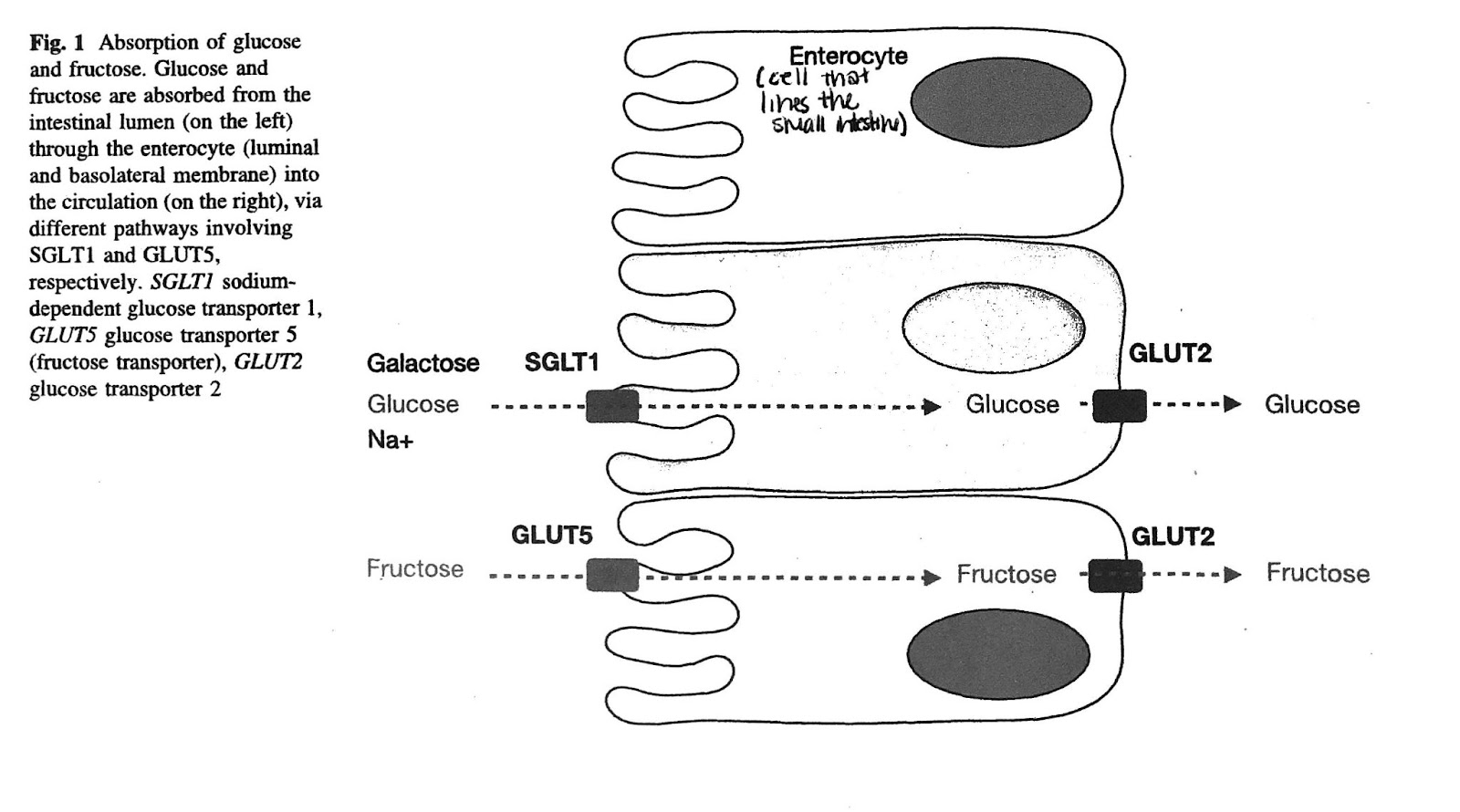
You’ll notice some of these taxis are sodium-dependent, which is a super essential nutrient for endurance exercise, particularly in the summer, but a topic for another day. 

We also know that increasing dietary intake of carbohydrates increases the rate of gastric emptying. This occurs rapidly with a change in diet, within just a few days. So what this means is that you can fuel with more carbohydrate before exercise, fuel with more carbohydrate during exercise, not feel like you’re running around with a giant, full, sloshy gut, and perform the training run or race better, because you were using the fuel you needed to perform adequately. 

And, we also now have evidence that when you fuel with the appropriate amount of carbohydrates before, during and after an exercise bout, recovery from hard efforts is substantially improved. 

When your body has all the sugar taxis it needs to get carbohydrates out of the digestive system and into the blood stream for circulation and use as fuel as quickly and efficiently as possible, and our body gets used to using carbohydrates added on the go as fuel, the chances of developing GI complaints during exercise are much smaller.

Win, win, and win, in my opinion. 

How Much Carbohydrate Can and Should I Be able to Tolerate ?

How much carbohydrates you need or should consume during exercise depends on a few factors. One, how long you’re going to be out there. Two, the intensity of the effort. And three, your gender. 

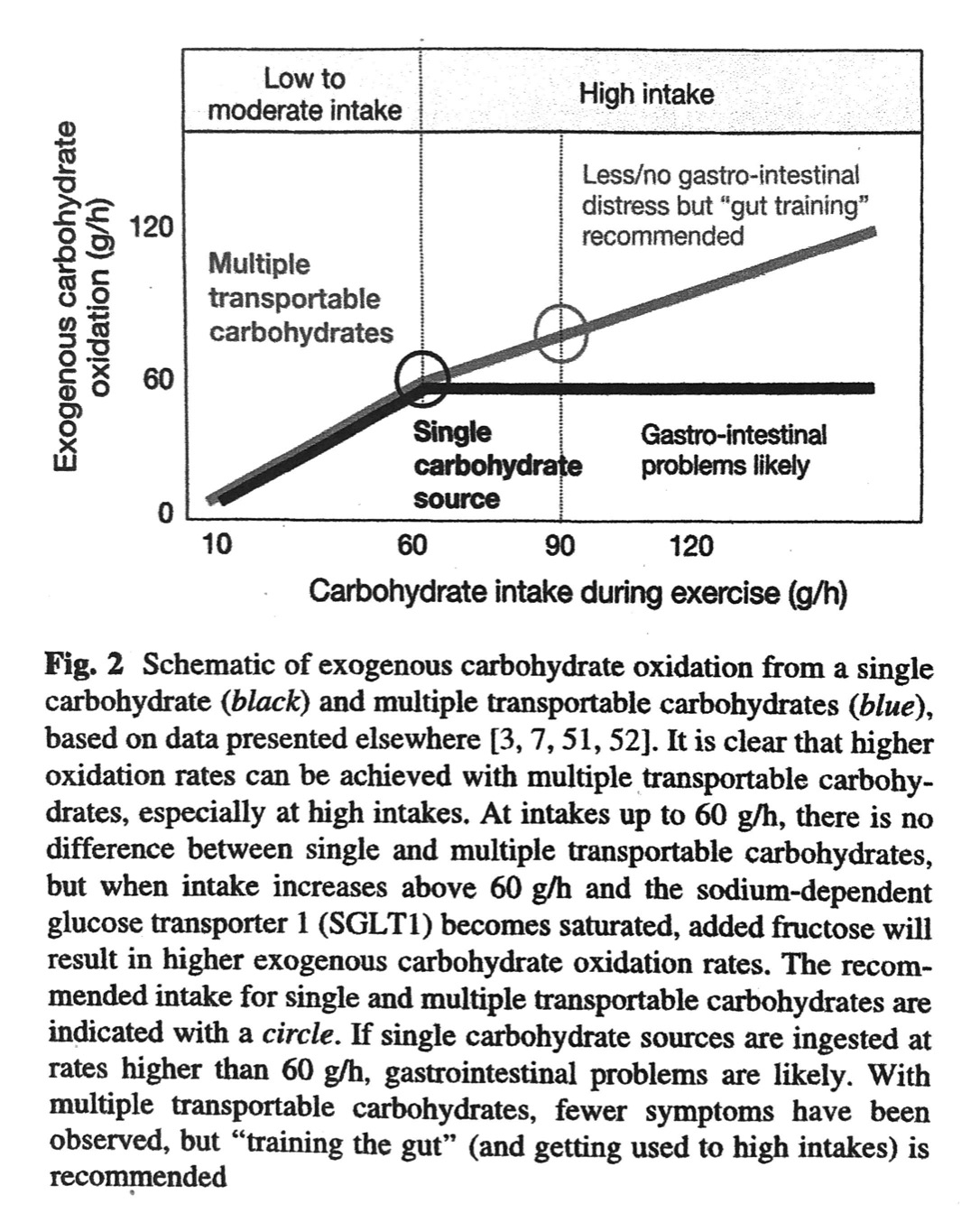
Exogenous carbohydrate oxidation, or the amount of carbohydrates we can use during exercise, peaks around 60 grams per hour when it comes from glucose only.  When fructose is ingested in addition to glucose, carbohydrate oxidation rates are elevated above 60 grams per hour, to 90 to 120 grams per hour (when the gut has been trained). In women, however, we have evidence that carbohydrate oxidation rates appear to be maximized at about 60 grams of carbohydrates per hour (2). If you’re a female and looking to maximize your fueling and racing/recovering capacity, you can experiment with ingesting more than 60 grams per hour. This upper limit will likely be individual.

The current guidelines for fueling are to take in up to about 60 grams per hour of carbohydrates for exercise lasting up to two hours. 

And when the effort lasts longer than 2 hours, men should experiment with increasing their intake to slightly greater amounts of carbohydrate (90g/hr), but women may feel best at sticking with 60 grams per hour. These carbohydrates should be a mix of glucose and fructose or maltodextrin and fructose. Virtually every sports nutrition product for use during exercise includes a mixture of carbohydrates these days so most people will not need to worry about getting the different sources. And most do-it-yourself whole food fuel sources will also include both fructose and glucose. 

Note that sucrose, which is contained within many whole foods and is also what makes up simple table sugar, is a disaccharide, meaning it has two different sugar compounds, fructose and glucose.
Here’s another way to look at the timeline of fueling needs:

Exercise Duration0-59 minutes1 hour2 hours2.5 hours3 hours
Grams of Carbohydrate Per Hournone3030-60g : women
Up to 70 g/hr: men
(higher intensity = higher need)
30-60g : women
Up to 70 g/hr: men
60 g: women (can experiment with more)
Up to 90 g: men
(can experiment with up to 120 g)

How Long Does Training the Gut Take? 


If you’re training for a race and practicing fueling during long efforts, it doesn’t take more than a few days to a couple weeks to increase those sugar taxis in your gut. Based on animal data, an increase in dietary carbohydrate from 40 to 70% could result in a doubling of SGLT1 transporters over a period of two weeks (1).

But it’s important to practice your race nutritional strategy in training, get used to higher volumes of solid or liquid intakes, and higher carbohydrate intakes both during and outside of training. 


As always with fueling for sports, it will take a little individual experimenting and tweaking to find what works for you so you’re less likely to end up looking like this during your next long run or race:

Will Training My Gut Fix all my Exercise-Related Digestive Woes? 

Perhaps following the above recommendations will be a simple answer to fixing all your exercise-caused angry/sad midsection woes. 

But many people with digestive systems that are more prone to upset also need to pay special attention to what you are and aren’t consuming, and how much you’re eating in all the hours outside of training. This can be very individual. 

Want to Know More?

Within my nutrition practice, I specialize in digestive imbalances. Often when we’re experiencing chronic GI distress, fatigue, and/or malabsorption of foods and nutrients, there will be imbalances in several systems of the body simultaneously. I shared more about this topic in the nervous system’s role in part 1, the immune response and subsequent inflammation in part two, gut microbes and dysbiosis in part three and the importance of chewing our food in part four. Check those out or reach out to me for more personalized support for gut healing, or to go from not being able to tolerate fueling, to training your gut for the amount you need.

References:

1). Jeukendrup, A.E. (2017). Training the Gut for Athletes. Sports Medicine, 47(Suppl 1): S101-S110. https://doi.org/10.1007/s40279-017-0690-6  
2). Wallis, G.A, et al. (2007). Dose-response effects of ingested carbohydrate on exercise metabolism in women. Medicine and Science in Sports and Exercise, 39(1): 131-8. https://doi.org/10.1249/01.mss.0000241645.28467.d3. 

What Does Your Tongue Say About Your Digestion?

Sometimes our bodies are really weird. And sometimes they’re super cool.

Today let’s chat about how they’re cool. Did you know our bodies have all sorts of ways to indicate and reflect externally, what is going on internally?

One of these ways is by looking at your tongue. Let’s take a look at what we can learn from assessing our tongues today!

But first, if you’re a regular reader in this space, yes, I changed my website and business name. But, it’s the same old mostly serious, sometimes goofy me (Rebecca). I’ll continue to share recipes here interspersed with more just-plain-nutrition-topics. Thanks for continuing to read and follow. Now let’s get to learning about your tongue!

When you look at your tongue, you can see clues about internal moisture (or lack thereof), heat and cold, tissue integrity and health, and overall vitality. All of this begins in the digestive tract, since the food you eat literally becomes the cells and tissues of your body within the following days and weeks. 

There are several aspects of the tongue that clue us into what is going on, including: 
Color
Shape, including width and vertical thickness
Cracks
Marks (spots, swollen papillae)
Coat (its presence, thickness, color, and how rooted it is)
Tension
Under tongue vein conditions and/or teeth indentations

For instance: The color of a healthy tongue is generally a moderate shade of pink. If yours is darker or paler, that indicates there may be something going on with the blood and/or blood circulation, such as excess heat and internal inflammation, or anemia (which at its most basic definition means lack of blood). A tongue that is purple or bluish, or has spots of those colors tells us the blood isn’t moving. You might really be suffering from a lack of circulation and feel particularly cold compared to others. Adding warmer spices to your foods and circulation-promoting herbs can particularly help cold, stagnant blood circulation. 

The tongue size and shape indicates the state of fluids and hydration within the body, as well as overall tissue nourishment and balance. A swollen, wide tongue usually indicates there’s excess moisture, mucus, or edema, and a dry, thin, tongue is often the opposite. A tongue that’s thick vertically often indicates excess heat and internal inflammation. 

Likewise, lack of vertical or horizontal cracks indicate there is adequate bodily moisture. Are you routinely dehydrated? Do you have cracks on your tongue? 

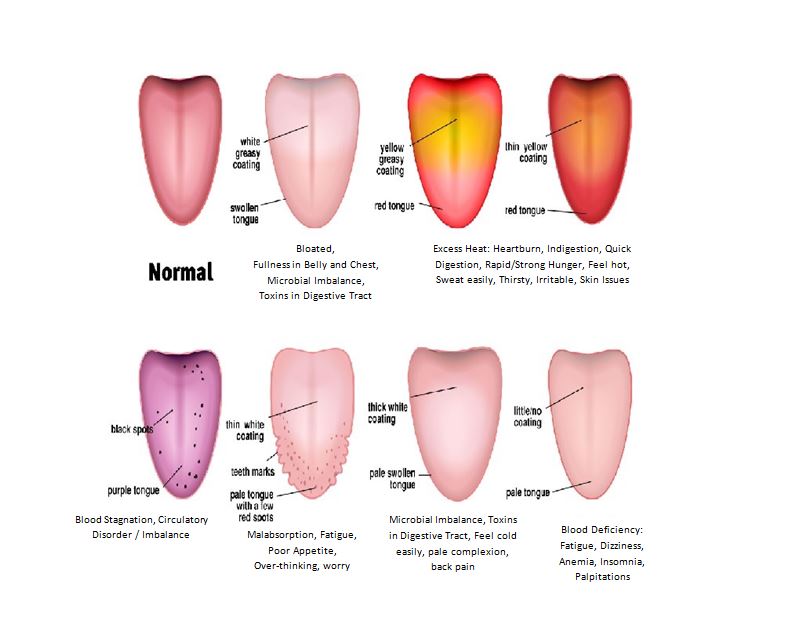
The tongue’s coat and the color of the coat in particular are tell-tale signs of how digestion has become imbalanced and can be improved. If there is no coat at all or it’s present in patches, this tells us your digestive capacity is a bit insufficient. We need to work on helping the digestive system assimilate and absorb those nutrients from your foods!

And a particularly thick coating tells us there’s some sort of excess going on, in the way of imbalanced gut bacteria, excess moisture which often presents as bloating after meals, or stagnant digestion, where you feel like your food just sits in your gut. 

One of the most common indications of imbalance I see is tooth marks or indentations or ripples on the sides of the tongue. This means the digestive fire is low, and you’re not assimilating the foods you’ve eaten, leading to poor tissue quality and all sorts of bodily presentations of feeling not optimal.

Take a look at your tongue. What do you see? 

Here’s mine. What can you determine about my digestion by looking at it?

My tongue assessment:
Shape: A little wide, indicating possible lymphatic stagnation or mucus.

Color: Somewhat pale (not shown super well in this photo); indicating possible anemia and/or malnourishment.
I tend to float back and forth on the line between clinical anemia and low-normal red blood cells, have fairly chronic low digestive ability, and need for a ton of supplements to stay in “health” despite consistent focus on optimizing digestion and food first. This clue checks out with my actual lab data and long-term health tendencies.

Thickness and Color of the Tongue Coat: Spotty. Mostly absent from the front; thicker than ideal in the back, indicating poor digestive capacity in the middle and lower GI (stomach and small intestine), and excess mucus or stagnation in the lower GI (colon), probably as a result of the under functioning section above. The color is a transparent white which is ideal!

Tongue Moisture: Moist – which is ideal.

Cracks on the Tongue Body: none – ideal.

Lastly, I tend to have mild indentations or tooth marks on the sides of my tongue in the middle to front; particularly in the morning when I wake up. This indicates I’m likely not digesting the last meal of the day well and could use simpler to digest evening meals – and a little more help in getting digestive functioning to optimal: as reflected in the above areas.

Overall, my tongue indicates fairly exactly what I tend to find with my digestion, and what long-term lab data has shown: Sub-optimal digestion with a tendency to not digest and assimilate nutrients well.

I will say with consistent work at it, my digestion has improved substantially from what it used to be, and I’m less super-obviously symptomatic. I rarely experience bloating, sharp or low-grade GI pain, etc.

Here’s another illustration with notes about what the presentation is indicating in terms of digestion and health: 

Tongue Types – Digestive Health

Does your tongue suggest your digestion is functioning optimally? Or do you find indications that reflect exactly what you’ve had going on in there? If you’d like to learn more about how you can fix it, I’d love to speak with you in a quick phone consultation! Or learn more about your digestion in my other articles on the topic of optimal digestion and gut health

References:
Bunce, L. (2017). Tongue Assessment for Western Herbalists: A Primer.
Coatzee, O. (2017). NUTR 663: Sports Nutrition; Eastern Medicine Tongues. [Lecture]. Maryland University of Integrative Health. Retrieved from: https://learn.muih.edu

What is Leaky Gut and What Does it Have to Do with Your GI Symptoms, Athletic Performance and Long-Term Food Intolerances?

Just after an incredibly warm, humid and ROUGH marathon in which my gastrointestinal system barely held on to the end, and then subsequently fell completely apart at the finish line. In a prelude to what’s below, I was also stressed out for weeks before that race.

Leaky Gut, also called increased intestinal permeability or gut permeability is when the tight junctions, which are the space between each of the cells that line the small intestine where nutrient absorption occurs, loosen a little and allow larger food particles and bacterial fragments into the bloodstream, potentially setting off an immune response and inflammatory reactions (1).  

If you have a digestive disorder or gut health problems, it’s generally safe to assume you have a leaky gut. Likewise, leaky gut symptoms can present in a wide variety of ways across multiple body systems – not just in the digestive system.  

Leaky Gut is associated with Irritable Bowel Disease (IBD), Crohn’s Disease (CD), multiple sclerosis (MS), rheutamoid arthritis (RA), type 1 diabetes (T1D), asthma, necrotizing enterocolitis, and autism spectrum disorder (2), as well as celiac disease, non-celiac gluten sensitivity, various skin disorders (if your skin has problems–then you have digestive problems), and more (3). However, we haven’t yet determined whether leaky gut is a cause or consequence of these disorders.

The Athlete Component

What is not as well known to a lot of the run long and run harder crowd is that sustained endurance activities, particularly the jostling and pounding that we do as runners, can and will cause a fair bit of leaky gut symptoms. If you consider the anatomy and physiology of this region of the digestive system, it’s easier to see why. Picture a person running a three (or four, or nine) hour marathon or ultra endurance race, or a series of training runs day after day and throughout weeks and months. The race and many of the runs leading up to the race is going to be a hard and a long effort (sometimes both), which we also will sometimes begin without feeling as recovered from the last effort as we’d prefer. Then, while running, we down any number of foods and food-like substances to provide fuel to sustain the effort and to “train the gut.” This fueling on the go is something the digestive and nervous systems are arguably not designed for. We’re “supposed to” be in rest and digest mode while we’re processing those calories. So utilizing them on the go is a stress to the system.

Then there’s the gut itself. At the small intestine, the cells between it and the bloodstream are approximately one cell thick. This is because this is the site where broken down nutrients move through to be transported to the liver and other regions of the body for use. It’s super thin so nutrients can get where they’re supposed to go. But one cell, and the space between it and the next one, is pretty easy to damage with jostling and stress. So even with a perfect diet, a hard long run (or even a hard shorter run) can cause some damage down there. This is why many people have digestive complaints for three to five days after a race or hard effort. That’s exactly how long it takes for the epithelial lining to turnover into completely new cells!

But what makes leaky gut become chronic, thus inviting long-term digestive (or widespread) symptoms?

There are several lifestyle factors that can also lead to and sustain a leaky gut including stress (a BIG one!), lack of sleep, eating inflammatory foods, alcohol, antibiotics, oral contraceptives, prescription medications, exposure to environmental toxins, and frequent use of NSAIDS such as ibuprofen. Likewise, nutrient deficiencies, poor digestion due to digestive enzyme deficiency, overeating in general, wrong ratio of dietary fats, gut microbe dysbiosis and (sometimes hidden) other food allergies can also contribute. Oofda! That’s a lot of factors that can be working against us.

That Villain Gluten and the Bacterial Connection

Dr. Alessio Fasano, a leading scientist who studies celiac disease and related pathologies, discovered an enterotoxin called zonulin a few years ago. Zonulin disassembles the tight junctions in the intestinal lining, allowing pathogens through and thus causing more intestinal permeability. Dr. Fasano’s research team found that zonulin release is primarily triggered by both bacteria and gliadin. Gliadin is part of the gluten protein complex (2.) Hence the reason many of us are either mildly or definitively reactive to gluten-containing foods, at least some of the time.

Before developing increased intestinal permeability, changes in the gut microbiota have also been shown to occur, which, given that zonulin release is often triggered by bacteria, suggests that the bacterial change occurs first, and then zonulin release assists the epithelial tight junctions to disassemble, leading the way for subsequent disorders or diseases to develop after sustained leaky gut-inflammatory reactions. It has been suggested that an environmental stimulus, (that list above including stress, gluten, a virus, inflammatory diet, etc.) first causes the change in the gut microbiota (2).

How to Heal

Healing chronic leaky gut often takes a many-pronged approach. We have to remove as many of the things that are causing it as it’s appropriate to. For those of us who aren’t willing to give up endurance athlete lifestyles, that means eating a diet appropriate for the individual, repletion of nutrient deficiencies, and lifestyle tactics (that stress relief component!) become particularly important.

Want to Know More?

A leaky gut is one of the primary categories of digestive imbalances I look for when working with individuals clinically with digestion-related and sometimes widespread symptoms. Often when we’re experiencing chronic GI distress, fatigue, and malabsorption of foods and nutrients, there will be imbalances in several categories, and we begin working on the areas that appear most pertinent. I shared more about this topic in the nervous system’s role in part 1, the immune response and subsequent inflammation in part two, gut microbes and dysbiosis in part three and the importance of chewing our food in part four.

And If you’re tired of dealing with your wonky GI symptoms and fatigue, and would like to get back to feeling and training well, I invite you to reach out to me for more personalized support.

References:
1). Lipski, E. (2012). Digestive Wellness (4th ed). McGraw Hill: New York, NY.
2). Sturgeon, C. and Fasano, A. (2016). Zonulin, a regulator of epithelial and endothelial barrier functions, and its involvement in chronic inflammatory diseases. Tissue Barriers, 4(4). https://doi.org/10.1080/21688370.2016.1251384.
3) Kneessi, R. (2017). NUTR 635: Adverse Reactions to Food. [Lecture]. Maryland University of Integrative Health. Retrieved from: https://learn.muih.edu