Coconut Grape Chia Pudding

IMG_9537


Most of my friends and aquaintances know me as the girl that knows a bit about agriculture and growing vegetables. Few of them remember or know that I started out in college as an English major, or that I actually did continue to take English classes all the way through, receiving a minor instead. All my favorite classes as an undergrad were in the English department, not the college of agriculture. I particularly enjoyed the upper division writing and research-intensive classes as I enjoyed reading others’ research even more than I enjoyed actually reading the classic literature itself.


IMG_9529


What I’ve been particularly excited about since deciding to go back to school is the opportunity to dive back into the academic literature—this time in a way that is a little more applicable and interesting to me now than the cohesion of magic and religious practices in medieval literature. Like grape juice. Is grape juice beneficial? Will the grape juice in my freezer enhance my athletic pursuits? Can it do other things?


IMG_9560


I’ve had a gallon of really tasty homemade/homegrown grape juice hanging out in the freezer for over a year now. My best friend’s parents gifted it to us for Christmas in 2014. Having already used half of it last year, I knew it was good. But I rarely ever crave a glass of juice, let alone a gallon of it. And William, though he’s quite keen on green juice, proclaimed grape juice is for summer, and turned up his nose when I asked if he’d drink it.

After defrosting the juice, I noticed the thick must from the home-pressing settling at the bottom. It looked, smelled, and tasted like there was a lot of nutrition there, in a good way. Since tart cherry, pomegranate, and beet juice have all been in the research and news these last few years for their benefits to athletes, I started wondering what the verdict has been on grape juice? I did a quick initial search and scan through peer-reviewed journals, and though there’s not an overwhelming amount of research on grape juice and exercise, there is enough to suggest grape juice might increase running time-to-exhaustion (1), improve recovery (2) and immune function (3). What I’m really excited about is to learn how to pick apart the good research from the bad since a study can be found to support just about every viewpoint on any given topic.

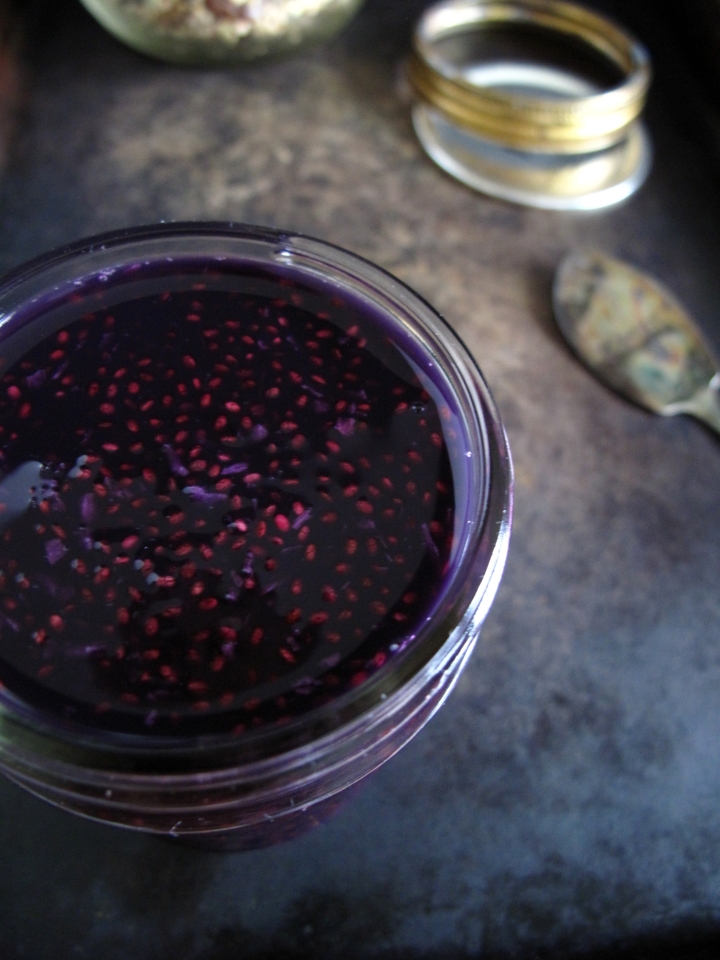
For now, I’m comfortable with the idea that eating this coconut-grape chia pudding might have helped me avoid coming down with a full-blown cold last week when I was experiencing a little sore throat and depleted energy. Or it might have been that I recognized the signs and took it easy for a few days. In any case, I’ve been wanting to turn that grape juice into chia pudding for a while now, and as it turns out, grape juice thickened up with chia seeds and some coconut makes an excellent dessert, or breakfast, if you’re of the mind.


IMG_9550


Coconut-Grape Chia Seed Pudding, makes 4 cups

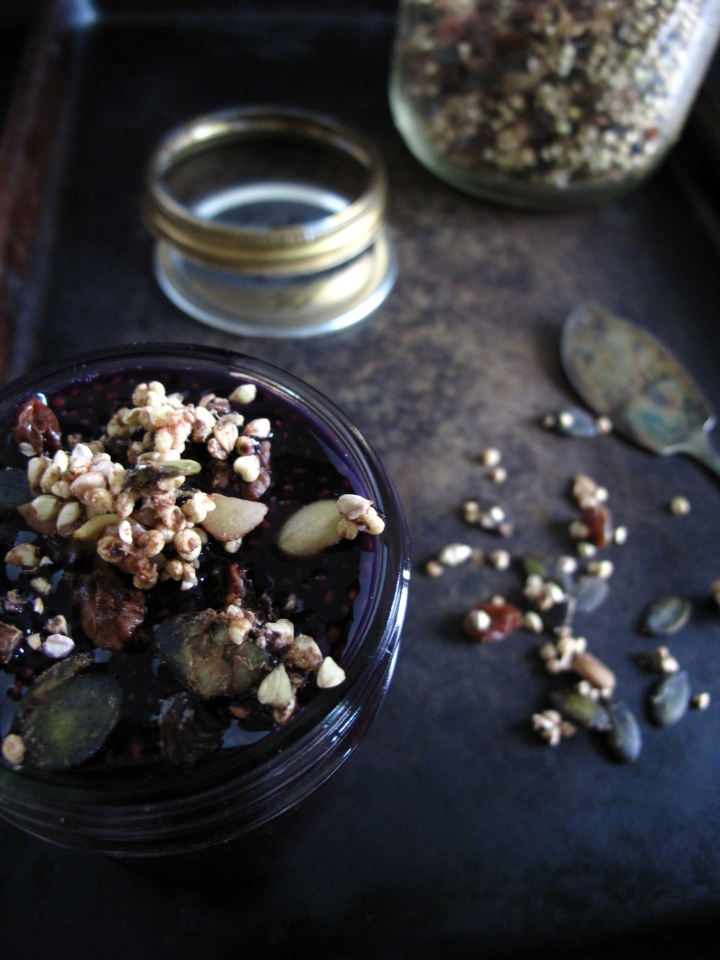
The Recipe Redux challenged us to an easy, seven-ingredient-or-less recipe this month since it’s Income Tax Season. What I like about this recipe is that it makes a big batch, can last for several days or feed a crowd, and can be interchanged with another type of juice for a flavor mix-up. I prefer to serve it with tangy yogurt and crunchy granola, to create more of a parfait, but the chia pudding is also quite nice on its own. 

3/4 cup unsweetened coconut flakes

3/4 cup chia seeds

4 cups 100% grape juice

1 tsp. pure vanilla extract

granola of choice, optional

plain unsweetened coconut yogurt, optional

peanut butter, optional

  • In a medium bowl, whisk the chia seeds, coconut flakes, vanilla extract, and grape juice together. Let sit out for a few minutes and then whisk again to make sure the chia seeds are evenly distributed. Chill in the fridge for at least 4 hours or overnight.
  • Remove from the fridge, spoon into dishes, and serve as is or with the optional mix-ins.


References:

  1. Toscano, L.T., Tavares, R.L., Toscano, T.T., Oliveira da Silva, C.S., Monteiro de Almeida, A.E., Biasoto, A.C.T.,…and Silva, A.S. (2015). Potential ergogenic activity of grape juice in runners. Applied Physiology, Nutrition, and Metabolism. 40(9): 899-906.
  2. Dalla Corte, C.L, De Carvalho, N.R., Amaral, G.P., Puntel, G.O., Silva, L.F.A., Retamoso, L.T.,…and Soares, F.A.A. (2013). Antioxidant effect of organic purple grape juice on exhaustive exercise. Applied Physiology, Nutrition, and Metabolism. 38(5): 558-565.
  3. UPI NewsTrack. (2008). Quercetin, found in produce, fights flu. Business Insights: Global. Web. 20 Mar. 2016.

Smoky Pear Tea Cakes

IMG_8719


As it turns out, I am a giant nerd. I’ll gladly take an evening in with a good book just about any day. I take books to all family gatherings and long road trips. I have no problem sitting in a room full of people, disengaged from the small talk, reading. Like a true nerd, I love libraries and bookstores, and of course, good old-fashioned books.


Nerdism started early but back when I learned to read, I was a slow learner and had to go to Mrs. Ashcraft’s for special reading class. After Mrs. Ashcraft worked her magic, I was reading giant chapter books far beyond my grade level in a matter of weeks. To this day, reading is among my favorite pastimes. I still have little girl Jane Austen fantasies about long afternoons in the parlor with all my best gal pals reading and eating tea cakes. The one time this came even close to happening was last year in Victoria with William. We stayed at a B&B with a serious library, complete with fireplace, cozy chairs, a pot of English tea, and a good book. Those quiet mornings in the library were magical.


Back in reality, I’m often asked if I like to read. Though I’m open about my interest in books, I often share only the lighter things I’m reading when people ask–and it is a rare day when I snag more than 10 minutes or so at a time with a book. Since The Recipe Redux theme for this month is quick bread and I can think of no better time to enjoy a slice or two than on a slow weekend with tea and reading materials, I’m sharing all the good books I particularly enjoyed in the past year. If you are in need of a new one to read or cook from, or need gifting ideas for the holidays, read on. Or skip to making these smoky pear tea cakes and enjoy a slice over something from your own selection.
 

IMG_8740 IMG_8739


Non-Fiction

When Women Were Birds: Fifty-four Variations on Voice, Terry Tempest Williams

This is the book I’ll gift to my former English-major friends. It is a memoir on Williams’ experience with her mother’s death and the resulting discovery of finding her voice. Of all the books in this list, it is the most beautiful and capturing to read.


Me and My Mate Jeffrey, Niall Breslin

Written by former professional rugby player and singer, Niall tells of his struggle with extreme anxiety disorder, how he kept the panic attacks and chronic insomnia a secret for 15 years, how it led him to give up on several careers, and ultimately to become a spokesperson leading the way for the discussion of mental health to be less stigmatized in our society. I can identify with much of Breslin’s mental struggles (though not how they present themselves) and his finding of endurance athletics and mindfulness to manage them. I can’t wait to see what happens when we as a society let go of the shame surrounding this topic and address it as we do other areas of health. I highly recommend this book to just about everyone.


The Five Elements of Self-Healing: Using Chinese Medicine for Maximum Immunity, Wellness, and Health, Jason Elias

I picked this one up at the library randomly and I’m glad I did. This book focuses heavily on addressing health from the standpoint of whichever Chinese Medicine element an individual identifies with most strongly. It also gives tools to balance oneself and delves deep into many common illnesses, starting with the most exterior (cold and flu) and moving to the most interior (diabetes and cancer). I’m super fascinated with Traditional Chinese Medicine and this was an easy to understand book that I will refer to again.


Between Heaven and Earth, Harriet Beinfield and The Web That Has No Weaver, Ted Kaptchuk

Both Between Heaven and Earth and The Web That Has No Weaver are great introductory texts that explain Traditional Chinese Medicine and bridge the gap between eastern and western medicine. I really enjoyed Between Heaven and Earth and am still making my way through The Web, but am adding it to the list anyway because I often find myself taking copious notes from it. I would definitely consider purchasing either of them to use as a reference when life gets chaotic.


Eating on the Wild Side, Jo Robinson

The premise of Eating on the Wild Side is that our modern foods have lost the rich nutrient content of their wild ancestors–and few of us are going to go gather wild herbs to eat every day to make up the difference. Instead, Robinson provides an exceptional resource on the most nutritious varieties of common fruits and vegetables, including how best to store and prepare them to ensure as many nutrients as possible actually arrive to our bodies. I took this book to work and made a handout for parents in our programs. My co-worker, who teachs a preschool parent-child health and nutrition class, says this is the number one handout that parents ask for and repeatedly refer to.


Lentil Underground, Liz Carlisle

This book is about a group of renegade farmers in Montana who eschewed the norms and started an organic lentil and bean farming revolution in an area that was typically conventional dryland wheat. I was able to listen to Liz Carlisle in person, as she and the farmer, David Oien, presented at my university a few months ago. The number one thing that stood out to me from this story was the sheer amount of work–double decade long lifework–that comes with eschewing the norm and following your dream. If you are at all interested in the food movement and sustainable farming systems, this is definitely one worth reading.


Running With Joy, Ryan Hall

I own this book and refer to it often for spiritual guidance. Essentially, it is Ryan Hall’s daily training journal as he prepared for the 2010 Boston Marathon. For me, it reads as a runner’s daily devotional. It’s a good one for gaining perspective on finding joy both in running and in life. 


Fiction

Skippy Dies, Paul Murray

When it comes to fiction, I often look to the award winners and the books that are short-listed. This one is a weighty novel (600+ pages) about a boy at a Catholic boarding school. The title gives away what happens and Skippy dies right away within the first chapter. This is a captivating journey into the world of teenagers, drawing the reader into their often nonsensical thinking patterns and how the opposite sex can become an all-consuming obsession. Rife with humor, drama, backstabbing, teenage confusion, mental health problems, and of course death, this book reminded me of both what it was like to be a teenager, and how the teens I work with often view the world from a very different lens than my own. And finally–this book is exceptionally well written. Murray has a special kind of voice as only the most gifted writers do.


The Master, Colm Tóibín

Tóibín is an exceptionally talented writer and this novel is about the famous novelist, Henry James. I loved the imagery that took me into James’ life, and Tóibín was able to make the seemingly drab doings of a writer come alive. I also learned an amazing tactic both to navigate uncomfortable social settings and to view life as a writer does. If you haven’t read this or any of Tóibín’s other novels, I highly recommend him. His books are gold.


Ella Enchanted, Gail Carson Levine

One of my favorite pre-teen stories, I reread this one recently (again) and as always, loved it just as much as my 11-year-old self. This fun and easy remake of the Cinderella Story is actually a good one and is FAR better than the horrible movie that was made out of it.


Cookbooks

Green Kitchen Travels, David Frenkiel

Written by Swedish and Danish couple David and Luise of the lovely blog, Green Kitchen Stories, this is the cookbook that most aligns with my style of cooking. Sometimes simple and easy, sometimes off-the-wall combinations of textures, ingredients and flavors, and often vividly colored. I have been cooking through this all year long. I like it even better than their first cookbook and refer to it often for both inspiration and to make recipes as-written. A word about their diet: David is vegetarian, Luise is health-minded. Together, they share recipes that are always both but can contain dairy, eggs, and gluten, but often do not. I find it super easy to sub these ingredients and have loved nearly every recipe I’ve tried.


Ard Bia Cookbook, Aoibheann MacNamara

This book, titled after its namesake restaurant, is lovely to simply leave on the coffee table because it is so beautifully put together. Whenever I read it, I want to cozy up in a lovely restaurant near the ocean on a dreary day and drink tea and watch the other customers leaf through newspapers and chat about scholarly things. The pantry section is my favorite part and leaves me super happy that a restaurant cookbook provides more than just recipes for meals. There are exotic seed and spice mixtures, infused oils and vinegars, chutneys, and the like.


The Sprouted Kitchen Bowl + Spoon, Sara Forte

I love just about every one of Sara’s bowl recipes, and I’ve tried TONS of them. There is no way I could choose a favorite, but the lentil-stuffed poblano chilies over a butternut mash which I had recently was particularly good. Sara cooks with a vegetable-heavy hand and when she includes cheese, it is often as topping and is never missed by us.


Whole Grain Mornings, Megan Gordon

This is a lovely brunch book that I’ve checked out from my local library for several months (more than once). I love the sheer variety of breakfasty options all arranged by season, and the fact that 90% of the recipes can instead be eaten either as dessert or dinner. If for no other reason, Megan’s recipes for granola are the BEST, which should hardly be surprising as she founded a granola business.


What good book are you reading? I always need more inspiration.
 

IMG_8751


Smoky Pear Tea Cakes

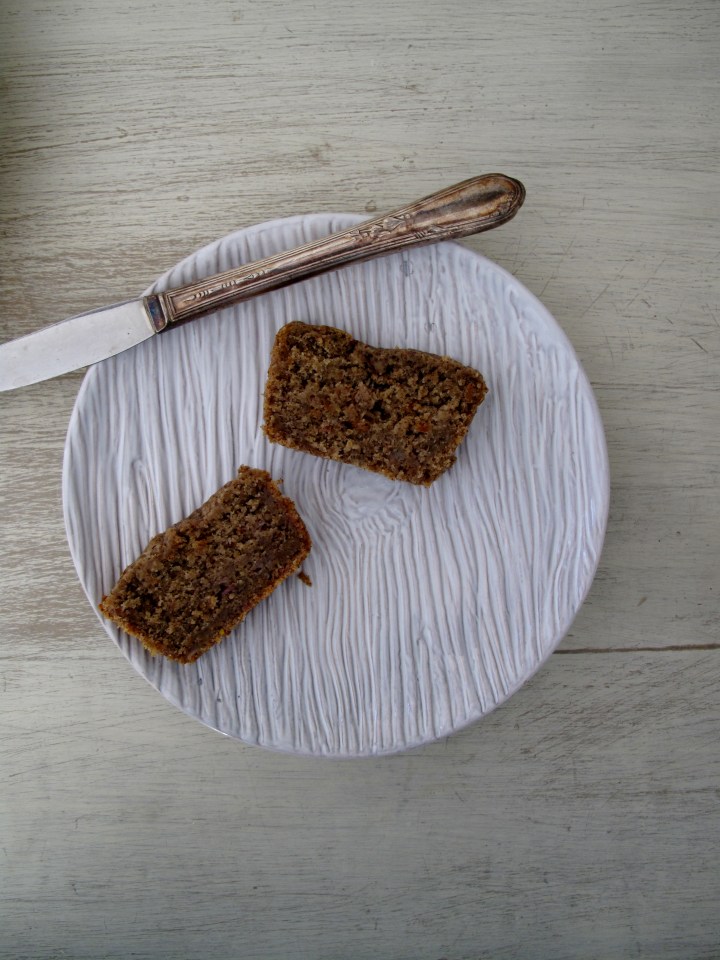
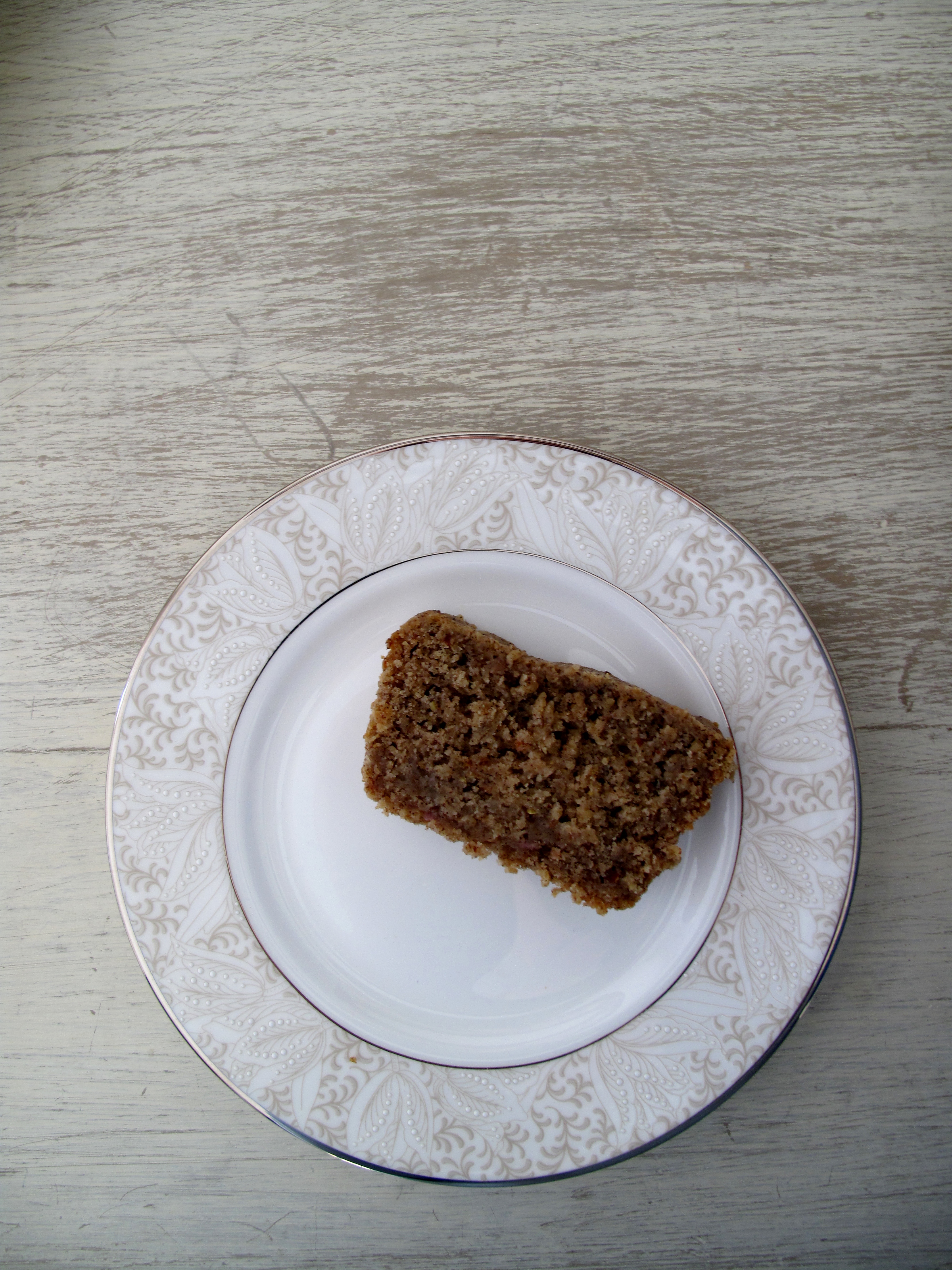
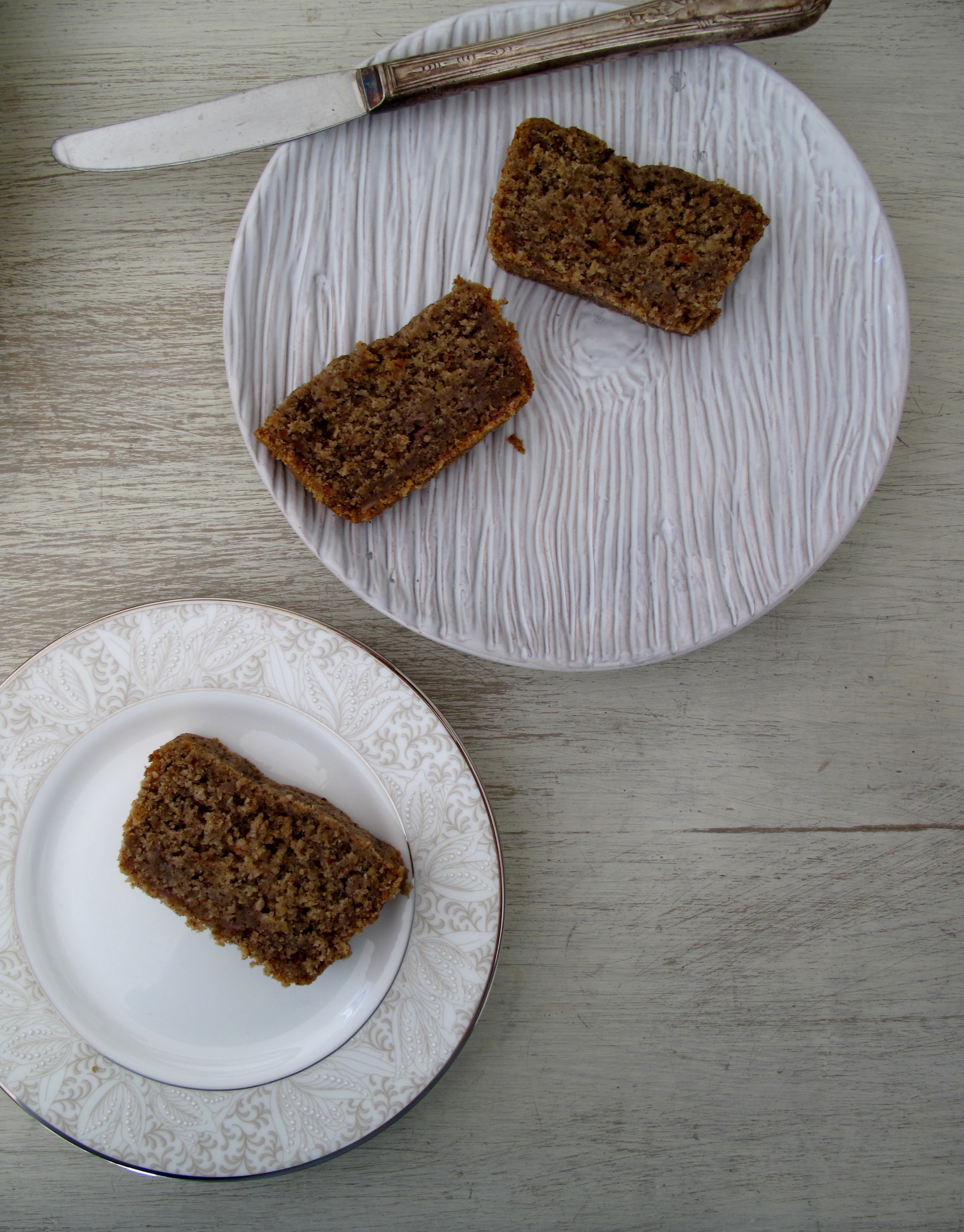
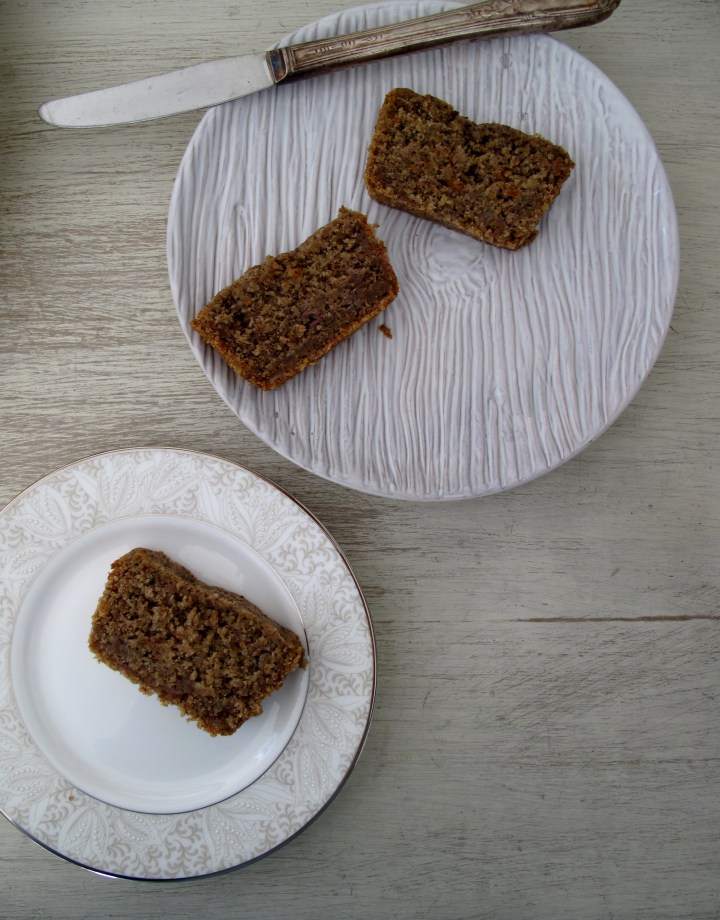
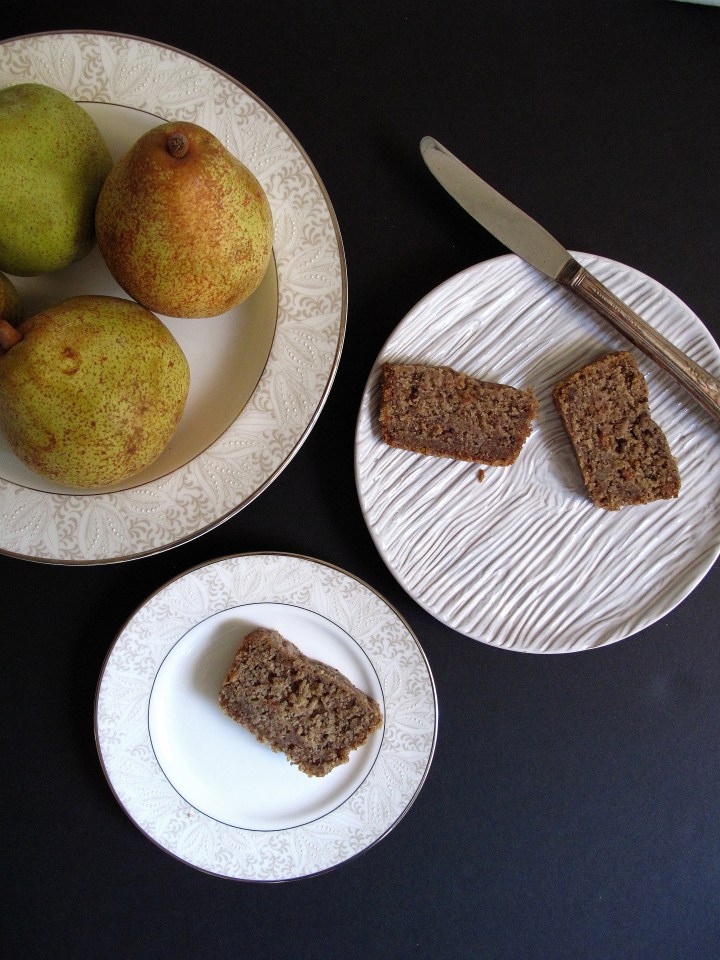
We are enjoying Thanksgiving in eastern Oregon this year with my family. I can’t wait for a long weekend of cozy reading, hugging babies and toddlers, and catching up with the folks and relatives. Plus, I have a whole freezer of not quite good enough versions of this cake to hand over to my sugar-loving, thinks-he’s-sweets-deprived father, who will gobble it all up in no time. The trick with this cake is to find some good quality Lipsang Souchong tea which has a smoky flavor due to the leaves being dried over a fire. The pairing of the smoky tea and soft, ripe pears is subtle but prominent, especially when slightly warm. The smoke and sweet combo captures this time in the season perfectly. 

1 cup +  ~2 Tbs. boiling water
4 tsp. Lipsang Souchong tea leaves
2 Tbs. ground flax seed
6 Tbs. hot water
3/4 cup oat bran, certified gluten-free
1 1/2 cups gluten-free flour mix or flour of choice
3/4 tsp. baking soda
2 tsp. baking powder 
3/4 tsp. salt
1 1/2 cups cored and shredded soft pears (~ 2 medium)
1/2 cup honey
1/3 cup canola oil
1 Tbs. pure vanilla extract
  • Preheat the oven to 350 degrees F. Oil and flour four mini-loaf pans or one 9×5-inch loaf pan.
  • Bring about 1 1/2 cups water to a boil. Pour slightly more than 1 cup of it over the tea leaves and allow them to steep for a while.
  • In a small dish, whisk together the remaining 6 Tbs. hot water and ground flax seeds. Set aside to form a thick slurry.
  • In a large bowl, combine the oat bran, flour, baking soda, baking powder, and salt. Mix well and set aside.
  • Grate the pears using the large holes of a box grater. Don’t include the core and seeds.
  • Strain the tea and pour 1 cup of it into a liquid measuring cup. Add the honey, oil, vanilla, pears, and flax mixture. Mix it all together thoroughly.
  • Pour the liquids into the dry mixture and stir the batter until just combined.
  • Fill the loaf pans equally and bake until a toothpick comes out clean, about 35-40 minutes for mini loaves or 50-60 minutes for a large loaf.


to go on

IMG_8456

I can’t go on. I’ll go on. – Samuel Beckett

We were headed back from the coast last weekend and I had been admiring the views and the changing season when I looked out and realized it is September(!) and I suddenly saw not the slow slide of summer into fall but the trajectory of my life these last few months. I realized that I have been so busy feeling my way through this year that I haven’t been able to truly see the world around me, much like that summer I was in Ireland for the second round and one of my co-interns spent so much of her time capturing the experience on her camera that she never stopped to appreciate the views beyond her lens. When I look up and out, it is so easy to feel and see the change in season right now, and as we drove back into town last weekend, there was a bittersweet sadness hanging in the air. This and the last few posts have reflected that bittersweet vibe, as I’ve been sharing bigger matters that have sat heavy with me this year.


IMG_8479


One of these is whether I’m even writing a food blog anymore. I have always had more of an interest in talking about life in this space than in hyper-focusing on the food. Over the course of the last few months, I’d like to think I’ve been doing more of that and through the process become more honest in sharing the bigger things that matter. As I’ve done so, I have contemplated moving away from sharing food at all because it often doesn’t seem to go with the message I’m conveying. I think about my readers too. What do you want from this space? Why do you come here? How much is too much information? And I think about why I began the site, to share life and food.

Food is important to me. I love learning about it. I love talking about it. I really like helping others with it. And if you are newer here, if you read back to this post, you’ll see the making and partaking in food is so much more to me than finding peace through this year’s challenges or in fueling life on the run. All my interests, joys, and even problems circulate and intersect in and around food. And though I’ll chatter your ear off in actual conversation until you politely ask me to shut up about it, I don’t particularly enjoy writing about food in this space anymore.


IMG_8457


In a recent conversation with a friend, the topic of my eating disorder and food came up and I shared, It’s not about the food. Just like every person has his or her tools or mediums with which to create a life (or destroy it), my strengths–and also weaknesses–are both food and words. Like my eating disorder, this space seems to be about food but is also not about food.

Inevitably, I have opted to continue with the recipe sharing because when I talk about the highs and lows of life here, I share the meals that feed my soul through the process, recipes that hold meaning not because they have this or that ingredient in or out, not because of any label or food trend but because they are simply feeding me through this life. I’ve considered deleting posts which I think are silly now or old recipes that I no longer partake in, but those too are all part of my experience. Those meals, like the more recent ones, fed me through those ventures into becoming the better person I am today. For that alone, I want to have them recorded.


IMG_8463


In this transition of seasons, I too feel as if I’m wading through a big life transition. As I take a deeper and bigger-picture look at my trajectory, as I sort through my life and organize my thoughts around the point of this space, I want to share with both the readers who have held on for the long haul and those that are just jumping in, the basic reason for this blog hasn’t particularly changed. It is a space where I can use my creative tools to share real life more honestly; to go on, when a part of me is actually afraid to share what I really feel, is afraid to move into life’s changing seasons, is often frustrated and saying simply, I cannot go on.


IMG_8471


When I am standing fearfully on one of life’s cliffs, not ready to jump yet somehow poised for whatever the next adventure brings, when I am at the point where I begin to question everything, when my mind wants to give up and fight like hell simultaneously, that is when I know I am right where I need to be. I will get through this changing season and I’ll be better for the challenge with which it came. I will be glad too that I was willing to share the experience here, rather than waffling on about some random ingredient.

After all, isn’t this life little more than the accumulation of these daily lessons and joys, of conversations and meals good and bad, of being vulnerable, of putting plans into action and seeing hard work pay off, or spinning wheels in useless worrying which we can’t seem to move on from, until, for whatever reason, we do?


IMG_8436


Two-Tone Fennel + Pistachio Zucchini Bread 

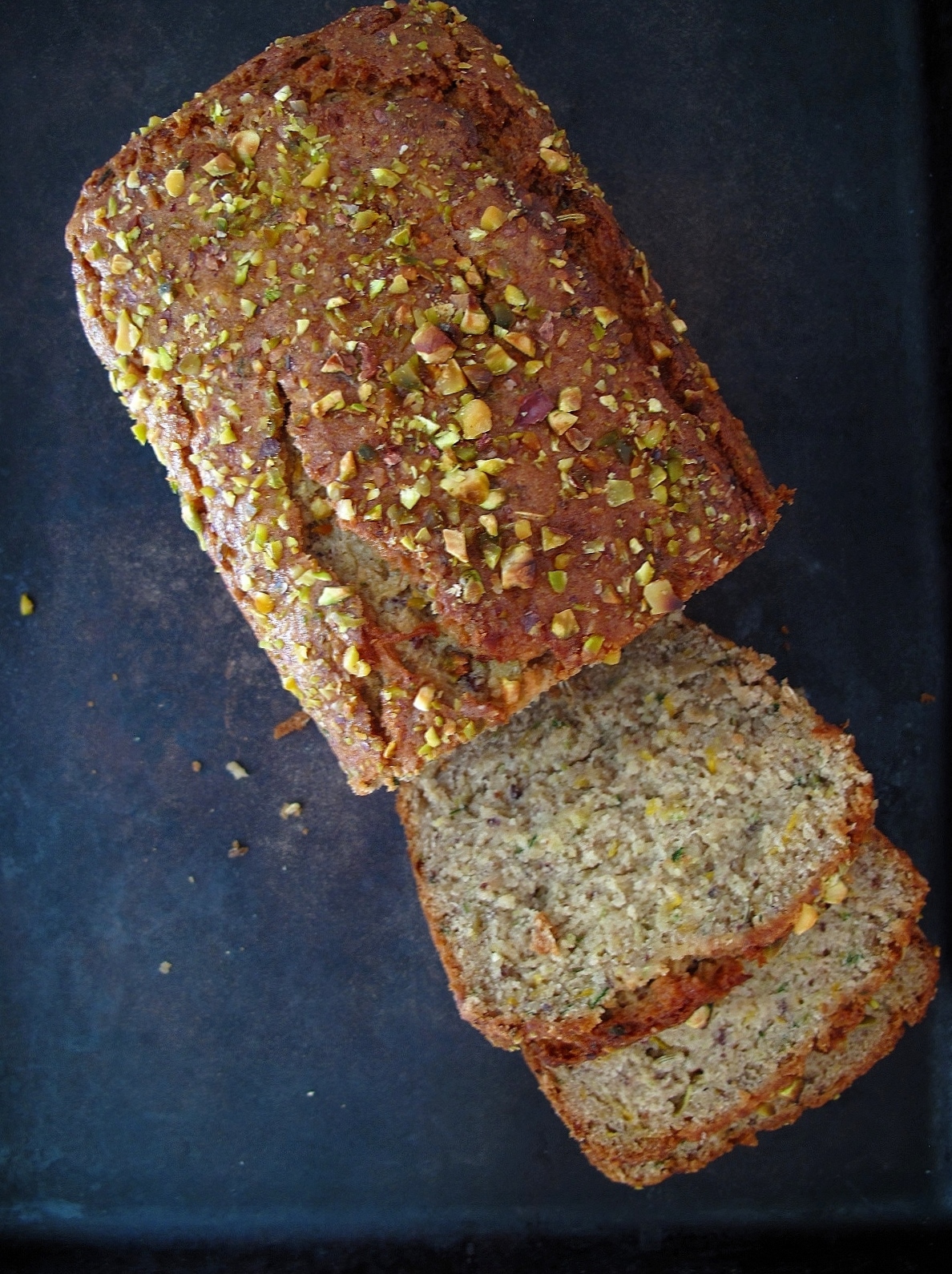
This zucchini bread has been a work in progress for many years and I’ve held off on publishing because every recipe, like the most vulnerable blog posts, is not quite ready to share. Originally adapted from a Cook’s Illustrated recipe, it has taken on a life of its own with the switch to quinoa, brown rice, and almond flours, two types of summer squash, fennel seeds, and pistachios. It is the type of recipe that feels right in this (nearly there) return to cooler days and comforting foods season, and it’s likely my last bout with zucchini this summer. My plants have been producing steadily since mid-June and they’re telling me their time has nearly come. Onwards!

1 lb. zucchini and yellow summer squash, (about 2 medium or 3 small)
2 Tbs. ground flax seeds
6 Tbs. hot water
3/4 cup sugar
1 cup quinoa flour
3/4 cup brown rice flour
1/2 cup almond flour
1/4 cup tapioca starch
1 tsp. baking powder
1 tsp. baking soda
1/2 tsp. cinnamon
1/4 tsp. allspice
1/2 tsp. salt
2 tsp. fennel seeds
1/4 cup plain non-dairy yogurt (I used unsweetened coconut)
1 Tbs. apple cider vinegar
3 Tbs. coconut oil
1/4 cup toasted pistachios, chopped

  • Heat the oven to 350 degrees F. Oil and flour the bottom and sides of a 9 x 5-inch loaf pan.
  • Shred the mixture of zucchini and yellow squash on the large holes of a box grater and then transfer to a fine-mesh strainer set over a bowl. Allow to drain for 20-30 minutes.
  • Meanwhile, mix the ground flax seeds with the hot water in a small dish and set aside to form a thick slurry.
  • In a medium bowl, whisk the flours, baking powder and soda, salt, cinnamon, allspice, fennel seeds, half the pistachios, and 1/2 cup sugar together. Set aside.
  • After the zucchini has drained, squeeze it dry between several layers of paper towels. Mix the dried zucchini with the yogurt and apple cider vinegar in a small bowl. Set aside.
  • Beat the remaining 1/4 cup sugar and coconut oil with a whisk in a large bowl until light and fluffy. Add the flax slurry and incorporate well. Add half the flour mixture and half the zucchini mixture and mix until just incorporated. Add the remaining flour and zucchini and mix once more until the mixture just comes together.
  • Scrape the batter into the prepared loaf pan and sprinkle the top with the remaining pistachios. Bake until the loaf is golden brown and a toothpick inserted in the center comes out with just a few crumbs attached, about 55 minutes. Cool the bread in the pan for 10-15 minutes, then tranfer the loaf to a wire rack. Serve warm or at room temperature, or once cool, slide into the fridge for a day or two, as the flavors really develop overnight.