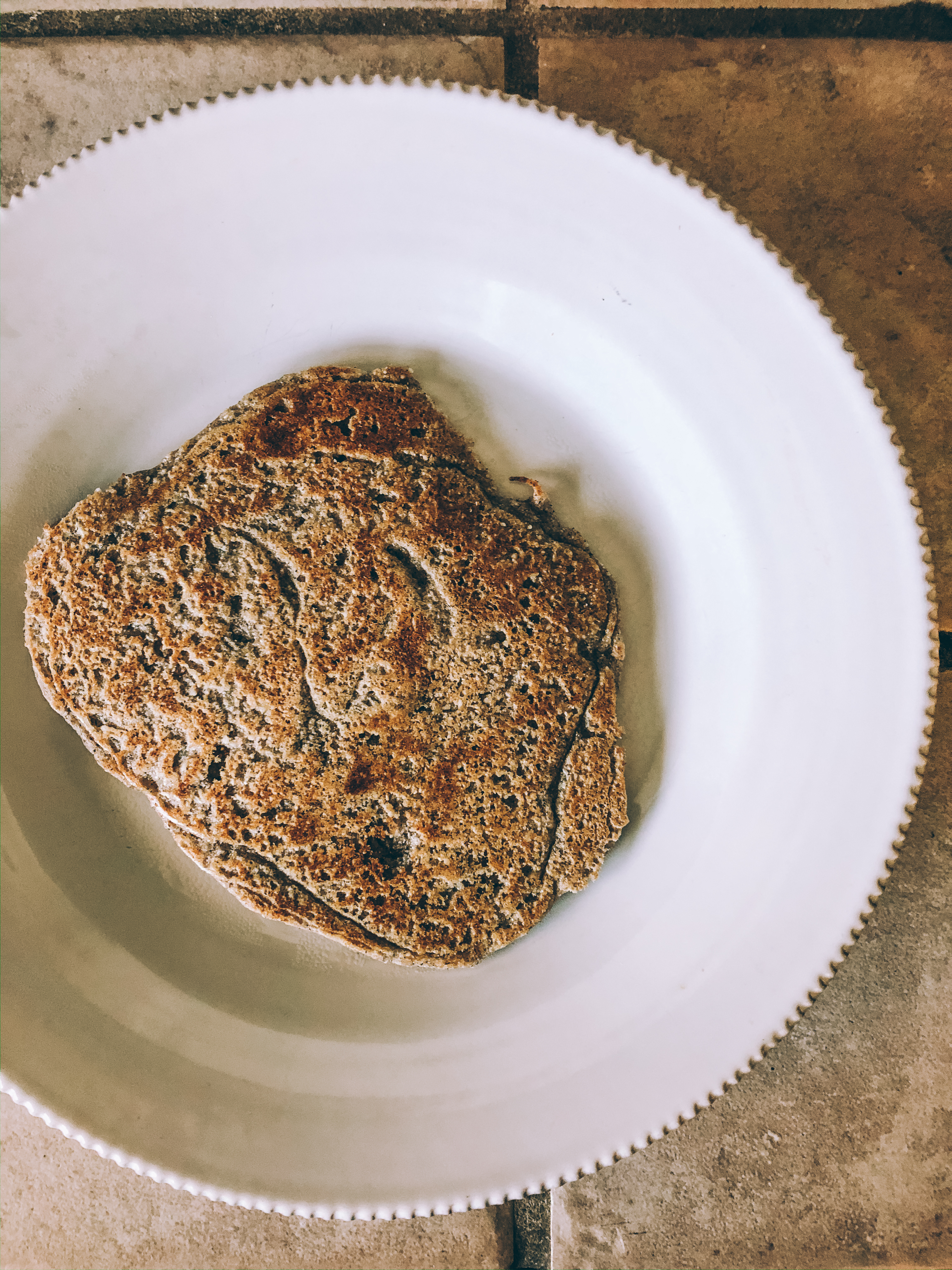
the simplest sourdough flatbread, and what probiotics and gut microbes have to do with it

“Why are you people always switching out sour cream for yogurt in all your recipes?”
This was the question I was asked a few weeks ago while teaching a (virtual) cooking store tour. The question had me pausing because it was so good and to be honest, I’m surprised no one has ever asked me before. I paused also because it’s been so many years since I’ve actually eaten sour cream – and years too since my yogurt-in-every-meal days.

So why do nutritionists and health-minded persons tend to switch out sour cream and add yogurt at every opportunity? Without jumping too deep into the science at first glance, I think we can look towards long histories of fermented foods in virtually all traditional ways of eating around the world. Our ancestors were fermenting foods in all sorts of ways for better health and as a way of food preservation. Yogurt products—whether they are dairy-based or non-dairy—all have the same culture of bacteria added, and as most of us have learned from countless yogurt advertisements, it’s good for gut health. Plain old sour cream, and other creamy dairy foods, can’t generally say the same.

Fiber Nourishes Your Gut – Prebiotics

What we’ve learned in the science and nutrition community over the last couple decades is that what we eat affects our gut bacteria. Our digestive system is home to trillions of beneficial bacteria, called the gut microbiota or microbiome. These bacteria live in an (ideally) symbiotic relationship with us. In the case of beneficial bacteria, they feed on the undigested part of the food, (fiber), that is passing through the large intestine by fermenting it into short chain fatty acids such as N-Butyrate. That’s a good thing.

When we eat fibrous plant-foods, we are essentially feeding many species of beneficial bacteria from the fiber that we ourselves cannot digest. And when we don’t eat the foods that beneficial bacteria need, we lose harmony and balance between beneficial and disruptive bacteria, and dysbiosis occurs. Often with all sorts of negative symptoms that we experience. This beneficial fiber-rich food is what we’ll often call ‘pre-biotics.’


A healthy gut microbiome can protect us against disease-causing bacteria because the good bacteria competes for space in the intestines, blocking the bad guys from establishing a strong community. Beneficial bacteria can also help us absorb otherwise non-absorbable nutrients like certain antioxidant polyphenols, produce some micronutrients like vitamin K, and provide needed fuel for the cells in the colon. Production of short chain fatty acids by bacteria in the intestine also plays an important role in the maintenance of the intestinal barrier. Butyrate, the short chain fatty acid I mentioned above, has been shown to be protective against colon cancer.

Whereas we don’t want an overgrown of bacteria in the small intestine, having ample beneficial bacteria in the colon is a hallmark for optimal health. Low beneficial bacteria can impact your protective mucus lining in the intestinal tract, which supports up to 70% of our immunity. The commonly used phrase “leaky gut” comes in here when the interplay between a low fiber diet, low beneficial bacteria count, and difficult to digest macromolecules poke holes in the cheesecloth-like fragility of the intestinal lining and then opens the way for the immune system to do its job –in overdrive – resulting in sensitivities, intolerances, and allergies to many foods. 

Fermented Foods and Probiotics

On the flip side of the prebiotic/fiber-rich food equation is a term we’ve all heard. Probiotics. That stuff that makes yogurt and other fermented and/or bacteria-containing foods like sauerkraut, kimchi, miso, tempeh, raw vinegar, raw honey, and (traditional) sourdough bread health-promoting. Probiotic-rich foods essentially mean we’re eating the beneficial bacteria rather than feeding the good bacteria we already have.

When to Supplement

Probiotic supplements, especially in high doses, are often extremely helpful for individuals with an autoimmune flare, food or environmental allergies, metabolic concerns, hormone imbalance, skin health, cognitive and/or mental health, long-term and/or frequent antibiotic use, and of course, any sort of symptom that’s related to negative digestion—which tends to be a precursor to many of the other health challenges. When we’re using probiotics that occur naturally in fermented foods, we’re trying to maintain the balance of beneficial bacteria in our system (not just our gut either, our skin and many other areas of the body also have a microbiome). But when we’ve been in a pattern of long-term distress, we often need a little help from more bacteria than we can ingest through food. So a supplement might be necessary—ideally one of a reputable brand and with strains and quantities of bacteria that are scientifically founded for the symptoms or imbalance.


Going back to that question I received about sour cream and yogurt. I don’t tend to push a lot of yogurt as a preferred probiotic food source. Many individuals don’t tolerate dairy at all and the dairy industry is sadly pretty corporate and non-supportive of small producers these days. If you tolerate dairy products, and can source from a small dairy producing yogurt from grass-fed cows, then yes, it can be healthful. And while non-dairy yogurts contain some bacteria cultures, they often don’t provide much else in the way of protein or micronutrients. Flavored varieties of all types of yogurt are problematic due to all the other added ingredients, such as fillers, gums, sweeteners, and preservatives. Instead, I definitely encourage choosing a range of all the bacteria-containing foods.

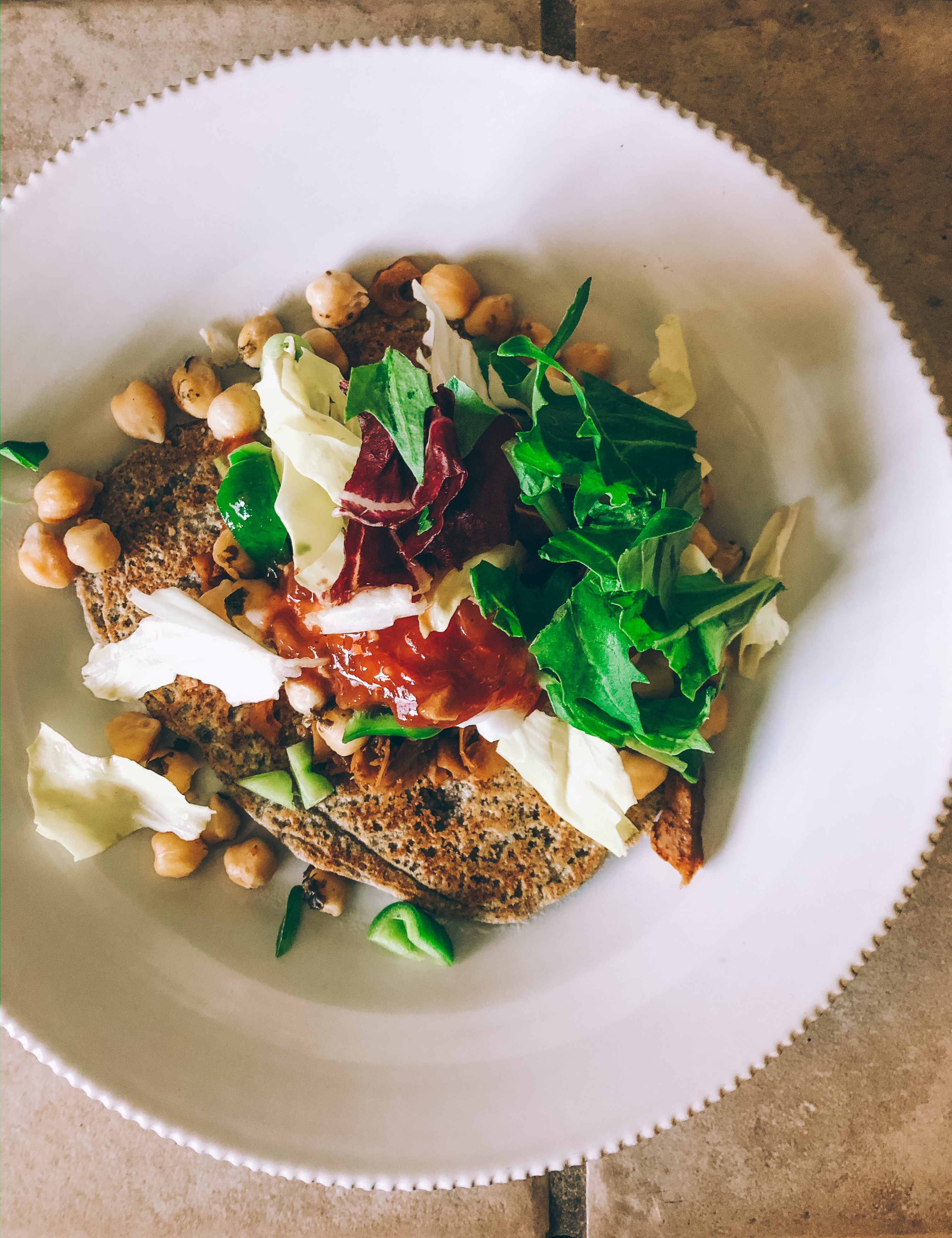
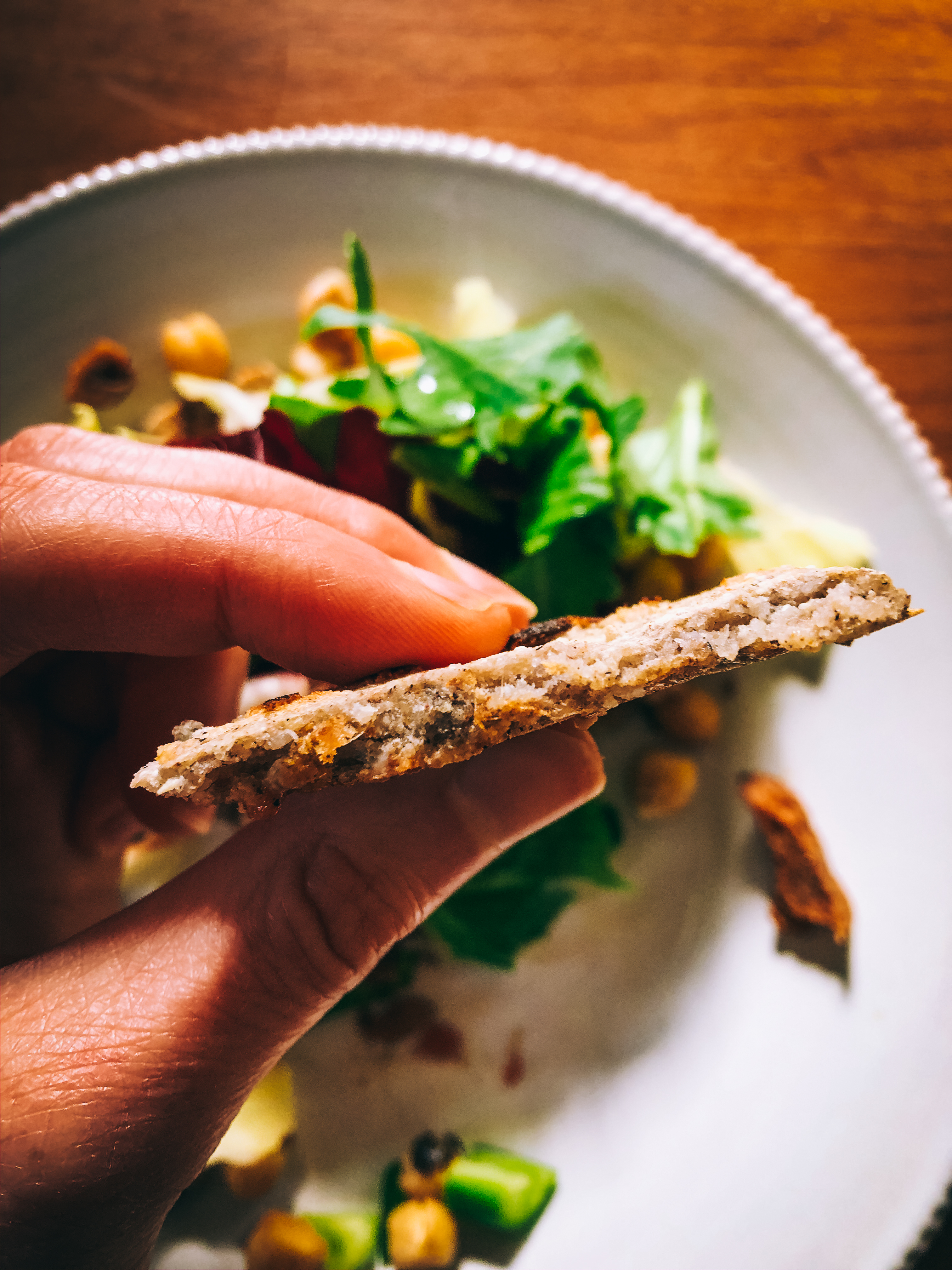
One of my favorites is whole-grain sourdough. If you need a home project this fall and winter, starting your own sourdough mother (and naming it), will be immensely rewarding. My sourdough mother’s name is Esmerelda. Even if you’re not a baker. The flatbread below has become one of my five-minute favorites as a bready lunch side when I’m short on pre-made options, and with just the mother, you never actually have to launch off into sourdough baking (but I certainly recommend it if you’re ready for a next step).

Enjoy!
Dysbiosis in the gut microbiome is one of the five primary categories of digestive imbalances I look for when working with individuals clinically. Often when we’re experiencing chronic GI distress, there will be imbalances in several categories, and we begin working on the areas that appear most pertinent. I previously shared about the nervous system’s role, and the immune system leading to inflammation and food reactions, a tip to support impaired digestion and absorption in part four, and I’ll explain remaining topics of digestive imbalance in future articles.

And If you’re tired of dealing with your wonky GI and would like to get back to feeling and training well, I invite you to reach out to me for more personalized support.

Simple Sourdough Flatbread, makes 1
This is the absolutely simplest flatbread made from the sourdough mother. It’s rich and delicious, tastes bready and substantial, and can be flavored in many ways beyond the simple (plain) way I’ve made it. For a few more ideas, see this video which was the original that clued me into this delicious bread idea. For a larger amount, just use more starter. If you do not have a sourdough starter, I made mine from Baking Magique’s instructions. Instead of a mix of buckwheat and brown rice flour, my starter is 100 percent buckwheat. It keeps feeding Esmerelda super simple that way.

70 grams / ~1/2 cup sourdough starter
a little oil for your pan

  • Heat a medium to large skillet over medium-high heat. Add a little oil of choice, such as olive or coconut oil.
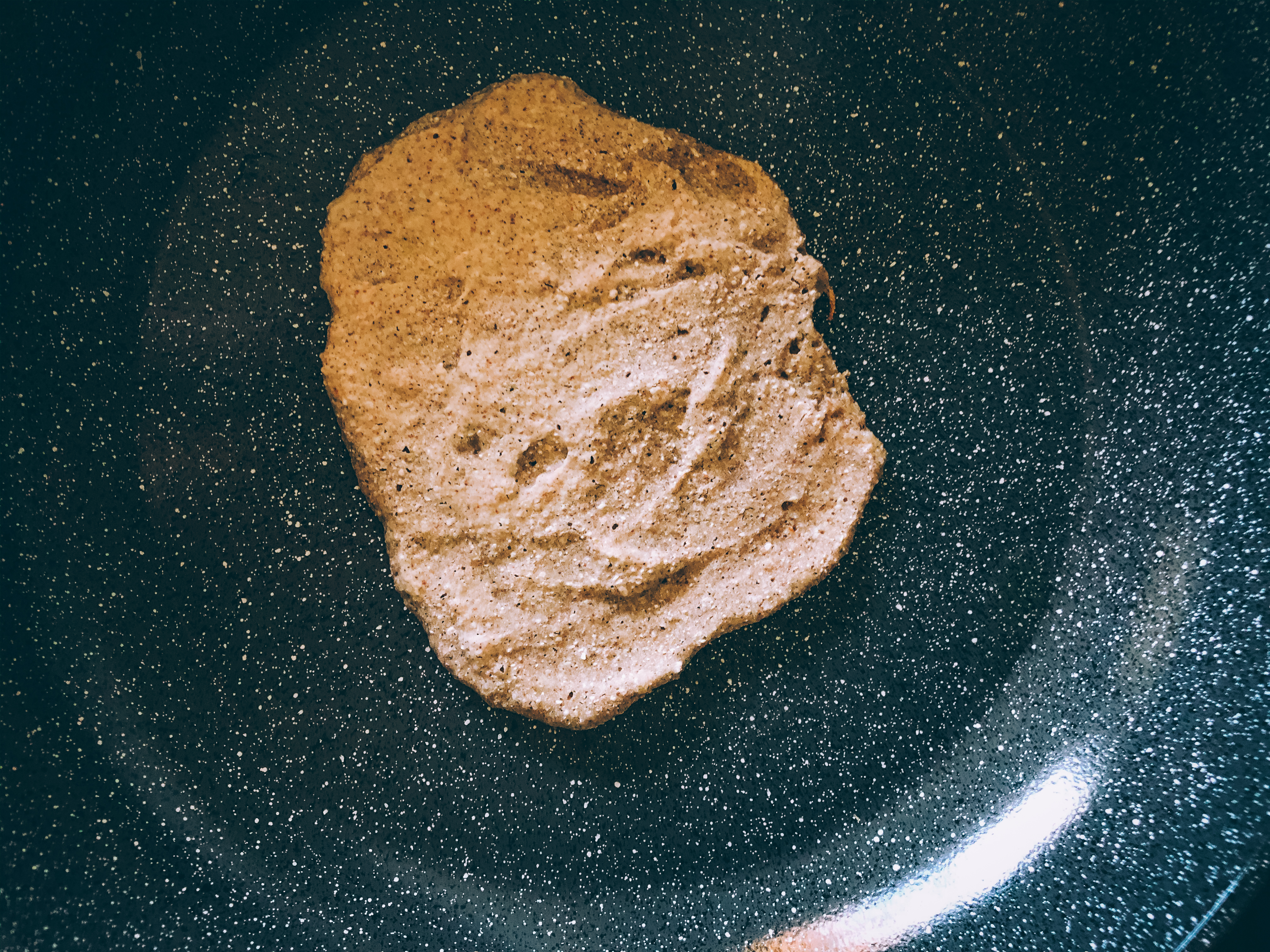
  • Pour your measured sourdough starter directly onto the pan and with a rubber spatula, gently spread it out so it’s smooth. Cook for about 3-4 minutes; then flip and cook 3-4 minutes more. You might need to turn your pan down a little, as this bread is slightly thick and you want to make sure you cook it all the way through.
  • Remove from pan, and add to your meal. I often eat it as a side like naan, but sometimes use it as a base for random other toppings that I have on hand for a quick lunch.

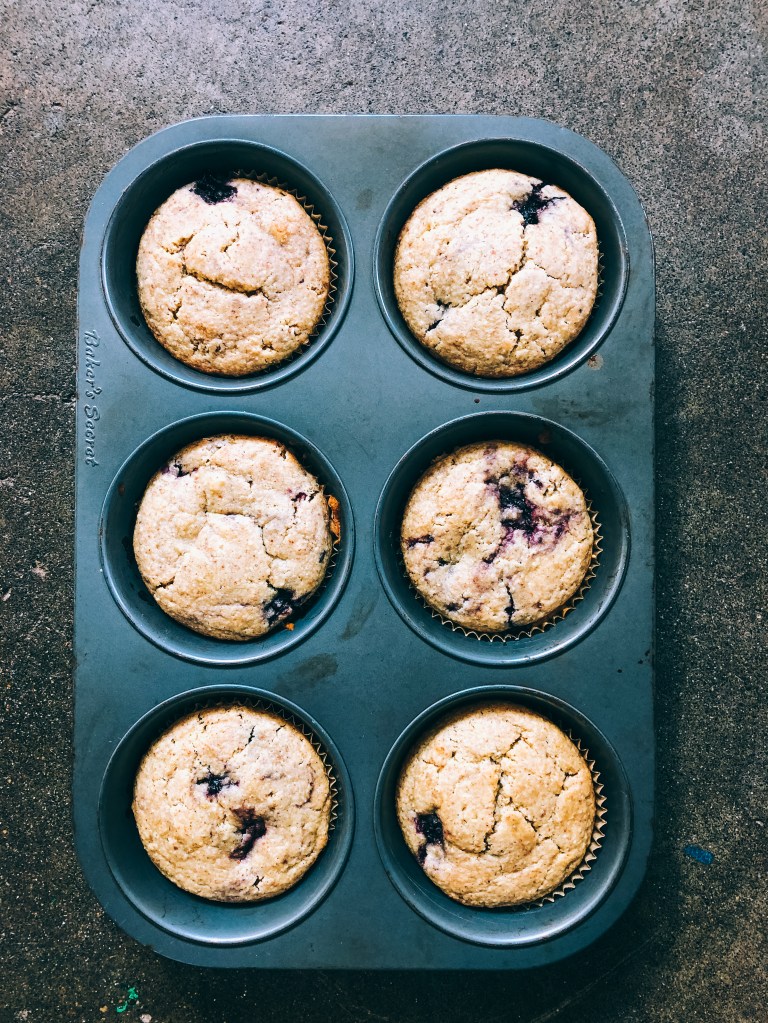
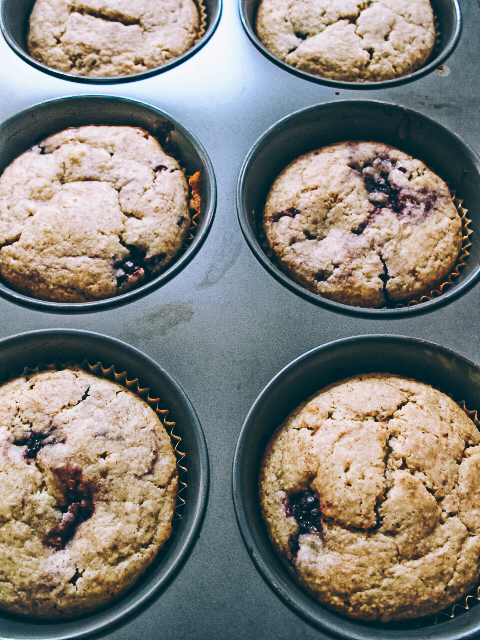
Better than the Bakery GF/DF Blackberry Muffins

During my senior year of high school, my agricultural science class focused on business and economics principles, and in one unit on our future in the workforce, I did some business planning on starting a cake bakery. I don’t know if we were focusing on entrepreneurship specifically, or if I’ve always had a streak of planning to run my own business, but to my way of thinking, I was owning, managing, baking, selling, etc. The whole dang thing. Never mind that I was in agricultural class, not growing or milling wheat or other grains, or just using an example from the then business I had at the time of raising and selling club lambs. Nope. Instead I did an abrupt turn and planned for baking artistic cakes in my future.

To this day, I often joke that if the pay were better and other things didn’t work out, I’d be baking and handing over the goods to other happy people instead. Oh and starting a porridge and brunch restaurant. Which is where my love for baking muffins comes in. If you go ahead and browse the recipe section, you’ll see I’ve published more than a handful of muffin recipes over the years. Along with cake, muffins are one of my favorite baked foods to experiment with.

When it’s up to me, I often tend to go for the heavily spiced, oat-rich, morning glory-type muffins that are stuffed with ingredients like raisins, shredded zucchini or carrots, mashed pumpkin, or other fruit. But not everyone favors that kind of porridge reincarnation. William, for instance, is a plain vanilla cake / vanilla frosting person, and likewise prefers simple berry muffins without the frills and extra ingredients. Since he’s been stopping by a local bakery before work many mornings for exactly that type of muffin, we settled on me making him some that are a little more wholesome and he can grab and take instead.

That’s where these come in. These are blackberry muffins made from milling oats, buckwheat, and almonds in my spice / coffee grinder. But they can easily become blueberry or raspberry-flavored instead, and if you have more of the flours than I do, start with oat, buckwheat, and almond flours for one less step. Either way, they’re an early morning treat that stands up to the bakery muffins with more whole foods, and especially whole-grains and reduced sugar. A big win and less of the side effects of refined sugars and flours, etc.

Blackberry Muffins, makes 6

65 grams / ¾ cup gf-certified oatmeal
65 grams / a little less than 1/2 cup raw buckwheat groats
60 grams / ½ cup raw almonds
8 grams / 1 Tbs. arrowroot flour
1 ½ tsp. baking powder
¼ tsp. baking soda
¼ tsp. sea salt
70 grams / 6 Tbs. organic cane sugar
25 grams / 2 Tbs. coconut oil
1 large egg or a vegan alternative (1 Tbs. ground flax mixed with 3 Tbs. water)
½ tsp. grated lemon zest, optional
1 tsp. lemon juice or apple cider vinegar
½ tsp. vanilla extract
170 grams / ¾ cup plain non-dairy yogurt (unsweetened coconut yogurt is best)
150 grams / 1 cup fresh or frozen blackberries

  1. Begin by weighing or measuring out the oats, buckwheat and almonds, and then finely grind them to a flour mixture in a spice / coffee grinder. Alternatively, if you already have light buckwheat flour, oat flour and almond meal, you can skip this step.
  2. Preheat the oven to 375 degrees and prepare a muffin pan by adding the paper liners, or lightly wipe the insides with oil and dust with flour. Set aside.
  3. In a small bowl, mix the flours, baking powder and soda, and salt. Then set it aside.
  4. In a medium bowl, mix the coconut oil and sugar with a spoon until light and fluffy. Then beat in the egg, lemon zest and juice, and vanilla.
  5. Add in about 1/3 of the flour mixture to the sugar and oil and stir. Then add in ¼ cup of yogurt. Stir in another third of flour and another ¼ cup of yogurt, and then add the rest of the flour and the final ¼ cup of yogurt. The batter should be slightly fluffy. Don’t overmix.
  6. Gently stir in the blackberries, and then evenly divide the batter into the six muffins cups.
  7. Bake for 25-30 minutes, or until a toothpick comes out clean. Cool them slightly in the pan, before tipping out and eating

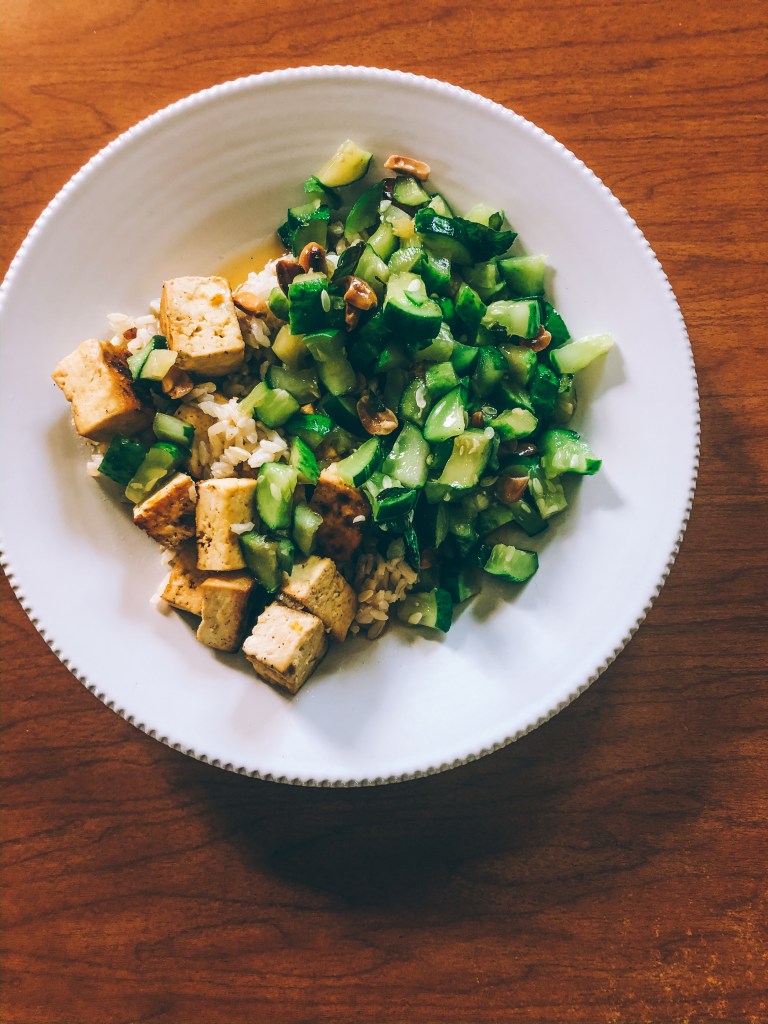
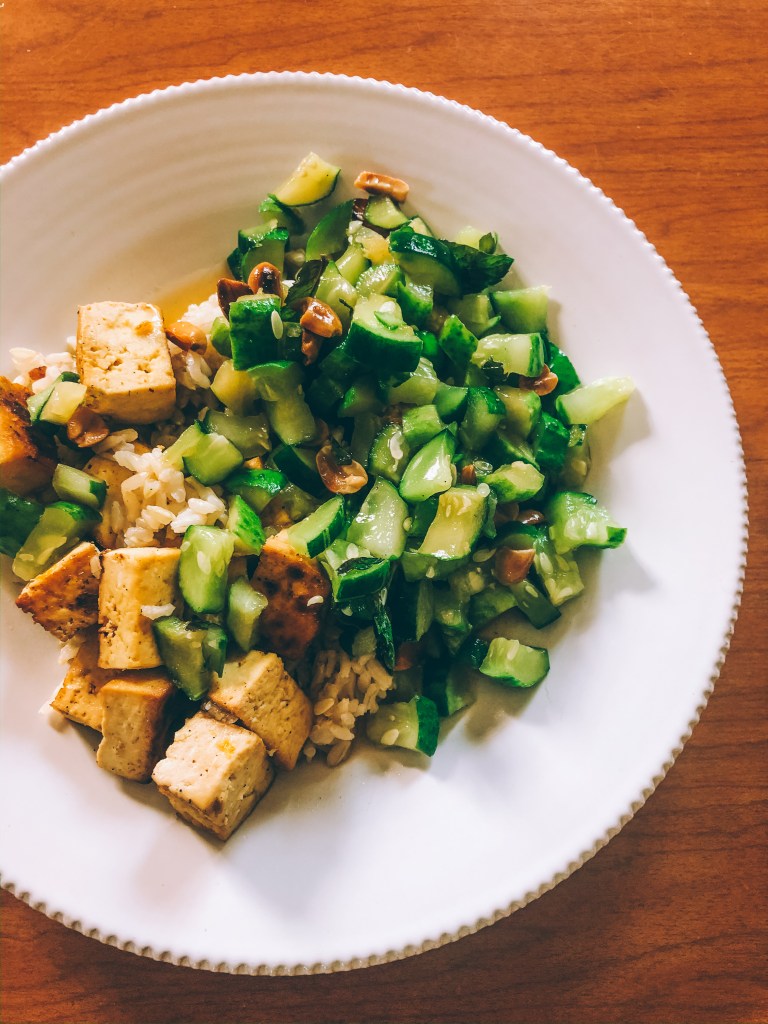
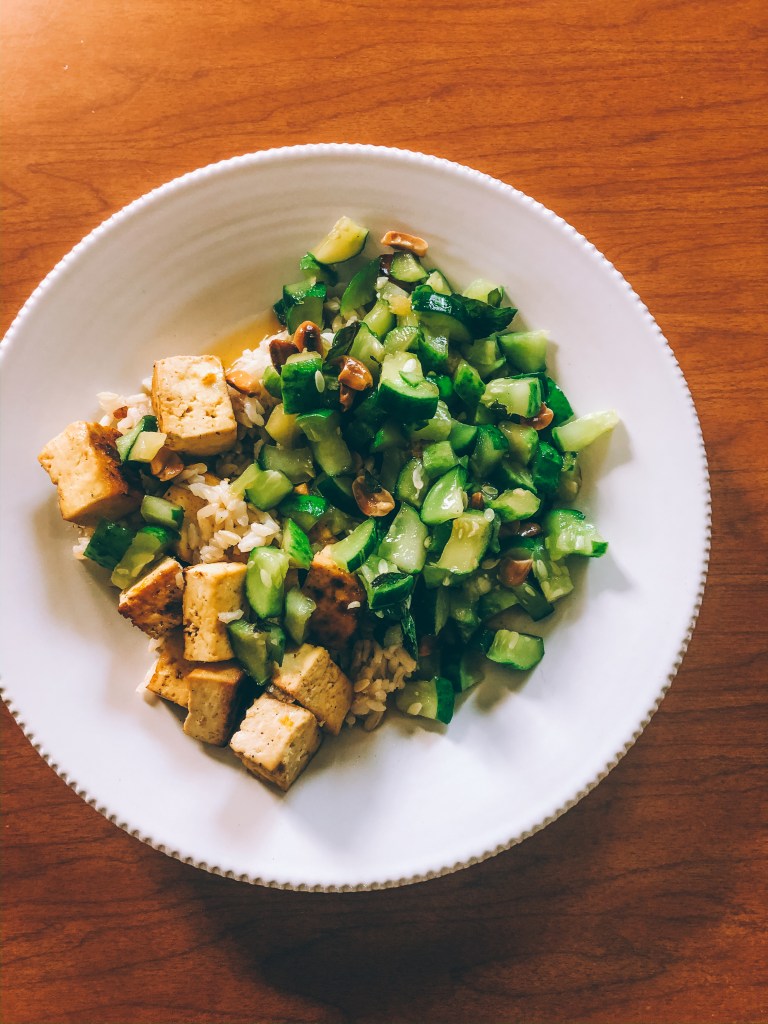
Garlic-Orange Tofu and Peanut Cucumbers with Rice

When I glance out the window this morning, it looks like it’s raining. But I look again and it’s still ash. We’ve been raining ash for the last couple days as the air quality went from clear blue skies over Labor Day weekend to a dramatic sweep of heavy smoke on Monday evening as several fast-moving forest fires have been burning in the cascade mountains and now closer near the edge of town to our east. Our hens have been out foraging as usual but I worry about their little lungs. Our teenage kitten, a truly needed and lovely new addition this summer, has been upset at the eery light the last couple of days.

I’ve been back to morning meditation lately first thing before I get out of bed or turn on the light, and this morning’s had me expressing gratitude for our air purifiers, those ‘noise machines’ that I have routinely tsk-tsked since William insisted on them in the last couple years. And also gratitude for a safe home. The alarm of LEVEL 3–GET OUT NOW evacuation alerts going off on my phone throughout yesterday afternoon for the northeast edge of the city, truly a ways off from us but too close for comfort, brought that gratitude home.

Today at least we got a sunrise, smoky as it was. Yesterday was just a dark red Apocalyptic haze, which is becoming the norm in Western Oregon in the last 36 hours.

We can still smell the smoke inside even with a couple good air purifiers so I’ve been adding turmeric to all my meals, taking or eating extra vitamin C and vitamin E-rich foods (hazelnuts, peanuts, sunflower seeds, leafy greens), and adding tulsi / holy basil, and licorice and marshmallow roots to my tea blend. The first three are taken with the idea of combatting the oxidative stress that comes with particularly toxic wildfire smoke particles. If I had a particularly vitamin-C rich food or herb on hand such as amla fruit powder, camu camu powder, or rose hips, I’d use that instead of just plain supplemental vitamin C. The last two roots of marshmallow and licorice are for soothing irritated internal tissues, such as the lungs and digestive lining. Even though I’m staying inside and out of the terrible air, this stuff is incredibly potent. Turmeric particularly helps my smoke headaches.

—–

While I’ve been meaning to share more about digestive health in this space over the next few days—since this is an area that my previous survey indicated is definitely a need. But first, I think we can all use a really good meal that’s refreshing, comforting, and enjoyable while summer is still here.

I know many individuals avoid tofu because they’re unsure of how to prepare it, or when they’ve tried to in the past the texture is all wrong. I was there for a long time (probably 10 years since I first attempted tofu until I was comfortable cooking / eating it). So I’ve outlined a little more detailed way to prepare it. This is my go-to method and yields the texture we prefer.

Then the tofu is paired with finely chopped cucumbers tossed and marinated in the same dressing as the tofu is marinated and cooked in, and enjoyed with simple brown rice. The result is a simple concept but the taste is truly rich and incredible. Hope you’re staying safe in whatever way where you are, and if you tend to avoid tofu because you’re unsure how to cook it, give this recipe a try.

Garlic-Orange Tofu and Cucumbers with Rice, serves 4
inspired by Anna Jones in the The Modern Cook’s Year

16 oz. / 453 grams firm tofu, drained

dressing:
3 cloves of garlic, minced
3 Tbs. reduced-sodium tamari
2 Tbs. brown rice vinegar or raw apple cider vinegar
1 Tbs. toasted sesame oil
1 Tbs. honey or maple syrup
a pinch of red pepper flakes
¼ tsp. ground black pepper
¼ tsp. ground coriander
the zest and juice of 1 unwaxed/organic orange

1 cup / 190 grams brown rice
2 cups / 470 ml water
1 ¼ lb. / 600 grams / ~4 cucumbers
a few pinches of salt
¼ cup /35 grams peanuts, toasted
a small handful of fresh basil, minced

  • Slice the block of tofu in half lengthwise, wrap in paper towels like a birthday gift, and then stack the wrapped tofu between two cutting boards. If you have something heavy in your kitchen, put it on top of your cutting board as a weight. (I use my giant Shakespeare textbook). Leave to press out the liquid for about 30 minutes.
  • While the tofu is pressing, whisk together the dressing ingredients.
  • When the 30 minutes is up, unwrap the tofu and slice it into equal size cubes (I get about 48), and combine it with 1/4 to 1/3 cup of the dressing in a container with a leak-proof lid. With the lid on, give it a few shakes to immerse in the dressing and then chill in the fridge for at least 30 minutes and up to a day. More time will allow for more flavor to develop.
  • Once the tofu has marinated, turn it and its dressing onto a parchment-lined baking sheet and bake at 400 degrees F for about 40 minutes, flipping it over halfway through.
  • After the tofu goes in the oven, cook the rice in a medium pot on the stovetop. Add 2 cups of water, 1 cup of brown rice (ideally pre-soaked but simply rinsed and drained if not), and bring the pot to a boil. Once it boils, turn down to a simmer, cover, and cook undisturbed for 40 minutes.
  • While the rice and tofu are cooking away, dice the cucumbers into small (~1-cm) pieces. Place the slices in a colander that’s over a sink or another bowl, and sprinkle and toss through a few pinches of salt. Set aside for 15 to 20 minutes to release some of their liquid.
  • Then take your (clean) hands or a clean kitchen towel and press the cucumbers to remove any extra liquid that may have been released. Put the cucumber in a bowl and add ¼ to 1/3 cup of the remaining dressing. Add more to taste. Scatter over and stir through the toasted peanuts.
  • Once the tofu and rice timers are done, remove them both from the heat and serve with the marinated cucumbers. Sprinkle atop some fresh minced basil leaves if desired.