Apple Cinnamon Doughnuts

Apple Cinnamon Doughnuts


img_0928


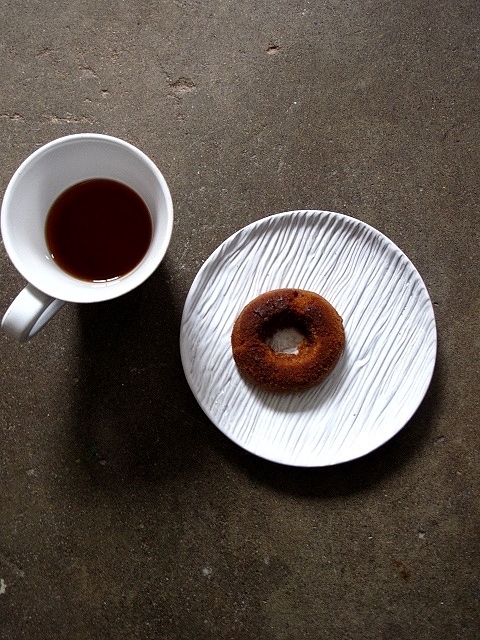
I made it to the end of a whole year of nutrition grad school and on the last day of finals I made doughnuts to celebrate bake off the mad I experienced when the server went down and locked me out of my four-hour final.

If this sounds overly dramatic, it is. I had really been looking forward to resting my mind from amines, amides, carboxyls, thiols, esters, etc., and waking up on a Saturday morning to finish it all off was last on my favorite list when all I really wanted was to go visit farmers at the market and finally get in the holiday spirit. In any case, I eventually got to take my final and do all of that because I finally regained access at 8:00 pm Friday evening and I decided to forge on and finish the class rather than waiting another day. Perhaps it was the extra study time, that I was better prepared than I thought, or that some of my fellow students are even more dramatic than me, but the final only took a little over three hours, wasn’t nearly as painful as I was envisioning, and I landed a solid score off the whole ordeal.
 

img_0953img_0965


Or maybe it was the doughnuts.

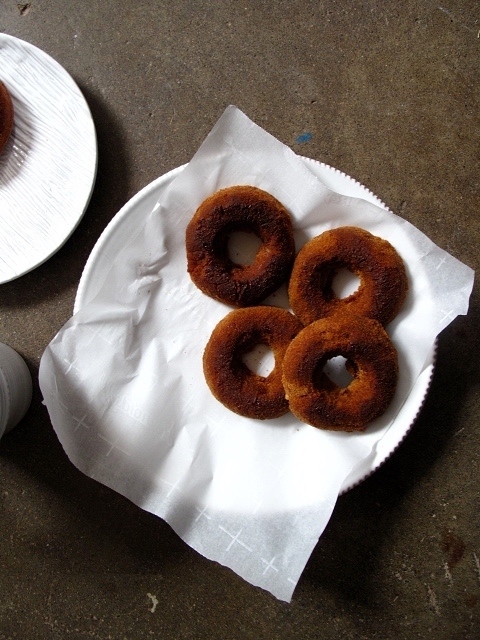
These apple cinnamon doughnuts are brought to you by my forced change of plans and at 2:30 pm on a Friday before the big final, they 1. tasted absolutely delicious 2. did not cause a sugar rush/crash that would have made a fun* experience even better and 3. may or may not taste exactly like a bakery doughnut because I haven’t had one since early high school.

You have been warned.


img_0947img_0966


As I mentioned in my last post with pie, and also back when I made cookies, I’ve really been torn when it comes to sugary, indulgent treats around the holidays–but also generally. I tend to eat a “treat” every single day after dinner, but often it is fruit and cereal or a bit of dark chocolate. When I do indulge in the more decadent desserts, I’m often shocked at how sweet they are and I retreat back to fruit pretty quickly. This wasn’t always the case.

Also, I get the urge to experiment for this space every few weeks or William requests some sort of dessert or friends bring over treats–so my life is not entirely devoid of sweets.

I learned about carbohydrate and sugar metabolism this last term and also did a bunch of research on which alternative sugars to recommend. The important thing is that all types of sugar are hard on our systems in too high amounts and we as a society eat way too much of them. Second, I favor alternative sugars because they contain just enough other nutrients to not tax our systems quite as much and most are a little less sweet. Fructose in its refined state, (think high fructose corn syrup and/or white table sugar) heavily taxes the liver and according to some research, leads to decreased leptin, our satiety hormone, and increased grehlin, which is our hunger hormone. So we crave more and more and are never really satisfied. Unlike refined fructose, the sugar in whole fruits doesn’t have the same effect and there is evidence that this is the case because some of the phyto (plant) nutrients like quercetin in whole fruits block or slow down sugar absorption.

One of the less processed sugars that I hadn’t tried until recently was coconut sugar. I had avoided mostly because I’ve slowly been reducing all sugar over the years but also because the coconut craze has had me questioning the sustainability of coconut water, oil, sugar, flour, etc., with it all being so popular. I was handed a big bag of coconut sugar recently, however, and after trying it out here, I liked the results. It didn’t make me jittery or crave more like regular white sugar and the doughnuts were quite sweet enough, but not too much so. Coconut sugar does have a lower glycemic index and more nutrients than regular sugar, and can be used cup for cup in recipes. If you’re baking this season, it might be a nice ingredient to experiment with.


img_0949


Apple Cinnamon Doughnuts, makes 4-5
1 Tbs. ground flax
3 Tbs. warm water
1/4 cup millet flour
1/4 cup brown rice flour
2 Tbs. coconut sugar
2 Tbs. almond meal
1/2 tsp. baking powder
1/4 tsp. baking soda
1/2 tsp. cinnamon
1/4 tsp. sea salt
1/4 cup almond milk
2 Tbs. applesauce
1 Tbs. coconut oil
1 tsp. vanilla
1/2 an apple, peeled + medium-diced
2 Tbs. coconut sugar + heaping 1/4 tsp cinnamon for the topping
1-2 tsp. coconut oil, melted

  • Oil and flour the doughnut pan and preheat the oven to 350 degrees F. If you’ve no doughnut pan, these can be made in a standard muffin pan; they won’t be doughnut shaped but they’ll taste just the same.
  • Whisk the ground flax together with the water in a small bowl and set aside for a few minutes.
  • Combine the dry ingredients in a large bowl and mix well and then go back to the flax mixture and add the remaining liquids to it. Stir it all together to combine.
  • Pour the liquids into the dry ingredients and stir briefly until the whole thing is just combined. Gently fold in the apples.
  • Spoon the batter into the doughnut pan, making sure not to overfill. Bake for 15-18 minutes until they are lightly golden brown at the edges. Remove from the oven and pan, and cool.
  • For the topping, switch the oven over to broil and then place a bowl of melted coconut oil and a plate of cinnamon sugar in an assembly line next to the doughnuts.
  • Dip the top of each doughnut into the oil mixture briefly and then dip and roll it in the cinnamon sugar. Set on a baking sheet or sturdy foil and repeat with the others. Then transfer them all to the oven, just under the broiler, and allow the sugars to caramelize briefly. This should take no more than 2-3 minutes and may take less. Be careful not to scorch their tops!
  • Remove from the oven and serve warm, if possible.

Pumpkin Pie + Holiday Thoughts

Pumpkin Pie + Holiday Thoughts

img_0915


The Recipe Redux theme for November is healthy holiday baking. If you’re new to this space, The Recipe Redux is a monthly recipe challenge, founded by three registered dietitians, which I participate in. The challenges are always focused on taking delicious dishes, keeping them delicious, but making them better for us.


image


In light of this season, I’ve been doing a bit of reflection on where I stand in the interchange between decadent holiday foods and how I eat from day to day. Should I splurge and not worry about some of those really not healthy ingredients because it is the holidays, or should I try to capture the essence of health in enjoyable foods because it is the holidays –and we all tend to overeat and regret it later?

Additionally, as a result of all that I’ve been learning of health and nutrition and where I stand right now in aiming to maintain a healthy relationship with food, I’ve been returning to passages from Annemarie Colbin’s Food and Healing: 

With all the recent emphasis on “healthy” eating, it is important to remember one thing: Food does not make us healthy. The right kind of food will allow us to reach our maximum health potential, to become as healthy as our genes and constitution may permit. It will support what we are at our best. It will not interfere with our development, but it will also not make us more than what we can be. In short, good food is effective because it is passive. The wrong kind of food will act like a block or a dam, deflecting our growth and thwarting our unfolding. In other words, it will actively create trouble, and make us unhealthy…Good food will nourish us without causing stress, and thus allow our immune system to spend its energy in healing. Thus many different diets will have healing effects. Often it is not just what we eat, but also what we don’t eat that helps us become healthy again. 

So my theory right now? Stressing about eating the right kinds of food is not healthful. But neither is eating foods that overtax and/or stress our bodies, foods like highly refined sugars, refined flours/grains, and rancid oils, to name a few. Sure, they’re fine in small quantities infrequently. For the most part however, they’re best avoided, even (and maybe especially) during the holidays. Aren’t we all a little too stressed in this season? Don’t we deserve to feed ourselves and our loved ones foods that have healing qualities?


img_0923

img_0886


My advice is to do what you can with what you have. But maybe as you venture into this holiday season, do so a little more mindfully, thinking to yourself, How do I want my body to feel after eating? What foods will nourish me best? 


img_0875


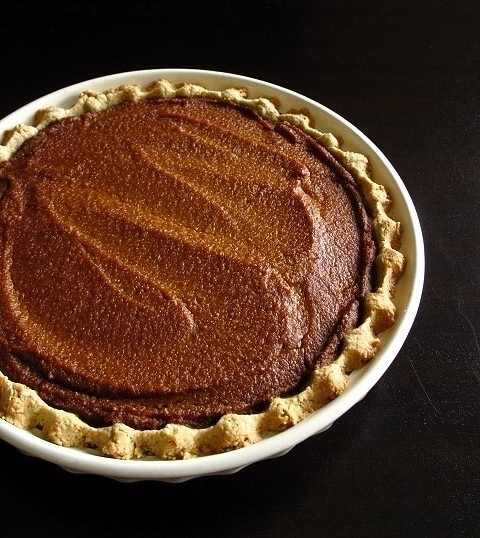
Pumpkin Pie, makes one 9-inch pie
Truthfully, I never liked pumpkin pie until I stopped eating dairy and enjoyed a vegan version of the classic. The creamy custard base always turned me off. Now I love pumpkin pie and count it as one of my favorite flavors. While there are innumerable versions swirling about this time of year, this is the one I make and enjoy. It is adapted from Gena Hamshaw’s pie in
Food52 Vegan and while I enjoy her version, I’ve changed it a bit so dates are the primary sweetener and, in my years-long quest to find a good gluten-free and vegan pie crust with no coconut oil (which I cannot stand in fat-heavy pastry doughs), I’ve finally come to a closer-to-whole-foods crust that tastes like what I think a pie crust should. It gets extra points for not needing to be rolled, chilled, or being difficult to work with. Enjoy!

filling:
2 1/2 cups baked + pureed pumpkin or winter squash, or canned puree
1 cup cashews, soaked for at least 4 hours
1 cup medjool dates (about 10)
2 tsp. pure vanilla extract
1/4 tsp. sea salt
2 Tbs. tapioca starch
2 Tbs. blackstrap molasses
1 tsp. cinnamon
1/2 tsp. ginger
1/4 tsp. nutmeg
a couple good pinches of cloves

crust:
1 cup rolled oats
1/4  cup + 2 Tbs. almond meal/flour
3/4 cup millet flour
pinch of sea salt
4 1/2 Tbs. good quality canola oil
3 Tbs. maple syrup
3/4 tsp. vanilla

  • Begin by baking the pumpkin or squash, if using, and soaking the cashews in water a few hours ahead of time.
  • Then, soak the dates in warm water for about an hour to soften up. Once the dates have soaked, keep 1/2 cup of their soaking liquid and put in a food processor along with the pitted dates, vanilla, and salt. Puree until completely smooth.
  • Into the food processor with the date puree, add the soaked and drained cashews, starch, molasses, and spices. Puree again, until completely smooth. Then add the pumpkin and puree once again until completely mixed. Then set aside to make the crust.
  • At this point, preheat the oven to 350 degrees F.
  • Finely grind the oats into a flour using either a food processor or coffee grinder.
  • Then, in a mixing bowl, whisk together the oats, almond and millet flours and salt.
  • In a liquid measuring cup, stir together the oil, maple syrup and vanilla. Then pour the liquids over the dry ingredients and mix together with a fork until the dough is evenly moistened.
  • Dump the entire mixture into a 9-inch pie pan, and with your fingers, spread the dough across the bottom and up the sides. A flat-bottomed measuring cup, glass, or mini rolling pin helps smooth the bottom.
  • Crimp the edges, and then fill the crust with the pumpkin mixture.
  • Bake for 35-40 minutes, until the filling is a golden brown.
  • Remove from the oven and let cool completely before serving.

smoky parsnip hummus

img_0855


In winter
    all the singing is in
         the tops of the trees
             where the wind-bird
with its white eyes
    shoves and pushes
         among the branches.
             Like any of us
he wants to go to sleep,
    but he’s restless—
         he has an idea,
             and slowly it unfolds
from under his beating wings
    as long as he stays awake.
         But his big, round music, after all,
             is too breathy to last.
So, it’s over.
    In the pine-crown
         he makes his nest,
             he’s done all he can.
I don’t know the name of this bird,
    I only imagine his glittering beak
         tucked in a white wing
             while the clouds—
which he has summoned
    from the north—
         which he has taught
             to be mild, and silent—
thicken, and begin to fall
    into the world below
         like stars, or the feathers
               of some unimaginable bird
that loves us,
    that is asleep now, and silent—
         that has turned itself
             into snow.


                                                      Mary Oliver’s White-Eyes


_______________________________________

If you’ve been reading for a while, you may know I enjoy poetry. Mary O’s White-Eyes fits with where I’m at lately but like all good art, it will be interpreted as needed by each taker. I’ll leave you to your representation. If you’re interested, here is a good playlist to listen to while letting the words come to life in you.

img_0863

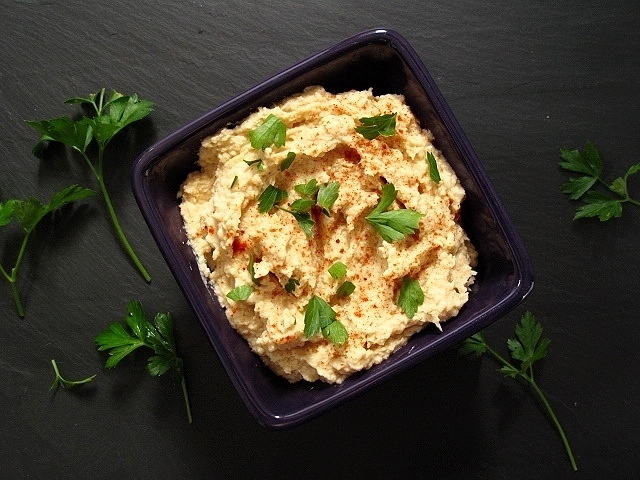
Smoky Parsnip Hummus, makes about 2 cups
Beyond the extraordinary colors of peak leaf season and the return to wearing sweaters day after day, one of my favorites about this time of year is stocking up on the cool season produce. We live in a pretty spectacular corner of the world where all the local farmers come together to sell their winter-ready produce in bulk at the end of the season, and so now we have a good 50 pounds of all my favorite cool weather vegetables to see us through the next few weeks and months. Are you ready for all the parsnips? They’re sweet, underrated, and much loved by many a new-comer. Try them soon if you haven’t already.

1 lb. parsnips (about 2 large), peeled and diced into 1-inch pieces
2 Tbs. extra virgin olive oil
1 ½ tsp. cumin
¼ tsp. coriander
1 ½ tsp. sea salt + more to taste
2 cloves garlic, finely minced
1/4 cup tahini
1/4 cup lemon juice
1/2 cup water, divided
1/2 tps. smoked paprika
freshly chopped parsley leaves to finish (optional)

  1. Bring the parsnips along with cumin, coriander, salt and 6 Tbs. water to a simmer over medium-low heat in a small sauce pan. Give it all a good stir to coat the parsnips with the spices.
  2. Cover and reduce heat to low and cook for about 10-15 minutes or until the parsnips are soft and can be easily pierced with a knife.
  3. Puree the cooked parsnips along with the garlic, tahini, olive oil, lemon juice, remaining water, and smoked paprika in a food processor until smooth. Add additional salt or lemon juice to taste, or extra water if it needs a little loosening up.
  4. Spoon into a bowl and sprinkle a little more smoked paprika and minced parsley leaves atop. Serve warm or at room temperature with crackers, chips, chopped vegetables, or flatbreads.