It started with my annual, have you tried asparagus before? questioning at the high school garden. To all the new students who told me they won’t eat asparagus, I brought them over to the plants, cut off a few stalks, snapped them into smallish pieces, and handed them over.
This always works.
I love converting asparagus haters. Fresh-off-the-plant raw asparagus is the epitome of what spring tastes like. It’s not tough or bitter or slightly limp like some of us have grown used to. It’s alive and green and has a flavor that even vegetable-avoiding high school students can get behind.
Since then, we’ve been eating a few asparagus-filled meals on repeat.
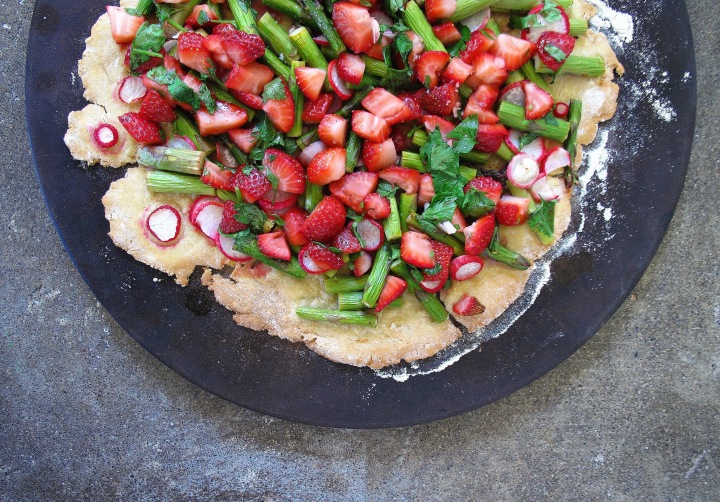
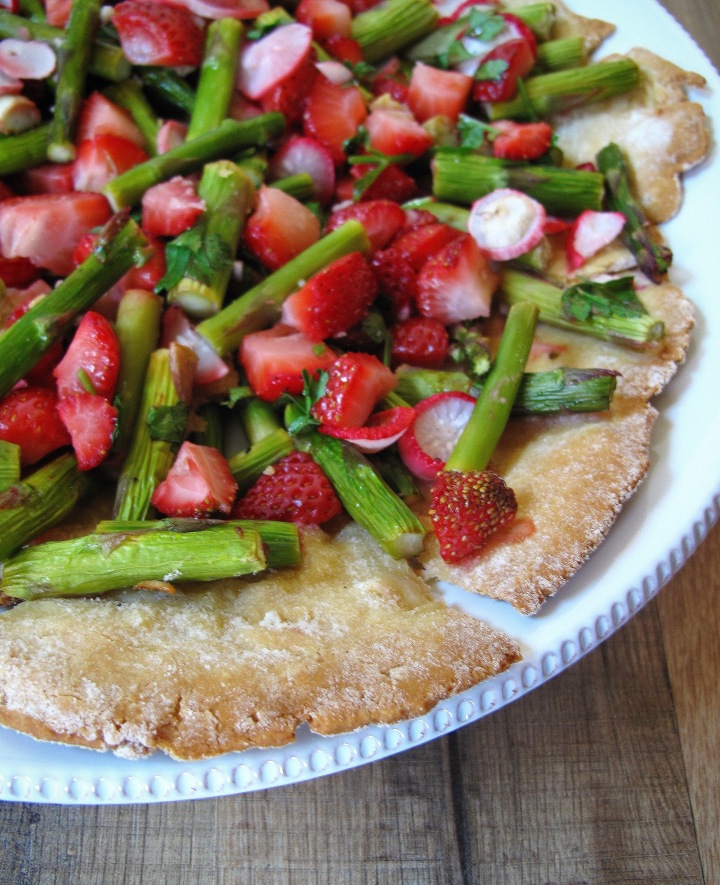
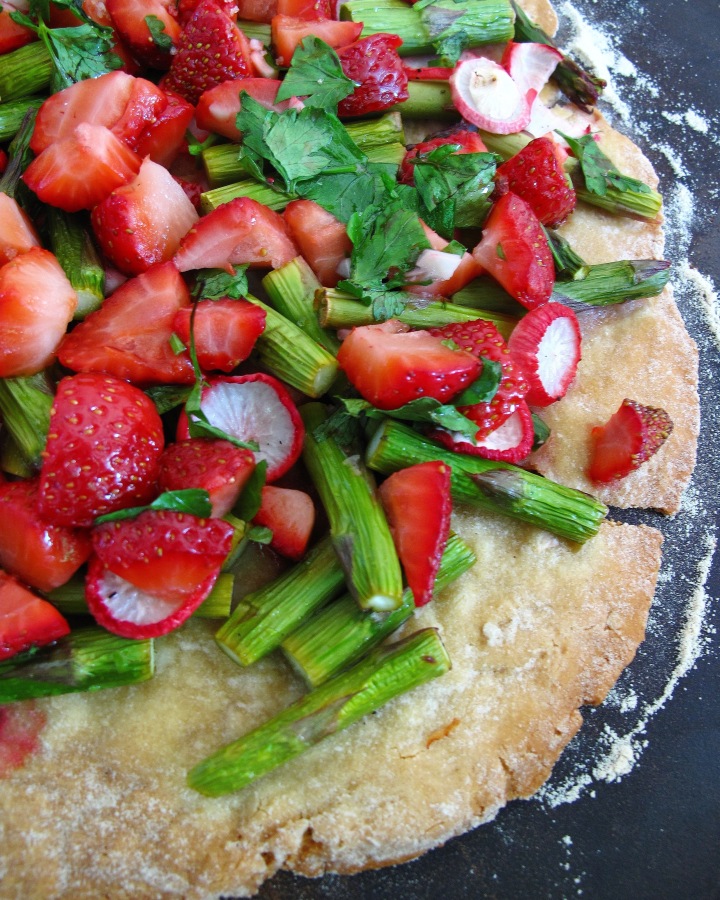
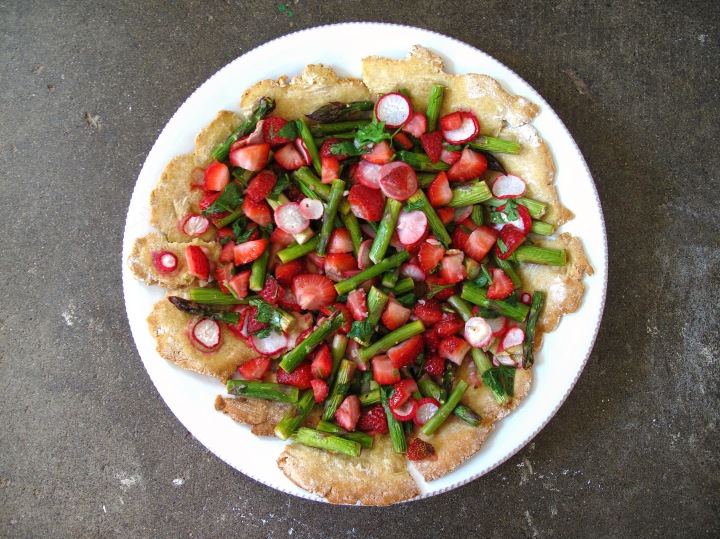
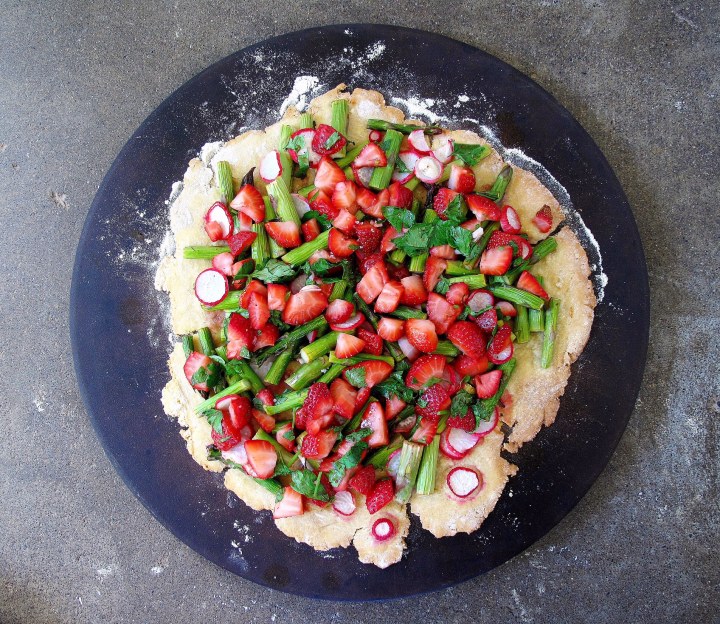
The first is this strawberry, asparagus + radish flatbread. It is perfect for a light meal or can be paired with others for more of a tapa-style selection. The Recipe Redux theme this month is tapas and small bites, so check out the link-up below for more ideas, if you’ve the mind. William and I have tended to make two of these flatbreads at a time, eat one for dinner, and then the other for lunch leftovers the next day. I like mine drizzled with a little balsamic vinegar and he leaves his as is. We love them.
The other asparagus dinners we’ve been enjoying and sharing with friends this spring include a quick sauté of asparagus, mushrooms, zucchini, and peas over Lindsey’s chickpea mash and then again with her vegan chickpea alfredo pasta, which we serve with asparagus, peas, and any number of other spring vegetables.
Strawberry, Asparagus + Radish Flatbread, makes 2
1 1/3 cups garbanzo bean flour
2/3 cups brown rice flour, plus more for dusting
2 tablespoons extra virgin olive oil
1 teaspoon baking powder
1 teaspoon fine grain sea salt
1/2-2/3 cup water
1 bunch asparagus, chopped into 2-inch pieces
1 bunch radishes, thinly sliced
juice from 1/2 lemon, or more to taste
olive oil
2 cloves garlic, minced
1 Tbs. raw honey
1 lb. strawberries, sliced
1 handful fresh flat-leaf parsley, finely chopped
balsamic vinegar, to drizzle, optional
Mix the flours, oil, baking powder, salt, and water. Add enough water to make a dough that can be handled and rolled. Then allow the mixture to rest for about 10 minutes. Divide it in two, and roll out one of the flatbreads on a floured work surface. Transfer to a baking pan or pizza dish and with a pastry brush or your fingers, coat the dough with a small amount of olive oil.
In a large bowl, toss the asparagus, radish slices, lemon juice, and garlic.
Then top the dough with half the asparagus mixture and bake at 400 degrees F for about 16 minutes. Without removing from the oven, add half the sliced strawberries, a handful of parsley, and a drizzle of honey, and then bake for an additional 3-4 minutes, just to warm the ingredients.
Remove from the oven, drizzle with a small amount of balsamic, if desired, slice and serve.
William took over my yoga mat the other night and started doing weird yoga-esque stretches I’ve never seen before. I’m certainly no yoga expert, but I think he was making them up. When I inquired about this new foray into brief stretching, he started talking about helping out his Qi (sounds like chee), which in Traditional Chinese Wisdom is the circulating vital energy or life force within us.
Around our house, I talk about Qi all the time, especially as it relates to mental clutter, anger or frustration, and digestive unease–basically whenever I notice something is personally out of balance. William is just about the only one I talk about Qi with, and having him suddenly spout my words back at me was a moment of startling clarity. As it turns out, when we spend enough time with someone, we begin to believe and do the same things as each other. I guess that’s why he also wanted only a big thrown together “beans and rice salad” for his weekly meal contribution recently, instead of the more typical tacos, pasta, and pizza fare.
It all makes me wonder, what little practices and sayings am I picking up from him (and others) that I haven’t noticed?
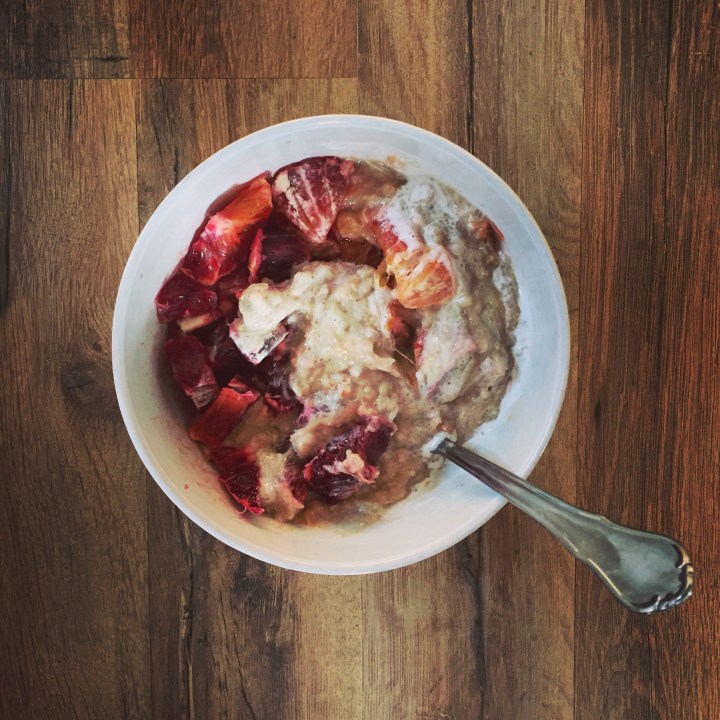
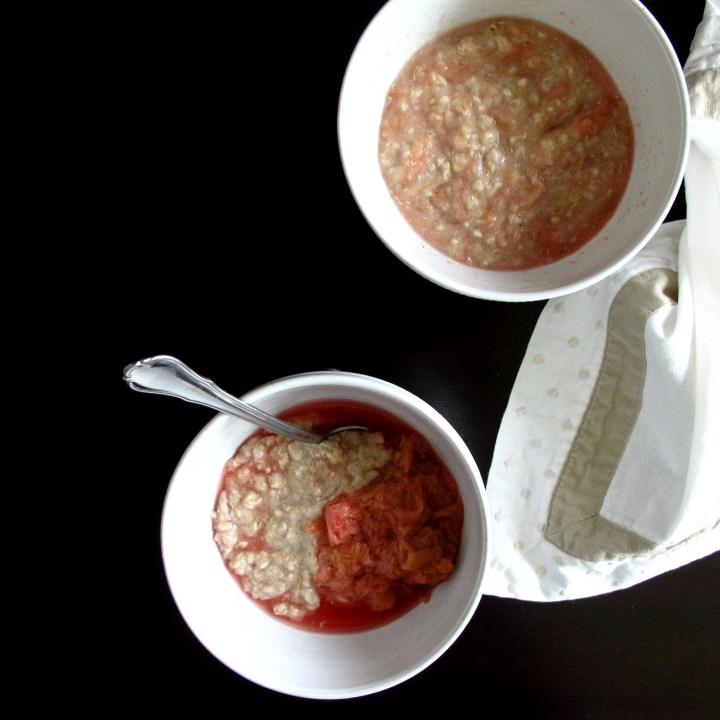
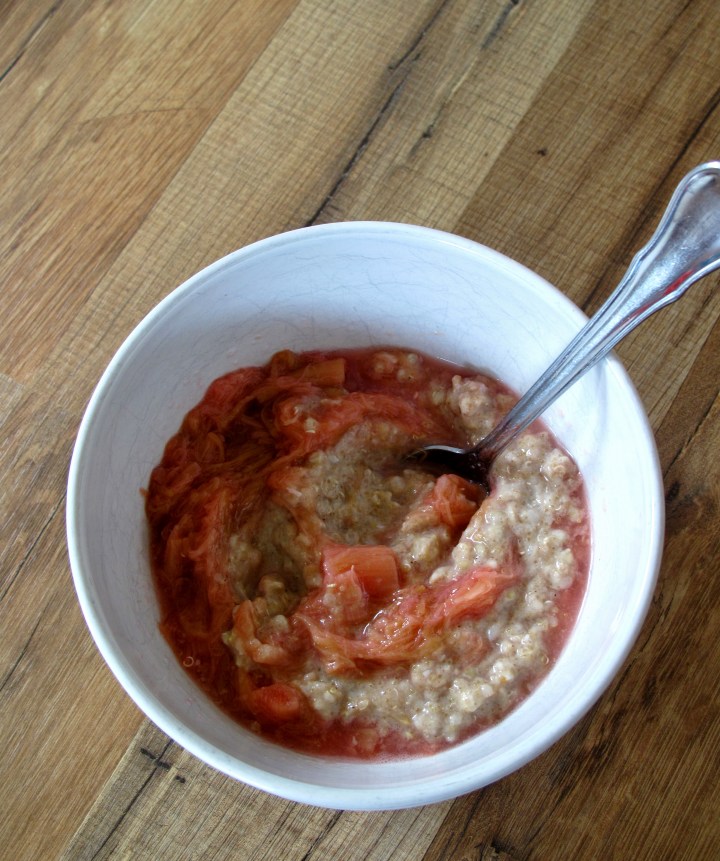
Superseed Porridge with Rhubarb, Blood Orange + Tahini, serves 1
I eat more oatmeal than my old horse but have also been experimenting with a good mixed grain/seed porridge combination these past few months. I’ve finally found one I like. It includes a few of the pseudo-grains/seeds I’ve been trying to enjoy more of including amaranth and buckwheat. They are wonderful and nutritional heavy-weights, but have strong, distinct flavors that can overwhelm all on their own. I leave out what we consider true seeds from the actual mix as I like to add ground sesame, flax, sunflower, pumpkin, hemp, chia, or tahini as the whim strikes, and I expect you will as well. Sometimes I add in an adaptogen like ashwagandha or maca powder, which I’m eagerly learning more about in my herbal medicine classes for their ability to help us adapt to stress. That’s a highly individual thing, however, and I recognize that simply making a good morning meal and eating it mindfully at a table is a vast improvement for many of us. I’ve tried this porridge mix with a number of flavor combinations throughout the seasons, but the one I love right now is heavy on the rhubarb with blood oranges and tahini.
Super Seed Porridge Mix, makes 10 1/3-cup servings
2 cups old-fashioned oats, gluten-free if necessary
2/3 cup quinoa flakes
1/2 cup amaranth
1/2 cup buckwheat
Mix together and store in a container of choice. When ready to cook, use 1 cup water to 1/3 cup grains for each serving.
Rhubarb, Blood Oranges + Tahini Porridge
rhubarb sauce, as much or as little as preferred
1-2 tsp. tahini
1 cup water
1/3 cup porridge mix
1 blood orange, sections separated and roughly chopped and a little zest stirred in.
sweetener, to taste
I stew the rhubarb into a sauce or compote ahead of time. Including chopping and prep, it takes no more than 20 minutes. Simply chop a few stalks of rhubarb roughly and then add to a small saucepan along with a small splash of water. Cook over medium high for a few minutes until it becomes a sauce. Unlike a lot of people, I don’t add sugar to the sauce and instead leave it tart. I’ll add a sweetener of choice to whatever I mix it into and adjust as needed. If I feel like getting fancy, I’ll stir in a little vanilla or orange zest.
Then boil the one cup water and whisk in the grains in a small saucepan. Cook until it becomes a porridge, and stir in the rhubarb sauce and tahini in the last few minutes, until warm.
Finally, add in a little orange zest and the orange sections in the last minutes, as their Vitamin C is heat sensitive and easily lost in cooking. Add sweetener of choice to taste.
All in all, this is more of a weekend porridge—or as I’ve taken to doing, it can be easily made up the night before. I cook the entire thing save the blood orange, and then pour into my serving bowl and let it chill overnight in the fridge. The next morning, I simply reheat in the microwave and stir in the orange and orange zest and I’ve got a fancy start to an otherwise busy morning.
Buckwheat, quinoa + millet mix, lentils, steamed beets, shaved rainbow carrots, sliced radishes, spring greens + turmeric special sauce.
Once a week, my coworkers and I eat lunch together during our staff meeting. We are all healthy-food loving ladies with different diets and food preferences, and we often begin the meeting looking around at each others lunches, thinking and sharing about how good they all look and how we’d like to trade. It is a great environment to work in, one of non-judgement and non-competitive respect and inspiration for eating well.
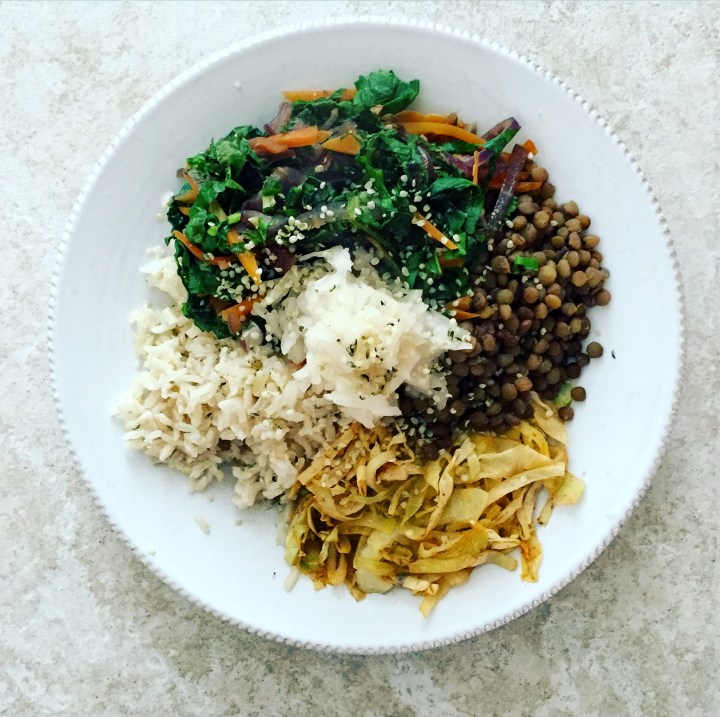
Brown rice, lentils, sautéed cabbage, kale + matchstick carrots, sauerkraut + hemp seeds.
Prior to working with this group, I ate lunch with my fellow science teachers at the high school I taught at. It was the first time I had worked at a place where everyone took 30 minutes every day to sit down, eat together, and catch up. Those 30 minutes kept me sane, but I wasn’t at first keen about sitting around having others see what I ate every day. I didn’t want my coworkers to judge my weird food habits. I have a pet peeve with people telling me, You eat sooo healthy, in that envious/judgmental way. But that never happened. Instead, I learned that everyone has weird food preferences, and no one cared what I was eating. It was pretty darn liberating.
A month or so ago, I spent a couple full days teaching at the high school. I brought my lunch with me and left it in the car. During the break, one of the students caught me on the way out and asked, You’re not eating? Is that why you’re so skinny? This was coming from a slightly overweight teenage male who was standing in the hallway, noticeably not eating also. I felt absolutely crushed at his response. After assuring him I was on my way to lunch, I asked about his own lack of food. He told me he was waiting for a friend. I don’t know whether he actually ate during that break, but I remember my own eating habits during that age, along with my former and current students’ tendency to skip breakfast and lunch. As I walked away, the interaction got to me. It was a really nice day, and I ended up eating my giant lunch bowl outside in the garden, in lieu of having more inquiring eyes looking on at my food choices.
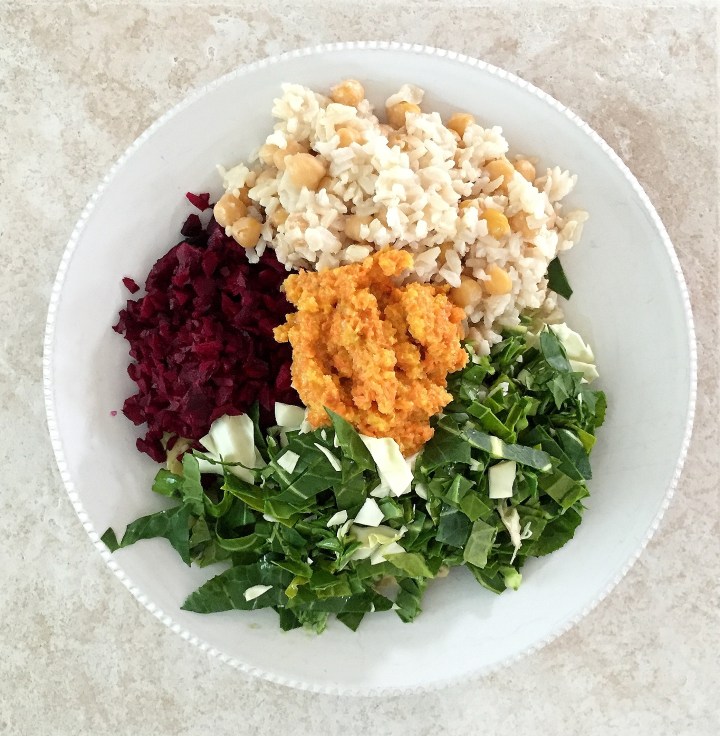
Brown rice, garbanzos, chopped collards and cabbage, diced beets, and carrot-miso spread
When I was teaching full time, many of my students asked about and observed what I ate. I could tell they were searching for a role model and they knew and loved talking about my tendency to eat the entire apple, drink lots of tea, and avoid all dairy and fast food. They thought it was all just plain weird but also cool. When some individuals approached me to talk about food and health, I tried to offer guidance that was actually helpful for where they were at. At the same time, I was conscious of not being too out there, both for their sake and mine. Out of self-preservation, I’ll do just about anything to avoid having a conversation that involves someone vocally comparing their body size to mine.
Inevitably, every time I work with a new group of high school students, I’m asked whether I’m vegetarian. This question always brings up a lot of personal anxiety and I tell them, no, I eat meat, and leave it at that. They don’t need to know it makes its way on my plate a couple times a year lately. My own personal viewpoint is that the adolescent and emerging adulthood years should be ones of exploration, and they don’t need me telling them they should follow a particular diet, cut out entire food groups, or ascribe to my food-belief system. I have entirely too much experience with disordered eating and body shaming to possibly lead someone toward that camp.
Millet, goji berries, oranges, kale, roasted romanesco and delicata squash with a citrus vinaigrette, hazelnuts + baked tofu.
Instead, I try to simply emphasize more whole foods and less processed, in baby steps. I avoid making recommendations about foods I don’t personally choose to eat, but I also recognize that what works for me in terms of food choices does not work for everyone. I particularly enjoy the teachings of traditional medical paradigms like Traditional Chinese Medicine and Ayurveda, which emphasize eating to one’s personal constitution and the seasons. It is especially difficult to teach this concept to my high school students, as they are often trying to fit in and do what their friends are doing. As an adult, I’m only just beginning to feel especially comfortable eating and sharing what works for me.
Quinoa, black beans, roasted Brussel sprouts and onions, kale + cumin-lime dressing.
I read recently in the book, Nourishing Wisdom, that women tend to engage in a silent competition during meals of who can eat the least, while men tend to openly compete for who can eat the most. I resonate strongly with the female side of that scenario and I am especially thankful that these last few years, my meals with co-workers have been free of that extremely harmful silent competition. Especially since what works for me tends to be beans + rice bowls, and the combinations are usually generously sized.
I’m curious, too, about the best way to approach these conversations about food with teenagers and individuals trying to find their way to healthy eating. How do we positively guide them? So far, I’ve focused on strengthening my self-confidence and relationship to food so I don’t feel the need to compare, and let the result of that show up by role-modeling positive behavior and conversation about eating, when it comes up. If you have another approach or successful experiences, I’d love to hear!
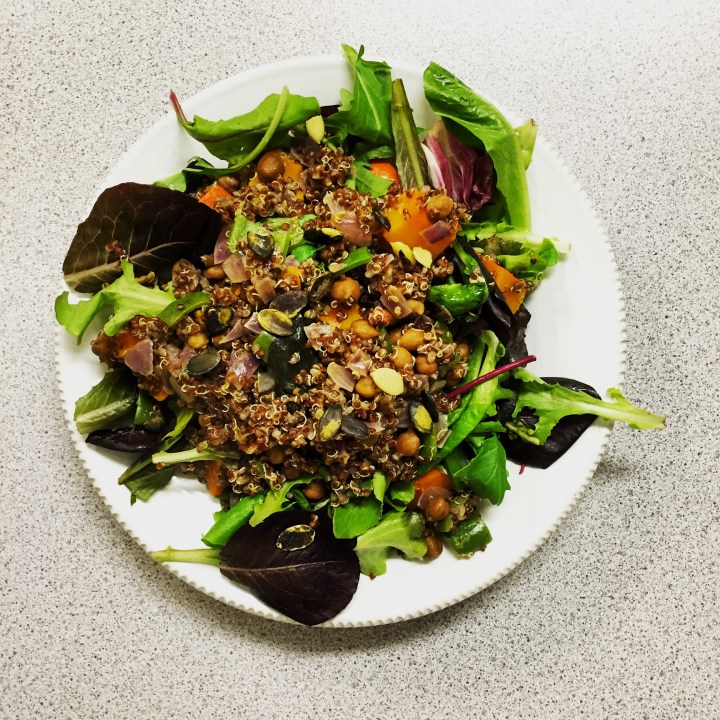
Quinoa, garbanzos, roasted winter squash and bell peppers, mixed greens, cumin-lime dressing, + pumpkin seeds
The reason I’ve included so many random meals is that The Recipe Redux theme this month is breaking up the lunch rut. My lunches nearly always tend to be leftovers from the night before and often that means I’m eating what I call bean and rice bowls, even if they have no rice and are rarely eaten in a bowl. Sometimes, however, I pull random ingredients from the fridge and come up with something slightly new. Unlike a lot of people, I rarely enjoy eating out, especially for lunch. It is one thing I wish I were more comfortable with, but knowing exactly what I’m having for lunch is a little comforting ritual that I like to keep amidst busy days.
The only advice for creating a quick lunch combination is to have a few key ingredients prepped ahead of time, be creative, and add color. Eating food that is beautiful is half the experience. I often have leftover cooked grains, some beans, and leftover dressings hanging out, and to that I add whatever vegetables and herbs are on hand and sound good. If, on the off chance I do not have ingredients prepped, I reach for quick grains like millet, quinoa, and buckwheat and cook them, along with a pot of lentils, while getting ready for my day. They all can be ready within 20 minutes.
The photos I’m sharing here are random compilations of beans and rice that I’ve made over the last few months for busy day lunch or dinners. They are only just a start, so go ahead and be adventurous!
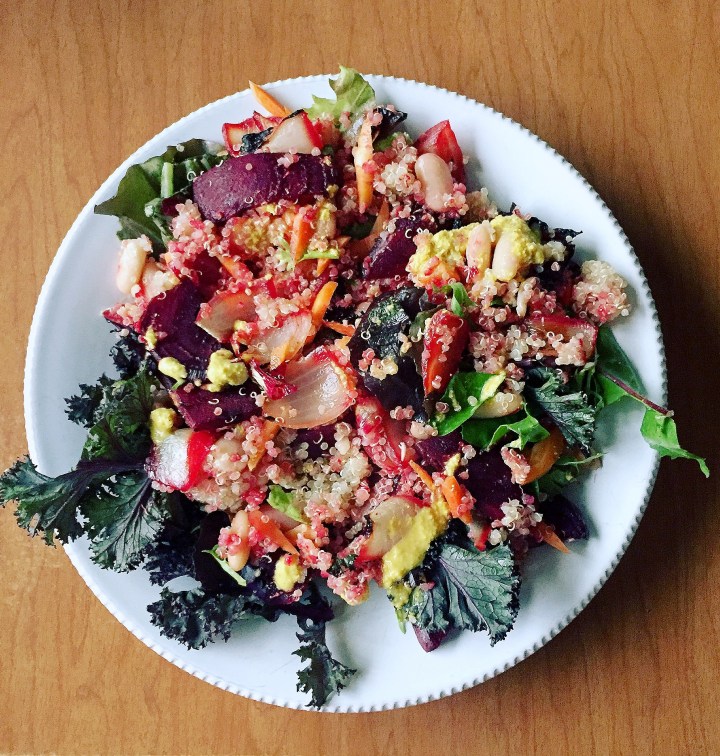
Quinoa, white beans, roasted beets and onions, matchstick carrots, greens mix + turmeric special sauce
Turmeric Special Sauce, makes 2 cups
This is my current dressing of choice. Adapted from David and Luise by way of Laura, it is packed with a lot of nutritional goodies. In my current quest to eat a few more fats from whole foods rather than oils, I’ve eliminated the oil from the original recipe, added lentils for a little more protein, which I tend to eat on the lower end for my needs, spiced it up with additional chili powder. The turmeric and nutritional yeast add color, umami flavor, and B-vitamins, plus much of the latest research has turmeric as a real powerhouse in terms of health benefits. All in all, this sauce is a good one, has a tiny kick that is completely balanced amongst all the other bowl ingredients, and comes together quickly, if you remember to soak the seeds. I especially like it with beets because in my opinion, vibrant salads taste just a touch better.
1/2 cup raw sunflower seeds, soaked for 2-4 hours
1 – 1 1/4 cup water
1 1/2 Tbs. nutritional yeast (flakes)
1/4 cup cooked lentils, white or mung beans
2 cloves garlic, peeled
1/2 tsp. turmeric powder
1 tsp. apple cider vinegar
1/4 cup fresh lemon juice
1/2 tsp. maple syrup
1/2 tsp. cumin
3/4 tsp. chili powder
1/4 tsp. each salt and pepper, or to taste
Drain and rinse the soaked seeds, and then add them, along with all the other ingredients to a food processor. Purée until smooth, adding a little more water as needed to thin it out. Adjust seasonings to taste.






 GUTSy Performance Nutrition