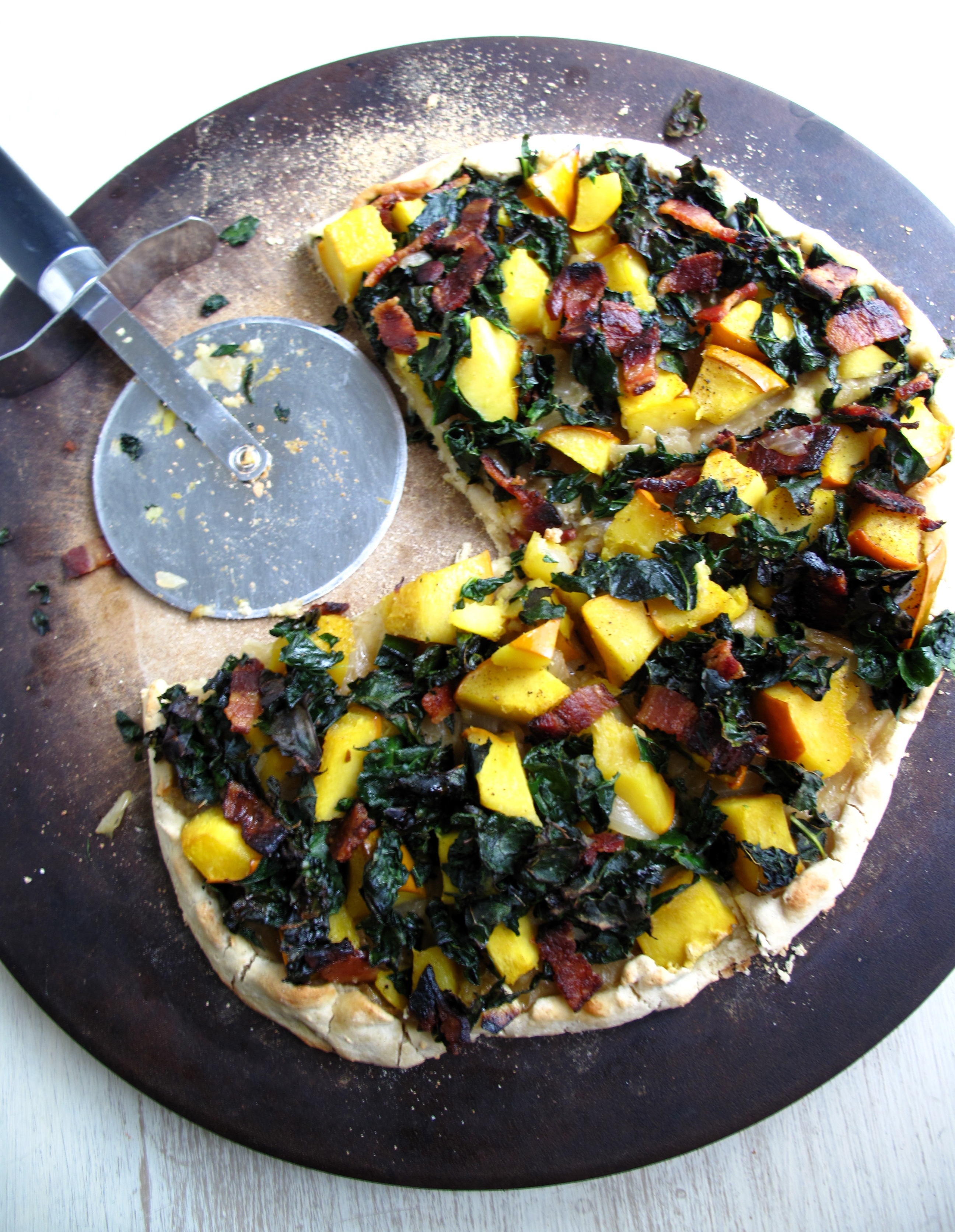
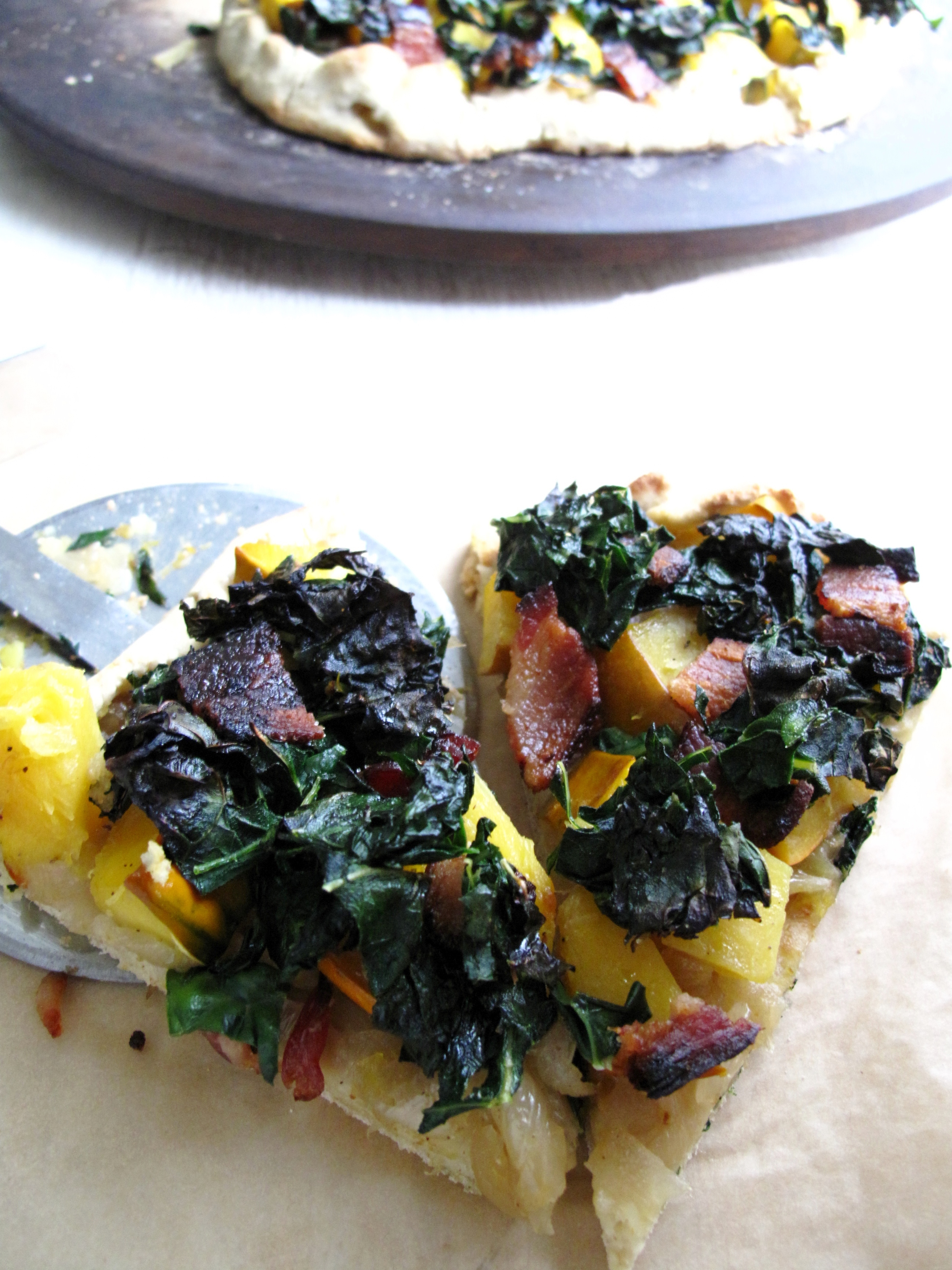
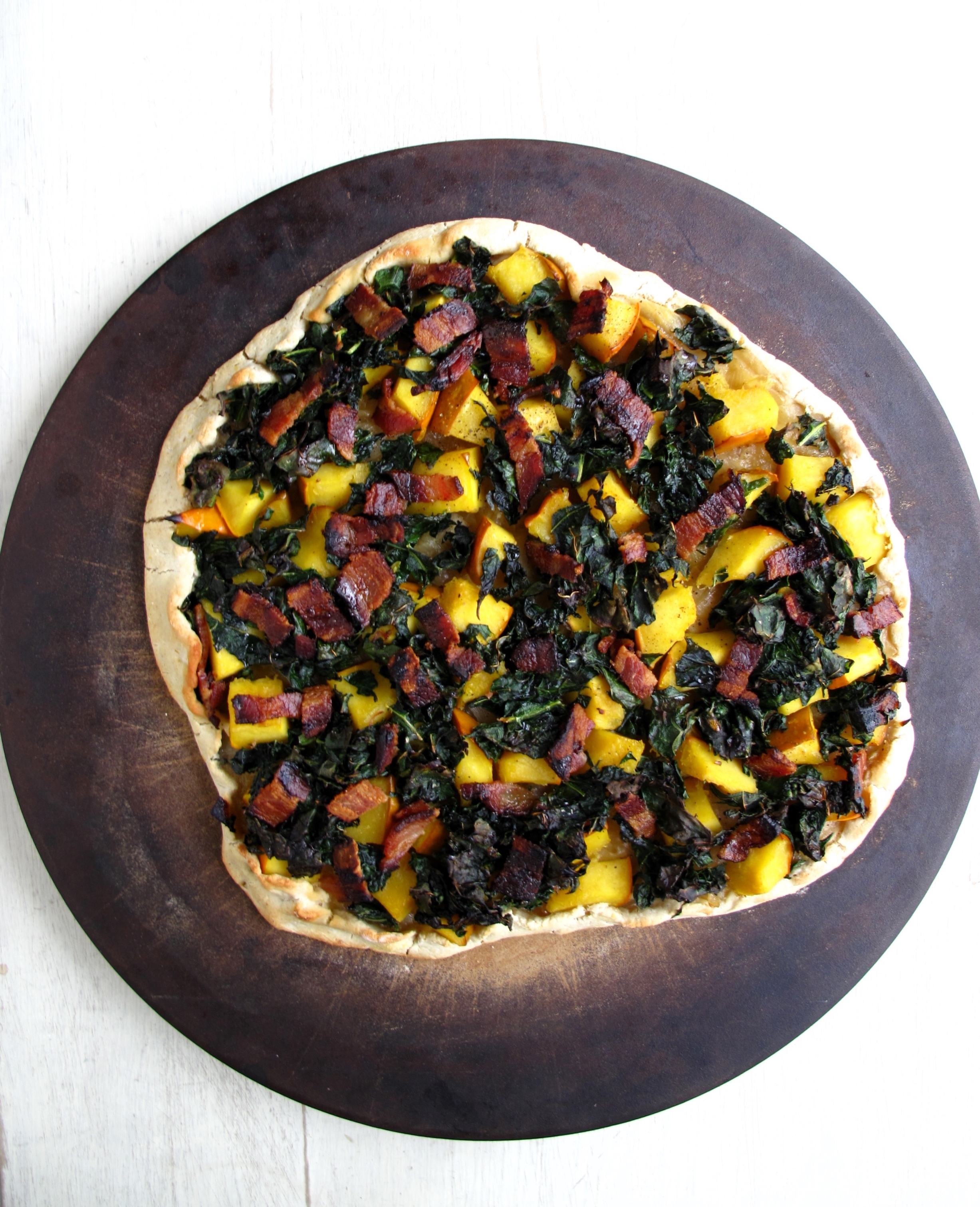
Caramelized Onion, Kale, Squash & Bacon Pizza

Contrary to how much cured pork is on this blog, our meals are often light on meaty things. Bacon and its relatives do happen to show up in special dishes though, and this pizza, it is super special. The Recipe Redux folks asked us to share a healthy pizza recipe that we can all look forward to after a long week…or a long day. This gluten and dairy-free pizza is definitely worth coming home to.

IMG_5220

Two years ago, I eliminated gluten. It was not as rough of transition as I had anticipated, except for pizza. Pizza has always been among my top three favorite foods, and W can eat it at least twice per week, indefinitely. We had an amazing pizza crust recipe, one that we had trialed and tailored so many times that it was loved more than any other pizza crust at even our favorite restaurants. It just so happens to contain a lot of wheat flour. When I received those test results back in January of 2012, and had cleaned out the cupboards and brought in new gluten-free flours, I quickly set to trying an array of pizza crust recipes. None of them were even remotely appetizing. They were difficult to roll, sticky, crunchy, and tasted like crackers. There was none of that bready texture that we wanted. Worse, we couldn’t find a better crust at any restaurant, even ones claiming to have an amazing gluten-free option!

IMG_5232

Then came months of still not feeling well, and the frustrating news that dairy was  a culprit too. Feeling defeated, I gave up on pizza for a while.

No longer. A few more months of experimentation paid off. We ate a lot of bad pizza in the process, but finally created the crust. And cheese? We have come to realize that when good toppings are loaded on, the cheese isn’t missed.

Really.
IMG_5240

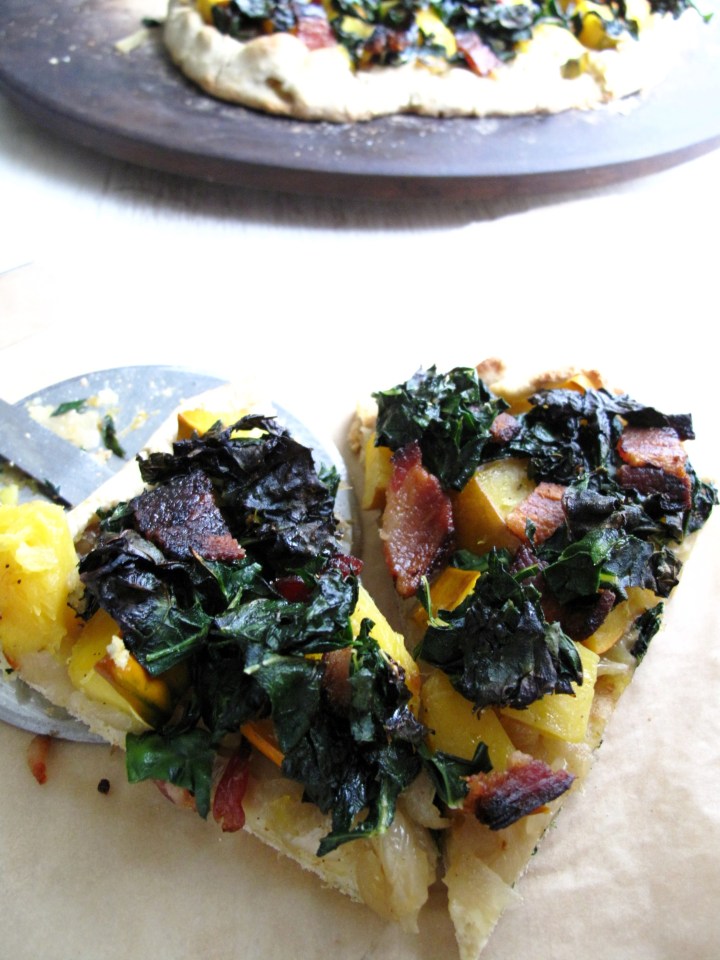
Now let’s talk about these toppings. This pizza involves acorn squash, lacinato kale, caramelized onions, honey, and a touch of bacon. It’s one of my favorite combinations. The caramelized onion forms an exquisite base in lieu of sauce, and with the slightly salty kale, squash and bacon, and with that drizzle of honey, the combination of sweet and salty creates a pizza that leaves us no longer missing the gluten and cheese.

IMG_5198

Caramelized Onion, Kale, Squash & Bacon Pizza, (crust adapted from Kumquat)
A note about the crust: The ingredients below make enough for two 10-12″ crusts. Each pizza usually serves two to three. You can refrigerate the dough for the second crust up to two days. Due to the differences in the flours, I like to weigh them with a kitchen scale to get an accurate ratio of 70 percent whole grains and 30 percent starches. I’ve then put those weights into cups so it will be easier to measure without a scale, but if in doubt, I’d use a “short measurement,” rather than an overflowing cup.
  
1 large yellow onion, thinly sliced
1/2 Tbs. olive oil
1/2 a bunch of lacinato kale, chopped
Extra virgin olive oil
Salt
1/2 of an acorn squash, deseeded and chopped
3 slices thick-cut bacon, cooked and diced
1-2 Tbs. honey
 
1 1/2 Tbs. golden flax seed, ground
3 Tbs. hot water
40 grams (a short 1/2 cup) garbanzo & fava bean flour
80 grams (3/4 cup) brown rice flour
80 grams (3/4 cup) sorghum flour
80 grams (3/4 cup) millet flour
40 grams (1/4 cup + 2 Tbs. tapioca starch
40 grams (1/4 cup + 2 Tbs. arrowroot starch
40 grams (1/4 cup) potato starch
2 tsp. salt
2 1/4 tsp. active dry yeast
~2 Tbs. olive oil, separated
1 tsp. sugar
1 1/3 cup warm water, divided
Cornmeal
 
For the caramelized onion:
In a large saute pan, pour in olive oil and heat to medium high. Add onions and allow to cook until they are becoming soft. Add a good pinch of salt and turn down to medium, covered. Stir occasionally and turn down again, if they are cooking too high. They will take 30-45 minutes to become golden and soft, and caramelized. Remove from pan and set aside.
 
For the kale:
In the same pan as the onion was cooked in, add a small drizzle of olive oil and pour in the chopped kale. Add a good pinch of salt and cook just until slightly wilted. Remove from pan and set aside.
 
For the squash: 
In the same pan as the onion and kale, add 1 Tbs. olive oil and squash. Cook over medium heat, just until the squash begins to soften slightly. Remove them from the pan and set aside.
 
For the pizza dough:
1.Combine flax seeds and 3 tablespoons very hot water in a small bowl until a slurry is formed; set aside.
2. Combine flour and salt in a large mixing bowl or bowl of a stand mixer. Combine yeast, 1 Tbs. olive oil, sugar and 1/2 cup warm water in a medium bowl or measuring cup. Allow to rest for 3 minutes for yeast to activate. Add yeast mixture to flour mixture; mix for 1 minute. Add flax seed slurry to the dough and a portion of the remaining water; mix until the dough comes together in a ball. If it is too dry, add enough water to for a tender, pliable dough. Set aside to rest for 1 hour.
3. Preheat oven to 450 degrees F. Separate the dough into two equal portions. Sprinkle your pizza stone or baking sheet with a light sprinkling of cornmeal. Roll one of the dough portions out to desired thickness directly on a pizza stone or baking sheet. 
4. Sprinkle the dough evenly with caramelized onion, followed by squash, then kale, bacon, and finish with a good drizzle of honey. Fold the crust edges in when done. Bake for about 16 minutes.

Pomegranate, Kale + Pancetta Spaghetti

 
IMG_5155
 
“Go into yourself and see how deep the place is from which your life flows; at its source you will find the answer to the question of whether you must create. Accept that answer, just as it is given to you.”
                                                            – Letters to a Young Poet, Rainier Maria Rilke 
 
IMG_5191
 
The truth is, the beginning is blurry. When I squint back into the depths of my childhood, my thoughts were not long off of food. I would take cookbooks to bed at night, squinting into the flashlight-shadows, long after my sister had demanded I put our shared, bunk-bedded room into darkness. Looking back at the shy, quiet, anxious little person that I was then, I recall only that I felt most at home in the kitchen. I still do.
 
It began then, I think, with playdough. My mom mixed up homemade playdough. I remember seeing the recipe on a worn index card in her gray metal recipe box, a box that to this day holds her most cherished recipes. There were two recipes in that box that were beyond intriguing to my child-mind:  elephant ears and playdough. The first was something that I had never considered could be made outside of a hot, steamy, trailer-kitchen at the county fair. The second was the only non-food recipe that I’ve ever known my mom to have on hand. I must have asked her, and she mixed up a batch for us. I don’t remember much after beyond the whirl of the mixer blades, and the fact that my mom brought me into the kitchen, handed me the measuring cups, and taught me fractions.
 
IMG_5138
 
From that moment when I learned to turn on the mixer, to scoop flour into the measuring cups, to follow recipe instructions, up to now, nearly 20 years later, I’ve been most at home in any place surrounded by food. It fascinates me in its cultural symbolism, use as a socio-economic tool and weapon, as a draw to family gatherings and entire holiday celebrations, and, most importantly, in its most simple form as basic sustenance for the hunger in all of us.
 
IMG_5151
 
In those simple childhood days, those most-remembered foods symbolize the dearly loved and oft-hated. My favorites from that gray box included our neighbor’s recipe for honey-cinnamon swirl rolls,  my mom’s homemade bread, and leftover-oatmeal cookies with just the right amount of spice. There was my favorite breakfast, dad’s “stinkbug porridge”, which was a simple concoction of raisins and brown sugar. And then the fresh milk from our cow, Betsy, with flakes of cream floating amongst my morning cheerios. I had to plug my nose to get the milk down after staying an extra hour at the table gathering the resolve to drink it. Now looking back, I realize what a precious experience to have been raised in a place where our milk came right from the cow.
 
IMG_5179
 
In this new year and new beginning of sorts, I am reminded of how I am drawn to food as a means of communication and connection. I am reminded of the beginning, how I learned in the kitchen with my mom and the whirl of the blender blades that are still in her cupboard today. I am reminded that food is special, and that when I go into myself, as Rilke suggests, the only answer I come back with is, yes, I must create.
 
Though I can no longer enjoy thick slices of my mom’s bread, or partake in flecks of cream floating in the cow’s milk, I hold in my heart and in my cooking a focus on good, simple, nourishing food, in whatever way it can be most enjoyed. I am looking forward to this year to come, and the creations it will bring.
 
IMG_5150
 
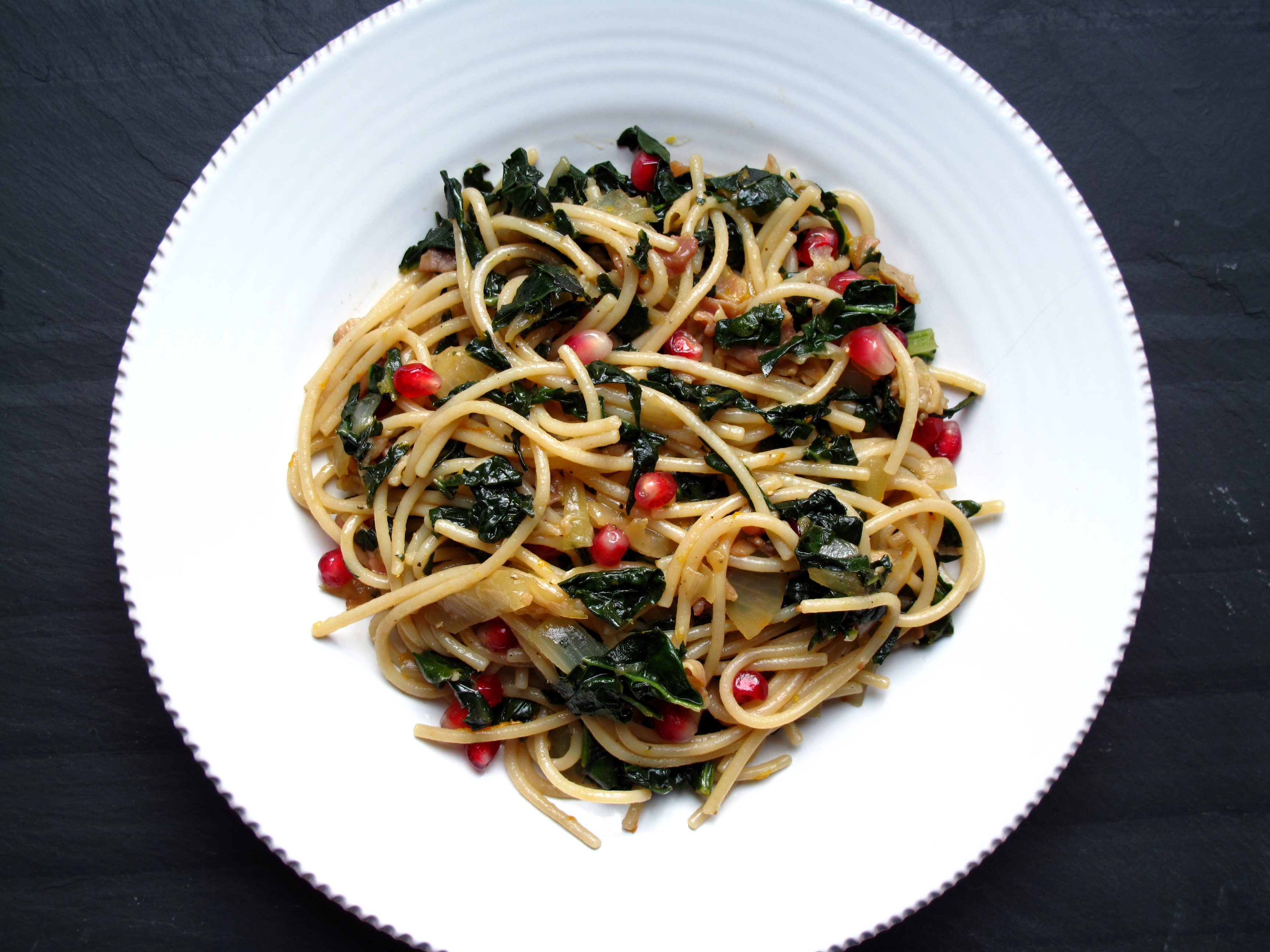
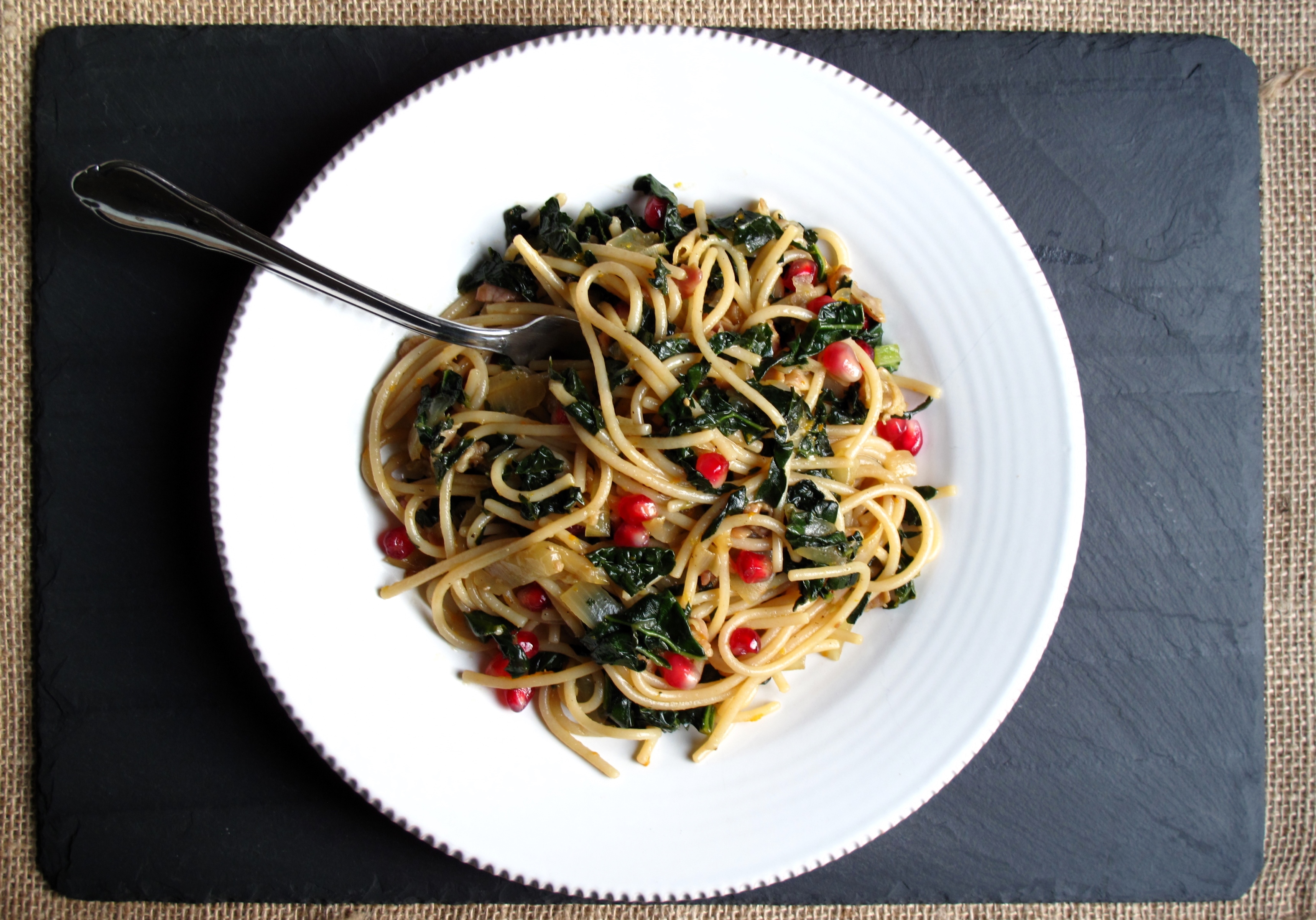
Pomegranate, Kale & Pancetta Spaghetti, serves 3
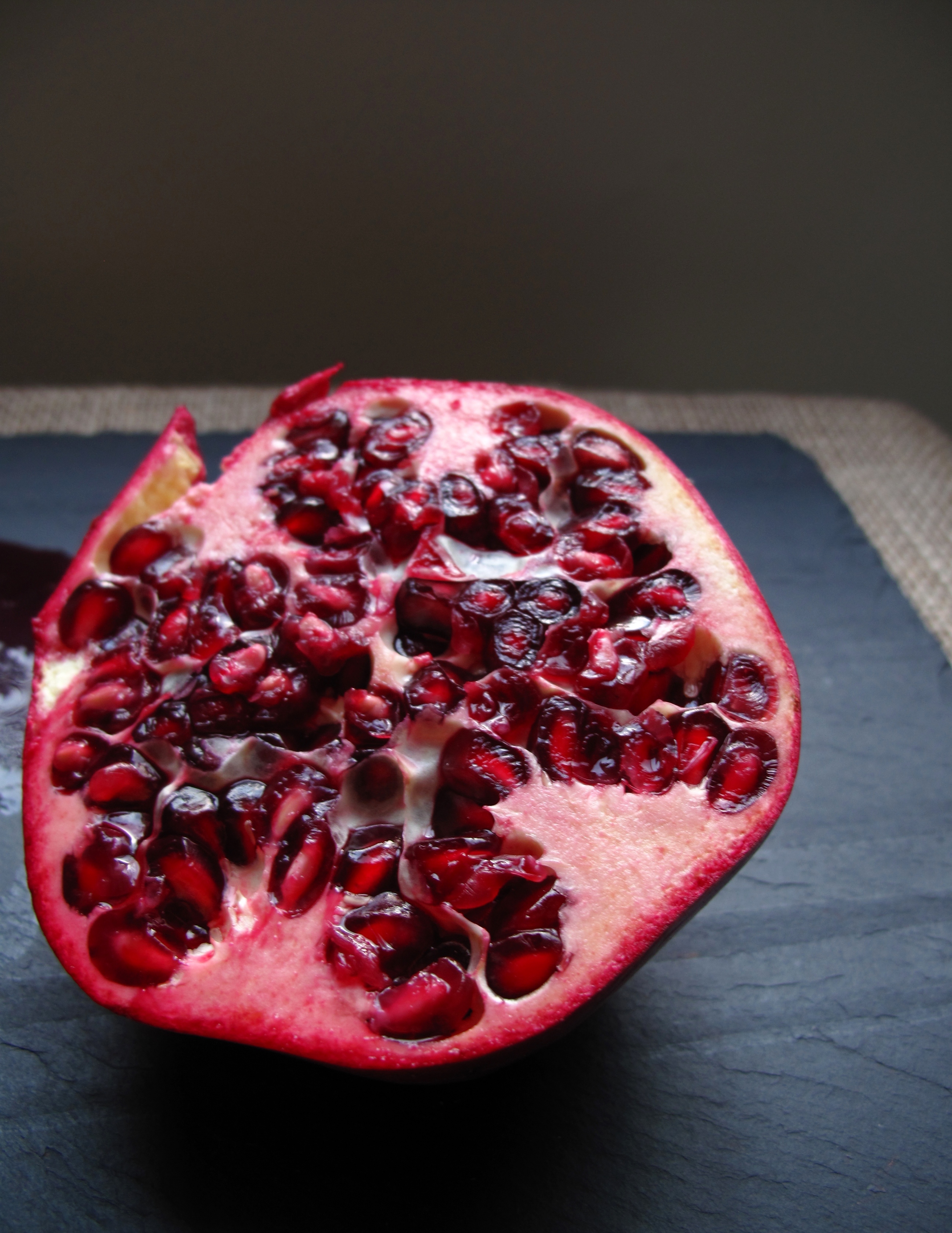
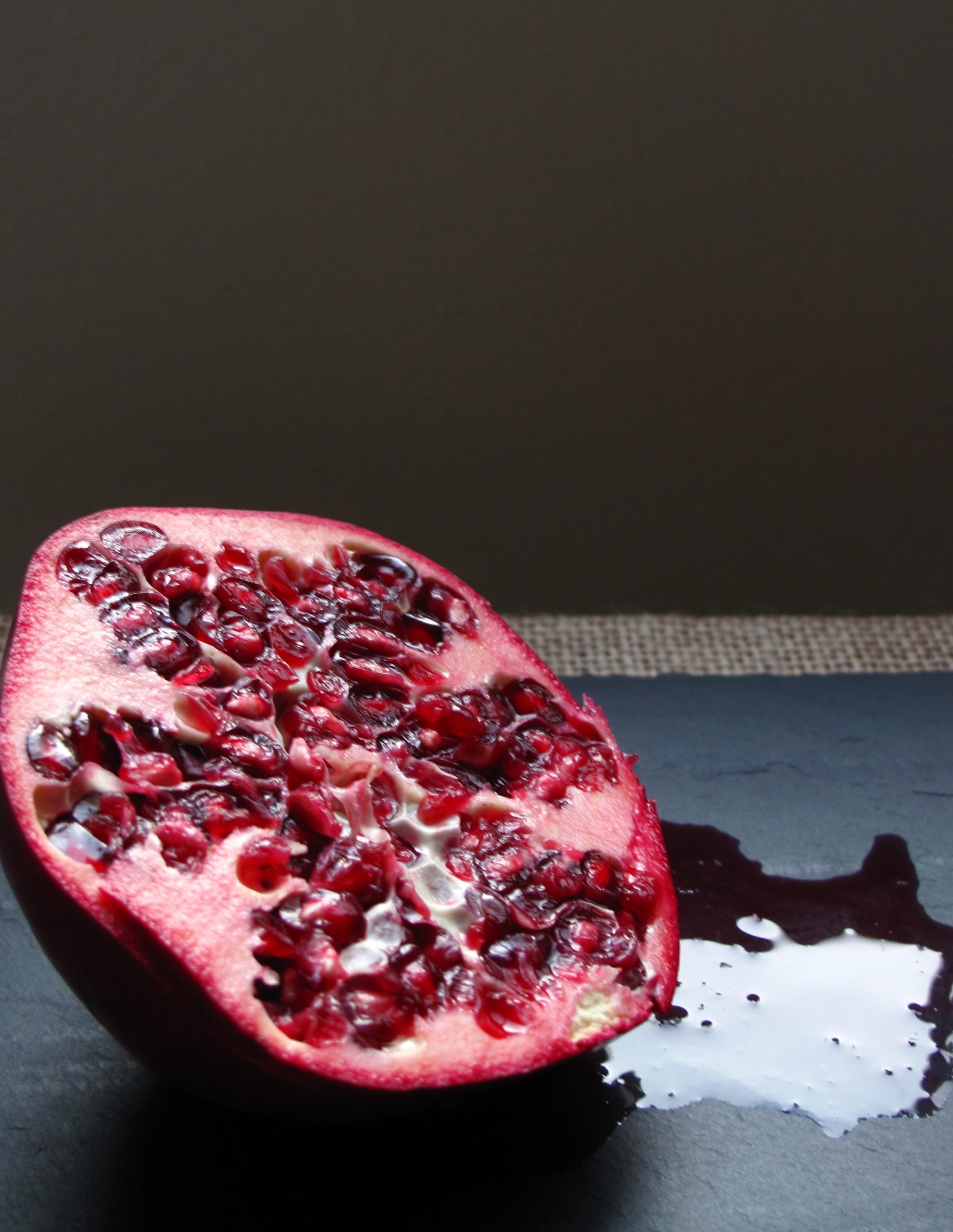
Pomegranates have been often in our kitchen this winter, more than ever before. This creation happened spontaneously and naturally, out of ingredients we had on hand one evening. It will become a favorite, I’m thinking, in the many wintery days ahead. If you have not used pomegranate molasses, it can be found at a well-stocked grocery store, online, or you can make your own by reducing pomegranate juice in a sauce pan. Don’t leave it out in this dish; it will be missed.
 
6 oz. brown-rice spaghetti (or any type that you prefer)
4 oz. pancetta, diced
1 medium onion, chopped
1 large bunch kale, chopped (I prefer Tuscan but any type will do)
1/4 tsp. salt
3 Tbs. pomegranate molasses
1 Tbs. orange zest
seeds from one pomegranate
salt and black pepper, to taste
  • Cook the spaghetti according to package directions in a large pot. 
  • While pasta is cooking, heat a large sauté pan to medium-high. Add pancetta and cook until almost done. Add the onion and continue to sauté until transculent, about 8 minutes.
  • When onion is very soft, add kale and cook down until wilted, about 5 minutes.
  • Drain spaghetti when cooked, and mix it into the kale and onion mixture.  
  • Add salt, orange zest, and pomegranate molasses. Toss the pomegranate seeds on top and stir them in gently. Add additional salt and pepper to taste, and serve.


Neah’s Apple {loaf} Cake

IMG_5110

I stepped out the door, determined to not let the weather hamper plans. The forecast was for two to three inches of fluffy, wintery, white. I decided by looking at the multiple inches outside that we were the “lucky ones.” As I trudged around town in those early hours, it became obvious our hilly neighborhood was not alone. I alternately ran in the street, where there were decidedly fewer cars than normal, or jumped to the side and pushed the accumulating inches. When I finally looped back to our apartment, decidedly more worked-out than I had intended, the flurry mass of winter wonder came down in full force.

IMG_5084

We had record-breaking weather this December. Nine inches and something like five days below freezing all in one go left me feeling humbled. Since I live on that big ol’ hill and all the local accidents were at the bottom of it, I decided to spend those days hoofing it around town.

After an unexpected week of slowing down and spending time in manual transport, I am more at peace and connected to my community. I took time to enjoy the cheery Christmas trees peeking through the house windows. I could take in the season’s lights slowly and know exactly which intersections were the most icey. I now know there are a couple horses at the Horse Center that are bad neighbors. Robert Frost’s philosophy about fences doesn’t work with them.

IMG_5056

I walked to the grocery store. On ice and then again in the melting mess (which was worse!) the second time. I almost lost it. Twice. I was thankful for a co-worker who through an unrelated phone call, made me forget my bad temper and live on. I smiled at the kids that made our driveway a very slick, very steep, and pretty awesome sledding hill. I almost joined them. I wish I had.

In that week when Christmas shopping plans were postponed and the thought of tree-decorating came to a halt, when running became an act for extreme-adventure-seekers only, and I circled only within a two mile radius from the home hill for seven days, I came to know what the holiday season should be.

IMG_5115

Take time to slow down and reflect on the end of a year well-lived. Be grateful for all that we have. Accomplish good deeds towards others. Get out of the bubble. Expand the perception of what can be accomplished. This season is not about the hustle and bustle. It is not about finding the perfect gift. It is about cherishing each moment as it comes.

IMG_5121

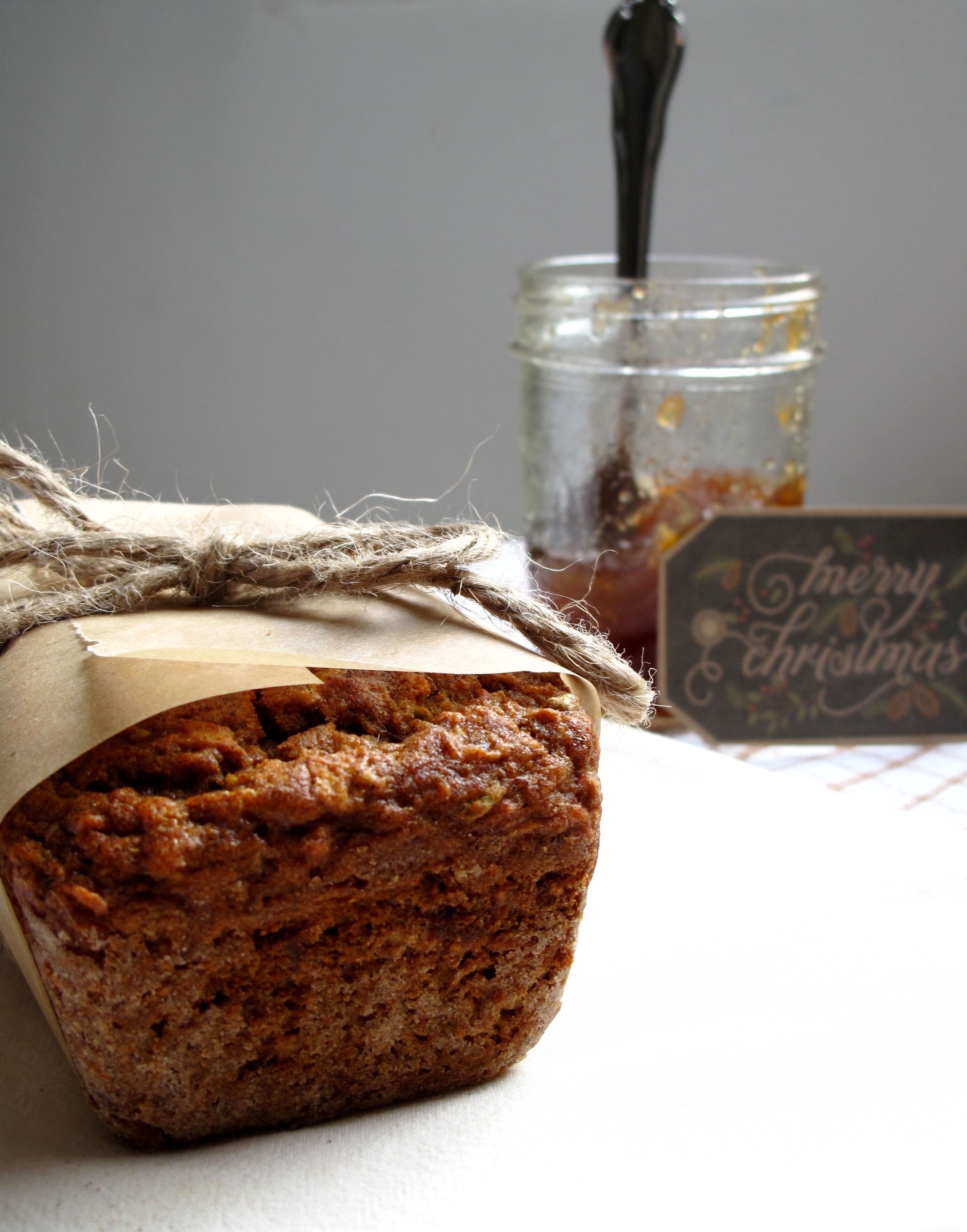
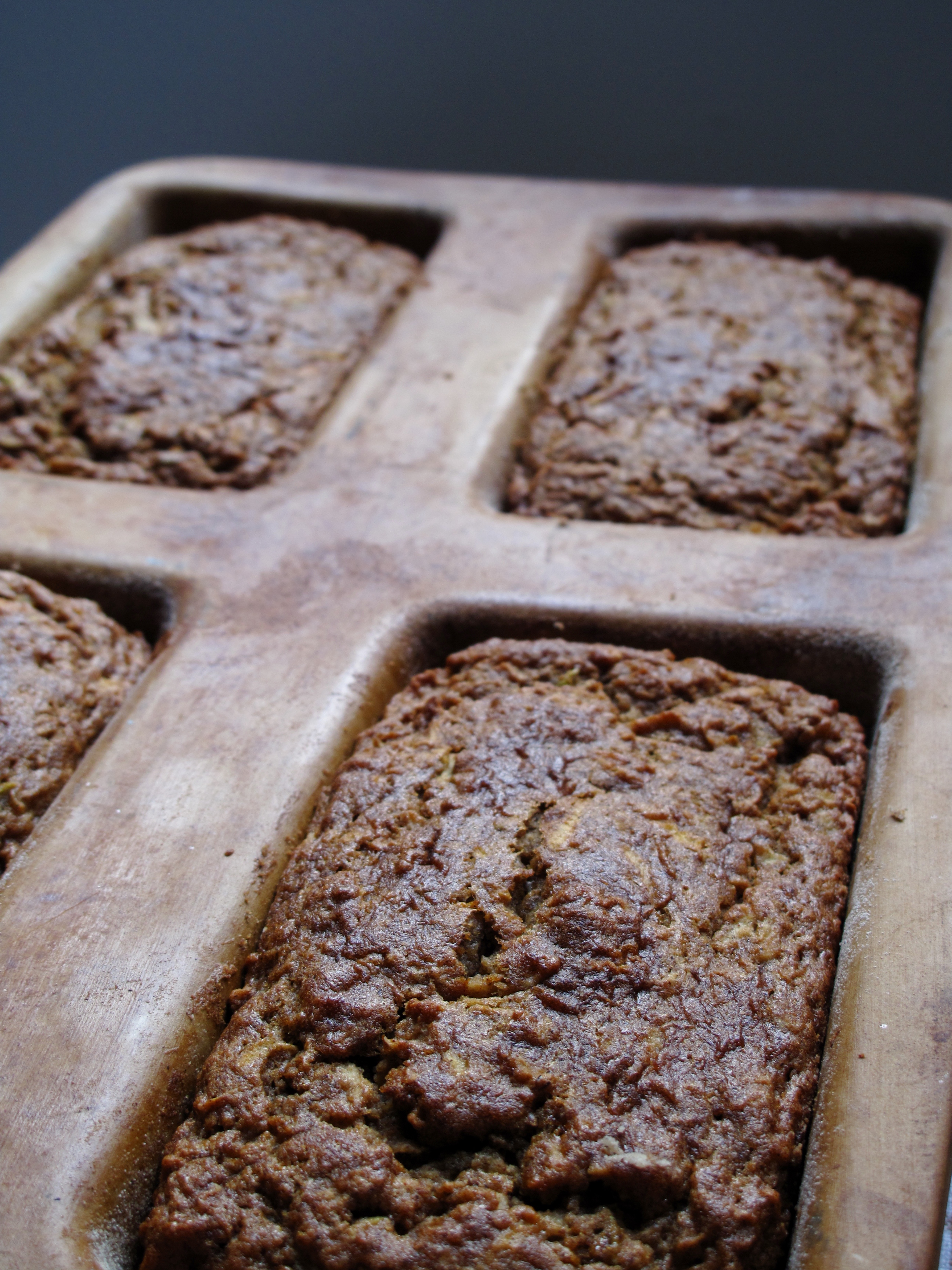
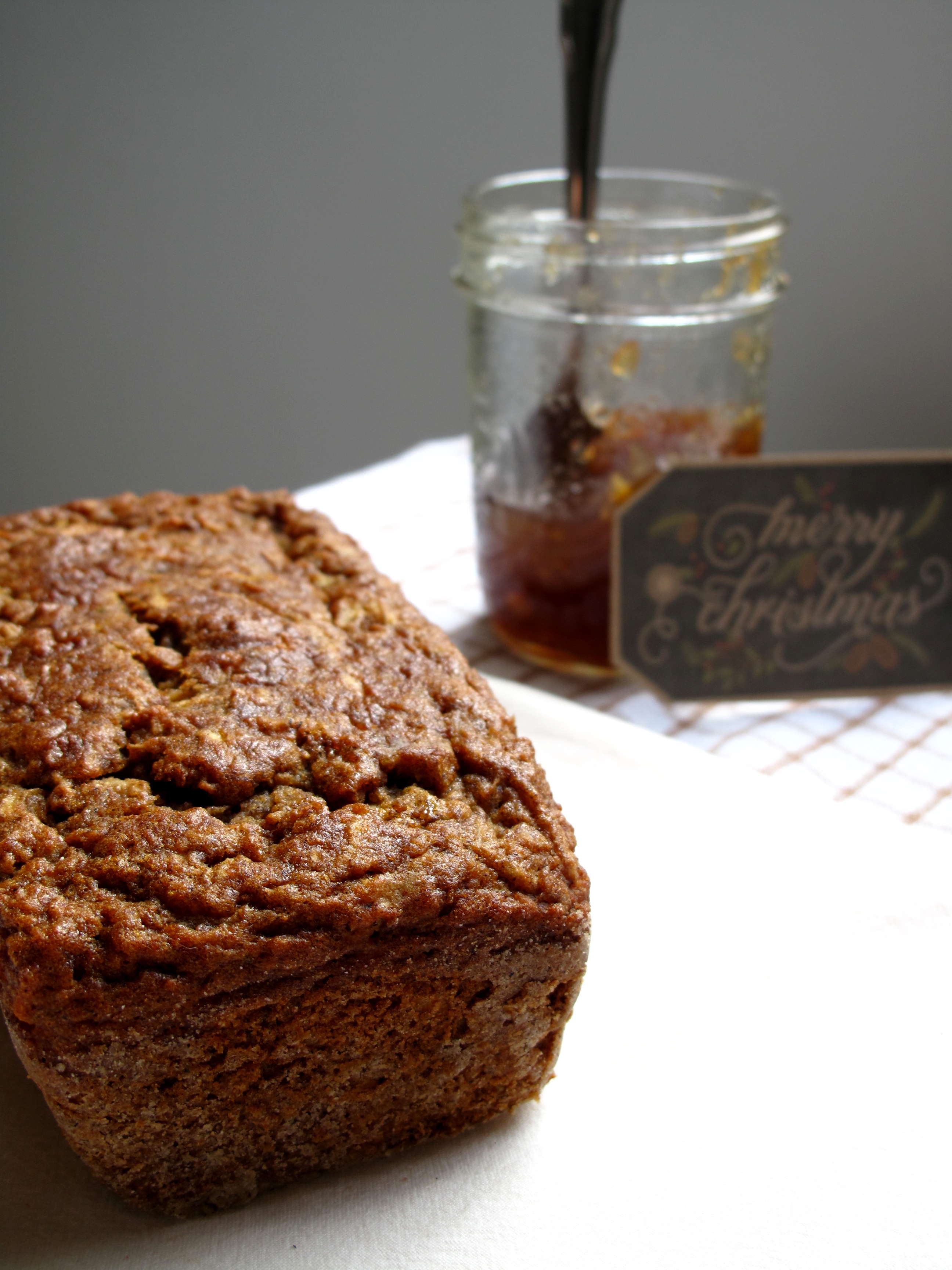
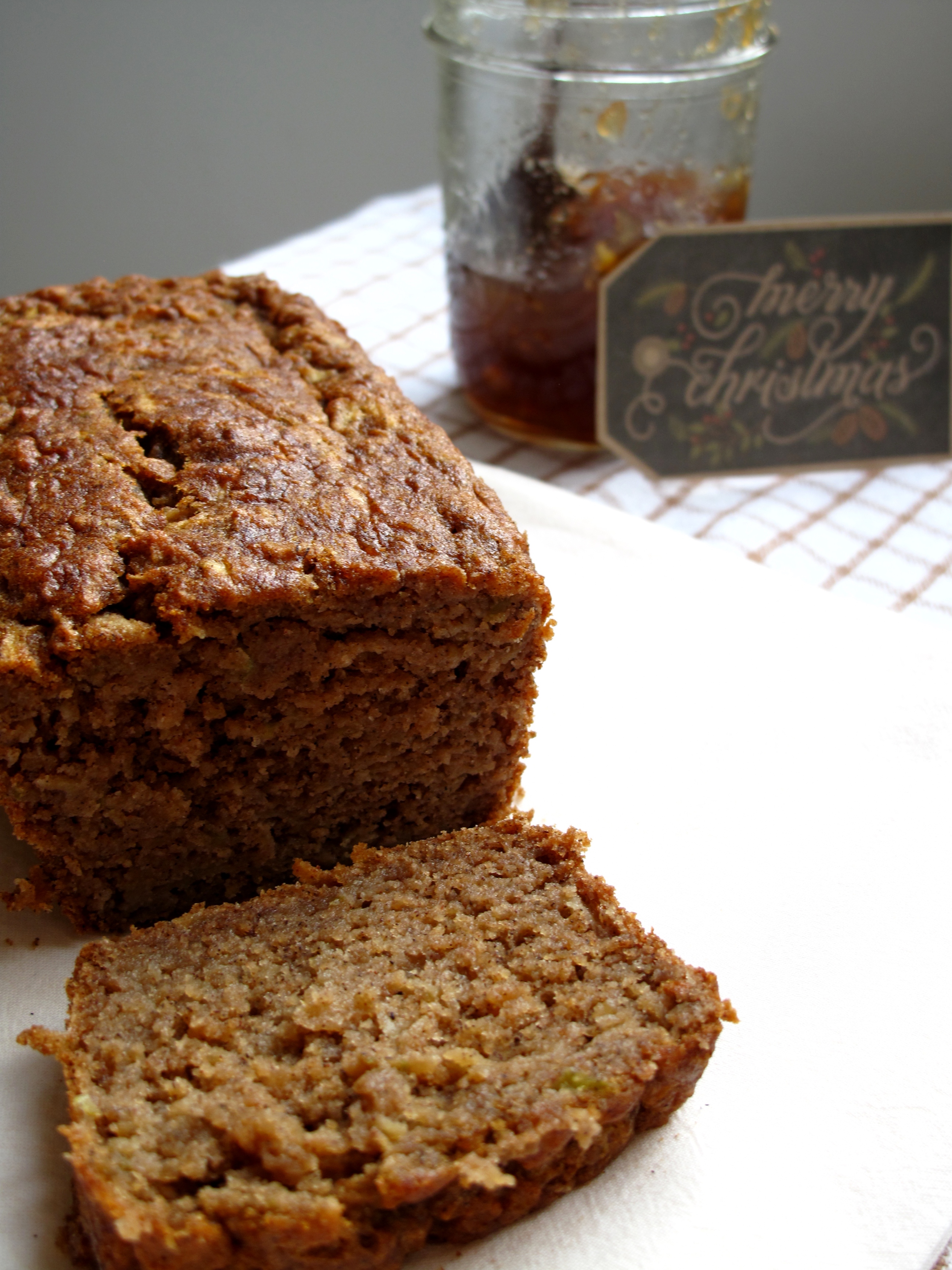
Neah’s Apple  {loaf} Cake, makes one large 9×5 loaf or four mini-loaves
Recipe Updated: 11/2023
 
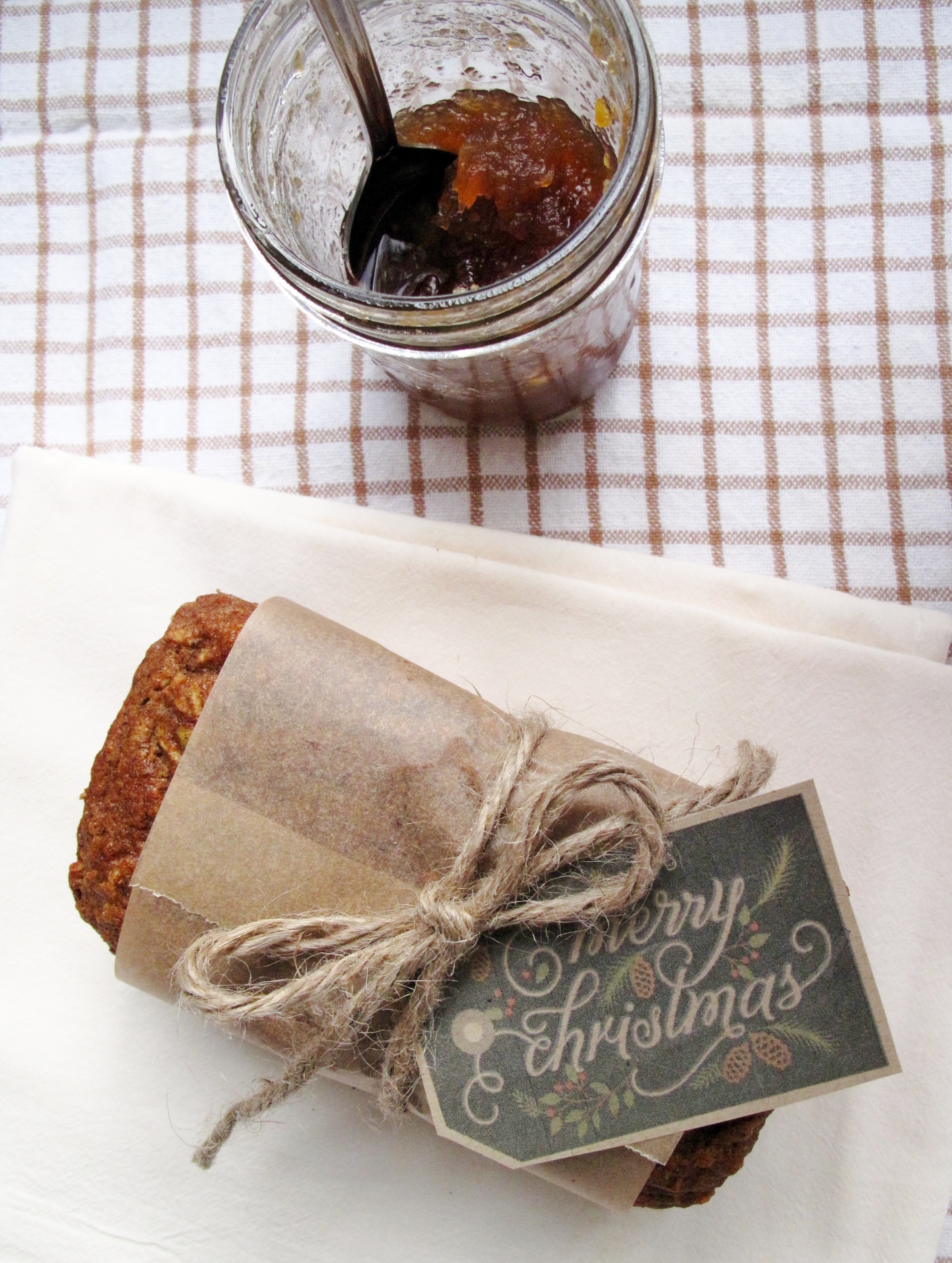
This is my version of my dear grandma Neah’s recipe. I remember making it multiple times with her growing up. Her name for it was Raw Apple Cake, which I always thought to be be misleading. There are a whole lot of raw apples in the batter, so I can see where it got its name. I have adapted the recipe to align with a gluten and dairy-free lifestyle, as well as cut down on the sugar. The apples shine through and I found extra sweetness was unnecessary. Feel free to experiment with different spices as well as add-ins, such as raisins, walnuts, or dates. We used to make several batches, each cake being slightly different.
1/2 cup  /110 gr coconut oil or dairy-free butter
1 cup / 200 gr sugar
2 eggs
3 1/2 cups apples (about 4 large), shredded with skins on
2 cups  (240 gr) gluten-free flour mix
2 tsp. baking soda
1/3 tsp. salt
1 tsp. baking powder
1 heaping tsp. cinnamon
1/4 tsp. nutmeg
1/4 tsp. ginger
1/8 tsp. cloves
  • Whip together the oil and sugar until fluffy. Whisk in the eggs and thoroughly combine. Shred those apples (and not your fingers!) and stir em’ in.
  • In a separate bowl, stir together the remaining dry ingredients. Mix those into the apple bowl.
  • Spoon the batter into a large oiled and floured baking pan, or four mini-pans (I made mini-cakes for gifts). Bake at 350 degrees F for 35 minutes for mini-cakes or 55-60 minutes for a large  9×5″ loaf cake.