Quinoa + Winter Squash Bowl with Cumin + Lime

IMG_7093


Each year at the beginning of the holiday season, I try to reflect on the people and experiences for which I am grateful. This past week, I’ve been selecting snippets to share, either directly, over on Facebook, or here in this space. When I reflect on the objects that matter most in this life, there’s only a short list: My bible, my wedding ring, my running shoes. Perhaps another day I’ll share about the first two, but this reflection and recipe are about the symbolism of the shoes.


Each pair is temporary, special only for a time and then easily replaced. Once done, they get jammed into our tiny front closet, worn out completely in garden work, and eventually tossed in a donation bin once a sizeable pile has accumulated. I tend to treat each pair extra nice until it hits 400-500 miles and then all emotional attachment is heaped on the next. The shoes I’m currently running in are neon-orange and turquoise, and they contrast with whatever I tend to throw on above. Depending on the day, I can pull off looking like I’m late to a one-act circus show.


I started running within the first couple weeks of moving into my freshman dorm in college, and over the many years since, I’ve come to know each of the places I’ve lived and visited in my running shoes. I have run 5am dim streets in Limerick, jet-lagged, no phone, no idea where I was going, no one in the whole world knowing my location. I’ve run the streets of La Grande, all hours of the day and night, just to feel alive and at peace. I’ve gotten to know the nooks and crannies of Corvallis, the suburbs of Dublin north and south, the pear orchards and cattle ranches of Southern Oregon’s Phoenix and Eagle Point, the Christmas tree farms and nurseries of Sandy, the angry farmer’s dogs on the outskirts of Albany, the oak savannah, communter-town streets and horse farms of Wilsonville. There was a month when I ran the rural-ish Keizer roads, and then a school-year of running all the west-side neighborhoods of Roseburg. It’s safe to say I’ve seen a good portion of Oregon in my running shoes, both the streets, forested and mossy trails, the beach, and the infinite farm roads. And still, there are all the travel cities I’ve gotten to know in between.
 

IMG_7065


Far more than what I’ve seen in these shoes and the ones that have come before, is what they’ve made me feel: Release from the worry and guilt that makes up my personality. Clarity; knowledge of what sits right in my soul. Cleansing from anger. Cleansing from feeling anything at all. I’ve caught up with good friends and high-fived others out on the paths. I’ve been visible and seen–a role model to the neighbors who knew me as “that runner girl,” and my current neighbor, a 55-year-old bachelor, who frequently runs out the door in his skivvies(!!) to ask, How many miles today? I’ve skipped biology lectures and headed for the trails instead. I’ve conjugated Spanish verbs over and over in my head, and I’ve run faster each mile, using my anger over a guy to fuel each step. I’ve pumped up the techno-dance-treadmill-tunes, and I’ve taken all my closest girl friends out for one last run as a single lady. I’ve listened for the first sounds of the birds in the morning and taken in countless sun rises that never fail to leave me astonished and breathless at the beauty of this world. I’ve meditated on simply living and breathing and just plain being a better me.


These shoes have enabled me to find out who I am, to push myself beyond the comfortable, to accomplish things, to release my competitive spirit. They’ve been a way to spend happy weekends with William–and most of all, they’ve helped me to develop a better relationship with my body, to be able to listen and nourish it with the foods and nutrients it needs.


IMG_7048


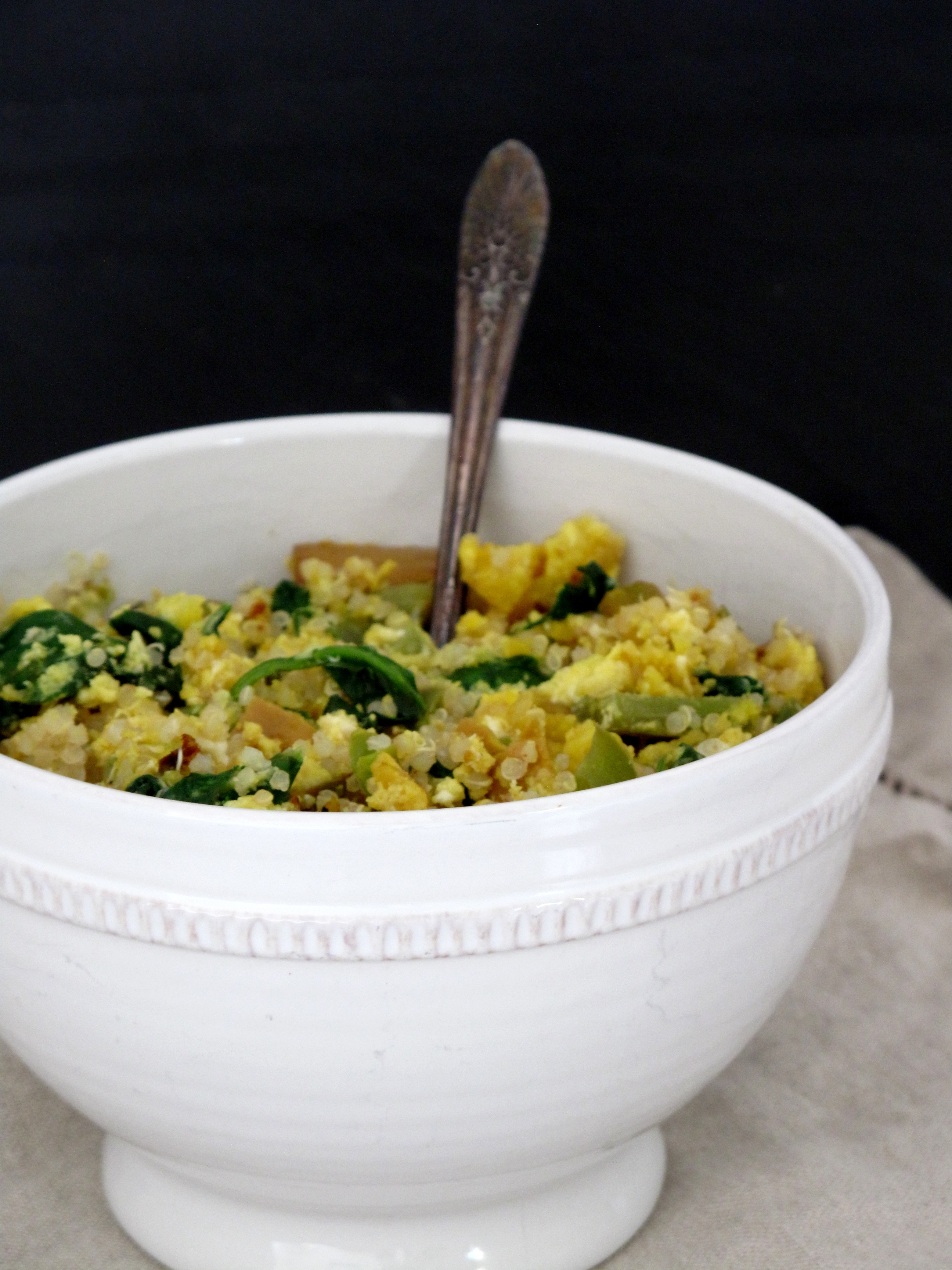
This recipe is one I’ve eaten countless times these past few weeks. After a long or hard run, I tend to go through phases where I desire certain foods. I’m of the belief that my body is either telling me I need to eat those foods because of their nutrients–or I’m simply crazy. Perhaps, a little of both. ;) Eggs, quinoa, and winter squash have been on repeat lately and like many of my favorite recipes, this one came about when I grabbed a random bunch of ingredients from the fridge in a post-run hunger. It was perfect from that first time to every subsequent helping I’ve made since.


IMG_7063


Quinoa + Winter Squash Bowl with Cumin + Lime, serves one
1 Tbs. cumin-lime dressing, see below
1 jalepeño or slightly spicy pepper, diced
1/2 green bell pepper, chopped
1- 1 1/2 cups roasted winter squash, chopped
2 eggs
large handful of spinach or other greens
1 cup cooked quinoa
more dressing, to taste
  • In a medium-sized skillet, heat 1 Tbs. dressing on medium high. Sauté peppers for 5-10 minutes until soft, and then add roasted winter squash. Cook for 2-3 minutes more, until squash is warm.
  • Crack eggs directly into the skillet, and stir them amongst the vegetables, making a scramble.
  • When eggs are almost cooked through, add spinach and quinoa and heat through entirely.
  • Pour it all into a bowl to serve, and add more dressing to taste.
 
Cumin-Lime Dressing, adapted from Laura 
1 small jalapeño, seeded
1 clove of garlic, peeled
2 1/2 tsp. ground cumin
juice of 2 limes + a little bit of zest
1 tsp. honey
1/4 cup extra virgin olive oil
salt + pepper
  • To make the dressing, puree all the ingredients together in a food processor or blender, and salt and pepper to taste.

{Recipe Redux} American Pancakes + A Dinner Party

IMG_7552

I squirmed down in the seat of the bus, tucking my knees up against the seatback, and in those early morning hours, slowly ate my dry cereal. Out the window, the industrial nature of the city made way for the green the country is known for, and the boys’ lilting voices conversed around me in their various dialects, some still too unfamiliar to catch all the words.

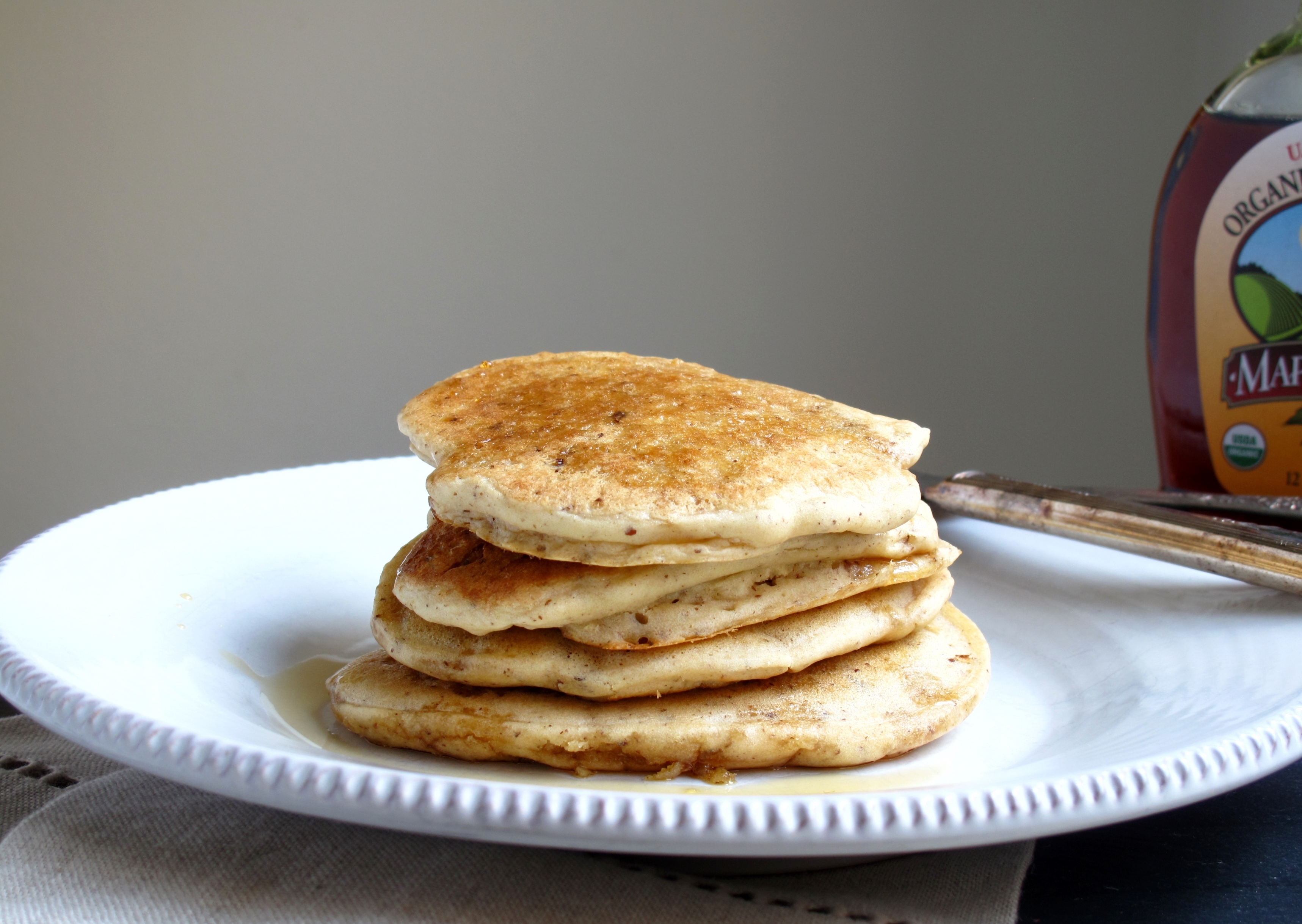
Later, on the way back from our class trip, my odd behavior of eating dry cereal was questioned, and subsequently we got on the topic of American food. Most of my Horticulture cohort, a small group of eight guys save Orla, had been to America the previous year. I was joining them for the semester at University College Dublin, and as is often the case of cross-cultural friendships, we began bonding over food. The boys raved about their experiences with American food. Even the bread, it’s so sweet, Ollie incredulated. And then he was on about the pancakes. Pancakes, in his perception, were the epitome of American deliciousness.

The others nodded in agreement, pancakes were quite nice. It was decided we’d have a class pancake party and I volunteered to make them proper American-style pancakes.

IMG_7540

On the night of the party, a mid-week November evening, Conor, Orla and I set off for Dan and Liam’s house in Stillorgan with all the fixings. Conor and I had shopped at Tesco the night previous, and there I learned pancakes really were rare in Ireland. Though I had planned to anyway, we were to make them from scratch because the Irish grocery didn’t then stock specialty items like pancake mix.

Once at Dan and Liam’s, I entered a typical college-boy-house, much the same as here in the states. Good thing I brought ALL the supplies, I thought, as I took over the kitchen. There wasn’t much in the way of cooking essentials in the cupboards. As I whipped up the batter, Dan, Liam, and their roommates, Joe, Terry, and Tim made up a bunch of sandwiches. I’m making you all pancakes for dinner, I exasperated. Oh, those are dessert, they replied. We wouldn’t eat sugar and dough for dinner. It soon became apparent the experience would be an education for us all.

As I worked on what I endearingly call a student stove—aka any old stove that is quite fussy, has burners that shouldn’t be used, and is often found in a college apartment—I got a fair share of ribbing over those first few throwaway pancakes until the heat settings were correct. Then, when it came time to eat, I attempted to show the group the typical way to eat an American pancake, in a big stack with maple syrup. Maple syrup wasn’t exactly easy to come by, however, so we improvised with golden syrup instead. Eating more than one at a time was viewed as outlandish, and the group much preferred to roll them up like Orla, with sugar and lemon. This is the Irish way to eat a pancake, Orla explained. Some of the others smeared one or two with chocolate spread.

IMG_7534

The whole experience was enlightening, and one for which I’m deeply thankful. Back home, I lived as part of a quartet of girls who loved to host dinner parties. At the time, though I loved cooking for them and our impromtu visitors, I didn’t get the appeal of hosting dinner parties. There was too much pressure, and I didn’t want to disappoint.

The pancake party was my first experience hosting a dinner, and though it went nothing like how I imagined (after the pancakes, it quickly morphed into the type of house party the Irish are more typically known for), it stands out in my memory as a learning experience of cultures and customs, of realizing the similarities amongst college students no matter the location. It was also an opportunity to practice going with the flow and adapting with a room full of people wanting to be fed. Most of all, it helped me to realize how much I love to entertain and cook for others.

IMG_7544

Gluten-Free + Vegan Pancakes, adapted from Celiac Teen

The Recipe Redux asked us to share a food memory for which we’re thankful this month. The recipe below is the one we often use for gluten-free, dairy-free pancakes. They have a slightly softer texture because of the flours and are also vegan as I’ve found better results when using a flaxseed mix instead of eggs. I’ve found the flour mix to be fairly flexible and often use 2 cups of my Gluten-Free Flour Mix in place of the three flours below. I often pour the batter into the waffle iron and make waffles instead, as we’re still cooking on a student stove and there are always casualties! This recipe is the one I used back in 2008 for the party. It was my favorite for a long time and I’d still recommend it to the gluten and dairy-eating crowd. 
 
Ingredients
1 cup millet flour
1/2 cup brown rice flour
1/2 cup arrowroot starch
1/2 tsp. xanthan gum
1/2 tsp. salt
2 tsp. baking powder
1 tsp. baking soda
2 Tbs. ground flax mixed with 6 Tbs. warm water
1 1/2 cups almond milk
2 Tbs. raw apple cider vinegar
1/4 cup canola oil
(1/3 cup additional almond milk, if needed)
  • Whisk the vinegar into the almond milk and set aside for a few minutes.
  • Heat your skillet or griddle where you will be cooking the pancakes. They’ll cook over medium-high heat.
  • Whisk together the flours, xanthan gum, salt, baking powder, and baking soda in a large bowl.
  • In a separate bowl, whisk together the flax-water mixture, milk and oil. Pour the liquids into the dry ingredients and whisk lightly until combined.
  • Lightly oil the skillet, and use about 1/4 cup of batter per pancake. Flip the pancakes when the bubbles appear on top and the bottoms are browned.
  • Cook on the second side until cooked through and browned on the bottom.
  • If you find the batter to be too thick, or becoming thicker as you cook the pancakes up, add some milk and whisk until fully incorporated. 
 

Za’atar-Spiced Millet + Chickpeas with Baba Ghanoush

IMG_6959


In between eating roasted pumpkin and winter squash in everything possible because it’s already November, I finally used up all the garden’s eggplants. There were as many growing in my tiny space as were in the school garden and given their late start last spring, they took seriously forever to ripen.

The real question is why did I plant so many in the first place? Quite simply, I like eggplant. Most people don’t. Like a little girl, I could say I like it because the fruit is purple and a funky shape and that name, egg plant. But there’s more. I began my eggplant-eating-tendencies years ago after trying it for the first time at The Olive Garden. My group thought I was crazy for ordering, of all things, something vegetarian and with a slimy vegetable as the main show. I was just beginning to show the “let’s-eat-all-the-weird-to-rural-Eastern-Oregon-food” side of my personality, and everyone else’s strong opinions made me like the vegetable even more.

All these years later, I still love eggplant because it’s often unloved and misunderstood–and because it can be seriously good. It pairs especially well in Middle Eastern food, and according to Ottolenghi, in Jerusulem it is often featured in every meal.


IMG_6964


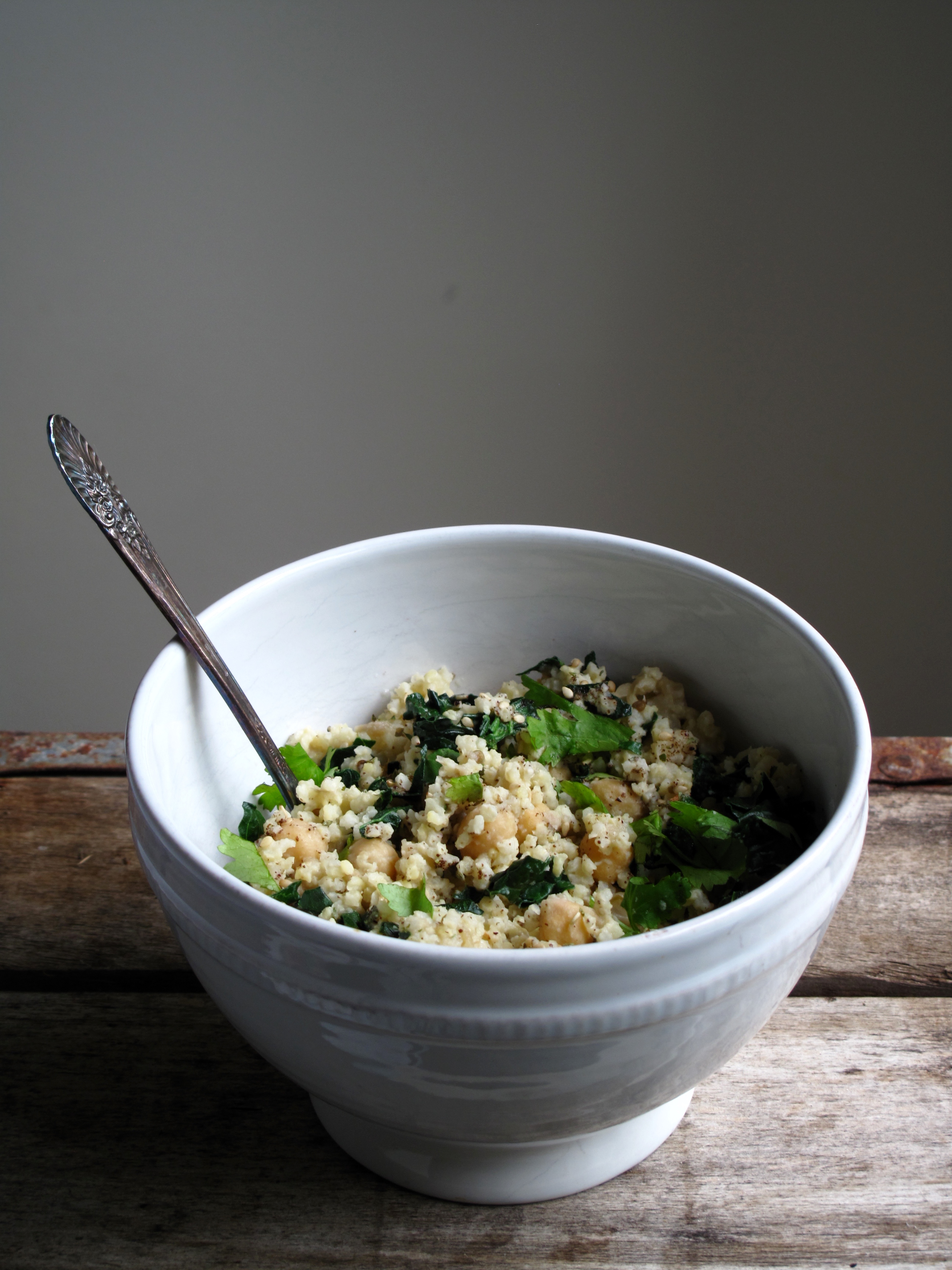
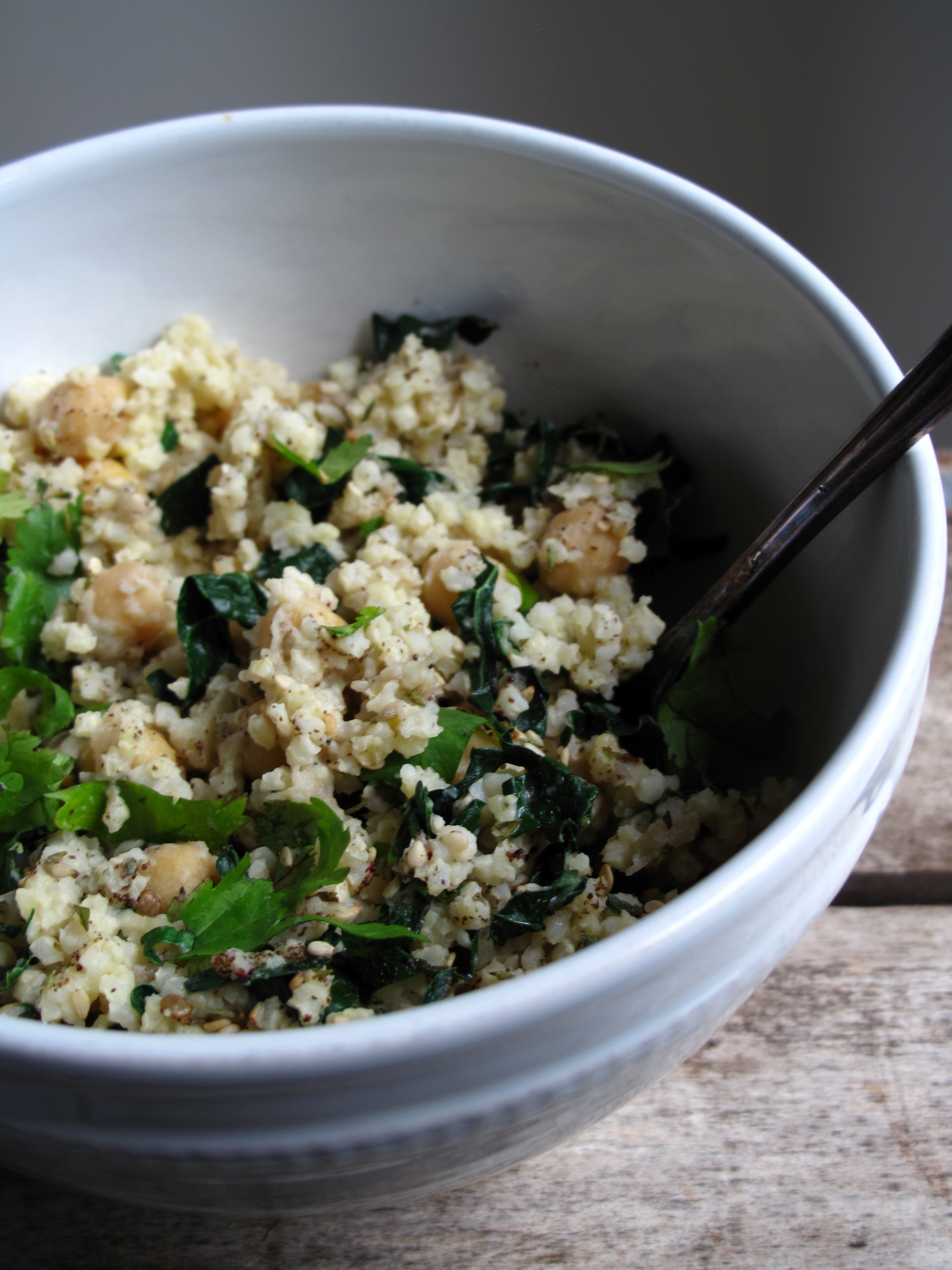
I whipped roasted eggplant into baba ghanoush a few weeks back and then, needing something for lunch on a busy day, threw all these ingredients in a dish before running out the door. I suspected something magical was in the works, and though leftovers for lunch is not always exciting, this combination of baba ghanoush, millet, chickpeas, za’atar, and kale goes together super well. It was so good that a decent amount of all that eggplant made its way into baba ghanoush for the sole purpose of making this.

If you’re at all like me and tend to have beans and grains and random spreads and spice mixtures like baba ghanoush and za’atar hanging out, this will go together super quick. If not, it will take a bit more time, though it’s definitely worth it!


IMG_6975


Za’atar-Spiced Millet + Chickpeas with Baba Ghanoush, serves 1
1 cup cooked millet
1/2-2/3 cup cooked chickpeas
2-3 Tbs. Baba Ghanoush, or more to taste
a big pile of chopped kale leaves
1-2 tsp. za’atar, to taste
chopped cilantro, optional
 
Toss all the above together. Eat warm or at room temperature.
 
 
Baba Ghanoush, adapted from The New Book of Middle Eastern Food
1 lb. eggplant (about one large)
2 cloves garlic, crushed
salt, to taste
2 Tbs. tahini
Juice of one lemon
1/3 tsp. cumin
 
Split the eggplant in half length-wise and roast, cut side down at 425 degrees F, until very soft inside (about 30 minutes). Let it cool slightly and then peel the skin off and discard. In a small dish, mash it all up with a fork and then stir in the remaining ingredients until they come together. Adjust seasonings to taste. 
 
 
Za’atar
You can buy this spice mixture, but it’s easy to make yourself. Combine 1 part ground dried thyme, 1 part lightly toasted sesame seeds, 1/4 part sumac, and salt to taste.