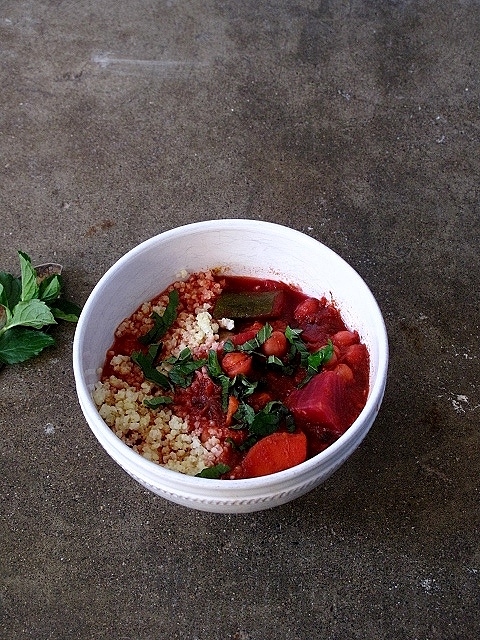
Moroccan Tagine with Sweet Potatoes + Beets, food for runners (or this runner)

Moroccan Tagine with Sweet Potatoes + Beets, food for runners (or this runner)

IMG_0359


There is nothing like a few days spent living with others to put into perspective how truly personal is our choice in food. While I will happily eat roasted broccoli or leftover kale salad for 9am snack (and frequently do), even the idea of kale salad at a seemingly more appropriate time of day might leave others running for the door.


This point is driven home in my frequent conversations about food with others. My work at the university has often left me chatting about the differences between foods here in the U.S. and elsewhere in the world–how everything is just sooo sweet–and how diets inherently change even without the individual really attempting to when taking up residence here.
 

IMG_0370
IMG_0368
IMG_0362

In sharing this recipe, I’ll make a point in saying first that I question the title and definitely the authenticity as I’ve never been to Morocco and have only eaten at one semi-Moroccan restaurant. And yet I love the flavors of “Moroccan” foods, particularly the tagines with sweet, savory, and spicy notes. So I’ll take liberty and call this my own version of a Moroccan tagine.

Second, I can see some camps loving this and others, again, running for the door because whoa, there are tooo many vegetables and don’t get me started on Rebecca’s fondness for spices.
 

IMG_0307


But basically I call this the type of food that I like to eat to fuel my running life. Or more adequately, it is the food I tend to crave before a big run or race. So when William and others were packing sandwiches for our relay race a few weeks back, I found myself making and then eating Moroccan sweet potato + beet tagine with quinoa to fuel my runs and turning to it again a few more times throughout the ensuing weeks.

It is also a recipe I know I will adapt and make further into the fall season and the months (and miles) to come.


IMG_0311


Moroccan Sweet Potato + Beet Tagine, serves 6-8
Inspired by Vegetarian Everyday

Though I tend to use a heavy hand with the harissa, I haven’t yet purchased or made one that has been nearly as spicy as the kind I’ve had in a restaurant–and its flavor tends to get muted by all the sweet notes of the apricots and currants. Use more or less, or even leave out, as you see fit.

1 tablespoon extra virgin olive oil
1 large onion, chopped
4 cloves garlic, minced
1 1/2 inches fresh raw ginger, finely grated
1 1/2 tablespoons cinnamon
1  1/2 teaspoons cumin
sea salt, to taste
2 tablespoons harissa
4-5 large tomatoes, diced
zest and juice of one lemon
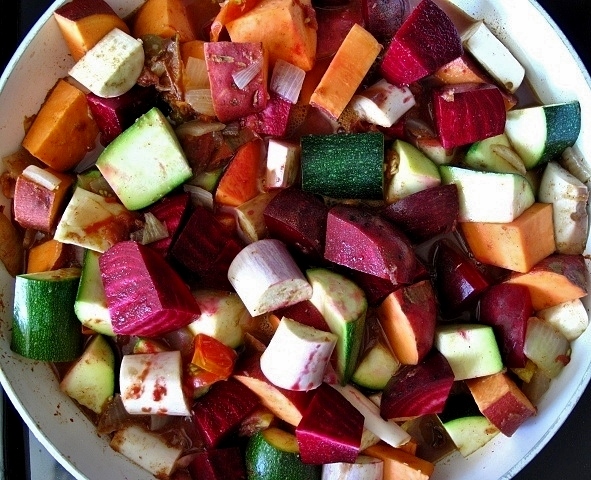
3-4 beets, sliced into 2 inch pieces
1 medium eggplant, sliced into large pieces
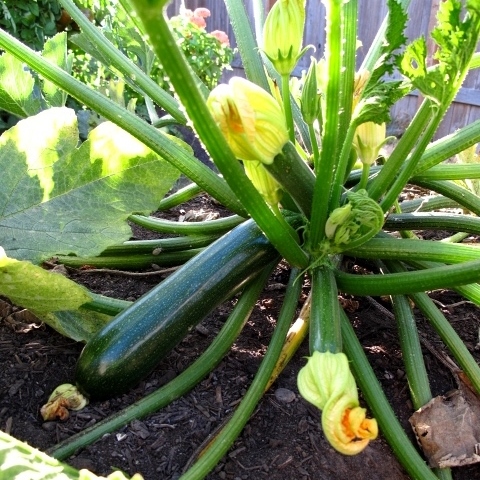
1 medium zucchini, sliced into 2-inch pieces
2 medium sweet potatoes, sliced into 2-inch pieces
10 dried apricots, each sliced into about six pieces
2 cups cooked garbanzo beans
1/4 cup currants
thinly sliced fresh mint, to serve
cooked millet, quinoa, brown rice or other, to serve

Directions:

  1. Heat the olive oil in a large saucepan and sauté the onion for a few minutes until it becomes soft and translucent. Add the garlic and ginger and the spices and allow to cook for about 30 seconds more.
  2. Stir in the harissa, diced tomatoes, lemon zest and juice. Bring the sauce to a boil and then lower the heat to simmer.
  3. Add the beets, eggplant, zucchini, sweet potatoes, and apricots. Stir well so everything is nice and mixed, then cover and simmer for about an hour. Keep it covered as much as possible, but stir a couple times throughout the hour.
  4. Once the vegetables are tender all the way through, add in the cooked beans and currants, cook for about 5 minutes more to heat through, and then season with additional salt and pepper, if needed.
  5. Serve over cooked millet or other grain with a garnish of sliced mint on top.
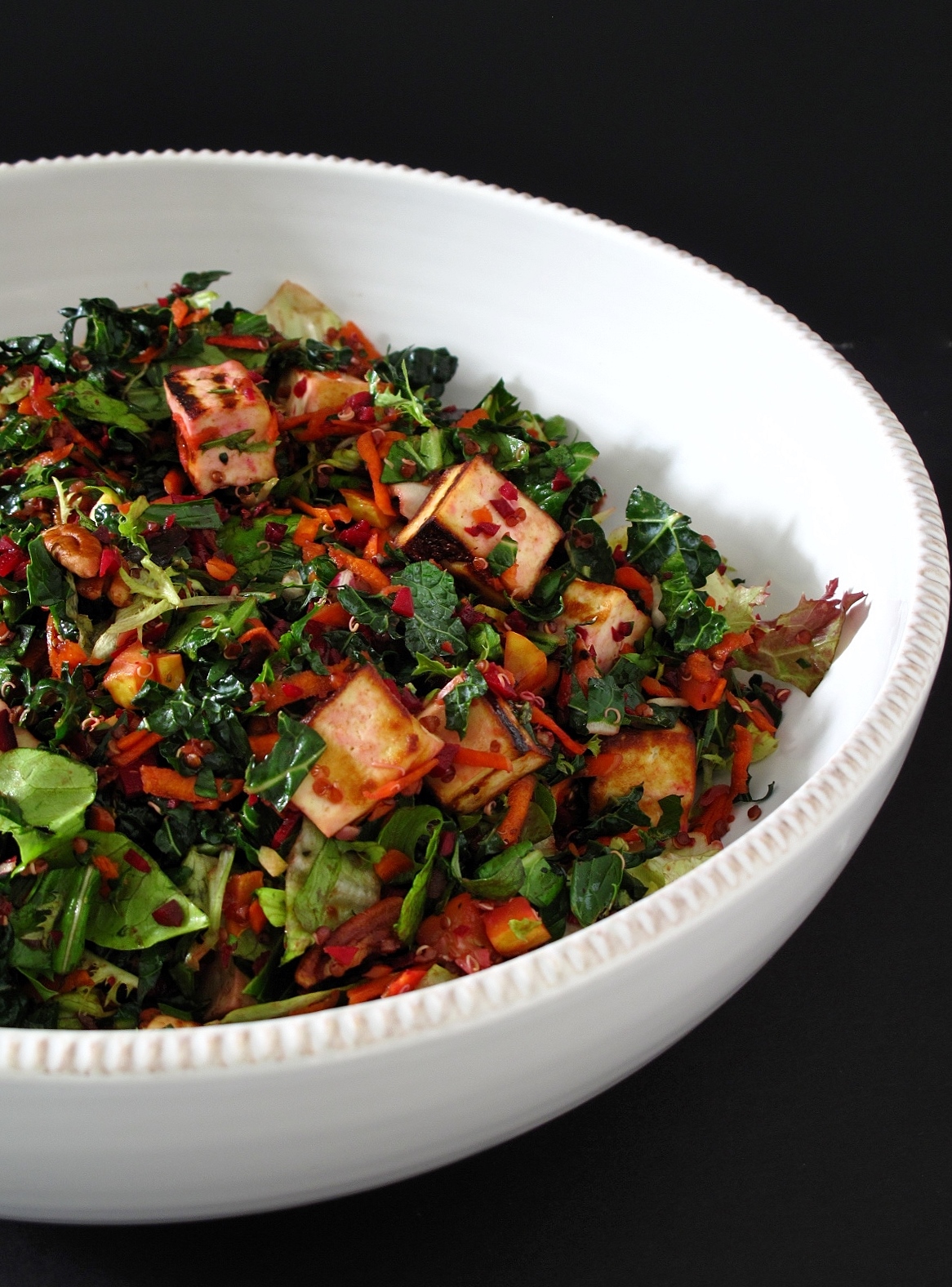
The Pittsburgh Salad

IMG_8242

The summer before my senior year of college, I took a leadership class required for my degree. Our main text was The 7 Habits of Highly Effective People, and from it we created a personal mission statement as one of our first assignments. I created a poster-size version of my mission statement at the time and I’ve since carted it around from home to home, always finding a special place to make it visible. This morning, the poster fell off the wall and I picked it up, re-read those words and realized, despite the distance of years, I would not change a single thing about the mission I crafted for myself that summer.

IMG_8255

I was gently reminded in re-reading that no matter my fears and unknowns, if I’m living my mission, I’m on the right track.

  • Listen to God. Live His plan.
  • Be active. Think healthy.
  • Cherish family. Do small acts to support positive, loving relationships.
  • Be a role model. Help others to achieve personal success.
  • Be a supportive and giving friend.
  • Appreciate nature. Do small tasks to ensure long-term ecological health.
  • Live in the moment. Right now. Enjoy it!

IMG_8252

Have you created a personal mission statement? If so, what is on it?

IMG_8241

The Pittsburgh Salad, serves 2 as a main dish

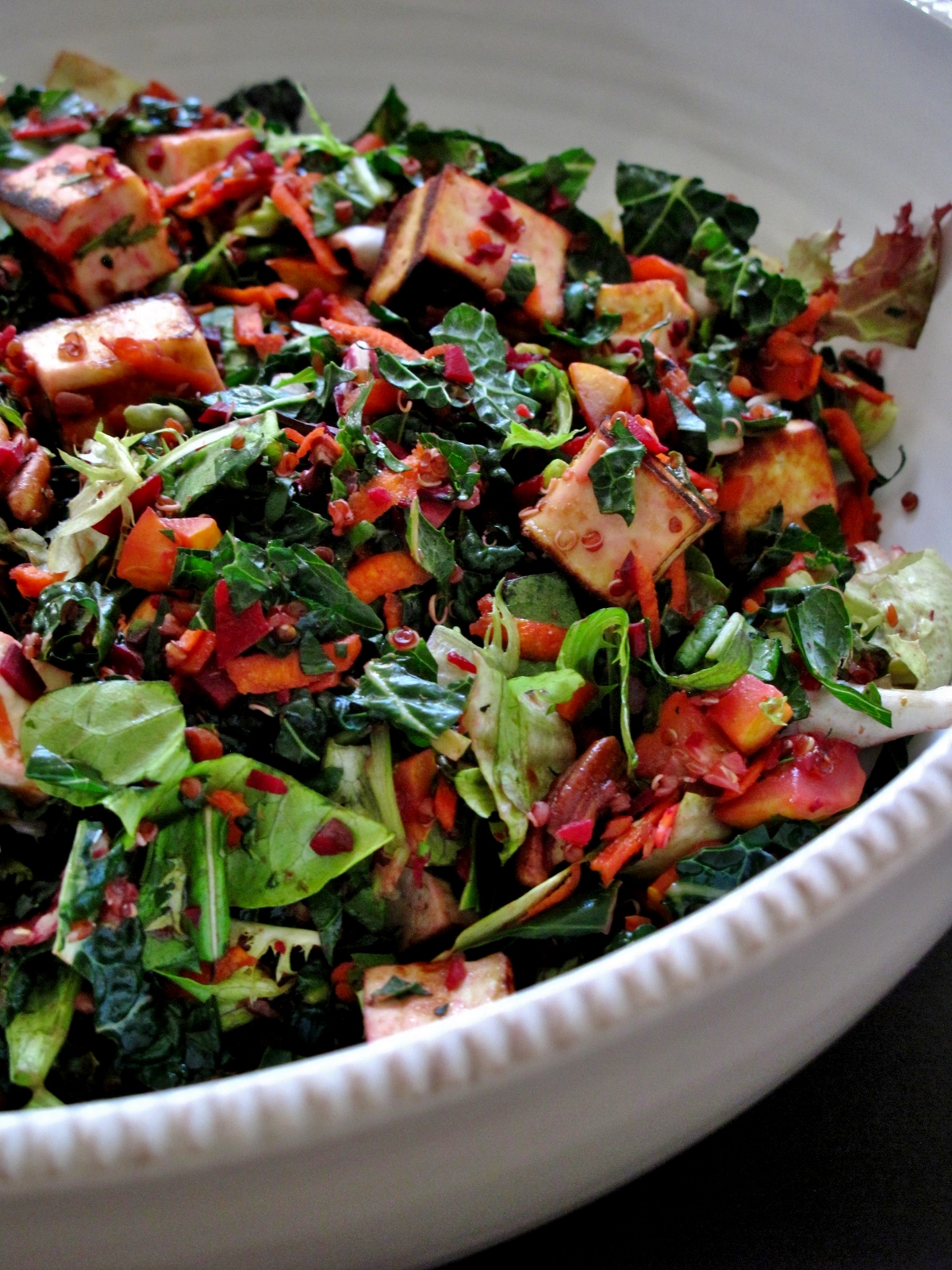
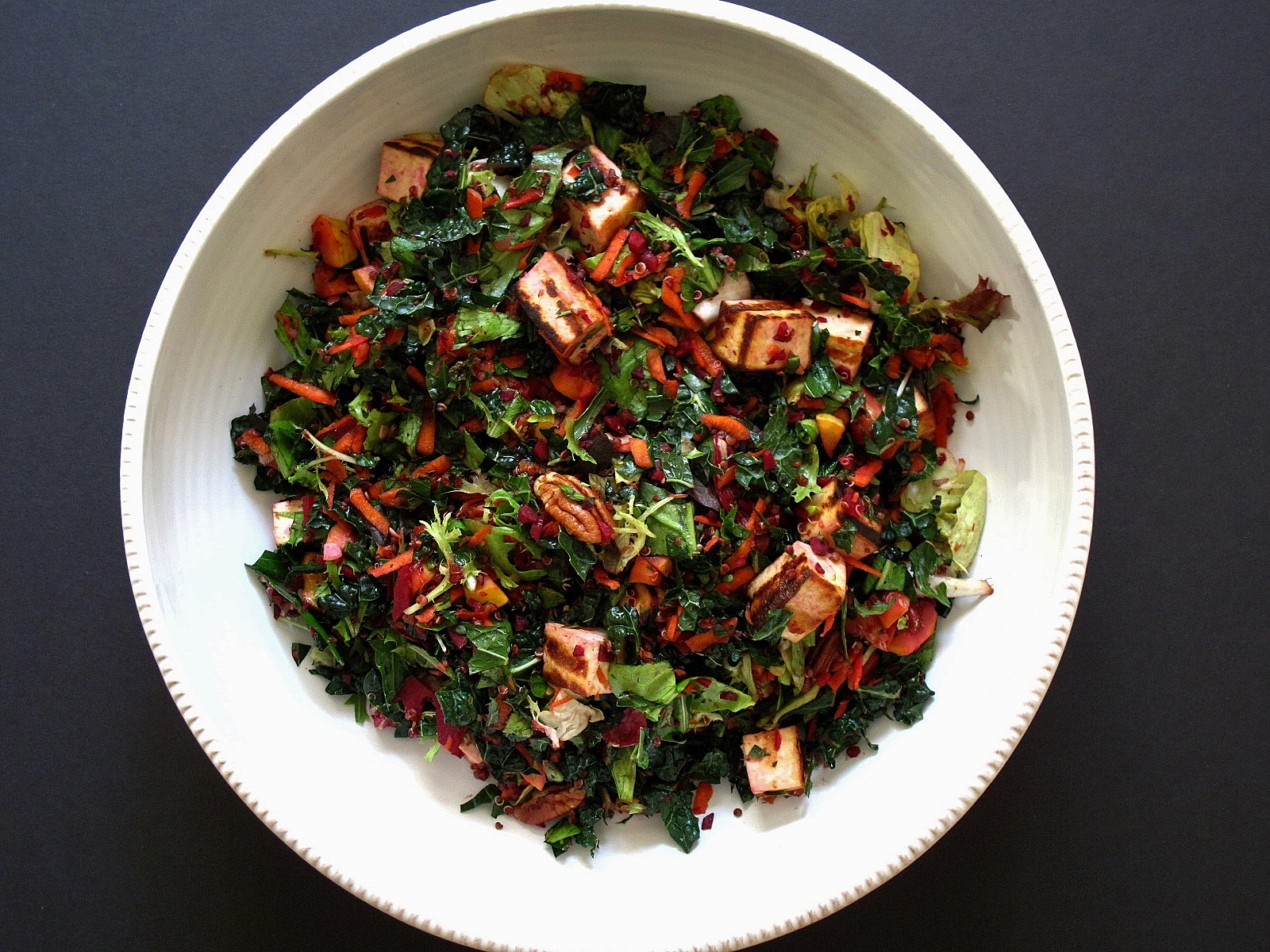
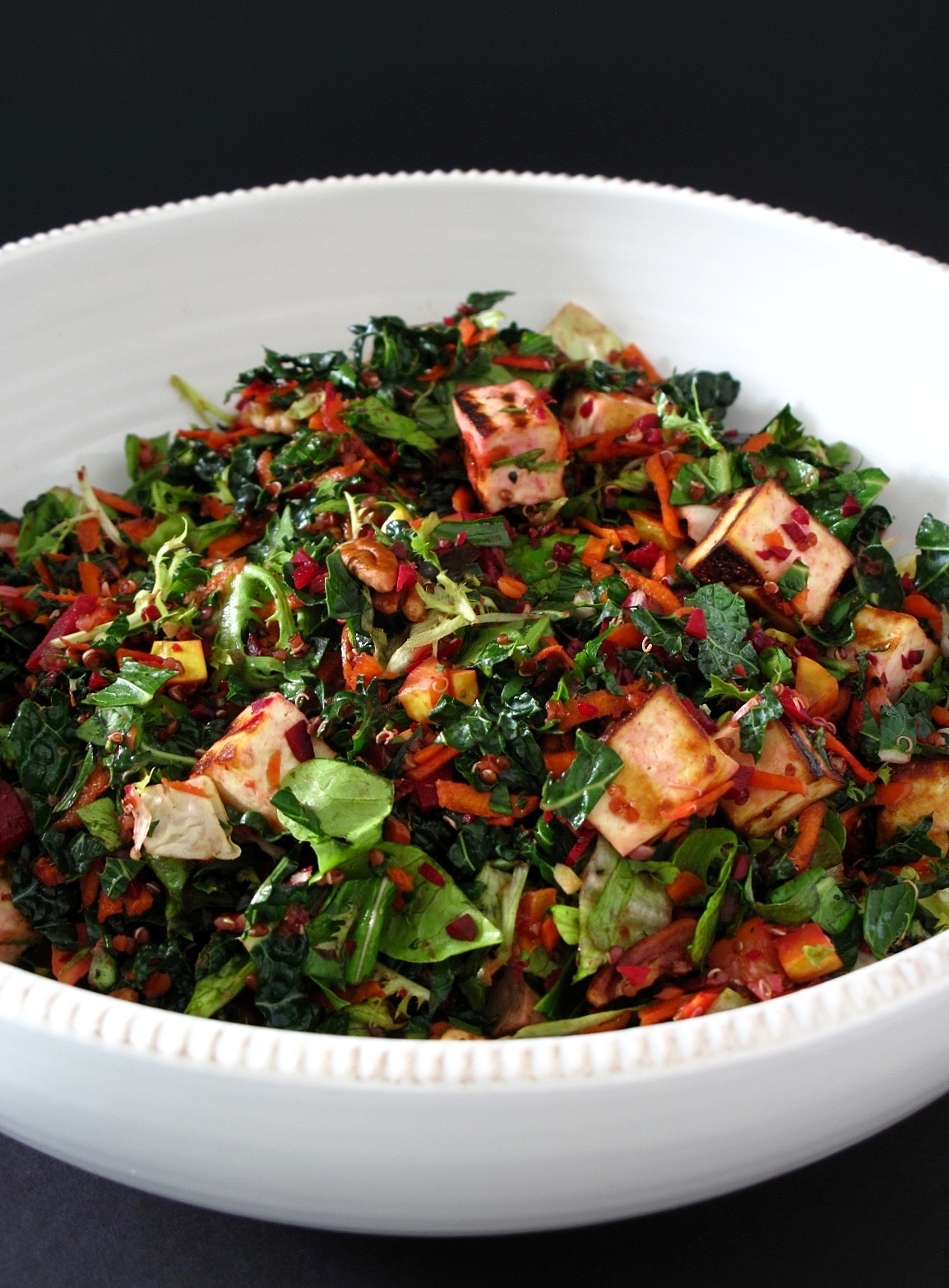
Last week, I was in Pittsburgh for a nutrition educators’ conference. It was the first time I had traveled long distance in years, spending several days with neither car nor kitchen, and I wondered how I would find the food options given my dietary constraints and vegetable-heavy tendencies. Within a few blocks of the conference, I discovered not one but two AMAZING salad bars. Normally, when I envision a salad bar, I think of Subway without bread–iceburg or romaine lettuce concoctions with pale tomatoes, dry shredded carrots, processed meats, and sketchy dressings. This was not the case. There were a gajillion freshly prepped and creative toppings to fit all sorts of eating preferences and lonnng lines out the door around lunch time. I found myself returning three days in a row because I only wanted to eat these salads. Without further going on about my hippy-dippy affinity for kale, quinoa, and beets, I’ve reconjured a variation of my favorite Pittsburgh Salad. Enjoy!

2 cups chopped kale

2 cups mixed greens

1/2 cup cooked and cooled quinoa

1/2 cup finely diced raw beets

1 medium yellow zucchini, chopped small

1 medium carrot, shredded

Grilled Tofu (below)

1/4 cup Honeyed + Spiced Pecans (below)

2-3 Tbs. Honey-Basil Balsamic Vinaigrette (below)

  • In a large mixing bowl, combine the greens, quinoa, beets, shredded carrots, grilled tofu, and pecans.
  • While the grill is still warm from the tofu, toss the chopped yellow squash in the container that the tofu marinated in, gently moisten with the remaining marinade, and slide onto the grill. Cook until just beginning to soften, about 4-5 minutes. Remove from the grill and toss in the salad bowl with the remaining ingredients.
  • Toss the salad ingredients with the desired amount of vinaigrette and serve.

Grilled Tofu

6-7 oz. extra firm tofu

1 1/2 tsp. apple cider vinegar

3/4 tsp. honey

1 1/2 tsp. smoked paprika oil (or  use a mild-flavored oil and a dash of smoked paprika)

  • Wrap the tofu block in several sheets of paper towels and set on a cutting board near a sink. Stack several heavy objects on top to press the extra water out, and let sit for 30-45 minutes.
  • Unwrap the tofu and cut into 1-inch cubes.
  • In a glass container with a lid or tupperware, gently mix the vinegar, honey and oil. Toss the tofu cubes into the marinade, close the lid, and shake to coat. Marinate in the fridge for at least 30 minutes.
  • Heat a stovetop grill, slide tofu cubes on, and close the lid. Grill until char marks begin to form, about 4-5 minutes. Quickly turn the cubes to grill the other side and cook for 3-4 minutes more.

Honeyed + Spiced Pecans

1 1/2 cups raw pecans

1/4 tsp. salt

1/8 tsp. black pepper

pinch of cayenne powder

pinch of dried thyme

1 1/2 tsp. olive oil

1 tsp. honey

  • Preheat oven to 350 degrees F. Spread pecans on a large baking pan and roast until fragrant, about 10-12 minutes. Remove from the oven to cool slightly.
  • In a small bowl, combine salt, thyme, pepper and cayenne.
  • In the baking pan, drizzle the pecans with oil and honey and toss well to coat completely. Sprinkle with the spice mixture and toss again.

Honey-Basil Balsamic Vinaigrette

1 Tbs. honey

2 Tbs. extra virgin olive oil

2 Tbs. balsamic vinegar

1 Tbs. whole-grain mustard

1 Tbs. finely diced fresh basil

Salt and freshly ground pepper, to taste

  • Combine all the dressing ingredients in a small container and shake to mix thoroughly.

Beet Hummus

IMG_8122


I have a spirit vegetable; one for each season.


In the late summer, it is the blackest purple eggplant, with streaks of white for good measure, like the Prosperosa. Into late autumn and winter, I fall for winter squash, and I sway between the dramatic orange Red Kuri in those early months of the season, and the thin-skinned Delicata as the new year and deep winter approaches. As the soil warms in the early spring and makes for dramatic growth day by day, the sweet, tart, crimson rhubarb calls my name.


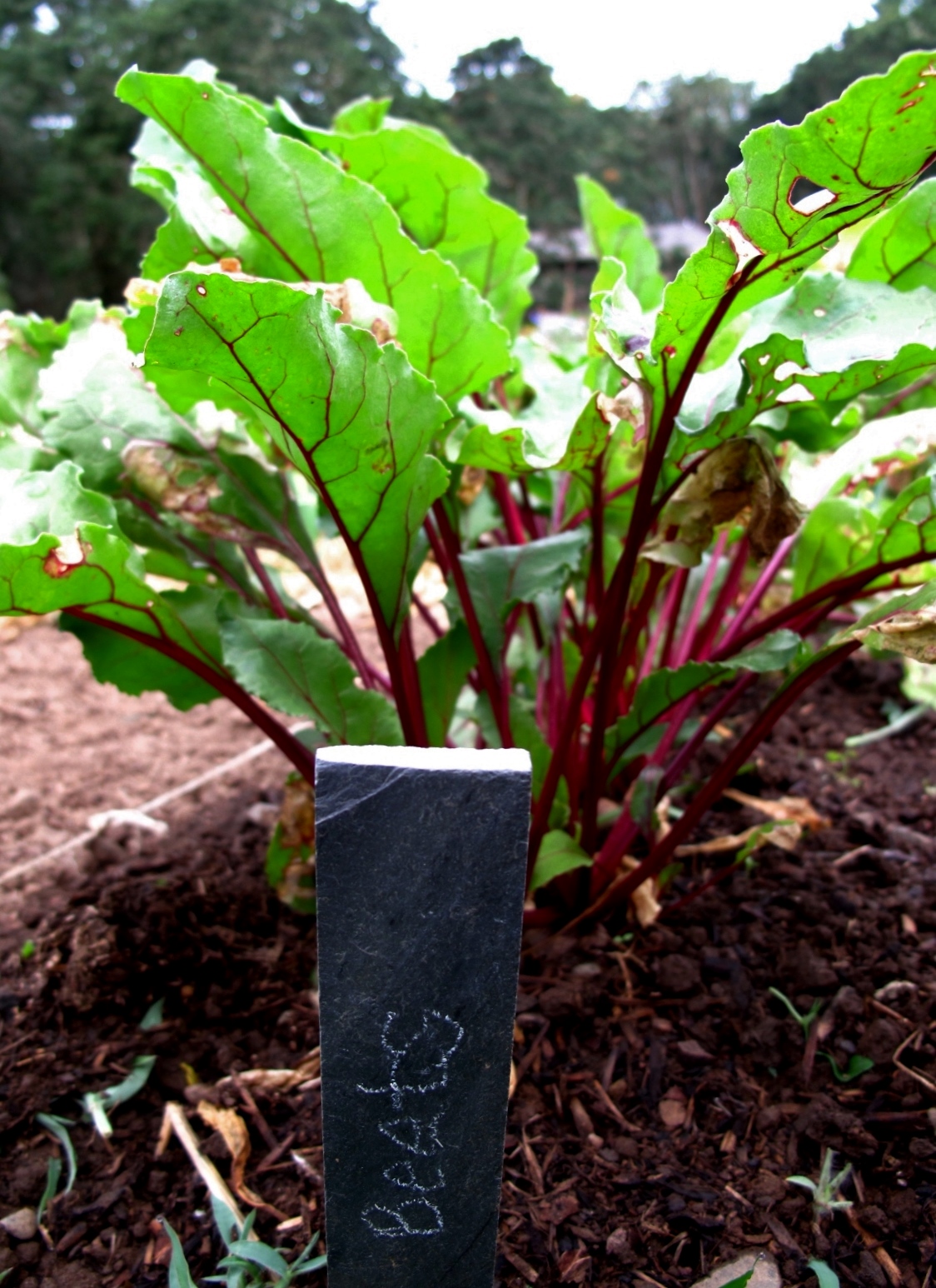
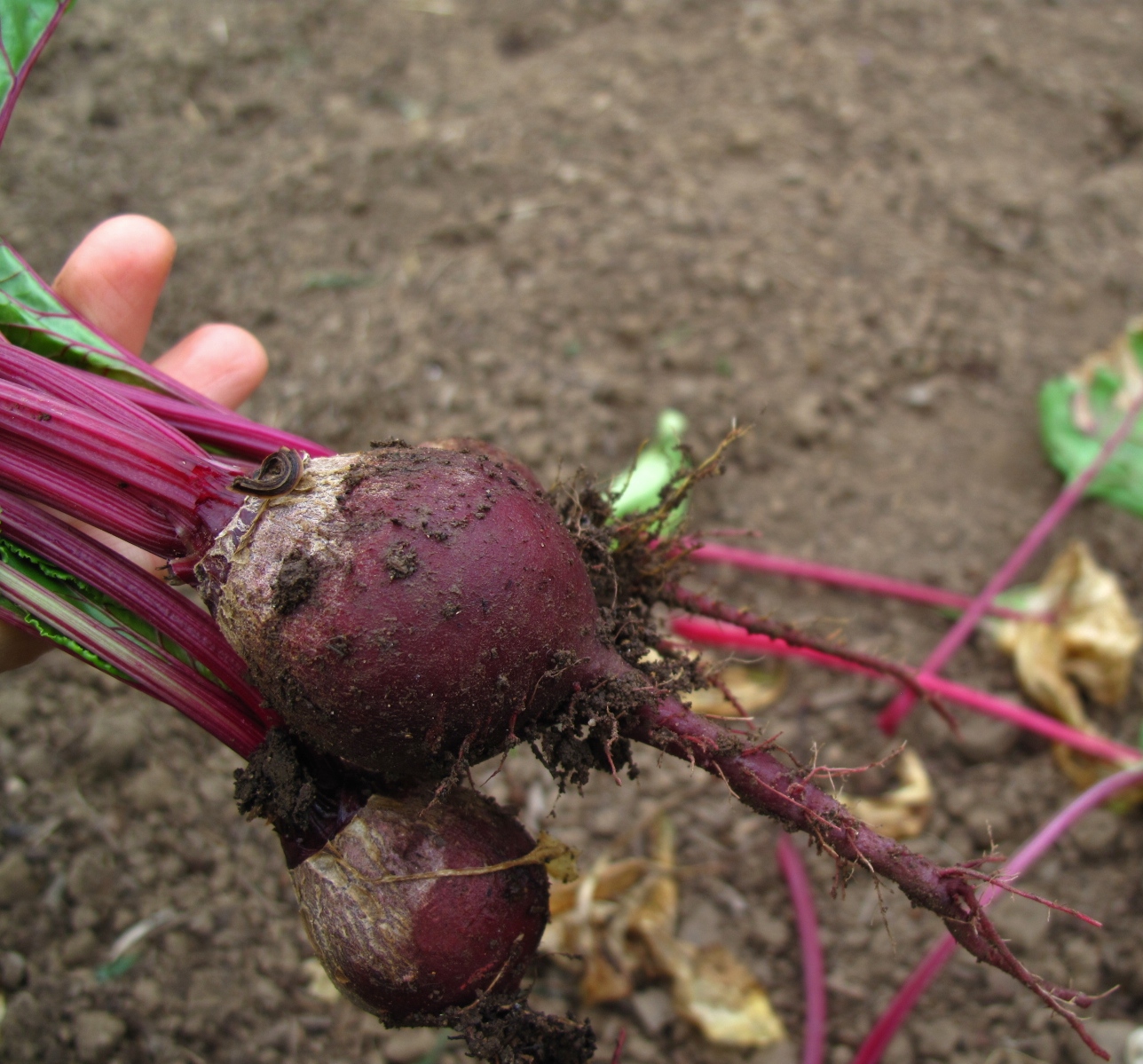
And in the heart of summer, when all the likely candidates wave their yellow-flowered flags before popping fruit upon fruit endlessly, I turn to the other side of the garden and pull the earthy beets from the ground, their soil-covered skins disguising the dramatic color within.


IMG_8155


I’ve mentioned this before, but I tend to identify with the harder-to-know vegetables, the ones that sometimes fall victim to knowing only one dish in most kitchens, or worse yet, never appearing. Like me, these vegetables might take a bit more work to understand, as what you see is certainly not what you get; they’re not the kind to be plucked from the vine and gobbled down there in the garden, warm and juicy from the sun.


I don’t revel in the hard-to-approach bits of my personality, nor do I love how I can remain so completely reserved to even my nearest and dearest friends. I don’t love how my first response to the teasing I get, for fun, is one of irritation and sharp-eyed fight-backing, before I slide my sassafras tongue back in, let out a smile, and just go with it.


I bet my spirit vegetables–with their thorny stems, prickly, then poisonous leaves, and dirty bottoms–feel the same way.


IMG_8164


Have you ever pulled a stalk of rhubarb from the ground, knocked that highly oxalated leaf off the stem, and sunk your teeth into the celery-like tartness, pure and raw and unadorned from sugar and strawberries? It is pungent; startling even. Have you ever greedily gobbled plain sweet roasted beets straight from their foil oven-packet before realizing you now don’t have enough for the recipe? Or done the exact same with a winter squash, thinking to yourself, this is the most magical candy on all the earth, as you’ve done so?


I don’t often share about my job, but one of my favorite things about it is wandering the garden with my high school students, giddily discovering a new vegetable is ready for harvest, like the spring’s first asparagus, cutting the new shoots from the ground, shoving stalks at them, and saying, try it. And there, with dirt on their hands, mud on their shoes, and weary eyes, they do and they discover a flavor they’ve never experienced before. It is one that you cannot get from a grocery store because it’s only there in that plant a short while before shipping and sitting on a shelf and waiting to be cooked in a fridge drains those flavors away. The students’ initial reluctance for something so green and unlike the usual packaged meals paves way for simple responses like, I’ve never tried asparagus before. I like it! Followed by their sitting in the log circle gnawing down an entire unruly, late-harvested, two-foot stalk.


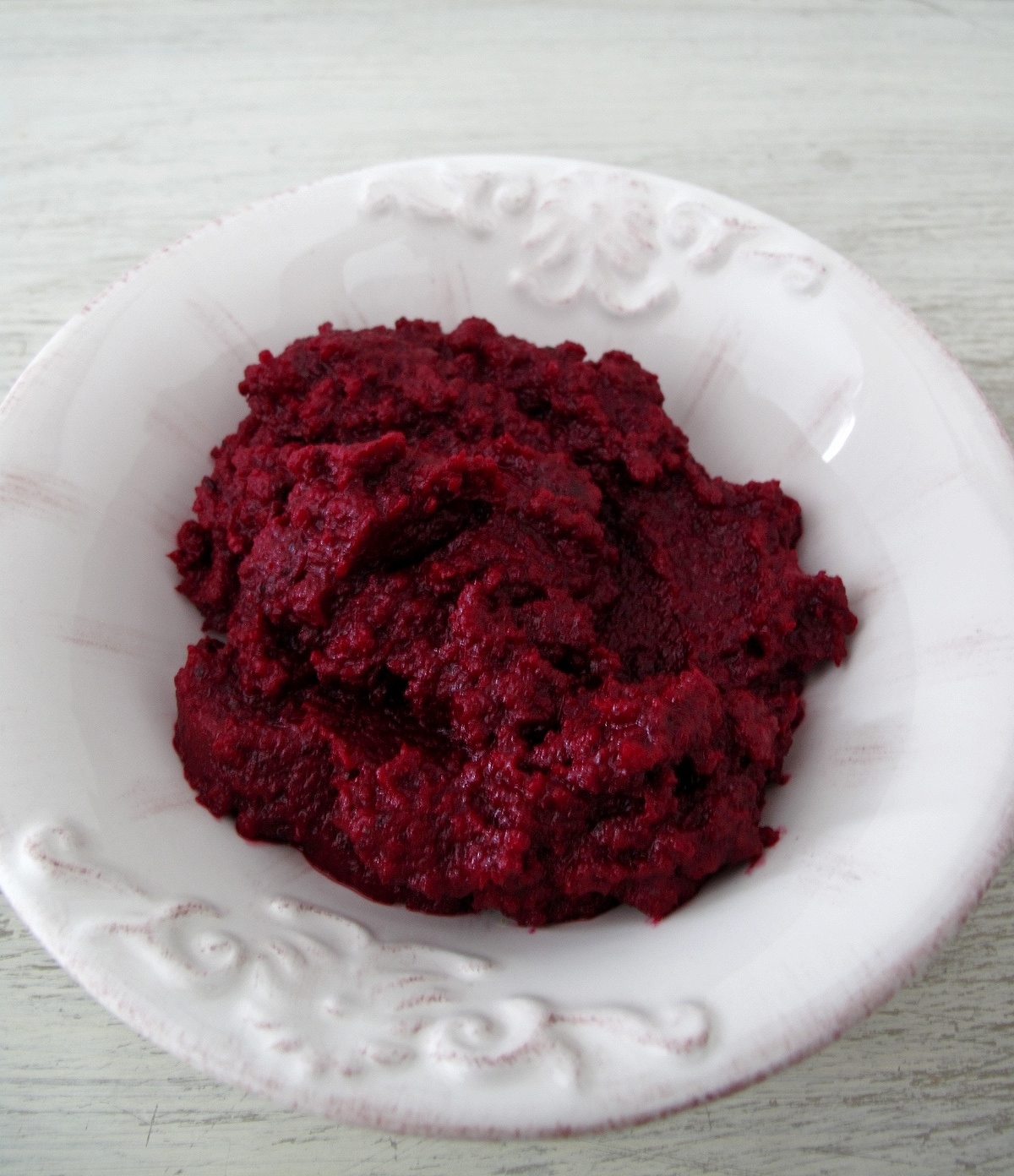
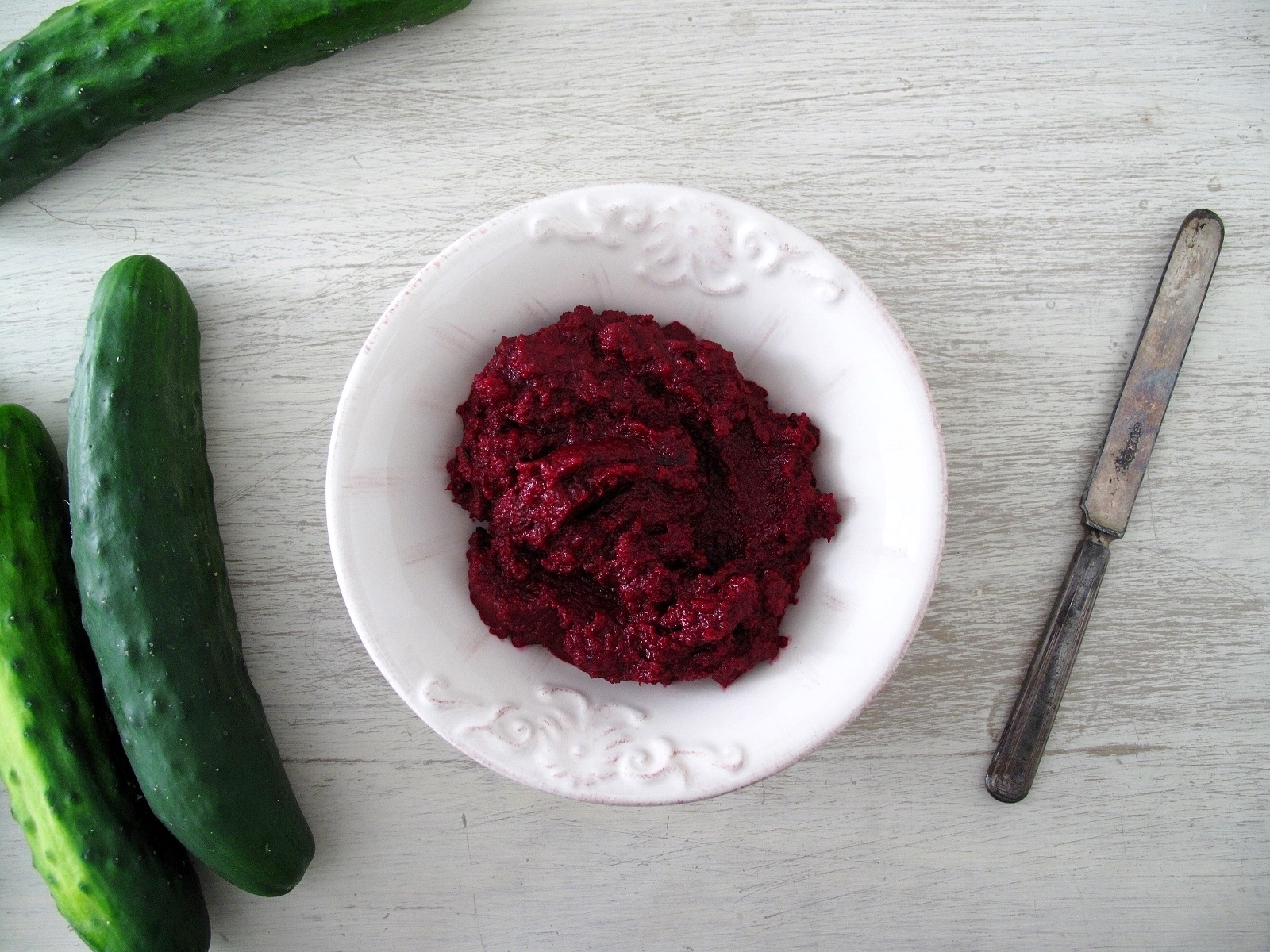
Since it is summer, I spend a good majority of my days outside in one garden or another, whether at work with students, or in my home garden. I tend to eat even more vegetables than usual to keep up with the harvest, and I end most days tired, hot, and ready for a shower the moment I walk in the door. I’ve taken, too, to eating random vegetable-y things at most meals, even rounding out the usual morning porridge with a spontaneous need for beet hummus “spooned” upon whole cucumbers. I harvested six last night and there are at least 10 more coming in the next couple of days–and when cucumbers are as snappy, crisp, and fresh as these ones, they are perfect vegetable dippers for beet hummus.


IMG_8114


Though beets can be harvested nearly year-round in these parts, beet hummus is what I love to make in this season to convert the earthy-crimson-root-weary to my summer spirit vegetable. Try it. You’ll like it.


IMG_8151


Beet Hummus, adapted from Ard Bia Cook Book
Makes about 1 cup or so. Double the recipe if you’re likely to gobble it up in one sitting.

4-5 beets (about half a pound)
1 garlic clove, peeled
1 1/2 tsp. ground cumin
1 1/2 tsp. pomegranate molasses
1 Tbs. tahini
2 Tbs. fresh lemon juice
1/2 tsp. sea salt
freshly ground black pepper

  • Scrub the beets and remove their tops and bottoms. Pile them into a large sheet of foil and fold until completely covered. Roast in a preheated oven at 400 degrees F until soft all the way through, about 40-50 minutes. Remove from the oven and let cool slightly. If they’re free from chemicals and grown in healthy soil, I don’t bother removing the peels.
  • In a food processor, puree the beets and remaining ingredients until they become a smooth paste. Add more lemon juice, salt, or pepper to taste.
  • Serve every which way atop the season’s fresh vegetables, or simply eat it straight from the spoon.