Observing the 20 Energies and How To Really Start Intuitive Eating

Every day in May is precious.

Where I live, the months of February through April are often the most challenging – January and the post-holiday, beginning of year hope always seem to fly by, but it’s in February, and March, and April that every day can feel like a grind. 

It’s not the sunshine that May can bring that necessarily turns it all around for me. I do love the sun and warmer days, but I also enjoy the rain. 

It’s the flowers and the fully leafed out trees that late winter and early spring lacks. The sheer density of foliage that has returned by early May.

A heavy blanket or extra padding of plant life that soothes my nervous system as I go out into the world, making everything hard, more bearable, and everything mundane or merely good, elevated. 

The twenty Gunas valued in Ayurvedic medicine.

One thing that is inevitably helpful from day to day, whether it’s in those more difficult late winter and early spring months, in May, or in the heat of peak summer, is tuning into and adjusting my food and lifestyle choices based on the energies around and inside me. What I’m referring to are the 20 Gunas in Ayurvedic wisdom. These are a set of 10 pairs of opposing qualities or energies that describe the different attributes inherent in all substances. 

For instance, a rock is hard. Feathers are soft. 
A rainy day is wet. A clear, sunny day in August in Oregon is dry. 
Fresh ginger is heating. Coconut milk and coconut water are cooling.  

What is so powerful about observing these qualities in your body and everyday life, and then using them to make subtle food and lifestyle adjustments, is that it’s a way to bring balance to your body, mind and health.

This daily adjusting is especially helpful as a preventative measure, but should also be used when there is clear illness or disease. Our body’s prefer to operate at homeostasis. Even with everything we do in our everyday that knocks the body out of homeostasis, its object is always to return to ‘baseline’ as quickly as possible. When there are too many blocks in its ability to do so, that’s when illness and disease, abnormal lab values, pain and aches, and injuries occur.  

The 20 Qualities are:
Heavy | Light
Cold | Hot
Soft | Hard
Oily | Dry
Smooth | Rough
Dense or Solid | Liquid
Slow or Dull | Sharp
Stable | Unstable or Mobile
Cloudy, Sticky or Slimy | Clear
Gross or Big | Subtle or Small

Observing and using the 20 qualities or gunas is a way to help the body system return to homeostasis. How you do that is for every quality that is out of balance, utilize the opposite quality instead. 

For instance, if I am currently experiencing hot, itchy skin rashes or acne, I know that adding more heating substances, foods, and heating spices will further increase the heat condition. Reducing the amount of spices in food, the type of foods that are hot in nature, and increasing cooling foods will help to clear the heat. Adding cooling, bitter vegetables like broccoli and asparagus and more cooling spices and herbs like fennel, coriander, mint and cilantro,  instead of eating a dish with garlic, onions, ginger, mustard seeds, and chili peppers will slowly (or sometimes quickly) assist in coming back to equilibrium. 

Or say I have a tendency towards being constipated and gassy, and I eat lots of dry, airy foods. Snacking on popcorn, granola, chips, crackers, yeasted bread, and raw, crunchy salads, which I eat while on the go, or eat while talking. All are dry and/or contain a lot of air.
A way towards balance is to increase the moisture — both through adding liquid into the foods consumed, and cooking foods until they’re soft, and by adding liquid fats and oils instead of dry, crunchy roasted nuts or seeds, etc.

A Daily Check-In

One way to begin to use this method is by doing a short daily check-in. Take a few minutes near the beginning of each day to journal or jot down the answers to these questions:

– What is Present today? 
– And What is Needed?

Getting more granular, it can sometimes be helpful to do a quick scan or review of different body systems, the mind and emotions, and the weather to help. Is something feeling dry? Hot? Slimy and mucousy? Slow and sluggish? Adjust your food and lifestyle choices with the opposite qualities, and see where it begins to bring more balance. 

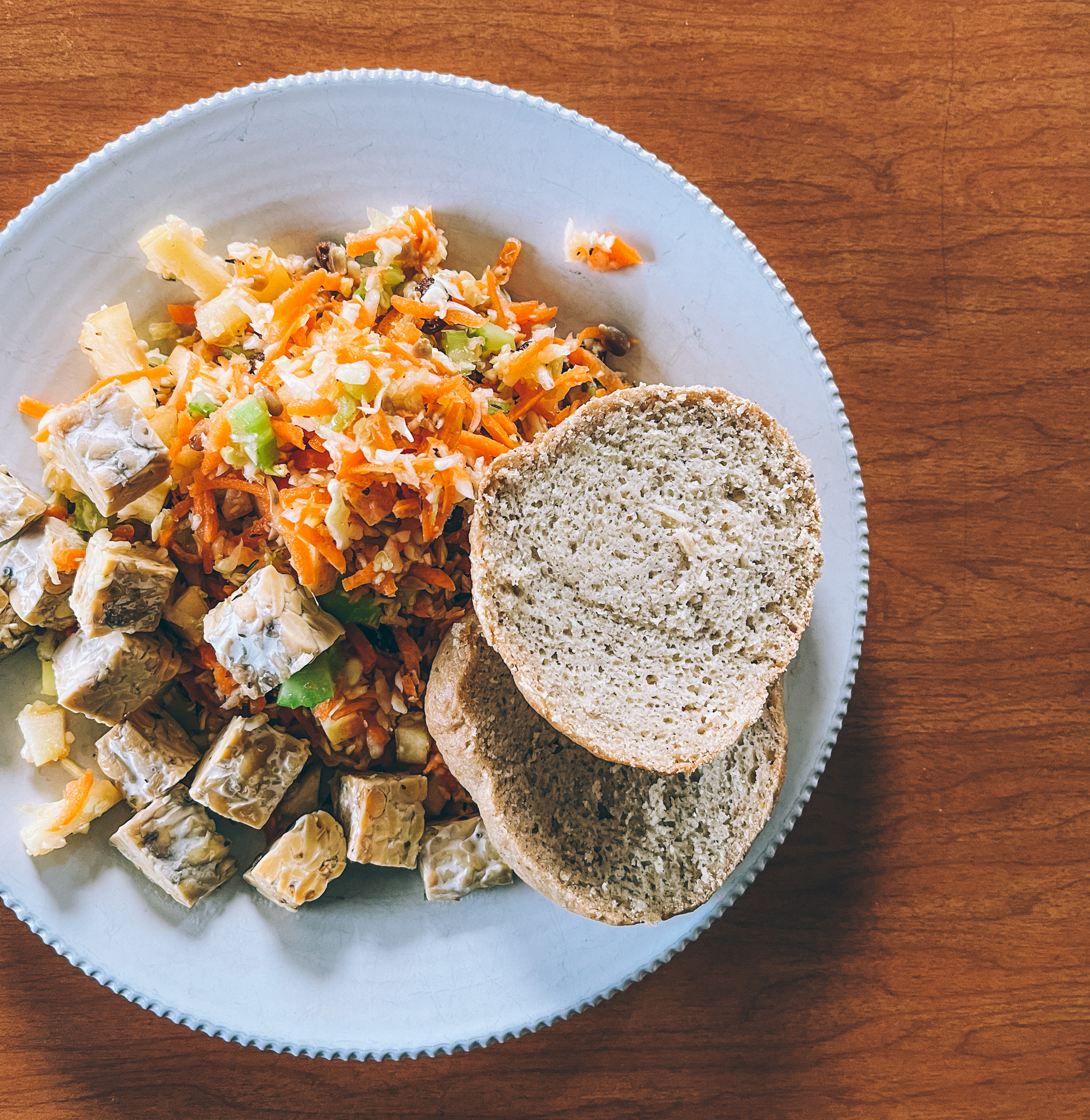
As we weave into the summer months in the northern hemisphere, it’s often that the qualities on display in the environment become hotter, dryer (or more humid, depending on where you live), and this can be mirrored in the body more rapidly, especially when we likewise choose heating and drying foods. Here’s a recipe for summer that can give you a good example of how to balance the heat and dryness with cooling spices, coconut and gently cooked, more liquid-containing meals. 

Observing what’s occurring internally and externally and adjusting to quickly reach equilibrium is the very definition of true intuitive eating. It’s tuning into what the body needs rather than what the mind craves. 


If you’d like to know more, there is a free download in more detail to use this idea in the Resources section. I also work with clients in individual nutrition consultations, and as a Licensed Dietician / Nutritionist (LDN /LD) and Certified Nutrition Specialist (CNS), use medical nutrition therapy, integrative health measures, and a root cause approach to heal imbalanced health conditions. 

If you’d like to learn more about how you can improve your symptoms of imbalance, I’d love to speak with you in a quick phone consultation

“Normal” Habits that Cause Poor Digestion

What’s considered “normal” in our modern culture doesn’t necessarily mean it’s healthy or optimal. 

As a pathway to optimal health and performance, optimal digestion is one of my main focuses as a clinical nutritionist. Why? 

Because the fire element in the body is responsible for all forms of transformation internally – digestion, absorption, assimilation, creation of digestive enzymes, maintaining balanced body temperature and metabolism, providing energy, supporting regular and balanced elimination, deep sleep, mental clarity, stability and groundedness, cellular communication, and zest for life

Among many others. 

In nearly all cases, the root cause of weight gain or stagnation, inflammation, muscle and joint pain, fatigue, anxiety and depression, hormone imbalances and monthly or menopausal symptoms, are all rooted in the condition of the digestive system’s ability to optimally transform food into a healthy body and mind. 

In the last few years, I’ve been increasingly drawn to the ancient wisdom of Ayurveda, which is one of if not the oldest, medical system. In Ayurveda, many of the medical terms are in Sanskrit, a very old classical language. 

In Sanskrit, there’s this term used with poor digestion called Ama, meaning unripe, uncooked, or undigested food, or events that occur as a result of impaired digestive function. 

Can you spot any of the normal food preparation techniques that may be problematic for certain individuals?

In our modern lifestyles, there are lots of “normal” ways of eating that cause ama formation, or impaired digestive function:

  • Meal combinations that have complicated ingredient combinations or incompatible elements 
  • Eating heavy foods or indigestible foods
    • This may be unique to the individual or universal
    • For example, A meat lover’s pizza with lots of cheese is not going to be well tolerated by anyone.
  • Overeating
  • Eating allergenic or rancid food
  • Raw and undercooked food
    • Especially when it’s cold outside or the individual is cold, dry, and generally undernourished
  • Eating cold food
    • Especially when it’s cold outside or the individual runs cold
  • Eating dry and dehydrated food
  • Experiencing intense emotional stress and especially eating when experiencing that stress
  • Fasting for long periods of time 
  • Irregular eating patterns
    • The body likes routine because it has its own circadian rhythms that also regulate digestion as well as sleep/wake cycles. Meaning it’s best to eat at the same times every day!
  • Suppression of natural urges like needing to go to the bathroom, ignoring hunger or thirst, etc. 
  • When one travels a lot or the season or weather shifts
    • The body likes routine, and there may be an adjustment period with seasonal transitions, as well as with traveling to a new place.

Our ancient teachings remind us that  modern day “normal” isn’t necessarily natural. 

Do you routinely practice any of these seemingly “normal” ways of eating? I know I sometimes do, and I definitely notice a difference in my digestion, energy, skin quality, and generally how I feel – both when I fall into these habits and when I transition back to cooking and eating styles that support digestion. The common culprits for me are uncooked, crunchy salads, overcomplicated “cheffy” meal combinations, and eating when stressed or anxious.

Each of us tends to gravitate to a few of these and they’re often more of the root cause for impaired digestion than the idea that you simply can’t tolerate a big list of random foods.

The ability to take food and break it down into nutrients, and assimilate it into the body to be used as energy is the basis for building healthy body tissue (and thus a healthy body!) The goal for each of us is balanced digestion, and the stable mood, and smooth and efficient symptoms that come with it. This is possible for everyone. 

If you’d like to learn more about how you can fix it, I’d love to speak with you in a quick phone consultation!

Learn more about which of the four types of digestion you have.

Four Types of Digestion – Which Do You Have?

What’s considered “normal” in our modern culture doesn’t necessarily mean it’s healthy or optimal. 

As a pathway to optimal health and performance, optimal digestion is one of my main focuses as a clinical nutritionist. Why? 

Because the fire element in the body is responsible for all forms of transformation internally – digestion, absorption, assimilation, creation of digestive enzymes, maintaining balanced body temperature and metabolism, providing energy, supporting regular and balanced elimination, deep sleep, mental clarity, stability, and groundedness, cellular communication, and zest for life

Among many others. 

In nearly all cases, the root cause of weight gain or stagnation, inflammation, muscle and joint pain, fatigue, anxiety and depression, hormone imbalances and monthly or menopausal symptoms, are all rooted in the condition of the digestive system’s ability to optimally transform food into a healthy body and mind. 

So with that as a preface, there are four main types of digestion. Which you currently experience?

Irregular or Erratic Digestion:

  • This digestive pattern swings from very fast to very slow, with both ravenous hunger and lack of appetite, depending on the day or time of day. 
  • There is both sluggish and rapid digestion;  for example constipation to diarrhea, and/or being quick to hunger, and quick to satisfy, with the ability to only eat very small meals before feeling full, but perhaps a tendency to overeat. 
  • May have a tendency to easily skip meals or forget to eat. 
  • Hunger can be quite delayed after waking in the morning. 
  • Symptoms such as gas, bloating, heaviness, rumbling or gurgling in the tummy or lower bowel.
  • Fatigue throughout the day or week, or crashes of energy after meals or feeling immediately cold after meals. 
  • Frequently experiencing anxiety, fear, indecisiveness, or scattered thoughts.

Slow Digestion:

  • This digestive pattern is marked by its sluggishness. Undigested food has a tendency to sit in the GI for too long, and hunger isn’t often present. 
  • Hunger can be quite delayed after waking in the morning, and you may have the tendency to skip breakfast or have only coffee for breakfast (not so great for blood sugar balance!) 
  • May have a tendency to easily skip meals or feel like you can only eat small meals at a time, and quickly feel full and heavy. 
  • May eat out of habit or have a tendency to eat emotionally. 
  • Symptoms such as heaviness, fatigue, excess weight, slow elimination trending towards constipation, nausea, low appetite with perhaps some overeating, excess saliva, coughing, respiratory problems, and/or low mood. 

Fast Digestion:

  • This digestive pattern is fast and sharp. Food is often digested very quickly. The fire is on too high! 
  • Hunger can come rapidly after eating; You might eat a full meal and feel ready for another 30 minutes to two hours later, instead of the four to six hours that occurs with optimal digestion.
  • Because the fire is turned up, there is a tendency towards having a low weight, even though you can eat a lot. 
  • Elimination trends towards loose stools and diarrhea. 
  • You never miss a meal, become “hangry” easily, and may snack frequently between meals.
  • Symptoms such as excess dryness in the throat, mouth or lips, reflux and heartburn, anemia, and/or low energy.
  • Skin Irritations such as eczema, psoriasis, rashes, hives, or acne.
  • Frequent irritability, frustration, short temper or being extremely hard on yourself.

Balanced Digestion – The optimal state of digestion

  • Hunger is experienced routinely, about 30 minutes to 1 hour prior to each of the day’s three meals, in anticipation of food. 
  • A healthy appetite; being ready for a morning meal by 7-9 am, feeling hungry again 3-6 hours later and at steady 3-6 hour intervals throughout the day. 
  • Steady energy throughout the day with no fatigue or big drops in energy after eating or mid-afternoon, or difficulty waking up or getting going 30 minutes after waking.
  • One to three bowel movements daily, which pass easily and are formed like a banana
    • no visible food, mucus, fatty film, or off colors
  • Clear skin, free of acne, itchy, inflammation, and rashes
  • Focused mind and inspired thinking
  • Your athletic performance is reflective of your training
  • Balanced hormones and menstrual cycle (if a menstruating female) with no PMS or menopausal symptoms

Which Type of Digestion Do You Have?  

The ability to take food and break it down into nutrients, and assimilate it into the body to be used as energy is the basis for building healthy body tissue (and thus a healthy body!)

The goal for each of us is balanced digestion, and the stable mood, and smooth and efficient symptoms that come with it. This is possible for everyone. 

When we are ready to embrace positive adjustments in our diet and lifestyle, we can see long-standing patterns shift, hormones and weight balance, sleep patterns become deeper and restorative, and acceptance, zest for life, and optimal performance return. 

Did you find your digestion isn’t working optimally based on your symptoms? If you’d like to learn more about how you can fix it, I’d love to speak with you in a quick phone consultation! Or learn more about your digestion in some of my other articles on the topic of optimal digestion and gut health.