resourceful hands, all-the-greens interchangeable pesto

IMG_2012


I vividly remember mornings at my grandparents in the north, my dad’s parents, who we visited less regularly growing up. Specifically, I remember mashed-potato cakes in the morning for breakfast, their perfect fluffy rounds composed of leftover mash from the night before. There was something special about the resourcefulness of meals at my grandparents–how my dad and grandpa had trout on summer mornings, freshly caught in a pre-breakfast fishing trip to the creek, how the milk and eggs came from their cow and chickens, and how my grandma’s large garden to the back of the house sustained them long past their garden season.


In those days, we ate fairly similarly at home. But I had more respect for the ingredients that went into meals at my grandparents–even when I still hated the milk, refused to go near the trout, and was just as picky an eater there as at home.


Though I may not have wanted to partake in some of the foods that made up my grandparents’ lifestyle, in that pre-teen phase of wonderment, I loved sitting in the corner chair at the tiny table tucked into the kitchen, watching my grandma turn random assortments into a meal, listening to my grandpa spin yarns about his neighbors, his fingers cozied around his coffee cup, my dad nodding along.


In those early years before computers or smartphones or big screens to numb the mind and overwhelm the senses, I learned the art of quiet observation in small corners of rooms with the adults. In those rooms, where there is nary a sibling or cousin or similarly-aged friend in my memory, I watched, listened, and learned. I have always been fascinated by hands and it is the hands that I vividly remember, making it all happen. Hands flipping the potato cakes in the frying pan, the grease popping and squeaking. The hands swirling and lifting the coffee cup and setting it down again. The hands bringing in the basket of just-gathered eggs. The hands that helped mine push the creaky old elevator button leading to the farmhouse basement for another jar of jam. In observing those wiser hands throughout those early years, I like to think I learned to appreciate resourcefulness, of using what was had, and turning near-waste into something worth having.


I am not so naïve as to think the resourceful way of life practiced by my grandparents and parents then was born out of an extreme desire for some romantic farmy lifestyle. It was a way of life because it was what they knew, it was what they had, and it was how they (and we) survived economically.


William and I mutually agreed to forego gifting each other at many holidays over these past few years and we had to gently explain to friends and relatives why we were not willing to purchase certain items that might have seemed basic. But we didn’t scrap on our willingness to really pay the people who engage in the hardest of hand work to feed us. I am more willing to spend on food than these people I learned from, but I still hold tightly to their lessons on resourcefulness. I choose more expensive produce without complaint–but I damn well better try to use the whole vegetable. I like to think this comes as a result of all those quiet, watchful learnings growing up until it has become simply what I do–and every item we throw away goes somewhere.


When faced with carrot tops, radish or turnip greens, and other random herbs, I’ve spent the last few years finding ways to make them useful. My mom and grandma have chickens to eat their vegetable scraps. I have an ancient–but still working–food processor.


And that is how freezer-containers full of eclectic pesto combinations happened.


IMG_2362


All-the-Greens Interchangeable Pesto, adapted from Gena Hamshaw

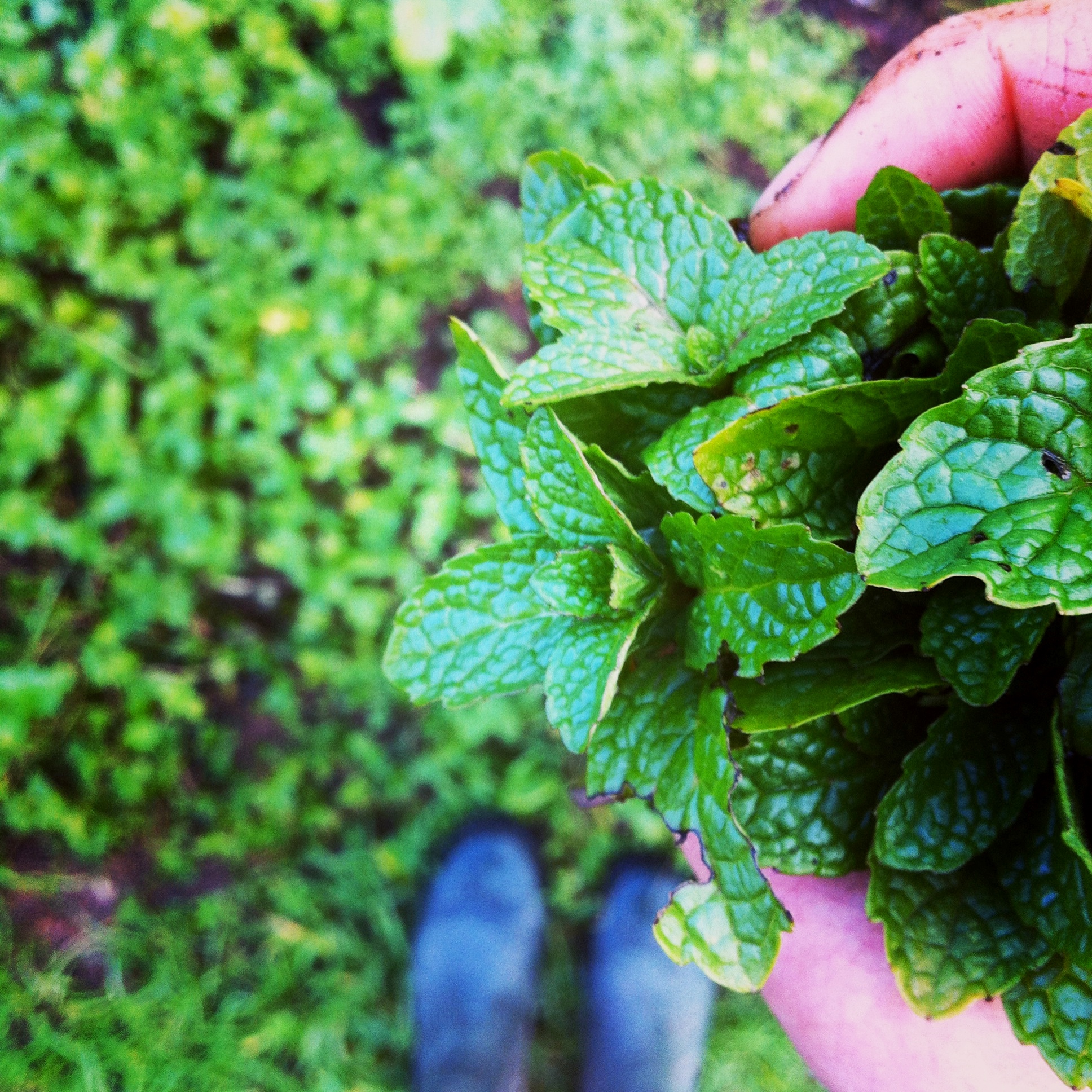
The Recipe Redux theme this month is freezer meals. Whenever I have more greens or herbs than I know what to do with, I turn them into pesto and toss the container in the freezer. This recipe is one of my favorites because it is so versatile and I can make it using whatever I have. It also makes for a simple and quick meal. Our standard busy day go-to is spaghetti with pesto, but I’ve swirled it into grain bowls, spooned it atop toasts and pizza crusts, and even thinned it out to make a quick and tasty dressing for green salad. Try a few different combinations. Use up those herbs and greens. 

  • 2 cups tightly packed greens (radish/kale/parsley/cilantro/basil/mint/turnip/etc.)
  • 1/2 cup nuts or seeds, toasted
  • 2 cloves garlic, roughly chopped
  • 1/4 cup extra-virgin olive oil
  • 1/4 cup water
  • 1/2 tsp. salt
  • 1 tablespoon lemon juice
  • 2 tablespoons nutritional yeast (large flake) or 2 tsp. powder
  •  ground black pepper, smoked paprika, or red pepper flakes, to taste
  1. Place the greens, nuts or seeds, and garlic in a food processor. Pulse to combine until the mixture becomes a rough paste.
  2. Turn the motor on and drizzle in the olive oil and water. Add the salt, lemon juice, and nutritional yeast, and pulse a few more times to combine.
  3. Add the optional spices to give it a different flavor spin.
My favorite combinations thus far:
  • Carrot Tops, Sunflower Seeds + Smoked Paprika
  • Basil + Pumpkin Seeds
  • Radish Greens + Almonds
  • Mint, Cashews + Green Chile
  • Cilantro + Radish or Turnip Greens, Pumpkin Seeds, Cumin, Coriander, Red Pepper Flakes + Lime

Savory Grape Syrup on Black Rice with White Beans + Collards

IMG_7677  

I go down to the edge of the sea.
How everything shines in the morning light!
The cusp of the whelk,
the broken cupboard of the clam,
the opened, blue mussels,
moon snails, pale pink and barnacle scarred—
and nothing at all whole or shut, but tattered, split,
dropped by the gulls onto the gray rocks and all the moisture gone.
It’s like a schoolhouse
of little words,
thousands of words.
First you figure out what each one means by itself,
the jingle, the periwinkle, the scallop
       full of moonlight.
Then you begin, slowly, to read the whole story.
                                     – Breakage, Mary Oliver
 IMG_7633

I was at church a few weeks ago, an hour before mass. The college-student musicians were rehearsing and as I spent a quiet hour in contemplation, the fits and starts of their rehearsal played out in my periphery. Soon my mind wandered to simply listening. Their music is just what I need each Sunday and one of the reasons I go to the ‘sinner’s mass,’ the last one offered. As I listened, I silently marveled at how such a beautiful performance in the next hour could come from a sub-par practice.

I let my mind continue its wondering, thinking back to my own practices growing up. I played the saxophone and piano. The noise made by a substandard seventh grade sax player was a horrendous thing to listen to, I’m sure; my siblings made it clear they’d rather I not practice. The music group at church is substantially more talented but like many rehearsals, theirs was remarkably un-put-together.

IMG_7698

I find that life is much the same as these practices. It’s rough around the edges with fits and starts, jumping from a particular staccato section to the line down the page so as to get the timing down, and then sweeping in and out of the harmony, dropping each one part way through and picking up at another spot.

There’s a randomness to it that is uncomfortable when our expectations are linear. It reminds me of this diagram of expectations versus reality.

IMG_7646

In moments when I most need them, the right words often come back to me, as if in having read them once months or years before, they were saved up for just the time I’d need them again. Ryan Hall’s Facebook posts often harbor the right words:

Sometimes your goals feel far from where you’re at in the moment. Rather than feeling overwhelmed, think ‘What can I be faithful with today to get one step closer?’ and celebrate progress.

IMG_7693

What I’m trying to say through the disorder of these paragraphs, is that life is not meant to be clear. We don’t know what we’re in for when we start. The way through can be equally hazy. As Mary Oliver says, there are a thousand words or experiences or paths to be sorted, each one to be picked up and puzzled back together into some semblance of sense.

IMG_7668
Beauty can come out of the fragmented practices. The hard going and the demanding everyday workouts prepare and toughen us for the real tests, the big performances, the meeting of monumental goals, and dreams that once felt far out of reach.

Sometimes we know what lies ahead; we are confident we can pull off the performance despite not having done it before. Other times we’re simply walking in faith, offering our best in each step and celebrating progress, even the barest glint of it, along the way.

IMG_7674


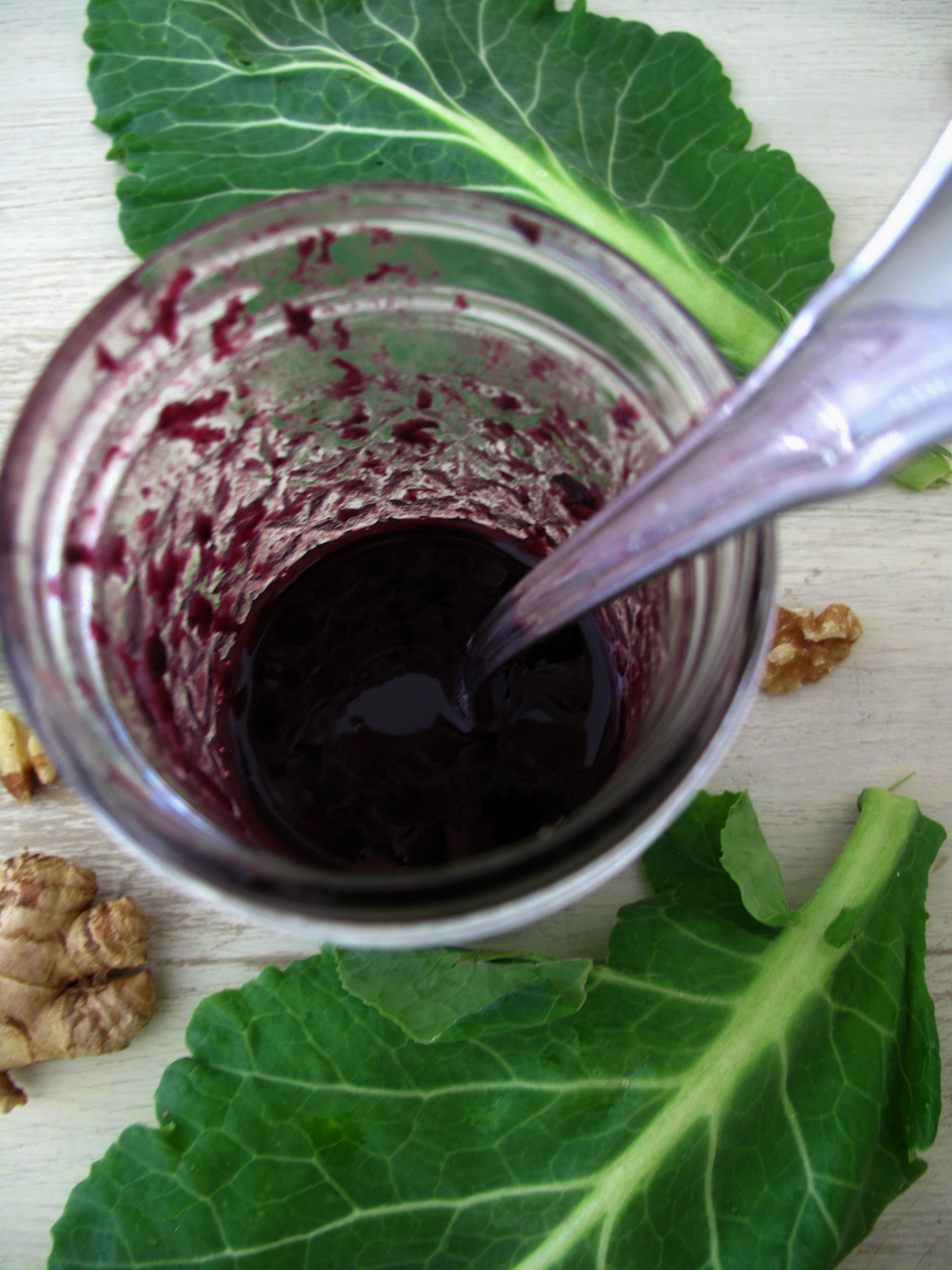
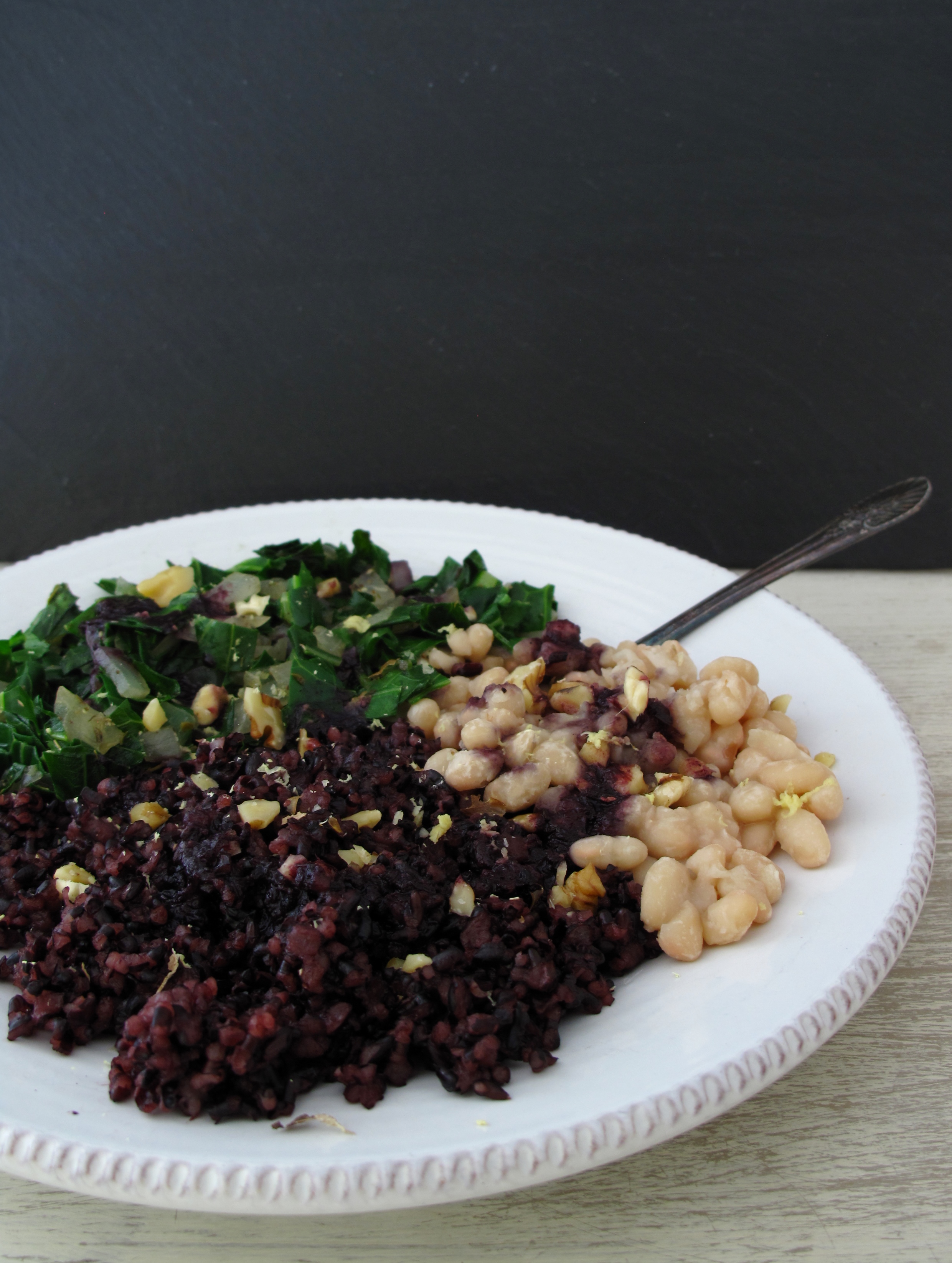
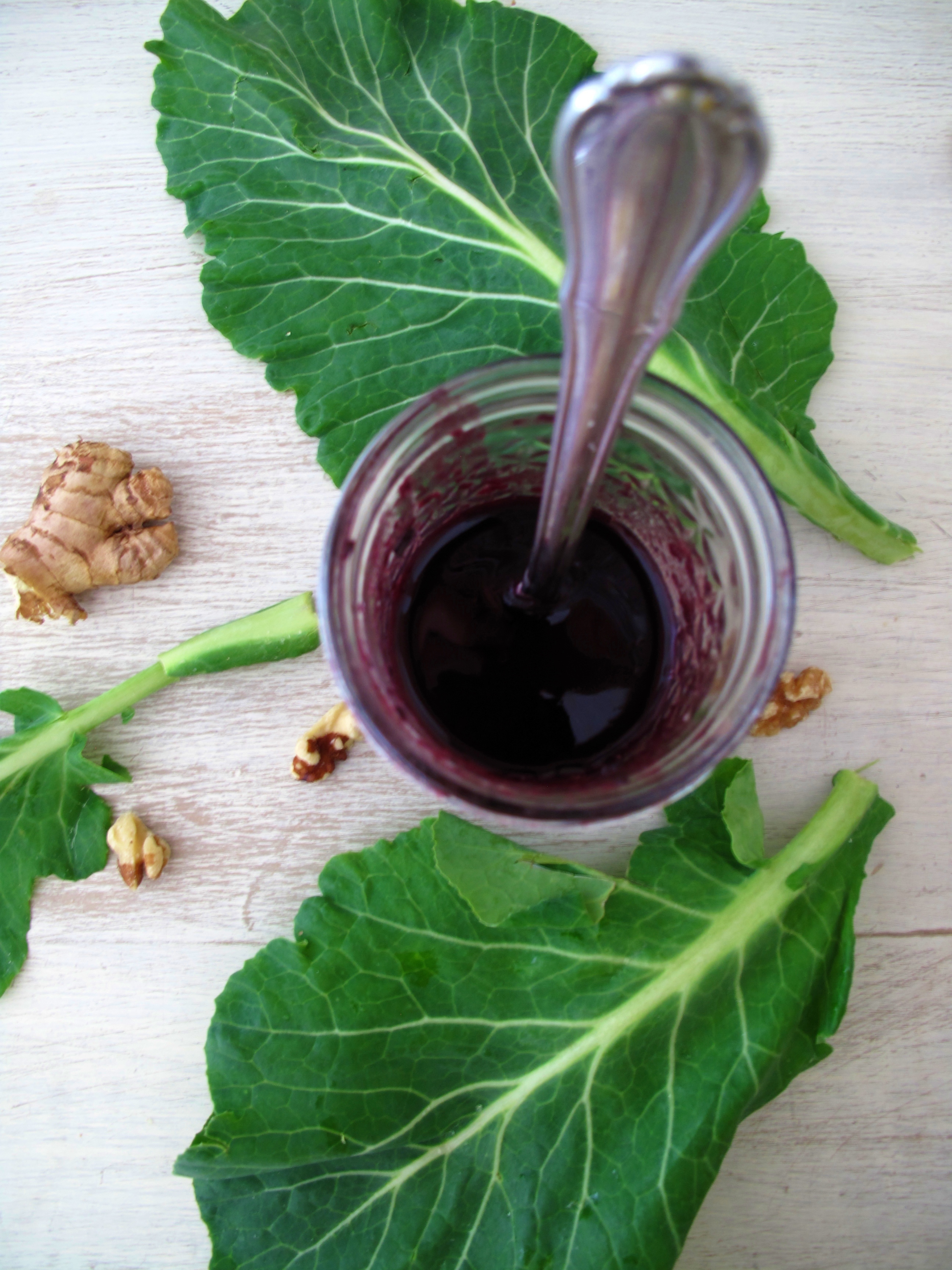
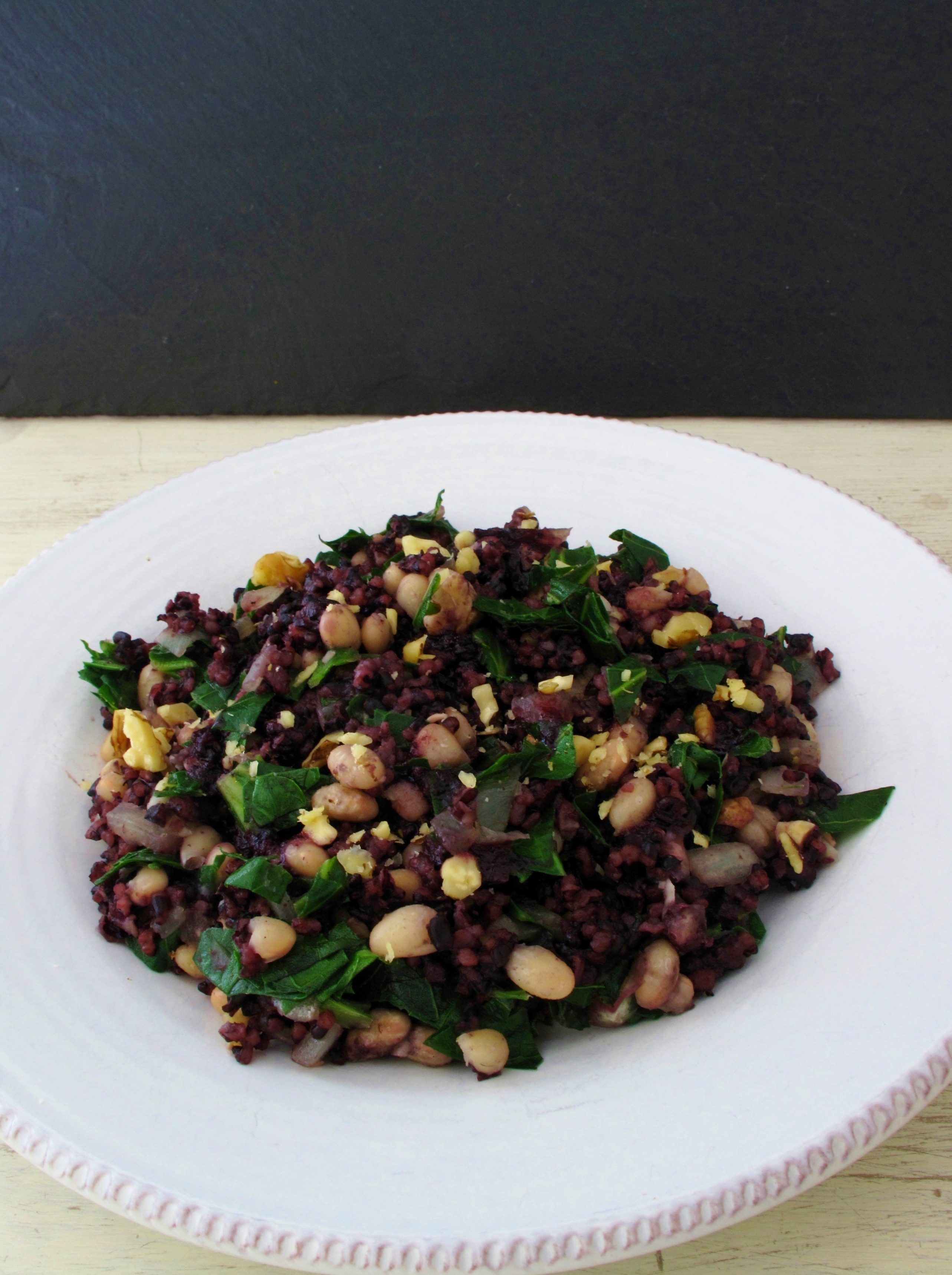
Savory Grape Syrup on Black Rice with White Beans + Collards
, serves 4

I spent half my childhood practically living at the home/nursery/farm of my two best friends down the road. Jari and Sheila, who I consider my second set of parents, gifted us the richest, grape-iest home-grown and pressed grape juice for Christmas. I’ve had gallons of it tucked away in the freezer for months, all the while trying to scheme up exactly the right way to make use of it. I boiled down a few cups into a thick, molasses-type concoction that is heavily infused with fresh ginger and rosemary. If you have an hour or so to mostly ignore a simmering pot, grab a bottle of grape juice and make syrup! It is simply the best with earthy black rice, white beans, and whatever greens are on hand this spring. 

3 cups grape juice

2 Tbs. freshly grated ginger

2 Tbs. finely chopped rosemary

1 tsp. ground mustard seeds

1 cup uncooked black rice

2 1/4 cups water, chicken or vegetable broth

2 cups cooked white beans

1 1/2 tsp. salt

1 medium onion, chopped

2-3 tsp. olive oil

1 large bunch collard greens, stems removed and chopped

a handful or two toasted walnuts, chopped

black pepper to taste

  • For the syrup:  In a medium-sized saucepan, bring grape juice, ginger, rosemary and mustard to a boil. Turn down to a simmer and allow to cook until reduced to about 1 cup of syrup.
  • Meanwhile, prepare the rest of the ingredients by cooking the black rice, chopping the onion and greens, and toasting and chopping the walnuts.
  • When the syrup is reduced, heat olive oil in a medium saute pan over medium-high heat. Stir in the chopped onion and cook until soft, about 10 minutes, adding a splash of water or more oil, as needed. Then, stir in the salt, black pepper and greens. Cook just until the greens begin to wilt.
  • In a large bowl or on individual plates, stir together the rice, beans and greens. Top with walnuts and drizzle the syrup over the top, stirring through before serving.

Beets, Tahini, Flatbread + Lentils

IMG_7200


Shannon and Anneke walked in to the kitchen and immediately curled their noses. Bec! You’re stinking up the house. After lifting the lid on the pot, they were even more disgusted. Beets! Gross!


An hour later, Shannon at least, was singing a different tune: I love beets! Beets, beets, beets. Let’s eat beets. For months afterwards, the subject of beets made their way into many a conversation, joke, and non-sensical late night roommate Facebook exchange. They even made their way into our school life as Shannon and I sat in our farming class plotting how to make more money than all the other students on our hypothetical farm. Our proposed course of action was growing and selling beets, of course.


IMG_7162


I have long since forgotten what sort of meal became of the beets that day when Shannon and Anneke walked in, but I’ve no doubt vegetables took center stage. Anneke, Shannon, and Kaci embraced my fondness for all things vegetable as whole heartedly as any semi-normal 20-something college person could, with only the expected amount of jabbing. My fondness for the full spectrum of produce even made it into Anneke and Kaci’s toast for my wedding.


Rebecca&William83


I’m going ‘home’ in a few days to celebrate family and Christmas and to perform my semi-annual reset in the farmhouse sunroom, where I will take in the dazzling morning light, open spaces, and cows over morning porridge. I’m super excited about a few things, and one of them is having a dinner party with Shannon and our fams. Last time we held a party, I was on a Middle-Eastern-themed-beet-tangent as well, so I made beet hummus and rose-flavored everything. I have come full circle as far as flavor combinations go so these beet flatbreads just might make an appearance. Luckily for me, I will be welcomed in to perfume Shannon’s home with the aroma of roasting beets.


Clearly, stinking up our house that winter afternoon was the right thing to do.


IMG_7201


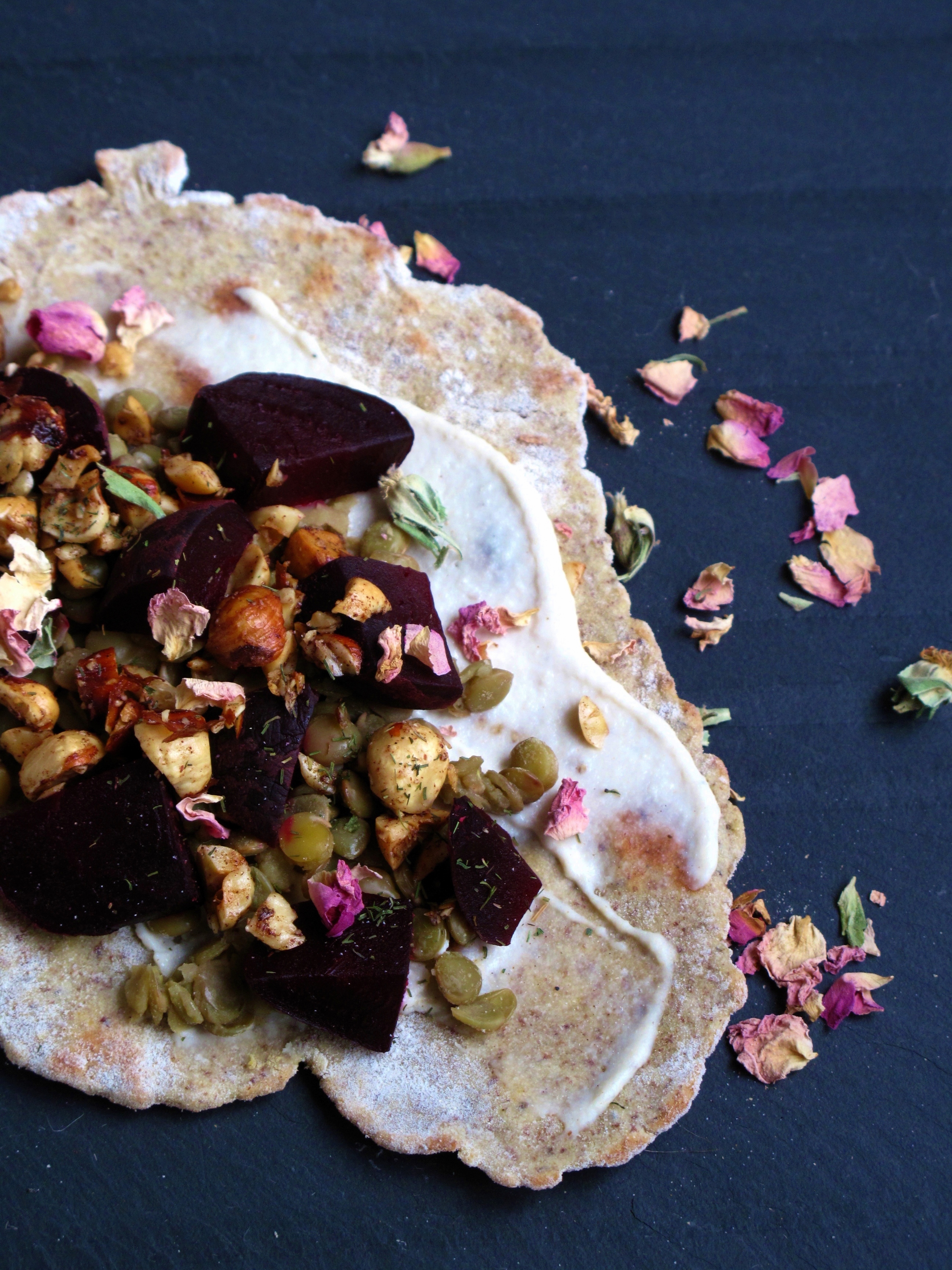
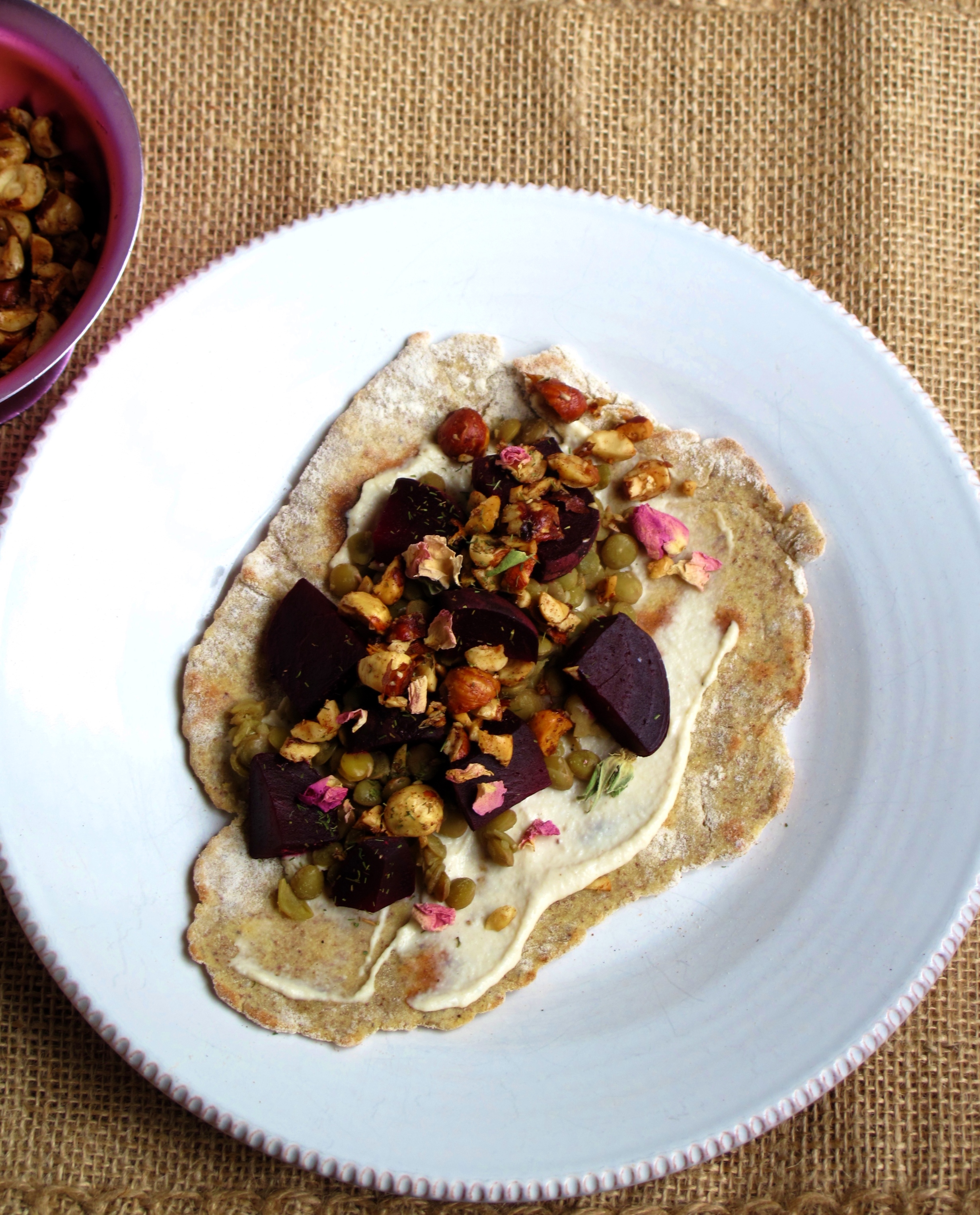
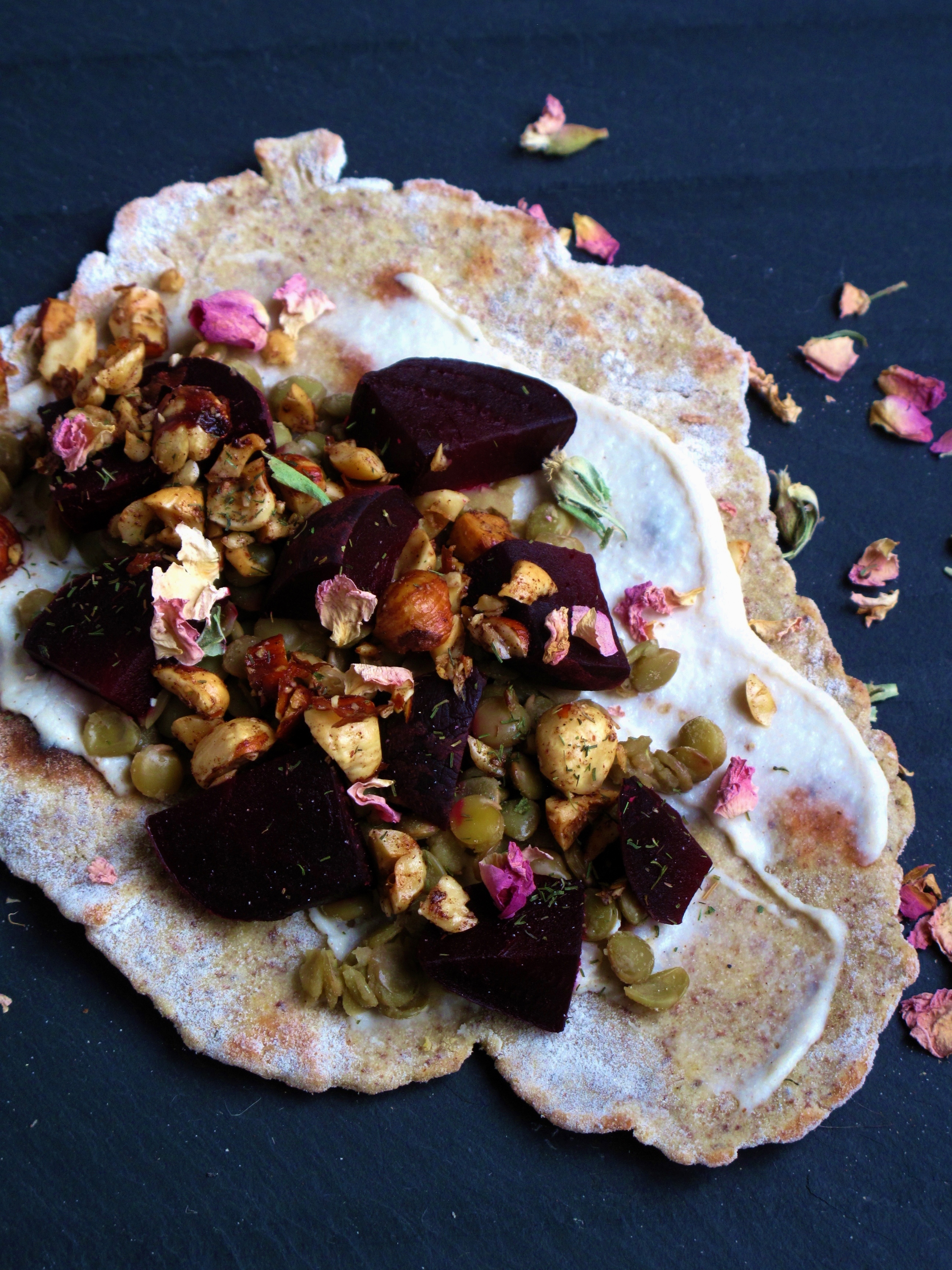
Beets, Flatbread, Tahini + Lentils, serves 4-6
There are many components to this recipe, making it somewhat labor-intensive. All the separate components save the flatbread can be made ahead and then reheated to eat with freshly made flatbread. On a rushed day, use purchased pita-type bread to serve instead. 

Lentils
1 cup lentils
3 cups water
Juice from 1/2 a lemon
1 clove garlic, crushed
1/2 tsp. cumin
salt to taste

Roasted Beets
10 medium-size beets, tops and bottoms removed 

Lemon-Tahini Cream
2 Tbs. tahini
1 1/2 Tbs. lemon juice
2-4 Tbs. water (as needed)
1 small garlic clove
Salt and pepper, to taste

Flatbread, adapted from Gluten-Free & Vegan Bread
1 Tbs. chia seeds
1/2 cup hot water
1/2 cup brown rice flour
1/2 cup garbanzo & fava flour
3/4 cup millet flour
1/4 cup amaranth flour
1/2 cup arrowroot starch
1/2 cup ground flax seed
1 tsp. salt
2 Tbs. extra virgin olive oil
1/2 Tbs. honey
3/4-1 cup warm water

Hazelnuts + Toppings
1 Tbs. extra virgin olive oil
dash of ground allspice
2 bay leaves
1/8 tsp. ground cinnamon
1/4 cup toasted hazelnuts, coarsely chopped
1/8 tsp. salt
Dried dill, for sprinkling
Dried rose petals, for sprinkling

  • Bring lentils and water to boil in a medium saucepan. Turn down to a simmer and cook for 20-30 minutes, until soft. Remove from the heat and stir in the remaining ingredients. Set aside.
  • Halve or quarter beets. In a large piece of foil, wrap all of the beets and roast in an oven, preheated to 400 degrees F, for 45-60 minutes. Check part way through for doneness, by opening up the foil bundle and stabbing with a fork. The beets should be tender all the way through. When done, remove from the oven and let cool slightly. Then, slice them into smaller pieces.
  • For the Lemon-Tahini Cream, puree all the ingredients in a food processor. Add additional water or lemon juice, to reach the desired taste and consistency.
  • In a small sauté pan, heat oil over medium heat. Add spices and bay leaves and cook until the spices start to smell warm and toasted, about 4-5 minutes. Remove from the heat and stir in the hazelnuts and salt. Set aside.
  • To make the flatbread, soak the chia seeds in the ½ cup water for at least 15 minutes. In a large bowl, combine the flours, flax seeds, and salt. In a separate bowl, combine the oil, honey, ¾ cup warm water and chia-mixture. Stir together and then add this liquid mix to the dry ingredients. Stir until it comes together with a wooden spoon. The dough should be fairly wet, so add more water if needed. Heat a cast iron skillet over medium heat. While the skillet is heating, divide the dough into 8 pieces and roll out each one on a counter, using brown rice flour to keep it from sticking. Each piece should be roughly 6 to 8 inches in diameter. Don’t worry about getting them perfectly symmetrical. As each piece of dough is rolled out, transfer to the skillet and cook on each side for about 4 minutes. Some of the edges will brown and crisp up; this is normal. As each flatbread is done, transfer to a warm oven until they are all cooked.
  • To serve, spread tahini cream onto the flatbread, top with lentils, sliced beets, and hazelnuts. Garnish with rose petals and dill.