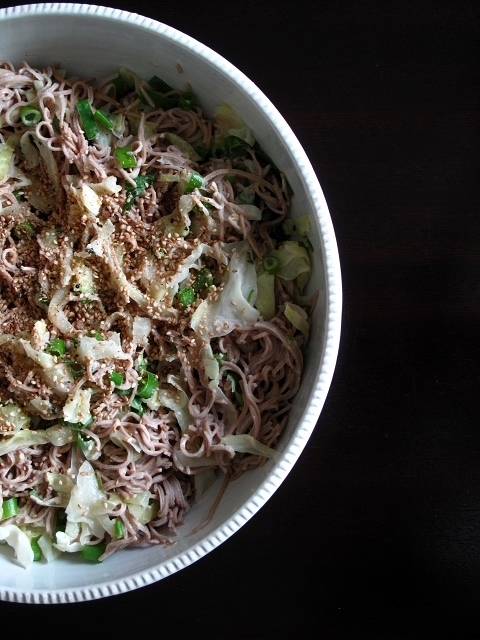
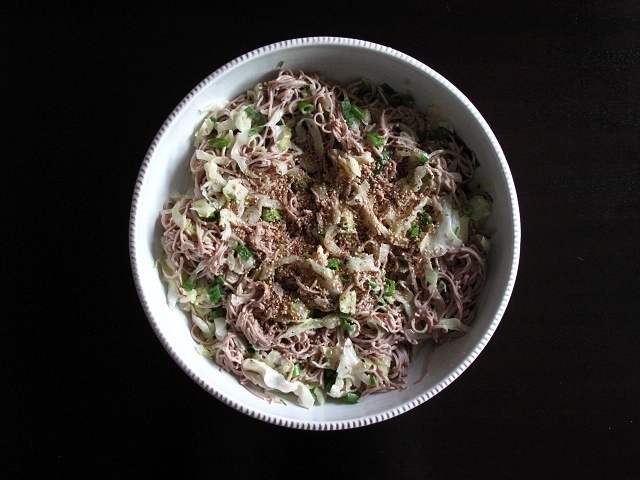
Soba Bowl with Braised Cabbage + Tahini Dressing from Eat This Poem

Soba Bowl with Braised Cabbage + Tahini Dressing from Eat This Poem

IMG_1377


Both the cook and the poet are makers.
One holds a knife, the other a pen.
– Nicole Gulotta from Eat This Poem
 

IMG_1391


Years ago, I began this blog as a recent college graduate with an abundance of quiet determination and no real idea what to do with it. I had a degree in agriculture and a minor in English, it was 2009 and the jobs for recent graduates with very generalized degrees were particularly non-existent. I was headed towards a teaching program in the fall, mostly because I had said I was going to years before, and every time I brought up my doubt, mentors and loved ones said try it and then decide. 

Words, whether mine or another’s, have always been a big part of my life, hence the reason I opted to keep pursuing literature courses long after deciding I did not want to specialize in the subject. So too has food, and the ability to create and celebrate a community about it, been particularly important. This space took its beginnings with that idea, of merging these two interests of words and meals because I didn’t know then of another way to combine the two. And so that first post back in June 2009 was about picking cherries high in a tree in a dress on the curb outside my last college house. And then making pie afterwards, a gift for my dad.

Since then, it’s fair to say I’ve often questioned whether I want to continue here, what the content should be, and whether anyone other than me cares for the words (or meals) that are shared.
 

IMG_1392IMG_1403


Though there are so many blogs now, I am still drawn to the ones that do as I started to all those years ago, capturing an otherwise forgotten moment or memory with the meal that accompanied it, in a way that is not often practiced in writing online. That is, with a real voice. Nicole Gulotta’s Eat This Poem, is one of those sites. And Nicole just wrote a whole cookbook merging the two! I’m so glad I get to share about it here.

Eat This Poem is at once a poetry anthology and a cookbook, as Nicole believes food and poetry are two of life’s essential ingredients. In the same way salt seasons ingredients to bring out their flavor, poetry seasons our lives; when celebrated together, our everyday moments and meals are richer and more meaningful. Each of the twenty-five inspiring poems—from such poets as Marge Piercy, Louise Glück, Mark Strand, Mary Oliver, Billy Collins, Jane Hirshfield—are accompanied by seventy-five recipes that bring the richness of words to life in our kitchen, on our plate, and through our palate. Eat This Poem opens us up to fresh ways of accessing poetry and lends new meaning to the foods we cook.

With poems simple and complex and recipes that mirror them, Eat This Poem nudges us to be thoughtful, to slow down, to pause and consider, and to cook and eat in the same way. I chose to make and share this particular recipe because it did exactly that, and after pausing and reflecting, I wanted to literally eat the poem, letting the meaning of the words fill me completely.
 

4.26 Stephen Dobyns


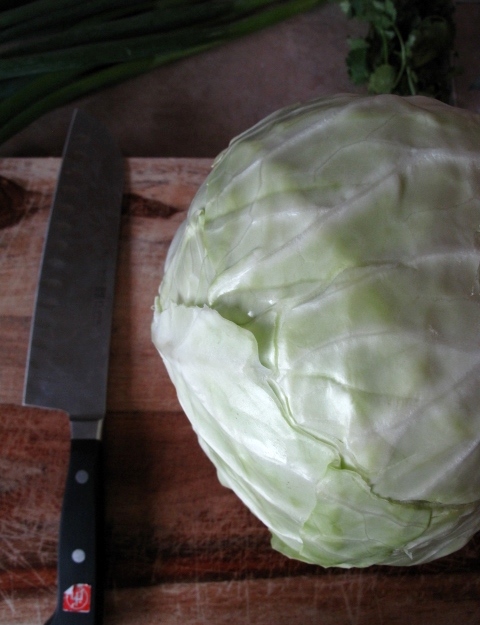
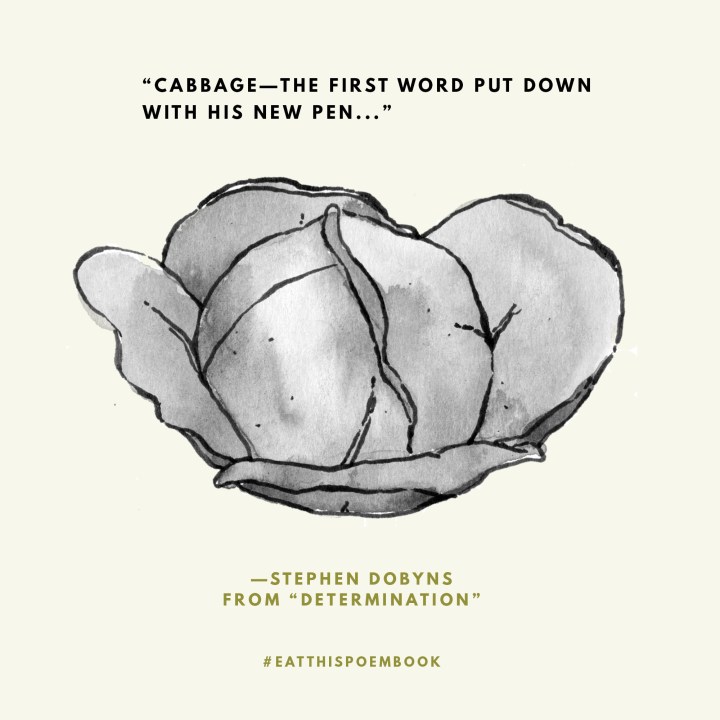
After a life spent doing other people’s taxes, this writer has purchased a new pen; dusted off an old desk; and written a single, fresh word on his blank piece of paper. Cabbage. That wrinkled, heavy, winter globe of a vegetable can be intimidating, but with a few slices of a knife and a bit of heat under its leaves, cabbage transforms into something tender and approachable. 

For writers, the blank page can be just as intimidating. Fearing rejection, they talk themselves out of doing the very thing they must do, burying their work in drawers for years. One day, they buy a new pen in hopes that it will fuel inspiration. They press on. Let this poem be a reminder to keep putting one foot in front of the other, to raise our heads, to do the difficult work, whatever it may be. Whatever struggle a writer endures, it is fuel for the page. The good news, always, is that what challenges us also changes us, usually for the better if we recognize its potential. 

What I love above all are Nicole’s reflections on each poem, like this one above about writing the word cabbage, in Determination. What I love too, is that poetry has the power to mean so many things, far beyond perhaps its literal meaning. So when I read Determination, it hits me where I’m at in life for reasons completely beyond the “simple” task of putting words to a page. And those words were more impactful when I ate them, mindfully and with intention, in this beautiful and tasty Soba Bowl with Braised Cabbage + Tahini Dressing which they were presented with.

I hope you pick up a copy of Eat This Poem when you get a chance, for it is filled with many more beautiful and moving poems from prominent and less known authors, along with recipes that fill us, in the way that only well spoken or written words and lovingly prepared meals can.
 

IMG_1402

Soba Bowl with Braised Cabbage + Tahini Dressing, serves 4

2 Tbs. toasted sesame oil
2 Tbs. extra-virgin olive oil
One 1-inch knob of ginger, finely grated
2 garlic cloves, finely minced
1 medium head cabbage, halved, core removed and thinly sliced (6-8 cups)
¾ cup water
Salt
8 ounces soba noodles (gluten-free if necessary or try adzuki spaghetti noodles)
1 bunch green onions, green parts only, thinly sliced
½ cup lightly packed cilantro, minced
1 red chile pepper, optional
2 Tbs. sesame seeds

For the Dressing:
1/3 cup tahini
¼ cup water
2 tsp. toasted sesame oil
1 tsp. rice wine vinegar
½ tsp. salt
2 tsp. honey
1 small garlic clove, peeled

  1. Set a large sauté pan over low heat and add the sesame and olive oils. Add in the ginger and garlic; cook for 1 minute or until they begin to dissolve and become fragrant. Add the cabbage and water, then season with 1 teaspoon salt. Increase the heat to medium, cover and cook for 15 to 20 minutes, or until the cabbage is tender. Check on it halfway through and toss the cabbage.
  2. Bring a large pot of water to a boil. While you’re waiting, make the dressing. Combine all the ingredients in a blender and pulse to combine. If you make the dressing in advance, put it in the refrigerator until this point. Take it out and thin with a bit of water if needed; it will have thickened when chilled.
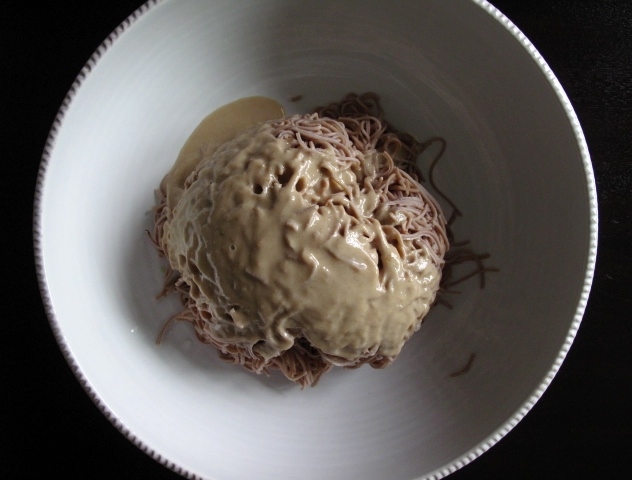
  3. Cook the soba or other noodles according to package directions, roughly 3 to 4 minutes. Remove from the heat, drain, and rinse with cool water to stop the cooking, then pour into a large bowl. Pour the dressing over the top and work it together with tongs or a large spoon. It may need an additional sprinkle of salt. Mix in the cabbage along with the green onions, cilantro, minced chile pepper (if using), and sesame seeds; toss. Serve with additional sesame seeds sprinkled on top.

NOTE: For this dressing, you want just a whisper of garlic. A good clove would be one pulled from the interior of the bulb.


Adapted from Eat This Poem A Literary Feast of Recipes Inspired by Poetry by Nicole Gulotta, © 2017 by Nicole Gulotta. Reprinted by arrangement with Roost Books, an imprint of Shambhala Publications, Inc. Boulder, CO. www.roostbooks.com
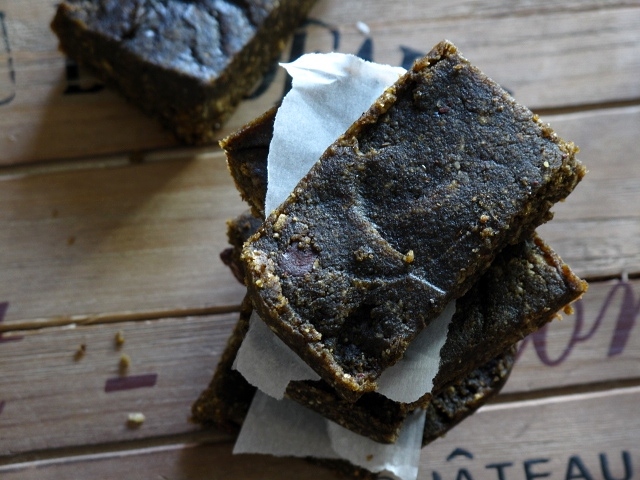
 

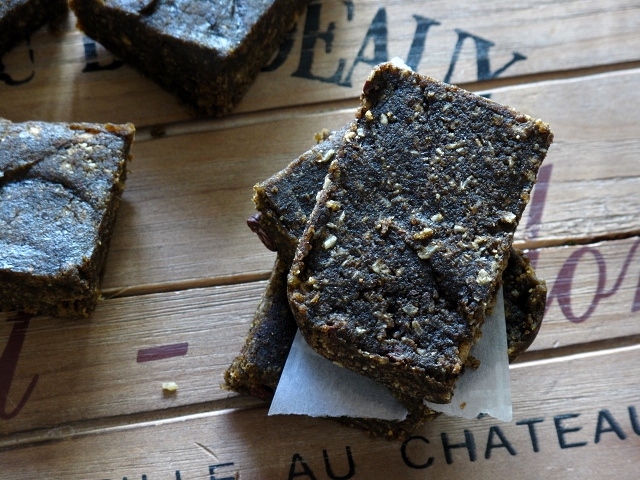
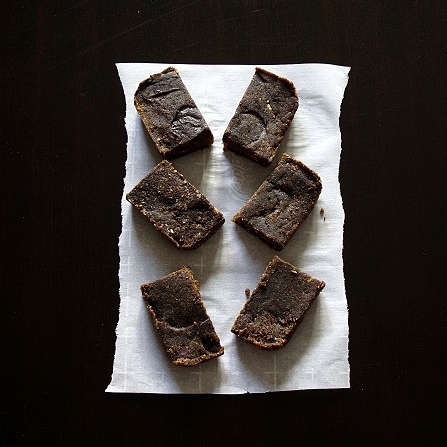
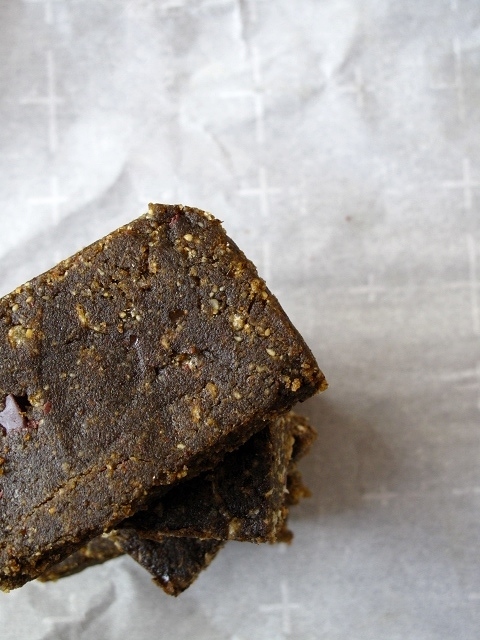
chocolate energy bars, 2 ways: coconut mocha & chocolate, peanut butter + sea salt

chocolate energy bars, 2 ways: coconut mocha & chocolate, peanut butter + sea salt

img_1339

img_1343


When I first changed my diet fairly drastically by removing gluten and then dairy, I did so with a totalitarian “whole foods only” frame of my mind. It was back in 2012, sort of at the onset of the gluten-free fad, when all sorts of new gluten-free processed foods were really starting to become mainstream. If I were going to be eating almost vegan and free of “normal flours,” I thought, I was going to do it all the way. I did not purchase or try gluten-free baked goods or vegan cheese.  If the ingredient wasn’t in basically the same form I could find it in nature, it wasn’t something I ate.

But there was also a double standard because I was really into baking then and still had a strong taste for sugar, so there were exceptions. Namely, I went through a phase of being obsessed with figuring out how to bake bread, pizza crust, desserts, etc. free of gluten and then dairy as well. Even though I don’t bake a lot anymore, and my flour cupboard generally gets much less use than ever before, I’m thankful for that baking phase because when I want it now, I have some really good staple recipes to draw from and the basic science of whole grain gluten-free and vegan baking down.


img_1333


These days, I’ve ventured into a way of eating that is a little less rigid than it was then–or perhaps it’s rigid in a different way and I can’t quite see it. In any case, I’m okay with a little more processing making its way into my recipes and meals. I began that because I recognized rigidity and eating perfectly is a hallmark of my disordered eating behavior. So recognizing that and doing something about it is why I started eating tofu and tempeh on an occasional basis. It’s why I nearly always have nutritional yeast in the pantry now, though I don’t use it super often. It’s why I made myself a big batch of Valentine’s cookies that were exactly what I wanted and then proceeded to eat the entire batch over the next two weeks, each day asking myself if I actually wanted a cookie, or perhaps many cookies, and each day eating exactly how many I was desiring. It’s also why I began to warm a little more to the idea of protein powder.

It turns out too that I might actually need more protein in my diet. Despite the general consensus (in the plant-based nutrition community anyway) that almost no one in the US actually needs more protein, I’m one of the few that might actually gain from eating more of it–for a couple of different reasons that have nothing to do with generally avoiding animal products but still add up to: providing our bodies with the right amount and types of foods is personal, and definitely not a constant. Adding more protein to my diet, strategically, is a current experiment I’m running. I’m not entirely sure it is necessary or will have the effects I’m looking for. But the protein powder is an easy way for me to adjust my eating patterns without making a drastic dietary overhaul.


img_1255


I want to mention too, I’m sharing these bars purposefully during #NEDAwareness week. If you aren’t familiar with NEDA, it is the National Eating Disorders Association and February 26-March 3rd is a week of increased advocacy about eating disorder recovery and awareness. If you’ve been visiting this space for some time or have read my About section, you’ll know I struggled with the eating side of that equation for several years, sometimes still do, and have since been doing much of the mental side of recovery more recently. Probably similar to many who have struggled with disordered eating behavior, I did not have much in the way of emotional support in the early years following reaching a restored weight. In fact, I often received, and still do to some extent, a lot of push-back about coming to a way of eating that works for me, and there were many individuals who really pushed me into stressful situations around food, for the sheer fact that they were completely unaware of my history or that struggling with food is about much more than a desire/dislike for eating too little or too much. And it is the part that tends to linger on. Often quite invisibly.

NEDA’s theme this year is It’s Time to Talk About It. As NEDA has stated:
It’s time we take eating disorders seriously as public health concerns. It’s time we bust the myths and get the facts. It’s time to celebrate recovery and the heroes who make it possible. It’s time to take action and fight for change. It’s time to shatter the stigma and increase access to care.

I couldn’t agree more. In the interest of keeping it really real for just a moment more, a few of you know I started writing even a little more personally about my continued recovery process in this last year. My general theme has been using that space as an online journal to completely lay out what I’m working with because writing and releasing it beyond me is immensely helpful. It has been the most intensely scary and sometimes challenging writing I’ve done. It has made me feel incredibly embarrassed and ashamed of the beliefs and views I hold on to. But acknowledging those challenging feelings has helped me to release and slowly grow beyond them as well. This is all to say, feel free to catch up with me there. And if you find that you, or someone you care for, is struggling with what might be an eating disorder, please reach out to someone. It ended up making all the difference for me.    


img_1351


Now, I’m sharing these energy bars because I think of them as my recovery snacks. I tend to eat granola/energy bars in the mid-mornings or mid-afternoons on a fairly regular basis and generally I make my own. I designed these with the idea of eating them after a run to kickstart the recovery process when a larger meal isn’t coming super soon. So they have more of the suggested endurance recovery carbohydrate to protein ratio of 3 or 4:1. But I also find I can handle a portion of a bar 30-45 minutes before a hard effort too with no problems. And because of the slightly higher protein content, I also have been using them whenever I just need a snack in general since they are a slightly better option right now than my old stand-by of mesa sunrise and almond milk.

I recognize these are specialty bars, designed for a specific person and purpose. But if you like the idea of a Coconut Mocha or Chocolate Peanut Butter Bar that is delicious and nutritious, these might be for you too. If you’re not overly concerned about needing more protein, there are options for alternatives as well.


Peanut Butter, Dark Chocolate + Sea Salt Bars, makes 8
1/2 cup (100 g) peanut butter
6 (100 g) pitted Medjool dates
6 Tbs. (50 g) hemp protein powder*
1/4 tsp. sea salt
1/2 tsp. cinnamon
2 tsp. (10 ml) raw honey or maple syrup
1 1/2 cups (50 g) crispy rice cereal, gluten-free if necessary
2 Tbs. +2 tsp. (40 ml) water
1 square (10 g) dark chocolate, broken into chunks
additional sea salt for topping

  • Puree the peanut butter, dates, hemp, salt, vanilla, cinnamon and honey in a food processor until completely combined.
  • Add cereal and 2 Tbs. water and pulse a few times more until it just comes together. Add a little more water as needed. Then stir in the chocolate chunks.
  • Turn out and press into a 8×8-inch baking pan, or something of similar size. Then, sprinkle with a few shakes of additional sea salt, and gently press in. Chill in the fridge for at least 30 minutes, and then cut into individual bars, store, and eat as needed. They will last in the fridge for at least two weeks with no change in texture/consistency.

Coconut Mocha Bars, makes 8
1/4 cup (50 g) cashew butter
2 Tbs. (10 g) coffee beans, finely ground
1/4 cup (30 g) shredded unsweetened coconut
6 (100 g) pitted Medjool dates
6 Tbs. (50 g) hemp protein powder*
1/4 tsp. sea salt
1 tsp. vanilla extract
1 tsp. (5 ml) coconut oil
1 Tbs. (15 ml) maple syrup
2 cups (65 g) crispy rice cereal, gluten-free if necessary
2 Tbs. + 2 tsp. (40 ml) water
2 squares (20 g) dark chocolate, broken into chunks

  • Puree the cashew butter, ground coffee beans, coconut, dates, hemp, salt, vanilla, coconut oil, and syrup in a food processor until completely combined.
  • Then add the cereal and 2 Tbs. water as needed. It should come together easily when you pinch the ingredients with your fingers. Add a little more water if needed.
  • Then stir in the chocolate chunks.
  • Turn out and press into a 8×8-inch baking pan, or something of similar size. Chill in the fridge for at least 30 minutes before cutting, storing or eating.

*Notes: For a hemp protein alternative, try another plain plant protein powder such as pea or rice, or use the same quantity (by weight) of hemp, sunflower, or pumpkin seeds.

lentil tacos, a memory

lentil tacos, a memory


img_1290


As an undergraduate living in a house with three other friends, we often cooked and ate meals together. Often, that meant I cooked and shared a lot. Many of the recipes were a little too inventive, had mishaps, or were otherwise freely critiqued with a good dose of humor all around.


img_1309img_1271


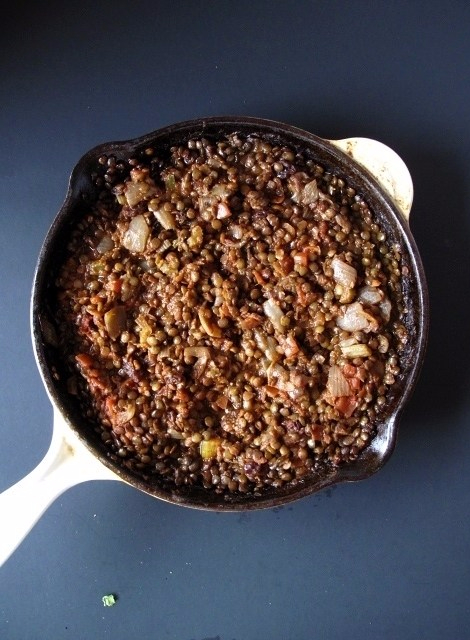
One such meal happened to be lentil tacos. I long-ago picked up the recipe from Runner’s World, back when they had a fairly elaborate recipe database on their site. The tacos were good but they were also what I deemed gringo-hippy tacos with their reliance on all the common gringo taco accompaniments, shredded cheese, lettuce, flour tortillas, etc. And the filling. It had not only lentils but also raisins, and they both finished simmering in salsa. Not exactly authentic or normal. Exactly the type of thing I would make. And still do.

The particular day I made these at that house, my roommate had a friend over who stayed for dinner. She was/is a good friend from childhood, a friend I had grown up eating countless authentic tacos with in our hometown. He was not only from Mexico, but also knew food. I was so embarrassed. I would never intentionally serve my hippy tacos to someone who knows tacos. (I had by then switched over to corn tortillas and dropped the gringo accompaniments). But still.

We all dived in and the lentil filling was met with overwhelming approval. And then I mostly forgot about the recipe, only making it a handful of times in the years since.


img_1285img_1301


In my hometown again over Christmas, my friend brought up that memory and asked for the recipe. Really? That’s just an old Runner’s World recipe. But when I looked, it was gone from the site. Good thing I had printed and held on to it, as I did then for all the really good recipes. So here it is, slightly adapted from the original, still in all its inauthentic-ness.

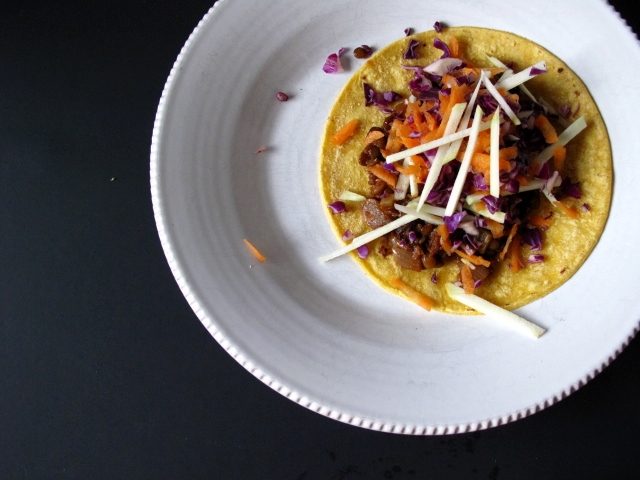
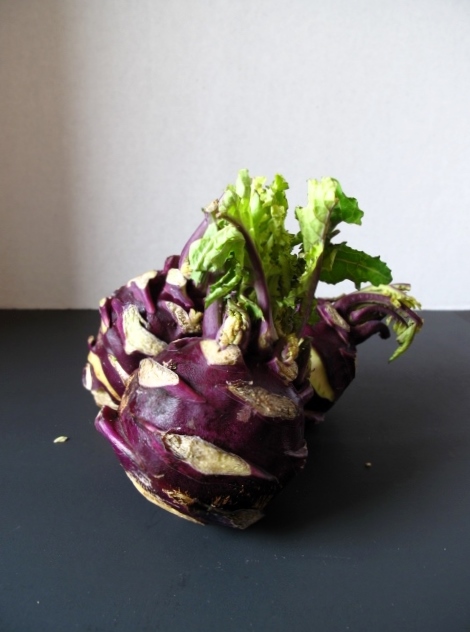
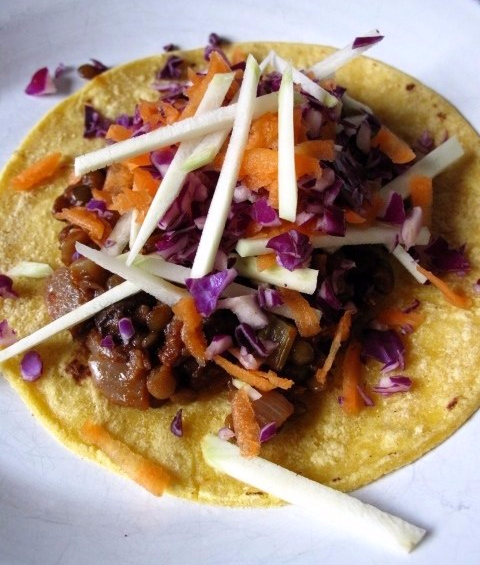
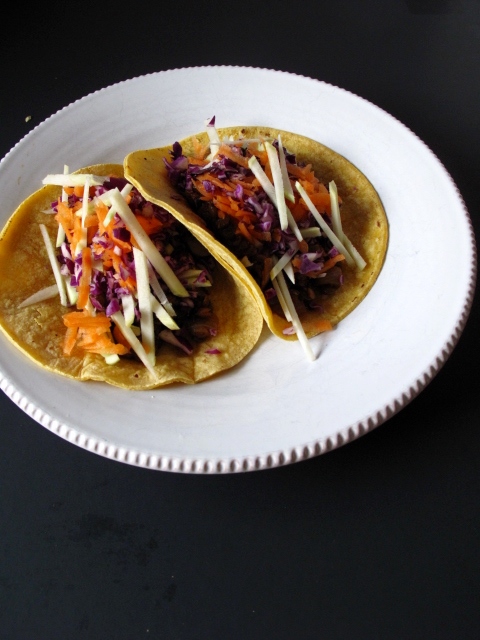
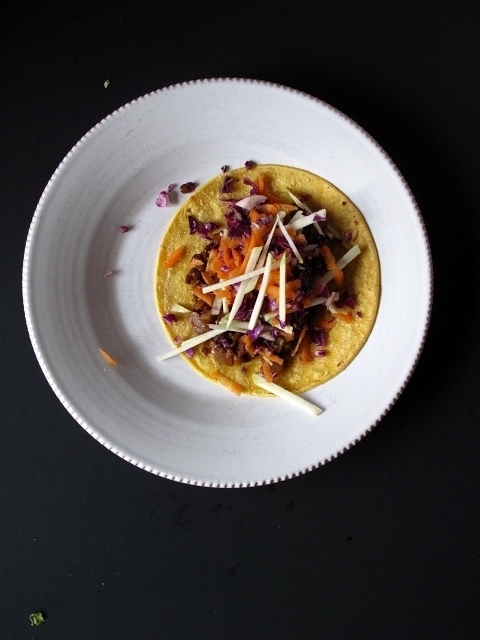
We served them this time over locally made corn tortillas and topped off with shredded carrots, diced red cabbage, and kohlrabi matchsticks, because they’re in season and were already on hand. That tends to be how we eat tacos.


img_1284


Lentil Tacos, serves 4-6
The Recipe Redux theme this month is Taco Tuesday and we were challenged to share our healthy, creative take on tacos. What is yours? I’d love to know how you enjoy them!

Lentils:
1 Tbs. coconut or other high heat oil
1/2 large onion, diced
1 stalk celery, small diced
3 cloves garlic, minced
1-3 tsp. chili powder, start with less and build the heat level as desired
2 tsp. ground cumin
1 tsp. dried oregano
1 cup green or brown lentils
2 Tbs. raisins
2-3 cups vegetable broth or water
1 cup salsa, your choice of heat (or plain canned tomatoes and more spices)
salt and pepper, as needed

Suggested Toppings:
shredded cabbage or greens
shredded carrots
kohlrabi, matchsticks or shredded
corn tortillas, warmed
additional salsa or other

  • In a large skillet, warm the oil over medium-high. Add the onion and celery and cook for five minutes until beginning to be soft. Add the garlic, stir and cook for about a minute longer.
  • Then add the spices, lentils, and raisins. Give them all a good stir to incorporate the spices well and then add 2 cups of the broth or water. Bring to a boil, then turn down to a simmer, cover, and cook for 30 minutes or until tender. Stir once or twice throughout and add more liquid if needed.
  • Stir in the salsa and cook for 5-10 minutes more. Then taste and add salt, pepper and additional spices to taste.
  • Meanwhile, prep the other ingredients, and spoon the filling and toppings atop warmed tortillas.


recipe-redux-linky-logo