Beet and Banana Pancakes

Pancakes.

A food I had a love/hate relationship with for many years. But after realizing they don’t have to be glorified breakfast cake or particularly even eaten at breakfast (which also isn’t my go-to), I’ve fully embraced pancakes in all the wonderful ways. 

This version is just about as whole-food as you can get, with oats, beets, banana, eggs, and not a lot else. These days, I tend to add on greens and maybe an additional egg to make pancake meals a balanced meal.

Hope you enjoy!

One more big / little thing

I’ve decided to share most of my recipes in my newsletter going forward this year, rather than publishing all of them here on the blog portion of the website. If you enjoy regularly receiving recipes from me as well as focused nutrition topics, I encourage you to sign up to receive my nutrition newsletter.

Beet Banana Pancakes, serves 2

Inspired by David of Green Kitchen Stories
Prep:  40-60 minutes to roast beets (can be done ahead) | Cook: 15  minutes 

2 eggs
1 banana, peeled
1 cup /100 gr rolled oats
2 – 4 Tbs. filtered water, or more as needed
⅛ tsp. salt
¼ tsp. baking powder
2 medium / 100 gr cooked beets
coconut oil or ghee for frying

To Serve:
1-2 tsp. olive oil
1-2 handfuls of greens
1 fried or scrambled egg, for each serving

  1. Prep ahead: Wash and halve the beets and wrap them in foil. Roast in a 400 degree F oven until soft, about 40 minutes. You can prepare more while you’re at for other meals or snacks. 
  2. To make Pancakes: Crack the eggs into a blender; add the banana, water, oats, salt and baking powder and blend until smooth. 
  3. Then pour into a bowl. Grate the cooked beets and add into the batter and stir through. 
  4. Heat a little oil in a sauté pan over medium-high heat. 
  5. Whisk the batter and thin it a little as needed, then pour in ⅓-½ cup amounts into the pan. Cook for about 1-2 minutes on each side. Repeat with the remaining batter. If planning to have some leftovers, reserve the unused batter, so you can cook and enjoy them fresh. 
  6. For the greens and eggs: Heat the remaining coconut oil, add a pinch of salt, and stir in the greens, and a splash of water if needed. Steam/sauté for a couple minutes until wilted. 
  7. Then fry or scramble one additional egg per serving
  8. Serve topped with a dollop of yogurt, molasses or applesauce, and with the fried egg and greens on the side. 
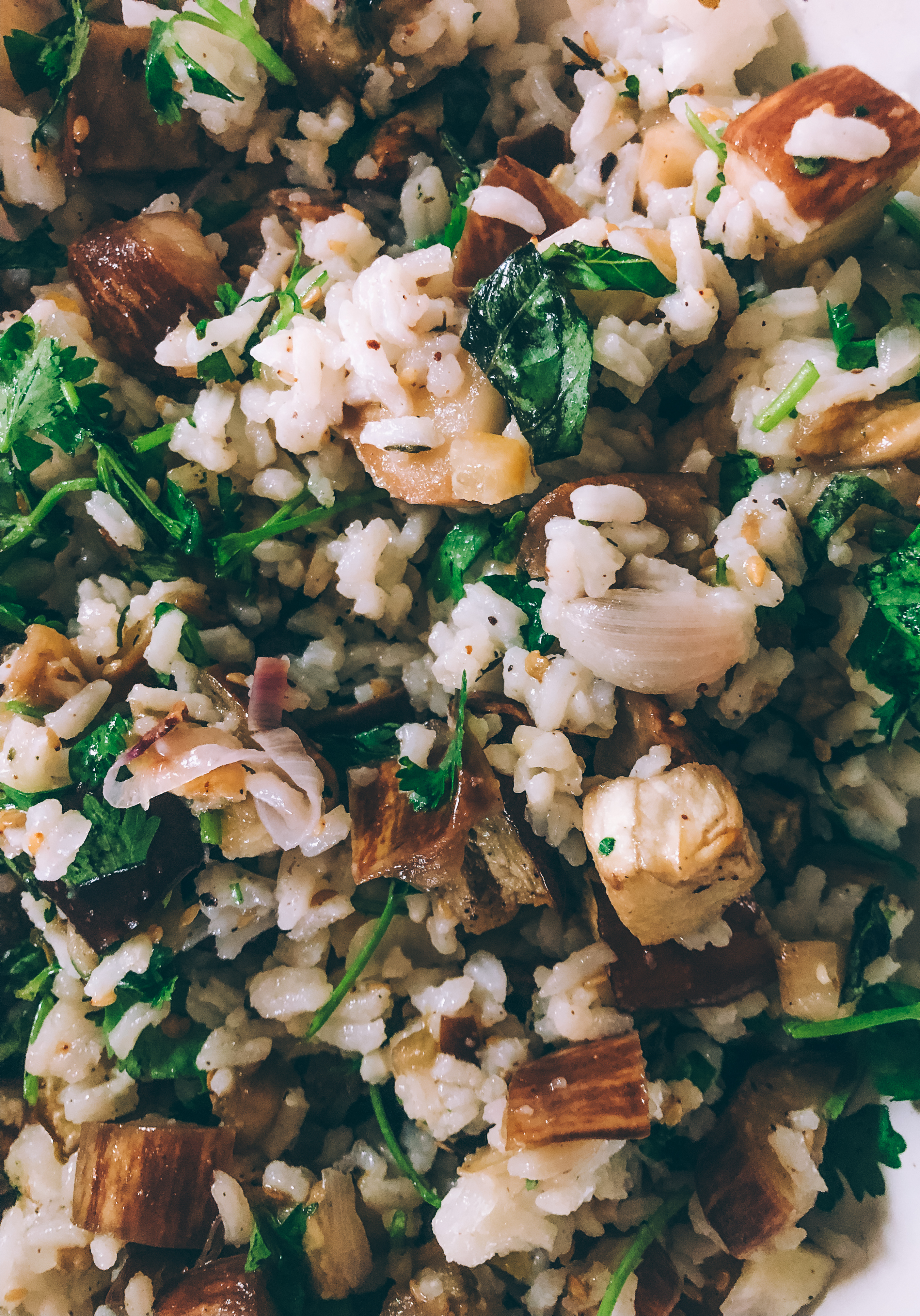
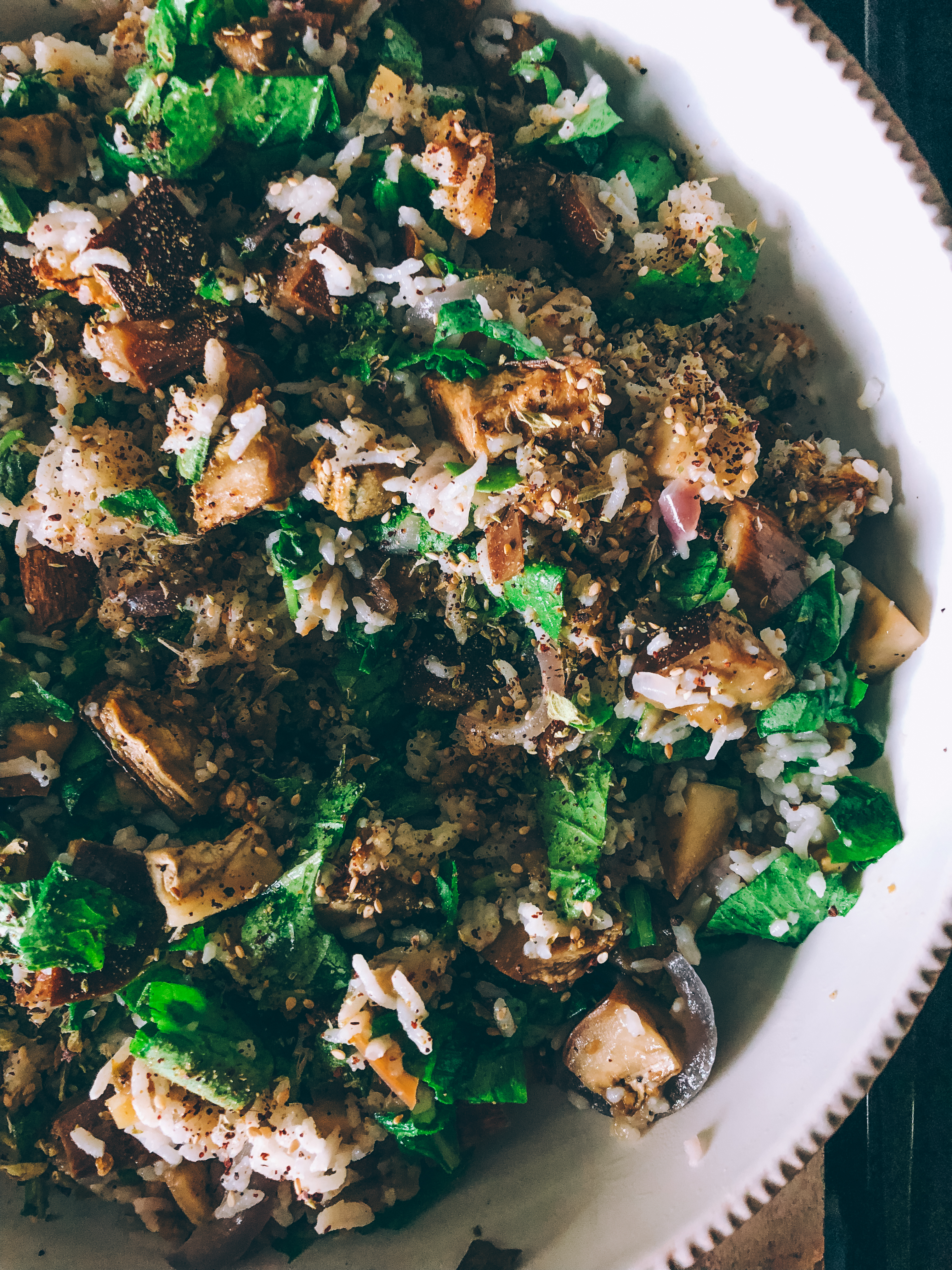
Thyme-Roasted Eggplant with Basmati Rice, Sumac + Preserved-Lemon

Perhaps because I formally named my blog/this website and subsequent business after it, or because I have a particular affection for the vegetable that seems to be a mystery for most people, I get a lot of questions and recipe requests involving eggplant.

Eggplant is much loved and at home in food cultures of the Middle East region. And after this summer, the second hottest locally on record, I can see why. Eggplant thrives in hot weather. Our usual couple plants and a few nice eggplants for the year has turned into more than I can keep up with lately.

And we’ve been eating it a lot.

For me, eggplant’s meaty, Portobello mushroom-like texture is best prepared by roasting (or grilling). And it doesn’t need the gobs of oil that you often find in eggplant-based recipes.

Eggplant does act as a sponge for oil, but also for moisture in general. A nice tip to keep an eggplant-based meal balanced in terms of oil amount is to add a fair bit of water to the roasting pan. Since most oils are actually best used away from heat, that’s the method here, with a nice quality olive oil being added once all the components are out of the oven and off the stovetop, so the oil isn’t oxidized and damaged by the oven and cooking temperatures.

The other thing to highlight is that all the main components of this dish are made warm or cooked. This is because cooking will make the whole dish easier to digest. Even the dark leafy greens are “heated/gently cooked” in the way I add the fresh out of the oven eggplant over the top, as well as the warm rice and onion, and allow it to steam cook for a minute before gently stirring. The easy to digest factor is also why I’ve chosen to use a (white) basmati rice as the grain component. You can choose another whole grain if you have no digestive problems.

Hope you enjoy. This is definitely a keeper of an eggplant-based recipe!

Thyme-Roasted Eggplant with Basmati Rice, Sumac + Lemon

The mung beans are added as a side-dish to make this a complete meal. Mung beans, either cooked from whole green mung, or split mung dal, are the simplest bean to digest. If you’d rather serve another protein, simply leave out and skip that step in the cooking process.

Prep:  6 hours, unattended  | Cook: 1 hour  | Serves: 4

Roasted Eggplant:
1 kg chopped eggplant
1 tablespoon fresh thyme leaves
½ teaspoon sumac
½ tsp. mineral salt
water to partially cover

For Mung Beans:
¾ cup dry mung beans, soaked for at least 6 hours
½ tsp. mineral salt
1 tsp. ground coriander
1 ½ tsp. ground cumin
1 tsp. chopped dried curry leaf
water to cover

Basmati Rice:
⅛ tsp. mineral salt
½ a red onion, sliced thin
1 cup basmati rice, rinsed and drained
2 cups water

To Finish:
1/2 preserved lemon, finely chopped
Up to 2 Tbs. lemon juice, to taste
2 Tbs. extra virgin olive oil
1 handful dark leafy greens, chopped
1 Tbs. toasted sesame seeds OR 1 Tbs. za’atar seasoning
Large handful of cilantro or basil, minced

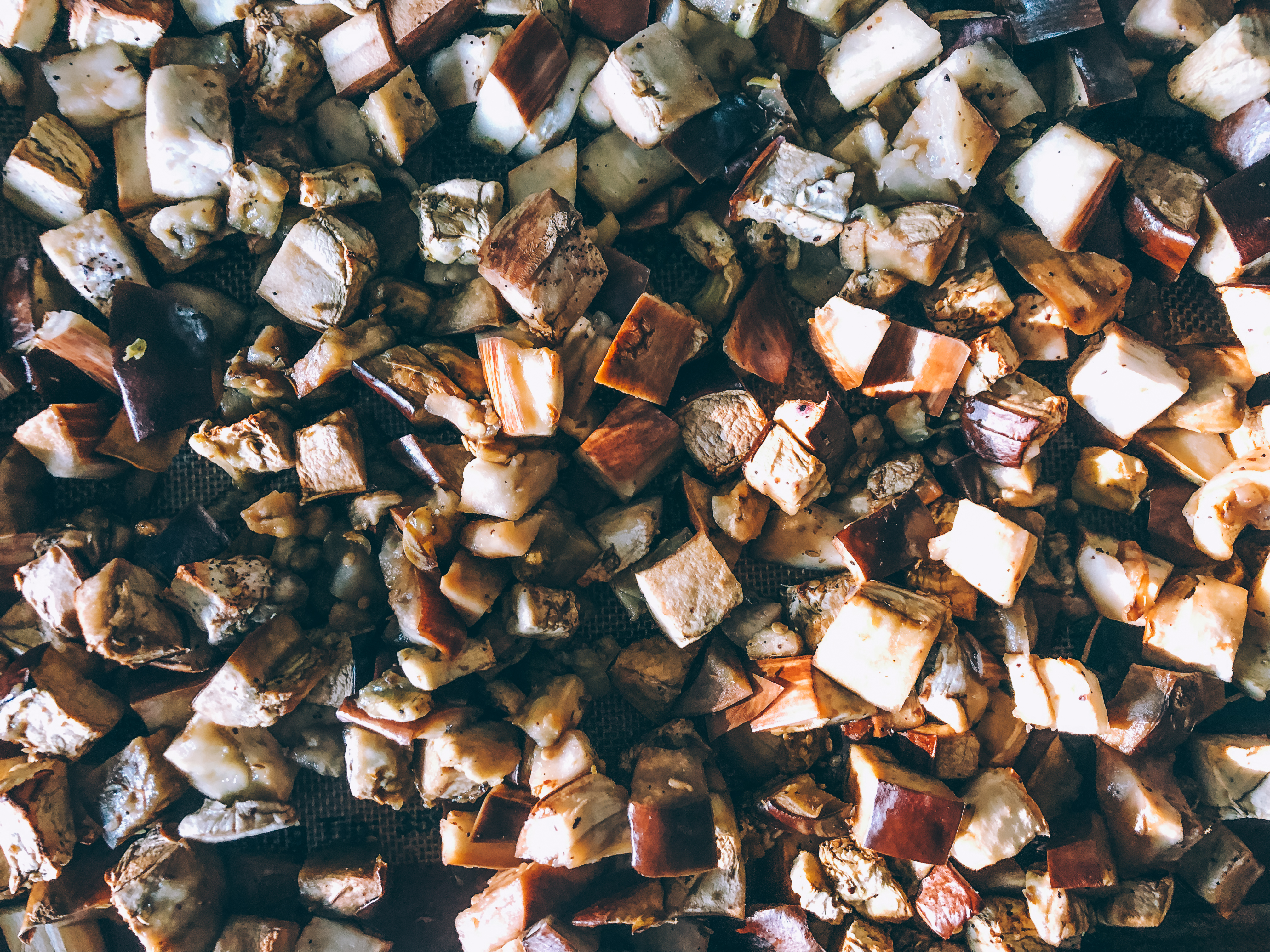
  • Preheat the oven to 350F. Dice the eggplant into medium pieces and place in a baking tray, lined with parchment.Sprinkle with thyme leaves and sumac, salt, and then add water to cover about ⅓ up the sides of the veg. Roast for about an hour, or until completely soft, stirring once or twice throughout.
  • Then start the mung beans. Add drained/soaked mung beans and spices to a medium saucepan. Bring to a medium-high heat and simmer until the spices become fragrant. Add water to cover by a couple inches, then bring to a boil. Once the pot is boiling, turn it down to a simmer and partially cover. Cook for 25-35 minutes, until soft. Set aside.
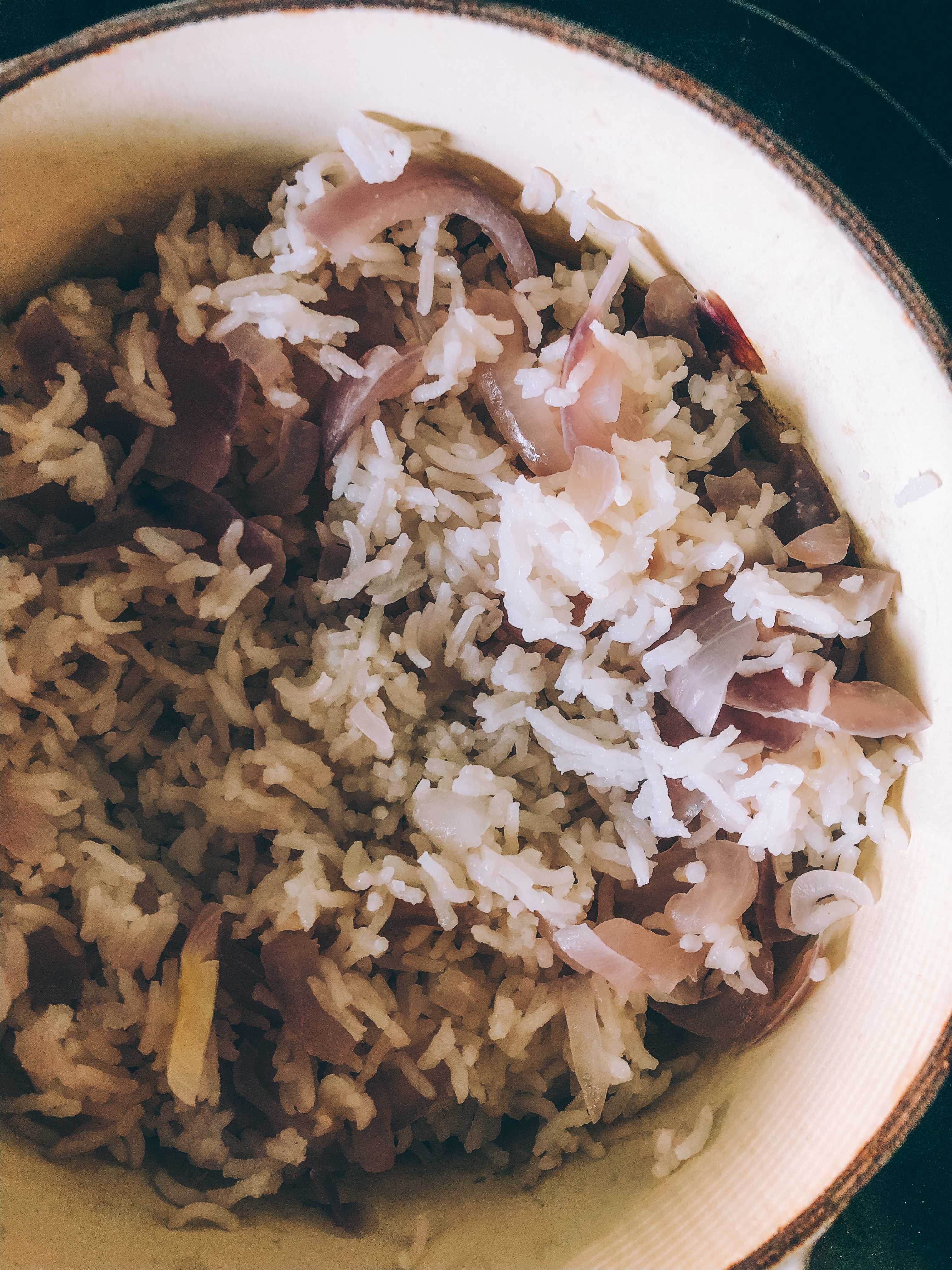
  • Add 2 cups water to a medium saucepan along with  ⅛ tsp. salt, sliced onion, and the basmati rice. Give it all a good stir, and bring to a boil. Once it’s boiling, turn down to a simmer, cover and cook for 25 minutes. When the rice has finished, take the lid off and allow the steam to escape for a few minutes. 
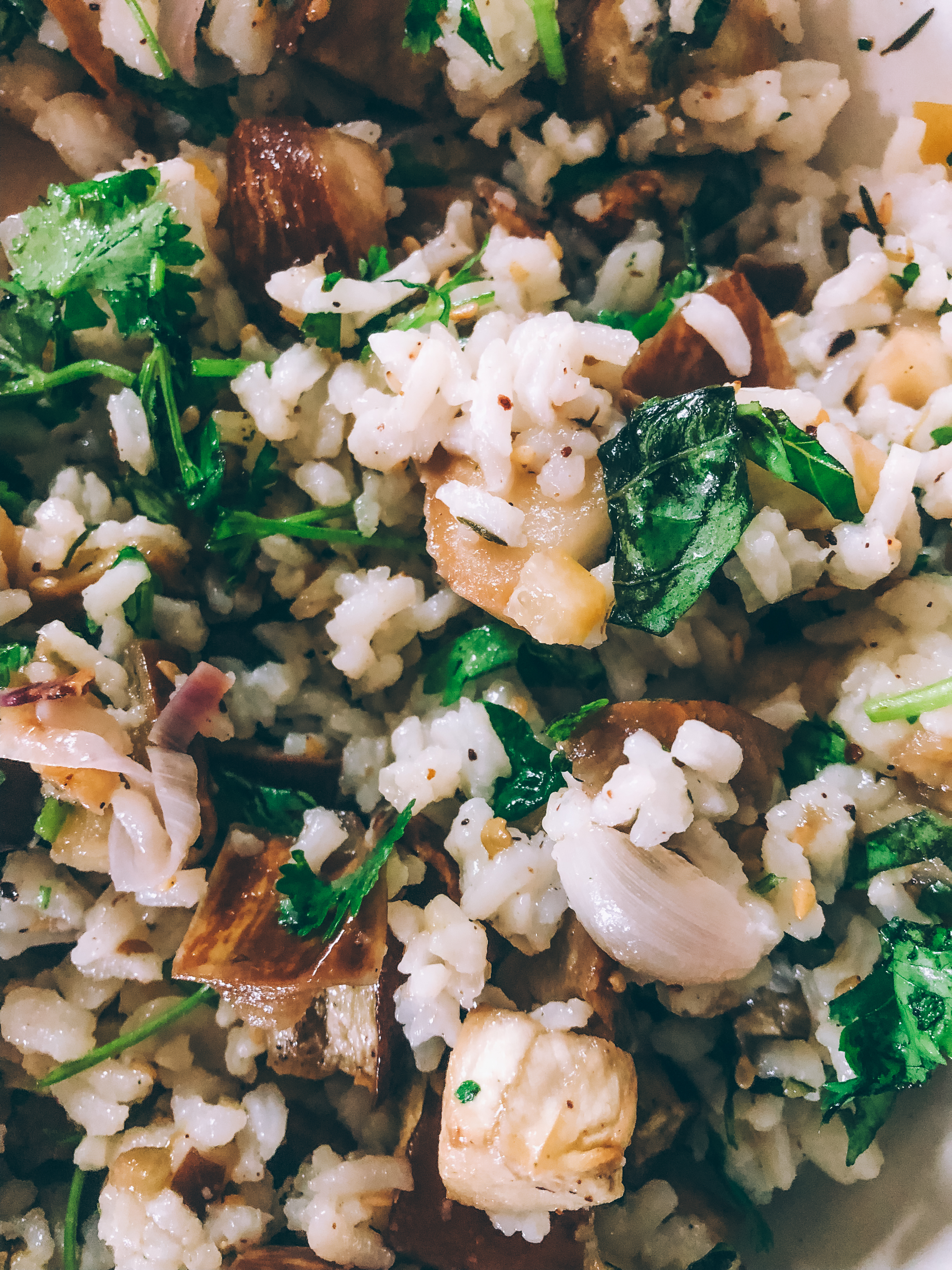
  • In a large serving bowl, add the diced preserved lemon, chopped leafy greens, and cooked eggplant. Then stir in the steamed rice and onion, along with the lemon juice and olive oil. Before serving, stir in the minced herbs and toasted sesame seeds or za’atar seasoning. 
  • Serve along with the mung beans on the side.

Notes:
– Finely grated lemon zest can be used in place of preserved lemon, if preferred.
– If you only have access to sumac OR za’atar seasoning, choose whichever you have, since za’atar contains the sumac berry as one of it’s components.
Recipe inspired by Emma Galloway of My Darling Lemon Thyme.

Veggie Rainbow Cool Noodles

In a quest to cook more in community, and educate in a hands-on format again, I’ve been leading routine cook-a-longs this summer. I’ve been cooking both with my local running group and as part of my public health nutrition role, my side gig when I’m not working one-on-one with nutrition clients.

I love cooking with both groups–but especially the cook-a-longs with my running ladies because we share similar interests and chat more as we’re making the recipes. And because I get to choose recipes that I routinely make in my everyday and know will make meals and workout recovery easier for others.

This is one such recipe that we made together last week.

It’s a cool noodle dish, served either warmish or at room temperature, but ideally not truly ‘fridge-cold’ or with raw vegetables, because that makes it extra difficult to digest. At a time (summer / hot weather) when our natural digestive ability is already weaker.

It features an Asian-inspired sauce and is kept super easy and quick by utilizing a protein and carbohydrate source in one with legume-based pasta noodles. If you don’t prefer tahini, choose almond butter instead. There are several legume-based pastas on the market. Banza is a good one. If you don’t prefer that, you can add two cups of edamame, your choice of other protein such as grilled fish, chicken, or tofu, and use a whole-grain noodle, such as brown rice noodles or whole-wheat fettuccine. 

Happy cooking and summer training / adventuring / eating / digesting! :)

Veggie Rainbow Cool Noodles
Prep:  15 minutes  | Cook: 15-25 minutes  | Serves: 4

Ginger Turmeric Tahini Sauce:
¼ cup tahini
½-inch fresh ginger, finely grated
1 Tbs. low-sodium tamari or soy sauce
½ tsp. turmeric
2 Tbs. lime juice
1 tsp. pure maple syrup
1 Tbs. light miso 

Noodle Salad:
8 oz. chickpea or legume-based noodles
3-4 large carrots (about 500 grams), sliced thin
1 bunch (240 grams) radishes, sliced
2 cups green peas, fresh or frozen
½ cup (packed) cilantro, plus more for garnish
Toasted sesame seeds, for garnish

  1. Make the sauce: Mix the sauce ingredients, along with 4-8 Tbs. water until completely smooth. Taste and adjust seasonings as needed and then set aside. 
  2. For the Noodles: Bring a pot of water to a boil. Add the noodles and any hard vegetables (such as carrots or radishes) and cook half way through. Add the peas and any softer vegetables, and cook the remaining few minutes until the pasta is al dente. Drain and rinse with cold water to stop the cooking process. 
  3. In a medium-serving bowl, toss the pasta and vegetables with the sauce and cilantro. Top with some toasted sesame seeds and serve. 

Notes: Change up the vegetables depending on what is in season near you! When you vary it up, choose one to two root vegetables or starchy vegetables and one or two leafy green vegetables or more pungent vegetables.
Roots/Starchy Examples: Peas, fresh corn, carrots, summer squash, zucchini (spiralized to add to the noodles (not in replace of!) is what I’ve done in the photo above)
Green/Pungent Examples: Broccoli, cabbage, kale, spinach, radishes, daikon radishes (what I’ve used in the photo), asparagus

Want to Know More?

Within my nutrition practice, I specialize in digestive imbalances, often within endurance athletes. When we’re experiencing chronic GI distress, fatigue, and/or malabsorption of foods and nutrients, there will often be imbalances in several systems of the body simultaneously. I shared more about this topic in the nervous system’s role in part 1, the immune response and subsequent inflammation in part two, gut microbes and dysbiosis in part three and the importance of chewing our food in part four. Check those out or reach out to me for more personalized support for gut healing, increased energy, performance, and feeling good in your everyday life.