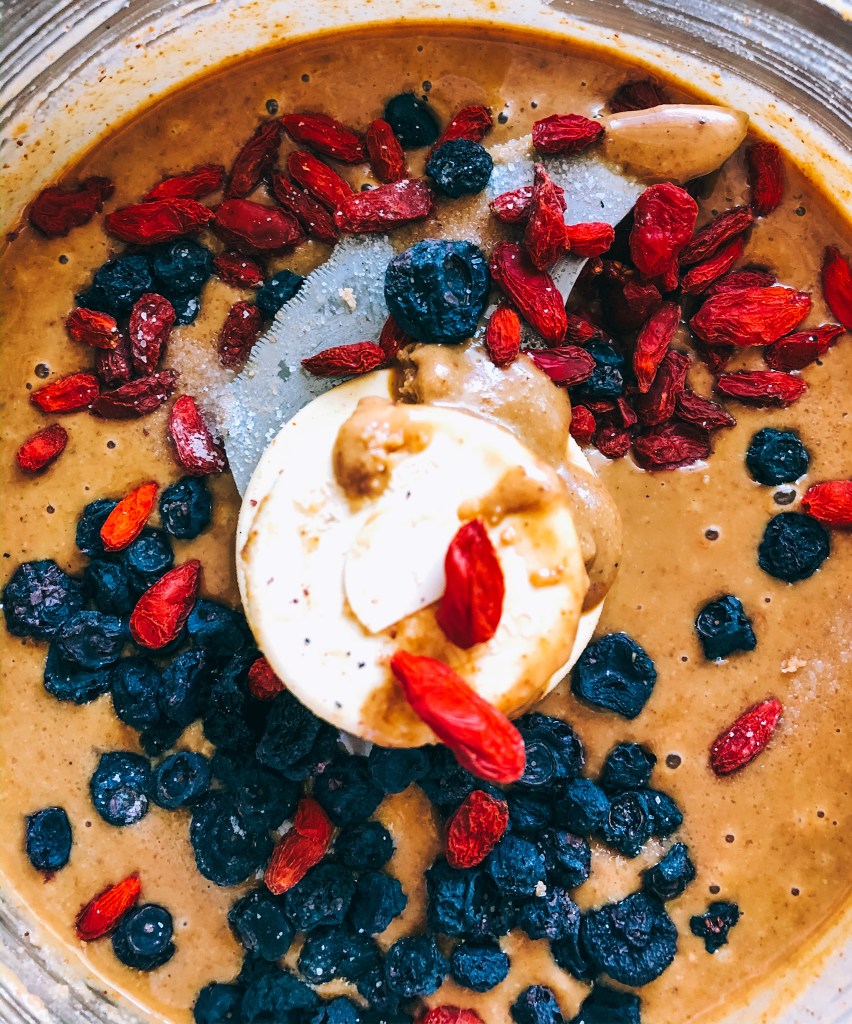
Walnut Butter with Blueberries, Goji Berries + Vanilla

I received free samples of California Walnuts mentioned in this post. By posting this recipe I am entering a recipe contest sponsored by California Walnuts and am eligible to win prizes associated with the contest. I was not compensated for my time.

There was a conversation going around the last few weeks about using up what’s in the cupboard, finding random stowed-away forgotten, stale, and outdated ingredients, and actually making a meal of them. As that went around, I truthfully had the thought of Ha, well that doesn’t apply to me.
I also remember a few years ago, a friend that first got to know me as a study abroad/international student and came to visit. He remarked at how elaborate the collection of ingredients in my pantry were. At the time, it felt like a moment of baring my soul, for what’s in your pantry and fridge tell as much or perhaps more about someone as taking a look in their medicine cabinet.

I tend to have a fairly vast collection of cooking ingredients simply because I love to experiment and create, and I like the flavors of a lot of different places. My kitchen is perhaps the [adult foodie] version of my dear grandmother’s elaborate dress-up closet that we loved as a kid.
Lately, I’ve also been making meals inspired by Heidi Swanson’s Near & Far cookbook, though I’ve particularly been drawn to the Near section, meaning Northern California cuisine. In the springtime particularly, this means I’ve been making meals with plenty of greens and herbs, and with flavors and ingredients that are pretty close to home here in Oregon’s southern Willamette Valley. In other words, as the stay-at-home recommendations went into effect, I craved even more the flavors that come from closer to home.
And…when I finally dug through the pantry and fridge to inventory what’s there, I discovered I’m not the outlier with no outdated or forgotten foods in the pantry like I’d convinced myself to be.

A jar of freeze-dried wasabi powder
An untouched jar of Rhubarb Cordial which I made during cordial-making week in Herbal Pharmacy class four years ago
A few blooming teas and flavored teas and extra-floral teas that various individuals have gifted me – love tea, kinda picky about which ones I’ll drink on the regular
A package of pizza spice mix
A jar of jalapeño jelly I made a long time ago that appears still good – the gift of high sugar content
A big pack of spring roll wrappers I’ve only needed in small amounts
A couple dried habaneros – before I realized only a smidge in a recipe will singe the hairs off, clear the mucus membranes, and help me breathe fire like the dragon I sometimes claim to be. ;)

And, not outdated at all and in constant rotation, an entire third of my fridge and a shelf on the pantry dedicated to the nut, seed, and dried fruit collection. Because I like to start from the equivalent of primary colors when making recipes, I usually purchase raw, unroasted nuts and seeds, and dried fruit with no added oils or sweeteners. This also means their amazing nutrients are retained without adding extra oils, salt, or sugar. Despite a few other ingredients that clearly need to be tossed or regifted – that cordial did not look good and went down the drain this morning – this preference for having diverse and fresh ingredients on hand came in real handy the last few weeks.
So let’s turn to this particular recipe, shall we?

One of the components of total health and overall diet that is important is the ratio of omega-3 to omega-6 polyunsaturated fatty acid types in our daily diets. Both omega-3s and omega-6s are essential, meaning we have to get them from our foods to have adequate health, but their ratio is perhaps just as important. In traditional diets, our evidence shows that peoples were likely eating a 3:1 or even 2:1 ratio of omega-6 to omega-3s, and this is still optimal. In a standard Western diet, that ratio is often skewed to a 20:1 or more ratio. Anything above a 5:1 ratio begins to be more of a pro-inflammatory state for the body.

Omega-3 fats are primarily found in fatty fish like salmon, herring, mackerel, anchovies and sardines.
But they’re also found in plant-foods including walnuts, chia, flax, and hemp seeds, as well as edible wild plants – a major source for our ancestors.

Omega-6 fats, though essential, are ones we usually don’t have to work at getting because they’re prolific in our food supply – primarily through corn, soy and other-vegetable oils, but also in most of the other nuts and seeds not mentioned above.

One important note is that no food has just one type of fatty acid profile – foods contain varying amounts of all types of fat, both monounsaturated, polyunsaturated (those omega-3s and 6s), and saturated fats. Our body thrives with a balance which is another reason it is wise to eat diversely and seasonally.

Working a little of that Near & Nearer concept into my meals and snacks lately, this recipe primarily features California walnuts, which I love because they offer a rich, sophisticated flavor, and they’re the only nut to provide an excellent source of the plant-based omega-3, ALA (2.5g/oz).

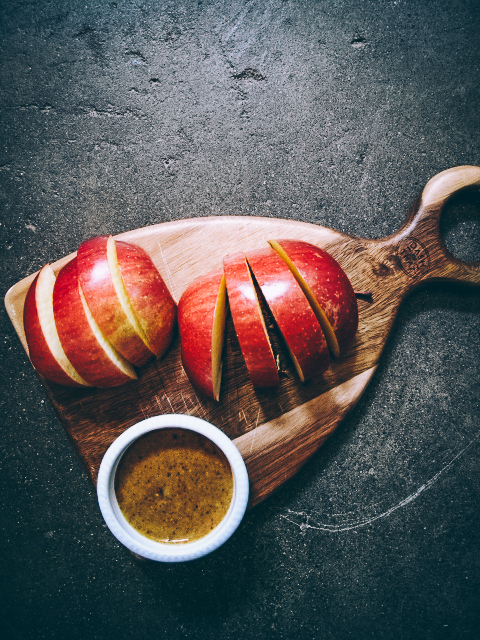
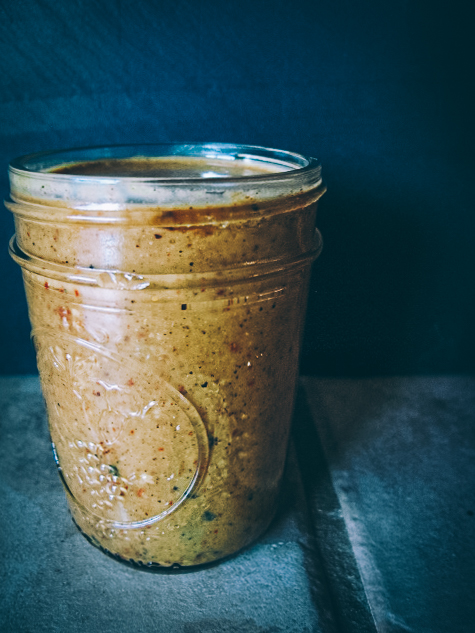
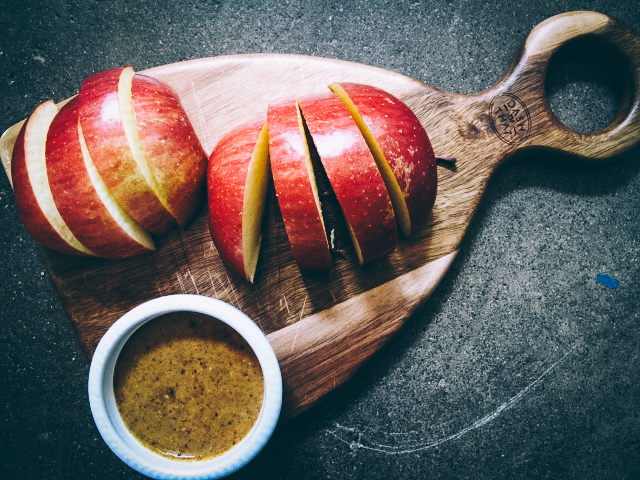
And a handful (or spoonful) of California walnuts is a versatile snack and can satisfy any taste preference, from savory to sweet.​ As far as this walnut and berry nut butter goes, it works that slightly sweet angle with blueberries that were grown by one of our local farmers, a handful of antioxidant-rich goji berries, and just enough sunflower seeds to balance out the stronger flavors that walnuts on their own in a nut butter provide. I particularly enjoy this as a snack or alongside apple slices as a little after dinner treat. And if you make it, whether you have to go source a few ingredients or work that Far angle of the Near & Far concept, I promise you will too. :)
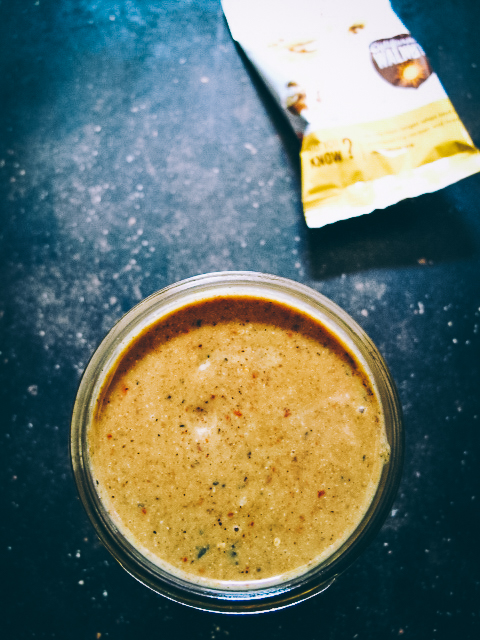
Walnut Butter with Blueberries, Goji Berries + Vanilla, makes 240 grams (about 8 oz.)
1 ¾ cups / 175 grams California Walnuts
¼ cup / 35 grams sunflower seeds
2 Tbs. / 20 grams unsweetened dried blueberries
2 Tbs. / 10 grams dried goji berries
1/8 tsp. vanilla
a dash of salt and up to 1/8 tsp.

  1. Set the oven to 160°C / 320°F.
  2. Spread out the walnuts and sunflower seeds on a baking tray and roast for 15-18 minutes until they begin to turn a slightly darker, toasted hue.
  3. Transfer to a food processor and mix on high speed for approximately 10-15 minutes or until it starts to become smooth and perhaps a little runny (stopping and scraping down the sides every now and then). 
  4. Add in the dried berries, vanilla, and salt.
  5. Puree again until the berries are mostly incorporated but might still have some small pieces.
  6. Pour into a 8 oz. jar and store extra in the fridge.
Meeting Your Protein Needs as a Vegan Athlete – and a quick socca recipe

IMG_3637-2

Updated: June 5, 2021

Over the years as I increased my athletic activity load and gradually began eating in a way that was more vegetable and plant heavy and included even less animal protein than before, I was curiously never asked the question that so often comes up when one stops eating meat. No one ever asked me Where do you get your protein?, the stereotypical question that so often comes up about plant-based diets. Knowing the basics of nutrition, and always adding a small protein source to my meals, I wasn’t at all worried about not getting enough. And interestingly, amongst many of the athletic women in my community who choose predominately vegan meals, it’s common that no one else is worried about protein either, with many active individuals like myself commonly eating plenty of whole grains and plant-heavy dishes that seem incredibly nutrient dense–yet they’re still left wondering over time why their health is in decline. I know I’ve for sure been in this scenario.

It wasn’t until I saw a nutritionist near the beginning of graduate school that I began to realize I too fell into dietary imbalance. My nutritionist mentor pointed out, You’re REALLY active. And for your activity level and because you tend to avoid meat, you need A LOT more protein. For quite a few months before I learned the particulars of what protein’s amino acids are doing in the body, and the higher needs of plant-based athletes, I really struggled with her suggestions to increase my intake.

Now before we get into the particulars, I’ll add a caveat that I do tend to eat some animal protein, usually in the form of monthly-ish wild-caught fish, a handful of eggs per month, and every once in a while, a bit of other meat. This blog post is not about the why’s of how I eat, or to encourage or discourage anyone from adopting a plant-based or vegan diet, it’s simply to support what the nutritional science currently knows about protein and our needs based on activity level and dietary choices.

As we all learned in grade school science, protein is made up of amino acids. Certain amino acids are essential to eat because the body, though incredibly wise, cannot make them out of other amino acids, as it otherwise can do.

Protein at its most basic understanding, builds muscle. We all learned that in elementary school and the idea is popularized in the cross-fit / weightlifting community. Beyond that role, amino acids from protein are used for bone health, enzyme formation to catalyze and carry out essential metabolic reactions, energy creation, to bind together skin and tendons, blood vessels, in the digestive system, and more. Nearly every one of the body’s 100 trillion or so cells is composed of various proteins, so our bodies require amino acids to function optimally. We don’t necessarily need “a lot” of protein in the diet, but we do need enough to meet our individual body’s needs.

Where vegetarian and vegans differ from meat-eating individuals is that they actually require a bit more protein as a percentage of body weight. This is because plant-based protein sources exhibit slightly lower digestibility than animal-based proteins (5). Athletes of all types who train more than about 30 minutes 3x / week require more too than the non-athletic community. And vegetarian and vegan athletes require just a bit more. So compared to their meat-eating counterparts, a vegan marathon or ultrarunner for example, needs quite a bit more protein than an individual who fuels with meat, and that protein can be more difficult to come by—especially when or if further dietary limitations come into play, such as when soy, legume, or nut allergies also limit food choices.

When I work with individuals, I don’t tend to give amounts or percentages of protein because we all eat food and food contains many different macro and micronutrients. In fact, even a plate of plain vegetables can offer a little boost of protein. I also never encourage anyone to get caught up in tracking meals rigidly to reach a certain number of either calories or nutrient values. That practice breeds its own problems.

But for the sake of being more precise, our current research suggests that vegan athletes need from 1.3-2.0 grams of protein per kilogram of body weight in the diet per day (1, 2, 3), with that intake being closer to the high end when there is a lot of high intensity or big-mileage pursuits in the regular training plan. For a 130-ish pound female athlete, that’s roughly 120 grams of protein per day, which is more easily achieved with two servings of fish or meat in the meal plan for a day, but maybe not so much with beans, quinoa, and lots of fresh vegetables. In other words, active vegan athletes training for challenging events are going to have to work to get the necessary protein in to meet the body’s needs and repair itself adequately. That’s where and why a good-quality protein powder might come in handy, as well as adding in little extras throughout the day and diet to help.

One other thing to note is that our currently data suggest that a good amount of protein per meal is from 20 to 30 grams, and this is enough to help the body begin to recover post-exercise and throughout the day. More than 30 grams in a single meal is not necessarily beneficial, i.e. the body metabolizes protein best when it’s eaten throughout the day in meals that contain that 20-30 gram amount. Weightlifters slamming 50+ grams post-workout aren’t necessarily doing their body any favors. And neither is the person that eats one large meal that contains a burger and bacon, or a surf and turf steak and seafood meal, or a meat-lovers pizza.

Beyond just needing more protein if you’re a vegan athlete, those with active inflammation, such as when healing from an injury, getting over a long illness, or dealing with an autoimmune disorder likely need more protein as well, since more (of all nutrients) are going to be used in the body’s process to repair itself.

For a lot of individuals who know or suspect their protein intake is low for their needs, I generally suggest making small changes that start to add up. Adding more nuts and seeds of all types to morning porridge, swapping the amounts of beans and rice for dinner (more beans / less rice), rotating in tofu and tempeh more often, and adding in chickpea or other bean flours where previously grain-based flour was used are examples I often employ in my own meal patterns.

When choosing to eat whole grains, there are also certain choices that are higher in protein than others, such as wild rice (6.6g / cup), spelt berries (6.6g / cup), quinoa (6.4g / cup), amaranth (6.4g / cup), buckwheat (6g / cup), oats (5.9g / cup), and barley (5.6g / cup) (4).

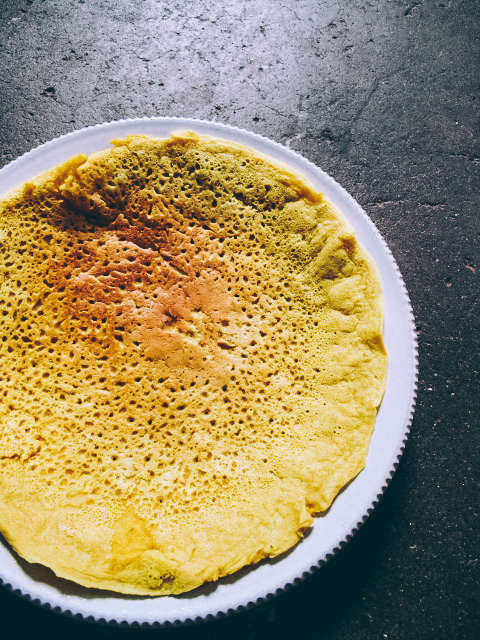
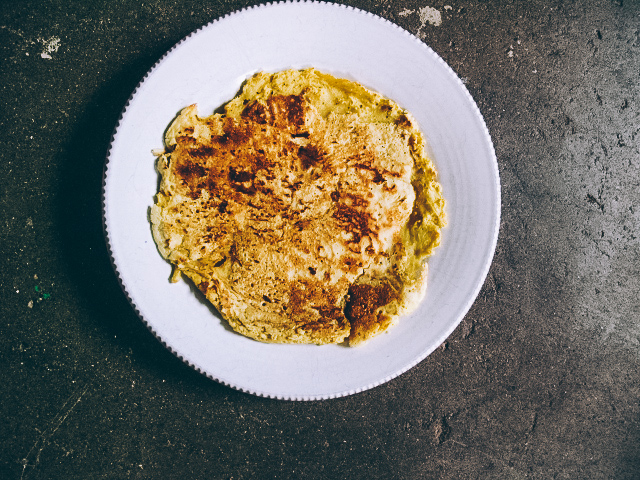
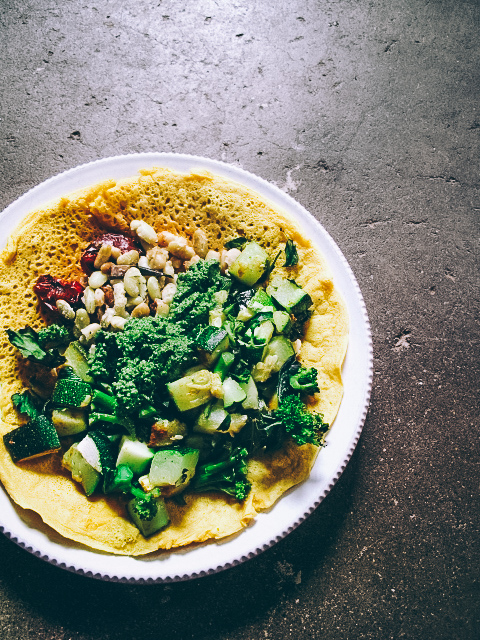
Another idea is to start being more creative with beans such as using a chickpea flour to make delicious socca, a French pancake or crepe-like flatbread that’s simple, quick, and tasty. Socca is one of my favorite ways to add a little extra protein boost in a meal when I’d otherwise reach for a more-carbohydrate-rich food, like bread, flatbread, or a cooked grain.

IMG_3632-2

If this topic interests you, below are a couple follow-up articles that give more meal ideas and delve deeper into one of the amino acids that frequently falls short in a vegan diet (leucine). They are all great short reads.
Thinking about becoming a vegan athlete? (with information about meeting leucine requirements)
No Meat Athlete Protein Bowl with 30 grams protein
The Full Helping’s protein meals combinations (not specific to athletes / contains some lower protein examples)

IMG_3548-2

Socca, makes 2
1 cup chickpea flour
1/2 tsp. baking powder
pinch of salt and dash or two of black pepper
1 tsp. turmeric
1 cup water
oil, just enough to coat the pan

  • In a medium bowl, combine the flour, baking powder, salt and pepper, turmeric, and then water. Whisk until you have a smooth batter. Set aside while you heat a large skillet over medium heat.
  • When the pan is hot, lightly brush the bottom with oil. Pour in half the socca batter (about 3/4 cup) and tilt the pan to distribute it evenly. Cook for about four minutes, until the bottom is browned and comes away easily from the pan, and then flip to do the same on the other side. Repeat with the remaining socca batter.
  • Remove the socca to a plate, and serve alongside or as a base for whatever other ingredients you prefer.

References:

  1. Kerksick, C.M. and Kulovitz, M. (2013). Requirements of Energy, Carbohydrates, Proteins, and Fat for Athletes. Nutrition and Enhanced Sports Performance. Doi: http://dx.doi.org/10.1016/B978-0-12-396454-0.00036-9.
  2. Zhou, J., Li, J., and Campbell, W.W. (2013). Vegetarian Athletes. Nutrition and Enhanced Sports Performance. Doi: http://dx.doi.org/10.1016/B978-0-12-396454-0.00036-9.
  3. Witard, O.C., Garthe, I., and Phillips, S.M. (2019). Dietary Protein for Training Adaptation and Body Composition Manipulation in Track and Field Athletes. International Journal of Sports Nutrition and Exercise Metabolism, 29(2), 165-174. Doi: https://doi.org/10.1123/ijsnem.2018-0267.
  4. Whole Grains Council. (2014). Whole Grain Protein Power! Retrieved from: https://wholegrainscouncil.org/blog/2014/02/whole-grain-protein-power.
  5. van Vliet, S., Burd, N.A., van Loon, L.JC. (2015). The Skeletal Muscle Anabolic Response to Plant- versus Animal-Based Protein Consumption. The Journal of Nutrition, 145(9), 1981-91. Doi: https://doi.org/10.3945/jn.114.204305. 

Summer’s End Tomato Crumble

IMG_3616-2


Every summer around this time, I make a version of this crumble. So much so that I can’t help but get to late-August and start to crave it when I’m inundated with too many tomatoes.

Also every year, we go to the coast for a family reunion over Labor Day weekend. When we get back and September has arrived, the light begins to change dramatically and the fall colors soon set in. So this is the last week of true summer.


IMG_3601-2

IMG_3609-2


And thus it’s a proper time to make a savory dinner crumble, filled up with the season’s best tomatoes and enjoyed on one of these still-long, slow evenings.


IMG_3622-2


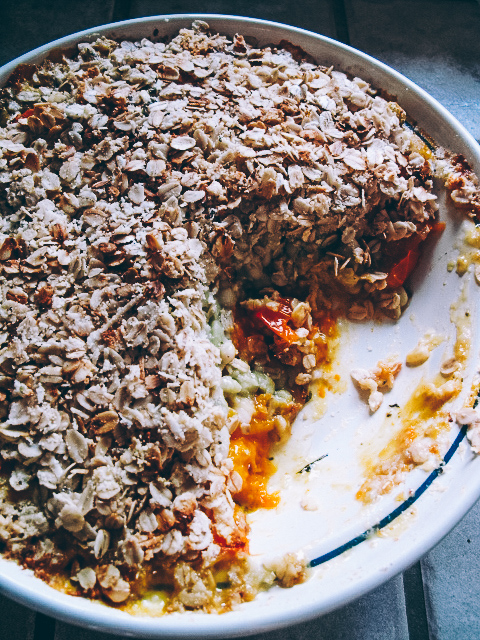
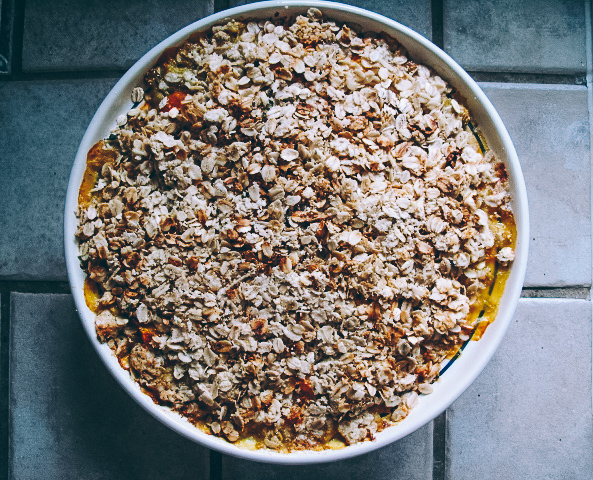
Summer’s End Tomato Crumble, serves 4-5
I love to add just a bit of non-dairy cheese to the crumble topping. I think it adds a nice flavor complexity that the otherwise simple ingredients need. Also, I’ve made this so many times and it’s quick and easy to get in the oven, but sometimes corners are cut and I can tell in the result. For instance, fresh herbs really make the seasoning. Use oregano, thyme, or even rosemary, minced quite fine. Add arrowroot flour to the tomato and bean filling if using large slicing tomatoes, but feel free to skip if using smaller cherry varieties. The flour will thicken it up when the tomatoes are extra juicy.

1 1/2 pounds / 700 g ripe tomatoes
1 tsp coarse sea salt
2 tbsp apple cider vinegar
2 cups cooked white beans such as flageolet or small lima beans
1/4 cup arrowroot flour (optional, see notes)

1 1/2 cups / 140 g rolled oats, gluten-free as necessary
6 tbsp almond flour
1/2 cup / 25 g grated vegan parmesan or cheddar cheese (I prefer Vtopian aged cheddar)
4 sprigs fresh oregano or thyme, leaves picked and chopped
1 pinch sea salt
1/4 cup / 55 g coconut oil

  • Preheat the oven to 350°F / 175°C.
  • Rinse the tomatoes and cut in halves if using cherries, or dice if using large slicers. Place in a 9-inch pie pan or baking dish and toss with sea salt, apple cider vinegar white beans, and arrowroot flour if using.
  • Prepare the crumble in a separate bowl. Start by thoroughly mixing oats, almond flour, grated cheese, oregano and salt. Add the coconut oil in small pieces. Use your hands to mix until large crumbs begin to form. Pour the crumble filling evenly over the tomatoes. Bake in the oven for 40 minutes or until the tomato juices are bubbling around the edges and the crumble is firm and browned.