The Easiest DIY Non-Dairy Milk

Shortly after we all went into lockdown a few weeks ago, my running team had a group call with Sally Bergeson, owner/founder of the women’s running apparel company, Oiselle. Sally spoke about doing the work of Pulling Out Poisoned Roots, and since I’d just received the team journal for this year, and knowing that Sally is an activist and visionary on what are often the most controversial topics and particularly women’s rights and sport, one could surmise exactly the poisoned roots she was referring to.

I had recently re-begun examining my own poisoned roots, and thus have spent most of the spring working through old programming, stories about my own limited potential and unable-to’s that stem from their foundations in early childhood and youth. As I have been working though the next layer of this ‘brain training’ this spring—for beginning this process many years ago was one of the most important steps in healing my autoimmune condition—I’ve been daily reminded about how difficult it is to rewire the brain, to heal old wounds and stories we’ve been told or have told ourselves. And every single day, I’ve been reminded of my privilege.

For I’m in a place right now where I have the ability to prioritize this type of self-work. My basic needs are met. I’m in a place of relative health. I don’t have unconscious or blatant systemic biases working against me. And I’ve thought about those that come from experiences of more extreme trauma—for a refresher on the impact of childhood trauma has also been part of my spring quarantine for my part-time public health role. How for individuals who’ve experienced extreme trauma, if they ever get to a point in life where they have the resources to undergo this type of psychological training, how much more difficult, how much more healing, they need.

For as much as it’s a nice thought that we’re all simply different shades in a crayon box—a saying I’ve seen a few times the past couple weeks—the circumstances we each are given make that a phrase that is naïve to the reality of our lives.

Today I’ll share a little story about that as it relates to dairy foods, who is supposed to consume them (everyone) as opposed to who can actually digest and absorb them (mostly white, non-minorities without other health problems). This is a mostly nutritional but also partly political post, but the end result is an incredibly easy DIY non-dairy ‘milk’ recipe with just a couple ingredients (nut or seed butter, water, pinch of salt). Since I’ve spent more than a decade immersed in public health and the politics of food systems before going into clinical nutrition, this is my way of combining and educating through a lens that speaks to all of them – if you’d rather just get the recipe, feel free to simply skip to the end.

——————————————————————————–

Whenever I have both the blender and the nut butter jar out, William tends to ask me if it’s time to milk my nuts. It’s a slightly humorous household joke, but without fail it reminds me of long-ago days in childhood when I watched my mom do a similar yet more complicated process of filtering the cream from fresh milk from our milk cow, Betsy. I was always fascinated and yet disgusted at the same time because for whatever reason, I did outgrow my early childhood dairy allergy for a while, but the smell and taste still repulsed me, leading to routine sessions of sitting extra-long at the kitchen table until my stubbornness gave way and I figured out a way to make myself gag the milk down.

Nowadays, I’m routinely reminded how times are a little different. In my parent’s era, making their children drink their milk portions every day was a necessity. How else was I to grow strong bones? Also, dairy farming is in my family history. I say things are different because there are a plethora of non-dairy milks available nowadays, so much so that dairy farmers in our country are struggling as never before. We now know that many individuals really struggle to digest dairy, whether because of lactose intolerance or a dairy protein allergy, as I have.

Lactose, the sugar in milk, requires the enzyme lactase to digest and absorb it properly, and it’s now well known that many populations worldwide, particularly individuals of East Asian and West African descent, are less likely to have the lactase enzyme. Additionally, this enzyme can become faultier as one ages, so lactose intolerance can arise in adulthood, making certain milk products challenging. All in all, approximately 65 percent of the population worldwide has a reduced ability to digest lactose after infancy, yet only about five percent of individuals of Northern European descent are lactose intolerant.

On the dairy protein sensitivity/allergy side of the equation, the reasons for its increasing prevalence are fairly widespread. We can develop an immune response to virtually any food, and the overload of disruptive environmental contaminants (toxic air, water, pesticides, pharmaceuticals, etc.), as well as high stress and imbalanced lifestyles (think lots of work, not enough sleep and nutritionally balanced meals), can wreak havoc on our digestive systems and over time the body begins to build antibodies to everyday foods that we could handle before. For individuals with seasonal environmental allergies, as well as those that generally tend to have excess mucous and feel ‘puffy,’ they often feel quite a bit better after removing dairy—since it’s protein structure can be tough to digest and therefore increases inflammation throughout the body.

So in our current global circumstances, there are a lot of individuals who are intolerant to dairy for varying reasons, or for environmental or other personal reasons are choosing to avoid it. And yet in the USDA’s MyPlate, the official dietary recommendation put out by the US Government, dairy is a food group that all individuals are recommended to consume daily, since one’s daily calcium needs are easily met with 3-4 servings of milk or similar dairy products. I still teach nutrition classes part time in a USDA-funded public health role in my local community, and it has frustrated me time and again to have to teach a model of nutrition that only ‘fits’ the needs of a certain (ahem, mostly white) population. This is an example of systemic bias at work – and also showcases the lobbying role of the dairy industry in making our federal government’s nutritional guidelines.

While recognizing that calcium is an important nutrient to consume in adequate amounts lifelong–adults need approximately 1000-1200 mg per day depending on gender, age, and activity level–there are other ways to consume it, like ample calcium-rich leafy greens. Those are often my first recommendation, because they have a calcium bioavailability similar and perhaps even better than dairy milk. We also need the many other nutrients that make up balanced bone metabolism including Vitamins A, C, D, K, B-vitamins, other minerals such as magnesium, zinc, copper, phosphorus, boron, manganese, potassium, iron, vanadium, and more. Eating lots of leafy greens as part of a balanced whole-food diet happens to also include many of that plethora of nutrients also.

There are several more foods on my bone support and maintenance list, and one of those categories is rotating through many different nuts and seeds. Sesame seeds and tahini, pumpkin and sunflower seeds, almonds and cashews particularly. None of these on their own will supply your daily calcium needs – if avoiding dairy, you need to eat diverse and greens-heavy meals for that – they do provide a range of many other bone supporting nutrients.


Today, let’s focus on the alternative to milk when one is looking for the texture and mouthfeel of using milk, such as in an extra-creamy porridge, cooked grains, to top your evening cereal fix, or to round out a smoothie. That’s when I’ve been reaching for my blender, nut butter jar, and the time to milk nuts scenario. Bonus points for no longer adding to the overflowing milk-carton collection in my laundry room that is supposedly recyclable during certain days of the year, but will more likely end up in the trash.

As a little aside, if it wasn’t clear from the above, I’m not overtly anti-dairy or a proponent that all of us should follow a dairy-free lifestyle, but I strongly believe in individual nutrition and not one-size-fits-all viewpoints that are already biased towards certain groups in power and with privilege.  
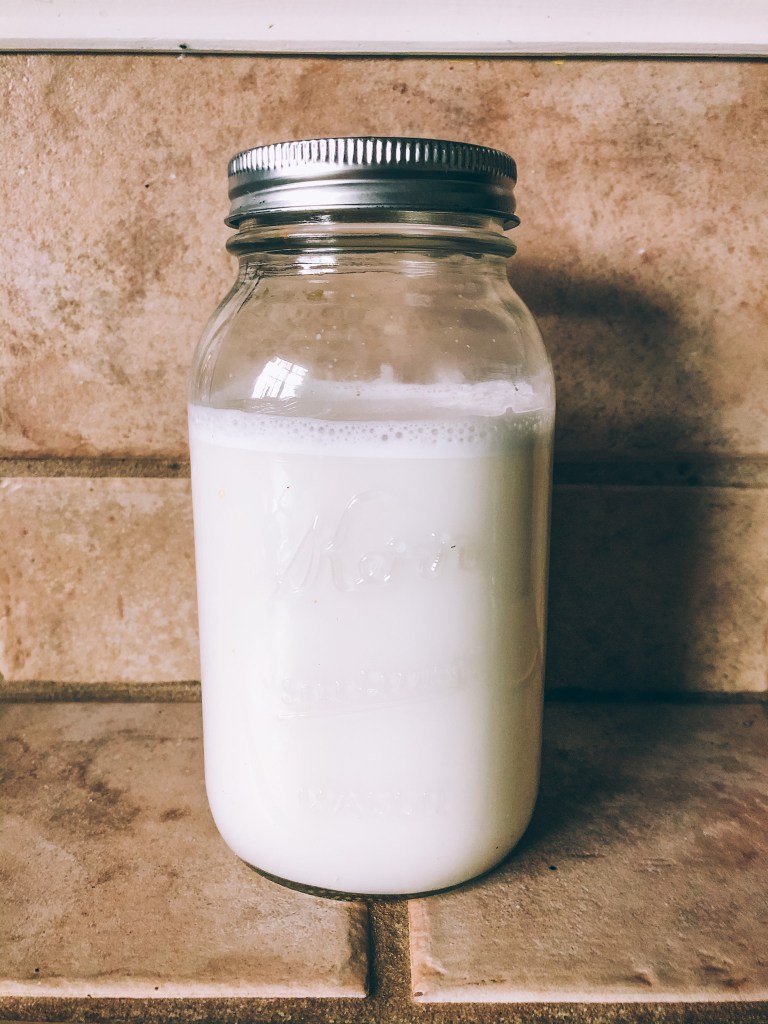
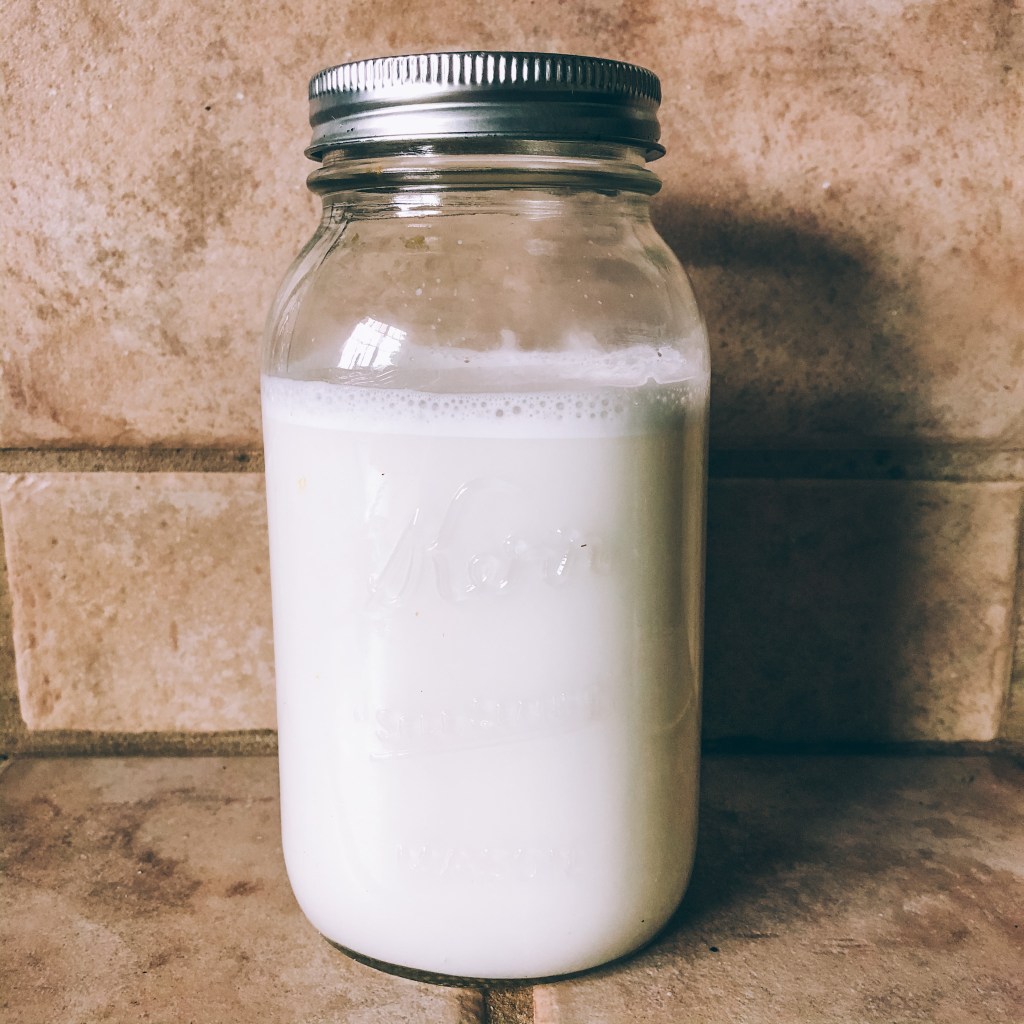
The Easiest DIY Non-Dairy Milk, makes 3 cups
For this, I recommend starting with raw nut/seed butter with zero other ingredients. Currently, I prefer Artisana Organics brand, which also happens to source from local California farms when possible and commits to sustainable and fair-trade ingredients. There are other brands that are similar, so do your research and learn where your food comes from. For nutritional diversity, I recommend rotating through a different type of nut or seed each jar or batch you use.

1-2 Tbs. raw nut/seed butter (raw cashew, almond, sunflower, or pumpkin butter, or raw tahini)
3 cups water
pinch of salt

  • In a high speed blender, combine 1 to 2 tablespoons of your raw nut/seed butter of choice with 1 cup water. I prefer using 1 Tbs. for each batch, but doubling the amount will make for a creamier milk. Blend for about 1 minute until the nut butter is completely worked into the water.
  • Then add 2 more cups of water, a pinch of salt, and pour out into a glass container. That’s it. You’re done and ready to use!
  • Store extra in the fridge and remember to shake/stir before each use as particulates will settle in the bottom.

This information does not intend to treat, diagnose, cure, or prevent any disease. 

References:
National Institute of Health (NIH). Genetics Home Reference. U.S. Library of Medicine. (2020). Lactose Intolerance.

Strawberry Rhubarb Scones {gluten + dairy-free} and Celiac Awareness Month

I was listening to an interview a few days ago with a nutritionist who was immediately asked, “So you’re a nutritionist. What diet are you on?”

Before she responded, I visibly cringed because let’s face it, most of us who work within the nutrition world follow a style of eating that is a type of diet. The reason for this varies but is usually because many of us that spend our days helping others with food and health came to it because we struggled ourselves.

And that’s true of myself as well.

The individual on the podcast quickly and proudly clarified that she has no food restrictions and isn’t on a diet. Had I been a nutritionist more than a decade ago when I first began to realize I was being called and pulled in this direction, I would have said the same. At that point, is was very helpful for me to eat the full spectrum of foods and to not have any restrictions, as is true for many individuals.

But then a lot more health challenges came along and here I am, a veteran of a gluten-free (and dairy-free, mostly vegetarian) diet. My journey was and continues to be one of a food as medicine approach. But I’m certainly not the type of person that believes everyone needs to prescribe to my way of eating. We’re all so different with life circumstances, genetics, preferences, and yes, food choices or dietary restrictions as a way to remain in balance with our health.

Celiac Disease Awareness

May happens to be Celiac Awareness Month, and as an individual that has had to eat strictly gluten-free for the last eight years, the better part of those years has been in educating others about what it means to live with a food restriction that when contaminated with even a little gluten, leaves longer-term symptoms than ‘just’ having a stomachache for a day or so.

What that means is also different for each person. 80 percent of individuals with celiac disease have difficulty remaining gluten-free, 70 percent are still exposed to gluten while on a strict gluten-free diet, half of all children with celiac are anxious about eating, many individuals have symptoms of depression, and nearly all have sacrificed major life experiences such as not being able to travel widely, enjoy a meal out with friends, enjoy the full experience of a wedding or birthday celebration and the like.

For me, it means I rarely eat out because I react to most restaurant meals unless it’s made in a strict gluten-free kitchen. Pizza, bakeries, gastropubs, and the like that serve a traditionally floury mix of foods and/or have one grill, fryer, or oven are generally the worst — ethnic cuisines that tend to be gluten-free by their nature are less risky. This is similar when eating in the homes of friends or family. (Wheat) flour in the kitchen tends to mean it floats and ends up in foods and surfaces you wouldn’t think about unless you have to.

On the flip side, there are many options to live fairly comfortably with a gluten-free lifestyle these days. More restaurants are beginning to understand the major issue of cross-contamination. Usually these restaurants have a family history and they’re the ones to trust because they take it seriously.

And gluten-free flours and baked goods are much more plentiful in the last several years.

But that doesn’t always mean we should be eating them.

What do you mean? I have to eat gluten-free because of celiac or similar and you want to take away my GF baked goods too?

Inherently, most gluten-free baked products have a lot of “junk” ingredients in them, ie starches, gums, and excess sugar (hello boxed gluten-free cake mix whose main ingredient is sugar). What most of these ingredients turn into in the body is a simple sugar, and sugar is extremely inflammatory, especially for individuals with an autoimmune disorder–which means the body tends to be really good at making inflammation a regular event. Not so good for daily comfort, being pain-free, having a positive mood, or long-term health.

So while I’m not a proponent of too many gluten-free baked goods — especially if they’re made with lots of refined flours, starches, gums, and sugars, I tend to be of the mindset that fresh baked bread, cake, cookies, and pastries and even the kind that are actually just not that good for you, can make their way into a Celiac friendly diet. Though maybe as just sometimes foods rather than everyday.

Depending on your personal health needs, of course. See last week — Are You Eating Enough for Your Activity Level? — as an example.

And while this is a celiac disease and gluten-focused article, I’m fully aware that other restrictive diets due to food allergies and/or medical necessity can be just as or more challenging to navigate. Despite this, my goal as a food as medicine eater and nutritionist is always to increase the diversity of our daily food choices, rather than limit them.

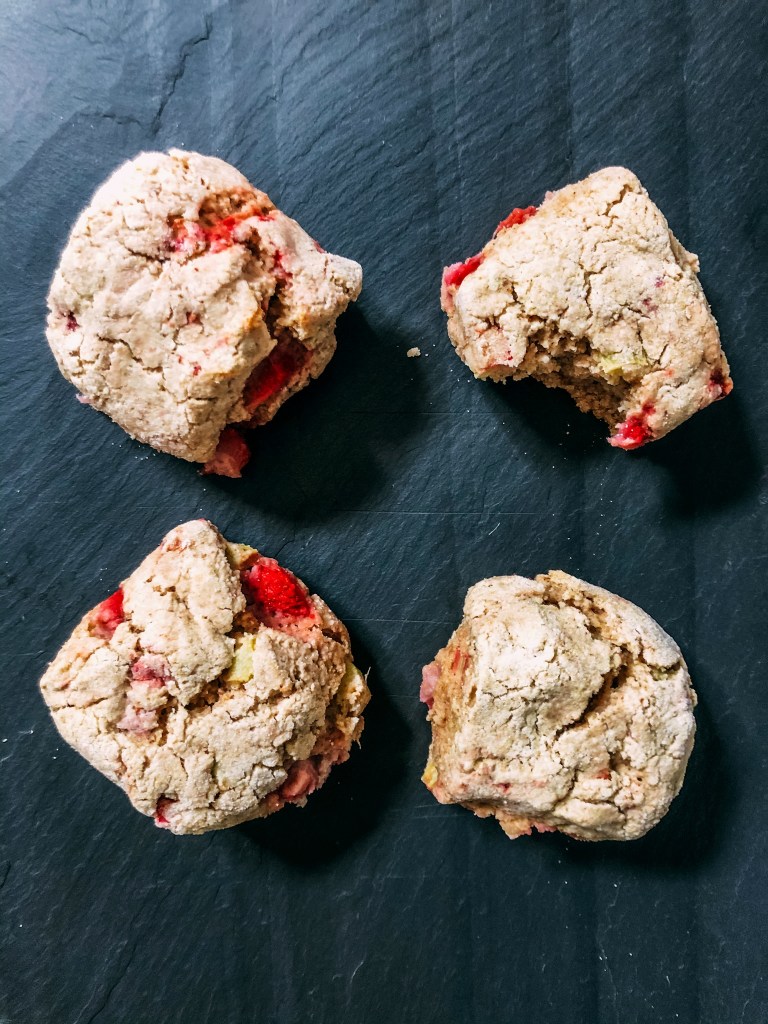
Strawberry Rhubarb Scones, makes 8
These are the Irish style of scones, so they’re usually made round, low in sugar or without, and delicious sliced in half and eaten with a little cream (traditional), yogurt, or honey.

I’ve made these with vegan butter here (Melt Plant Based Butter Sticks), but unrefined extra virgin coconut oil and Kerrygold butter also work well . Freeze your butter or oil and then grate it into the flour mixture. If you have no reason for avoiding true dairy butter, opt for that instead and choose a good brand, like Kerrygold. 
The addition of sugar and vanilla are optional because I left them out in my first try of this recipe and found them still delicious. You’ll know by now I tend to be acclimated to eating very little sugar so keep that in mind.

160 g oatmeal
110 g buckwheat groats
10 g arrowroot starch or cornstarch
25 g sugar (optional)
4 teaspoons / 20 g baking powder
½ teaspoon salt
60 g / 4 Tbs. frozen grated butter or coconut oil
¾ cup chopped strawberries
1/3 cup finely chopped rhubarb
2/3 cup cold non-dairy milk
1 tsp. vanilla (optional)

  • Preheat oven to a very hot 475°F
  • In a spice grinder or food processor, mill the oatmeal and buckwheat until they’re ground into a fine flour.
  • Combine all the dry ingredients in a mixing bowl.
  • Rub the frozen grated butter or oil into the dry ingredients until it resembles very coarse bread crumbs with some pea-sized pieces.
  • Stir in the chopped strawberries and rhubarb.
  • Add the milk and vanilla at once and stir until it just forms a sticky dough. They will seem a touch wet, but they will end up more tender this way!
  • Turn the dough out onto a lightly floured board and lightly flour the top of the dough. To achieve a layered effect in your scones, knead very gently once (do not press too firmly) then fold and turn the kneaded dough about 3 or 4 times until the dough has formed a smooth texture. Scones require a light hand so be gentle and err on working the dough less.
  • Pat or roll out the dough into a 12 inch by 8 inch rectangle or circle that’s a little more than 1-inch thick. Cut or separate it into eight equal portions and gently form into rounds.
  • Place the rounds just touching on a baking dish and bake in the preheated oven for about 12 minutes (check at 10 minutes so as to not overbake!) until the scones are well risen and are lightly colored on the tops.
  • Immediately place the pan onto a cooling rack and serve while still warm, or gently reheated.

Other Seasonal Strawberry Recipes:
Strawberry Tabbouleh
Strawberry, Asparagus + Radish Flatbread
Strawberry Cardamom Lassi
Berry Bran Muffins
Strawberry Rhubarb Pie

Are you eating enough for your activity level?

Today’s topic is one that’s been on my mind a whole lot lately. A nutrition question that is frequently asked is:  Should I be eating intuitively when I’m hungry or tracking what I eat and going off the numbers?

Before I tell you my answer, I’d like you to think about this question for a moment. No really, take a moment and think about what you’d say if someone asked you. (Humor me please, this is the educator in me.)

From my instagram a couple weeks ago: as mileage and/or time on feet goes up, eating becomes almost another part-time job. the last few days I felt like I wasn’t quite eating enough, and not surprisingly, today’s long run felt a little extra challenging.
low energy availability is extremely common in athletes, and long term, it can cause widespread physiological and psychological imbalances.
so the short story is if you’re moving a lot, you need to be eating a lot.

Now, my answer:  YES, eat intuitively!! Tracking numbers often leads to becoming reliant on the numbers rather than recognizing your own body’s needs. Your body is incredibly wise and those tracking websites and apps are all using estimates. They’re estimating your energy needs and using nutrition data done in a lab on a random sample item of the food tested. And that’s not to mention that your estimates of portion size, etc. are usually not entirely accurate either.
So random sample food that may not reflect the actual nutrition of the food you ate, formula estimating your energy needs, and, unless you’re a super type-A person that weighs every morsel ingested to the nearest gram (also please don’t do this), inaccurate food measurement. Yes, they can give you an idea if you might be in the ballpark with your nutrition needs, but as above, it can vary so much. And yes, some individuals can go into a lab and get their metabolic rate measured to determine a more accurate picture of energy needs, but most of us don’t have access to or need that data.

AND also my answer: It depends. Many active individuals are actually not eating enough for their on-the-move lifestyles – and the body, because it is wise, makes decisions about where it is going to prioritize its precious calories. So if you’re going to go for a trail run in the forest for the day followed by an evening bike ride or weight session, and then follow with something similar tomorrow and the next day, and throw in a weekend long couple workouts, AND you’re routinely not eating enough to meet your caloric needs, the body is going to choose where to spend those nutrients because when this precious energy is used for one function, it is not available for another one. Essentially, you are putting your system into survival mode.

And it plays out along these lines as your body says,  “Well, if you’re going to make me go do these workouts, I’ll put my energy here, though maybe with a little less pep, energy, and high-end ability, but I’ve got to rob Peter to pay Paul, so I’ll compromise over here with bone metabolism, or over here with female reproductive hormones or thyroid health, or immune function, or over here with the GI system and the ability to break down nutrients in food (because digestive enzymes are made of proteins which may be lacking in the diet), or muscle and tissue repair or”…. and the list goes on.

Why am I bringing all this up? Because it’s actually common for active individuals to be eating to hunger levels and still not be eating enough.

While intuitive eating means we should honor our hunger, many athletes have a suppressed appetite after long or intense workouts, and we still need to replace nutrients quickly after exercise, and learn to recognize that symptoms of hunger go beyond simply an empty stomach.

While intuitive eating means we should respect our fullness, if you get to the point of overeating by having excessively large meals, it is often because of low energy intake throughout the day or because you did some seriously strenuous exercise. With more even or adequate energy intake before and during a long workout, you can avoid that ravenous feeling of needing to eat quickly and impulsively, which means you’re paying more attention to fullness.

A SELF-ASSESSMENT TO HELP YOU NAVIGATE YOUR ENERGY NEEDS

So what to do if tracking all your meals isn’t very accurate (and not to mention time-consuming and takes the joy out of eating and deciding what to eat), and eating intuitively might be a little faulty, especially at the beginning?

My suggestion is to start with a self-assessment. Ask yourself these questions:
– Am I sick more than I should be?
– Do I struggle with fatigue more than I think I should?
– Am I improving in my performance?
– Have I had a lot of injuries?
– How’s my overall health?
Basic bloodwork results holds a plethora of data on how the body is ‘performing’ internally.
– How is my menstrual cycle and/or sex drive? Women have a little advantage here in that any menstrual symptoms or irregularities* are symptoms telling you to heed warning because there’s a larger health story.
– Do I have a lot of gut upset / discomfort?
– Am I more irritable, depressed, anxious, or have decreased concentration?
– Am I sleeping well?
– and if you have teammates or friends/family that you work out with regularly: Do I eat less than my teammates but have a higher body fat? This is subjective of course because every body is different, but yep, higher body fat and eating less is also a tell-tale sign, since lower metabolic rate occurs with lower energy availability, meaning you might be eating less but weighing more or having more cushion than previously.
– and one more because it can become prevalent with long term low energy availability: Am I thinking about food ALL THE TIME? We know from eating disorder and starvation studies that chronically deprived individuals become obsessed with food, far beyond just being interested in food.

So where to go from here?
Above all, food and exercise should make you feel good. The goal is to be aware and in tune with yourself and your body’s ability to show you signs that something may not feel right or as great as it should.

And you may benefit from professional guidance. If you’re confused or concerned about your needs, or would like a professional opinion, I invite you to reach out to me for more personalized support.

*Women on hormonal birth control will not have the same ability to use their menstrual cycle to gauge abnormalities, since it is designed to eliminate ovulation and the normal hormonal fluctuation that occurs. If symptoms or irregularities occur without birth control, that is vital sign that your body has an imbalance somewhere.
This information does not intend to treat, diagnose, cure, or prevent any disease. 
References:
2018 UPDATE: Relative Energy Deficiency in Sport (RED-S)
Bronwen, L., Rowe, G., and Girdlestone, C. (2020). Low Energy Availability – an imbalance that impacts more than performance. CompeatCon Nutrition Conference.
Fahrenholtz, IL., Sjodin, A., Benardot, D., Tornberg, AB., Skouby, S.,…and Melin, AK. (2018). Within-day energy deficiency and reproductive function in female endurance athletes.
Torstveit, MK., Fahrenholtz, IL., stenqvist, TB., Svlta, O., Melin, A. (2018). Within-day energy deficiency and metabolic perturbation in male endurance athletes.
Tribole, E. and Resch, E. (2003). Intuitive Eating: A revolutionary program that works. (2nd ed.). St. Martin’s Griffin.