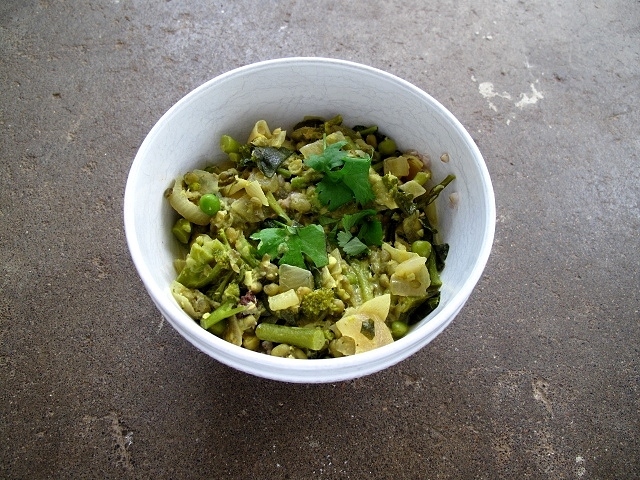
go-to coconut curry

IMG_2967.JPG

For the past month or more, I’ve been collecting a few snippets of news I’ve read or articles meant to be shared, but rather than actually share, I’ve stashed them away in a folder and time has marched on.

Looking back, so much of what I had accumulated was news that was frustrating, negative, and political, in congruence with the season, even as it was about the state of our food system and climate. Those are indeed important things and I think we should all be informed about what we are eating and the nature and consequences of its production.
IMG_8507

But for whatever reason I was reminded recently of my high school riding instructor/coach, who always encouraged me to remember and focus on what’s going well, and to forget about the rest. I more often get in the mindset that if I only look through the world with rosy-hued lenses, then nothing gets done, and no real change to the status quo can occur.

But that’s not actually true. We grow better when we are happier, when we are living in joy, when our systems are not stressed with what-ifs and fear.
IMG_8521

I encouraged a nutrition client recently to start small, taking one day at a time, and to focus on only one thing each day that helps her to take care of herself. Taking a dose of my own advice, it’s early morning as I write this, and I’m unexpectedly home at my mom’s farmhouse kitchen table, sitting in what I deem the sunroom, given for it’s dusty lemon hues and big windows letting in the new day. My week has been fraught with grief, many tears, and saying one last goodbye to a truly dear grandfather, and related to that and my own internal fears and anxieties, my thoughts have been incredibly bent toward the negative of late.

Today I’ve decided to focus on the good, and to look for what is going well.

Today it’s that I did make it home to see Papa in his last hours, and it was almost as if he waited for me, the last and furthest grandchild to visit, and for his room to fill with family as he spoke his last words and slipped quietly from us.
IMG_8518

Too, the country is quiet, and I get to spend my day (and yesterday) looking out any window onto wide open pastures and birds singing and dancing their dance.

What this has to do with curry, I don’t for sure know, other than a simple and easily adaptable curry such as this has been my long time go-to for comfort, for taste, for turning whatever I have into something special and pleasing to everyone. It’s the food version of eternally positive, and a dish no matter the vegetable or bean adaptations, seems one can never mess up.
IMG_2969

Go-To Coconut Curry, serves 4-5
Recipe Updated: December 2023
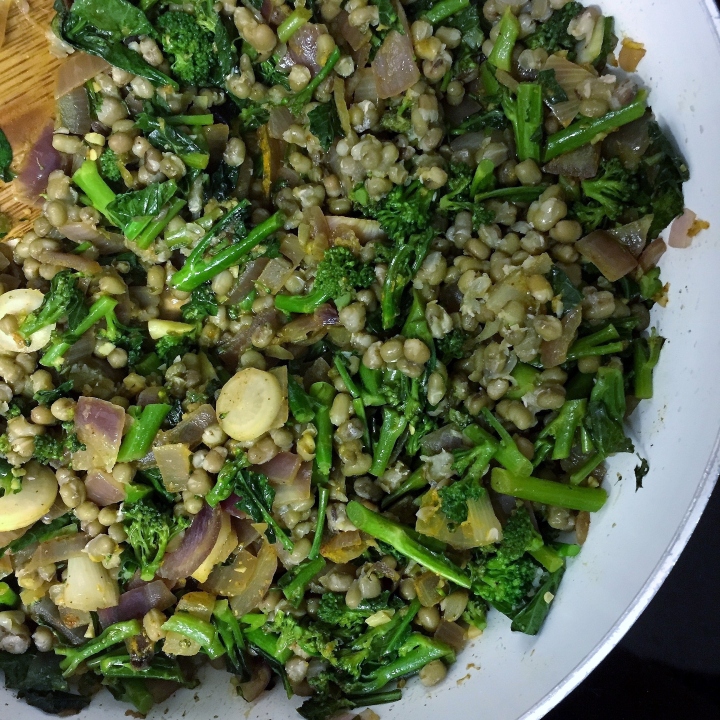
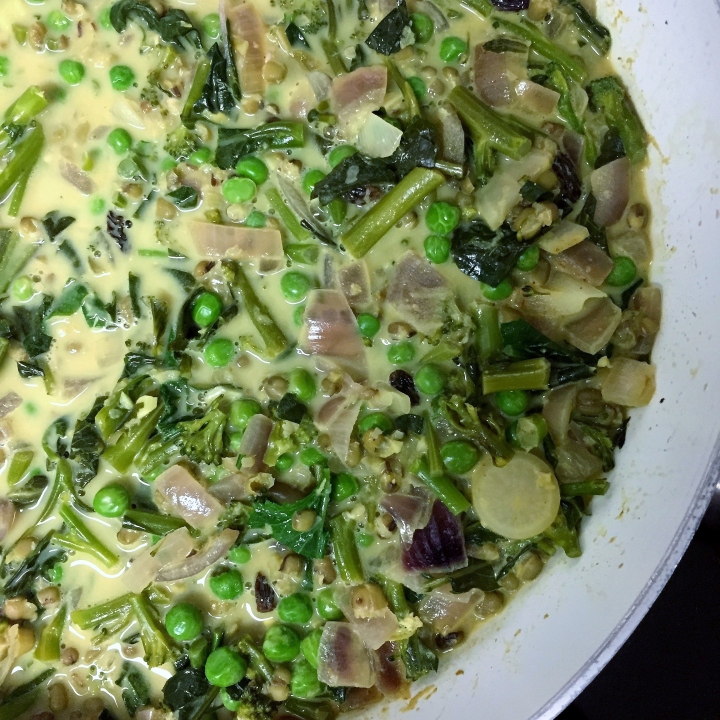
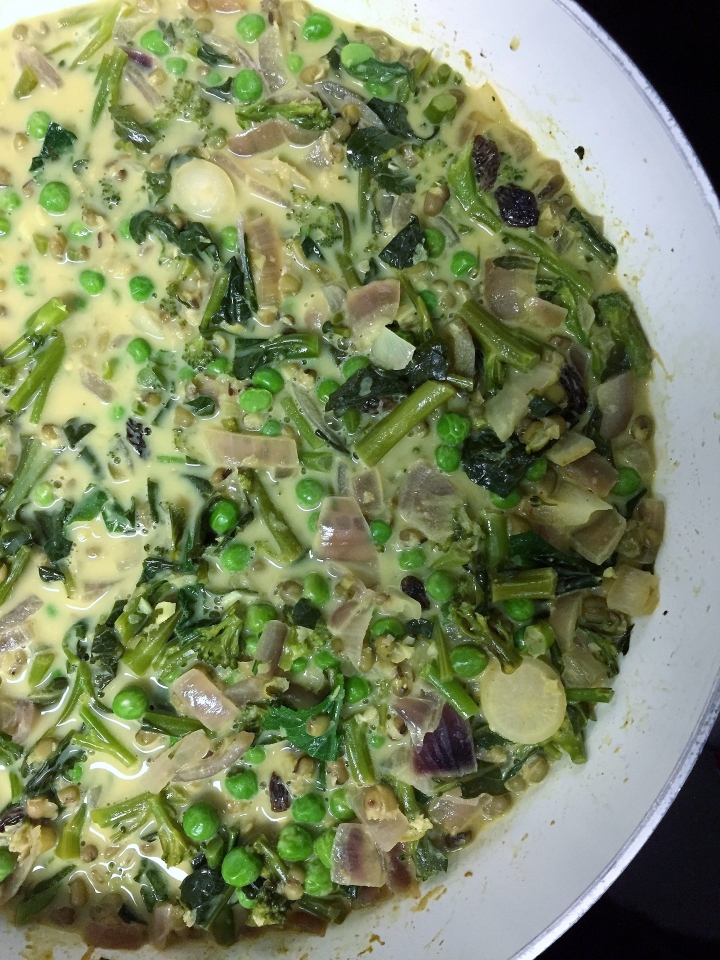
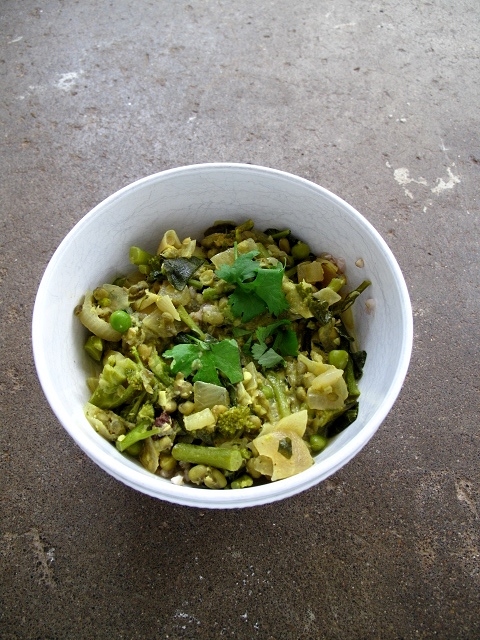
– I used cooked mung beans, broccoli, white “spring” turnips, and frozen peas in this version, and I encourage you to use whatever you have, is in season, or are particularly enjoying just now.
– In another version, I used carrots, shiitake mushrooms, cabbage, and frozen peas, as well as tofu. For the tofu, I pressed it and then baked it for 30 minutes with just a dry rub method of curry powder. 

1 Tbs. coconut oil
1 large onion, diced
1 large clove garlic, minced
4 cups / 500-600 gr chopped seasonal vegetables
1/8-1/4 tsp. cayenne powder (adjust according to taste)
3/4 tsp. cumin
1/2 tsp. chili powder
3/4 tsp. ground coriander
1 tsp. salt
1/2 tsp. turmeric
1 Tbs. fresh ginger, finely grated
1 can full fat coconut milk
2-4 cups water, as needed to thin
2 cups cooked beans or 14-16 oz. pressed and baked tofu
2 cups / 200-300 gr leafy greens, chopped
2 Tbs. lemon or lime juice
fresh cilantro, to serve
cooked brown or white basmati rice, to serve

  • In a large deep pan over medium heat, warm oil, moving around the pan to coat the bottom evenly. Toss in the chopped onions and garlic. Stir and let cook for about 8-10 minutes, until the onion and pepper are soft.
  • Then stir in the spices and other vegetables and cook until they are tender. You may need to add a few splashes of water.
  • Add the coconut milk, water, tofu or beans and greens. If you’re adding frozen peas, add them now as well. Stir everything together and let the flavors meld for 5-10 minutes more.
  • Stir in the lemon or lime juice, adjust seasonings to taste, and enjoy with rice and cilantro.

Whole Grain Gluten-Free Sourdough Bread

IMG_2671

This summer, myself and a group of fellow nutrition students and alums are reading Deep Nutrition for a book club we’ve started. The theme of the book is about the benefits of traditional diets, somewhat in the Weston Price tradition, for optimal health. I cannot yet comment on what I think of the book as I haven’t read enough to have a strong opinion, but the idea of eating more in the traditional style with its emphasis on whole foods as close to the source and as untouched as possible from chemicals and the like has been a major theme in my nutritional courses over the past two years. It is also a viewpoint I adopted years ago when figuring out how to truly recover from the diet culture I was immersed in and which was contributing to my eating disorder behaviors around foods. In my classes, we’ve also delved a lot into the need for promoting gut health, since a healthy, happily functioning gut can be thought of as the foundation to health in the body and mind far beyond our digestive region. This also happens to be a topic that is near and dear to me because it’s one of my main health struggles.

As I’ve mentioned before, The three major nutritional practices that promote gut health are eating more fiber, eating more fermented foods, and reducing sugar and refined carbohydrate intake.

IMG_2660

Last summer, after a particularly rocky winter and an autoimmune lab marker coming back positive, I began a very focused fine-tuning of my diet and lifestyle, in relation to improving gut health and my reaction to stress, since both strongly contribute to autoimmune conditions. As part of that process, I began a return to making sourdough.

Sourdough, as the name suggests, is a traditional fermentation process where wild yeasts ferment the flours, making them easier to digest because the yeasts create lactic acid, and which then break down anti-nutrients that plants make to protect themselves, such as phytates and lectins. These anti-nutrients block mineral absorption and the resulting sourdough can contain a lot more readily absorbable nutrients than the original unfermented flours or grains. Additionally, the process of fermentation more generally makes all the proteins in the bread easier to digest, and it is the protein that is usually causing an inflammatory reaction for those with GI issues like intestinal permeability, malabsorption, celiac disease, and other autoimmune conditions. Due to our hectic lifestyles and often very non-whole-foods diets, many, many of us have at least some of these symptoms and/or diagnoses that could be improved by adding more fermented foods, in addition to the other two gut health promoting practices of eating more fiber and reducing sugar and refined carbohydrates.

IMG_2648IMG_2651

For someone that is very sensitive to gluten like me, there’s also good news from eating gluten-free sourdough, as there are research indications that the fermentation process involved in making traditionally fermented gluten-free bread reduces the release of inflammatory compounds within the gut for someone who has recently adopted a gluten-free diet due to a celiac diagnosis, whereas consuming other types of gluten-free bread did not reduce these inflammatory responses1.

IMG_2655

Maybe it’s the tea-drinking, sweater-garbed, sourdough-baking wise grandmother in me, but I can’t help but think, of course, to that news. It simply seems that our systems recognize and respond better to the more traditionally made foods like sourdough. Whenever I have a GI flare-up these days, I definitely try to put extra focus on avoiding those refined gluten-free products and even whole grains that weren’t cooked really well, and emphasize sourdough for my grain consumption. I’m finding this helps me return to balance more quickly. For someone that doesn’t react so strongly to gluten, consuming sourdough instead of regularly-baked bread still contributes all the positive benefits I mentioned above about keeping the gut happy and increasing nutrient absorption.

So now, after more than a year of refining my gluten-free sourdough method, I have a recipe I feel good about sharing!

IMG_2673

Whole Grain Gluten Free Sourdough Bread, makes 1 sandwich/toast loaf
– Adapted from Baking MagiqueWholehearted Eats, and with tips from Bad Hunter Stories.
– I have a 100% buckwheat starter that I began using this formula. I did not add any outside culture, but simply created it from the wild yeasts in my home. This meant it took a little longer for the starter to get good and active initially.
– For the buckwheat and oats, I often start with whole grains which I grind in my coffee/spice grinder each time I bake and feed the starter.
– I only make this using a kitchen scale rather than measuring cups, and I’ve found I can interchange the flours, by weight, using this method.
– Using slightly different flours along with the the outside weather will result in needing to change the amount of water. Err on the side of having a fairly moist dough that still comes together. 

80 g brown rice flour
140 g cold buckwheat sourdough starter
110 g water
————–
350 g water at room temperature + more as necessary to reach the desired consistency
20 g psyllium husk
10 g ground flax seeds
————–
60 g of each
– sorghum flour
– oat flour
– buckwheat flour
– millet flour
– teff flour
24 g / 2 Tbs. sugar or honey
1 tsp. sea salt

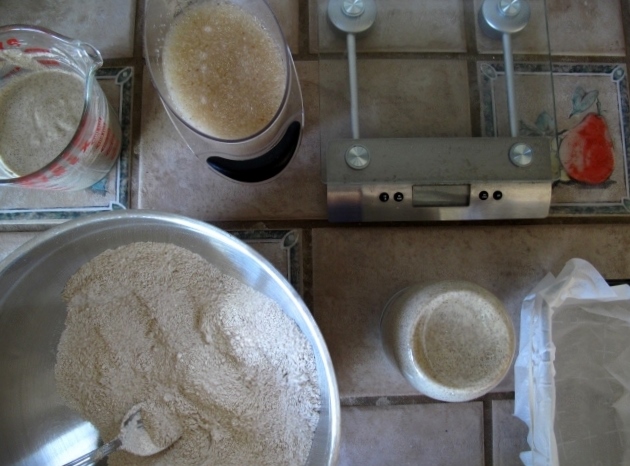
  • In the evening: Mix brown rice flour, sourdough starter and water in a bowl and cover with a clean kitchen towel. Let sit overnight (about 8-12 hours) in a warm and non-drafty place.
  • In the morning: Mix water, psyllium husk and ground flaxseeds in a bowl and whisk until a thick gel forms. Set aside.
  • In a separate bowl mix all of the dry ingredients.
  • Add the sourdough starter that you made the night before to the wet ingredients and mix.
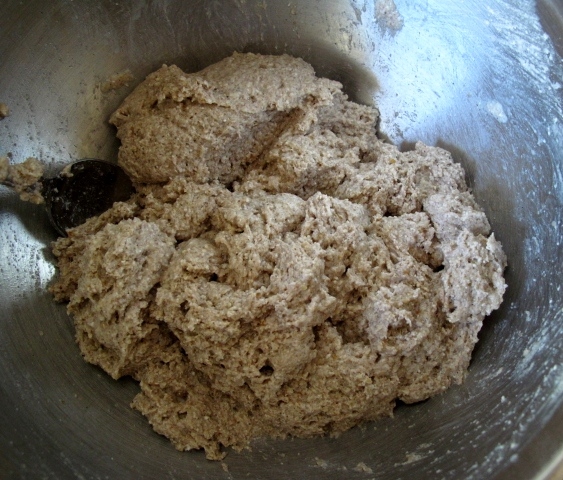
  • Add the wet mixture to the dry ingredients and stir with a wooden spoon until the flour is fully incorporated. Add a small amount of filtered water, if needed, to arrive at a moist ball of dough.
  • Line a loaf pan with parchment and dump the dough into the pan, smoothing it out into a loaf shape and leveling it into all the corners. Cover with the clean kitchen towel or plastic bag and put in a warm place away from drafts. Allow to rise for 4-6 hours. This will depend on your kitchen warmth. Mine tends to stay cool so I err on the side of 6 to even 6 1/2 hours usually.
  • Preheat the oven to 500°F/260°C. Once the oven’s hot, remove the towel or bag from the loaf, and score the top with one or two good slashes with a sharp knife.
  • Put the loaf in the oven and turn the temperature down to 450°F/230°C. Bake for 70 minutes or until the internal temperature reaches a little over 200°F/90°C.
  • Let the loaf cool on a wire rack for at least an hour, before slicing.

1. Calasso, M., Vincentini, O., Valitutti, F., Felli, C., Gobbetti, M., and Di Cagno, R. (2012). The sourdough fermentation may enhance the recovery from intestinal inflammation of coeliac patients at the early stage of the gluten-free diet. European Journal of Nutrition,51(4). 507-12. doi: 10.1007/s00394-012-0303-y.

Honey-Roasted Rhubarb and Favorites, Lately

IMG_2599


Hey friends, it’s been a hot minute. I’ve recently had an epiphany about ‘keeping the main thing the main thing,’ and for me right now, that’s successfully taking care of myself through peak weeks of marathon training, and then balancing summer term of grad school with my newish job, in that order. Everything else has been largely set aside for now unless it fits into the above. Which means I’ve made variations of chocolate walnut banana bread for three weeks in a row as end of the week baking therapy, made a lot of lovely but quick meals, taken significantly more restful moments and reincorporated naps into my life, but also haven’t done much else or shared here.

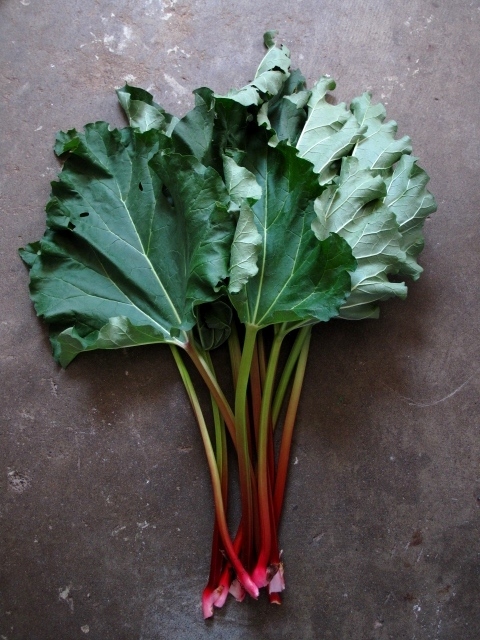
Below are a few favorites from the last couple weeks and months, and a lovely quick recipe for honey-roasted rhubarb, which tastes great as an add-in to a seasonal green salad, stirred through morning porridge, or simply spooned alongside some nice yogurt.


IMG_2611


to read: 
Plant Spirit Totems by Bloom Post
Eat Up! by Ruby Tandoh
Long days but learning so much in all my classes

to eat, drink, and imbibe:
Ginger-Turmeric Kombucha
Strawberries, and cardamom. also, rhubarb.
Flower Essences by Sophia Rose

to listen: 
Medicine Stories Podcast, but especially the episode with Sajah Popham (#17)
Lauren and Jesse’s new podcast, which is great for all sorts of life advice, but especially for athletes with questions.
Nicole Antoinette’s discussion with pro-runner Collier Lawrence. So much good stuff including goals, suicide prevention, and more.
A good pathophysiology review of the (lots of science!) involved in depression, for all you fellow science nerds.

to pause in awe and simply take in:
Early morning sunshine, through the leaves
Gifts from a lifetime friend who lives on the other side of the world


IMG_2605

IMG_2618

Honey-Roasted Rhubarb
When adding the finished rhubarb to a seasonal salad, I find it goes great with a mix of delicate and hardier greens, and alongside early season snow or snap peas, pea shoots, toasted walnuts or hazelnuts, and a light vinaigrette dressing. That’s just one variation of how this can be incorporated into a savory meal, and partly why I tend to err on the side of less honey, to let rhubarb’s natural sour-tart flavor shine through. 

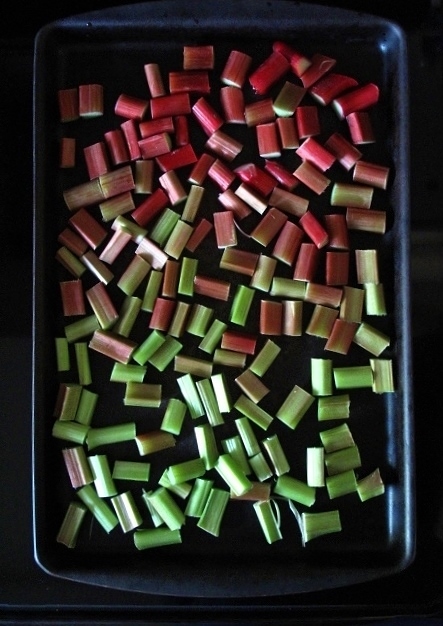
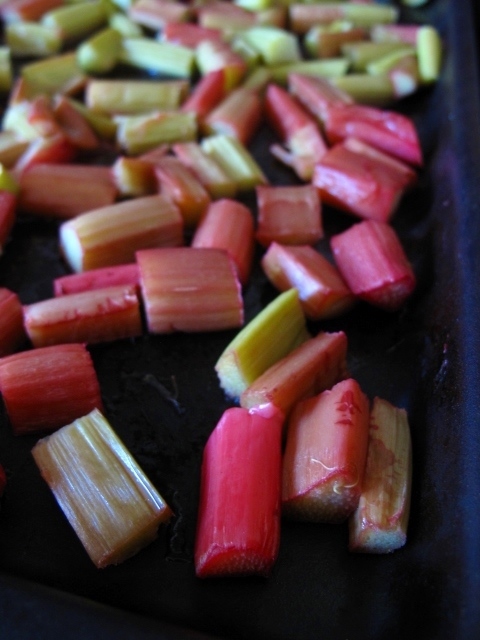
1 lb. rhubarb, sliced into 1-inch slices
1-2 Tbs. honey, as preferred

  • Preheat the oven to 350 degrees F. Scatter the rhubarb in a single layer in a large baking tray, then drizzle over the honey, and gently mix it all together.
  • Bake for 20 minutes or until the rhubarb is tender, giving it a stir halfway through. The rhubarb pieces should keep their shape rather than cook all the way down.
  • Leave to cool slightly before serving.