Tart Cherry + Apricot Oatmeal

Just in time for summer, here’s a delicious new way to start your day.

So many athletes and active individuals tend to eat oatmeal as a morning go-to, and inevitably get stuck in a rut with the same ingredient and flavor combinations day in and day out.

Oatmeal is super nourishing, filling, fiber-rich, and generally an all-around superb breakfast option. But changing it up every now and again is also optimal to encourage digesting and absorbing a wide range of micronutrients as well as feeding diversity in the gut microbial community.

Another challenge that you might find yourself in, is that active individuals often don’t start the day with “enough” food.

Classified as a “within-day energy deficiency,” an example is starting your day with a small breakfast, slightly larger lunch, and then having a moderate to large dinner. OR expending more energy than you’ve consumed (through both activity and daily living), in the early hours of the day and not topping up the tank until hours later, creating metabolic and physiological stress.

I also used to eat this way. It was part of my restrictive eating and diet mentality paradigms.

Not only is this style of consuming most of the day’s caloric energy late in the day problematic for digestion, since eating larger meals late at night is challenging for the body to digest and negatively impacts sleep quality, but it also creates a feast and famine cycle in the mind and body.

When I was caught in this pattern, I was routinely hungry all the time because I was training fairly heavily, and not proportioning all my meals to be adequate for what I needed.

For more information on the topic of Within-Day Energy Deficiency, here and here are two great articles.
And two of the scientific studies frequently referenced on this topic:
Within-Day Energy Deficiency and Reproductive Function in Female Endurance Athletes
Within-Day Energy Deficiency and Metabolic Perturbation in Male Endurance Athletes

The portion size below is “larger” than usual, but just about right for moderately active individuals. If you’re more or less active, or in a larger or smaller body (than average), feel free to adjust portion size accordingly.

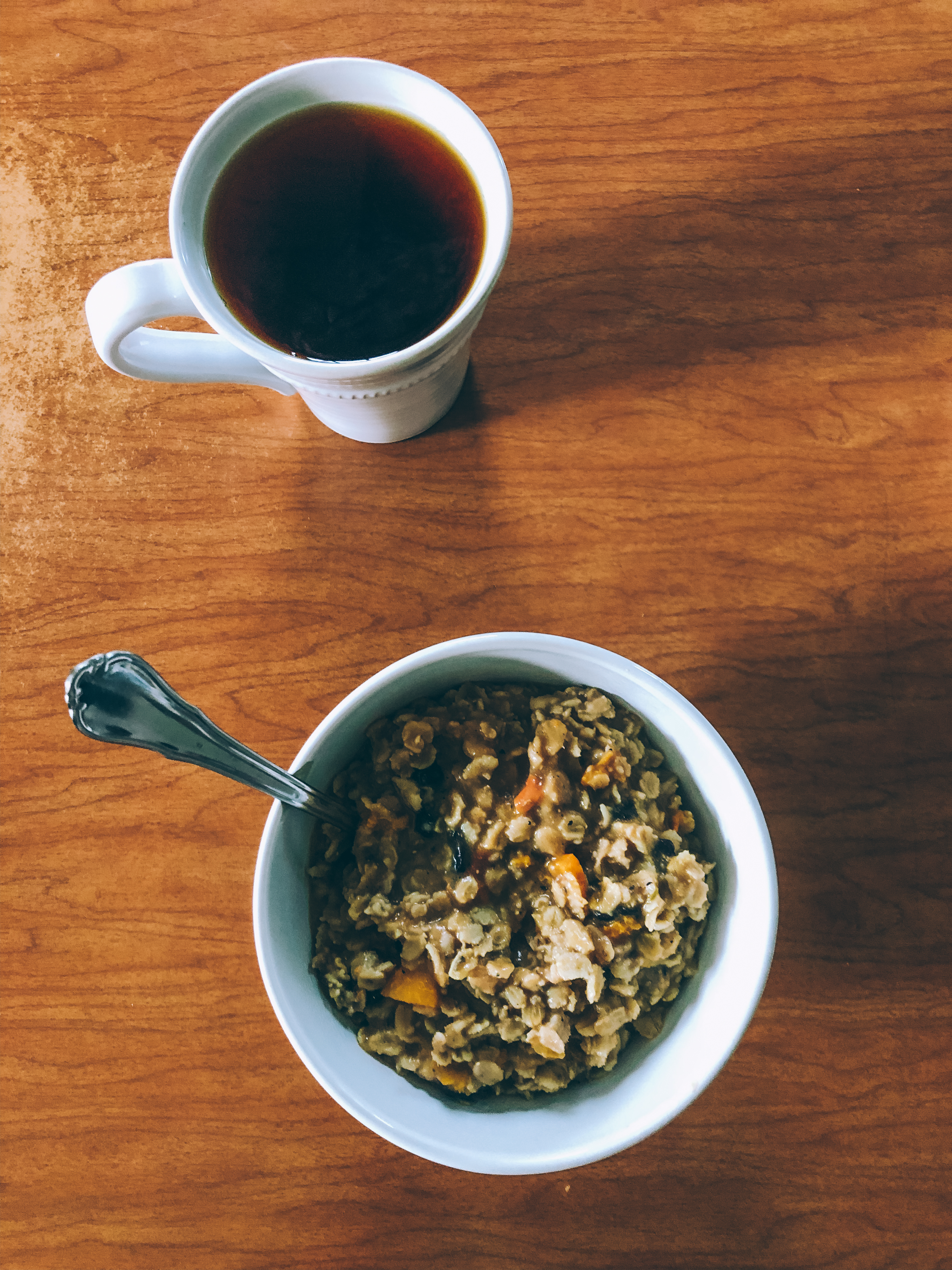
Tart Cherry + Apricot Oatmeal 

Prep:  none  | Cook: 10-15  minutes  | Serves: 1

1 1/2 cups water
1/8 tsp. mineral salt
⅛ tsp. ground ginger
⅛ tsp. ground cardamom
¼ tsp. fennel seeds
3/4 cup old-fashioned oats, certified gluten-free as needed
2 Tbs. dried tart cherries
2 apricots, diced (approx. 150 grams)
2-3 tsp. sunflower butter
1-2 tsp. chia seeds

  1. On the stovetop, bring the water, salt, and spices to a boil in a small saucepan.
  2. When boiling, turn down to medium-low, and stir in the oats and dried cherries. Let cook until it is soft and nearly all the water has been absorbed, about five minutes.
  3. Then add in the diced apricot and stir. Turn off the heat and stir in the sunflower butter, and chia seeds, making sure they are spread evenly throughout.
  4. Spoon into a bowl and enjoy!

Notes / Substitution Suggestions:
– adjust the spices as needed for your energetics
– omit the tart cherries and increase to three apricots
– for a smaller portion, use ½ cup rolled oats
– omit either the sunflower butter or chia seeds and double the amount of the one you keep in. 

Within my nutrition practice, I specialize in endurance athletes and digestive imbalances. If you’re curious about how to improve your performance, health, and digestion, I encourage you to reach out to me for more personalized support.

Nettles and Rose Herbal Tea

Today I’m sharing a tea formula that’s lovely, sweet, floral, and cooling. Perfect for early and mid-summer, when nettles and roses are growing wild, and we need a cooling “tonic” to drink.

Nettles are one of the nine sacred plants in old Wessex, a kingdom in the south of Great Britain from around 500-900 AD. They were used earlier by the Greeks in at least the first century as a medicinal plant. And they’re just as revered today as a tonic herb in Western Medicine.

Nettles are extremely rich in nutrients including calcium, magnesium, potassium, iron, silica, zinc, selenium and chromium and are useful for nourishing the blood and adrenals, and supporting the liver in detoxification. 

Nettles are most commonly used as a general tonic when you’re overworked, chronically tired, and needing nutrients. Nettles are incredibly nutrient rich–so much so, you can taste it, especially when they’re used fresh. Many people use strong nettle infusions for calcium and the other nutrients they contain, as an alternative to taking supplements. If you also start to drink nettles daily for some time, your hair, nails and skin will start to have a healthy glow!

I don’t usually take nettles in high dose amounts, but it’s rare for a day to go by without having at least one cup of tea that doesn’t contain 20 percent or more of nettle leaves.

Energetically, nettles are cooling and drying. Those two components translate to being slightly bitter and astringent in taste. Personally, I like to balance these two flavors in a formula with a touch of sweet from licorice.

Like nettles, roses also have an incredibly long history of use, both as a nutritive food, medicine, and in skin / beauty care. Rose petals have a particular affinity for healing the skin, whether it’s acne, scars, varicose veins or capillary damage, eczema, and more. They are anti-inflammatory and also like nettles, can be used daily as a tonic herb. Rose is also a nervine tonic, meaning it’s supportive of the nervous system!

Energetically, rose petals are cooling and moistening. The flavor, beyond just “floral,” is slightly bitter, sweet, and astringent. In Ayurvedic medicine, roses are often recommended for consumption during the hot summer months, and for overheated Pitta constitutions, a feature of their being cooling and moistening during the time of year when both we and the season are typically hot and dry.

Licorice root is one of my favorite and most used herbs. The flavor is not anise and licorice-candy. Rather, it’s extremely sweet and slightly bitter. Licorice is an extremely important herb in Traditional Chinese Medicine (TCM), where it tonifies the spleen and Qi, and also clears internal heat. It is particularly helpful for the adrenals, soothing an inflamed digestive system, moistening the lungs, and relieving pain.

In herbal formulas, licorice is commonly used in a small amount because it acts as a harmonizer to bring the other herbs together and provide a more pleasant taste.

Energetically, licorice root is warming/neutral, and moistening. It’s flavor is very sweet and slightly bitter.

Nettles and Rose Herbal Tea

Prep:  none  | Serves: 1
Energetics + Flavor: Cooling, Slightly Moistening; Bitter, Astringent + Sweet

1 Tbs. dried nettle leaves (Urtica dioica)
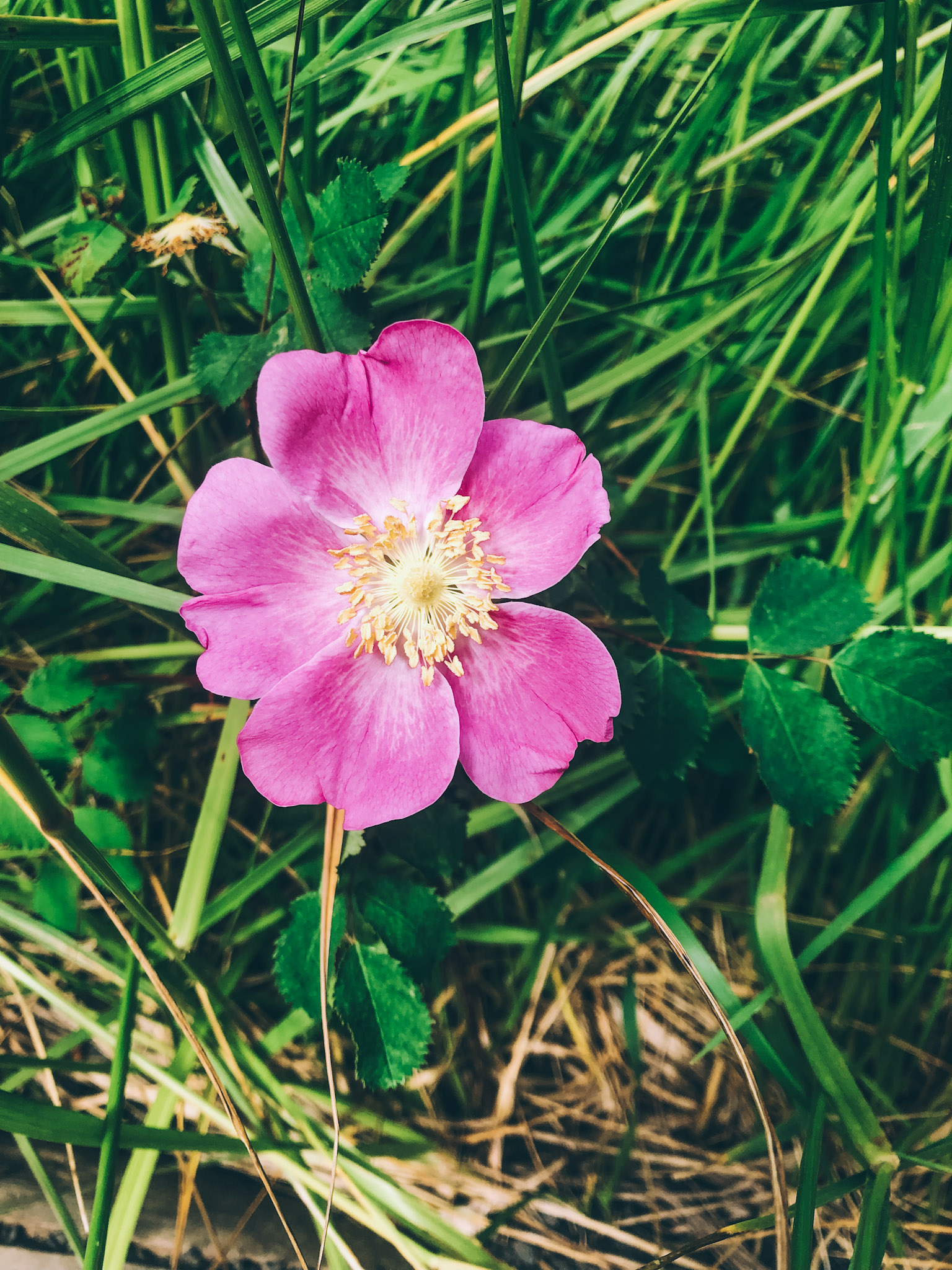
½ Tbs. dried rose petals (Rosa x damascena,  Rosa nutkana, or Rosa canina)
Pinch of licorice root (Glycyrrhiza glabra)
12 oz. boiling water

  1. Bring water to a boil. While it’s boiling, combine the dried herbs in an herbal infuser or disposable tea filter. 
  2. When it has boiled, pour the water over the herbs in your mug. If you have an easy lid available, cover the mug. This will allow more of the medicinal constituents to stay within the tea rather than rising in the air in the steam. 
  3. Let infuse for 10-20 minutes, and longer if desired. 
  4. Drink when warm, or allow to cool to room temperature. 

Notes:
– If you have high blood pressure, omit the licorice root. If you’d like a touch of sweetness, add a couple drops of honey after the herbs have infused and it’s no longer piping hot.
-Good sources of these herbs if you need to order include: Mountain Rose Herbs and Starwest Botanicals. For Roses, you can collect the wild Nootka Rose petals locally during the late spring and summer months, or purchase rose petals. Diaspora Co. has incredibly high quality Paneer/Damask Rose petals, shown in the photo.
Amazon is not a great source for herbs since they are frequently lower quality/questionable sources. 

Experiencing Fatigue and Poor Exercise Recovery?

Depending on your exercise or training load, it’s sometimes “normal” to experience fatigue in the hours and days after a workout or strength session. But what about when you routinely feel fatigued, more than your normal or chronically? Or when you realize you’re not recovering from workouts as well as in the past? 

There are many reasons why you might be more fatigued than ideal, or not recovering well from training. Below are a few of the most common. 

Reasons For Excessive Fatigue and Poor Training Recovery

Sleep

Sleep is probably the number one thing that can help you recover better from exercise and stressful phases of life. Typically, most adults need about seven to nine hours of sleep per night, but it’s not just the number of hours that matters. The quality and timing of sleep can be equally important.

Do you fall asleep after 10 pm, or closer to midnight or 1am? Or later? 

If so, you’ve already missed out on crucial hours of recovery. This is because your body’s internal clock–it’s circadian rhythm–is programmed for what we’ll call the “night janitor” to come between the hours of 10pm to 2am each night. These are the hours that the brain and body does most of its deep cleaning internally. Just like at school or a workplace, if you work late and the night janitor shows up, they often say “I’ll come back later.” In this case, later means another day. Practiced routinely, and your missed hours or nights of deep cleaning and cellular repair start to add up, adding to your fatigue and poor recovery.

High Stress

Stress, no matter whether it’s perceived or actual, wreaks havoc on your hormonal response and puts extra strain on your recovery process. Habitual high stress also often impacts sleep, causes anxiety, burn-out, depression, and excessive inflammation. Nutritionally, inflammatory foods are a major stress to the metabolic process and can be treated as “high stressors” at the metabolic level. See more about this below.

Overtraining

Overtraining can be looked at from a number of angles, but ultimately, it’s about too much stress and not enough rest. That’s an extremely broad way of differentiating it from the Stress category above or from the nutritional categories below.

Snacking all day / improper meal planning or amount

If you’re quite active, aim for four balanced meals with no snacking in between. Giving the digestive system time to rest by about four to six hours after each meal really supports its ability to fully digest the last meal before the body has to begin digestion again. This habit can go a long way towards enabling proper nutrient utilization and improved recovery.

Inadequate Macro or Micronutrient Status

Either an improper ratio or amounts of the macronutrients (Carbohydrates, Protein, and Fats), or of any number of Micronutrients can cause poor exercise recovery. The micronutrients that are most often implicated for chronic fatigue and poor workout recovery include:
Magnesium,
Thiamin (B1),
Riboflavin (B2),
Niacin (B3),
Pantothenic Acid (B5),
Pyroxidine (B6),
Folate,
Vitamin B12,
Biotin,
Iron,
Copper,
Vitamin D,
Vitamin E,
Vitamin C,
Carotenoids,
Coenzyme Q10,
Selenium,
Zinc,
and other antioxidants such as Glutathione, N-Acetyl Cysteine, and Alpha-Lipoic Acid. 

As you can see, this is quite the list. Any one of these can be the cause of poor recovery. Some of these nutrients can be toxic if supplemented with more than is needed, or they can negatively impact the status of other micronutrients. So it’s always best to confer with an experienced nutrition professional before adding supplement nutrients to your regime. This also makes sure you get the right nutrients for you– and not guessing at what might help.

Poor Digestion / not absorbing nutrients from food

I’ve written extensively about poor absorption and digestion so I encourage you to learn more by reading other articles on this topic. But it’s safe to say if your digestion is compromised, which also may not be obvious to you, then you’re not going to be recovering well and will frequently experience fatigue as a result.

Excessive Ingestion of Inflammatory Foods 

Think of inflammatory foods as anti-nutrients for the body. They take more nutrients to break down and clear from the body than they provide, and cause excessive cellular inflammation before doing so. Foods or beverages in this category include refined sugars, refined/processed grains, rancid oils, alcohol, ultra-processed foods (most foods that have more than eight to ten ingredients, or ingredients that you’d never add to the food from your pantry if making a homemade version), and in cases where you also have compromised digestion (which may not be immediately obvious), whole foods that can be inflammatory and difficult to digest for certain individuals, such as wheat, barley, spelt, farro, dairy products, nuts, soy, eggs, and fish. 

Next Steps

Unfortunately, I am all too familiar with many of these personally, and have had whole training blocks and races thrown off by them. For me, the most common culprits are poor digestion and nutrient assimilation, micronutrient deficiencies due to poor digestion, and high stress. Additionally, the factors that can contribute to fatigue often work interchangeably and compound on themselves.

Within my nutrition practice, I specialize in endurance athletes and digestive imbalances. If you’ve struggled with poor exercise recovery or extra fatigue that you’d like to figure out, I encourage you to reach out to me for more personalized support.